Asset Income / Trailer Rental · Claim Review
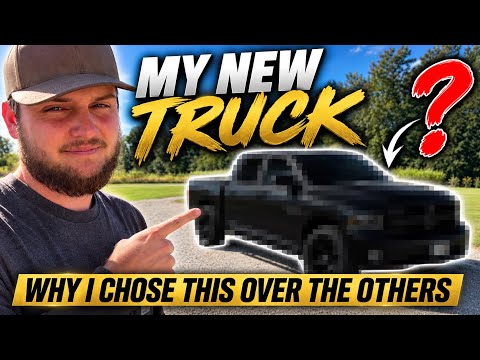
“I Finally Bought a Truck… Here’s Why I Chose This One”
What we found: Trailer Rental: "$55–60k Truck Into $8–10k a Month" Is Stated in a Truck Vlog's Coaching Pitch With No Rates, Bookings or Costs
A used-truck review ends with a 25-trailer fleet called "very profitable", while the owner says he has only just started taking money home.
- $55k–$60k Truck sold to fund trailers
- $8k–$10k/mo Income it "could" become
- 25+ trailers Fleet
- Not given Rates, bookings, costs
The claim
That selling a paid-off $55,000–$60,000 truck to buy more trailers could produce $8,000–$10,000 a month, and that his trailer rental business grew to over 25 trailers in a little over a year and is "very profitable" with one employee.
- Truck sold — 2022 Ram 2500, paid off, "$55, $60,000"
- What it "could" become — "8 to $10,000 a monthly income"
- Trailers before the truck sale — "Like five or six"
- Fleet now — "Over 25 trailers", in "a little bit over a year"
- Staff — "One employee operation, which is myself"
- Taking money home — "Finally at a point now"
- Replacement truck — 2018 Ram 1500, "mid-20s" price range
- Rental rates, utilisation, revenue, costs — Not stated
What is this video about?
A trailer rental owner explains why he bought a used 2018 Ram 1500, then closes with a pitch for his coaching service for trailer rental businesses.
- Most of the video is about the truck. He wanted a quiet crew cab for out-of-state hunting trips of 500–600 miles a weekend, for taking coaching calls on the road, and to keep winter road salt off the older truck he plans to keep. He chose a 2018 Ram 1500 with a V8 and about 56,000 miles, priced "in the mid-20s", after rejecting a lower-mileage truck with a badly rusted frame.
- The business claims come at the end. His site offers "coaching solutions for trailer rental businesses", and he says he grew his own fleet to "over 25 trailers" in "just a little bit over a year", with "serious revenue and not just revenue, very profitable."
- He describes how: reinvest everything rather than "live on it", and sell things you do not need. He sold a paid-off 2022 Ram 2500 — "I've got a $55, $60,000 truck sitting here and I could turn this into like 8 to $10,000 a monthly income" — when he had five or six trailers, and bought more.
- He says he is "finally at a point now where I'm actually taking some money home", has slowed buying "by choice" and is "mostly at capacity". He credits listings, reviews and Google ranking for overtaking three or four local competitors.
- The pitch ends with booking a call, a weekly newsletter for "a small monthly fee", and rental agreement templates and maintenance logs for sale.
A truck review with a coaching advert at the end; the income figures in the advert are not broken down.
- Start with a few trailers — Five or six
- Sell a $55–60k truck — Paid off
- Buy more trailers — Prices not given
- Reinvest all revenue — "Not live on it"
- 25+ trailers — ~1 year
- Start taking money home — "Finally"
- Sell coaching — Calls, newsletter
The growth story is told in outline; every number between the steps is missing.
The income claim is the sales pitch, not the subject
The lesson underneath the number
- For most of its length this is a careful, sensible truck-buying video: why a crew cab, why a V8 rather than a turbo V6, why a used truck that has done most of its depreciation, why walking away from a cheaper low-mileage truck with a rotten frame. The money figures arrive only when it turns into a pitch for his coaching.
- There, the claims are large and loose. A $55,000–$60,000 truck "could" become $8,000–$10,000 a month. The fleet passed 25 trailers in about a year. The business is "very profitable" with "super low" overhead. None of this comes with a rental rate, a utilisation figure, a trailer price, a monthly revenue total or a cost. Viewers are invited to book a call to find out.
- Two details are more informative than the headline. He says growth came from reinvesting everything and not living on it, and that he is only now "actually taking some money home". That is an honest description of a capital-hungry first year. It also means "very profitable" was, for most of that year, profit on paper that went straight back into trailers.
- The coaching conflict is out in the open: calls, a paid weekly newsletter and templates are all for sale, and he says so. A viewer weighing those offers should ask for the numbers this video leaves out.
You have to be able to reinvest the money as fast as you can and not live on it for a little while.
The most candid line in the pitch
The growth method, as described
Three principles, stated without figures.
No rental rates, trailer prices, bookings or costs are given for any stage.
- Reinvest rather than draw an income — "You have to be able to reinvest the money as fast as you can and not live on it for a little while." Honest about the trade-off: growth came from not paying himself.
- Turn idle assets into trailers — Sell a project truck, unused equipment or "more truck than I need" and buy rental units. He did this with a paid-off 2022 Ram 2500.
- Win on listings and reviews — He says he outranked three or four local competitors through listings, reviews and Google ranking. No booking or ranking data is shown.
- Run it alone — A "one employee operation" managing 25+ units. Plausible for trailers, which need hand-offs and maintenance rather than staff, but no hours are given.
The business model
Daily rental of trailers to local customers. No rates, revenue or booking figures are given in this video.
Local renters within his area; he says competitors were three or four other operators.
Available, well-reviewed trailers that rank well on Google.
Online listings, reviews and Google ranking.
- Trailers — 25+ units, purchase prices not given
- Parking — Expansion needed; cost not given
- Insurance and agreements — Not discussed in this video
- Maintenance and tyres — Not priced
- Tow vehicle — Replacement truck in the mid-$20,000s
He calls the overhead "super low"; no overhead figure is given. A second business — coaching, newsletter and templates — is sold alongside the rentals.
What you would actually need
Money
Capital from selling unneeded assets, then every dollar of rental revenue reinvested.
His own route took a paid-off $55,000–$60,000 truck on top of an existing five or six trailers, and a year without taking money home. That is substantial capital, and the video does not say what the trailers cost or what they earn.
Costs named or implied, not priced
- Trailers — 25+, prices not given
- Parking — "we need some parking expansion"
- Insurance and rental agreements
- Tyres, bearings and maintenance
- A tow vehicle; he bought a truck in the mid-$20,000s
- A year of reinvested income instead of pay
Time
He manages 25+ units "very easily" as the only employee.
Plausible, but not measured here. Hand-offs, cleaning, maintenance, bookings and coaching calls all take time, and he now also runs a coaching business.
Where the time goes
- Bookings, pick-ups and returns
- Maintenance across 25+ units
- Listings and review management
- Coaching calls, which motivated the new truck
The part you must pay attention to
"Could turn this into" is a projection, and "income" is undefined.
The headline figure is: "I've got a $55, $60,000 truck sitting here and I could turn this into like 8 to $10,000 a monthly income."
- Monthly "income" stated — $8k–$10k
- Truck value invested — $55k–$60k
13%–18% a month
Implied monthly return on the capital
The figure is phrased as what he "could" turn the truck into, not what the trailers it bought then earned. It does not say whether it is gross rent or profit, how many trailers $55,000–$60,000 bought, what they rent for, or how often they are out. It also sits alongside five or six trailers he already had, so the truck capital is not the only thing producing the business's income.
If $8,000–$10,000 a month were profit on $55,000–$60,000, the trailers would repay their cost in roughly six to seven and a half months. That would be an exceptional return, and nothing in the video lets a viewer check it. The same video says he has only recently started taking money home, which is consistent with heavy reinvestment and tells us nothing about margin.
- THE TRUCK-TO-TRAILERS CLAIM (OUR ARITHMETIC)
- Capital $55,000 - $60,000
- Monthly "income" $8,000 - $10,000
- Monthly return 13% - 18%
- Payback if profit 5.5 - 7.5 months
- WHAT IS MISSING
- Trailers bought with it ?
- Daily rate per trailer ?
- Days booked per month ?
- Insurance, parking, upkeep ?
- THE NEW TRUCK
- Truck sold $55,000 - $60,000
- New truck "mid-20s"
- Difference ~$30,000 - $35,000
The economics
Capital is stated; returns are asserted.
- Truck sold to fund trailers — $55,000–$60,000
- Monthly income it "could" produce — $8,000–$10,000
- Implied monthly return — 13%–18%
- Trailers before the sale — 5–6
- Fleet now — 25+
- Replacement truck — Mid-$20,000s
- Rates, bookings, revenue, costs — Not stated
Testing the truck-to-income claim
$8,000–$10,000 ÷ $55,000–$60,000 per month; $55,000–$60,000 ÷ $8,000–$10,000 for payback
A 13%–18% monthly return and a 5.5–7.5 month payback, if the figure were profit from that capital alone
IncomeIdeaLab calculation from the figures stated in the video
He does not say whether the figure is revenue or profit, nor whether it comes from the truck-funded trailers alone or the whole fleet.
- Daily or weekly rental rates
- Utilisation or days booked
- What each trailer cost
- Monthly revenue and profit
- Insurance, parking and maintenance costs
- How much he now takes home
- Selling a $55,000–$60,000 truck and later buying one in the mid-$20,000s leaves roughly $30,000–$35,000 of the vehicle money in the business, by our arithmetic. The video does not say whether other vehicles were bought or sold in between.
- Growing from five or six trailers to 25+ means buying about 19–20 trailers in the year, funded by the truck sale and reinvested revenue. No purchase total is given.
- He mentions "slowing down expansion the last like monthish by choice" and parking as the constraint, which fits a fleet near the limit of its yard.
Evidence status
Every business claim in the video.
- $55k–$60k truck could become $8k–$10k a month — Creator — Phrased as potential; revenue or profit unstated.
- Over 25 trailers in a little over a year — Creator — Plausible given the stated reinvestment; no purchase figures.
- "Very profitable", "overhead super low" — Creator — No revenue or cost figure given.
- One-employee operation — Creator — Plausible for trailers; hours not given.
- Only now taking money home — Creator — Candid, and limits what "profitable" meant during the year.
- Outranked three or four local competitors — Creator — No ranking or booking data shown.
- Coaching, paid newsletter and templates for sale — Creator — Disclosed openly.
What is actually proven?
The truck is shown. The business numbers are told.
- The replacement truck and parts of the trailer yard are shown on camera.
- A paid-off truck worth $55,000–$60,000 was sold to buy trailers.
- That truck "could" turn into $8,000–$10,000 a month.
- That figure implies a 13%–18% monthly return on the capital.
- Rates, bookings, revenue, costs and profit.
What the headline doesn’t tell you
The numbers come with a booking link, not a breakdown.
- "Could turn this into." — A projection, not a result.
- "Income" is undefined. — Revenue or profit?
- Five or six trailers already. — Before the truck sale.
- Only now taking money home. — After about a year.
- No rates or bookings. — Anywhere in the video.
- The pitch sells the answers. — Calls, newsletter, templates.
Should you try it?
Possible, but this video gives you nothing to plan with
Treat the figures as a sales pitch until you see rates, utilisation and costs.
- Specificity of income claims — 2 — Ranges and adjectives, no breakdown.
- Candour about trade-offs — 6 — Says growth meant not taking pay.
- Cost disclosure — 1 — No cost figure for the business.
- Conflict disclosure — 8 — Coaching and paid products are pitched openly.
- Capital required — 3 — His route used a $55k–$60k truck sale.
- Trailer rental can work, and his description of the path — start with a few units, reinvest everything, grow until parking runs out — is a sensible outline. What this video does not give you is any number you could use to test it in your own area.
- Before buying a trailer, price it, find local daily rates, and assume a realistic number of rental days a month. Subtract insurance, parking, tyres and maintenance. That is the calculation the pitch skips.
- Note his own admission that a year of growth meant not living on the income. If you need the money to live on, your fleet will grow far more slowly than his.
Passive or automated?
Automation
Online bookings help; hand-offs and upkeep are manual.
Passive potential
Assets earn while idle time is low, but need an operator.
Trailers are assets that earn without being manufactured each time, which makes rental more scalable than a service. They still need someone to hand them over, check them on return, grease bearings, replace tyres and manage listings and reviews. He runs it alone, and also runs a coaching business on top.
- Hand-offs and returns
- Inspections and maintenance
- Listings, reviews and customer messages
- Buying and placing new units
Recommended beginner experiment
Do the arithmetic the video leaves out.
- Price one trailer you would rent. — New and used.
- Collect local daily rates. — From existing rental listings.
- Assume conservative utilisation. — Days booked per month.
- Get an insurance quote. — Before buying.
- Find parking and its cost. — His growth limit.
- Compute payback on one unit. — Then decide on the second.
Our verdict: 3/10
A sensible truck review with an unsupported income pitch attached $8,000–$10,000 a month is a "could", and nothing behind it is broken down
Credited for openly pitching his coaching, newsletter and templates, and for admitting that growth meant reinvesting everything and only recently taking money home. Marked down because the $8,000–$10,000 monthly figure is phrased as what a truck sale "could" produce, does not say whether it is revenue or profit, and comes with no rental rate, utilisation, trailer price or cost; and because "very profitable" and "super low" overhead are asserted without a single figure.
Most of this video is a reasonable explanation of a used-truck purchase: a quiet crew cab for long hunting drives and coaching calls, a V8 rather than a turbo six, a used truck that has already lost most of its value, and a firm refusal to buy a cheaper one with a rusted frame. The business claims arrive in the closing pitch for his trailer rental coaching, and they are loose. He says a paid-off $55,000–$60,000 truck "could" become $8,000–$10,000 a month, which would be a 13%–18% monthly return and a payback of six to seven and a half months if it were profit; he does not say whether it is profit, how many trailers the money bought, what they rent for or how often they are out. He already had five or six trailers when he sold the truck, so the figure cannot be tied to that capital alone. The fleet passed 25 units in about a year, which fits his account of reinvesting every dollar, and he is candid that he has only recently started taking money home. That candour is the most useful part of the pitch. The numbers needed to test "very profitable" are offered on a paid call, not in the video.
- Truck sold — $55k–$60k
- Monthly income claimed — $8k–$10k, "could"
- Implied monthly return — 13%–18%
- Fleet — 25+ trailers
- Costs and profit — Not stated
Sources
- I Finally Bought a Truck… Here’s Why I Chose This One — YouTube video, 2026-09-30
- FTC — Guides Concerning the Use of Endorsements and Testimonials — Regulatory guidance on earnings claims