Founder Wealth / Investing · Claim Review
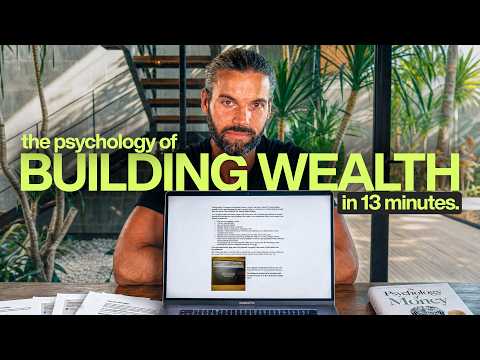
“why grinding harder won't build you wealth”
What we found: A $10 Million Example That Leaves Out Its Own 12% Return, and Two Portfolio Rates That Do Not Match
A founder with a stated $3 million a year in profit says the business, not the portfolio, drives wealth. The worked example and the return rates do not line up, and the coaching and travel he describes come with no cost total.
- $15M+/yr Portfolio companies revenue
- $3M+/yr Business profit
- 12% or 8% Portfolio return
- $28M vs ~$44M Example after 6 years
The claim
That a founder’s own business, and the founder running it, is a larger driver of wealth than an investment portfolio, shown by a portfolio of companies doing over $15 million a year with over $3 million in profit and a mostly empty calendar.
- Revenue across portfolio of companies — Over $15 million a year
- Business profit — Over $3 million a year
- Profit as a share of $15M — ~20%, if both describe the same companies
- Investment portfolio — “8 figure”, compounding at around 12% a year
- Return he says he is fine with — “Boring 8% a year”
- Example: $10M at 12% plus $3M a year, 6 years — ~$44.1M by our arithmetic, vs $28M stated
- Coach and breathwork — $20,000 and $500 a month
- Those two items a year — $246,000, ~8% of $3M profit
- Net worth, business valuation, team cost — Not stated
What is this income idea?
Treat the business you run, and your own capacity to run it, as your main wealth engine, and invest its profits in a boring diversified portfolio.
- The creator says he went from grinding daily to a portfolio of companies doing over $15 million a year, with a mostly empty calendar. He says his business throws off over $3 million in profit a year and that he has an eight-figure investment portfolio compounding at around 12% a year. He opens by saying the portfolio is not the biggest line on his net worth statement, and promises to show what is.
- The answer is the founder. His example: $10 million invested at 12% produces $1.2 million a year, while a business making $3 million a year in profit contributes more. He then describes the $10 million growing to 13, 16, 19, 22, 25 and 28 million as long as the business keeps contributing $3 million a year.
- Second, he invests profits monthly in a diversified portfolio with a wealth adviser, alongside a business coach, tax adviser, accountant and lawyer. He says he is fine with “boring 8% a year returns” and that his lifestyle barely changed between 40K and 500K a month.
- Third, he spends on himself as the asset: a $20,000-a-month coach, a $500-a-month breathwork practitioner, an uncapped health budget, regular trips and time in nature. Fourth, he says founders are free agents who can choose where to live, describing his own move away from Canada.
- The video closes with an invitation to apply to Founder OS, the creator’s community, which he says helps founders go “from invisible to inbound clients in the next 60 days”.
A profitable business adds more to your wealth each year than a modest portfolio earns, so protect the business and the person running it.
- Run a profitable business — $3M+/yr stated
- Pull profit monthly — Amount not stated
- Invest it boringly — 12% or 8%
- Spend on yourself — $20k/mo coach
- Keep lifestyle flat — Two suitcases
- Pick where you live — Left Canada
- Net worth — Not stated
The order of priorities is clear. The arithmetic connecting them is incomplete.
The comparison is right. The example built on it is not.
The lesson underneath the number
- The central point holds on its own figures. A business producing $3 million a year in profit adds more each year than a $10 million portfolio earning 12%, and many founders do spend more attention on allocation than on the business that funds it. The advice to keep lifestyle costs flat as income rises, to pull profits out regularly and invest them in something diversified and dull, and to have a tax adviser, accountant and lawyer is sound and widely applicable.
- The worked example then drops the return it started with. Adding $3 million a year to $10 million gives 13, 16, 19 and so on only if the portfolio earns nothing. At 12% it reaches about $44 million in six years, not $28 million. That omission understates his own wealth, and it also blurs his comparison, because a portfolio compounding at 12% overtakes a $3 million contribution within a few years. Compounding matters more than the example shows, which sits oddly with a section that quotes the eighth wonder of the world.
- The two return rates need reconciling too. Around 12% is stated for his eight-figure portfolio, and boring 8% is the rate he says he is happy with on a low-risk diversified one. Both may be true for different periods or different parts of the portfolio, but the video does not say which applies, and 12% is a high figure to assume for a low-risk portfolio over the long run.
- The spending list is unusually frank. A $20,000-a-month coach and $500 a month on breathwork are specific, and he presents them as costs he will not cut. They also show who the advice is for. On our arithmetic those two items alone are about $246,000 a year, roughly 8% of the profit figure he gives, and the team that lets the calendar stay mostly empty is not costed at all.
My lifestyle at 40K per month and 500K per month didn’t change much.
Matt Gray, on keeping lifestyle costs flat as income grew
The four points, as the creator gives them
Each ends with an action item and a link to a downloadable guide.
No figure is given for net worth, the business’s value, team cost or the total spent on the founder.
- You are the asset — A $3 million-a-year business contributes more each year than a $10 million portfolio earning 12%. The action item is to invest in skills, health and education and to make sure the core offer can produce the wealth you want.
- Boring investing wins — Profits are pulled monthly and invested in a diversified, low-risk portfolio with a wealth adviser. He recommends a team of business coach, wealth adviser, tax adviser, accountant and lawyer, even with $1 to $2 million.
- Keep the lifestyle simple — He says his lifestyle at 40K a month and at 500K a month did not change much, that most of his belongings fit in two suitcases, and that he does not yet own a car. Travel and accommodation are named as his biggest expenses.
- Invest in the architect — His list: a $20,000-a-month coach, a $500-a-month breathwork practitioner, a wealth adviser, an uncapped health budget, trips about every four weeks, a house in nature and a mostly empty calendar, with a team that can run ten days without him.
- You are a free agent — He says he left Canada five or six years ago after about twelve years of travel, describes a structure that taxes at 50%, and encourages founders to try living somewhere new for a few months.
The business model
Profit from a portfolio of companies, including Founder OS, a community that helps founders build personal brands and social media systems; investment returns on profits pulled out monthly.
Founders, mainly those who want inbound clients from a personal brand.
Building a business that runs without the founder, so the founder can invest its profit and live on their own terms.
YouTube and the creator’s founder brand, with downloadable guides and an application link.
- Business coach — $20,000 a month
- Breathwork practitioner — $500 a month
- Advisers: wealth, tax, accounting, legal — Named, not priced
- Health, travel and housing — Health budget uncapped; others not priced
- Team able to run without the founder — Size and cost not stated
- Tax — 50% referred to for his former structure; current rate not stated
Two costs are priced. The team behind a mostly empty calendar is not.
What you would actually need
Money
The model assumes a business already producing profit. He suggests a full advisory team even with $1 to $2 million, and lists a $20,000-a-month coach among his own costs.
The advice is aimed at founders who already have a profitable business, and the video says so in effect. For anyone else, the cost list is the useful part: the coach and breathwork alone come to $246,000 a year by our arithmetic, before advisers, health, travel and a team able to run without the founder.
Named or implied, mostly not priced
- Business coach: $20,000 a month
- Breathwork: $500 a month
- Wealth adviser, tax adviser, accountant, lawyer
- Uncapped health budget
- Trips about every four weeks, a house in nature
- A team that runs ten days without the founder
Time
He describes a mostly empty calendar now, after a period of grinding day after day, and two days in nature each weekend.
How long the grinding period lasted, and what the business looked like at each stage, is not stated. The empty calendar depends on a team whose size and cost are not given.
What the video does and does not date
- About 12 years of travel before leaving Canada
- Left Canada about 5 or 6 years ago
- Grinding period: length not stated
- Monthly investing calls with an adviser
- Founder OS promise: inbound clients in 60 days
The part you must pay attention to
The example adds $3 million a year and leaves out the 12% return it began with.
The example starts with $10 million compounding at 12% and a business contributing $3 million a year, then says “that 10 million will turn into 13 million 16 19 22 25 28 over the coming years”.
- Portfolio plus a year’s 12% return — $10M × 1.12
- Business profit contributed — $3M
$14.2M after year 1
~$44.1M after six years, against $28M in the video
The sequence of 13, 16, 19, 22, 25 and 28 million adds $3 million a year and nothing else, so it describes a portfolio earning 0%. With the 12% stated a sentence earlier, our arithmetic gives $14.2 million after one year and about $44.1 million after six. At the 8% he later says he is fine with, it gives about $37.9 million. The omission understates his own case, because with returns included the portfolio grows faster than the video says. It also changes the comparison he is making: by year six the portfolio’s 12% return is over $4 million a year, more than the $3 million the business contributes.
Two other figures need care. The creator gives his portfolio return as “around 12% a year” and, a few minutes later, says he is “totally fine with just boring 8% a year returns” on a low-risk diversified portfolio. A 12% return is also described as “$1.2 million of passive cash flows”, though much of a diversified portfolio’s return is growth in value that becomes cash only when sold. And the net worth line the video promises to reveal in its first twenty seconds is the founder, with no figure for what the business is worth.
- THE EXAMPLE, AS STATED
- Start $10M
- + $3M a year 13 16 19 22 25 28
- -> no return included
- WITH THE 12% IT STATES (ours)
- Year 1 10 x 1.12 + 3 = 14.2
- Year 2 18.9
- Year 3 24.2
- Year 6 ~44.1
- WITH 8% (ours)
- Year 6 ~37.9
- THE FOUNDER’S OWN COSTS
- Coach $20k x 12 $240,000
- Breathwork $500 x 12 $6,000
- Two items $246,000
- vs $3M profit ~8.2%
The economics
Revenue, profit and two personal costs are stated. The rest is not.
- Revenue across companies — Over $15M a year
- Business profit — Over $3M a year
- Implied margin — ~20%, if the same companies
- Portfolio return stated — ~12% a year
- Return he is fine with — 8% a year
- $10M + $3M/yr at 12%, six years — ~$44.1M
- $10M + $3M/yr at 8%, six years — ~$37.9M
- Coach and breathwork a year — $246,000
- Net worth, business value, team cost, tax — Not stated
The compounding example with its own return included
Each year: portfolio × 1.12 + $3M. From $10M: 14.2, 18.9, 24.2, 30.1, 36.7, 44.1
About $44.1 million after six years, against $28 million in the video
IncomeIdeaLab calculation from the rate and contribution stated in the video
This assumes the $3 million is contributed at the end of each year, the 12% holds every year with no losses, and nothing is taxed or withdrawn. It is an illustration of the stated assumptions, not a forecast.
- Net worth, or the value placed on the business
- Whether $3M profit is from the same companies as the $15M revenue
- Which rate, 12% or 8%, describes the portfolio
- Team size and cost behind the empty calendar
- What the 40K and 500K a month figures measure
- Tax paid now, and the cost of changing residence
- A $10 million portfolio at 12% gains $1.2 million in a year, as stated. Calling that “passive cash flows” treats total return as cash; much of it is growth in value.
- “40K per month and 500K per month” is not labelled as income, revenue or profit. At $500,000 a month the annual figure would be $6 million, double the $3 million profit stated.
- The video refers to a system that taxes at 50% and describes leaving Canada. Changing tax residence has its own rules and costs, which are not discussed.
- The closing pitch is for Founder OS, the creator’s community, described as getting founders “from invisible to inbound clients in the next 60 days”; the price is not stated.
Evidence status
Every substantive figure and claim in the video.
- Portfolio of companies does over $15M a year — Creator — We could not check this from the video. The companies are not listed.
- Business throws off over $3M profit a year — Creator — We could not check this from the video. About 20% of $15M if the same companies.
- Eight-figure portfolio compounding at ~12% — Creator — Later he says he is fine with 8% on a low-risk portfolio; which applies is not stated.
- $10M at 12% throws off $1.2M of passive cash flow — Creator, example — The return checks out; describing it all as cash flow does not follow.
- $10M becomes 13, 16 … 28M with $3M a year — Creator, example — Leaves out the 12% return. With it: ~$44.1M after six years.
- Lifestyle unchanged between 40K and 500K a month — Creator — What the figures measure is not stated.
- $20,000-a-month coach; $500-a-month breathwork — Creator — $246,000 a year together, a frank disclosure of cost.
- Team runs ten days without the founder — Creator — Team size and cost not stated.
- Founder OS gets founders inbound clients in 60 days — Creator, closing pitch — No result or price is given for it in the video.
- Net worth, business value — Not stated — Promised at the start; given as the founder, without a figure.
What is actually proven?
The argument is checkable from the figures. The figures themselves are stated.
- A $3M-a-year profit contributes more than 12% on $10M, as stated.
- The 13-to-28 million sequence omits the stated return; with it, ~$44.1M.
- The stated coach and breathwork costs total $246,000 a year.
- Two different portfolio return rates are given.
- The advice to keep lifestyle costs flat is stated with his own example.
- Net worth, business value, team cost and tax position.
What the headline doesn’t tell you
The advice assumes the profitable business already exists.
- The example drops its own return. — $28M stated; ~$44M at 12%.
- Two return rates. — 12% and 8%.
- Returns are not all cash. — Growth is paid only when sold.
- The net worth line has no number. — It is the founder.
- A $20,000-a-month coach. — Plus advisers and travel.
- The team is not costed. — Behind the empty calendar.
- 40K and 500K a month. — Of what is not stated.
- The close is an application. — To the creator’s community.
Should you try it?
Sound priorities for a founder with a profitable business; not a starting plan
Take the advice on lifestyle, regular investing and advisers. Redo the compounding arithmetic yourself, with returns included.
- Soundness of the core comparison — 7 — Holds on the stated figures.
- Accuracy of the worked example — 2 — Omits the return it assumes.
- Consistency of return figures — 3 — 12% and 8% both given.
- Disclosure of personal costs — 7 — Coach and breathwork priced.
- Disclosure of business costs — 2 — Team and tax not stated.
- Relevance to beginners — 3 — Assumes a profitable business.
- If you already run a profitable business, the priorities here are reasonable. The business is usually the biggest contributor to a founder’s wealth, burning out the person who runs it is a real risk, and keeping living costs flat while investing profits regularly in something diversified is advice most financial planners would recognise.
- Do your own compounding arithmetic. The example in the video adds $3 million a year to $10 million and leaves out the 12% return it began with, which understates the result by about $16 million over six years. If you model your own plan, include the return, use a conservative rate rather than 12%, and include tax.
- Treat the spending list as context. A $20,000-a-month coach is a cost the creator can carry on a stated $3 million a year in profit. For a founder earning a fraction of that, the same principle, investing in your own health and skills, needs a budget sized to your own business.
- If you are not yet running a profitable business, the video has little to act on directly. Its closing offer is a community for building inbound clients through a personal brand, and no result figure or price is given for it.
Passive or automated?
Automation
A team runs the business; investing is a monthly manual call.
Passive potential
The portfolio is passive; the business engine depends on the founder and team.
The creator draws the line himself: the investment portfolio is passive, and the business is his “active portfolio”. The mostly empty calendar is the result of a team that can run for ten days without him, whose size and cost are not stated, and of continuing spending on coaching, advisers and his own health that he says he will not cut. The model is passive only for the part of wealth that is already invested. The part that adds $3 million a year depends on a business that has to keep being run, by him or by people he pays.
- The team that runs the companies
- Monthly investing decisions with an adviser
- Coaching, tax, legal and accounting work
- The founder’s own brand and content
- Delivering Founder OS to its members
Recommended beginner experiment
Apply the priorities at your own scale.
- Measure your business’s real profit. — After your own pay and tax.
- Set a fixed monthly transfer to invest. — His monthly routine, at your size.
- Model compounding with returns included. — At a conservative rate.
- Hold lifestyle costs flat for a year. — His most transferable advice.
- Get an accountant before a coach. — Cheaper, and tax is not discussed in detail.
- Test a week away from the business. — His team runs ten days without him.
Our verdict: 5/10
A sound priority, illustrated with arithmetic that leaves out compounding and two return rates and a net worth line that are not pinned down
Credited for a core comparison that holds on the stated figures; for clear, widely applicable advice on keeping lifestyle costs flat, investing profits regularly and using tax, legal and accounting advisers; and for pricing his own coaching and breathwork spend. Marked down because the worked example grows a portfolio by its contributions alone and leaves out the 12% return it assumes, giving $28 million after six years where the stated inputs give about $44 million; because 12% and 8% are both given as his portfolio rate; because a 12% total return is described as passive cash flow; because the net worth figure promised at the start is not given; and because team size, team cost and tax position are not stated.
The idea at the centre of this video is right on its own numbers: a business producing $3 million a year in profit adds more to a founder’s wealth each year than a $10 million portfolio earning 12%, so the business and the person running it deserve the founder’s attention. The surrounding advice, to keep living costs flat as income rises, to pull profits regularly into a diversified portfolio, and to have tax, legal and accounting advice, is sensible for anyone with a profitable company. The creator is also frank about his own spending, naming a $20,000-a-month coach and $500 a month on breathwork. The arithmetic used to illustrate the point needs correcting. Growing $10 million to 13, 16 and on to 28 million by adding $3 million a year leaves out the 12% return stated a moment earlier; with it included, the stated inputs give about $44 million after six years, and the portfolio’s own return overtakes the business contribution within that time. Two return rates, 12% and 8%, are given without saying which applies, and a 12% return is described as cash flow when much of it would be growth in value. The video opens by promising to show the biggest line on his net worth statement and answers that it is the founder, without a figure. Use the priorities, and redo the numbers with returns, a conservative rate and tax included.
- Business profit — Over $3M a year
- Revenue across companies — Over $15M a year
- Portfolio return — 12% and 8% both stated
- Example after six years — $28M stated; ~$44.1M at 12%
- Coach and breathwork — $246,000 a year
- Net worth — Not stated
- Beginner suitability — For existing founders
Sources
- why grinding harder won't build you wealth — Matt Gray — YouTube video, 2026-07-14
- FTC — Guides Concerning the Use of Endorsements and Testimonials — Regulatory guidance on earnings claims