Personal Finance / Saving & Index Investing · Claim Review
“Master Money in 17 Minutes : Everything you Need to Know to be Rich”
What we found: Half a Million by 25 Rests on a $25,000-a-Month Income the Video Does Not Explain
Going from $100,000 at 23 to about $500,000 at 25 means saving roughly $17,000 a month. The seven habits are sound; the job that paid for the result is mentioned once and left unnamed.
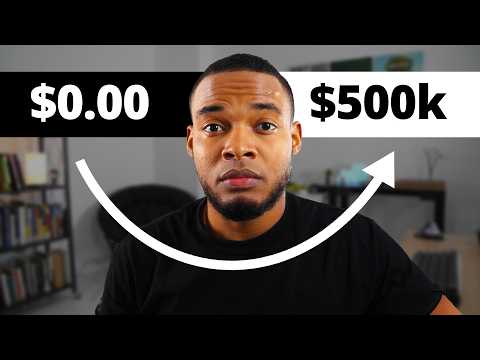
- ~$500k Wealth at 25
- ~$17k/mo Needed to get there
- >$25k/mo Peak income
- <$1,200/mo Living costs today
The claim
That seven money habits — tracking spending, living below your means, eliminating debt, an emergency fund, consistent investing, an extra income stream and financial education — took the presenter from a single-parent household on welfare to about half a million dollars by age 25.
- Savings at 19 — $10,000, twice
- Savings at 23 — $100,000
- Wealth at 25 — "About a half a million"
- Required saving, 23 → 25 — ~$16,700 a month
- Income "at one point" — Over $25,000 a month
- Source of that income — Not named
- Early income — $60 a week
- Living costs then / now — <$1,000 / <$1,200 a month
- Peak debt — Over $70,000
- Whether "half a million" is savings, investments or net worth — Not stated
What is this income idea?
Not a business — a set of seven personal-finance habits, presented through the presenter’s own savings record.
- The presenter opens with how little he spends: rent under $300 a month, a used Toyota Corolla bought for cash, and total living expenses under $1,200 a month. He then gives his record: $10,000 saved at 19 — twice, because he spent the first lot — $100,000 by 23, and "about a half a million" by 25.
- He describes a hard start — raised by a single mother, a family on welfare — and says plainly that "I got lucky": he "heard the right thing from the right person at the right time".
- The seven habits are conventional. Track every dollar, starting with whatever you earn — his was $60 a week. Give every dollar one of five jobs: emergencies, investments, debt, expenses and charity. Live below your means by separating needs (shelter, utilities, groceries, transport) from wants, and cut the cost of the needs too — he moved to the Dominican Republic and pays under $300 in rent.
- Eliminate debt. He once owed over $70,000 and borrowed freely to buy property and shares; he now takes on no debt except, as a rule, a 15-year mortgage on a home with payments no more than 33% of net income.
- Build an emergency fund in stages: $500 to $1,000 first, then three to six months of costs once debt-free, then one to five years once financially free. He has used his twice — for his father’s funeral and for his daughter’s birth without insurance.
- Invest 10–15% consistently once debt-free; his only stock-market holding is a Vanguard S&P 500 fund. Add one extra income stream — his was flipping phones. And keep learning; each habit comes with a recommended book.
Spend less than you earn, avoid debt, keep cash for emergencies and buy an index fund — sound habits, though the half-million result needed a very large income as well.
- Track every dollar — Even $60 a week
- Give each dollar a job — Five categories
- Cut needs, not just wants — Rent under $300
- Clear debt — He owed $70,000+
- Stage an emergency fund — $500 → 6 months → years
- Invest 10–15% — One S&P 500 fund
- Add one income stream — He flipped phones
- Keep learning — A book per habit
A sensible order of operations. The outcome it is sold with needed a large income on top.
Frugality decides how much you keep. It cannot decide how much you earn.
The lesson underneath the number
- The habits in this video are ones most personal-finance writers would endorse, and they are presented in a sensible order: get a small cash buffer, clear debt, build a fuller emergency fund, then invest a steady share in a broad index fund. His staged emergency fund and his point about investing a modest 10–15% so you do not have to stop are both practical. His living-cost figures are consistent — under $1,000 a month as a single man living with his mother, $200 more now with a wife and child.
- The problem is the framing. The title promises "everything you need to know to be rich", and the proof offered is his own path to about half a million dollars by 25. But between 23 and 25 his wealth rose by roughly $400,000. That is about $16,700 saved every month for two years — far beyond what tracking spending or cheap rent can produce on a normal wage. The only income in the video large enough is one sentence: "over USD 25,000 a month" from a job where he "can make no money ever" afterwards. He does not say what the job was.
- The figure is not omitted. He raises it himself, he says he got lucky, and he compares himself to a baseball player who earns a lifetime’s money in a year. That is honest. But the habits and the outcome are presented as cause and effect, and they are not. Someone on a typical salary who follows every step here will be in a much stronger position than before — with no debt, a cash cushion and a growing index fund — and nowhere near half a million by 25.
- His own arithmetic for small goals makes the point better than he does. Covering a $40-a-month haircut with dividends takes something like $16,000 to $32,000 invested, depending on yield — which is why, he says, he started cutting bills instead. The same logic applies to his headline: modest habits produce modest, reliable results; large results need large inputs.
At one point I was making no joke over USD 25,000 a month… the way my job works is I can make a lot of money today but then I can make no money ever.
The one sentence that explains the half million
The seven habits, as he gives them
Each is standard advice, with his own numbers attached.
The presenter does not give his name in the video; we refer to him by the channel name.
- Track every dollar from the start — "If you can't manage a little bit of money you can't manage more money." He began on $60 a week and says waiting for a bigger income before budgeting was his early mistake.
- Give every dollar a job — Five categories: emergencies, investments, debt, expenses and charity. No percentages are given for how to split them.
- Live below your means — including on needs — Rent under $300 instead of $3,000 by moving to the Dominican Republic; a used car bought for cash instead of a $700 monthly payment. Now married with a child, he says he spends "USD 200 more" than before.
- Eliminate debt, with one exception — No debt "no matter the opportunity", except a home on a 15-year mortgage with payments no more than 33% of monthly net income.
- Build the emergency fund in stages — $500–$1,000 in a separate high-yield savings account; three to six months once debt-free; one to five years once "financially free".
- Invest a small, steady share — About 10%, "maybe 10 to 15%", once debt-free, because people who aim for 40–50% tend to stop. His own holding is a single Vanguard S&P 500 fund.
- Add one income stream, not seven — A side hustle — he flipped phones — then interest and dividends once debt-free with an emergency fund in place.
The business model
Not a business. Wealth is built from earned income — his own came from an unnamed job paying "over USD 25,000 a month" at one point, and from flipping phones — plus savings interest and index-fund dividends.
Viewers starting out with money, especially those on low incomes.
An ordered set of habits — track, budget, cut costs, clear debt, save, invest, add income — with a book recommended for each.
YouTube, with each habit linked to a further video and a book in the description.
- Living costs — Under $1,000 a month then, under $1,200 now, by his account
- Rent — Under $300 a month in the Dominican Republic
- Debt service — On over $70,000 at its peak; rates and timing not given
- Tax — Not mentioned, on income of over $25,000 a month
- Uninsured childbirth — "A lot of money"; amount not given
His costs are unusually low and he says so. The point the video does not make is that his income was unusually high.
What you would actually need
Money
Start with whatever you earn — "USD 60 a week or… 10,000 doesn't matter". A first emergency fund of $500 to $1,000.
True for the habits. Not true for the outcome. Reaching $500,000 by 25 from $100,000 at 23 needs about $16,700 a month saved, which on his stated spending implies roughly $17,700 a month after tax, sustained for two years.
What the headline result needed
- An income near or above $17,700 a month after tax, for about two years — our calculation
- Living costs under about $1,000 a month in that period, as he states
- Rent under $300 — available because he lives in the Dominican Republic
- No dependants at the time — he agrees this was true then
- Possibly investment gains, which he does not mention
Time
Adopt one habit a week or a month; becoming expert "is going to take a few years".
A realistic pace for the habits. His own timeline — six years from $10,000 to about $500,000 — reflects his income more than the habits.
His stated timeline
- Age 19: $10,000 saved — twice, after spending the first
- Age 23: $100,000
- Age 25: about $500,000
- At some point: over $70,000 of debt, since cleared
- Today: married, one child, spending under $1,200 a month
The part you must pay attention to
The habits do not explain the half million. The income does.
He mentions, once and as a warning, that "at one point I was making no joke over USD 25,000 a month" — from a job where "I can make a lot of money today but then I can make no money ever." The job is not named.
- Wealth at 25 — $500,000
- Savings at 23 — $100,000
- Time between — 24 months
~$16,700 a month
Saved every month for two years — before living costs
Nothing in the seven habits can generate $16,700 a month. Tracking spending, cheap rent and avoiding debt can raise how much of an income you keep, but not past the income itself. On his own figures — living costs under $1,000 a month in that period — he would have needed about $17,700 a month after tax for two straight years, or substantial investment gains he does not mention. The video does not say what the job was, when the $25,000 months happened, how long they lasted, or whether "half a million" means cash saved, investments, or net worth after the $70,000-plus of debt he says he once carried.
The earlier steps are more ordinary. From $10,000 at 19 to $100,000 at 23 is $90,000 in four years, about $1,875 a month saved — achievable on a modest income with very low costs, and consistent with what he teaches. The jump from 23 to 25 is the one that leaves the title’s "everything you need to know to be rich" incomplete: the decisive input is a high, volatile income from an unnamed source. He is candid that luck played a part, and he does not hide the $25,000 figure. But a viewer earning an ordinary wage who adopts every habit here will not reproduce his result, and the video does not say so.
- AGE 19 -> 23
- $100,000 - $10,000 = $90,000
- / 48 months = ~$1,875/mo saved
- AGE 23 -> 25
- $500,000 - $100,000 = $400,000
- / 24 months = ~$16,700/mo saved
- + living costs ~$1,000/mo
- = after-tax income ~$17,700/mo
- LIVING COSTS RECONCILE
- Then: under $1,000/mo
- Now: + $200
- = under $1,200/mo (matches)
- THE SMALL-GOAL DIVIDEND MATHS
- (yields are our assumption)
- $40/mo haircut = $480/yr
- at 3% yield -> $16,000 invested
- at 1.5% yield -> $32,000 invested
The economics
Small, consistent costs; one large, unexplained income.
- Savings at 19 / 23 / 25 — $10k / $100k / ~$500k
- Saved per month, 19 → 23 — ~$1,875
- Saved per month, 23 → 25 — ~$16,700
- Peak income — Over $25,000 a month
- Living costs then / now — <$1,000 / <$1,200 a month
- Rent — <$300 a month
- Peak debt — Over $70,000
- Mortgage rule — 15 years, ≤33% of net income
- Job, tax, investment returns — Not stated
What the jump from 23 to 25 required
($500,000 − $100,000) ÷ 24 months = ~$16,700 a month saved; + ~$1,000 living costs = ~$17,700 a month after tax
An after-tax income near $17,700 a month for two years, or large investment gains — neither of which the habits provide
IncomeIdeaLab calculation from the figures stated in the video
This treats "about a half a million" as accumulated savings. If it is net worth including investment gains or property, less of it had to come from income — but the video does not say which, or what the investments were at the time.
- What the job paying over $25,000 a month was
- When those months occurred and how long they lasted
- Whether "half a million" is cash, investments or net worth
- Tax paid on that income
- How the $70,000-plus of debt was used and repaid
- Whether the book links in the description are affiliate links
- The living-cost figures reconcile: under $1,000 a month before, "$200 more" now, under $1,200 total.
- A $20 haircut every two weeks is about $40 a month, as he says. Covering it with dividends would need roughly $16,000 at a 3% yield or $32,000 at 1.5% — our illustration, with assumed yields.
- A goal of $10,000 a month in passive income would need about $4 million to $8 million invested at those same assumed yields. His decision to abandon that goal for small ones is consistent with the arithmetic.
- He says "obviously I'm not trying to sell you anything" and jokes "buy my course… don't buy my course". No product is priced in the video; each habit links to a book and a video in the description, and the video does not say whether any link pays him.
Evidence status
Every substantive claim in the video.
- $10,000 saved at 19, twice — Presenter — Plausible; the first $10,000 was spent, which he admits.
- $100,000 saved by 23 — Presenter — About $1,875 a month over four years. Plausible with very low costs.
- "About a half a million" by 25 — Presenter — Needs ~$16,700 a month saved for two years; not explained by the habits.
- Over $25,000 a month income at one point — Presenter — The only income large enough. Job, dates and duration not given.
- Living costs under $1,200 a month — Presenter — Consistent with his earlier under-$1,000 figure plus $200.
- Rent under $300 — Presenter — Tied to living in the Dominican Republic.
- Owed over $70,000, now debt-free — Presenter — Timing and repayment not described.
- Invest 10–15% once debt-free — Presenter — Advice for viewers; he says he saves "almost all" his own income.
- Sole stock investment is a Vanguard S&P 500 fund — Presenter — Stated plainly.
- "Everything you need to know to be rich" — Title — The decisive input — a high income — is not part of the seven habits.
What is actually proven?
The figures are his own statements; none are shown.
- His living-cost figures are internally consistent.
- The $100,000-to-$500,000 jump requires about $16,700 saved a month for two years.
- He earned over $25,000 a month at one point, from an unnamed job.
- He attributes part of his outcome to luck and admits spending his first $10,000.
- The half-million figure, and what it consists of.
- The job, its timing and the tax paid on it.
- Whether any description links earn him a commission.
What the headline doesn’t tell you
The habits are the lesson. The income is the result.
- $25,000 a month. — Mentioned once, job unnamed.
- $400,000 in two years. — About $16,700 saved monthly.
- "Half a million" is undefined. — Cash, investments or net worth?
- Rent under $300. — Because he lives in the Dominican Republic.
- He owed $70,000+. — How it was repaid is not said.
- Tax is not mentioned. — On a $25,000-a-month income.
- He says he got lucky. — To his credit.
- He spent the first $10,000. — Also to his credit.
Should you try it?
Adopt the habits; do not expect the result
The seven steps are a sound order of operations for anyone starting out. The half-million outcome needed a very high income as well, which the habits do not supply.
- Soundness of the habits — 8 — Conventional, well ordered, practical.
- Internal consistency of spending figures — 8 — The before-and-after living costs reconcile.
- Explanation of the headline wealth — 2 — The decisive income is one unexplained sentence.
- Title accuracy — 3 — "Everything you need to know to be rich" omits the income.
- Candour about luck and mistakes — 7 — Luck, spent savings and past debt all admitted.
- Disclosure of interest — 5 — Says he is selling nothing; link terms not stated.
- Beginner accessibility — 9 — Every step can start with any income.
- If you are starting out, the order he gives is a good one. Track what comes in and goes out. Save a small emergency fund of $500 to $1,000 and keep it separate from your everyday account. Pay off debt. Then build three to six months of costs, and only then start investing a steady 10–15% in a broad index fund. Each step works on any income and none requires buying anything.
- Be realistic about what it will produce. His savings from 19 to 23 — about $1,875 a month — show what very low costs can do on a modest income. His savings from 23 to 25 — about $16,700 a month — show what a very high income does. The video presents both as the result of the same habits. They are not: the second needed a job paying, by his own account, over $25,000 a month, and he does not say what it was.
- Some of his low costs depend on circumstances that will not apply to everyone. He lived with his mother with no dependants for part of the period, which he acknowledges, and now pays under $300 in rent because he lives in the Dominican Republic. Cutting the cost of needs is good advice; the specific figures are not a benchmark.
- His 15-year mortgage rule — payments no more than a third of net income — and his staged emergency fund are both reasonable guardrails. His one-to-five-year emergency fund for later life is conservative and he says so. Use these as starting points, adjusted for your own job security and family.
Passive or automated?
Automation
Transfers and index-fund purchases can be automated; budgeting and earning cannot.
Passive potential
Dividends and savings interest are passive, but only at scale.
Parts of this can run on their own once set up: a standing transfer into an emergency account, a fixed percentage into an index fund, interest on a high-yield savings account. But the income that funds them is earned, and in his case it came from a job and from flipping phones. His own example shows how slow the passive part is at small scale — covering a $40 monthly haircut with dividends takes tens of thousands invested — which is why he cut bills instead. Passive income at a level that changes your life needs a large invested sum first.
- Earning the income that funds everything
- Tracking and categorising spending
- Deciding needs from wants each month
- Running a side hustle such as flipping phones
- Reviewing the emergency fund as circumstances change
Recommended beginner experiment
His order of operations, with realistic expectations.
- Track a full month of spending. — Every dollar in and out.
- Save $500–$1,000 separately. — In a different account.
- List needs and wants. — Then cut the cost of the needs.
- Clear high-interest debt. — Before investing.
- Grow cash to 3–6 months. — By job security.
- Invest 10–15% steadily. — In a broad index fund.
- Raise your income separately. — The step the result depended on.
- Measure progress against your own pay. — Not against his.
Our verdict: 5/10
Sound habits, sold with a result they did not produce The half million needed about $17,000 a month saved — and a $25,000-a-month job the video does not name
Credited for a conventional, well-ordered set of habits that any viewer can start on any income; for living-cost figures that reconcile across the video; for a staged emergency fund and a modest, sustainable investing rate; and for admitting luck, an early spending spree and past debt. Marked down because the headline outcome — about half a million dollars by 25 — required roughly $16,700 saved every month for two years, which the habits cannot produce; because the only income large enough is a single sentence about over $25,000 a month from a job that is not named, dated or explained; because "half a million" is not defined as savings, investments or net worth; and because the title presents the habits as "everything you need to know to be rich".
As a list of money habits, this is sound and well ordered. Track every dollar, separate needs from wants and reduce both, clear debt, build an emergency fund in stages, invest a steady 10–15% in a broad index fund, and add one income stream rather than seven. His own spending figures are consistent — under $1,000 a month as a single man, $200 more now with a family — and he is candid that luck played a part, that he spent his first $10,000, and that he once owed over $70,000. The problem is what the habits are offered as proof of. His savings from 19 to 23, about $1,875 a month, are the kind of result low costs and discipline can deliver. His savings from 23 to 25 are not: going from $100,000 to about $500,000 in two years means saving roughly $16,700 a month, which on his stated costs requires about $17,700 a month after tax. The only income in the video that could supply it is a single remark about earning over $25,000 a month from a job where he "can make no money ever" afterwards. The job is not named, the period is not given, tax is not mentioned, and "half a million" is not defined. A viewer who adopts every habit here will be better off, with no debt, a cash buffer and a growing index fund. They will not be rich by 25 unless they also find an income like his — and the video, despite its title, does not tell them that.
- Wealth at 25 — ~$500,000
- Required saving, 23 → 25 — ~$16,700/month
- Required saving, 19 → 23 — ~$1,875/month
- Peak income — >$25,000/month
- Source of that income — Not named
- Living costs — <$1,200/month
- Beginner suitability — Habits yes; result no
Sources
- Master Money in 17 Minutes : Everything you Need to Know to be Rich — YouTube video, 2025-07-02