Mobile Apps / Side Project · Claim Review
“This app replaced my 9-5 (USD 150K/year)”
What we found: The Wish List App's $150,000 a Year Needs About Three Months at Five Times Its $6,000 Low-Season Month
A six-year side project with 1.1 million registered users and about 4,000 payers. The annual figure depends on a high season whose length is not stated, and the 99% margin leaves out app-store commission.
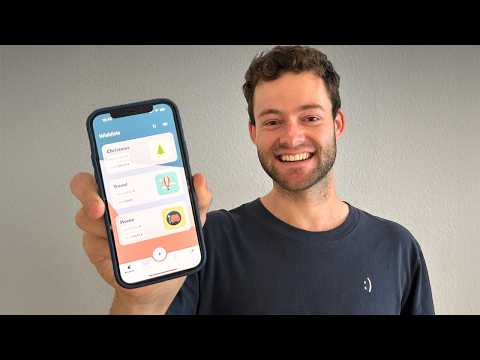
- $150,000 Annual revenue
- ~$6,000 Low-season month
- 1.1 million Registered users
- ~6 years Time to quit job
The claim
That a simple wish list app, built as a side project with no team, funding or paid marketing, became a $150,000-a-year business that let the developer quit their job.
- Annual revenue — $150,000 a year
- Monthly revenue, low season — "Around 6k"
- High season — Values "multiply by five"
- Twelve low-season months — $72,000
- High-season months needed for $150,000 — ~3.25
- Registered users / monthly actives / paying — 1.1 million / 110,000 / ~4,000
- Margin — "99%", server costs only
- Tools on the video's tech-stack card (shown at 10:40) — Flutter FREE, Cursor $20, OpenAI $20, Firebase $80, RevenueCat 1% of monthly revenue; $120 a month plus 1% (our arithmetic)
- App-store commission — Not mentioned in the video
What is this income idea?
A free consumer app for keeping and sharing wish lists, paid for by premium in-app purchases and by affiliate commission when users open product links.
- Chris started building the app in 2019 at university, released it in 2020, rebuilt it as version 2.0 in 2023 and passed 100,000 registered users at that launch. They worked on it before and after a full-time developer job, negotiated a four-day week at the start of 2025, and quit in July 2025.
- The figures given in the interview: revenue "around 6k" a month "now in the low season", 1.1 million registered users, about 4,000 paying customers, 110,000 monthly active users, and "you can multiply these values by five during the high season". The title and the host describe it as $150,000 a year.
- Money comes from two places. A premium membership unlocks features such as custom wish list images, and when a user imports a product from a store such as Amazon, the link is converted to Chris's affiliate link.
- Growth came without paid marketing. Chris asked friends and family for reviews at the start, prompts users for an app-store review just after they add or fulfil a wish, and follows up on every support email when a bug is fixed, only asking for a review after a positive reply.
- The stack named is Flutter, Cursor, ChatGPT, Firebase for backend and analytics, RevenueCat for in-app purchases, a feedback tool, a deep-link service and accounting software. The channel's on-screen tech-stack card prices five of these tools: Flutter free, Cursor $20, OpenAI $20, Firebase $80 and RevenueCat at 1% of monthly revenue. Chris puts the margin at 99%, saying the only real cost is servers.
A small, well-reviewed app with a very seasonal audience, built slowly by a developer in spare hours, earning from upgrades and shopping links.
- Solve your own problem — A nicer wish list
- Ship a first version — 2020
- Rebuild properly — Version 2.0, 2023
- Ask for reviews well — After a good moment
- Earn from upgrades — Premium features
- Earn from links — Affiliate commission
- Ride the season — x5 at peak
The process is described clearly. The monthly revenue across a full year is not.
The six years are the finding; the $150,000 needs the season explained
The lesson underneath the number
- This is one of the more grounded app stories in the genre. Chris gives a timeline year by year, says plainly that it took six years, credits a negotiated four-day week for the final push, and describes growth tactics that cost nothing but care: a review prompt timed to a good moment, and a habit of telling users when their bug is fixed before asking for anything.
- The user figures hang together. About 4,000 paying customers out of 1.1 million registered is about 0.4%, and about 3.6% of 110,000 monthly actives. For a free utility with an optional upgrade and affiliate income on top, those are believable proportions.
- The annual revenue is less clearly supported. The only monthly number is about $6,000 in the low season, and the high season is described as five times that. On those figures the year comes to between about $120,000 and $144,000 for a two- or three-month peak, and $150,000 needs a little over three. That may well be right, but it is the load-bearing input and it is not given.
- The 99% margin is also worth reading carefully. Apple and Google take a commission on in-app purchases, and the video does not mention it. If the revenue figure is what the stores pay out, the margin may be close to what Chris says; if it is what customers pay, it is not. Meanwhile the host twice promotes a programme to launch an app "in just a couple weeks even if you've never coded before", in a video whose subject took six years and a career as a developer.
Nowadays everyone would just vibe coded on a weekend but for me it took 6 years.
Chris, on the timeline
How the side project was run, as described
Six years of evenings, mornings and winters.
The steps are about time and growth; no money figures are given for any of them.
- Start with a real problem — Chris kept their own wish list in a spreadsheet and found no app they liked. "If you have this problem there's at least one more person on this earth with the same problem."
- Set small first goals — The first goal was a stranger downloading the app, not revenue. "Users first monetization later."
- Fit it around a job — An hour from 8:00 on support and analytics, the job from 9 to 6, then the side project from 8 to 11 or later. Winters were the productive season; a four-day week was negotiated in 2025.
- Time the review prompt — The in-app review request appears after a user adds or fulfils a wish, "when the user feels good".
- Close the loop on support — Every feature request and bug report is saved. When it is fixed, the user is told and asked a question; only a positive reply gets a review request.
- Monetise two ways — Premium in-app purchases, and affiliate links when users import products from stores.
The business model
Premium in-app purchases plus affiliate commission on products users import from online stores.
People keeping and sharing wish lists, most heavily around gift-giving seasons.
A nicer, shareable alternative to a notes app or spreadsheet for wish lists.
App-store search and ranking, driven by reviews requested at good moments and by word of mouth; no paid marketing.
- Servers — The only cost Chris names
- App-store commission on in-app purchases — Not mentioned in the video
- Developer tools and subscriptions — Named; not priced
- The developer's own time — Six years part-time; now full-time
The "99% margin" may be measured after store commission, if revenue is counted as payouts, but the video does not say which.
What you would actually need
Money
Built "without a team without funding with zero marketing"; Chris says they "simply didn't have the money" for marketing.
The cash cost is low, which is credible for a developer building alone. The main investment is skill and time: Chris was a trained app developer by the later years.
Costs named or implied
- Server costs, the only cost Chris names
- Apple and Google developer accounts and store commission, not mentioned
- Cursor, ChatGPT, RevenueCat and other tools, not priced
- Accounting software
- Six years of evening and weekend hours
Time
"Nowadays everyone would just vibe coded on a weekend but for me it took 6 years."
This is the most useful number in the video, and it sits beside a sponsor message promising a working app "in just a couple weeks". The six years included learning to code and a full rebuild.
Where six years went
- 2019: start building at university
- 2020: first release
- 2021: first developer job, thanks to the app
- 2023: version 2.0 and 100,000 registered users
- 2025: four-day week, then quitting in July
The part you must pay attention to
$150,000 a year rests on how long the high season lasts, and that is not stated.
The only monthly figure is about $6,000 in the low season. The rest of the year is described as a multiplier: "you can multiply these values by five during the high season".
- A full year at the low-season level — $6,000 x 12
- Extra per high-season month at 5x — $24,000 x months
~3.25 high months
Needed to reach $150,000
A wish list app's peak is plausibly built around Christmas. If the high season is two months at five times, the year comes to about $120,000; three months gives about $144,000. Reaching $150,000 needs a little over three months at the full multiple. The video does not say how long the season is, whether the five times applies to revenue or only to users, or how the $150,000 was measured.
The annual figure is possible on the numbers given, but it depends on an input the video does not supply. A reader should treat $150,000 as the founder's stated total and about $6,000 as the most specific monthly figure.
- LOW SEASON ALL YEAR
- $6,000 x 12 = $72,000
- HIGH SEASON AT 5x ($30,000/mo)
- 2 months: 10x6k + 2x30k = $120,000
- 3 months: 9x6k + 3x30k = $144,000
- For $150,000: 72k + 24k x h
- h = 78 / 24 = ~3.25
- PAYERS
- 4,000 / 1,100,000 = ~0.4%
- 4,000 / 110,000 MAU = ~3.6%
The economics
One monthly figure, one multiplier and one annual total.
- Annual revenue, stated — $150,000
- Monthly revenue, low season — ~$6,000
- High-season multiplier — 5x
- Implied high-season month — ~$30,000
- Year with a 2-month peak — ~$120,000
- Year with a 3-month peak — ~$144,000
- Paying share of registered users — ~0.4%
- Revenue per payer, low-season month — ~$1.50 (includes affiliate)
- Tool prices on the stack card — $120 a month plus 1% of revenue to RevenueCat; about $60 at the $6,000 low-season month (our arithmetic)
- Store commission — Not stated
How many high-season months the annual figure needs
$6,000 x 12 = $72,000; each 5x month adds $24,000; ($150,000 − $72,000) / $24,000 = 3.25
About three and a quarter months at five times the low-season level
IncomeIdeaLab calculation from figures stated in the video
Chris says "these values" multiply by five, which could refer to users rather than revenue. The length of the season and the basis of the $150,000 are not stated.
- Length of the high season
- Split between in-app purchases and affiliate income
- Whether revenue is before or after store commission
- The founder's own bills for servers and tools, compared with the stack card prices
- Churn on premium memberships
- Income in years before the most recent
- About $6,000 across about 4,000 payers is roughly $1.50 each per month, but affiliate income is included in the revenue and not separated, so this is not a price.
- The 100,000 registered users at the 2023 relaunch grew to 1.1 million by 2025, an elevenfold rise in about two years, with no paid marketing stated.
- Starter Story Build, the host's own paid programme, is promoted in the middle and at the end. It is presented as the channel's product, so the connection is clear.
Evidence status
Every substantive claim in the video.
- $150,000 a year — Chris and the host — Needs ~3.25 months at 5x the low-season month.
- Around $6,000 a month in the low season — Chris — The only monthly figure given.
- Values x5 in the high season — Chris — Length of season not stated.
- 1.1 million registered users — Chris — Consistent with 110,000 monthly actives.
- ~4,000 paying customers — Chris — About 0.4% of registered users.
- 99% margin, server costs only — Chris — Store commission is not mentioned. The channel's stack card shows $120 a month plus 1% of revenue, about $180 a month at the $6,000 low-season month, or 3% (our arithmetic).
- Zero marketing, no team, no funding — Chris — Consistent with the growth tactics described.
- About six years from start to quitting — Chris — Year-by-year timeline given.
- Build a working app "in just a couple weeks" — Host, promoting own programme — Not the experience described in this video.
What is actually proven?
The story is consistent. The annual total rests on an unstated season.
- A year-by-year timeline from 2019 to quitting in July 2025.
- Specific, low-cost growth tactics for reviews and retention.
- User, active and payer counts are consistent with each other.
- $150,000 needs about 3.25 months at five times the low-season month.
- Whether revenue is counted before or after store commission.
- The length of the high season.
What the headline doesn’t tell you
A patient side project with a seasonal year.
- $6,000 is the low-season month. — The only monthly figure.
- The peak is 5x. — For an unstated number of months.
- It took about six years. — Alongside study and a job.
- Chris is a professional developer. — Hired because of the app.
- 99% margin. — Store commission not mentioned.
- Affiliate income is included. — Not split out.
- The sponsor promises weeks. — The founder took years.
Should you try it?
A realistic model for patient developers
The tactics are free and transferable. The timeline and the skills are the real requirements.
- Honesty about time — 9 — Six years, part-time, with a year-by-year account.
- Growth tactics — 8 — Specific, low-cost and repeatable.
- Consistency of user figures — 7 — Registered, active and paying counts fit together.
- Support for the annual figure — 4 — Depends on a season length not given.
- Cost disclosure — 3 — Servers only; store commission not mentioned.
- Beginner accessibility — 4 — Needs app-development skill and years of patience.
- The useful lessons here cost nothing. Ask for a review only when a user has just had a good experience; tell users when their bug is fixed and ask a question so they reply; build something you need yourself; and set your first goal as a stranger downloading the app rather than a revenue figure.
- The timeline is the requirement. Chris learned app development, released a first version, got a developer job partly because of it, rebuilt it from scratch, and spent years of evenings and winters on it before quitting. That is a different proposition from the couple of weeks promised in the sponsor message.
- Treat the revenue with care. About $6,000 a month is the solid figure, and a strong gift season multiplies it. If you build something seasonal, plan your costs and your own income around the low months, not the annual total.
Passive or automated?
Automation
Purchases, affiliate links and review prompts run in the app.
Passive potential
Revenue arrives without selling, but support and updates continue.
Once built, an app like this earns while its owner sleeps: users upgrade and open shopping links without any sales effort. But Chris describes a daily routine of support emails, analytics, feature requests and bug fixes, and the review-led growth depends on that support. It is now a full-time job by choice.
- Answering support emails
- Shipping features and fixing bugs
- Following up with users before asking for reviews
- Keeping up with app-store and platform changes
Recommended beginner experiment
Copy the growth habits, not the headline.
- Pick a problem you have yourself. — A spreadsheet you keep is a clue.
- Ship a small first version. — Goal: one stranger downloads it.
- Save every support email. — Reply when it is fixed.
- Prompt for reviews after a win. — Not on first launch.
- Add one way to earn. — Upgrade or affiliate, then both.
- Track monthly revenue all year. — Know your low and high seasons.
- Count store commission in the margin. — Not mentioned in the video.
Our verdict: 6/10
A patient, credible side-project story with a seasonal annual figure the $150,000 depends on a high season whose length is not given, and store commission is not mentioned
Credited for a year-by-year timeline, an open six-year account, specific no-cost growth tactics and user figures that fit together. Marked down because the annual $150,000 depends on a high-season length that is not stated, because the 99% margin does not mention app-store commission and the stack card's tool prices are the channel's figures, and because the host's paid programme promises a working app in weeks in a video about six years of work.
This is a credible story of a small app that grew slowly into a living. Chris gives a clear timeline, says it took six years, explains a four-day-week bridge, and shares growth habits that anyone could use for free. The user numbers fit together. The revenue is the softer part: the one monthly figure is about $6,000 in the low season, with five times that in the high season, and the $150,000 annual total needs a little over three months at that peak, which the video does not confirm. The 99% margin leaves out app-store commission, which may or may not already be deducted. The host's promotion of a programme to launch an app in a couple of weeks sits awkwardly beside a founder who took six years. The lesson worth keeping is patience, not the annual figure.
- Annual revenue — $150,000
- Low-season month — ~$6,000
- High-season months needed — ~3.25 at 5x
- Registered / paying — 1.1M / ~4,000
- Store commission — Not mentioned
- Time to replace the job — ~6 years
- Beginner suitability — For patient developers
Sources
- This app replaced my 9-5 (USD 150K/year) — Starter Story — YouTube video, 2025-09-24
- Apple — App Store Small Business Program — Platform documentation on App Store commission rates