SaaS / Mobile App · Claim Review
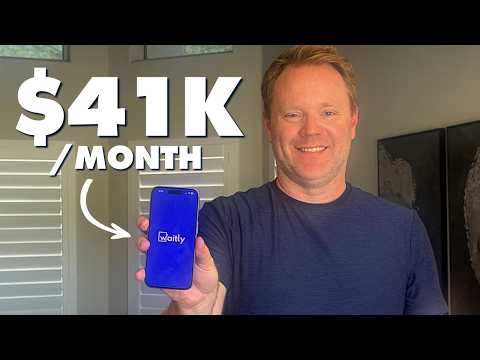
“My app makes USD 41K/month”
What we found: Weightley's $41K a Month Is This Year's Pace; the Cost List Leaves Out Apple's Commission
Seven years of revenue are given and the title matches the stated pace of over $500,000 this year. Eleven costs are listed, about $4,000 a month in fixed tools, but the App Store's cut of in-app purchases is not mentioned.
- >$500k This year, stated pace
- $445k Last full year
- 700 Paying customers
- Not stated Apple commission
The claim
That a solo founder built a waitlist and reservations app as a side project that now makes over $40,000 a month, competing with much larger companies on price, simplicity and support.
- Revenue by year — Y1 $0, Y2 $14,500, Y3 ~$116,000, Y4 $186,000, Y5 $307,000, Y6 $354,000, Y7 $445,000
- This year — "On pace to make over half a million"
- Monthly equivalent of $500,000 — $41,667, matching the title
- Monthly average in year seven — $445,000 / 12 = $37,083
- Total collected, years 2 to 7 — ~$1.42 million
- Price — Flat $100 a month "to unlock all the features"
- Paying customers — 700, from over 15,000 businesses that tried it
- Customer acquisition cost — ~$130
- Lifetime value — $750 to $1,000
- Listed fixed tools — ~$4,032 a month (our sum)
- Apple's commission on in-app purchases — Not mentioned
What is this income idea?
A narrow subscription app for small restaurants and other businesses with queues: a digital waitlist that texts customers when their table is ready.
- The founder was a software engineer who moved into management at a photo-products company and missed building things. In 2017, kept waiting at a brunch spot by a text link that demanded a Yelp account, they decided a waitlist link should simply open a page. Their spouse suggested building it.
- The app took a long time to launch. There was a working prototype at six months, an App Store launch at around a year and a half with ten downloads in the first week, and in-app purchases only about two years in. Year one made nothing; year two made $14,500.
- Growth then came quickly: about $116,000 in year three, $186,000 in year four, $307,000 in year five, $354,000 in year six and $445,000 in year seven. This year is "on pace to make over half a million", which is where the title's $41K a month comes from.
- A host staff member adds a guest with a name, party size, estimated wait and phone number; the guest gets a text with a link to see their place in line, and a second text when the table is ready. No app download is needed for the guest.
- The founder competes on price, a flat $100 a month against rivals charging hundreds plus per-cover fees; on simplicity; and on support, with phone calls answered immediately. During COVID, retail chains used it to queue shoppers outside, putting it into over 700 locations and, the founder says, multiplying the business tenfold that year.
- Growth is driven mainly by Apple Search Ads. The founder gives a customer acquisition cost of about $130 against a lifetime value of $750 to $1,000, then nurtures trials with emails, quick-start videos and onboarding calls.
A $100-a-month waitlist app for small restaurants, grown by one developer over seven years to a stated pace of about $41,700 a month.
- Spot an annoying wait — Brunch, 2017
- Build on the side — 18 months to launch
- Add in-app purchases — Year two
- Buy search ads — ~$130 per customer
- Nurture the trial — Emails, Zoom onboarding
- Keep them on $100/mo — 700 paying now
- Answer every call — Support as a moat
A slow build followed by steady compounding, with the revenue history given year by year.
The revenue history is the evidence; the margin depends on a split not given
The lesson underneath the number
- This interview is more complete than most. The founder gives revenue for every year from launch, says the first year made nothing, names acquisition cost and lifetime value, and prices nearly every tool the business pays for. The title figure is not a peak month: it is the stated pace for the year divided by twelve, and it checks out.
- The timeline is the most useful number for anyone considering a similar app. It took about two years to charge anyone and three to reach six figures, and the current pace arrived in year eight. The COVID retail contract that put the app into over 700 locations is credited with a tenfold year, which the founder describes as unexpected; "expect the unexpected" is part of their advice.
- Two figures need care. Apple Search Ads are called a main driver, yet the stated monthly spend of about $500 at about $130 per customer buys roughly four new customers a month (our calculation). Either other channels matter more than stated, or spend varies a lot through the year, which the founder does say it does. And 700 customers at a flat $100 would be $70,000 a month, well above the stated pace, so the real average price is lower than the headline price.
- The biggest open question is the App Store. The cost list includes the subscription platform's 1% of iOS revenue and the card processor's 3% of web revenue, but not Apple's own commission on in-app purchases. Depending on how much revenue goes through iOS, that is somewhere between nothing and the largest cost in the business.
You don't need a new idea there's plenty of ideas out there problems that have been solved that you could improve upon.
The founder, on finding an idea
How the business was built, as the founder describes it
A side project that took two years to charge anyone.
No figure is given for the founder's own pay or for profit.
- Start from a problem you had — A waitlist link that required an app download and an account, by which time the table was ready. The product is the opposite: a link that opens a page.
- Build slowly while employed — A working prototype in six months, launch at about eighteen months, in-app purchases at about two years. Ten downloads in the first week.
- Buy installs where intent is high — Apple Search Ads on selected keywords are "one of the main drivers". The stated acquisition cost is about $130 per customer.
- Convert the trial by hand — Tip emails, quick-start videos, onboarding and staff training over Zoom, and promotions near the end of each trial.
- Undercut on price and keep it simple — A flat $100 a month for all features, against larger rivals' monthly fees plus per-cover charges. Doing only waitlists and reservations let it serve retail queues too.
- Answer the phone — Support calls are answered immediately, which the founder says surprises customers and is one of three ways the app competes.
The business model
Monthly subscriptions, a flat $100 for all features as stated, sold through the App Store and the web.
700 paying businesses in the US and Canada, mainly small restaurants, plus retail and other businesses with queues.
A simple waitlist and reservation tool with no guest app download, cheaper than larger rivals and without per-cover fees.
Apple Search Ads on chosen keywords, followed by trial emails, videos, Zoom onboarding and end-of-trial promotions.
- Business text messages — ~$2,500 a month, the largest listed cost
- Firebase hosting, auth and database — ~$700 a month
- Apple Search Ads — ~$500 a month, varies by season
- Claude Code — ~$200 a month
- Other tools — Survey, project management, support tickets, ChatGPT, booking: ~$132 a month
- Subscription platform and card fees — 1% of iOS and 3% of web revenue
- App Store commission — Not mentioned
- Founder's own salary — Not stated
Few interviews in this library price as many costs as this one. The cost the list leaves out, Apple's commission, could be larger than all the listed tools combined if most revenue comes through iOS.
What you would actually need
Money
About $4,000 a month in named tools and services, plus 1% of iOS revenue to the subscription platform and 3% of web revenue to the card processor, and about $500 a month on search ads.
Those figures describe the business at today's size. A newcomer would start far smaller. The cost not listed is Apple's commission on in-app purchases; under the App Store small business programme it is 15% for developers earning under $1 million a year, which on iOS revenue alone could be the largest single cost.
Running costs, as stated
- Firebase: ~$700 a month
- Business text messages: ~$2,500 a month
- Apple Search Ads: ~$500 a month
- Claude Code: ~$200 a month
- Survey, project, support, email and booking tools: ~$132 a month
- Subscription platform: 1% of iOS revenue
- Card processing: 3% of web revenue
- Apple's commission: not mentioned
Time
Built as a side project. Two years before charging, three years before it "really took off".
The timeline is stated candidly and is the most useful figure for a beginner: seven years to reach the current pace, with near-zero revenue for the first two. Running it now includes immediate phone support and Zoom onboarding, which are not hands-off.
Where the years went
- 6 months to a working prototype
- ~18 months to App Store launch
- ~2 years to in-app purchases
- Year 3: ~$116,000
- Year 7: $445,000
- Ongoing: phone support and onboarding calls
The part you must pay attention to
Apple's cut of in-app purchases is not in the cost list.
The founder lists eleven costs, including 1% to the subscription platform for iOS payments and 3% to the card processor for web payments. The App Store commission on those same iOS payments is not mentioned.
- Monthly revenue at the stated pace — $41,667
- Listed fixed tools and ads — $4,032
- Platform, card and App Store fees — 1% to 15%+
~$31,000 to ~$36,400
A month before owner pay and tax, depending on the iOS share
How much revenue comes through the App Store is not stated, and that decides the margin. If all of it were web payments, fees would be 3%, about $1,250 a month. If all of it were iOS in-app purchases, the 1% platform fee plus a 15% App Store commission would be about $6,670 a month. The true figure is somewhere between, and the video gives no split.
A second figure does not reconcile. The founder says the app costs a flat $100 a month and has 700 paying customers. At that price, 700 customers would bring in $70,000 a month, not $41,700. The stated revenue implies an average of about $60 per customer per month (our calculation), so there are presumably cheaper plans, discounts or annual pricing the video does not describe. That same $60 average, set against a lifetime value of $750 to $1,000, implies customers stay about 12 to 17 months on average, which is shorter than the seven-year story suggests.
- THE TITLE FIGURE
- "Over half a million" / 12
- = $41,667 /mo
- Year 7: $445,000 / 12
- = $37,083 /mo
- PRICE x CUSTOMERS
- 700 x $100 = $70,000 /mo
- Stated pace $41,667 /mo
- Implied average ~$60 /customer
- LISTED FIXED COSTS ~$4,032 /mo
- FEES (OUR RANGE)
- All web, 3% ~$1,250
- All iOS, 1% + 15% ~$6,670
- LEFT BEFORE OWNER PAY AND TAX
- ~$31,000 to ~$36,400 /mo
The economics
Revenue given year by year, most costs priced, one large fee absent.
- Year seven revenue — $445,000
- This year, stated pace — Over $500,000
- Paying customers — 700
- Stated price — $100 a month
- Average revenue per customer — ~$60 a month
- Acquisition cost / lifetime value — ~$130 / $750–$1,000
- Listed fixed costs — ~$4,032 a month
- App Store commission, owner pay, profit — Not stated
Monthly margin before owner pay and tax
$41,667 − $4,032 − fees ($1,250 if all web; $6,670 if all iOS at 1% + 15%)
About $31,000 to $36,400 a month, depending on the iOS share
IncomeIdeaLab calculation from the figures stated in the video; the 15% App Store rate is from Apple's small business programme
The split between iOS and web revenue is not stated. The App Store rate applies to developers under $1 million a year who are enrolled in the programme; otherwise the standard rate is 30%, which would lower the result further. Tax and the founder's own pay are not included.
- How much revenue comes through the App Store versus the web
- Apple's commission on in-app purchases
- The real price mix behind the $100 flat fee
- Monthly churn
- The founder's own salary and profit
- Yearly growth: year four was 1.6 times year three, year five 1.65 times year four, year six 1.15 times, year seven 1.26 times, and this year's pace about 1.12 times (our calculations).
- Years two to seven add up to about $1.42 million collected in total (our sum).
- Lifetime value of $750 to $1,000 against an acquisition cost of $130 is a ratio of about 5.8 to 7.7.
- At the implied ~$60 average, a lifetime value of $750 to $1,000 means customers stay about 12 to 17 months on average (our calculation).
- At about $500 a month and $130 per customer, search ads buy about four customers a month (our calculation). The founder says spend fluctuates through the year.
- Of more than 15,000 businesses that tried the app, 700 are paying now, about 4.7%. This counts all trials since launch against current customers, so it is not a conversion rate.
- The video carries a sponsor read for a company-formation and bookkeeping service, and the host closes by promoting the channel's own paid app-building programme. Both are stated as such in the video.
Evidence status
Every substantive claim in the video.
- Makes over $40,000 a month — Founder — Matches the stated yearly pace divided by twelve.
- Year-by-year revenue from $0 to $445,000 — Founder — A full history; could not be checked from the video.
- On pace for over $500,000 this year — Founder — About $41,667 a month; the source of the title figure.
- Flat $100 a month for all features — Founder — At 700 customers would be $70,000 a month; the stated pace implies about $60 average.
- 700 paying customers; 15,000+ tried it — Founder — About 4.7% of all trials since launch are paying now.
- Acquisition cost ~$130, lifetime value $750–$1,000 — Founder — A healthy ratio; the implied customer lifetime is 12 to 17 months.
- Apple Search Ads are a main driver — Founder — At the stated ~$500 a month, about four customers a month by our calculation.
- COVID retail chains "10xed our business that year" — Founder — Consistent with the jump from $14,500 to ~$116,000.
- 59 million parties waitlisted — Founder — A usage figure; could not be checked from the video.
- Eleven itemised running costs — Founder — About $4,032 a month fixed, plus percentage fees.
- Apple commission on in-app purchases — Not mentioned — Absent from the cost list.
What is actually proven?
The figures are detailed and mostly consistent; the margin is the gap.
- The title's $41K a month matches the stated yearly pace.
- Revenue is given for every year since launch, including a year of nothing.
- Most running costs are named with monthly prices.
- Price times customers does not match the stated revenue.
- Apple's commission, the iOS share of revenue, churn and profit.
What the headline doesn’t tell you
A real, slow-built business, with one large fee left out of the list.
- $41K is this year's pace. — Year seven averaged ~$37K.
- Apple's cut is not listed. — Up to 15% of iOS revenue.
- 700 x $100 is $70K. — Not $41.7K.
- Two years before charging. — Year one made $0.
- COVID drove the jump. — A tenfold year, by the founder's account.
- Ads buy ~4 customers a month. — At the stated $500.
- Texts cost $2,500 a month. — The largest listed cost.
- Owner pay is not stated. — Nor is profit.
Should you try it?
A realistic model for a patient developer, not a quick one
The idea framework is sound: improve on a solved problem for an underserved niche. Plan for years, not months.
- Revenue disclosure — 9 — Every year since launch, including a $0 year.
- Cost disclosure — 7 — Eleven costs priced; Apple's commission missing.
- Consistency of figures — 6 — Title checks out; price times customers does not.
- Honesty about the timeline — 9 — Ten downloads in week one; two years to charge.
- Unit economics given — 7 — Acquisition cost and lifetime value both stated.
- Profit disclosure — 2 — No profit or owner pay figure.
- Beginner accessibility — 4 — Requires real engineering skill and years of patience.
- If you can build software, this is one of the more realistic templates in this library. The founder picked a problem they had personally, served a niche the large players underserve, charged a simple flat fee and competed on support. None of that requires a new idea.
- Be realistic about the timeline. It took about two years to charge anyone and three to reach six figures. The founder had a full-time engineering career while building it, and a pandemic contract they did not plan for produced the biggest jump.
- Before you price your own app, include the App Store. If you sell subscriptions inside an iOS app, Apple takes a commission, 15% under the small business programme, before the subscription platform's fee. The video's cost list does not include it.
- Watch the costs that scale with use. Here the largest listed cost is text messages, about $2,500 a month, because every guest gets at least two texts. Any product built on per-message or per-request services needs those costs in its price from the start.
Passive or automated?
Automation
The product, billing and texts run themselves; support and onboarding do not.
Passive potential
Recurring revenue from 700 customers, with live support as a selling point.
A subscription app with 700 paying businesses is closer to passive than most models reviewed here: the software sends the texts and bills the customers. But the founder lists immediate phone support as one of the three reasons customers choose the app, offers Zoom onboarding and staff training, runs search ads and trial emails, and is still building. A solo founder answering every support call is not passive, even if the revenue recurs.
- Answering support calls immediately
- Zoom onboarding and staff training
- Managing search ads and trial promotions
- Maintaining iOS, web and back-end code
- Building new features against larger rivals
Recommended beginner experiment
Copy the approach, at the founder's own pace.
- Pick a problem you hit yourself. — As with the brunch waitlist.
- Find an underserved niche. — Small venues the giants overcharge.
- Ship a minimal version quickly. — The founder now suggests weeks, with AI.
- Price with every fee included. — App Store, payments, messaging.
- Measure acquisition cost early. — Against what a customer is worth.
- Onboard the first customers by hand. — Calls, emails, videos.
- Track churn monthly. — Not stated in the video.
- Plan for two years before real revenue. — The founder's own timeline.
Our verdict: 7/10
A well-documented slow build, with the App Store fee missing from the costs the title matches the stated pace; price times customers does not match revenue
Credited for giving revenue for every year since launch, including a year of nothing; for a title figure that matches the stated yearly pace; for naming acquisition cost and lifetime value; for pricing eleven running costs; and for a candid timeline of ten first-week downloads and two years before charging. Marked down because Apple's commission on in-app purchases is not in the cost list, because 700 customers at the stated $100 flat fee would be well above the stated revenue, and because profit and owner pay are not given.
This is a better-documented interview than its title suggests. The $41K a month is not a best month: it is the founder's stated pace of over half a million dollars this year divided by twelve, and the year-by-year history behind it, from nothing in year one to $445,000 in year seven, is given in full. The founder names acquisition cost and lifetime value, prices nearly every tool the business uses, and is candid that it took two years to charge anyone and a pandemic contract to produce the biggest jump. Two gaps remain. The cost list includes the subscription platform's 1% of iOS revenue and the card processor's 3% of web revenue, but not Apple's commission on in-app purchases, which at 15% could be the largest single cost if most customers pay through iOS. And the stated flat price of $100 a month for 700 customers would be $70,000 a month, not $41,700, so the real average price is about $60 and the plan mix is not described. On the figures given, the business leaves roughly $31,000 to $36,400 a month before the founder's pay and tax, a strong result for one person. The video gives the inputs for most of that calculation, which is more than most do.
- This year, stated pace — >$500,000 (~$41,667/mo)
- Year seven — $445,000
- Paying customers — 700
- Implied average price — ~$60/mo vs $100 stated
- Listed fixed costs — ~$4,032/mo
- Apple commission — Not stated
- Margin before owner pay — ~$31,000 to ~$36,400/mo
- Beginner suitability — Good template, long timeline
Sources
- My app makes USD 41K/month — Starter Story — YouTube video, 2025-09-13
- Apple — App Store Small Business Program — Platform documentation on App Store commission rates