Video Software · Claim Review
“I Got Rejected From YC, Then Built a $200M Startup”
What we found: The Number in the Title Is Never Said
A genuinely good founder story about rejection and brute-force SEO — carrying a $200M figure that appears nowhere in fifteen minutes, and measures something different from everything that does.
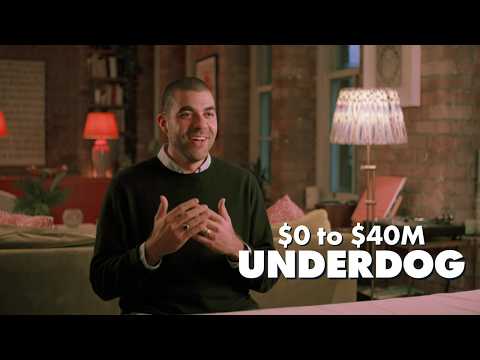
- 0 times "200" in video
- $40m Highest figure spoken
- ~500 Landing pages built
- Never mentioned Funding, profit, headcount
The claim
That he was rejected from Y Combinator and then built a $200 million startup.
- Title — "$200M Startup"
- Occurrences of "200" in the video — None
- Highest figure spoken — "10, 20, 30, 40 million in revenue"
- Revenue path given — $1m in year one, $2m four months later, $3m two months after, $6m six months on
- Dates on the later figures — None
- Valuation — Never mentioned
- Funding raised — Never mentioned; narrator says "no funding"
- Profit, headcount, burn — Never mentioned
- YC outcome — Rejected, implemented the feedback, rejected again
- Growth method — ~500 search terms, a landing page each, a YouTube video each
- Time before traction — Two years of failed projects before the company worked
- Sponsor and funnel — A paid analytics sponsor, plus a "ship it in 12 days" bootcamp
What is this income idea?
Build for a category you understand, then win every small search query in it, one landing page at a time.
- Two friends met through an online hackathon, worked together on failed projects for two or three years, and eventually settled on video editing because both were interested in the space. The early advice he gives about that period is unusually modest: the first job is simply to find out whether you can ship anything at all — buy a domain, build a back end, put up a landing page, complete the cycle once.
- The hardship section is real and specifically told. Negotiating a $100-a-month software bill down to $20 because they could not afford it. Working out of a VC's office and being thrown out of it. Both interns quitting. No money in their bank accounts and not being able to afford the train.
- They reached 30,000 monthly users with no revenue, saved money from full-time jobs, and applied to Y Combinator. They made the interview round. Then the rejection, and the line in it that mattered: "we don't understand why you haven't charged your users."
- What they did next is the best part of the video. They implemented charging over a weekend, got twenty paying users, and emailed YC at nine on Monday morning asking to be reconsidered. "You know what happened? We got another rejection email."
- Back in the UK he focused on one thing: make traffic higher than yesterday and revenue higher than yesterday. The method was programmatic SEO. "People search for things like trim video, crop video. There's actually about 500 of these search terms. So I built a landing page for every single one of those things. And then I'd record YouTube videos for every single landing page."
- Then the numbers: a million in the first year, two million four months later, three million two months after that, six million six months on — and a growth phase "going from 10, 20, 30, 40 million in revenue." Two hundred million is not among them.
A genuinely good story about persistence and one very specific marketing method, sold under a number nobody in the video ever says.
- Fail together for two years — Learn to ship anything
- Pick a space you know — Video editing
- Nickel-and-dime everything — $100 bill down to $20
- Reach 30,000 users, unpaid — Still no revenue
- Get rejected by YC — "Why haven’t you charged?"
- Charge over a weekend — 20 paying users
- Get rejected again — Same week
- 500 pages, 500 videos — "Absolutely brute force"
Two unpaid years, one piece of feedback acted on, and a mechanical growth engine.
The rejection contained the advice. The title contains the number.
The lesson underneath the number
- The most valuable ninety seconds here are about a rejection email, and the value is not the emotional beat that the framing reaches for. Y Combinator turned them down and wrote a line explaining why: they did not understand why the company had 30,000 users and no one was being charged. That was not a consolation, it was a diagnosis. They built a paywall over a weekend, found twenty people who would pay, and emailed back asking to be reconsidered — and were rejected a second time. His own summary is the right one: before, a company making no revenue; after, a company making some. The accelerator was never what they needed from the application.
- The second useful thing is the growth method, and it is genuinely replicable. People do not search for video editing software; they search for the specific task in front of them. He counted roughly five hundred such queries in his category, built a dedicated landing page for each, and filmed a YouTube video to sit alongside every page. He mentions, without self-pity, that he is dyslexic and wrote the pages anyway, badly worded and misspelled. That is what brute force actually looks like, and it is more instructive than any framework.
- Now the title. Neither is valuation, raise, series, profit, employee or burn. The only time "funding" is said is in the narrator's opening description of a founder who had none. The largest number anyone speaks aloud is a growth phase running from ten to forty million in revenue — real, substantial, and a completely different measurement from the one on the thumbnail. A valuation is a price agreed in a negotiation about the future; revenue is money that arrived. Conflating them is how a story about surviving on no money becomes a headline about a nine-figure company, without anyone having to explain who set that figure or when.
- What follows from that is a gap where the business should be. This is a company described as passing forty million in revenue, and the video says nothing about how many people work there, whether it makes money, what it costs to run, or who owns it. As a founder story that is a legitimate choice — the film is about persistence, and it earns its emotional beats honestly. As the basis for a viewer's belief about what is achievable, it leaves almost everything out, and then puts a number on the front that the film itself never says.
We don’t understand why you haven’t charged your users.
The rejection email, and the most valuable sentence in the video
What he actually describes
A real method and a real story — with the business facts absent.
All figures are spoken statements; no dashboard or document appears. We searched the complete video for 200, valuation, raise, series, profit, employee and burn: none appears. "Funding" occurs once, in the narrator’s opening phrase "no funding".
- Finish the loop once before chasing an idea — "The first thing you need to work out is actually are we capable of putting something together… buy a domain, make a back end, make a landing page." Unfashionable advice, and correct for anyone who has never shipped.
- Treat every expense as negotiable — Emailing a software vendor to say they could not afford $100 a month and being offered $20. "We would nickel and dime every single purchase to keep operating expenses as low as possible."
- Act on the rejection, not the rejector — The YC email said they did not understand why users were not being charged. That single line produced a paywall over a weekend and twenty paying customers — which turned out to be the actual value of applying.
- Reframe the failure honestly — His own summary of the second rejection: "at that point there was pre-Combinator, which is a company that makes no revenue, and now there's post, a company that makes some revenue." The accelerator said no twice and the business was better for having asked.
- Reduce growth to two daily numbers — "The only thing I had to do was make traffic higher than the day or the week before and make revenue higher than the day or the week before." Two metrics, checked daily, no strategy deck.
- Build a page for every query in the category — Around 500 search terms — trim video, crop video, and so on — each with its own landing page, each with its own YouTube video. He notes he is dyslexic and wrote them anyway, misspellings included. This is the mechanism, stated plainly.
- Give the revenue arc — $1m in year one, $2m four months later, $3m two months after, $6m six months on, then "10, 20, 30, 40 million." The first four are dated relative to each other; the last four are not dated at all.
- And what is never said — No valuation. No funding raised. No profit. No headcount. No burn rate. And no mention, anywhere, of two hundred million.
The business model
Subscription video editing software, described as reaching a growth phase of "10, 20, 30, 40 million in revenue."
People searching for small, specific video tasks — trimming, cropping and several hundred similar queries.
The simplest possible tool for the exact job the user just typed into a search box.
Programmatic SEO across roughly 500 query-specific landing pages, each supported by its own video.
- Early software bills — Negotiated down aggressively. The only costs described
- Founders’ own savings — Invested "multiple times over"
- Two hired engineers — Mentioned in passing. Never costed
- Everything after the early period — Never mentioned
- Profit — Never mentioned
The video is a founder narrative rather than a business teardown, and it contains no cost, headcount or profit figure at any point.
What you would actually need
Money
Their own savings from full-time jobs, spent repeatedly. "We've invested all our money in it multiple times over." At the low point there was nothing left in either account.
Honest and vivid about the early years, and silent about everything after. A company described as passing $40 million of revenue has costs, staff and almost certainly investors, and none of the three is mentioned once.
Costed, and not
- Costed: a $100 software bill negotiated to $20
- Costed: personal savings, invested "multiple times over"
- Not costed: any expense after the early period
- Not mentioned: funding raised, or any valuation
- Not mentioned: headcount at any stage
- Not mentioned: profit, or whether there is any
Time
Two or three years of failed projects before the company, two more years before applying to YC with 30,000 users and no revenue, then a fast growth phase.
The timeline he gives for the early years is the most useful thing in the video, and the least compatible with how it is sold. The closing pitch is for a bootcamp where you "ship it in 12 days using only AI tools," directly after a story whose first paid customer took years to arrive.
The arc as told
- Met a co-founder through an online hackathon
- 2–3 years of projects that failed
- Both working full-time jobs throughout
- 30,000 monthly users, none paying
- Rejected by YC, then rejected again days later
- First 20 paying users after the YC feedback
- $1m in year one; $6m about twelve months later
- Then "10, 20, 30, 40 million" — undated
The part you must pay attention to
We searched for "200". It is not in the video.
The largest figure anyone speaks is "10, 20, 30, 40 million in revenue."
- Characters of video — 14,986
- Mentions of 200 — 0
- Highest figure spoken — $40m
A title with no source
And a different unit of measurement
Two hundred million is, in this context, almost certainly a valuation — the price at which someone bought a share of the company — and a valuation is not revenue, not profit, and not money any founder has received. It is a number set in a negotiation, usually with investors, usually about the future. Everything the video actually discusses is revenue: one million, two, three, six, and then a growth phase he describes as ten, twenty, thirty, forty. Those are real and they are large. They are also a different measurement from the one on the thumbnail, and the video never bridges the two because it never mentions the second one at all. The tension runs deeper than units. The narrator opens by describing a founder who turned "no money, no validation, no funding" into success, and the emotional core of the story is investors and an accelerator all saying no. A nine-figure valuation is ordinarily established by investors saying yes. The video cannot have it both ways, and it resolves the problem by simply never raising it: funding, valuation, raise, series and profit appear nowhere in fifteen minutes.
What the video does have is better than its title. The YC sequence is the most useful rejection story we have reviewed, because the lesson is not resilience — it is that the feedback was correct. The rejection email asked why they had not charged their users. They built a paywall over a weekend, found twenty people willing to pay, emailed back on Monday, and were rejected a second time. His own framing is the honest one: before the application there was a company making no revenue, and after it there was a company making some. The accelerator was never the prize. And the growth method is properly teachable — identify every small query in your category, roughly five hundred of them in his case, build a dedicated page for each, and film a video for each. He calls it absolutely brute force and he is right; it is unglamorous, mechanical work that anyone can copy. The video then closes by advertising a programme to build and ship a product in twelve days using AI, which is an odd note after a story in which the first paying customer took several years and a rejection letter to arrive.
- Video SEARCH
- Characters 14,986
- "200" 0 hits
- "valuation" 0 hits
- "raise" 0 hits
- "series" 0 hits
- "profit" 0 hits
- "employee" 0 hits
- "funding" 1 hit - narrator saying
- "no funding"
- WHAT IS ACTUALLY SAID
- Year 1 $1,000,000
- +4 months $2,000,000
- +2 months $3,000,000
- +6 months $6,000,000
- then "10, 20, 30, 40 million"
- ...no dates given
- UNITS
- Title: valuation (implied)
- Video: revenue
- Not the same measurement
- THE GROWTH ENGINE
- ~500 search terms
- 1 landing page each
- 1 YouTube video each
The economics
A revenue arc, and nothing else.
- Year one revenue — $1,000,000
- Four months later — $2,000,000
- Two months after that — $3,000,000
- Six months on — $6,000,000
- Growth phase — "10, 20, 30, 40 million" — undated
- Monthly users at YC application — 30,000, none paying
- First paying users — 20, after the YC feedback
- Landing pages — ~500, one per search term
- Title’s figure — $200,000,000 — never spoken
- Valuation, funding, profit, headcount — Never mentioned
Matching the title to the video
The headline figure has no source inside the video, and measures something the video never discusses
IncomeIdeaLab video analysis
This is not a claim that the company is not worth $200m. It is an observation that the video offers nothing to support, date or explain the figure, and that revenue and valuation are different measures.
- Any valuation, and who set it
- Whether outside funding was ever raised
- Profit, or whether the company is profitable
- Headcount at any point
- What the growth years cost to fund
- When the "10, 20, 30, 40 million" phase occurred
- Ownership after the growth phase
- The first four revenue figures are dated relative to one another; the four largest are given as a list with no timeframe attached.
- The narrator’s framing — "no money, no validation, no funding" — sits awkwardly beside a nine-figure valuation in the title, since such valuations are ordinarily established by investors.
- Two engineers were hired early using money saved from full-time jobs. No later hiring is described.
- The video carries a paid analytics sponsorship and closes by promoting a bootcamp that promises a shipped product in twelve days using AI tools.
- The host discloses that he was himself rejected from Y Combinator three times, which is why he made the film.
Evidence status
Every substantive claim in the video.
- "$200M Startup" — Title only — Appears nowhere in the video, and measures a different thing from revenue.
- "10, 20, 30, 40 million in revenue" — Founder — The largest figure actually spoken. Undated.
- $1m year one, $6m about a year later — Founder — Specific and internally consistent.
- 30,000 monthly users with no revenue — Founder — The state at the time of the YC application.
- Rejected by YC twice in one week — Founder — The best-told sequence in the video.
- 20 paying users after implementing the feedback — Founder — The first revenue the company ever had.
- ~500 landing pages and matching videos — Founder — The growth engine, described operably.
- Negotiated a $100 bill to $20 — Founder — Small, vivid, and the only cost detail given.
- Funding, valuation, profit, headcount — Nobody — None of these words appears.
What is actually proven?
A method and a narrative; no business figures beyond revenue.
- The figure in the title is never spoken in the video.
- A revenue arc from $1m to a phase described as $10–40m.
- A YC rejection whose feedback produced the company’s first revenue.
- Around 500 query-specific landing pages, each with its own video.
- A two-metric daily operating discipline: traffic up, revenue up.
- Valuation, funding, profit, headcount and ownership.
What the headline doesn’t tell you
The number is only on the thumbnail.
- Valuation isn’t revenue. — Different measurements entirely.
- The top spoken figure is $40m. — And it has no date.
- Funding is never discussed. — The narrator says "no funding".
- No profit figure exists. — At any revenue level.
- No headcount, ever. — Two engineers, then silence.
- Years, not months. — Before the first paying user.
- The outro sells 12 days. — After a multi-year story.
Should you try it?
Watch it for the rejection and the 500 pages
Two genuinely useful lessons sit inside a film that tells you nothing about the business and advertises a number it never mentions.
- Quality of the YC story — 9 — The feedback was the value, and he says so.
- Teachability of the growth method — 9 — 500 queries, 500 pages, 500 videos. Copyable today.
- Honesty about the hard years — 8 — Empty accounts, evicted office, interns quitting.
- Support for the headline figure — 0 — It is not in the video.
- Clarity on funding and ownership — 0 — Never raised, despite a nine-figure title.
- Cost and profit disclosure — 0 — Nothing beyond a $20 software bill.
- Dating of the revenue claims — 4 — The first four are dated; the largest four are not.
- Consistency of the closing pitch — 2 — "Ship in 12 days" after a multi-year story.
- Two parts of this are worth your time and both are specific. The first is what the Y Combinator rejection actually contained. They were turned down with a note saying the reviewers did not understand why a product with thirty thousand monthly users was charging nobody. That is a diagnosis, not a commiseration, and they treated it as one — building a paywall over a weekend, finding twenty people who would pay, and emailing back on Monday. They were rejected again. His own account is the honest one: the application converted a company with no revenue into a company with some, which was worth more than the acceptance would have been.
- The second is the growth engine, and it is the kind of advice you can act on this week. People do not search for the category, they search for the task — trim a video, crop a video — and he counted around five hundred of those queries, built a page for each, and filmed a video for each. He is dyslexic, wrote them badly, and shipped them anyway. That is what "brute force" means in practice, and it is far more useful than the montage of hardship that surrounds it.
- Now set the title aside, because it is not supported by anything in the film. Neither does valuation, raise, series, profit, employee or burn. The only mention of funding is the narrator saying there was none. The largest figure spoken is a growth phase running from ten to forty million in revenue, with no dates — substantial, real, and a different unit from the one on the thumbnail. A valuation is a price negotiated about the future, usually with investors; revenue is money that has already arrived.
- And note what that leaves out. A company said to be past forty million in revenue is described for fifteen minutes with no headcount, no costs, no profit figure, and no account of whether anyone ever invested. As a story about persistence it works and it is honestly told. As information about what you could build, it gives you a marketing method, a good lesson about acting on criticism, and a number with nothing behind it.
Passive or automated?
Automation
Self-serve software with search-driven acquisition, but the pages and videos were made by hand.
Passive potential
Five hundred landing pages and five hundred videos is the opposite of passive, and he says so.
Search traffic compounds once it exists, which is the closest thing to leverage in this story. Producing it was not remotely passive: roughly five hundred landing pages written by one dyslexic founder, each with an accompanying video he recorded himself, on top of two or three years of failed projects and two more years before anyone paid. He also describes being "paranoid all the time about the company" at the end. Nothing in the account suggests a business that runs without its founders, and the video offers no information about what running it now involves.
- Producing and maintaining hundreds of query-specific pages
- Defending search positions in a competitive software category
- Product development in video editing
- Everything the video does not describe about a company at this scale
Recommended beginner experiment
Take the two things that transfer.
- Ship one complete thing first. — Domain, back end, landing page. Prove you can.
- Charge somebody early. — The rejection they got was right.
- Read criticism as instruction. — They implemented it in a weekend.
- List every query in your category. — He found about 500.
- Build a page for each one. — Badly written is fine. He says so.
- Film a video for every page. — That was the multiplier.
- Track two numbers daily. — Traffic up, revenue up.
- Distinguish valuation from revenue. — Especially in anything you read.
Our verdict: 5/10
A good story with an absent number
Credited for the best Y Combinator rejection sequence we have reviewed — not for the resilience but because the rejection email contained a correct diagnosis, that a product with 30,000 users was charging nobody, which they acted on over a weekend and which produced the company’s first twenty paying customers; for a growth method described in genuinely operable detail, roughly 500 category queries each given a dedicated landing page and an accompanying video; for a two-metric daily discipline that needs no explanation; and for an unvarnished account of the hard years, including empty bank accounts, an eviction from a borrowed office and both interns resigning.
As a piece of storytelling this is well made and it earns most of what it asks for. The hard years are told without varnish — a hundred-dollar software bill negotiated down to twenty because they could not afford it, a VC's office they were working out of and then thrown out of, both interns quitting, and two bank accounts with nothing in them. And the Y Combinator sequence is the best version of that story we have seen, because the point is not that they were rejected and persisted. The point is that the rejection was right. The email asked why a product with thirty thousand monthly users had never charged anyone; they built a paywall over a weekend, found twenty people who would pay, emailed back at nine on Monday, and were rejected a second time. His own line is the honest one — before the application, a company making no revenue; after it, a company making some. The growth method is equally worth having: people search for the task rather than the category, he counted around five hundred such queries, and he built a landing page for every one of them and filmed a video for every page, badly written and dyslexic and shipped anyway. That is the whole engine and anyone can copy it. What the video does not contain is its own title. The largest figure anyone says out loud is a growth phase running from ten to forty million in revenue, with no dates attached. Two hundred million is a valuation-shaped number, which is a price someone negotiates about the future, and it has been placed on top of a film that only ever talks about money that actually arrived. The result is a company said to be past forty million a year, described for a quarter of an hour without a single word about how many people work there, what it costs to run, whether it profits, or who owns it.
- Title — $200M startup
- Mentions of "200" — Zero
- Highest figure spoken — $40m revenue
- Revenue path — $1m → $2m → $3m → $6m
- Users at YC application — 30,000, none paying
- First paying users — 20
- Landing pages — ~500
- Funding / profit / headcount — Never mentioned
- Beginner suitability — Method yes, numbers no
Sources
- I Got Rejected From YC, Then Built a $200M Startup — Starter Story — YouTube video, 2025-05-07
- FTC — Guides Concerning the Use of Endorsements and Testimonials — Regulatory guidance on earnings and performance claims in promotional content
- Y Combinator — Application and interview process — Background on the accelerator application referenced throughout the video