SaaS / Portfolio · Claim Review
“I Make $250K/Month From 20 Apps”
What we found: The Founder Paid Almost $1M for the Flagship, a Purchase the Intro Does Not Mention
$3M ARR across twenty-odd products, seven of which earn — with real margins disclosed, one app at 40% of revenue, and an acquisition not mentioned in the opening.
- $3m Combined ARR
- 7 of ~20 Products that earn
- Bought ~$1m Flagship
- 70% / 90% Margins
The claim
That a solo founder makes $250,000 a month from a portfolio of twenty apps built over three years.
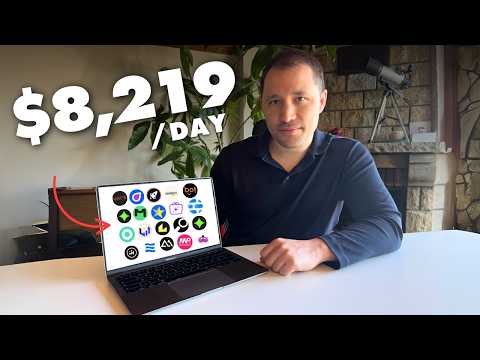
- Combined revenue — "20 different projects doing 3 million" ARR; the channel's on-screen graphics read "$3M ARR" and "$3,000,000"
- Combined users (on-screen counter) — 1,000,000, "million users in B2B"
- Host’s count — "Over 26 different apps"; the on-screen product grid shows around thirty cards
- Concentration — "Seven products bring most of the revenue and the other products are bringing the audience"
- Largest named — SEO Bot at $100k MRR — about 40% of the $3m
- Flagship origin — "I paid almost a million dollar for that startup"
- Flagship scale — Unicorn Platform, 600,000 users
- AI product margin — ~70% — "$100K a month and then we pay 30K for APIs"; after API cost only
- Non-AI margin — ~90%; the channel's "MARGINS" slide repeats both figures
- Main non-AI cost — Human support agents, by choice
- Team — Co-makers on every product; splits never stated
- Failure rate claim — 90% before building in public; 10% after
- Sponsor — Vanta, disclosed mid-video
What is this income idea?
Run a portfolio of small tools for one audience, where a few products earn and the rest exist to feed them customers.
- The portfolio is aimed at a single group — "all my products are for busy founders" — and the products cross-sell into each other. Unicorn Platform is a website and directory builder with 600,000 users. SEO Bot is an SEO agent at "100k MRR… grown in less than 12 months." Listing Bot finds directories to submit a product to.
- They are explicit about the shape of the revenue, and it is the most useful sentence in the video: "combined 3 million ARR where seven products bring most of the revenue and the other products are bringing the audience and that they channel to the paid products." The opening on-screen graphic reads "I run 20 different projects doing $3M ARR", and a later grid of around thirty product cards carries counters of 1,000,000 users and $3,000,000.
- They also give margins with the cost behind them, repeated on the channel's on-screen "MARGINS" slide ("70% margins using APIs", "90% margins not using APIs"): "in SEO bot, we have around 70% margins. So, we make 100K a month and then we pay 30K for APIs. And then in non-AI tools where the costs are pretty low, I have 90% margins." The main cost on the non-AI side is human support — "I like to have humans for that because AI doesn't have the soul."
- The validation process is tight and stated step by step: launch a waiting list, aim for 100 signups, email all of them offering a 90% pre-sale discount, and only build once five people pay. Before that, "I don't even build a product. I actually deliver the solution manually."
- Every product has a partner. "Once I find a sweet spot where it satisfies the users, I go and find a co-maker. The co-maker joins in. We spend two three months building and then I have this big launch on Twitter." They find them by befriending other makers over months or years.
- And the origin of the flagship, which they volunteer: in 2022 they approached the founder of the tool they liked most and asked to buy it, on the condition the seller stay a year to teach them bootstrapping. "I paid almost a million dollar for that startup."
A cross-selling toolkit for founders, anchored by a product they bought for about $1M, where seven of twenty products carry the revenue.
- 10 years in VC-backed startups — Then left
- Buy the flagship (~$1m) — Seller stays a year
- Pick a founder problem — One audience only
- Wait list → 100 signups — Then 90% off pre-sale
- Five sales, then build — Deliver manually first
- Recruit a co-maker — 2–3 months to ship
- Launch on Twitter — Build in public
- 7 of ~20 earn — Rest feed the funnel
A coherent portfolio strategy — starting from a purchase the intro omits.
Most of the portfolio is marketing. They say so, and that is the honest version.
The lesson underneath the number
- The single most valuable sentence is the one about concentration: three million a year, seven products earning most of it, and the rest "bringing the audience." Every portfolio claim in this genre invites you to divide the total by the product count and imagine each one earning a share. They tell you not to. With SEO Bot alone at a hundred thousand a month — roughly forty per cent of everything — the arithmetic is clear: a couple of winners, a tail of funnels, and a cross-sell structure that makes the tail worth keeping even though it earns little.
- Their validation sequence is the other thing to take. A waiting list, a hundred signups, an email with a ninety per cent discount, and a hard rule that five people must pay before anything gets built — with the service delivered by hand until the offer is right. The reasoning is the best part: it is easier to change what you sell when there is no code to change, so stay manual while you are still wrong.
- And they do something almost nobody does, which is give a margin with the cost that produces it. Seventy per cent on the AI products because thirty thousand dollars of API spend sits against a hundred thousand of revenue; ninety per cent elsewhere, where the main cost is human support staff they keep deliberately because "AI doesn't have the soul." That is a real profit and loss statement in two sentences.
- What the packaging obscures is where it started. They explain, unprompted, that in 2022 they approached the founder of their favourite tool, bought the company for close to a million dollars, and required the seller to stay a year and teach them how bootstrapping works — acquiring six hundred thousand users, a cash flow and a mentor in one transaction. The introduction describes a founder who left venture capital and "launched his own apps as a solo founder." Both cannot be true, and the founder's version is the one with the detail in it.
Combined 3 million ARR where seven products bring most of the revenue and the other products are bringing the audience.
The sentence that should end every portfolio interview
What they actually describe
Specific validation, real margins, and a stated concentration.
Figures are taken from what is said and shown in the video. The $3M ARR appears in the channel's on-screen graphics at the start and at 1:21, and the margins on a "MARGINS" slide at 12:57. Churn, equity and revenue splits are not discussed. A Vanta sponsorship is read mid-video and disclosed.
- Serve one audience with many tools — "All my products are for busy founders." Every product is a cross-sell target for every other, which is what makes a portfolio compound rather than fragment.
- Pre-sell before building anything — A waiting list, a target of 100 signups, an email offering 90% off, and a rule: five sales before a line of code. "I don't even build a product. I actually deliver the solution manually."
- Iterate while there is no code — "It's easier to iterate when there is no product… I just have to change my own routine and my own service." Manual delivery makes changing the offer free.
- Recruit co-makers from long relationships — They befriend makers over months or years, then approaches people who have already attempted something similar. "Finding a co-maker is really hard, same as finding a co-founder."
- State the margins and the cost driver — 70% on AI products because of API spend ($30K against $100K of revenue on SEO Bot); 90% on non-AI products, where the main cost is deliberately human support. The 70% is revenue less API cost only, before support staff, co-makers or the founder's own time (our reading of the stated figures).
- Admit that most of the portfolio does not earn — "Seven products bring most of the revenue and the other products are bringing the audience." The rest are acquisition channels dressed as products.
- Hedge the model layer — They run multiple model providers simultaneously and let users choose, because "one model is better this month than the other model." Sensible for a business whose margin is API cost.
The business model
Subscriptions across a portfolio of tools for founders, with free and low-value products feeding paid ones.
"Busy founders" — one audience, served by twenty-odd cross-selling products.
A connected toolkit where each product solves the next problem the last one created.
Building in public on Twitter, cross-promotion between products, and the 600,000-user flagship.
- AI APIs — ~$30,000/month against $100,000 revenue on SEO Bot — 70% margin
- Human support agents — The main non-AI cost, chosen deliberately — 90% margin
- Co-makers — On every product. Share never stated
- Acquisition capital — ~$1m for the flagship in 2022
- Churn — Never mentioned
Better cost disclosure than almost anything in this library — with the co-maker split as the one significant gap.
What you would actually need
Money
Margins are given — 70% on AI tools, 90% elsewhere — along with the API cost that explains the difference. The startup capital is also given: nearly $1 million to acquire the anchor product.
This is the most complete cost picture in the batch, and it also shows why the model is not a starting point. The portfolio began with a seven-figure acquisition and a year of paid mentorship from the seller.
What it took
- ~$1,000,000 to buy Unicorn Platform in 2022
- The seller retained for a year to teach bootstrapping
- API spend: ~$30,000 a month against $100,000 on SEO Bot (the 70% is after API cost only)
- Human support agents on the non-AI products
- Co-makers on every product — share never stated
- Ten years of prior experience in VC-backed startups
Time
Three years of building since entering the bootstrapped world in 2022; two to three months per product once a co-maker joins.
The per-product cadence is credible because they pre-sells first and partners for the build. The three years sit on top of ten years in venture-backed startups and a purchased flagship.
The timeline
- Ten years building VC-backed startups, to 2020
- 2022: enters bootstrapping by buying Unicorn Platform
- Seller stays a year as a guide
- Three years, twenty-plus products
- SEO Bot: $100k MRR "in less than 12 months"
- Two to three months per product with a co-maker
The part you must pay attention to
The flagship was purchased, and the intro calls them a launcher.
Their own account: "I reached out to the founder and I said, do you want to sell this product to me… I paid almost a million dollar for that startup."
- Paid for Unicorn Platform — ~$1,000,000
- Users acquired with it — 600,000
- Seller retained as mentor — +1 year
The portfolio started with an asset, not an idea
The intro says they "launched his own apps as a solo founder"
Buying a product with six hundred thousand users is a legitimate and clever move, and they describe it plainly — including the unusual condition that the seller stay on for a year to teach them how bootstrapped businesses work. But it is the foundation of everything that follows: the audience that the later tools cross-sell into, the credibility that attracts co-makers, and the cash flow that funds the next build. The introduction compresses all of that into a founder who "decided to throw it all out the window and instead launched his own apps as a solo founder." A viewer who stops at the first minute learns the opposite of what the founder says at minute eight.
The second thing worth doing is the arithmetic they half-supplies. Three million a year across roughly twenty products, of which they say seven earn most of it — and SEO Bot alone is a hundred thousand a month, or one and a fifth million a year, about forty per cent of the whole portfolio. Strip out the flagship and the top earner, and the remaining products average a very small amount each, which is exactly what they mean by "the other products are bringing the audience." That is honest and it is the correct way to read every portfolio claim in this library. The unstated item is the co-makers: every product has one, and what they take is never said, so the three million is a pool rather than their income.
- THE PORTFOLIO, FROM HIS OWN WORDS
- Combined ARR $3,000,000
- Products ~20 (host 26; ~30 cards on screen)
- "Seven products bring most of
- the revenue"
- The rest: "bringing the audience"
- CONCENTRATION
- SEO Bot $100k MRR = $1.2m ARR
- Share of total ~40%
- Remaining ~19 products ~$1.8m
- Average each ~$95k/year
- MARGINS (stated)
- AI tools 70%
- SEO Bot: $100k rev - $30k APIs
- (API cost only; support not in it)
- Non-AI tools 90%
- Main cost: human support
- THE STARTING POINT
- Unicorn Platform bought 2022
- Price "almost a million"
- Users acquired 600,000
- Seller retained 1 year
- Co-maker shares not stated
The economics
Margins, cost drivers and concentration — all stated. The split is not.
- Combined ARR — $3,000,000
- Monthly equivalent — $250,000
- Products — ~20 (host says 26; around thirty cards in the on-screen grid)
- Products earning most revenue — Seven
- SEO Bot — $100,000 MRR ≈ $1.2m ARR ≈ 40% of total
- AI margin — ~70% ($30k APIs on $100k; API cost only)
- Non-AI margin — ~90%
- Flagship acquisition — ~$1,000,000 in 2022
- Co-maker revenue share — Never stated
- Churn — Never mentioned
How concentrated the portfolio is
$1.2m (SEO Bot) ÷ $3m total; remaining ~$1.8m spread across roughly nineteen products
One product is about 40% of revenue; the average of the rest is under $100,000 a year each
IncomeIdeaLab arithmetic from the founder’s stated figures
They say seven products carry most of the revenue, so the remaining products are likely well below that average — which is their own point about them serving as audience channels.
- What co-makers receive on each product
- Revenue for any product other than SEO Bot
- Churn across the portfolio
- Whether the ~$1m acquisition has been repaid
- How much of the $3m is the founder’s own income
- The host says "over 26 different apps" while the founder says "20 different projects" and the title says 20; the product grid on screen at 1:21 shows around thirty cards, alongside counters of 1,000,000 users and $3,000,000. We have used the founder’s figure.
- SEO Bot's 70% is $100,000 of revenue less $30,000 of API cost (our arithmetic); human support, co-maker shares and the founder's time are not in that figure.
- The claimed failure-rate flip — 90% of projects failing before building in public, 10% after — is striking and entirely unevidenced.
- A Vanta sponsorship is read mid-video and clearly signposted; its own claims (including "$535,000 a year" saved) are the sponsor’s.
Evidence status
Every substantive claim in the video.
- "20 different projects doing 3 million" ARR — Founder; channel's on-screen graphics — Equals the $250k/month in the title; repeated in on-screen graphics, not a revenue dashboard.
- "Over 26 different apps" — Host — Higher than the founder’s own count; the on-screen grid shows around thirty cards.
- "Seven products bring most of the revenue" — Founder — The most useful disclosure in the video.
- SEO Bot at $100k MRR in under 12 months — Founder — About 40% of the portfolio total.
- 70% margin on AI tools; $30k of APIs on $100k — Founder; channel's "MARGINS" slide — A margin with its cost driver, rare; it is after API cost only, before support staff and co-makers.
- 90% margin on non-AI tools; main cost is human support — Founder — Consistent with the product types described.
- "I paid almost a million dollar for that startup" — Founder — The flagship was acquired, not built.
- Unicorn Platform has 600,000 users — Founder — Acquired with the company.
- Pre-sell: 100 signups, 90% discount, five sales before building — Founder — A specific, copyable validation rule.
- Failure rate fell from 90% to 10% after building in public — Founder — A large claim with no supporting data.
- "Launched his own apps as a solo founder" — Host intro — Co-makers on every product; flagship purchased.
- Co-maker shares, churn — Nobody — Never stated.
What is actually proven?
The economics are better documented here than almost anywhere in this library.
- Margins with the API cost that produces them, said and repeated on an on-screen slide.
- That seven products carry most of the revenue.
- That the flagship was bought for nearly $1m, with the seller retained.
- One product is roughly 40% of the portfolio.
- A concrete pre-sale validation rule, stated as a threshold.
- The 90%-to-10% failure-rate flip.
- Co-maker shares, churn, and the founder’s own take.
What the headline doesn’t tell you
They tell you most of it. The intro does not.
- The flagship was bought. — For almost $1 million, in 2022.
- Seven of twenty earn. — Their own words.
- One app is ~40% of revenue. — SEO Bot at $100k MRR.
- Every product has a co-maker. — Their share is never stated.
- "Solo founder" is the intro’s. — Not their description.
- Ten years in VC-backed startups. — Before any of this.
- The seller stayed a year. — As a paid guide.
- No churn figure. — Across twenty subscriptions.
Should you try it?
Excellent disclosure, unreachable starting line
The validation rule and the margin honesty are worth copying. The portfolio began with a seven-figure purchase.
- Margin disclosure — 8 — 70% and 90%, with the API cost stated; the 70% is after API cost only.
- Honesty about concentration — 9 — "Seven products bring most of the revenue."
- Disclosure of the acquisition — 8 — Volunteered, with the price and the mentorship condition.
- Quality of the validation rule — 9 — 100 signups, 90% off, five sales before code.
- Accuracy of the framing — 2 — "Launched his own apps as a solo founder."
- Co-maker transparency — 1 — A partner on every product; no split given.
- Evidence for the failure-rate claim — 1 — 90% to 10%, with nothing behind it.
- Beginner replicability — 2 — Requires ~$1m, a decade of experience and a maker network.
- Two things here are worth more than the headline. The first is that they tell you how portfolios actually work: three million a year, seven products earning most of it, and the rest kept because they bring an audience that buys the earners. With one product at a hundred thousand a month, roughly forty per cent of the total, the tail is very thin — and they are the one who says so. Read every other "I run twenty apps" claim through that lens.
- The second is a margin you can check. Seventy per cent on the AI tools because thirty thousand dollars of API spend sits against a hundred thousand of revenue, and ninety per cent on the rest, where the biggest cost is human support staff they keep on purpose. Almost nobody in this library will name a cost driver at all, let alone put a number beside it.
- Their validation rule is the most copyable thing in the video and costs nothing: build a waiting list, aim for a hundred signups, email them a ninety per cent discount, and refuse to write code until five people have paid — delivering the service by hand in the meantime, because it is far easier to change an offer that has no product attached.
- What you cannot copy is the beginning. They spent a decade inside venture-backed startups, then in 2022 bought the tool they admired most for close to a million dollars and made the seller stay a year to teach them the trade — acquiring six hundred thousand users, revenue and a mentor at once. They say all of this themselves, plainly, eight minutes in. The introduction says they left venture capital and launched their own apps as a solo founder, and every product since has had a co-maker whose share is never mentioned.
Passive or automated?
Automation
Products are self-serve; support is deliberately human and co-makers run the builds.
Passive potential
Twenty products, human support and constant public building.
Subscriptions renew and the products are self-serve, but the operation is not hands-off: they staff support with people on purpose, work with a co-maker on every product, run an AI project manager to coordinate them, and build in public continuously because that is their distribution. A portfolio of twenty tools also means twenty things that can break, twenty sets of API costs to watch, and a model layer they rotate between providers month to month.
- Human support agents, by explicit choice
- A co-maker on every product
- Continuous building in public on Twitter
- Monitoring API costs and switching model providers
- Cross-promotion across twenty products
Recommended beginner experiment
Take the validation rule; scale the expectations to your capital.
- Pick one audience and never leave it. — Their is "busy founders."
- Put up a waiting list before building. — Target 100 signups.
- Email them a 90% pre-sale discount. — Their exact offer.
- Require five paid sales before any code. — Their hard threshold.
- Deliver the service by hand first. — Iterating is free without a product.
- Track API cost per customer from day one. — It is the difference between 70% and 90%.
- Expect most products to earn nothing. — Seven of their twenty carry it.
- Write the co-maker split down. — This video never states one.
Our verdict: 7/10
Detailed portfolio accounting, with an acquisition the intro does not mention seven of twenty products earn, margins are real, and the flagship cost a million dollars
Credited for stating outright that seven products carry most of a $3 million portfolio while the rest exist to bring an audience — the disclosure every portfolio interview in this library needs and almost none makes; for giving real margins with the cost behind them, including $30,000 of monthly API spend against $100,000 of revenue on one product; for a concrete, copyable validation rule requiring five paid pre-sales before any code; for keeping human support deliberately and explaining why; and for volunteering that they entered bootstrapping by buying their flagship product for close to a million dollars and retaining the seller for a year. Marked down because the introduction describes a founder who "launched his own apps as a solo founder," which omits both the acquisition and the co-maker on every product; because the 70% AI margin is after API cost only, with support and co-maker costs outside it; because those co-makers' shares are never stated, so the $3 million is a pool rather than their income; because the host counts twenty-six products against the founder's twenty; because the claimed fall in failure rate from 90% to 10% after building in public is unevidenced; and because churn is never mentioned across a portfolio of subscription products.
This founder does two things that put them near the top of the library. They tell you which parts of their portfolio actually make money — "combined 3 million ARR where seven products bring most of the revenue and the other products are bringing the audience" — which is the sentence that should end every interview claiming twenty apps and a big number, and almost never does. And they give margins with the cost that creates them: seventy per cent on the AI products because thirty thousand dollars of API spend sits against a hundred thousand of revenue, ninety per cent on the rest, where the largest cost is the human support staff they keep because "AI doesn't have the soul." Their validation rule is equally concrete: a waiting list, a hundred signups, a ninety per cent discount by email, and no code written until five people have paid, with the service delivered by hand until the offer stops being wrong. All of that is free to copy and genuinely good. What the video's opening minute does is describe a founder who walked away from venture capital and "launched his own apps as a solo founder." Eight minutes later they explain that they entered the bootstrapped world in 2022 by approaching the founder of their favourite tool, buying the company outright for close to a million dollars, and making the seller stay for a year to teach them how this kind of business works — acquiring six hundred thousand users, a revenue base and a mentor in a single transaction. Every product since has been built with a co-maker whose share they never state. The disclosures are their; the opening minute does not mention the acquisition.
- Combined ARR — $3m
- Products earning — 7 of ~20
- Largest product — $100k MRR ≈ 40%
- AI margin — 70% after APIs ($30k)
- Non-AI margin — 90%
- Flagship — Bought ~$1m
- Co-maker share — Never stated
- Churn — Never mentioned
- Beginner suitability — Validation rule yes, model no
Sources
- I Make $250K/Month From 20 Apps — Starter Story — Source video, 2025-05-31
- FTC — Guides Concerning the Use of Endorsements and Testimonials — Regulatory guidance on earnings claims