Service Business / Freight Dispatch · Claim Review
“How To Start Truck Dispatching in 2026 - Part 1”
What we found: Truck Dispatching’s “$20,000 Profit” Is Revenue, and the $1.6M Is Shared Gross
The per-truck arithmetic reconciles. The labels on it do not — and the headline figure belongs to a two-owner business that also runs trucks.
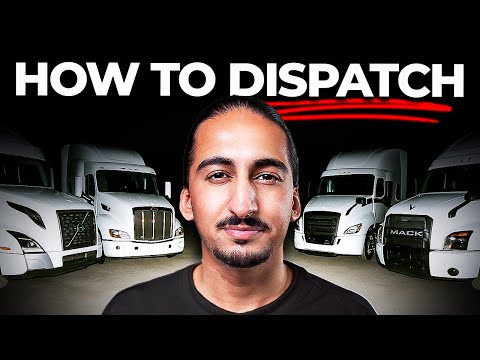
- $1.6M Last 12 months
- $2k–$3k/mo Per truck
- $20k/mo 10 trucks
- $97/mo Paid course
The claim
That the creator made $1.6 million in 12 months from truck dispatching, and that a solo dispatcher charging 10% on 10 trucks makes $20,000 a month in profit.
- Made in the last 12 months — $1.6 million
- Current monthly gross, two 50/50 owners — "Much more than 100k"
- $1.6M ÷ 12 — ~$133,000 a month
- Each owner’s half of $1.6M, gross — ~$800,000
- First 8 months together (2016) — $100,000 a year gross
- Dispatcher income per truck — $2,000–$3,000 a month
- Solo capacity — 7–12 trucks
- Solo range from those figures — $14,000–$36,000 a month
- 10 trucks × 10% × $20,000 load revenue — $20,000 a month — revenue, not profit
- Stated running cost — ~$500 a month
- Course share of income — Under 7%
- Community members on the Skool page shown at 25:41 — 142
- 142 members × $97 a month, if all paid that price — ~$13,800 a month
What is this income idea?
A truck dispatcher works for owner-operators, finding and negotiating freight loads from brokers, and takes a percentage of each load — typically 8% to 10%, according to the video.
- This is the first of a seven-part free course. It explains the parties in freight — shipper, broker, carrier, dispatcher — and argues that dispatching is the cheapest and lowest-risk way into trucking: a phone, a laptop, Wi-Fi, some software, and roughly $500 a month.
- The opening line is the headline: "i made $1.6 million in the last 12 months for my truck dispatching business." A few minutes later the background fills in. The brand was started in 2016 by the creator and a sibling, who are "both 50/50 owners"; it includes "an asset company where we have our trucking company" alongside the dispatch side; and today it grosses "much more than 100k per month".
- The earnings model for a viewer is built from three inputs: a dispatcher earns $2,000 to $3,000 a month per truck, one person can handle 7 to 12 trucks, and a 10% fee on a truck grossing $20,000 a month in loads is $2,000. Ten such trucks gives $20,000 a month, which the video calls "profit".
- The creator runs a paid course and community at $97 a month and says so clearly and early, adding that it makes up "less than 7% of my income". It is plugged three times, with a 90-day money-back guarantee tied to finding a first carrier, and member results — $16,500 and $14,000 a month within 30 days — are cited from it.
- The community’s Skool page, shown on screen at 25:41, lists the $97 monthly price with a note that it rises to $997 a year at 500 members, shows 142 members, repeats the guarantee to land a first carrier in 90 days or get a refund, and advertises the contracts the creator says they "used to hit $114k/mo". The page does not say whether that $114,000 is dispatch fees or gross revenue.
- The explainer itself is clear. The creator separates dispatcher from broker carefully, explains that the dispatcher is on the carrier’s side of the negotiation, and describes the broker margin with a worked example. The later parts of the course promise the setup, funnel, marketing, dispatching, pricing and scaling detail.
Take a cut of each truck’s loads — the maths per truck is consistent, but the headline number is a shared, gross figure from a bigger business.
- Shipper — Needs a load moved
- Broker — Keeps 10–20%
- Dispatcher — Negotiates for the carrier
- Carrier — ~$20k/mo in loads
- 10% fee — ~$2k per truck
- 7–12 trucks — One person
The chain is explained well. What each step costs the dispatcher is not.
The per-truck maths is honest. The labels drift upward.
The lesson underneath the number
- Taken as an explainer, this is a good video. The creator lays out the freight chain clearly, is careful to separate a dispatcher from a broker, and makes the point that dispatcher and carrier are paid on the same side of the negotiation — the dispatcher only earns more when the carrier does. The per-truck figures reconcile with one another: 10% of a truck grossing $20,000 a month is $2,000, which sits inside the stated $2,000–$3,000 range, and five trucks for $10,000 or ten for $20,000 follow directly.
- The course disclosure is also better than most. The creator says there is a paid course, gives its price, says viewers do not need it, and puts a number on its share of income. Viewers can judge the plugs knowing what they are.
- The problem is in the words attached to the numbers. "$20,000 per month in profit" is ten trucks of gross fees, arrived at a few minutes after the video says the business costs about $500 a month to run; nothing is subtracted. The solo range of 7 to 12 trucks at $2,000 to $3,000 each runs from $14,000 to $36,000, and only the top is quoted. The member results cited — $16,500 and $14,000 a month within 30 days — are the best examples from a paid community, presented without the number of members who did not reach them. The $16,500 appears as an on-screen graphic over a student’s testimonial video at 24:52, with no invoices or payouts shown; the eight community win posts shown at 26:10 record carriers signed and first leads, and none states an income. The largest, seven trucks onboarded, comes from a member whose post says they were already dispatching seven or eight trucks and had done so for seven years.
- The $1.6 million needs the most unpacking. It opens the video as money made "for my truck dispatching business". Later it becomes gross revenue of a brand co-owned 50/50 with a sibling, which also includes an asset-owning trucking company. That is a real achievement, but it is not a figure a viewer should compare with a solo dispatcher’s income: at $2,000–$3,000 a truck it would take several times one person’s capacity, and if trucking revenue is included, the per-truck model does not describe it at all.
10 trucks at $2,000 per month equals $20,000 per month in profit.
The creator’s summary — the arithmetic reconciles; the labels do not
How the video frames the business
Part 1 is the "what, why and how much"; the operating detail is deferred to later parts.
Based on what is said and shown in the video (28:51, published 13 October 2025). Member results are taken from a testimonial graphic at 24:52 and the community page and win posts shown from 25:41; we could not check them from the video.
- Understand the chain — Shipper pays for the move, the broker resells it at a 10–20% margin, the carrier hauls it, and the dispatcher negotiates on the carrier’s behalf. The distinction between dispatcher and broker is drawn clearly.
- Charge a percentage of each load — "They charge 10% per load 8% whatever you’re going to charge." The creator calls 10% "on the higher end of the spectrum" and reasonable if the dispatcher adds value — a fair caveat.
- Run it on roughly $500 a month — A phone, laptop, Wi-Fi and software. The $500 is stated twice and never itemised, and the next part of the course promises the tool list.
- Handle 7 to 12 trucks alone — The stated solo capacity. The creator adds that "none of these numbers are exaggerated" — an assurance we could not check from the video.
- Set a revenue goal and count trucks — "If you want to make $10,000 per month you need about five trucks… $20,000 per month you need 10 trucks." Consistent with $2,000 per truck.
- Continue into the paid or free course — Six more free parts are promised; the $97-a-month course offers advanced training, weekly calls and a refund if no first carrier is signed in 90 days.
The business model
A percentage — 8% to 10% in the video — of each load booked for an owner-operator, billed as an independent contractor.
Owner-operators and small carriers who own their trucks and authority and want someone to find and negotiate loads.
Higher rates per load than the carrier would negotiate alone, since the dispatcher is paid more when the load pays more.
Deferred to later parts: a pre-built funnel and "four traffic methods" are promised.
- Software and tools — ~$500 a month, stated, never itemised
- Load boards — Covered in Part 2
- Factoring — Mentioned for getting paid. Not priced
- Tax — Not mentioned; the dispatcher is a 1099 contractor
- Staff at scale — Implied by a seven-figure business; not discussed
- Paid course — $97 a month, optional, disclosed
The video names a monthly cost and then describes gross fees as profit without subtracting it.
What you would actually need
Money
"With $500 per month you could be making six figures very very easily." Failure costs "a couple hundred dollars".
Low startup cost is plausible for a service business run from a laptop, and the creator is right that it is far below starting a trucking company. But the $500 is not broken down, and the video then counts $20,000 of fees as profit without subtracting it — or tax, payment costs or the paid course it recommends.
Named, and not subtracted
- ~$500 a month in software and tools, never itemised
- Load board access, promised in Part 2
- Factoring companies, mentioned for getting paid, never priced
- The $97-a-month course, optional but plugged three times
- Tax on dispatch fees, paid as a 1099 contractor
- Phone, laptop and Wi-Fi
Time
"Just give me like 30 40 minutes of your time with each of these videos" and "you’re gonna start a $10,000 per month business". Members are cited earning $14,000–$16,500 a month within 30 days.
At $2,000 a truck, $16,500 a month means signing roughly eight trucks in a month. That is possible, but it is the best outcome from a paid community, not a norm, and the video gives no hours estimate for finding carriers or negotiating their loads.
Where the time goes
- Six more hours of free course content
- Finding and signing carriers — covered only in later parts
- Negotiating loads daily for every truck
- Invoicing and chasing payment
- Hours per truck per week: not stated
The part you must pay attention to
"$20,000 per month in profit" is ten trucks of fees before any cost — including the $500 a month the video itself names.
The per-truck maths is sound. The word attached to its result is not, and the headline figure comes from a different kind of business.
- Monthly load revenue per truck — $20,000
- Dispatch fee — 10%
- Trucks — 10
$20,000 a month
Gross fees — the video labels it profit
The load-bearing assumption is that every one of ten trucks grosses $20,000 a month in loads, every month, and pays the full 10% on time. The creator calls $20,000 "very very conservative" and says it holds "in any economy", but gives no evidence beyond nearly a decade of personal experience. Ten trucks also sits near the top of the stated 7–12 solo range, and the earlier range quoted — "36 $37,000 per month" — is only the ceiling: 12 trucks at $3,000. The floor from the same figures, 7 trucks at $2,000, is $14,000.
The $1.6 million opener needs the same care. It is introduced as made "for my truck dispatching business", then described as gross revenue — "just in gross revenue" — of a brand with two 50/50 owners that also includes a trucking company. On the video’s own terms that is about $133,000 a month gross, or roughly $800,000 per owner before any cost. If the figure were all dispatch fees at $2,000–$3,000 a truck, it would imply roughly 44 to 67 trucks under management — several times one person’s 7–12 capacity, so a staffed operation. If it includes the trucking company’s revenue, the per-truck maths does not apply to it at all. The video does not say which. What the creator does do well is disclose the course: its price, that it is optional, and a stated share of income under 7%.
- THE 10-TRUCK EXAMPLE
- Load revenue per truck $20,000/mo
- x 10% fee $2,000
- x 10 trucks $20,000
- -> called "profit" in the video
- - stated tools -$500
- - tax, payment costs -???
- THE SOLO RANGE
- 7 trucks x $2,000 $14,000
- 12 trucks x $3,000 $36,000
- Video quotes "36-37,000"
- THE $1.6M (OURS)
- / 12 months ~$133,000/mo
- / 2 owners (50/50) ~$800,000 each
- / $2k-$3k per truck ~44-67 trucks
- -> if all dispatch fees
The economics
Consistent inputs, one mislabelled output, and a headline from a larger business.
- Headline, last 12 months — $1.6 million
- Monthly average of that — ~$133,000
- Owners — Two, 50/50
- Per-truck dispatcher income — $2,000–$3,000/month
- Solo capacity — 7–12 trucks
- Solo income range — $14,000–$36,000/month
- Assumed truck load revenue — $20,000/month
- Fee — 10%
- Running cost — ~$500/month
- Course price — $97/month
The 10-truck "profit"
10 trucks × ($20,000 × 10%) − ~$500 stated monthly cost
~$19,500 a month before tax, payment and factoring costs — gross fees less one named cost, not profit
IncomeIdeaLab calculation from figures stated in the video
Every input is the video’s own assumption: that each truck grosses $20,000 a month in loads, that the full 10% is collected, and that one person runs ten trucks. None of these is evidenced beyond the creator’s experience.
- Whether the $1.6 million includes the trucking company’s revenue
- The business’s costs, staff and profit
- How many dispatchers the business employs
- What the $500 a month buys
- Factoring and payment fees
- How many paid members did not reach $10,000 a month
- The course share: under 7% of income at $97 a month. If "income" here means the $1.6 million, 7% is about $112,000 a year, or roughly 96 average paying members. The Skool page shown at 25:41 lists 142 members; if every one paid $97 a month, that is about $13,800 a month or $165,000 a year, roughly 10% of $1.6 million (our arithmetic). The video does not say how many members pay or at what price, and does not define income, so the two figures cannot be reconciled from the video.
- The same page lists a price rise to $997 a year at 500 members, and advertises contracts the creator says they "used to hit $114k/mo". That monthly figure sits close to the "much more than 100k per month" gross said aloud; the page does not say whether it is fees or gross revenue.
- The broker example — a $1,000 load marked down 10–20% and passed on "for $800" — uses the top of the range; 10% would leave $900. A small slip in an otherwise clear explanation.
- The early history is modest and useful: $100,000 a year in gross revenue within eight months of two people starting in 2016. That is a more realistic benchmark for a beginner than the current seven figures.
- The creator states that a dispatcher, as the carrier’s independent contractor, carries "little to no risk" and needs no insurance or authority. That is presented as fact and not sourced; readers should confirm their own obligations.
Evidence status
Every substantive claim in the video.
- $1.6 million in the last 12 months — Creator — Gross revenue, two 50/50 owners, brand includes a trucking company. Not a solo dispatch figure.
- "Much more than 100k per month" gross — Creator — Consistent with $1.6M ÷ 12 ≈ $133,000.
- $100,000 a year gross in the first 8 months (2016) — Creator — A modest, useful benchmark.
- $2,000–$3,000 per truck per month — Creator — Consistent with 10% of $20,000–$30,000 in loads.
- One person handles 7–12 trucks — Creator — Stated as experience; not evidenced.
- "36 $37,000 per month" solo — Creator — The ceiling only. The same inputs give $14,000 at the floor.
- 10 trucks = $20,000 a month "in profit" — Creator — Gross fees. The video’s own $500 cost is not subtracted.
- Start with ~$500 a month — Creator — Plausible; never itemised.
- Course is $97/month and under 7% of income — Creator — Disclosed clearly and early.
- Members at $16,500 and $14,000 a month within 30 days — Creator; student testimonial graphic — The $16,500 is shown in an on-screen graphic over a testimonial at 24:52, with no invoices or payouts. Selected results; no count of members who did not.
- Community wins — Skool posts shown at 26:10 — Eight posts shown: carriers signed and first leads. None states an income; the largest is from a member already dispatching seven or eight trucks.
- 142 members at $97 a month — Skool page shown at 25:41 — If all paid, about $13,800 a month (our arithmetic), about 10% of $1.6M a year and above the stated under-7% share. Paying members are not stated.
- AI dispatch tools "don’t do anything" — Creator — Opinion; no evidence offered.
- Dispatchers carry "little to no risk" — Creator — Asserted without a source.
What is actually proven?
The arithmetic, yes. The headline and the testimonials, no.
- The paid course, its price and its optional status are disclosed up front.
- Per-truck figures reconcile with the 5-truck and 10-truck revenue goals.
- The 7–12-truck solo range spans $14,000 to $36,000 a month.
- The "$20,000 profit" is gross fees before the stated $500 cost.
- $1.6 million in 12 months, gross, for a two-owner brand with a trucking company.
- Member earnings of $14,000–$16,500 a month in 30 days; the $16,500 appears only as an on-screen testimonial graphic at 24:52.
- The Skool page at 25:41 shows 142 members and the $97 monthly price; none of the eight win posts at 26:10 states an income.
- The business’s costs, staff and profit.
What the headline doesn’t tell you
Useful explainer, generous labels.
- $1.6M is gross. — The creator says so later.
- Split two ways. — "Both 50/50 owners."
- It includes a trucking company. — Or may — the video does not separate them.
- "Profit" is revenue. — $500 a month is named, then not subtracted.
- $36,000 is the ceiling. — The floor is $14,000.
- Testimonials are selected. — From a paid community; the win posts shown name carriers, not income.
- The course is disclosed. — $97 a month, stated early.
- Part 1 of 7. — The how-to is in later videos.
Should you try it?
A clear introduction with numbers to discount
Use it to understand the freight chain and the per-truck economics. Discount the $1.6M and the "profit" label.
- Clarity of explanation — 8 — Shipper, broker, carrier and dispatcher laid out cleanly.
- Internal consistency of per-truck maths — 8 — $2,000 per truck reconciles across every example.
- Course disclosure — 8 — Price, optional status and income share all given.
- Headline accuracy — 3 — $1.6M is shared gross, possibly including trucking revenue.
- Gross vs profit — 2 — Fees labelled profit after a cost is named.
- Cost disclosure — 3 — $500 a month, never itemised; nothing else.
- Beginner accessibility — 6 — Low startup cost; carrier acquisition deferred to later parts.
- If you are new to freight, this is a good first explainer. It makes clear who pays whom, why a dispatcher works for the carrier and not the broker, and how a percentage fee lines up the dispatcher’s interest with the carrier’s. The per-truck numbers are consistent and give you a simple way to set a goal: at around $2,000 a truck, count how many trucks you would need.
- Treat the headline figure as context, not a target. $1.6 million is gross revenue for a business two people own equally, which the creator says also includes a trucking company. It tells you the creator’s brand is large; it tells you little about what one new dispatcher can earn.
- Be careful with the word "profit". Ten trucks at $2,000 a month is $20,000 of fees. From that come the software and tools the video puts at about $500 a month, payment and factoring costs, tax, and your own time. The solo range is also wider than the $36,000 quoted: at seven trucks and $2,000 each, it is $14,000.
- The paid course is disclosed honestly and you are told you do not need it. The member results come from its own community and are the best examples. Before paying, finish the free parts and try to sign one carrier.
Passive or automated?
Automation
A pre-built funnel is promised; booking and negotiating loads are manual.
Passive potential
Each truck needs loads found and negotiated continuously.
Dispatch income is earned load by load. Each carrier needs a dispatcher finding, negotiating and booking freight whenever the truck is empty, and the fee stops when that stops. The creator emphasises freedom to work from anywhere, which is fair — the work is remote — but remote is not passive. At the scale implied by $1.6 million a year, the per-truck figures suggest a staffed operation rather than one person.
- Finding and signing carriers
- Negotiating rates with brokers for every load
- Booking and tracking each load
- Invoicing and collecting the percentage
- Staff to cover more than 7–12 trucks
Recommended beginner experiment
Prove one truck before you plan ten.
- Write down every monthly cost first. — Itemise the $500 the video leaves as a total.
- Use the conservative end. — $2,000 a truck, seven trucks.
- Watch the free parts before paying. — The creator says you do not need the course.
- Sign one carrier. — Then measure the hours it takes to dispatch them.
- Track the truck’s real load revenue. — Check it against the $20,000 assumption.
- Set aside tax from the first invoice. — You are paid as a contractor.
- Confirm your own legal obligations. — The "no risk" claim is not sourced.
- Compare net, not gross. — With your current income.
Our verdict: 5/10
Clear explainer, disclosed course, labels that do not match the figures the per-truck maths holds, but $1.6M is shared gross and "$20,000 profit" is revenue
Credited for a clear, accurate-sounding explanation of the freight chain; for distinguishing dispatcher from broker; for per-truck figures that reconcile with each other and with the revenue goals given; for disclosing the paid course, its $97 monthly price and its stated share of income, and saying viewers do not need it; for describing the headline as gross revenue and naming the 50/50 ownership; and for giving a modest early benchmark of $100,000 a year gross in the first eight months. Marked down because the $1.6 million opener is attributed to "my truck dispatching business" but belongs to a two-owner brand that also includes a trucking company, without saying how much is dispatch; because ten trucks of gross fees are labelled "$20,000 per month in profit" after a $500 monthly cost is named; because the solo range is quoted only at its $36,000 ceiling; because member results are selected testimonials from the paid community; and because the "little to no risk" claim is unsourced.
As a first lesson in how freight dispatching works, this video does its job. It lays out shipper, broker, carrier and dispatcher clearly, explains why the dispatcher sits on the carrier’s side of the negotiation, and uses per-truck numbers that hold together: 10% of a truck grossing $20,000 a month is $2,000, five trucks make $10,000 and ten make $20,000. The creator is also upfront about the paid course — its $97 monthly price, that it is optional, and that it is under 7% of income — which is more disclosure than this genre usually offers. The problems are in the labels. The $1.6 million that opens the video is described minutes later as gross revenue for a brand owned 50/50 by two siblings and including a trucking company; that is about $133,000 a month gross, or $800,000 per owner before costs, and the video does not say how much of it is dispatch fees. The ten-truck example is called "$20,000 per month in profit" after the video itself says the business costs about $500 a month to run, and nothing is subtracted. The solo range quoted, around $36,000, is the ceiling of figures whose floor is $14,000. And the member results cited come from the creator’s paid community, with no sense of how many members fell short. Use the explainer and the per-truck arithmetic; treat the headline as the size of someone else’s larger business, not a forecast of yours.
- Headline — $1.6M in 12 months, gross, two owners
- Monthly average — ~$133,000
- Per truck — $2,000–$3,000/month
- Solo range — $14,000–$36,000/month
- 10-truck example — $20,000 gross, not profit
- Running cost — ~$500/month
- Course — $97/month, disclosed
- Beginner suitability — Good primer; discount the headline
Sources
- How To Start Truck Dispatching in 2026 - Part 1 — Gill22 — Source video, 2025-10-13
- FTC — Guides Concerning the Use of Endorsements and Testimonials — Regulatory guidance on earnings claims and testimonials