Local Services / Residential Trash Pickup · Claim Review
“How to Start Your Own Trash Business in 2021”
What we found: A Rural Trash Route at 600 Customers: The $40,000-a-Year Price-Rise Maths Checks Out, but No Cost or Profit Figure Is Given
A residential pickup operator gives customer counts, a $30 monthly minimum and competitor prices. Our arithmetic puts gross billing near $18,000 a month at the minimum rate. Dump fees, fuel, insurance and the operator's own wage are named but not priced.
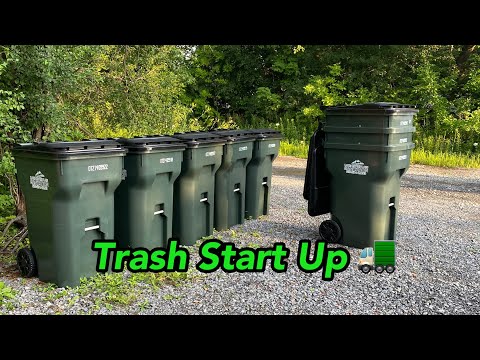
- 600 Residential customers
- $30 Monthly minimum
- ~$18,000/mo Gross at the minimum
- Not stated Costs or profit
The claim
That a residential trash route started with a pickup truck and trailer can reach a living wage for one person at roughly 350 to 450 customers within three to five years, and that a small price rise across 600 customers adds $40,000 to $50,000 a year.
- Current customers — 600, with a possible further 100 that may need a packer truck
- Customers at the earlier rate — About 100 stops before any price rise
- Current minimum price — $30 a month, weekly pickup, cart provided
- Price rise effect — $6 a month × 600 = $3,600 a month, "between 40 and 50,000 a year"
- Our check of the price rise — $3,600 × 12 = $43,200 a year
- Gross billing at the $30 minimum — About $18,000 a month, $216,000 a year
- Cart cost — $60 to $80 each
- Customers for a one-person living — 350 to 450
- Time to reach that level — Three to five years
- Dump fees, fuel, insurance, tyres, rent — Named; no amount given
- Profit or owner pay — Not stated in the video
What is this income idea?
Run a weekly residential trash pickup route in an area where no large company holds the collection contract, starting with a pickup truck and a dump trailer.
- The operator runs a dumpster rental, junk removal and residential trash business in rural upstate New York, describing the area as roughly 80,000 people within a 50-mile radius. This video covers only the residential route.
- The first hurdle given is not equipment but somewhere legal to park it. The business ran from rented parking spaces at an apartment complex, then from a small lot for about a year, before moving into an office with more outdoor space.
- Marketing is described as friends and family first, which the operator expects to produce "five to probably 50 customers right off the bat", followed by Facebook, Google and a small Instagram page that may not have produced any sales.
- Pricing has moved from a lower starting rate three years ago, with no cart included, to a $30 monthly minimum for weekly pickup that now includes a cart costing $60 to $80. Local competitors are said to charge from about $24 plus tax up to about $50.
- The route stands at 600 customers. The operator says a further 100 might be available but could require a packer truck, and that the business could probably reach 700 to 750 customers without one.
- The closing section lists the downsides plainly: the work is dirty and physical, it runs 52 weeks a year, and expenses include dump fees, flat tyres, insurance, fuel and rent. The video ends with an offer of paid one-to-one coaching calls booked through Calendly.
Weekly trash pickup is recurring income that rises with every customer and every price change, but the video gives no figure for what it costs to run.
- Check local contracts — Rural areas only
- Find a legal lot — Before buying a truck
- Tell friends and family — 5 to 50 customers
- Pickup and trailer — No packer at first
- Price mid-market — $24 to $50 locally
- Add carts — $60 to $80 each
- Grow to 350–450 — A one-person living
- 600 customers — Three years in
A clear sequence for starting, with the revenue side described and the cost side named but not priced.
Recurring revenue makes small price changes large. It does the same to small cost changes.
The lesson underneath the number
- The strongest idea in the video is the arithmetic of a subscription route. Every customer pays every month, so a change of a few dollars compounds across the whole base: the operator puts a $6 monthly rise across 600 customers at $3,600 a month, and our check gives $43,200 a year. That is a real and useful insight for anyone pricing a recurring local service.
- The same arithmetic applies to costs, and that side is left open. Dump fees are charged per load, fuel and tyres rise with route length, and insurance is fixed whether the route has 100 customers or 600. The operator says pricing should follow "your dump fees and your trucking costs", which is sound advice, but gives no figure for either, so the margin per household cannot be worked out from the video.
- The operator is candid about the limits. The model only works where residents can choose their hauler. The work is described as disgusting without a packer truck, physical, and tied to all 52 weeks of the year. A one-person route is said to support "a small salary" and to let you "survive", with the explicit caveat that "you're not gonna thrive and go wild". The warning against undercutting the market without cash reserves, based on competitors who lasted only months, is specific and useful.
- The closing offer of paid coaching calls is made openly. The coaching price is not stated in the video.
A one-man operation you can live on that, you can drive a decent truck and take a small salary from the business and survive.
The operator, on a route of 350 to 450 customers
How the route was built, as described
The order matters: legal parking, then customers, then equipment.
No amount is given for any operating cost at any stage.
- Confirm you are allowed to collect — In cities, a large company often holds the collection contract, and the operator says there is then "nothing you can really do". The model described is for rural areas where residents choose their own hauler.
- Secure somewhere to park — Rented apartment parking spaces, then a small lot for about a year, then an office with more space. The warning is practical: a dump truck parked where neighbours can see it can bring fines before the business has earned anything.
- Start with people you know — Word of mouth among friends and family is described as free and expected to produce five to 50 customers. Facebook and Google follow; the operator says they have never used paper advertising.
- Use cheap equipment first — A pickup truck with a dump trailer, or an old dump truck with built-up sides and a tarp, is described as enough. A packer truck is not needed until roughly 700 to 750 customers.
- Price in the middle of the market — The operator advises against undercutting competitors without deep cash reserves, saying several new entrants that tried it lasted only a few months. Prices should follow local dump fees and trucking costs.
- Raise prices as you grow — The minimum is now $30 a month with a cart included. The operator credits a roughly $6 monthly increase with adding $3,600 a month across 600 customers.
The business model
Monthly subscription for weekly residential trash pickup, $30 minimum, with a cart included.
Rural households in an area where no single company holds the collection contract.
Local, personal weekly pickup priced in the middle of the local market.
Friends and family, word of mouth, Facebook, Google and a small Instagram page.
- Dump fees — Named as a driver of pricing; no amount given
- Truck and trailer — Pickup and trailer or an old dump truck; no price given
- Carts — $60 to $80 each
- Fuel, tyres, insurance — Named; not priced
- Lot or yard rent — Named; not priced
- Packer truck — Expected to be needed beyond about 700 to 750 customers
- Owner time — Weekly, all year
The operator lists the cost categories honestly and warns readers to run their numbers conservatively, but gives none of the numbers.
What you would actually need
Money
A pickup truck and dump trailer, or an old dump truck, plus a lot to park on. Carts at $60 to $80 each once affordable. No startup total is given.
The cart cost alone scales with the route: 600 carts at $60 to $80 is $36,000 to $48,000, roughly one year of the price-rise gain the operator describes. Insurance, dump fees and a truck are recurring and not priced.
Named, not priced
- Pickup truck and dump trailer, or an old dump truck
- A rented lot or outdoor storage space
- Carts at $60 to $80 each
- Dump (tipping) fees on every load
- Fuel, tyres and insurance
- A packer truck beyond about 700 to 750 customers
Time
Three to five years to reach a one-person living of 350 to 450 customers, possibly started alongside another job.
The route runs every week of the year. The operator says plainly that you cannot take a week off, so the time cost is permanent unless someone is hired, and hiring is said to need a different set of numbers.
Where the time goes
- Weekly pickup, 52 weeks a year
- Trips to the dump
- Equipment repairs and flat tyres
- Marketing and customer questions
- Three to five years of growth to a living wage
The part you must pay attention to
Revenue is described in detail. What is left after costs is not stated in the video.
The operator says a one-person route of 350 to 450 customers lets you "take a small salary from the business and survive". No figure is given for that salary or for the costs it is left from.
- Customers for a living — 350–450
- Monthly minimum — × $30
- Costs, not priced — − dump, fuel, insurance, truck
$10,500–$13,500/mo gross
Before any cost; owner pay not stated
Everything rests on the gap between what a customer pays and what it costs to collect their trash each week. The video names the costs (dump fees, fuel, tyres, insurance, rent) but gives no amount for any of them, so the margin per customer, and therefore the customer count that supports a living, cannot be checked from the video.
The price-rise claim is the one figure we could check, and it holds: $6 a month across 600 customers is $3,600 a month, or $43,200 a year, inside the stated $40,000 to $50,000. One qualification: the operator says there were about 100 stops before any price rise, so most of the 600 customers likely joined at the newer rate. The $43,200 is best read as the difference between charging the whole route $30 rather than about $24, not as money added to existing accounts alone.
- THE PRICE RISE (STATED)
- Increase per customer ~$6/mo
- Customers 600
- Per month $3,600
- Per year $43,200
- -> inside "40 to 50,000"
- GROSS AT THE MINIMUM (OURS)
- 600 x $30 $18,000/mo
- x 12 $216,000/yr
- THE CARTS
- 600 carts x $60-$80
- $36,000-$48,000
- COSTS STATED none priced
The economics
Prices and customer counts are stated. Costs and profit are not.
- Customers — 600
- Monthly minimum — $30
- Competitor prices — ~$24 plus tax to ~$50
- Cart cost — $60 to $80 each
- Price rise effect — $3,600 a month
- Gross at the minimum — ~$18,000 a month
- Customers for a one-person living — 350 to 450
- Operating costs and profit — Not stated
Checking the price-rise figure
$6 × 600 customers = $3,600 a month; $3,600 × 12 = $43,200 a year
$43,200 a year, inside the stated "between 40 and 50,000"
IncomeIdeaLab calculation from the figures stated in the video
The operator says there were about 100 stops before any price rise, so most customers likely joined at the new rate. The figure measures the difference between two price levels across the whole route rather than a rise paid by 600 existing customers. Some customers may pay more than the $30 minimum; no average price is given.
- Total monthly or annual revenue
- Dump fees per load or per month
- Fuel, insurance and maintenance costs
- Truck and trailer cost
- Owner salary or profit
- Customer churn rate
- At the $30 minimum, 350 to 450 customers is $10,500 to $13,500 a month in gross billing (our arithmetic). The operator describes that as enough for "a small salary", which implies substantial costs, but none is given.
- Carts for 600 customers at $60 to $80 each come to $36,000 to $48,000 (our arithmetic), about one year of the stated price-rise gain.
- The operator suggests planning for the loss of 10 to 15 per cent of customers to a new competitor or a service problem. On 600 customers at $30 that is $1,800 to $2,700 a month of billing (our arithmetic).
- The operator says the business "really didn't lose much money during covid"; no figure is given.
Evidence status
Every substantive claim in the video.
- 600 residential customers — Operator — Stated; we could not check it from the video.
- $30 monthly minimum with a cart included — Operator — Within the $24 to $50 local range the operator describes.
- $6 a month on 600 customers is $3,600 a month, $40,000 to $50,000 a year — Operator — Checks out: $43,200 a year.
- Friends and family produce 5 to 50 customers — Operator — A wide range, offered as an expectation.
- Carts cost $60 to $80 each — Operator — A material cost at 600 customers.
- 350 to 450 customers supports one person — Operator — Not checkable without cost figures.
- Reachable in three to five years — Operator — An estimate, offered as possible.
- 700 to 750 customers without a packer truck — Operator — Stated as a likely ceiling.
- Did not lose much money during covid — Operator — No figure given.
- Operating costs and profit — Not stated — Categories named, amounts not given.
What is actually proven?
The arithmetic that is given checks out. The figures it would need to show profit are not given.
- The stated price-rise figure reconciles: $3,600 a month, $43,200 a year.
- At the $30 minimum, 600 customers bill about $18,000 a month gross.
- Customer count, minimum price and competitor prices are stated.
- The operator names dump fees, fuel, tyres, insurance and rent as costs.
- The paid coaching offer at the close is stated openly.
- Total revenue, every cost amount, and the owner's pay or profit.
What the headline doesn’t tell you
A good recurring model, with the margin left out.
- Only where contracts allow. — Not in most cities.
- No cost is priced. — Dump fees, fuel, insurance.
- No profit figure. — "A small salary", unquantified.
- Carts add up. — 600 × $60–$80 = $36k–$48k.
- 52 weeks a year. — No week off, in the operator's words.
- Three to five years. — To a one-person living.
- A packer truck comes later. — Beyond about 700 customers.
- Coaching is offered. — Price not stated.
Should you try it?
Possible in the right area, with your own cost numbers first
Check who holds the collection contract, price your dump fees and insurance, then work out your margin per household before buying anything.
- Clarity of the startup sequence — 8 — Legal lot, customers, equipment, pricing, in order.
- Revenue figures given — 7 — Customers, minimum price and competitor range all stated.
- Arithmetic accuracy — 9 — The price-rise figure checks out.
- Cost disclosure — 2 — Categories named, no amounts.
- Candour about the downsides — 8 — Dirty, physical, 52 weeks, a modest living.
- Beginner accessibility — 5 — Low equipment cost, but limited to areas without contracts.
- The startup sequence is the most useful part. Before any equipment, find out whether households in your area choose their own hauler, and find somewhere you are allowed to park a dump trailer or truck. Both are cheap checks that can end the idea before it costs money.
- The revenue side is easy to model from the video: count households, multiply by a mid-market monthly price, and remember that every customer added or dollar raised repeats every month. The operator's price-rise example shows how strongly that works.
- The cost side you have to build yourself. Call your local transfer station or landfill for tipping fees, get an insurance quote for hauling, and estimate fuel for a weekly loop. The operator says a one-person route of 350 to 450 customers supports a small salary; your own costs decide whether that holds where you live.
- Finally, take the time commitment seriously. Weekly pickup does not pause for holidays or illness, and the operator says hiring someone changes the numbers entirely.
Passive or automated?
Automation
Billing can recur; every pickup is physical work.
Passive potential
The operator says you cannot take a week off.
Recurring revenue is not passive income here. Every customer needs a weekly visit, every load goes to the dump, and the truck needs maintaining. The operator describes the work as relaxing when done alone but also as dirty, physical and permanent: "it's 52 weeks a year, you don't take a week off from the garbage business." Hiring help is possible but, in the operator's words, needs its own set of numbers and risks a drop in service quality.
- Weekly collection on every route
- Trips to the dump
- Truck and trailer maintenance
- Customer service and billing questions
- Marketing to replace lost customers
Recommended beginner experiment
Check the area, price the costs, then sign up the first customers.
- Confirm households choose their hauler. — No municipal or company contract.
- Find a legal place to park. — Before buying a truck.
- Get tipping fees and an insurance quote. — The costs the video does not price.
- Call three local competitors. — Price in the middle.
- Start with friends and family. — The operator expects 5 to 50.
- Use a pickup and trailer first. — No packer until much later.
- Track margin per household. — Monthly price minus collection cost.
- Plan for 10–15% customer loss. — The operator's own caution.
Our verdict: 6/10
A clear, candid start-up guide whose one checkable figure holds with every operating cost named and none of them priced
Credited for a practical startup order (legal contract area, legal parking, then customers, then equipment), for specific prices including the $30 minimum, $60 to $80 carts and a $24 to $50 competitor range, for price-rise arithmetic that checks out at $43,200 a year, for warning against undercutting the market, and for being plain that the work is dirty, physical and continuous and supports "a small salary". Marked down because no revenue total, cost amount or profit figure is given, so the claim that 350 to 450 customers supports one person cannot be checked from the video.
This is a straightforward and useful account of how a rural residential trash route gets started. The order of operations is sound: check that households in your area are free to choose their hauler, find a legal place to park, start with friends and family, and run a pickup and trailer before investing in a packer truck. The pricing information is specific, from the $30 monthly minimum to the $60 to $80 cost of each cart and a local competitor range of roughly $24 to $50, and the one calculation offered holds up: $6 a month across 600 customers is $3,600 a month, or $43,200 a year. The operator is also candid about the job, describing it as dirty, physical and continuous, with a one-person route supporting "a small salary" rather than wealth. What the video does not give is the cost side. Dump fees, fuel, tyres, insurance and rent are all named, and the operator rightly tells viewers to run their numbers conservatively, but no amount is given for any of them, and neither is total revenue or profit. At the minimum rate, our arithmetic puts 600 customers at about $18,000 a month in gross billing; how much of that is left after collection costs is not stated in the video. Anyone considering this should treat the video as a startup checklist and build the cost model themselves.
- Customers — 600
- Monthly minimum — $30
- Gross at the minimum — ~$18,000 a month
- Price-rise gain — $43,200 a year
- Cart cost for 600 customers — $36,000–$48,000
- Operating costs — Not stated
- Profit or owner pay — Not stated
- Beginner suitability — Area-dependent
Sources
- How to Start Your Own Trash Business in 2021 — Lake Champlain Sanitation — YouTube video, 2021-07-22