Local Services / Junk Removal · Claim Review
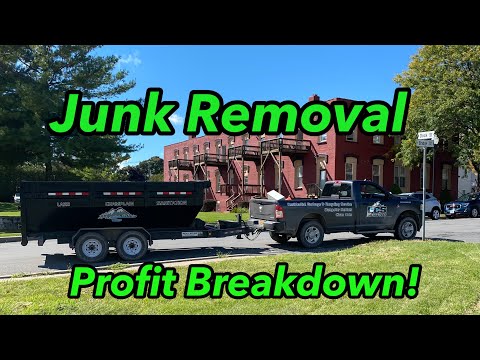
“JUNK REMOVAL Business | Profit Breakdown”
What we found: A $530 Junk-Removal Day That Starts With a Waste Company Already Running
Three small jobs, four hours, $725 gross. The deductions on the profit sheet add up, but a $69 landfill ticket shown on screen is not among them, and neither are the truck, the $9,200 trailer, the trash route or the referral partner.
- $725 Gross for the day
- $530 Stated net
- ~4 Hours
- ~$9,200 Trailer cost
The claim
That three small junk-removal jobs in about four hours grossed $725 and "netted 530 dollars into the company" after dump fees, fuel, a $20-an-hour wage and lead costs.
- Job 1 — trucking for a contractor partner — $250 + tax
- Job 2 — barn clean-out — $250 + tax
- Job 3 — small clean-out — $225 + tax
- Gross (creator's handwritten profit sheet, 14:45) — $725 + tax
- Dump fees / fuel — $60 / $25
- Labour at $20 an hour × 4 — $80
- Marketing at $10 a lead — $30
- Net to the company (same sheet) — $530
- Landfill tickets on screen, 10/8/2021 (11:46) — $69.00 (0.97 t) + $30.00 minimum (0.15 t)
- Net if the $69 ticket also comes out of the day — ~$461
- Trailer and build-out — ~$9,200 + ~$400
- Overhead, insurance, workers' comp, truck — Excluded by design
What is this income idea?
Small-load junk removal: load a customer's unwanted furniture, cardboard and household junk into a dump trailer, take it to the landfill, and charge a flat price that covers the dump fee.
- The operator runs Lake Champlain Sanitation. A driver on their residential trash route is "doing just over 600 stops a week" with one truck, and their father runs roll-off dumpsters, renting "about seven to ten dumpsters a week." Junk removal is described as a side hustle "starting to become a main hustle."
- They present it as starting from "ground zero… with practically nothing", then qualifies that straight away: "I have the equipment already because I use it for other things." What is new to them is marketing and pricing junk jobs.
- They show a newly built 7×12 dump trailer — about $9,200 "out the door after tax" plus about $400 of materials for the sides, some of the wood free from their father's property — and estimates about $500 for someone buying all the materials.
- The day covers three jobs. The first is trucking for a local contractor, Roger of RKS, who books clean-outs and pays for the hauling. The landfill tickets on screen at 11:46, dated 10/8/2021, show $69.00 for 0.97 ton at $71.13 a ton and a $30.00 minimum for 0.15 ton; the operator says the $69 comes "out of our 250 that we got from him". The second is a mostly cardboard clean-out in a barn. The third is a small load they will add to their residential route rather than take to the landfill.
- On a handwritten profit sheet shown at 14:45 they total $725 gross plus tax, subtract $60 of dump fees, $25 of fuel, four hours at $20 and $30 of marketing, and arrives at $530 "into the company today to put towards overhead."
- They then suggest that doubling up — "three more of those small jobs in a day" — would put about a thousand dollars into the company while still paying a worker.
They charged $725 for three small hauls in four hours and, after dump fees, fuel, a wage and ad costs, kept about $530 before the costs of owning the truck and trailer.
- Lead arrives — Google or a partner
- Quote a flat price — $225–$250 here
- Load in 10–25 min — Dump trailer
- Drive and wait — Most of the 4 hours
- Pay the dump fee — $30 minimum
- Net per day — $530 before overhead
The jobs are short; the driving and the landfill queue are where the hours go.
A careful day, measured from inside an existing business
The lesson underneath the number
- This is a well-made profit breakdown. They price each job, keep the sales tax out of revenue, use a real landfill minimum, count their own time at a wage they would pay a worker, and put a cost on leads even for a job that came by word of mouth. Where they are unsure — the fuel, the lead cost, the dump fee on a load that will ride on the trash truck — they round up. Then they say plainly that the $530 is "to put towards overhead" and that workers' compensation and insurance sit on top. That is more care than most videos in this category take.
- The framing is the weak point. "Ground zero… starting with practically nothing" sits next to a sentence that undoes it: "I have the equipment already because I use it for other things." The other things are a residential trash route of more than 600 stops a week and a dumpster business renting seven to ten a week. Those supply the truck, a place to dispose of small loads for a few dollars, familiarity with the landfill, and — through job one — a contractor partner who books clean-outs. A beginner gets none of that on day one. The landfill tickets they show also carry a $69.00 fee for job one that the profit sheet does not deduct.
- The equipment is the clearest example. They tell viewers the trailer cost about $9,200 after tax plus several hundred dollars to build out, and that is useful information. But it is not set against the day's result, and a newcomer would have to fund it first. At $530 a day, the trailer alone takes about eighteen working days to recover, before a tow vehicle, insurance or the slow winter season they describe.
- The doubling suggestion should also be read with their own caveat in mind. "Three more of those small jobs in a day" would roughly double the take, but they note drive time and landfill queues took most of the four hours. More jobs means more driving and more landfill minimums, and it depends on enough leads arriving on the same day in the same area — in a region where, by their account, demand drops off with the snow.
I know there's workers comp, you have insurances, there's more overhead. I'm just saying I netted 530 dollars into the company today to put towards overhead.
The operator, drawing the line around their own figure
How the day was run, as they show it
A documented day with the pricing and the receipts shown on camera.
Figures are as stated in the video. The landfill tickets at 11:46 and the profit sheet at 14:45 are quoted as they appear on screen.
- Keep the paperwork tidy — Receipts bagged and posted to an accountant monthly; card and ACH payments run through QuickBooks; trash customers more than 30 days overdue have their service cancelled. About 35 of 600-plus residential invoices were past due.
- Partner with local haulers — The contractor books the clean-out and does the loading; they are paid for "the trucking portion of it". Job one was two loads, about six miles round trip, for $250 plus tax. Its landfill ticket, shown on screen, is $69.00 for 0.97 ton, which the operator says comes "out of our 250".
- Quote, then adjust on site — Job two was expected to be larger — the customer warned there might be "double the stuff" — but some items were kept back. It loaded in about ten minutes and was charged $250 plus tax, dump fee included.
- Turn away hazardous items — Gasoline, oil and hazardous materials are refused, and large refrigerators are not taken to the landfill.
- Cost the day conservatively — A $30 landfill minimum is charged for the third job even though it will ride on the trash route for "probably two dollars, three dollars"; fuel is called $25 though they are unsure of the true figure; leads are costed at $10 though they do not believe they cost that much.
- Plan the next asset — A Ford F-600 with a 7-ton hook-lift is being upfitted; trailers and trailer dumpsters will be sold. Price and financing are deferred to future videos.
The business model
Flat-priced junk-removal loads ($225–$250 each here) and trucking for a contractor partner, plus sales tax.
Homeowners clearing small amounts of junk, and a local contractor who books clean-outs and subcontracts the hauling.
Same-day removal of bulky household junk without the customer renting a dumpster.
Google leads and word of mouth, alongside an existing residential trash and dumpster business.
- Landfill fees — $30 minimum per load; $71.13 a ton above it. Tickets for $69.00 and $30.00 shown on screen
- Fuel — Rounded to $25 for ~60 miles towing. Assumed
- Labour — $20 an hour for four hours, one person. Assumed
- Lead cost — $10 a lead, "to be safe". Assumed
- Trailer — ~$9,200 plus ~$400 build-out. Stated, not deducted
- Truck, insurance, workers' comp — Named as overhead, not priced
Most day-level costs are realistic and rounded up, though the $69 landfill ticket for job one is not on the profit sheet. The fixed costs are named as overhead and left for each operator to fill in.
What you would actually need
Money
"Ground zero… practically nothing", qualified by "I have the equipment already". The trailer cost about $9,200 plus about $400 to build out.
A newcomer needs a truck able to tow a loaded dump trailer and the trailer itself before the first job. On their figures that is close to $10,000 for the trailer alone, before the truck, insurance and registration.
Costs outside the $530
- Dump trailer: ~$9,200 plus ~$400–$500 of materials
- A tow vehicle — already owned, never priced
- Commercial vehicle and liability insurance
- Workers' compensation if anyone else works the job
- Vehicle wear, tyres and maintenance
- Accounting and card-processing fees
- Sales tax collected (correctly excluded from the $725)
Time
About four hours shop to shop for three jobs; each job "only took you know 15 to 25 minutes", with "drive time… the majority of it and waiting in the landfill."
The four hours are the field time only. Quoting, answering leads, scheduling, invoicing and the trailer build are separate, and a beginner would not have a trash route to absorb small loads or a partner sending work.
Where the hours go
- Driving between jobs and to the landfill
- Queuing at the landfill scale
- Loading: 10–25 minutes a job
- Quoting from photos and adjusting on site
- Two days with their father building the trailer sides
The part you must pay attention to
"Ground zero" here means an established waste business with a truck, a trailer, a trash route and a referral partner.
Their day-level arithmetic is correct and openly conservative. The question is what a newcomer would have to add to reach the same day.
- Three jobs, gross — $725
- Dump fees and fuel (rounded up) — $85
- 4 hours at $20 — $80
- Leads at $10 — $30
$530
Into the company, before overhead and equipment
The day is easier to reproduce for them than for a viewer in three specific ways the video mentions in passing. One of the three jobs came from a contractor partner who books clean-outs and does the loading. The third load does not go to the landfill at all, because it can ride on their residential trash truck for a few dollars. And the truck, the trailer and the landfill relationship already exist because they serve the trash and dumpster businesses. A newcomer pays the $30 landfill minimum on every load, finds every customer through paid or organic leads, and buys the equipment first.
They say overhead is excluded, they round several costs up rather than down, and they disclose what the trailer cost. One cost on screen does not reach the sheet: the landfill tickets shown at 11:46 total $99 (our arithmetic) — $69.00 for job one's 0.97 ton and a $30.00 minimum — while the sheet deducts $60 for two $30 minimums. If the $69 is paid from the day's takings, as the operator says, the day nets about $461 rather than $530 (our arithmetic). The $80 labour line is also one person's four hours at $20. Either way, the figure is the return on a day for a business whose fixed costs are already paid. For someone starting out, the first question is how many such days it takes to pay for the trailer: about eighteen at $530, or about twenty-one at $461 (our arithmetic), before the truck or insurance.
- THEIR PROFIT SHEET (on screen, 14:45)
- Job 1 (contractor) $250
- Job 2 (barn) $250
- Job 3 (small) $225
- ------------------------------
- Gross $725
- Dump fees -$60
- Fuel -$25 = $640
- Labour 4 h x $20 -$80 = $560
- Leads 3 x $10 -$30 = $530
- LANDFILL TICKETS (on screen, 11:46)
- 0.97 t x $71.13/t $69
- 0.15 t, minimum $30
- Total (ours) $99
- $530 - $69 (ours) = ~$461
- PER HOUR (OURS)
- $530 / 4 h = ~$132/h to company
- TRAILER PAYBACK (OURS)
- $9,200 + $400 = $9,600
- / $530 a day = ~18 days
- Truck, insurance not included
The economics
A correct day-level calculation with the fixed costs deliberately outside it.
- Gross (three jobs) — $725 + tax
- Landfill fees on the sheet — $60 (one rounded up)
- Landfill tickets on screen — $69.00 + $30.00
- Fuel — $25
- Labour benchmark — $20 an hour × 4
- Lead cost — $10 × 3
- Net to the company — $530
- Net if the $69 ticket is deducted — ~$461
- Net per field hour — ~$132
- Trailer and build-out — ~$9,600
- Truck, insurance, workers' comp — Not stated
How long one trailer takes to pay back
($9,200 + $400) ÷ $530 per day
~18 days like this one, before the tow vehicle, insurance or slow-season weeks
IncomeIdeaLab calculation from the costs and day result stated in the video
They already owned a truck and had other businesses sharing the equipment, so their own payback is shorter. A newcomer without free wood, a trash route or a referral partner would see higher costs per load and fewer jobs per day at first.
- The cost of the tow vehicle and its insurance
- Liability and workers' compensation premiums
- How many such days are available per week, and in winter
- Actual lead cost from Google (they believe it is under $10)
- Cost of the hook-lift truck, deferred to future videos
- The arithmetic chain on the profit sheet is exact: $725 − $60 − $25 = $640; $640 − $80 = $560; $560 − $30 = $530.
- The landfill tickets shown at 11:46 are dated 10/8/2021: 0.97 ton at $71.13 a ton for $69.00, and 0.15 ton charged the $30.00 minimum. The operator says the $69 comes "out of our 250 that we got from" the contractor; the sheet's $60 is two $30 minimums and does not include it. $530 − $69 = $461 (our arithmetic).
- They cost three leads at $10 each, though one job came by word of mouth from the contractor partner; that puts the $30 on the high side, consistent with their other rounding.
- Doubling to "a thousand dollars" assumes three more jobs of the same size fit into another four hours with the same driving and landfill time. That is a projection, not something the day demonstrates.
- The coffee marketplace they promote is a friend's business; they state it is "not sponsored or anything like that" and explains the friendship, which is a clear disclosure.
Evidence status
Every figure in the video.
- $725 gross for three jobs — Operator — Three prices given; they sum correctly.
- $530 netted into the company — Creator's handwritten profit sheet at 14:45 — Correct chain of subtractions; excludes overhead by their own statement and the $69 landfill ticket.
- Landfill tickets: $69.00 (0.97 t) and $30.00 minimum, 10/8/2021 — Landfill scale tickets on screen at 11:46 — $99 together (our arithmetic); the sheet deducts $60.
- About four hours shop to shop — Operator — Consistent with short loads, ~60 miles and landfill queues.
- $30 landfill minimum — Landfill ticket on screen at 11:46 — A $30.00 minimum for 0.15 ton is shown; a real floor on small loads.
- $25 fuel — Operator — They are unsure of the true figure and round up.
- $10 per lead — Operator — Stated as a safe overestimate.
- Trailer ~$9,200 plus ~$400 build-out — Operator — Disclosed; not set against the day.
- "Ground zero… practically nothing" — Operator — Qualified by existing equipment, a trash route and a partner.
- Doubling to about $1,000 a day — Operator — Depends on lead volume and drive time.
- 600+ residential stops a week; 7–10 dumpsters a week — Operator — Context for the existing business.
What is actually proven?
The day is documented and costed honestly. The starting position is not a beginner's.
- The deductions from $725 to $530 on the profit sheet are arithmetically correct.
- Landfill tickets dated 10/8/2021 show $69.00 for 0.97 ton and a $30.00 minimum (on screen at 11:46).
- With the $69 ticket deducted, the day nets about $461.
- The jobs, loading and landfill visits are filmed.
- They state the figure excludes workers' comp, insurance and overhead.
- Fuel, lead cost and one dump fee are rounded up rather than measured.
- The trailer cost about $9,200 plus about $400 to build out.
- The cost of the truck, insurance and other fixed overhead.
- About $1,000 a day by doubling the number of jobs.
What the headline doesn’t tell you
An honest day's figures, from a business that was already up and running.
- The equipment already existed. — Their own words.
- One job came from a partner. — Who booked it and loaded it.
- A $69 ticket is not on the sheet. — About $461 with it.
- One load rides the trash route. — For a few dollars.
- The trailer cost ~$9,200. — Not in the $530.
- The truck is not priced. — Nor insured, on paper.
- Most of the time is driving. — And landfill queues.
- Winter slows demand. — They say so.
- Doubling is a projection. — Not a recorded day.
Should you try it?
A real, simple service — budget for the equipment first
Use their costing method, then add the trailer, truck and insurance they already had.
- Arithmetic accuracy — 9 — Every step from $725 to $530 checks.
- Cost honesty at job level — 7 — Fuel, wage and leads rounded up; a $69 landfill ticket left off the sheet.
- Equipment disclosure — 7 — Trailer cost given; truck not priced.
- Overhead disclosure — 4 — Named as excluded; not quantified.
- Fit of the "ground zero" framing — 3 — Existing waste business supplies equipment and work.
- Sponsorship disclosure — 9 — Friend's business plugged and clearly stated as unsponsored.
- Repeatability for a newcomer — 4 — No trash route, partner or owned trailer.
- Beginner accessibility — 4 — Roughly $10,000 of trailer before day one, plus a truck.
- The method is worth copying exactly. Price each load, keep sales tax out of revenue, pay the landfill minimum on every trip, count your own hours at a wage you would pay someone else, and put a cost on every lead. If you round, round costs up. Do that for every day you work and you will know what the business is really making — something many new hauling operators never establish.
- Then fill in what their day leaves out because their other businesses already cover it. A tow vehicle that can pull a loaded dump trailer. The trailer itself, at about $9,200 plus build-out on their figures. Commercial insurance and, if anyone helps you, workers' compensation. Without a trash route, every small load costs at least the landfill minimum; without a contractor partner, every job has to be found.
- Work out the payback before you buy. At a day like theirs — $530 to the company after a wage, or about $461 with the $69 landfill ticket — the trailer alone takes about eighteen to twenty-one working days to recover. Early on you are unlikely to have three paid jobs every day, and they note that demand in their area falls away in winter. Count weeks, not days.
- Treat "about a thousand dollars a day" as a ceiling to test rather than a target to plan on. It requires twice as many jobs, in reach of each other and the landfill, in the same day. The jobs they filmed took ten to twenty-five minutes each; the driving and queueing took the rest of four hours.
Passive or automated?
Automation
Invoicing runs through QuickBooks; every load is physical work.
Passive potential
Revenue stops when the truck stops.
Junk removal is a physical, local service and nothing in the video suggests otherwise. Each job needs someone to quote it, drive to it, load it, drive to the landfill, wait at the scale and drive back. Invoicing and card payments are automated through QuickBooks, and a partner contractor can supply work, but the revenue is directly proportional to hours on the road. Hiring a driver at the $20 an hour they use as a benchmark would free the owner's time, and the $530 already assumes that wage — but the owner would still be quoting jobs, managing the equipment and finding the next lead.
- Quoting each load from photos or on site
- Loading, driving and unloading at the landfill
- Turning away hazardous materials
- Maintaining the truck and trailer
- Finding and keeping referral partners
Recommended beginner experiment
Prove demand before you buy the trailer.
- Check your landfill minimum. — Their is $30 a load.
- Price a trailer and tow vehicle. — Their trailer: ~$9,200.
- Get insurance quotes first. — They name it as overhead.
- Test lead flow with a small ad budget. — Cost per lead, per job.
- Find a contractor partner. — Their first job came that way.
- Cost every day their way. — Fees, fuel, wage, leads.
- Track jobs per day honestly. — Three filled four hours.
- Plan for the slow season. — Winter, by their account.
Our verdict: 6/10
A careful day's costing from a business with a head start the sheet's $725 to $530 checks; a $69 landfill ticket shown on screen, the truck, trailer, trash route and partner are not in it
Credited for pricing every job, excluding sales tax from revenue, deducting landfill fees, fuel, a $20-an-hour wage and $10-a-lead marketing, and rounding uncertain costs up rather than down; for an arithmetic chain from $725 to $530 on a handwritten profit sheet that checks exactly; for showing dated landfill tickets on camera; for stating that workers' compensation, insurance and other overhead are not included; for disclosing the trailer cost of about $9,200 plus build-out; and for clearly stating that a plugged business is a friend's and unsponsored. Marked down because "ground zero… practically nothing" describes an operator with an existing trash route, a dumpster business, an owned truck, a referral partner, and a route that absorbs small loads for a few dollars; because the $69.00 landfill ticket shown for job one, which the operator says came out of that job's $250, is not deducted on the sheet, leaving about $461 rather than $530 (our arithmetic); because the trailer cost is not set against the day and the truck is not priced; and because the suggestion of about $1,000 a day by doubling jobs is a projection rather than a recorded result.
As a costing exercise this is a model of how to do it. Three jobs are priced at $250, $250 and $225, sales tax is kept out, and from the $725 they subtract $60 of landfill fees, $25 of fuel, four hours at a $20 wage and $30 of lead costs to reach $530 on a handwritten profit sheet — every step correct, and the uncertain figures rounded up. The landfill tickets they show at 11:46 add one thing the sheet does not: a $69.00 ticket for job one's 0.97 ton, which they say comes out of that job's $250. Deduct it and the day nets about $461 (our arithmetic). They also say plainly that workers' compensation, insurance and other overhead sit on top, and they tell viewers the new trailer cost about $9,200 plus a few hundred dollars to build out. Where the video overreaches is in calling this "ground zero." The same sentence admits the equipment already existed for other purposes, and the other purposes are a residential trash route of more than 600 stops a week and a dumpster business renting seven to ten a week. That background supplied the truck, a contractor partner who booked one of the three jobs, and a trash truck that will carry the third load for a few dollars instead of a landfill minimum. A newcomer would pay for each of those things. On their own figures, the trailer alone takes about eighteen days like this one to pay back, before a tow vehicle, insurance or the winter slowdown they describe. The suggested thousand-dollar day is twice the jobs in the same window and remains a projection. Read the $530, or about $461 with the landfill ticket, as a day's contribution for an operator whose fixed costs are already covered, and use their method — not their total — to judge your own.
- Gross — $725 for three jobs
- Net to the company — $530 on the sheet
- With the $69 ticket — ~$461
- Per field hour — ~$132
- Trailer cost — ~$9,200 + ~$400
- Trailer payback — ~18 days like this
- Truck and insurance — Not stated
- Doubled day — ~$1,000
- Starting position — Existing waste business
- Beginner suitability — Possible, with ~$10k of equipment
Sources
- JUNK REMOVAL Business | Profit Breakdown — Source video, 2021-10-08