YouTube / Creator Business · Claim Review
“19 Years on YouTube, USD 37 Million, and My 5 Biggest Regrets”
What we found: The $37 Million Is Lifetime Topline Revenue Across Nine Income Streams; Profit, Costs and a Yearly Breakdown Are Not Stated
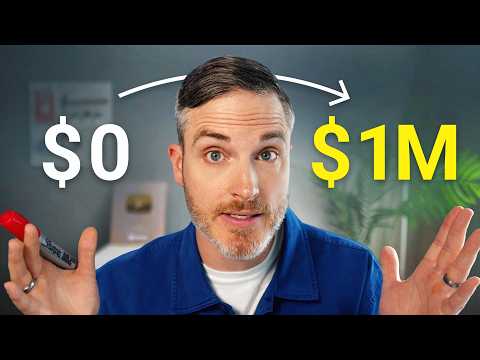
The creator says the company has done over $37 million in revenue over roughly 19 years, with at least $1 million in each of nine streams and a team of 20. They call it topline themselves. What it left after payroll and costs is not stated.
- $37M+ Company revenue, lifetime
- 9 Income streams at $1M+
- ~20 Team today
- Not stated Profit and costs
The claim
That a YouTube-led creator business built over 19 years has generated more than $37 million in revenue, with at least $1 million from each of nine income streams.
- Company revenue to date — Over $37 million, described as topline revenue
- Time on YouTube — 19 years, first videos posted in 2007
- Age of the main channel — 16 years
- Streams with at least $1 million each — Ad revenue, brand deals, digital courses, event tickets, affiliate marketing, book sales, JV partnerships, memberships, coaching
- Minimum explained by those nine streams — $9 million, about 24% of $37 million
- Average revenue per year — ~$1.9M over 19 years; ~$2.3M over 16 years
- Team today — About 20 people
- People worked with over time — Over 100 employees and contractors
- Current annual revenue — Not stated
- Profit, payroll, costs — Not stated
- Cost of the five mistakes — "Millions", not itemised
What is this income idea?
Use a YouTube channel as the centre of a business that sells many things around it: ads, sponsorships, courses, events, books, memberships and coaching.
- The video is a keynote given to a room of creators at a conference, published on the channel's podcast feed. The creator says they first posted to YouTube in 2007 for a local church, ran several channels at once in the early years, and started the main channel 16 years ago.
- The headline number comes in the first sentence: a business that has "generated over $37 million in revenue". Later they repeat it, "our company's done over 37 million in revenue", and list nine streams that have each brought in at least a million dollars: ad revenue, brand deals, digital courses, event ticket sales, affiliate marketing, book sales, JV partnerships, memberships and coaching.
- They qualify it straight away: "that's topline revenue. I've learned in business that sometimes you can make a lot of money and sometimes you can lose even more." That is an accurate description of what a revenue figure is, and it is stated without prompting.
- The rest of the talk is a framework of five stages, each with an income band and one mistake. Stage two runs from the first dollar to $1,000 a month; stage three from $1,000 to $10,000 a month; stage four from six figures to a million a year; stage five from high six figures to seven figures and above.
- The five mistakes are: running too many projects at once, doing every job alone, saying yes to every opportunity, ignoring contracts, entity structure and bookkeeping, and avoiding hard conversations with team members and partners. The creator says these mistakes cost them "millions" but gives no figure for any one of them.
- Mid-talk and again at the end, the video promotes a paid three-day online workshop run by the creator's company for business owners who want clients from YouTube.
A creator says their company has taken in over $37 million in total over many years and many products, and shares five mistakes; it does not say what the company kept.
- Post the first video — Stage zero to one
- Focus on one channel — Their stage-one fix
- First dollar to $1k/mo — Get help early
- $1k to $10k/mo — Filter opportunities
- Six figures to $1M/yr — Contracts, entity, books
- Seven figures and up — Hard conversations
- Nine income streams — $1M+ each, they say
Income bands are the creator's framework, not reported results; no figure is given for how many creators reach each stage.
A revenue total is a measure of size, not of earnings
The lesson underneath the number
- The $37 million is a lifetime company total across nine products and roughly two decades. Spread over the 16 years of the main channel it averages about $2.3 million a year in revenue; over 19 years, about $1.9 million. Those are averages of revenue for a company that now employs about 20 people, not a salary and not a profit.
- The creator is clear about this. They call it topline in the same breath, and they spend a whole section of the talk on the money lost by ignoring contracts, entity structure and bookkeeping, which they put at "multiple millions". That is useful context: a business can post large revenue and still lose much of it through structure and partner disputes. The video does not say how much of the $37 million that loss came out of.
- The income bands attached to each stage are a framework rather than data. The video gives no count of how many creators reach $1,000 a month or $10,000 a month, or how long it typically takes. A viewer at stage one should read them as signposts in this creator's model, not as expected results.
- The most transferable parts are the cheapest ones: commit to one project, delegate single tasks before hiring full-time, write down how a partnership ends as well as how it starts, and decide on opportunities with more than revenue in mind. None of those depends on reaching the creator's scale.
That's topline revenue. I've learned in business that sometimes you can make a lot of money and sometimes you can lose even more.
The creator, qualifying the $37 million in the same breath
The five mistakes and fixes, as the creator gives them
Each stage comes with an income band, one mistake and one fix.
No cost or profit figure is given for any stage.
- Stage one: commit to one thing — The creator says they once ran four channels with no team and no money, and now run two with a full team. The fix is to focus on "the shortest path to revenue" for the channel. A concrete, low-cost rule.
- Stage two: get help sooner — A solo creator does "12 to 18" jobs, they say, from scripting to bookkeeping. The fix is to delegate early; they note a single task can be handed to a contractor for about $200. No figure is given for what their own early help cost.
- Stage three: filter opportunities — Weigh the time, energy, resources, money and sanity a deal takes against its return, future value, personal development and lifestyle effect. The creator credits the framework to another author and gives one recent example of turning down a trip.
- Stage four: handle the boring parts — Contracts in writing, the right legal entity, someone who "owns your numbers", and written expectations. The creator says ignoring this led to the loss or non-realisation of "multiple millions of dollars"; no breakdown is given.
- Agree how partnerships end — They say they would avoid an even 50/50 split without very clear expectations, and that in one partnership the start was written down but the ending was not. Specific and usable advice.
- Stage five: have the hard conversation — Address a team problem early, "deal with the cavity before it becomes a root canal". The creator describes delaying one decision after several people raised the same concern.
The business model
Nine named streams: YouTube ad revenue, brand deals, digital courses, event tickets, affiliate marketing, book sales, JV partnerships, memberships and coaching.
Creators and business owners who want to grow on YouTube, plus the channel's general viewers for ads and affiliate products.
Teaching people how to build a channel and use it to win clients, from a creator with a long track record on the platform.
Two YouTube channels, a podcast feed, conference talks, and a paid online workshop promoted in the video.
- Team of about 20 — Stated. Payroll not stated
- Contractors — Over 100 people worked with over time. Cost not stated
- Events — Ticket revenue named. Venue and production costs not stated
- Course, coaching and membership delivery — Not stated
- Book production — Not stated
- Losses from the five mistakes — "Millions", not itemised
The video gives revenue only. The creator's own remark that a business can lose more than it makes is the right caution, and no figure follows it.
What you would actually need
Money
No starting budget is given. The creator says early help can be bought task by task, for example about $200 to a contractor, and advises hiring before you feel you can afford it.
The $37 million came from a business with a team of about 20 today and over 100 people over time. Payroll, contractors, event costs, book production and course delivery all cost money, and none of it is priced in the video, so the revenue says little about the cash a creator would keep.
Named in the video, not priced
- A team of about 20, plus contractors
- Editors and other delegated tasks
- Legal entity setup and accounting
- Contracts and legal advice
- Running in-person events
- Travel to conferences
Time
Nineteen years on YouTube, 16 on the main channel. The creator says they were still doing everything themselves as late as October 2015.
That is a long timeline, and it is stated openly. The stages give income bands but no typical time to move between them, so a viewer cannot tell from the video how long stage two or three usually lasts.
The timeline as stated
- 2007: first videos, for a local church
- Around 2009: several channels at once
- Main channel started 16 years ago
- October 2015: still working solo
- Today: team of about 20, two channels
The part you must pay attention to
$37 million is total revenue over many years, not yearly income and not profit.
The creator says it directly: "that's topline revenue." The video gives no figure that turns it into income.
- Company revenue to date — $37M+
- Years the figure may span — 16–19
~$1.9M–$2.3M
Average revenue a year, before any cost
The video does not say over which years the $37 million was earned, how it splits between the nine streams beyond "at least a million" each, or what the company spent to earn it. A company of about 20 people carries payroll before anything else, and courses, events, books and coaching each have delivery costs. Without a profit or cost figure, the $37 million cannot be read as what the creator earned.
Our averages assume the revenue is spread across either the 16 years of the main channel or the full 19 years on YouTube. Revenue in a growing business is usually lower in early years and higher later, so recent years were likely above the average and early years below it; the video gives no single-year figure to check. The nine streams at $1 million each account for at least $9 million, about a quarter of the total; where the other $28 million came from is not stated.
- THE HEADLINE, AVERAGED (our arithmetic)
- Company revenue to date >$37,000,000
- / 19 years on YouTube = ~$1.95M/yr
- / 16 years, main channel = ~$2.31M/yr
- -> revenue, before payroll and costs
- THE NINE STREAMS
- 9 streams x at least $1M = >= $9M
- $9M / $37M = ~24%
- Rest of the split not stated
- WHAT IS MISSING
- Team today ~20
- Payroll not stated
- Profit not stated
- Any single year not stated
The economics
One lifetime revenue figure, nine streams, and no cost or profit figures.
- Company revenue to date — Over $37,000,000
- Years on YouTube — 19
- Age of main channel — 16 years
- Streams at $1M or more — 9
- Team today — ~20
- People worked with over time — 100+
- Average revenue a year — ~$1.9M–$2.3M
- Profit, payroll, costs, any single year — Not stated
Averaging the lifetime figure
$37,000,000 ÷ 19 years = ~$1.95M; $37,000,000 ÷ 16 years = ~$2.31M
Roughly $1.9 million to $2.3 million a year in average revenue, before payroll and every other cost
IncomeIdeaLab calculation from the stated revenue and timeline
The video does not say which years the revenue covers, so both spans are our assumption. A growing business earns less in early years and more later, so no single year should be read from these averages.
- Profit or margin in any year
- Payroll for a team of about 20
- Revenue for the most recent year
- How the $37 million splits across the nine streams
- Costs of events, courses, coaching and book production
- The size of the losses attributed to the five mistakes
- The title figure and the spoken figure match: the video opens with "over $37 million in revenue" and repeats it later as company revenue.
- Nine streams at a minimum of $1 million each account for at least $9 million, about 24% of the total (our arithmetic). The video does not say which stream is largest.
- The stage bands overlap at the top: $10,000 a month at the top of stage three is $120,000 a year, which sits inside the "six figures to a million" band of stage four. They read as one continuous ladder.
- The talk promotes the creator's company's paid workshop in the middle and at the end, and invites viewers to subscribe. The workshop is named as their own; its price is not stated in the video.
Evidence status
Every substantive claim in the video.
- Over $37 million in company revenue — Creator — Stated twice and labelled topline. We could not check it from the video; no breakdown by year is given.
- 19 years on YouTube, first videos in 2007 — Creator — 2007 to 2026 is 19 years; the two figures agree.
- Main channel is 16 years old — Creator — Consistent with the rest of the timeline given.
- At least $1 million in each of nine streams — Creator — Accounts for at least $9 million of the $37 million; the rest of the split is not stated.
- Three silver play buttons and a gold play button — Creator — Reported as the creator's statement.
- Team of about 20; over 100 people worked with — Creator — Payroll and contractor costs are not stated.
- Stage income bands, $0 to seven figures — Creator's framework — A teaching model. No data on how many creators reach each band.
- The mistakes cost "millions" — Creator — Not itemised. No single loss is quantified.
- Average revenue of ~$1.9M–$2.3M a year — IncomeIdeaLab — From $37 million over 16 to 19 years. Revenue, not profit.
- Profit, payroll, costs — Nobody — Not stated in the video.
What is actually proven?
The timeline is consistent and the creator labels the figure correctly. The size of the earnings is not addressed.
- Over $37 million in company revenue, by the creator's statement.
- The creator calls the figure topline and says a business can lose more than it makes.
- Nine income streams with at least $1 million each.
- Average revenue of roughly $1.9 million to $2.3 million a year over 16 to 19 years.
- The nine streams at their stated minimum explain about a quarter of the total.
- The paid workshop promoted in the video is named as the creator's own.
- Profit, payroll and costs for a team of about 20.
- Revenue in any single year, including the most recent.
What the headline doesn’t tell you
A lifetime total across many products reads very differently from an annual income.
- $37 million is lifetime revenue. — Not yearly, not profit.
- It spans about 16 to 19 years. — Averaging ~$2M a year in revenue.
- There are nine streams. — Ads are only one of them.
- There is a team of about 20. — Payroll not stated.
- Losses are mentioned. — "Millions", not itemised.
- The stage bands are a model. — Not measured results.
- A paid workshop is promoted. — Named as their own.
Should you try it?
Useful operating advice; the $37 million is not a benchmark for a new channel
Take the low-cost fixes: focus, delegate single tasks, put agreements in writing. Do not read the headline as what a channel earns.
- Match between title and video — 8 — The $37 million is spoken in the same form as the title.
- Labelling of the figure — 8 — Called topline revenue, with a caution about losses.
- Breakdown of the revenue — 2 — Nine streams named; no split, no yearly figure.
- Cost and profit disclosure — 0 — No cost or profit figure in the video.
- Specificity of the advice — 6 — Concrete on contracts, partnerships and delegation.
- Disclosure of the pitch — 7 — The workshop is named as the creator's own; price not stated.
- Beginner accessibility — 5 — The early-stage advice costs little; the scale took 16 to 19 years.
- The useful parts of this talk do not depend on the headline. Commit to one channel and one route to revenue. Hand off single tasks to contractors before you think you can afford a hire. Weigh every opportunity against the time, energy and sanity it takes, not just the money. Write down how a partnership ends, not only how it starts.
- Read the $37 million as the size of a company built over 16 to 19 years with nine product lines and, today, about 20 people. Averaged, that is around $2 million a year in revenue, and the video does not say what was left after payroll, contractors, events and production. The creator is upfront that this is topline, which is the correct label.
- The income bands per stage are the creator's way of organising advice. No data is given on how many creators reach each band or how long each stage typically lasts, so they are not a forecast for your channel.
- The talk also promotes the creator's company's paid workshop. That is stated plainly; its price is not stated in the video.
Passive or automated?
Automation
Ad revenue and some course sales run without the creator; most streams do not.
Passive potential
Coaching, events, brand deals and a team of 20 are active work.
The creator does not describe this as passive. The business they outline runs on a team, live events, brand deals, coaching and a steady flow of new content, and the five mistakes are all about managing people, partners and paperwork. Some revenue, such as YouTube ad income and recorded courses, keeps arriving between uploads, but the video gives no figure for how much of the $37 million came that way.
- Making new videos on two channels
- Managing a team of about 20
- Negotiating and delivering brand deals
- Running events and coaching
- Contracts, entity structure and bookkeeping
Recommended beginner experiment
Borrow the cheap fixes and measure your own numbers from the start.
- Pick one channel and one offer. — Their stage-one fix.
- Track revenue and costs monthly. — The figures this video leaves out.
- Delegate one task to a contractor. — They cite about $200.
- Score each deal on more than money. — Time, energy and sanity too.
- Set up the right legal entity. — Ask an accountant where you live.
- Put every agreement in writing. — Including how it ends.
- Judge results by profit, not revenue. — The creator's own caution.
Our verdict: 5/10
A correctly labelled revenue total with no profit or cost figure beside it and practical advice that does not depend on the headline
Credited because the title figure matches what is said, because the creator labels the $37 million as topline revenue and warns that a business can lose more than it makes, because the timeline is internally consistent, and because the advice on focus, delegation, written agreements and partnership exits is specific. Marked down because no profit, payroll, cost or single-year figure is given for a company of about 20 people, because the $37 million is not broken down by stream or year beyond a $1 million minimum for each of nine streams, and because the stage income bands are presented without any data on how many creators reach them.
The $37 million in the title is the figure the creator says on camera, and they describe it accurately: company revenue to date, which they call topline, followed by a reminder that a business can lose more than it makes. Over the 16 to 19 years the video covers, it averages roughly $1.9 million to $2.3 million a year in revenue by our arithmetic, earned across nine product lines with a team of about 20 today. The video does not say what any of that left as profit, what the team costs, what the most recent year brought in, or how the total splits between ads, brand deals, courses, events, books, memberships and coaching beyond a $1 million minimum for each. So the headline measures the size of a long-running company, not what a creator should expect to earn. The talk itself is more useful than the number. Its five fixes are concrete and cheap to apply: focus on one project, delegate single tasks early, weigh opportunities against time and sanity as well as money, put contracts and partnership exits in writing, and deal with team problems before they grow. The stage income bands are a teaching model with no data behind them, and the talk promotes the creator's own paid workshop, which it names as theirs.
- Company revenue to date — >$37M
- Average a year — ~$1.9M–$2.3M revenue
- Streams at $1M+ — 9
- Team today — ~20
- Profit and costs — Not stated
- Paid workshop promoted — Yes, named as their own
- Beginner suitability — Advice yes, headline no
Sources
- 19 Years on YouTube, USD 37 Million, and My 5 Biggest Regrets — Think Media Podcast — YouTube video, 2026-10-15
- FTC — Guides Concerning the Use of Endorsements and Testimonials — Regulatory guidance on earnings claims