YouTube / Lead Generation · Claim Review
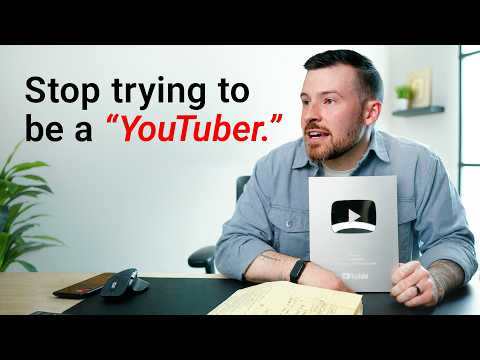
“How to Make Money on YouTube (Without Being a YouTuber)”
What we found: A Roofer’s $1.3M From YouTube Is Gross Sales, Told Second-Hand by His Coach
The only money figure in a video titled “How to Make Money on YouTube” is a student’s sales total with no timeframe, no margin and no attribution method — relayed inside a pitch for a paid workshop.
- $1.3M Sales attributed to YouTube
- Not given Timeframe
- 15,000 subs Channel size
- Not given Profit on those sales
The claim
That a business owner can make money from YouTube without being a YouTuber — evidenced by a roofer with a 15,000-subscriber channel who has $1.3 million in sales attributed to his videos.
- Sales attributed to YouTube — “Over 1.3 million” / “$1.3 million”
- Who reports it — The host, relaying what the roofer told him
- Relationship — “One of our students”
- Period covered — “Since he started doing it” — no dates
- Channel subscribers — 15,000
- Recent views per video — 200–400
- Recent deal being finalised — “Over 75k”
- Advertising spend — “Zero”
- Jobs, margin, attribution method — Never stated
What is this income idea?
Use YouTube as a lead source for an existing business rather than as a media business: answer buyers’ questions on video, then direct viewers to contact you.
- The host is a YouTube coach on the Think Media team. His argument is that business owners should stop measuring views and subscribers and measure enquiries and clients instead — “views are a YouTuber’s scoreboard… clients are the business owner scoreboard.”
- The evidence offered is one person. A roofer, described as “one of our students,” whom the host interviewed on an earlier episode. “He’s actually done uh over 1.3 million in sales attributed to YouTube… it’s at 15,000 subscribers… zero advertising by the way he told me that too.”
- The roofer’s method, as relayed, is search-style content for people about to buy: comparisons of roofing shingles and similar questions. Local viewers become customers; non-local viewers are referred elsewhere.
- The host adds that the channel is “in a slump” — recent videos getting “200 300 400 views” — while the roofer was finalising “a deal for like over 75k for another roofing project” during their interview. The point being that a handful of views from the right people can be worth more than reach.
- The second half covers YouTube’s recommendation system, which the host says now matches videos to viewers “based on meaning,” and three practical call-to-action rules: put the call to action before the halfway point, show a simple URL on screen and above the fold in the description, and pin a comment with the link.
- Twice in the episode the host pitches a paid three-day workshop run by himself and a colleague. The price is not given. The roofer’s figure is the only money number in the video.
Make videos that answer your future customers’ questions and ask them to get in touch — the coach says a student’s roofing business took $1.3 million in sales this way.
- Define what a video should cause — A call, a form, a booking
- Answer buyer questions — e.g. shingle comparisons
- Small, relevant audience — 15,000 subscribers
- Call to action before halfway — After 30 seconds
- URL on screen and above the fold — Plus a pinned comment
- Leads into a pipeline — Follow-up funnel
- Local jobs closed — One “over 75k”
- $1.3M in sales, told second-hand — No timeframe or margin
A sensible lead-generation method, with one unaudited data point as its proof.
The argument is right. The proof is a testimonial.
The lesson underneath the number
- The core idea here is sound and worth hearing. A service business does not need a large channel; it needs videos that reach people at the moment they are about to buy, and a clear way for those people to get in touch. A homeowner searching for which shingles to choose is a far more valuable viewer than a thousand people watching for entertainment, and a channel with a few hundred views per video can still produce a five-figure job. That is a better way for most businesses to think about YouTube than chasing subscribers.
- The call-to-action section is the most useful part, because it is specific enough to check. Put the ask before the halfway point and after some value has been given; show a short URL on screen while saying it; use the full address so the link is clickable; keep it above the description fold; pin it in the comments. The episode does exactly this — its first workshop pitch arrives about nine minutes into a roughly twenty-five-minute episode, before halfway, right after the first point is made. Whatever you think of the pitch, the technique is demonstrated in front of you.
- The proof is weaker than the argument. The only figure is one student’s sales total, told by his coach, with no period, no attribution method and no margin. “Sales” for a roofer is the price of a roof, most of which pays for shingles, crews and insurance. A cumulative $1.3 million could be a modest annual contribution spread across several years, or a remarkable one; the video does not let you tell. The host does disclose that the roofer is a student, and that is to his credit — but the figure is still selected, second-hand testimony from inside a sales funnel.
- And the title promises something the episode does not attempt. “How to Make Money on YouTube” suggests a figure a viewer could aim for. There is none. The closing promise — “you’re one video away from your next 10 clients” — is a slogan for the workshop, not a finding. The fair reading is that this is a reasonable marketing method for people who already run a business, illustrated by one unaudited success story, ending in an invitation to pay for more.
He’s actually done uh over 1.3 million in sales attributed to YouTube.
The host, relaying a figure from one of his students
The method, as the host gives it
Most of this is general marketing practice applied to YouTube, and much of it is sound.
- Decide what a video is supposed to cause — “When I post a YouTube video what happens?” For a service business the answer is an enquiry — a call, a text, a form — not a view. A useful reframe for anyone treating YouTube as marketing.
- Answer questions people ask just before buying — The roofer’s videos, as described, compare shingles and answer research-stage questions. That targets viewers who already need the service, which is why small view counts can still produce work.
- Call to action before the halfway point — Outside the first 30 seconds, ideally just before halfway, “after you’ve already given some value.” His reasoning is that retention falls through a video, so an end-only call to action reaches the fewest people.
- Make the link easy to act on — A short custom domain said aloud and shown on screen; the full URL including http so it is clickable in the description; and the link placed above the “show more” fold.
- Pin a comment with the link — Copy the description call to action into a comment and pin it. A small step, and a concrete one.
- Write for a specific viewer — The host argues that YouTube’s recommendations now match videos to people “based on meaning,” so narrow, specific content travels to the right audience. This is his characterisation of the platform, citing remarks he attributes to YouTube’s chief executive; it is not something the video can confirm.
The business model
For the roofer: roofing jobs won from viewers. For the channel: a paid workshop and coaching on this method.
Homeowners researching roofs, in the roofer’s case; business owners who want clients from YouTube, in the host’s.
Videos that answer buyers’ questions bring qualified enquiries without advertising.
YouTube search and recommendations, with calls to action pointing to a pipeline.
- Roofing materials, crews, insurance — The bulk of the cost behind $1.3M in sales. Never mentioned
- Video production time — “A few hours a week,” asserted in the workshop pitch
- Editing and equipment — Implied. Not priced
- Advertising — “Zero,” per the roofer, relayed by the host
- The paid workshop — Pitched twice. Price not stated
The money in this story is made by the roofing business. The channel is its marketing. Treating the sales total as YouTube income skips everything a roof costs to install.
What you would actually need
Money
Not discussed, except that the roofer spent “zero” on advertising and that the workshop is “a paid event.”
For an existing business, the cash cost of making search-style videos is modest. The real requirement is an existing business with something worth selling — the roofer’s sales came from roofing, not from YouTube.
Costs implied, none priced
- An existing service business to send leads to
- Camera, microphone and editing (or an editor)
- A custom domain for calls to action
- A follow-up pipeline for enquiries
- The paid workshop, if you take it — price not stated
Time
“You can make this run in just a few hours a week.” Said while describing the workshop.
Plausible once a routine exists, but unsupported. The roofer’s channel reached 15,000 subscribers over a period the video never states, and the time it took to get there is not mentioned.
What the video does not say
- How long the channel has existed
- How many videos it took
- Over what period the $1.3M was attributed
- How long a typical lead takes to close
- Hours per week actually spent by the roofer
The part you must pay attention to
$1.3 million in roofing sales is not $1.3 million made from YouTube.
The headline proof is gross sales of a physical service, reported by the seller’s coach, over a period nobody states.
- Sales attributed to YouTube — $1.3M
- Cost of delivering roofs — − materials, crew, insurance, overhead
- Period never given — ÷ years
Unknown
Annual profit attributable to the channel
Three things carry the claim and none is shown. First, attribution: “since I’ve been able to track attribution” is the only description of how a sale gets counted as coming from YouTube, and a customer who watched a video after being referred by a neighbour could be counted either way. Second, time: the figure is cumulative, and whether it covers one year or ten changes its meaning completely. Third, margin: a roofing job carries materials, labour, equipment and insurance, so the owner keeps only part of each sale. On top of that, the figure reaches the viewer second-hand, from a coach whose business is selling exactly this method, about a person described as one of that coach’s students.
None of this makes the claim false. A roofing company taking $1.3 million in work from search-style videos and a 15,000-subscriber channel is entirely plausible, and the recent “over 75k” deal shows how few customers it takes to add up. But the video is titled “How to Make Money on YouTube,” and it offers no figure at all for what the roofer kept, what a viewer might expect, or how long it took. The student relationship is disclosed, which is to the host’s credit. The workshop it leads into is pitched twice, with no price.
- THE SIZE OF THE CLAIM (our arithmetic)
- Sales attributed $1.3M
- One recent deal ~$75k
- $1.3M / $75k ~17 jobs
- -> if all jobs were that size
- WHAT THE OWNER MIGHT KEEP
- (illustrative margins, assumed)
- at 10% net ~$130,000
- at 20% net ~$260,000
- over ? years unknown
- THE AUDIENCE
- Subscribers 15,000
- Recent views/video 200-400
- Ad spend "zero"
- THE EPISODE ITSELF
- First workshop pitch ~9:21
- Episode length ~24:44
- Position ~38%
- -> follows its own
- before-halfway rule
The economics
One figure, three missing qualifiers.
- Sales attributed to YouTube — $1.3M
- Period covered — Not stated
- Attribution method — Not described
- One recent deal — Over $75,000
- Equivalent jobs at that size — ~17
- Subscribers — 15,000
- Recent views per video — 200–400
- Advertising spend — “Zero”
- Profit at an illustrative 10–20% net margin — $130,000–$260,000 in total
What $1.3M in roofing sales could mean for the owner
$1.3M × an assumed 10%–20% net margin, over an unstated number of years
Roughly $130,000–$260,000 in total profit — cumulative, not annual, and only if those margins apply
IncomeIdeaLab illustration. The margins are our assumption, not a figure from the video
The video gives no margin, cost or timeframe. We use an illustrative range only to show that gross sales of a physical service are not the owner’s income; the roofer’s actual margin could be higher or lower.
- The period over which $1.3M was earned
- How a sale was judged to come from YouTube
- Number of jobs and average job size
- Roofing margin after materials and labour
- Time spent producing videos
- The price of the workshop being pitched
- The $1.3 million figure is the host’s report of what the roofer said on another episode. The roofer does not speak in this video.
- Over $75,000 for a single roofing project means the cumulative figure could represent fewer than twenty large jobs. That is a useful reminder of how few customers a high-ticket service business needs — and of why one good year could produce the whole total.
- Non-local viewers are “referred somewhere else.” Whether those referrals earn the roofer anything is not said, so they may be audience without revenue.
- The host describes himself as having “helped hundreds of people” with this process. No outcomes other than the roofer’s are given.
- The workshop is pitched at roughly the 38% mark and again near the end, with a custom domain shown as the call to action. The episode is, in effect, a worked example of its own advice.
Evidence status
Every substantive claim in the video.
- “Over 1.3 million in sales attributed to YouTube” — Host, relaying the roofer — Gross sales, second-hand, no period or attribution method.
- 15,000-subscriber channel — Host — Plausible and consistent with the rest of the story.
- Zero advertising — Host, relaying the roofer — Stated. Not checkable here.
- A deal “over 75k” closing during the interview — Host — Shows the job size that makes small audiences valuable.
- Recent videos at 200–400 views — Host — Disclosed, and it supports his point about relevance over reach.
- Has helped hundreds of people — Host — No results other than one student’s are given.
- YouTube now matches videos to viewers by meaning — Host, citing YouTube’s chief executive — His characterisation; the video cannot confirm it.
- Call to action before halfway improves conversions — Host — Sensible reasoning from retention curves. No data given.
- “A few hours a week” — Host, in the workshop pitch — Asserted, not evidenced.
- “One video away from your next 10 clients” — Host — A slogan. No basis given.
- What a viewer could earn — Nobody — The title promises it; the episode never addresses it.
What is actually proven?
The method is described; the money is asserted.
- The call-to-action rules are specific and the episode follows them.
- A student roofer reports $1.3M in YouTube-attributed sales, via his coach.
- The student relationship is disclosed.
- $1.3M is roughly seventeen jobs at the one deal size mentioned.
- The period, attribution method and margin behind the $1.3M.
- The workshop price.
- Any figure for what a viewer might earn.
What the headline doesn’t tell you
A marketing method, sold with a testimonial.
- $1.3M is sales, not income. — Roofs cost money to install.
- No timeframe is given. — “Since he started tracking.”
- It is second-hand. — The roofer does not speak here.
- He is the host’s student. — Disclosed, to the host’s credit.
- A paid workshop is pitched twice. — No price is given.
- You need a business first. — YouTube was the marketing, not the product.
- One example is offered. — Out of “hundreds” helped.
- The title’s question is not answered. — No earnings figure for viewers.
Should you try it?
Yes, if you already sell something — skip the promise
The call-to-action rules cost nothing to apply and are worth applying. The $1.3M story is not a forecast for anyone.
- Practicality of the call-to-action advice — 8 — Specific, cheap to apply, and demonstrated in the episode.
- Soundness of the core argument — 7 — Relevance over reach is the right frame for a service business.
- Disclosure of the student relationship — 7 — Stated plainly when the example is introduced.
- Evidence for the money claim — 2 — One second-hand gross figure, no period or margin.
- Delivery on the title — 2 — No earnings figure for viewers anywhere.
- Commercial transparency — 4 — Workshop pitched twice; price withheld.
- Beginner suitability — 5 — Good for existing businesses; no route for someone without one.
- If you already run a service business, the idea here is worth trying and costs little. Make videos that answer the questions your customers ask just before they buy — comparisons, prices, what to choose — and measure enquiries rather than views. A few hundred of the right viewers can be worth more than many thousands of the wrong ones, especially where a single job is worth tens of thousands.
- Apply the call-to-action rules directly. Ask after you have given some value and before the halfway point; say and show a short web address; put the full, clickable link at the top of the description; pin it in the comments. These are free, specific changes, and the episode demonstrates each one on itself.
- Do not read the roofer’s $1.3 million as income, or as an expectation. It is the value of roofing work, most of which pays for materials and labour; it covers a period nobody states; it is counted by a method nobody describes; and it reaches you through his coach, in an episode that is selling a workshop. The honest takeaway is that one roofer reports winning a lot of work this way.
- If you do not have a business to send leads to, this video has nothing for you despite its title. It is about marketing something you already sell, not about earning from YouTube itself.
Passive or automated?
Automation
Search keeps old videos working; everything after the enquiry is manual.
Passive potential
The income is from roofing, which is labour.
The one genuinely durable element is that search-style videos keep answering questions long after they are posted, which is why a channel in a views slump can still produce enquiries. Everything else is active. Videos have to be planned, filmed and edited; enquiries have to be followed up and quoted; and the revenue itself comes from installing roofs, which is physical work with crews and materials. The host’s own description of the roofer — a busy business owner with a family and a second channel — is of someone fitting video around a full-time trade, not someone earning passively.
- Planning and filming question-led videos
- Editing, or managing an editor
- Following up and quoting every enquiry
- Delivering the service itself
- Tracking which customers came from video
Recommended beginner experiment
For an existing service business, over three months.
- List the ten questions customers ask before buying. — Those are your first ten videos.
- Decide the single action each video should cause. — Call, form, or booking.
- Buy a short domain for that action. — Say it and show it.
- Ask before halfway, after giving value. — Outside the first 30 seconds.
- Put the full link above the fold and pin it. — Include http so it is clickable.
- Ask every new customer how they found you. — Your own attribution, written down.
- Track jobs and margin, not sales alone. — What the video never shows.
- Judge it on profit after three months. — Before paying for any workshop.
Our verdict: 4/10
Sound marketing advice, proven by a coach’s student’s gross sales and a title that promises an earnings answer the episode never gives
Credited for a correct core argument — that a service business should measure enquiries and clients rather than views — for call-to-action advice specific enough to apply immediately and demonstrated by the episode itself, and for disclosing that the roofer cited as proof is one of the hosts’ students. Marked down because the only money figure is $1.3 million in gross roofing sales, relayed second-hand with no timeframe, attribution method or margin; because a paid workshop is pitched twice without a price; because no outcome is offered from the “hundreds” the host says he has helped other than this one; and because a video titled “How to Make Money on YouTube” contains no figure for what a viewer might earn.
The advice in this episode is better than its evidence. Measuring a business channel by enquiries rather than views is the right instinct; making videos that answer buyers’ questions is a proven way to reach people when they are ready to spend; and the call-to-action rules — ask before halfway, show a short address, make the link clickable and visible, pin it — are concrete, free, and demonstrated by the episode on itself. A service business that applied only those would probably get more from whatever video it already makes. The money claim is another matter. The single figure, $1.3 million in sales attributed to YouTube, belongs to a roofer described as one of the hosts’ students and reaches the viewer through his coach. It is the value of roofing work, not the owner’s earnings; nobody says over what period it accumulated or how a sale was judged to come from a video; and no margin is offered for a trade where materials and crews take much of every job. The host discloses the student relationship, which is fair, and the figure is entirely plausible for a high-ticket local trade — one recent deal alone was said to be over $75,000. But it is a testimonial, not evidence, and it sits inside an episode that pitches a paid workshop twice without a price. Take the method. Leave the number.
- Sales attributed to YouTube — $1.3M (second-hand)
- Period — Not stated
- Owner’s profit — Not stated
- One recent deal — Over $75,000
- Channel — 15,000 subscribers
- Ad spend — “Zero”
- Student relationship — Disclosed
- Workshop price — Not stated
- Beginner suitability — Existing businesses only
Sources
- How to Make Money on YouTube (Without Being a YouTuber) — Think Media Podcast — YouTube video, 2026-08-28
- FTC — Guides Concerning the Use of Endorsements and Testimonials — Regulatory guidance on testimonials and typical results