Index Investing / Rental Property · Claim Review
“From USD 0 To Millionaire | Investing For Beginners”
What we found: $10 a Day at 7% Reaches About $505,000 in 35 Years, as Stated; a Million Takes About 44 Years
The compound-interest example holds. The millionaire figure in the title comes from the creator's leveraged rental portfolio, stated without costs, and the claim that each mortgage payment buys "half a percent more of the home" is about three times what a standard 30-year loan pays down at the start.
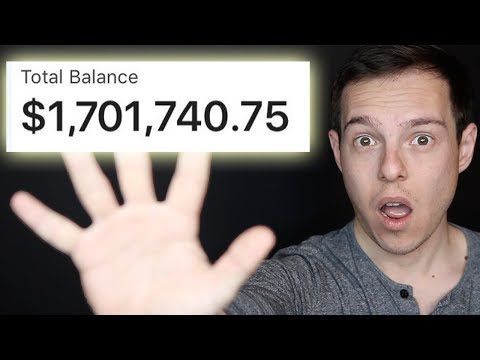
- ~$500k $10 a day, 7%, 35 years
- ~44 years $1 million at the same rate
- >$1M Made from real estate
- >$15k/mo Gross rent
The claim
That a beginner can go from nothing to wealthy by investing consistently — a $10-a-day habit at 7% for 35 years buys a half-million-dollar car — with index funds as the default, and that the creator has made over $1 million from rental real estate as a side investment.
- $10 a day at 7% for 35 years — About half a million dollars
- Our recalculation (annual contributions) — ~$504,600
- Daily amount for $1 million in 35 years at 7% — ~$19.80
- Years for $10 a day to reach $1 million at 7% — ~44
- S&P 500 long-run return — ~7.5% a year after inflation, dividends reinvested
- Made from real estate — Over $1 million, as a side investment
- Rents — Over $15,000 a month gross
- Home equity per mortgage payment — "Half a percent more of the home"
- Our calculation, first payment on a 30-year 3.5% loan — ~0.16% of the loan
- Rental expenses, mortgage costs, net income — Not stated in the video
What is this income idea?
Not a single business: a beginner's ranking of five places to put money, from hands-off index funds to hands-on rental property.
- The video opens with a car. A half-million-dollar supercar, the creator says, is "as simple as a $10 a day investment compounded at a 7% return over 35 years". The creator then stresses that no investment is guaranteed, that returns fluctuate, and that there may be several years of breaking even.
- Index funds come first. The S&P 500 is said to have returned about 7.5% a year over the last 100 years after inflation, with dividends reinvested. The creator says they have held a mix of broad index funds for ten years and recommends holding for at least ten years. Low-cost brokers are named as places to buy them.
- Rental real estate is where the creator says "pretty much" all their money goes. The blueprint: buy below value, in an area expected to rise, with a fixed-rate 30-year loan, renovate, rent for more than the expenses, and repeat. The creator says this has made "over a million dollars" as a side investment and that rents now exceed $15,000 a month gross. The downsides are stated: three to six months to find a deal, a down payment and credit requirement, illiquidity, and tenants.
- Individual stocks are third, described as something the creator does only occasionally, with money they can afford to lose. Three stocks' one-year gains are given as examples, followed by a warning that "the typical investor is really really bad at doing this". A link offers two free stocks for a $100 deposit on a trading app the creator says they use.
- Fourth is a high-interest savings account, where the creator keeps at least $50,000 at 1.6% to 2%, roughly matching inflation. Fifth is investing in yourself: books, travel, skills, networking and health.
Put most money in broad index funds for the long run; rental property can earn more but is a part-time job; keep cash in a savings account that pays interest.
- $10 a day — 7% for 35 years
- Index funds — Buy and hold 10+ years
- Rental property — Leveraged, hands-on
- Individual stocks — Money you can lose
- Savings account — $50,000 floor
- Yourself — Skills and networks
Five options ranked by the creator, with costs and risks stated for each.
The index maths holds; the million came from somewhere else.
The lesson underneath the number
- The opening example is accurate. Ten dollars a day for 35 years at 7% comes to about $504,600 by our arithmetic, which is the half a million the video names. The creator surrounds it with fair warnings: nothing is guaranteed, there may be several years of breaking even, and investing is "a true test of your willpower".
- The title's millionaire is a different story, and the video says so in its own way. The creator says real estate is "pretty much where all my money goes", that it has made "over a million dollars" as a side investment, and that it is far more intricate, time-consuming and risky than index funds. That million is not the result of starting from zero with $10 a day; it is the result of borrowing against property and working on it, and the creator says plainly that it requires a down payment, good credit and qualifying income.
- Two property claims are worth testing. The first, that a 3.5% loan "is essentially costing me nothing" after the interest deduction and 2% inflation, comes close: at a 24% tax rate the real after-tax cost is about 0.66% a year by our arithmetic. The second, that each payment buys "half a percent more of the home", is higher than amortisation gives. On a 30-year loan at 3.5%, the first payment repays about 0.16% of the balance and the average over the life of the loan is about 0.28%; half a percent a month would pay a loan off in under 17 years.
- The stock section is careful in its words and selective in its examples. Three stocks' one-year gains of 88% to 140% are given, followed by the creator's own warning that the typical investor will not beat the market and that they buy individual stocks only with money they can afford to lose. The two-free-stocks link is for an app the creator says they use; whether they are paid for sign-ups is not stated in the video.
I'll be the first to admit it's a lot of work… it's definitely like you're buying yourself another part-time job.
Graham Stephan, on rental real estate
The rental-property blueprint, as given
The creator's six numbered steps, which the list then extends to seven ways the property makes money.
No purchase prices, expenses or returns are given for any of the creator's own properties.
- Buy below value — A $450,000 purchase of a $500,000 home is "$50,000 of equity just for buying it". That is paper equity before closing costs, and only if the $500,000 value holds.
- Buy where values are expected to rise — Areas with new buyers, investment and businesses, ideally cheaper than nearby areas.
- Use a fixed-rate 30-year loan — At 3.5%, the creator says the interest is deductible against rental income and the remainder is eroded by about 2% inflation, so the loan "is essentially costing me nothing". By our arithmetic, at a 24% tax rate the after-tax, after-inflation cost is about 0.66% a year: small, not zero.
- Renovate for forced appreciation — Remodel so the home is worth more than purchase plus renovation cost.
- Rent for cash flow — $5,000 a year on $100,000 invested is a 5% cash-on-cash return. The arithmetic is correct.
- Let tenants pay down the loan — The creator says each monthly payment means you own "half a percent more of the home". On a 30-year 3.5% loan the first payment repays about 0.16% of the balance, and the average across the loan is about 0.28%, by our arithmetic.
- Collect long-run appreciation — Two to four per cent a year in high-quality areas, with a stated caution that some areas fall in value.
The business model
Market returns and dividends from index funds; rent, loan paydown and appreciation from property; interest from savings.
Beginners who know they should invest but not where to start.
A ranked starting point, with the risks and workload of each option stated.
A YouTube video, with a trading-app sign-up link offering two free stocks and links to the creator's other videos.
- Fund fees — Described as extremely low or free; no figure given
- Closing costs on property — Not mentioned in the $50,000-equity example
- Rental expenses and vacancies — Not stated for the creator's portfolio
- Property manager — Mentioned as an option; cost not stated
- Tax — Retirement accounts suggested for stock trading
The index-fund example is given before fees, and the property results are given before any expenses. The cash-on-cash definition used in the video does count expenses, which is the right measure.
What you would actually need
Money
Index funds can start with one share, quoted at $307.58. Real estate needs a down payment, a good credit score and enough income to qualify for a loan.
The two halves of the video need very different amounts. $10 a day into index funds is open to most earners. The real-estate path, which is where the over-$1 million result comes from, requires capital and borrowing capacity the video does not quantify.
What each option needs
- Index funds: $10 a day, held for decades
- Rental property: down payment, credit, qualifying income
- Renovation budget on top of the purchase
- Emergency cash: the creator keeps at least $50,000
- Stocks: only money you can afford to lose
Time
Index funds take "pretty much no work at all". Real estate is "like you're buying yourself another part-time job".
The creator is direct about the time cost of property: three to six months or more to find a deal, open houses every weekend, and managing renovations. The index example needs 35 years to reach half a million and about 44 to reach a million.
Where the time goes
- Index funds: 35 to 44 years of compounding
- Property: 3–6+ months per deal search
- Weekend open houses
- Renovation management
- Managing tenants or a property manager
The part you must pay attention to
The $10-a-day example reaches half a million, not a million.
The title promises a path from zero to millionaire. The worked example in the video stops at about half a million, and the creator's own million came from leveraged rental property.
- $10 a day for a year — $3,650
- Growth factor, 35 years at 7% — 138.2
~$504,600
Matches the stated half a million
The example holds, but it rests on 7% a year, every year, for 35 years. The video itself says the S&P 500 has returned about 7.5% a year after inflation over a century, which, if the 7% is read the same way, makes the $504,600 a figure in today's money; the video does not say which. Reaching $1 million at 7% would take about $19.80 a day for 35 years, or about 44 years at $10 a day, by our arithmetic.
The creator's over-$1 million result is a different route: rental property bought with 30-year loans, renovated and rented. It is stated alongside more than $15,000 a month in gross rent, with no mortgage payments, expenses, vacancies or net figure, so the result could not be checked from the video. The creator is clear that this route is a part-time job with a high barrier to entry, which is the honest framing of how the million was made.
- $10 A DAY AT 7%
- Per year $3,650
- 1.07^35 = 10.68
- Annuity factor = 138.2
- 35 years ~$504,600
- TO REACH $1,000,000
- 35 years: ~$19.80 a day
- $10/day: ~44 years
- EQUITY PER PAYMENT (OURS)
- $400k loan, 3.5%, 30 yrs
- Payment ~$1,796
- Interest, mo 1 ~$1,167
- Principal ~$629
- = ~0.16% of the loan
- Stated: "half a percent"
The numbers
One compound-interest example, a set of property examples and a stated result with no costs.
- Daily contribution — $10
- Assumed return — 7% a year
- Period — 35 years
- Result, stated / ours — ~$500,000 / ~$504,600
- S&P 500 long-run return — ~7.5% after inflation
- Real-estate result — Over $1 million
- Gross rent — Over $15,000 a month (~$180,000 a year)
- Cash held in savings — At least $50,000 at 1.6%–2%
- Property expenses, debt service, net income — Not stated in the video
Recomputing the $10-a-day example
$3,650 × ((1.07^35 − 1) / 0.07) = $3,650 × 138.24
About $504,600, consistent with "half a million"; $1 million needs ~$19.80 a day or ~44 years
IncomeIdeaLab calculation from the contribution, rate and period stated in the video
Annual contributions at year end; daily compounding gives slightly more. Before fund fees and tax. Whether the 7% is before or after inflation is not stated.
- Purchase prices and loans on the creator's properties
- Expenses, vacancies and net income behind $15,000 a month gross
- Whether "over a million" is equity, cash flow or sale profit
- Closing costs in the buy-below-value example
- Whether the creator is paid for trading-app sign-ups
- $15,000 a month gross is about $180,000 a year in rent, by our arithmetic. With mortgage payments, tax, insurance, repairs and management unstated, the net figure cannot be estimated from the video.
- The $450,000-for-$500,000 example creates $50,000 of paper equity; buying and later selling costs would reduce what can actually be realised.
- The creator's rental blueprint is introduced as six steps and then numbered to seven ways the property makes money; the extra item is long-run appreciation.
- At 1.6% to 2%, the creator says savings "basically just keeps pace with inflation", which is consistent with the roughly 2% inflation rate used elsewhere in the video.
Evidence status
Every substantive claim in the video.
- $10 a day at 7% for 35 years buys a half-million-dollar car — Creator — About $504,600 by our arithmetic. Holds.
- S&P 500 ~7.5% a year after inflation over 100 years — Creator — Could not be checked from the video.
- Index funds held for the last ten years — Creator — The creator's own statement.
- Over $1 million made from real estate as a side investment — Creator — No prices, costs or net figures. Could not be checked from the video.
- Rents over $15,000 a month gross — Creator — Gross only. About $180,000 a year.
- $5,000 a year on $100,000 = 5% cash on cash — Creator — Correct.
- A 3.5% loan "is essentially costing me nothing" — Creator — About 0.66% a year real, after tax at 24%, by our arithmetic. Close to, not at, zero.
- Each payment buys "half a percent more of the home" — Creator — About 0.16% at the start and 0.28% on average for a 30-year 3.5% loan.
- Homes in high-quality areas rise 2%–4% a year — Creator — Stated with the caveat that some areas fall.
- Three stocks up 88% to 140% in a year — Creator — Examples chosen after the fact; followed by a warning about stock picking.
- At least $50,000 kept in savings at 1.6%–2% — Creator — The creator's own practice.
What is actually proven?
The examples can be recomputed; the creator's own results cannot be checked from the video.
- The $10-a-day example reaches about $504,600, as stated.
- The cash-on-cash example is correct.
- The monthly equity figure is about two to three times what standard amortisation gives.
- Over $1 million made from real estate, and over $15,000 a month in gross rent.
- 7% a year for 35 years, and 2%–4% yearly appreciation.
- Expenses and net income from the rental portfolio.
What the headline doesn’t tell you
Zero to half a million is in the maths; zero to a million is in the property.
- $10 a day reaches ~$505,000. — Not a million, at 7% for 35 years.
- A million takes ~44 years. — At $10 a day and 7%.
- The creator's million is property. — Leveraged, hands-on, stated gross.
- $15,000 a month is gross rent. — No expenses or net figure.
- "Half a percent" a month is high. — ~0.16% at the start, by our arithmetic.
- The loan is not quite free. — ~0.66% real after tax at 24%.
- The stock examples are winners. — With a warning attached.
- Sign-up link payment not stated. — For the two-free-stocks offer.
Should you try it?
Yes to the index funds; property only with capital and time
The $10-a-day example is accurate and achievable. The real-estate route is the creator's, and they describe it as a part-time job with a high barrier to entry.
- Accuracy of the headline example — 9 — Within 1% of our recalculation.
- Risk warnings — 8 — No guarantees, flat years, stock-picking odds all stated.
- Honesty about property workload — 8 — "Another part-time job", barrier to entry, illiquidity.
- Evidence for the creator's results — 2 — Gross rent and a total, no costs.
- Accuracy of the property examples — 6 — Cash-on-cash correct; equity-per-payment high.
- Match between title and content — 5 — The index route stops at half a million.
- Beginner accessibility — 7 — Index funds yes; property requires capital.
- For most beginners, the first section is the useful one. Broad index funds held for ten years or more, bought cheaply and left alone, are what the creator recommends for "almost everyone watching", and the $10-a-day example shows the scale: about $505,000 after 35 years at 7%. If the goal is $1 million, the same rate needs about $19.80 a day, or about 44 years at $10.
- The rental-property section is honest about what it takes. The creator spends three to six months or more finding each deal, goes to open houses every weekend, and calls it a part-time job. The over-$1 million result and the $15,000 a month in gross rent come without purchase prices, loan payments or expenses, so a reader cannot work out the return from the video.
- Two of the property examples need adjusting before use. A below-market purchase creates paper equity that buying and selling costs will reduce. And a 30-year mortgage repays far less than half a percent of the home each month in the early years — about 0.16% on a 3.5% loan at the start — so equity from paydown builds slowly at first.
- Treat the stock section as the creator does: occasional, with money you can afford to lose. The three one-year winners quoted are examples, and the creator's own conclusion is that the typical investor will not beat the market.
Passive or automated?
Automation
Index contributions automate fully; property does not.
Passive potential
Index funds are close to passive; rentals are a part-time job by the creator's account.
The video covers both ends of the scale. Index funds are as passive as investing gets: the creator buys a mix of broad funds and then does "absolutely nothing". Rental property is the opposite, and the creator says so: searching for deals, open houses every weekend, managing renovations, and managing tenants or a property manager. The over-$1 million result comes from the active end.
- Setting and maintaining contributions
- Finding, financing and renovating properties
- Managing tenants or a property manager
- Researching any individual stock bought
- Not selling index funds in a downturn
Recommended beginner experiment
Start with the part that needs no capital.
- Build an emergency fund first. — In a savings account that pays interest.
- Automate $10 a day into a broad index fund. — About $300 a month.
- Check the fund's expense ratio. — Fees are not quantified in the video.
- Plan for 35 years, not 3. — The example needs the full period.
- Model property with every expense. — Mortgage, tax, insurance, repairs, vacancy.
- Use a real amortisation table. — Not half a percent a month.
- Keep stock picks small. — Money you can afford to lose.
Our verdict: 6/10
An accurate compound-interest example under a title it does not reach with the creator's million coming from leveraged property stated in gross figures only
Credited for a $10-a-day example that matches our recalculation within 1%; for repeated, specific risk warnings, including flat years and the odds of stock picking; for an honest account of rental property as a part-time job with a high barrier to entry and poor liquidity; and for a correct cash-on-cash example. Marked down because the title's millionaire figure is not reached by the index example, which stops at about half a million in 35 years; because the creator's over-$1 million real-estate result and $15,000 a month in gross rent come with no expenses, debt service or net figure; because the claim that each mortgage payment buys half a percent of the home is about three times what a 30-year loan repays at the start; and because whether the creator is paid for sign-ups through the trading-app link is not stated.
The core of this 2020 video is sound and the headline maths is accurate. Ten dollars a day at 7% for 35 years comes to about $504,600 by our arithmetic, the half a million the creator names, and the advice around it — broad index funds, held for ten years or more, with the risks stated plainly — is the right default for a beginner. The title promises more than that example delivers. Reaching $1 million at the same rate takes about $19.80 a day, or about 44 years at $10. The creator's own million came from rental property, which they describe as where "pretty much" all their money goes, and which they say is intricate, risky and a part-time job. That result, and the more than $15,000 a month in gross rent, are given without purchase prices, loan payments, expenses or a net figure, so they could not be checked from the video. Two property examples need correcting before use: the near-zero cost of a 3.5% loan is closer to 0.66% a year after a 24% tax rate and 2% inflation, and a 30-year mortgage repays about 0.16% of the loan in its first payment, not half a percent. Take the index-fund habit; treat the property route as the creator does, as a separate job.
- $10 a day, 7%, 35 years — ~$504,600
- Years to $1 million at $10 a day — ~44
- Real-estate result — >$1 million
- Gross rent — >$15,000 a month
- Equity per payment, stated / ours — 0.5% / ~0.16%
- Loan cost after tax and inflation — ~0.66% a year
- Property expenses — Not stated in the video
- Beginner suitability — Index funds: high
Sources
- From USD 0 To Millionaire | Investing For Beginners — YouTube video, 2020-02-14
- FTC — Guides Concerning the Use of Endorsements and Testimonials — Regulatory guidance on endorsement and affiliate disclosure