Agencies / Social Media Marketing · Claim Review
“Social Media Marketing Agency Guide (Beginners)”
What we found: Agency Guide's Student Profit Figures Come Without a Count, and the Contractor Margin Is Not Stated
The video names monthly student profits of $10,000 to $65,000 and client fees of $1,000 to $3,000. It gives no figure for the creator's own agency and no price for the contractor who delivers the work.
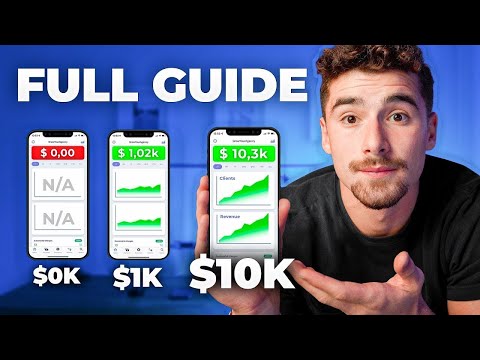
- $65k/mo Top student profit
- $1k–$3k/mo Client fee range
- Not stated Own agency revenue
- Not stated Contractor cost
The claim
That a beginner can start a social media marketing agency with a laptop and an email account, sell paid social advertising to local businesses, and have a contractor deliver the results, with one or two clients enough to replace a full-time income.
- Monthly profit of named student tiers — $65,000, $25,000, $18,000 and $10,000 a month profit; no names, count or time frame
- What many students aim for — An extra $2,000 to $5,000 a month
- Typical client fee — $1,000, $2,000 or $3,000 a month (stated in the free-trial warning)
- Clients needed to replace a 9-to-5 — One to two
- Gross from one to two clients at the stated fees — $1,000 to $6,000 a month, before contractor pay
- Full-service agencies cited as a warning — $20,000 a month revenue, $3,000 to $4,000 profit
- Margin implied by that example — 15% to 20%
- Consulting fee — £25,000 (about $32,000) for two eight-hour days, about $2,000 an hour
- Hourly rate from those figures — $32,000 / 16 hours = $2,000; checks out
- Creator's own agency revenue or profit — Not stated in the video
- Contractor pay — Not stated in the video
What is this income idea?
Run a service business that sells paid social advertising to local businesses, find clients by cold outreach, and use a contractor to deliver the work while you sell.
- The video is a beginner guide in four parts: whether running a business suits you, what a social media marketing agency is, how to find clients and how to service them. The creator says they started an agency at 16, got their first client in August 2016, and runs an education company for agency owners.
- The central idea is what the creator calls contractor arbitrage. They say that when they moved into Facebook ads they "really wasn't very good at Facebook ads" and a contractor "actually delivered all the results" for their clients, while they knew enough to sell. That contractor later became a full-time employee.
- Client finding is a numbered process: choose one niche, build a list of 10 to 30 local businesses, reach out by cold call, email or Instagram direct message, and sell the meeting rather than the service. The creator says their first five to eight clients came from cold Instagram messages.
- The meeting follows four stages the creator names as dig, emotion, logic and close. For delivery, the recommendation is paid social advertising on Facebook, because it is the easiest to learn, gives the most obvious return and has no software cost.
- Some of the advice is specific and useful: never offer free trials, have the client pay ad spend directly on their own card, invoice before work starts, and pick independent businesses with high margins and small teams.
- The video ends with a link to a free training that includes two bonuses "directly from my paid course agency incubator", plus a giveaway of one coaching call for every hundred comments.
Sell Facebook advertising to local businesses, pay someone else to run it, and keep the difference; the video does not say how big that difference is.
- Pick one niche — Gyms, dentists, restaurants
- List 10–30 leads — Start local
- Cold outreach — Calls, email, Instagram DMs
- Sell the meeting — Not the service
- Dig, emotion, logic, close — On Zoom
- Invoice up front — No free trials
- Contractor runs ads — Pay not stated
- Referrals, repeat — Stated, not measured
A clear sales process. The step that decides the margin, what the contractor is paid, has no figure.
A sales course with the delivery cost left out
The lesson underneath the number
- Most of this video is about selling. The outreach advice is concrete: one niche, a short local list, an audit offered as the reason to meet, and a meeting that sells the next step rather than the service. The warnings are concrete too. Free trials are said not to convert because the client anchors on paying nothing. Clients should pay their own ad spend so the agency never handles it. A client is not a client until the invoice is paid. Those are practical rules a beginner can use.
- The delivery side is where the money question sits, and it is the thinnest part. The creator is candid that they were not good at Facebook ads when they started selling them and that a contractor delivered the results. That is a real model, and the creator presents it openly. But the profit of a reseller depends on the gap between what the client pays and what the contractor is paid, and the video gives one side of that gap and not the other.
- The headline numbers do not fill the gap. The student profits of $10,000 to $65,000 a month are stated without names, a count, a time frame or a definition of profit, and the video refers viewers to interviews elsewhere on the channel. The creator's own agency, which they say they started at 16 and which ran ads for e-commerce and information product businesses, is described without a revenue or profit figure. The only statement about it is that by early 2017 they were earning more than their teachers.
- What the creator does say about the downside deserves credit. They say there is no guaranteed income, that some hard-working students wait until month six for a first client, that luck and timing play a part, that it is "not about getting rich quick", and that many students only want an extra $2,000 to $5,000 a month. They also advise against dropping out of school, against business partners, and against quitting a job before the agency is running. For a beginner, those statements are a better planning base than the top student figures.
There's always that air of luck and timing no matter what business you're in.
The creator, on how long a first client can take
The process, as the video gives it
Five steps to clients, five steps to delivery.
No cost is given for any step except a domain and an email suite.
- Start with the minimum — A laptop, an email account and a social media account. The creator recommends a domain "from one dollar a year" and Google G Suite "from five dollars a month" so outreach comes from a business address.
- Choose one niche — The creator cites 38,000 gyms, 200,000 dentists and 600,000 restaurants in the United States to argue there is no shortage of clients. These are market counts, not a measure of how many will buy.
- Build a lead list — "Write 10 to 20 businesses" with phone numbers, emails, websites and social pages, later "20 30 to start". Start local, go broader later.
- Reach out and sell the meeting — Cold call, cold email or Instagram direct message, with a short audit offered as the reason to meet. "You are selling the meeting not the service." A daily outreach target is advised, but no number is given.
- Run the meeting and get paid — Dig for numbers, connect to what the owner wants, justify with logic, then close and "get an invoice paid and agree a start date". The creator says they stopped one-on-one sales meetings in mid-2018.
- Deliver Facebook lead ads — Set up a business account, request access to the client's page, run lead generation campaigns on the client's card, write long-form copy, avoid stock images, and send leads to the client automatically.
- Outsource delivery to scale — "Outsourcing is easier to scale doing it yourself is easier to start." The creator says outsourcing also "gets the client better results". What a contractor costs is not stated.
The business model
A monthly service fee, stated as $1,000 to $3,000, for running paid social advertising. Ad spend is paid by the client directly.
Independent local businesses with high margins and small teams, such as gyms, dentists and restaurants.
More customers through Facebook lead generation ads, with leads sent straight to the business owner.
Cold calls, cold email and Instagram direct messages to a local lead list, then referrals from existing clients.
- Contractor or employee delivering the ads — The key cost. Not stated
- Funnel and website software — Trial link given; price not stated
- Invoicing, Zoom and automation tools — Recommended; not priced
- Domain and email suite — $1 a year and $5 a month, as stated
- Tax — The creator says to be tax registered; no figure
- Owner's outreach and sales time — Not quantified
The video credits a sensible cost rule, that the client pays ad spend directly, but gives no figure for the contractor the model depends on.
What you would actually need
Money
Almost nothing to start: a laptop, a Gmail account, a social account, and optionally a $1 domain and a $5 a month email suite. No office, employees, software, registered company or degree.
The start-up cost is low, as stated. The running cost is the contractor who delivers the ads, and the video gives no figure for that, so the margin on a $1,000 to $3,000 client cannot be worked out from the video.
Named or implied, not priced
- Contractor or employee who runs the client ads
- Website or funnel software (a link to a 14-day trial is given)
- Invoicing software
- Zoom and calendar tools
- Automation for sending leads to clients
- Tax registration and self-employment tax
- Domain ($1 a year) and email suite ($5 a month), the only priced items
Time
It "takes a fraction of a normal job" and can be built alongside a job, college or school. One student signed a first client 24 days after starting outreach.
The creator also says hard-working students can wait until month six for a first client. The video gives no hours per week for outreach, meetings or account management, and no time frame for the $10,000 to $65,000 student results.
Where the time goes
- Building and researching lead lists
- Daily cold outreach, target not stated
- Sales meetings on Zoom
- Writing ad copy and managing campaigns
- Client check-in calls
- First client: from 24 days to six months, by the creator's account
The part you must pay attention to
The model's profit depends on a contractor cost the video does not give.
The guide says a beginner does not need to know digital marketing because a contractor can deliver the results. That makes the contractor's pay the cost that decides whether a client is profitable.
- Monthly fee per client (stated) — $1,000–$3,000
- Clients to replace a job (stated) — × 1–2
- Not stated in the video — − contractor pay
$1,000–$6,000 gross
Our calculation, before contractor, tools and tax
The contractor's rate. The creator describes having a contractor run campaigns across "three four five six client campaigns" and later hiring them full time, but gives no rate, salary or percentage. The video's own warning example, full-service agencies on $20,000 a month in revenue keeping $3,000 to $4,000, is a 15% to 20% margin by our calculation. Applied to two $1,500 clients, that range would leave $450 to $600 a month. The video does not say the simpler model it recommends does better, and gives no figure that would let a reader check.
The large figures in the video, $65,000, $25,000, $18,000 and $10,000 a month in profit, belong to unnamed students. The video gives no count of how many students reached each level out of the "thousands and thousands" it mentions, no time frame and no definition of profit. The creator's own description of typical students, an extra $2,000 to $5,000 a month, and of luck and timing deciding when the first client arrives, is the more useful guide for a beginner. The creator's own agency revenue and profit are not stated.
- ONE TO TWO CLIENTS
- Fee per client $1,000-$3,000
- Clients 1-2
- Gross / month $1,000-$6,000
- Contractor pay ? (not stated)
- THE VIDEO'S OWN MARGIN EXAMPLE
- Revenue $20,000/mo
- Profit $3,000-$4,000/mo
- Margin 15%-20%
- Two clients at $1,500 $3,000
- At 15%-20% $450-$600
- THE CONSULTING RATE
- £25,000 ~ $32,000
- 2 days x 8 hours 16 hours
- $32,000 / 16 = $2,000/hr
- -> matches the stated rate
The economics
Fees and student results are stated. Costs and the creator's own numbers are not.
- Client fee — $1,000–$3,000 a month
- Clients to replace a 9-to-5 — 1–2
- Gross at those figures — $1,000–$6,000 a month
- Student profit tiers — $65k, $25k, $18k, $10k a month
- Common student goal — $2,000–$5,000 extra a month
- Full-service agency example — $20,000 revenue, $3,000–$4,000 profit
- Margin in that example — 15%–20%
- Consulting rate — ~$2,000 an hour
- Sales calls to meetings (old sales hire) — 3 in 10
- Contractor pay, own agency revenue — Not stated
What one to two clients produce before costs
1–2 clients × $1,000–$3,000 a month = $1,000–$6,000 a month gross
A plausible part-time or full-time income at the top of the range, before the contractor is paid
IncomeIdeaLab calculation from the fee range and client count stated in the video
The fee range comes from the creator's free-trial warning, not from a stated price list, and the video gives no contractor cost, so the net figure cannot be calculated. Whether one to two clients replace a given job depends on that job's pay, which varies by country.
- What the contractor or employee delivering the ads is paid
- The creator's own agency revenue, client count or profit
- How many students reached each profit level, and over what period
- How "profit" is defined in the student figures
- Client churn or average client lifetime
- Prices of the funnel, invoicing and automation software recommended
- Tax on self-employment income
- The consulting figure reconciles: £25,000 at roughly 1.28 dollars to the pound is about $32,000, and $32,000 across two eight-hour days is $2,000 an hour, as stated.
- The full-service agency example, $3,000 to $4,000 kept from $20,000, is a 15% to 20% margin by our calculation. The creator gives it as a warning about complexity and says simpler agencies do better, without a figure.
- Three meetings from ten calls is a 30% booking rate for the creator's former sales hire. It describes an experienced caller, not a beginner.
- The market counts, 38,000 gyms, 200,000 dentists and 600,000 restaurants in the US, show how many possible clients exist. They say nothing about how many will pay $1,000 or more a month.
- The video links to a free training with bonuses taken from the creator's paid course, Agency Incubator, which the creator names. A website-builder link with a free trial is also given; whether it pays the creator a commission is not stated in the video.
Evidence status
Every substantive money claim in the video.
- Students making $65,000, $25,000, $18,000 and $10,000 a month profit — Creator — No names, count, time frame or definition of profit. We could not check these from the video.
- Many students aim for an extra $2,000 to $5,000 a month — Creator — A more modest figure the creator offers alongside the top results.
- One to two clients can replace 9-to-5 income — Creator — At the stated $1,000 to $3,000 fees, $1,000 to $6,000 gross a month, before contractor pay.
- Clients charged $1,000, $2,000 or $3,000 a month — Creator — Stated in passing while explaining why free trials do not convert.
- A student signed a first client 24 days after starting outreach — Creator — One case. The creator also says some students wait until month six.
- Earning more than their teachers by early 2017 — Creator — No figure is given.
- Full-service agencies on $20,000 revenue keep $3,000 to $4,000 — Creator — A 15% to 20% margin by our calculation. Given as a general observation.
- £25,000 for two days, about $32,000, about $2,000 an hour — Creator — The arithmetic checks out.
- 38,000 gyms, 200,000 dentists, 600,000 restaurants in the US — Creator — Market counts. No source is named in the video.
- A former sales hire booked three meetings from ten calls — Creator — Offered as footage in the free training, not in this video.
- Free trials do not convert — Creator — Stated from experience with students; no rate is given.
- Contractor cost, own agency revenue and profit — Not stated — Not given at any point in the video.
What is actually proven?
The process is explained. The money figures are statements we could not check.
- The outreach, meeting and Facebook ads process is described step by step.
- The creator says income is not guaranteed and a first client can take six months.
- One to two clients at the stated fees give $1,000 to $6,000 a month gross.
- The consulting rate of about $2,000 an hour matches the stated fee and days.
- The video's own full-service agency example is a 15% to 20% margin.
- Student profits of $10,000 to $65,000 a month, without a count or time frame.
- What the contractor who delivers the work is paid.
- The revenue or profit of the creator's own agency.
What the headline doesn’t tell you
The figures that would show the margin are the ones not given.
- The big numbers are students. — Unnamed, uncounted.
- No figure for the creator's agency. — Revenue and profit not stated.
- The contractor does the work. — Their pay is not stated.
- One to two clients. — $1,000 to $6,000 gross.
- First client can take six months. — The creator says so.
- A 15% to 20% margin example. — From the video itself.
- The free training leads to a course. — Named in the video.
- Coaching is a giveaway prize. — One call per 100 comments.
Should you try it?
A usable sales outline, with the profit side missing
Use the outreach and no-free-trial rules. Price your delivery before you sell it, because the video does not.
- Clarity of the sales process — 8 — Niche, list, outreach, meeting stages and close are all laid out.
- Practical client rules — 7 — No free trials, client pays ad spend, invoice before starting.
- Candour about the downside — 7 — No guaranteed income, luck and timing, up to six months to a first client.
- Evidence for the student figures — 2 — No names, count, time frame or definition of profit.
- Evidence for the creator's own results — 1 — No revenue or profit figure for their agency.
- Cost disclosure — 2 — Only a domain and an email suite are priced.
- Low start-up cost — 8 — A laptop and email account, as stated.
- Beginner accessibility — 5 — Cheap to start; selling a service you cannot yet deliver takes skill and nerve.
- The start-up cost really is low, and the sales advice is specific enough to act on. Choosing one niche, building a short local list, offering a quick audit as the reason to meet, and charging before starting work are all sound habits for any service business. The warning against free trials, and the rule that clients pay their own ad spend, would save a beginner real trouble.
- Treat the large figures with care. The $65,000, $25,000, $18,000 and $10,000 monthly profits are students the video does not name or count, out of what the creator calls thousands of students. Without knowing how many reached each level, or over what period, they describe what is possible, not what is typical. The creator's own description of typical students, an extra $2,000 to $5,000 a month, is closer to a planning figure.
- Before selling, work out what delivery costs you. The video's model is to sell Facebook ads and have a contractor run them, and it gives the client side of the price, $1,000 to $3,000 a month, but not the contractor side. If a contractor charges half the fee, two $1,500 clients leave you $1,500 a month before tools and tax. The video's own example of agencies keeping $3,000 to $4,000 from $20,000 shows how thin agency margins can be.
- Plan for time to a first client, too. The creator says some hard-working students wait until month six, and recommends keeping a job while building. That is honest advice, and it means the realistic first year includes months of outreach with no income.
Passive or automated?
Automation
Lead forwarding and calendar links can be automated; selling and delivery cannot.
Passive potential
A service business: income stops when clients or the contractor stop.
An agency is a service business and the video does not present it as passive. Clients come from daily cold outreach and sales meetings, delivery is done by the owner or a paid contractor, and each client needs campaigns written, monitored and reported on. The only automation described is forwarding leads to clients and generating meeting links. Outsourcing moves the delivery work to someone else but adds a cost and a management job, and the owner still sells.
- Daily cold outreach to new businesses
- Sales meetings and closing
- Writing ad copy and managing campaigns
- Hiring and managing the contractor
- Client check-ins and retention
Recommended beginner experiment
Test the sales side cheaply, and price delivery first.
- Get a quote from a contractor first. — Know your margin before you pitch.
- Pick one local niche. — As the video advises.
- Build a list of 30 businesses. — Name, phone, email, social pages.
- Set a daily outreach number. — The video gives none; choose one.
- Track replies and meetings. — Your own booking rate, not 3 in 10.
- Never offer a free trial. — The video's firmest rule.
- Have clients pay ad spend directly. — Never handle their ad money.
- Keep your job for six months. — The creator's own advice.
Our verdict: 4/10
A clear sales outline with the margin left unstated student figures without a count, and no number for the creator's own agency
Credited for a specific, usable outreach and meeting process; for practical rules on free trials, ad spend and invoicing; for stating that income is not guaranteed, that luck and timing matter and that a first client can take six months; for advising viewers to keep their jobs; and for naming the paid course the free training draws from. Marked down because the largest figures are unnamed student profits with no count, time frame or definition; because the creator's own agency revenue and profit are not stated; and because the contractor model at the centre of the guide comes with no contractor cost, so the margin cannot be worked out from the video.
As a guide to finding clients, this video is clear and practical. It tells a beginner to pick one niche, build a short local list, reach out by call, email or Instagram message, offer an audit as the reason to meet, and sell the meeting rather than the service. Its rules on not offering free trials, having clients pay their own ad spend and invoicing before work begins are sound, and it is candid about the downside: no guaranteed income, a first client that can take up to six months, and luck and timing that do not always reward effort. As a guide to what the business earns, it gives much less. The large figures, $10,000 to $65,000 a month in profit, are unnamed students with no count, time frame or definition of profit, and the creator's own agency is described without a revenue or profit figure. The model the guide rests on, selling ads you cannot yet run and paying a contractor to run them, comes with a client price of $1,000 to $3,000 a month and no contractor price. By our calculation one to two clients give $1,000 to $6,000 a month gross, and the video's own example of full-service agencies keeping 15% to 20% of revenue shows how much of that could go before it reaches the owner. Price the delivery before you sell it, and plan around the modest student figure the creator also gives, an extra $2,000 to $5,000 a month.
- Top student profit — $65,000 a month
- Common student goal — $2,000–$5,000 extra a month
- Client fee — $1,000–$3,000 a month
- One to two clients, gross — $1,000–$6,000 a month
- Margin in the video's agency example — 15%–20%
- Consulting rate — ~$2,000 an hour
- Contractor cost — Not stated
- Own agency revenue — Not stated
- Beginner suitability — Sales advice yes, budget your delivery
Sources
- Social Media Marketing Agency Guide (Beginners) — Iman Gadzhi — YouTube video, 2020-03-02
- FTC — Guides Concerning the Use of Endorsements and Testimonials — Regulatory guidance on earnings claims and testimonials