Ecommerce / Branded Apparel · Income Report Review
“USD 125K in 30 days branded Shopify A.i. dropshipping (Just Copy This)”
What we found: A Shopify Polo Brand’s $125,000 Month Nets $12,600 After $68,900 of Meta Ads, and the Line Items Add Up
A full cost breakdown that reconciles to within a dollar. Ads take 55% of revenue, net margin is 10% before the owner’s time and tax, and the brand runs from its own US warehouse rather than the dropshipping set-up demonstrated later in the video.
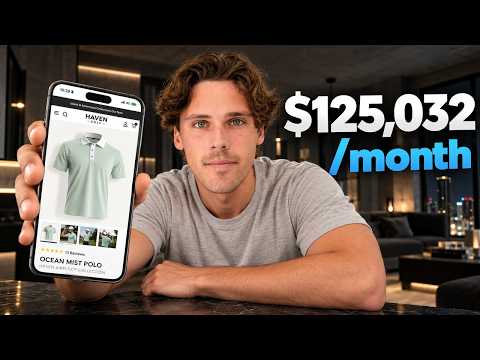
- $125,464 September revenue
- ~$68,886 Meta ad spend
- $12,597 Net profit
- Within $1 Line items reconcile
The claim
That a branded Shopify store did $125,000 in 30 days, and that viewers can copy it with a free AI-built store and a dropshipping app.
- Revenue, September — $125,463.94 (“Total sales over time” on the Shopify Analytics screen at 0:47, Sep 1–30)
- Gross sales, September — $144,486.36 on the same Shopify Analytics screen
- Orders — 1,382
- Meta ad spend — About $68,886
- Cost of goods sold — $28,868.40
- Net profit — $12,596.51, “just over” 10%
- Net margin recomputed — 10.0%
- Return on ad spend — 1.82 by our calculation; “around a two” stated
- Revenue since launch — $4.2 million over about 18 months
- Owner’s time, tax, warehouse storage — Not stated
What is this income idea?
A branded clothing store on Shopify, built around golf and military-themed polos, selling through Meta ads and shipping from a US warehouse.
- The creator says the brand, Haven, has done $4.2 million in about a year and a half, and that September brought $125,463.94 from 1,382 orders. They say they have been running Facebook ads for about nine years and previously scaled another store to 100,000 orders.
- The first half of the video is a monthly report. Four new polos were added to the military collection mid-month; one test campaign sold out and had to be switched off. Conversion rate fell 13% to 1.9%, average order value rose 18% to $86.91, and they describe September as a weak month for Meta ads generally. They were also travelling for the second half of it.
- They then give the profit and loss line by line: about $68,886 on Meta ads, $28,868.40 for the cost of goods delivered to the North Carolina warehouse, about $3,000 for the Shopify plan and apps, $3,871.97 in payment processing, $8,983 for shipping to customers at $6.50 an order, and an adjustment for $4,299 of returns whose stock goes back into inventory. Net profit is $12,596.51, which they call quite low for the brand.
- The second half is a tutorial: claim a free store from an AI store builder, sign up to Shopify at a promotional $1 a month for three months, install a dropshipping fulfilment app that is free up to ten products, find suppliers through a shipping-records site, and generate image ads from competitors’ winning ads with AI. They say they have no course to sell; the store builder and other tools are linked in the description.
A $125,000 month that leaves about $12,600 after ads, stock, fees and shipping, from a brand with its own warehouse and nine years of ad experience behind it.
- Design branded polos — Golf and military lines
- Manufacture in bulk — ~$21 per order in COGS
- Store in US warehouse — North Carolina
- Sell through Meta ads — ~$69k in September
- Ship in 2–3 days — $6.50 per order
- ~10% net — $12,597 in September
The brand’s own model. The tutorial later in the video shows a dropshipping set-up instead.
A real profit statement shows how little of the revenue is left
The lesson underneath the number
- Most revenue screenshots stop at the top line. This video goes all the way down, and the figures hold together. Taking the stated revenue and subtracting each stated cost leaves $11,854; the stated net of $12,596.51 is that plus about $742 added back for returned stock, which is consistent with roughly 49 returned orders at the stated average order value. The shipping figure is exactly 1,382 orders at $6.50. That level of reconciliation is unusual and worth crediting.
- What the statement shows is a business where advertising takes more than half of every sale. At a return on ad spend of about 1.8, $125,000 of revenue produced about $12,600 of profit before the owner pays themself or any tax. They call it a low month and explains why: Meta performance dropped across the industry, a winning campaign ran out of stock, and they were away for two weeks. A strong month for this brand, by their account, is more profitable; those months are not broken down here.
- The title combines two things. “$125K in 30 days” is the reported brand, which manufactures in bulk, holds stock in a North Carolina warehouse and ships in two to three days; they recommend that approach over long dropshipping delivery times. “A.i. dropshipping (Just Copy This)” is the tutorial: a free AI-built store, a dropshipping app free to ten products, and suppliers found through import records. The tutorial is a reasonable way to open a store, but it is not the operating model behind the September figures.
- They say they have no course to sell. The store builder, ad research tool and fulfilment app are each recommended with links in the description, and they mention a partnership with Shopify behind the $1 offer. Whether any of those links pays them is not stated in the video. Their prior experience is disclosed: about nine years of running Facebook ads and an earlier store that reached 100,000 orders.
Not the best month we’ve ever had if you’ve watched any of the other videos it’s actually quite low.
The creator, on a 10% net margin
The September profit statement, as they give it
Each line as stated, in the order they give it.
The owner’s own time and tax are not included in the net figure.
- Revenue: $125,463.94 — 1,382 orders at a stated average order value of $86.91. Conversion rate 1.9%, down 13% on August.
- Meta ads: about $68,886 — The largest cost, at about 55% of revenue. They call the return “around a two”, low for the brand, and attributes it to a difficult month on the platform.
- Cost of goods: $28,868.40 — Polos and other products delivered from the manufacturer to the North Carolina warehouse. About $20.89 per order by our arithmetic.
- Shopify plan and apps: about $3,000 — Described as roughly flat each month.
- Payment processing: $3,871.97 — About 3.1% of revenue by our calculation.
- Shipping to customers: $8,983 — 1,382 orders × $6.50. The multiplication checks out.
- Returns adjustment, then net: $12,596.51 — $4,299 of returns, with the cost of unused polos added back because they return to stock. The stated net is about 10% of revenue.
The business model
Branded polos, hats and accessories sold direct to consumers through a Shopify store, with themed collections for golf and military audiences.
US buyers reached through Meta ads; the military collection is described as one of the best sellers.
Distinctive themed designs, fast US shipping in two to three days, and a premium store design.
Meta ads, including AI-generated image ads modelled on competitors’ successful ads.
- Meta ads — About $68,886 in September, 55% of revenue
- Cost of goods — $28,868.40, delivered to the warehouse
- Shipping to customers — $6.50 per order, $8,983 in September
- Payment processing — $3,871.97, about 3.1% of revenue
- Shopify plan and apps — About $3,000 a month
- Returns — $4,299 refunded; unused stock goes back into inventory
- Owner’s time, staff, warehouse storage, tax — Not stated
This is one of the few videos of its kind that lists every main cost with a figure. The remaining gaps are the owner’s time, any staff, storage fees and tax.
What you would actually need
Money
The tutorial puts the start at $3 for three months of Shopify, a free store build, a fulfilment app free up to ten products, and up to $79 for 30 days on its paid plan.
Those are the costs of opening a store, not of running the brand reported. In September the brand spent about $68,886 on ads and $28,868 on stock in one month, and holding bulk inventory in a warehouse means paying for it before it sells. Ad spend at any meaningful level is the real starting cost, and the video does not give a starting ad budget.
Costs named in the video
- Shopify: $1/month for 3 months promotional, then the Basic plan
- Fulfilment app: free to 10 products, up to $79 per 30 days
- Meta ads: ~$68,886 in September for this brand
- Inventory: $28,868 of cost of goods in September
- Shipping: $6.50 per order from a US warehouse
- Shopify apps: ~$3,000 a month for this brand
- Samples from manufacturers, not priced
Time
The store builder takes about five minutes, and the store can be “up and running literally today”. Fulfilment can be automated.
The store set-up is fast; the business behind the September figures is not. They cite nine years of running Facebook ads, a previous store with 100,000 orders, and continuous product design and ad testing. They also note that results fell in a month they were away for two weeks.
Where the time goes
- Designing and releasing new products
- Sourcing and sampling with manufacturers
- Producing and testing ad creatives weekly
- Managing Meta campaigns through platform changes
- Stock planning, so campaigns do not sell out
- Nine years of ad experience, by their account
The part you must pay attention to
Ads take 55 cents of every dollar, and a 10% margin is what is left.
The breakdown is complete enough to rebuild, and it reconciles. What it shows is how thin the margin is on a $125,000 month.
- Revenue — $125,464
- Meta ads — $68,886
- Cost of goods — $28,868
- Shopify, processing, shipping — $15,855
- Returns add-back, our figure — $742
$12,597
Net for the month, before owner’s time and tax
Return on ad spend decides everything here. At $125,464 of revenue on about $68,886 of ads, the return is 1.82, slightly below the “around a two” they describe. With cost of goods, fees and shipping at about 35% of revenue, the business needs a return of roughly 1.5 just to cover them; below that, every additional order loses money. A small drop in ad performance, of the kind they describe in September, moves the margin a long way.
The net figure is also before anything for the owner’s time, before income tax, and does not show a separate warehouse storage or staffing cost. They are open that this was a weak month and that profit is reinvested. The other point to note is what the tutorial teaches. The reported brand buys stock in bulk and ships from its own US warehouse in two to three days, and they recommend that approach. The step-by-step part of the video sets up a store from an AI builder and a dropshipping app with products from a supplier catalogue, which is the starting point they describe for a new store rather than the model behind the $125,000.
- SEPTEMBER, REBUILT
- Revenue $125,463.94
- Meta ads -$68,886.10
- Cost of goods -$28,868.40
- Shopify plan + apps -$3,000.00
- Payment processing -$3,871.97
- Shipping (1,382 x 6.50) -$8,983.00
- ------------------------------
- Before returns $11,854.47
- Stated net $12,596.51
- Implied add-back ~$742
- RATIOS (OURS)
- ROAS 125,464 / 68,886 1.82
- Ads / revenue 55%
- Net / revenue 10.0%
- Revenue / orders $90.78
- Stated AOV $86.91
The economics
Every main cost is given, and the statement reconciles.
- Revenue — $125,463.94 (Shopify Analytics screen)
- Orders — 1,382
- Meta ads — About $68,886
- Cost of goods — $28,868.40
- Shopify plan and apps — About $3,000
- Payment processing — $3,871.97
- Shipping — $8,983 (1,382 × $6.50)
- Returns — $4,299
- Net profit — $12,596.51
- Return on ad spend — 1.82
- Break-even return on ad spend — ~1.5
Rebuilding the September net from the stated costs
$125,463.94 − $68,886.10 − $28,868.40 − $3,000 − $3,871.97 − $8,983 = $11,854.47; stated net $12,596.51
Reconciles once about $742 of returned stock is added back; net margin 10.0%
IncomeIdeaLab calculation from the figures stated in the video
The net figure is before the owner’s pay and income tax. Warehouse storage, any staff and design costs are not listed separately and may be inside other lines or not counted.
- The owner’s pay or time
- Income tax
- Warehouse storage and staff costs, if separate from the per-order shipping fee
- Inventory held in stock and the cash tied up in it
- Profit for any other month of the $4.2 million
- Whether the linked tools pay the creator a commission
- Return on ad spend from the stated figures is 1.82 ($125,464 ÷ $68,886). They describe it as “around a two”. Our arithmetic.
- Cost of goods, platform fees, processing and shipping total about $44,723, or 35.6% of revenue. Ads must return about 1.55 times their cost to cover those before any profit. Our arithmetic.
- Revenue divided by orders is $90.78, against a stated average order value of $86.91. The difference may be shipping or tax collected, which the video does not separate.
- Payment processing at $3,871.97 is about 3.1% of revenue, in line with typical card processing rates.
- The tutorial’s Shopify offer is $1 a month for three months; after that the Basic plan price applies, which the video does not state.
Evidence status
Every substantive figure in the video.
- $125,463.94 revenue in September — Creator; Shopify Analytics screen at 0:47 and 5:24 — Shown as “Total sales over time” for Sep 1–30 on Shopify Analytics, alongside gross sales of $144,486.36. Consistent with the cost lines given.
- Meta ads about $68,886 — Creator — 55% of revenue. Reconciles with the stated net.
- “Around a two” return on ad spend — Creator — 1.82 by our calculation.
- Cost of goods $28,868.40 — Creator — About $20.89 per order.
- Shipping $8,983 at $6.50 per order — Creator — The multiplication is correct.
- Net profit $12,596.51, just over 10% — Creator — 10.0%. Reconciles with the stated costs plus a returns add-back of about $742.
- Average order value $86.91, up 18% — Creator — Revenue per order is $90.78; the gap is not explained.
- Conversion rate 1.9%, down 13% — Creator — Consistent with the weaker month they describe.
- $4.2 million in about 18 months — Creator — No other month is broken down in the video.
- Store set-up in about five minutes, free — Creator — Opening a store, not reaching the reported revenue.
- “No I don’t have a course to sell” — Creator — Tools are linked in the description; any commission is not stated.
What is actually proven?
The month’s figures are internally consistent; the tutorial model is not the one reported.
- Revenue and every main cost for September are stated.
- The stated costs and stated net profit reconcile.
- Ads took about 55% of revenue; net margin was 10.0%.
- The brand holds stock in its own US warehouse.
- The creator discloses nine years of ad experience and a prior 100,000-order store.
- Owner’s pay, tax and profit in other months.
- Whether a new store built from the tutorial can reach similar figures.
What the headline doesn’t tell you
The $125,000 is real revenue with a real cost structure attached.
- Net was $12,597. — About 10% of revenue.
- Ads took $68,886. — 55 cents of every dollar.
- Return on ads was 1.82. — Break-even is about 1.5.
- The brand holds stock. — In its own US warehouse.
- The tutorial is dropshipping. — A different model.
- Nine years of ads experience. — They say so.
- Before owner pay and tax. — Neither is included.
Should you try it?
Study the profit statement; budget for the ads
Opening the store is cheap. Reaching revenue like this takes an ad budget, stock and ad skills built over years, and leaves a thin margin.
- Cost disclosure — 9 — Every main line is given with a figure.
- Internal consistency — 9 — The statement reconciles to within a dollar.
- Honesty about a weak month — 8 — Calls 10% quite low and explains why.
- Match between title and tutorial — 4 — The tutorial is a dropshipping start, not the reported brand.
- Margin resilience — 3 — Small changes in ad return move profit sharply.
- Beginner accessibility — 4 — Cheap to open; expensive to grow.
- The useful thing to take from this video is the profit statement itself. Write your own version before you spend anything: product cost, shipping, payment processing, platform fees and returns as a share of revenue. For this brand those come to about 36%, so ads have to return about 1.5 times their cost before the business makes a cent, and a return of 1.8 leaves around 10%.
- The tutorial is a cheap way to open a store, and the tools it shows are real. Be clear about what it gives you: a store with supplier catalogue products and dropshipping fulfilment. The brand whose numbers are reported designs its own products, buys them in bulk, holds them in a US warehouse and ships in two to three days, and they recommend that over slow dropshipping delivery.
- Then budget for ads. The video gives no starting ad budget, and the brand reported spent about $68,886 in a single month. A beginner without the creator’s nine years of experience should expect a lower return on ad spend at first, which on these margins means losses until products and ads are tested.
Passive or automated?
Automation
Fulfilment and some ad research can be automated; design and ad management cannot.
Passive potential
Results dropped in the month the owner stepped away.
They present the tutorial as close to hands-off, with automatic fulfilment and AI tools that can pull competitors’ ads each week. The brand reported is not run that way. New products are designed and released, stock is planned, ad creatives are produced and tested continuously, and campaigns are adjusted as Meta changes. They link a weaker September partly to being away for two weeks, which is a fair indication of how much the business depends on them.
- Product design and new collection releases
- Supplier sampling and quality control
- Creating and testing ad creatives each week
- Managing Meta campaigns through platform changes
- Stock planning and returns
Recommended beginner experiment
Know your break-even return before you buy ads.
- Build a cost sheet per order. — Goods, shipping, fees, returns.
- Work out break-even ROAS. — Their brand needs about 1.5.
- Open a store cheaply. — The tutorial route is fine for this.
- Sample suppliers before selling. — They stress product quality.
- Test ads with a fixed budget. — Stop if return stays below break-even.
- Plan stock for winning ads. — Their best campaign sold out.
- Pay yourself in the sums. — Their net excludes owner pay.
Our verdict: 7/10
A complete, reconciling profit statement for a $125,000 month with a 10% margin and a tutorial for a different model
Credited for giving every main cost with a figure and a net profit that reconciles with them; for calling a 10% margin low and explaining why; for disclosing nine years of ad experience and a previous store; and for stating that they have no course to sell. Marked down because the step-by-step tutorial demonstrates a dropshipping set-up rather than the warehouse-stocked brand whose figures are reported; because the net excludes the owner’s pay and tax; because whether the linked tools pay the creator is not stated; and because only one month is broken down out of the $4.2 million stated.
This is a rare revenue video that goes all the way to net profit, and the figures hold up. September brought $125,463.94 from 1,382 orders; about $68,886 went to Meta ads, $28,868 to stock, and roughly $15,855 to Shopify, card processing and shipping. With a returns adjustment the stated net is $12,596.51, and rebuilding it from the stated costs gets to the same number within a dollar. That is a 10% margin, which the creator themself calls low, explaining a weak month on Meta, a sold-out campaign and two weeks away. The statement is the most useful thing in the video for a beginner because it shows the shape of the business: ads take more than half of revenue, everything else takes about a third, and the return on ad spend has to stay above about 1.5 for any profit to exist. Two things to keep in mind. The net is before the owner’s pay and tax. And the tutorial in the second half sets up a dropshipping store from an AI builder and a fulfilment app, while the brand that produced the $125,000 buys stock in bulk and ships from its own US warehouse, backed by nine years of ad experience by their account.
- Revenue, September — $125,463.94
- Meta ads — ~$68,886
- Net profit — $12,596.51
- Net margin — 10.0%
- Return on ad spend — 1.82
- Break-even ROAS — ~1.5
- Owner pay and tax — Not included
- Beginner suitability — Cheap to open, costly to grow
Sources
- USD 125K in 30 days branded Shopify A.i. dropshipping (Just Copy This) — Austin Rabin — YouTube video, 2026-10-29