SaaS / Consumer Tools · Claim Review
“How I Used Reddit To Build a $25K/Month Business”
What we found: $25,000 a Month, of Which 97% Is Lifetime Plans — So Almost None of It Recurs
A precise, copyable playbook for finding first users on Reddit and Facebook, attached to a revenue figure that resets to near zero every month unless new buyers keep arriving.
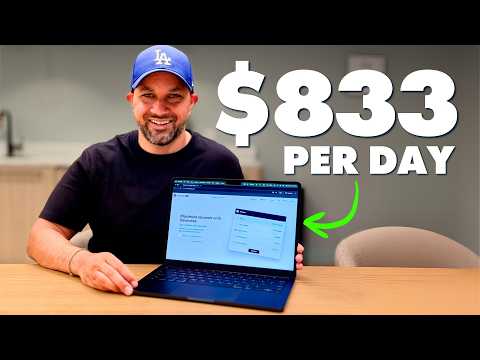
- ~$25k Monthly revenue
- ~97% From lifetime plans
- ~1,500 Paying customers
- $0 Marketing spend
The claim
That a solo founder built a $25,000-a-month business in 15 months using Reddit and Facebook groups and no paid marketing.
- Monthly revenue — "Approximately $25,000 of revenue a month"
- Time to get there — 15 months
- Paying customers — "About 1,500 paying customers right now"
- Users — "In the tens of thousands"
- Revenue mix — "About 97% of the revenue" from lifetime plans
- Implied recurring revenue — ~$750 a month
- Implied lifetime-plan sales — ~$24,250 a month, every month, from new buyers
- Early outreach — 300–400 emails to influencers; one reply
- Launch-site traffic — Product Hunt, Hacker News, Indie Hackers: "bounce rate was like 95, 96%"
- One Facebook post — Over 1,500 website visits from a shared spreadsheet (spoken; the post on screen shows 449 reactions and 117 comments, no visit count)
- Costs, price, team — Not stated; solo founder
What is this income idea?
Build a tool for a problem you have, then find the exact online communities where people with that problem already gather, and be useful there before you sell.
- The founder, Avneesh Kohli — a former engineer at large technology companies who left "to build something from scratch" — built Save Wise (getsavewise.com), "a platform that helps people earn credit card points and airline miles for things they're already buying online." It solved their own manual routine of stacking coupons, cash-back portals and card offers. "Started off really slow… we're doing about $25,000 a month in revenue now."
- The first attempts failed in ways they itemise. Product Hunt, Hacker News and Indie Hackers brought "tons of traffic" with a 95–96 per cent bounce rate and no useful feedback. Three to four hundred emails to influencers produced "a single email back". The lesson they draw: "nobody who has an audience or influence cares about a product that is not ready."
- What worked was going where users, not builders, gathered — subreddits about using credit cards rather than about building software, and Facebook groups organised around travel and points. Their five steps: brainstorm the interests and demographics of the target user and use a subreddit-mapping tool to find adjacent communities; join and read without posting; set a goal for each community; start in comments and work up to a top-level post with moderator permission; set keyword alerts and be helpful first.
- The two posts are described concretely. In a Facebook group of people manually hunting stacked cash-back offers, they posted a spreadsheet generated from their product's data — with their website linked inside it — and "had over 1,500 people visit the website just from posting this spreadsheet." The post is shown on screen: "Rakuten Stacks - How to Double Dip with Rakuten", dated 12 August 2024, with 449 reactions and 117 comments, and a view-only Google Sheet of "Amex / Chase Offers" carrying a getsavewise.com promo box. The 1,500-visit figure itself is not on screen. On Reddit they answered in a subreddit's weekly Q&A thread for about three and a half months, built the features members asked for, then asked the moderator for a top-level post, "and it blew up."
- The numbers come near the end: about $25,000 a month, tens of thousands of users, about 1,500 paying customers. Then the detail: they launched a subscription, was asked the same day for a lifetime option, and "that is now about 97% of the revenue, people choosing the lifetime plan over a monthly or yearly subscription plan."
An unusually specific guide to finding your first users in online communities, and a $25,000 figure that is monthly sales of a one-off product rather than a recurring base.
- Build for your own problem — Points and cash-back stacking
- Launch sites: 95% bounce — Product Hunt, HN
- 300–400 influencer emails — One reply
- Map user communities — Reddit map, Facebook groups
- Read, then comment, then post — With mod permission
- Spreadsheet post → 1,500 visits — Facebook group
- ~1,500 paying, ~$25k/mo — 15 months
- 97% lifetime plans — Resets monthly
The acquisition story is specific and free. The revenue is one-off sales that must be repeated every month.
The best community playbook in the library, on a revenue line that resets monthly
The lesson underneath the number
- The acquisition half of this interview is unusually good because it is unusually specific about failure. Launch sites brought traffic that bounced at 95 per cent; hundreds of influencer emails got one reply; and the founder names the reason — those audiences were builders and gatekeepers, not people with the problem. The fix was to go where the problem lived, and the five steps they give for doing that are concrete enough to execute this week. The two examples are better still: a spreadsheet of stacked offers, generated from their own database and posted into a group compiling the same thing by hand, with the website linked inside; and fourteen weeks of answering a subreddit's weekly thread before asking the moderator for a post.
- The revenue half is where a reader should slow down. "About $25,000 a month" is stated, and then the founder explains that about 97 per cent of it is lifetime plans, because the day they launched a subscription, customers asked to pay for two-plus years up front instead. They present this as a lesson about consumers hating subscriptions, which it is. It is also a lesson about the number: a business whose revenue is 97 per cent one-off does not have $25,000 of monthly recurring revenue; it has about $750, plus whatever it sells this month. The title does not make that distinction and the host does not ask.
- The consequences compound. Lifetime pricing pulls forward revenue that a subscription would have delivered over years, which flatters the fifteen-month figure. It also creates a growing base of users who have paid once and must be served forever, on infrastructure the founder describes as data-heavy and never costs. Without a price per plan, a monthly history or any expense, a viewer cannot tell whether the business is compounding or running on a treadmill.
- What transfers cleanly is the method. Find the communities where your users already are, read before you speak, give them something made from your own data, earn the top-level post. That produced tens of thousands of users at zero ad cost, which is the achievement, and it does not depend on how the revenue is booked.
That is now about 97% of the revenue, people choosing the lifetime plan over a monthly or yearly subscription plan.
The founder, redefining "$25K/month" in one sentence
The playbook, as the founder gives it
Five steps for communities, then two worked examples.
Figures are taken from what is said and shown in the video. The Facebook post (12 August 2024; 449 reactions, 117 comments) and the linked "Amex / Chase Offers" Google Sheet are shown on screen at about 9:17–10:56, and a Starter Story chart titled "Uniques of Core Action" appears with its axis values blurred out. Where the Reddit post is described (around 10:48), the screen shows the founder with an "Avneesh playbook" overlay rather than the post. The revenue, customer and lifetime-share figures are spoken with no figure on screen at that point.
- Find users, not builders — "Focus on subreddits that were more related to using products rather than building products." The launch-site traffic bounced because it was founders, not credit-card users.
- Map the adjacent communities — Brainstorm 5–15 interests and demographics, then use a subreddit-mapping tool to "traverse from one community to several different related communities."
- Join and read before posting — "Do not initially post in those groups." Learn what people discuss and how, so you can enter the conversation rather than advertise into it.
- Set a goal per community and start in comments — Feedback, understanding, or first users — decide which. Comments are "a very low-risk way of figuring out is this type of stuff you're saying… actually resonating."
- Set keyword alerts and be helpful first — An alert tool emails every mention of chosen keywords; answer those threads with real tips, which "earned me the right to also mention my product."
- Give the community its own data — A spreadsheet of stacked offers, built from the product's database and linked back to the site, posted where people were compiling the same list by hand: 1,500 visits, by the founder's account. The post on screen shows 449 reactions and 117 comments.
- Earn the top-level post — Three and a half months in a weekly Q&A thread, shipping what members asked for, then moderator permission. "It blew up."
The business model
Mostly one-off lifetime purchases of a pro tier (~97%), with a small monthly and yearly subscription remainder.
People who stack cash-back portals, coupon codes and credit-card offers on online purchases — reached through Reddit and Facebook communities about points and travel.
One query replaces the manual hunt across portals and card offers; the spreadsheet post demonstrated exactly that to a group doing it by hand.
Helpful comments and data-driven posts in target communities; no paid marketing.
- Data ingestion and hosting — "A lot of data" — cloud costs never stated
- Tool stack — Front-end hosting, auth, internal tools, analytics, AI assistants — all named, none priced
- Founder time — Solo; hours not given; prior salary forgone
- Serving lifetime customers — Ongoing cost with no ongoing revenue
No cost is given, and the lifetime model makes the missing cost side more important than usual: every sale is paid once and served indefinitely.
What you would actually need
Money
"Without spending a dime on marketing" — the host's framing, which the founder's account supports. No other cost is discussed.
Zero ad spend is credible; the growth is attributed to posts and comments. But the product ingests and serves a large dataset, runs on cloud infrastructure and a stack of paid tools, and was built by an engineer who left a salaried job — none of which is costed.
Costs implied and not stated
- Cloud data processing and hosting — "a lot of data that my product hosts"
- A named stack of front-end, auth, analytics, internal-tools and AI services, all unpriced
- The founder’s own salary forgone after leaving employment
- Payment processing on lifetime sales
- Any affiliate or data-licensing costs behind the offers
Time
Fifteen months to $25,000 a month; "a couple of months" of brainstorming before that; three and a half months of weekly Q&A replies before the Reddit post.
The community method is slow by design — read for weeks, comment for months — and the founder was doing it while building the product alone. Hours are not given.
Timeline stated
- Several years at large technology companies before leaving
- "A couple of months" of brainstorming
- Launch-site and influencer outreach: failed early
- 3.5 months of weekly Q&A comments before the Reddit post
- 15 months from start to ~$25,000 a month
The part you must pay attention to
97% lifetime plans means the $25,000 is monthly sales, not monthly recurring revenue.
The founder says it, almost as an aside: customers "hate subscriptions", so nearly all revenue is one-off lifetime purchases.
- Monthly revenue — $25,000
- Lifetime plans — × 97%
- One-off sales needed again next month — = ~$24,250
- The recurring remainder — ~$750
~3% recurs
The base that carries into next month without a new sale
The revenue model. A subscription business at $25,000 a month starts next month at roughly $25,000 less churn. This business, on the founder's own numbers, starts next month at about $750 and has to sell roughly $24,000 of lifetime plans again. It has done that — the figure is described as current — and the founder is clear-eyed about why customers prefer it. But the title's "$25K/month business" reads as a base, and the founder's own figures make it a flow. Lifetime pricing also front-loads revenue that a subscription would have spread over years, which is why fifteen months can show a large monthly number from about 1,500 total buyers. And every lifetime customer is a user the company must serve indefinitely — hosting a large, changing dataset — with no further revenue from them.
None of this makes the number false, and the founder volunteers the detail that undermines it, which counts in their favour. It does change what the number means. The right reading is: a solo founder found a repeatable way to reach a niche community, converted about 1,500 of tens of thousands of users to a one-off purchase, and is currently selling around $24,000 of those purchases a month plus a small subscription tail. Whether that continues depends entirely on whether the community channels keep producing new buyers, and the video offers no price, no month-by-month figures and no cost side against which to judge it. The two acquisition stories — the spreadsheet with a link inside it, the three and a half months of Q&A replies — are the durable content here; the revenue line is a snapshot.
- THE REVENUE, AS DESCRIBED
- Monthly revenue ~$25,000
- Lifetime plans ~97%
- -> one-off, this month ~$24,250
- -> subscriptions ~$750
- WHAT CARRIES TO NEXT MONTH
- Recurring base ~$750
- Needed from new buyers ~$24,250
- THE CUSTOMERS
- Paying, cumulative ~1,500
- Users "tens of thousands"
- Price per lifetime plan not stated
- THE ACQUISITION
- Influencer emails 300-400 -> 1
- Launch sites 95-96% bounce
- One spreadsheet post 1,500 visits
- (on screen: 449 reactions,
- 117 comments)
- Ad spend $0
The economics
Two revenue figures and a percentage; no price, no costs, no history.
- Monthly revenue — ~$25,000
- Share from lifetime plans — ~97%
- Recurring share — ~$750 a month
- Paying customers, cumulative — ~1,500
- Users — "Tens of thousands"
- Time — 15 months
- Average paying customers per month — ~100
- Lifetime plan price — Not stated
- Costs — Not stated
How much of the monthly figure recurs
$25,000 × (1 − 0.97)
About $750 of recurring revenue; the remaining ~$24,250 must be sold afresh each month
IncomeIdeaLab calculation from the founder’s two stated figures
The 97% is described as current. If lifetime sales are growing, the monthly figure can keep rising; if they slow, it falls to the subscription tail. The video gives no trend.
- The price of the lifetime plan and of the subscriptions
- Monthly revenue history over the 15 months
- Infrastructure and tooling costs for a data-heavy product
- Conversion rate from tens of thousands of users to ~1,500 buyers
- Refunds on lifetime purchases
- Any revenue share with cash-back portals or card programmes
- About 1,500 paying customers over 15 months averages 100 a month; if sales were back-loaded as the founder describes ("really taken off"), recent months are higher and early months lower. At ~$24,000 of lifetime sales a month the implied average price is in the low hundreds of dollars, which is consistent with "two plus years worth of the pro membership" paid up front — but no price is stated and this is inference.
- The 1,500-visit spreadsheet post is the only traffic figure given and is presented as one post in one group; it is not a monthly or cumulative number.
- The three-and-a-half-month comment period before the Reddit post is the clearest time cost in the video and is easy to underweight.
- The host promotes Starter Story Build twice. The founder promotes nothing and names no affiliate arrangements.
Evidence status
Every substantive claim in the video.
- ~$25,000 a month in revenue — Founder — Spoken, with no figure on screen at that point. Mostly one-off sales by their own account.
- 97% of revenue from lifetime plans — Founder — Volunteered; redefines the headline.
- ~1,500 paying customers; tens of thousands of users — Founder — Consistent with a low single-digit conversion rate.
- 15 months to this point — Host and founder — Stated.
- No marketing spend — Host — Supported by the founder’s account of community posts.
- Launch sites bounced at 95–96% — Founder — Specific and against interest.
- 300–400 influencer emails, one reply — Founder — Specific and against interest.
- Spreadsheet post drove 1,500+ site visits — Founder; Facebook post on screen — The post (12 Aug 2024, 449 reactions, 117 comments) is shown; the visit count is not.
- Reddit top-level post after 3.5 months of Q&A replies "blew up" — Founder — No numbers attached to "blew up".
- Price, costs, margin — Nobody — Absent.
What is actually proven?
The method, in detail. The revenue, by statement — and by their own statement, mostly non-recurring.
- A five-step community playbook and two worked examples; the Facebook post and its Google Sheet are shown on screen.
- The founder discloses early failures and the lifetime-plan share unprompted.
- ~$25,000 a month, ~1,500 paying customers, 15 months, no ad spend.
- About $750 of the monthly figure recurs; ~$24,250 is fresh one-off sales.
- Price, costs, revenue history and whether lifetime sales are rising or falling.
What the headline doesn’t tell you
The number is real. The word "month" does less work than it seems.
- 97% is lifetime plans. — About $750 a month actually recurs.
- Next month starts near zero. — Unless ~$24,000 of new plans sell again.
- No price is given. — For the lifetime plan or the subscription.
- No costs are given. — On a data-heavy product served forever.
- Lifetime pulls revenue forward. — Fifteen months looks bigger than a subscription would.
- Revenue is not on screen. — The Facebook post is; a usage chart is blurred.
- "Blew up" has no number. — The Reddit post’s result is unquantified.
- The host is selling a course. — Twice. The founder sells nothing.
Should you try it?
Copy the community method; read the revenue as sales, not a base
The five steps and two examples are worth more than the headline. Model lifetime pricing before you copy it.
- Specificity of the acquisition playbook — 9 — Five steps, two worked posts, tools named.
- Honesty about what failed — 9 — Bounce rates and one reply from 400 emails.
- Clarity of the revenue model — 3 — The 97% is volunteered; its implication is never drawn.
- Cost disclosure — 0 — None.
- Evidence for the figures — 3 — Facebook post and sheet shown; revenue spoken only; usage chart blurred.
- Disclosure of interests — 7 — Host’s course promoted openly; founder neutral.
- Replicability of the method — 8 — Free tools, patient steps, works for any niche with a community.
- Beginner accessibility — 4 — The product required an experienced engineer; the marketing does not.
- Start with what is transferable, which is nearly everything the founder says about finding users. They tried the standard launch venues and hundreds of cold emails, got nothing, and explain why: those audiences did not have their users' problem. The alternative — map the communities where the problem is discussed, read for weeks, answer questions for months, give the group something built from your own data, and ask the moderator before you post — is slow, free, and described precisely enough to copy for almost any niche.
- Then read the revenue with the sentence they add at the end. Ninety-seven per cent lifetime plans means the $25,000 is what they sold this month, not what they will receive next month; the recurring part is around $750. That can still be a good business if the community channels keep delivering buyers, and the founder says they have. It is not the "$25K/month business" a viewer will picture from the title, and the video never reconciles the two.
- Before copying the pricing, do the arithmetic they do not. A lifetime customer pays once and is served forever on infrastructure described as data-heavy; no cost is given, no price is given, and no month-by-month figure shows whether sales are still climbing. Lifetime deals are a well-known way to make an early revenue number look large and a later one look small.
- The video sells the host's course, not the founder's product, and the founder is measured throughout. Take their method. Treat their headline as a snapshot of one month's sales.
Passive or automated?
Automation
The product queries data automatically; the acquisition is manual community work.
Passive potential
With 97% one-off revenue, income stops when new sales stop.
The founder built an automated tool and a manual growth engine. Every dollar of the $25,000 was earned by a post, a comment or a referral made by one person, and 97 per cent of it will not repeat without another sale. The recurring portion is small, and the lifetime customers still need the data kept fresh and the service kept running. This is an active business whose founder has found a channel that does not cost money — which is different from one that does not cost time.
- Reading, commenting and posting in communities, continuously
- Building the features members request
- Maintaining the offer dataset and infrastructure
- Supporting lifetime customers indefinitely
- Generating each month’s sales afresh
Recommended beginner experiment
Run the playbook, then decide how to charge.
- List the communities where your user already complains. — Use a subreddit map; look for groups about using, not building.
- Read for two weeks before typing. — Learn the etiquette and the recurring questions.
- Set keyword alerts. — Answer real threads with real help.
- Give the group a data artefact. — Their spreadsheet earned 1,500 visits from one post.
- Ask the moderator before the big post. — After months of comments, not before.
- Track recurring and one-off revenue separately. — So "$25K/month" is always read alongside the $750 base.
- Cost the lifetime customer. — Hosting and support forever, paid once.
- Keep a month-by-month sheet. — The trend is the number the video does not give.
Our verdict: 6/10
A first-rate playbook for finding users, and a monthly figure that is 97% one-off ~$25,000 of sales a month; ~$750 of it recurs
Credited for a five-step community method with real tools and two worked posts; for stating the failures — 95–96% bounce from launch sites and one reply from 300–400 influencer emails — in numbers; for a single, specific traffic result from one post; for reaching tens of thousands of users with no ad spend; and for volunteering that 97% of revenue is lifetime plans. Marked down because the title and host present $25,000 a month as a business base when the founder's own figures make it monthly one-off sales with about $750 recurring; because no price, cost, margin or month-by-month figure is given; because no financial figure is on screen where the revenue is discussed, and the one chart shown has its values blurred; because the Reddit result is described only as "blew up"; and because the interview twice promotes the host's course.
The useful part of this interview is the part most founders skip: what did not work and why. Launch sites sent traffic that left in seconds, hundreds of emails to people with audiences produced one reply, and the founder explains that those were the wrong people — builders and gatekeepers rather than users with the problem. What worked was patient and free: mapping the communities where people stack cash-back offers by hand, reading for weeks, answering a subreddit's weekly thread for three and a half months, giving a Facebook group a spreadsheet made from their own data with their site linked inside, and asking the moderator before posting. That method reached tens of thousands of users and about fifteen hundred buyers without a dollar of advertising, and it is described precisely enough to reuse. The revenue line needs the sentence the founder adds at the end. About twenty-five thousand dollars a month is what was sold; ninety-seven per cent of it is lifetime plans, so roughly seven hundred and fifty dollars is what recurs, and next month starts from there. Lifetime pricing pulls years of subscription revenue into a single fifteen-month window and leaves a growing base of customers to serve for nothing. No price, no cost and no monthly history is offered to judge whether that is compounding or coasting. Copy the playbook. Read the title as one month's sales.
- Monthly revenue — ~$25,000
- Lifetime-plan share — ~97%
- Recurring portion — ~$750/mo
- Paying customers — ~1,500 cumulative
- Time — 15 months
- Ad spend — $0
- Price / costs — Not stated
- Shown on screen — Facebook post and sheet; blurred usage chart
- Beginner suitability — Method yes, headline no
Sources
- How I Used Reddit To Build a $25K/Month Business — Starter Story — Source video, 2025-08-09
- FTC — Guides Concerning the Use of Endorsements and Testimonials — Regulatory guidance on earnings claims