Home Services / Pressure Washing · Claim Review
“Pressure Washing Business Equipment Guide (USD 2k - USD 35K)”
What we found: Pressure Washing Rigs From $2,500 to $35,000: Equipment Prices Are Given, but No Job Price, Margin or Payback Figure Backs the Case for Financing One
The guest builds the skids and trailers being priced and says so. Tiers run from a $2,500 starter setup to a $35,000 rig. The video says the margins justify borrowing a few thousand dollars, but no job price, margin or payback period is given.
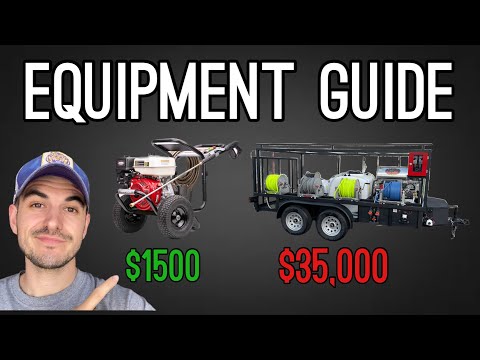
- ~$2,500 Starter setup
- ~$10,000 Mini skid
- $35,000 Top rig
- Not stated Job price, margin, payback
The claim
That a pressure washing business can be equipped for anywhere from about $2,000 to $35,000, that a beginner should buy on gallons per minute and business model rather than on the biggest machine, and that the margins are good enough to justify financing a few thousand dollars of a rig.
- 4 GPM direct-drive cart washer — Under $2,000, “probably $1,300 to $1,500”
- Step from ~2.8 GPM to 4 GPM — About $300 more
- Starter setup with tank and hoses — ~$2,500
- Mini skid (pressure plus soft wash) — Around $10,000; “now it’s over 10”
- Trailer build — “20 something grand, 25 grand”; ~$10,000 more than the Alumax skid
- Most expensive rig — $35,000
- Our estimate: Alumax skid — ~$15,000, from the trailer gap
- Guest’s own earnings — “Multiple six figures” for many years on a cart setup
- Units shipped this year — “Just shy of 400”; “over a thousand” built
- Job price, revenue per job, margin — Not stated
- Payback period on a financed rig — Asked, not answered with a figure
What is this income idea?
Start a residential and commercial pressure washing business, choosing equipment by flow rate and by the work you plan to do rather than buying the largest rig first.
- The host brings on Cody, whose company, Southeast Softwash, builds pressure washers, skids and trailers in-house. Cody walks through the shop from the cheapest professional-grade machine to their most expensive trailer, giving a rough price for each and the kind of business it suits.
- The central technical point is that flow matters more than pressure: “we don’t care about PSI … we’re looking for gallons per minute,” because more gallons per minute means jobs finish faster, “which means more money in our pocket.” Pressure can be changed with tips; flow cannot.
- The tiers are a 4 gallon-a-minute direct-drive cart at $1,300 to $1,500, a 5.5 gallon-a-minute gear-drive machine that Cody calls “Goldilocks” and recommends to most buyers, and an 8 gallon-a-minute machine he says only makes sense for operators doing large amounts of flat concrete work.
- Above the washer itself come combined platforms. A mini skid carries a 5.5 GPM washer with 50-gallon water and bleach tanks plus a soft wash system, at around $10,000. A larger Alumax skid has 100-gallon tanks and a ladder rack. The trailer build carries a 200-gallon water tank, a 100-gallon bleach tank and a 30-gallon surfactant tank, at about $10,000 more than the Alumax.
- The reason given for moving beyond a washer is roof cleaning, which Cody calls “tremendous money” and “very easy work”: a washer’s downstream injector cannot deliver strong enough chemical, so a separate soft wash system is needed. No price for a roof cleaning job is given.
- Both speakers repeatedly advise restraint. Cody says to “test your business first” before buying big equipment, that most buyers do not need an 8 GPM machine or a trailer, and that the trailer is “our least seller because it is the most expensive.” He also recommends financing the gap above about $5,000 down, because “the margins are so good.”
Buy flow, not pressure; start near $2,500; move to a $10,000 combined rig when you add roof cleaning; and only buy a trailer if your work needs one. What the jobs pay is not stated.
- Start with a 4 GPM cart — $1,300–$1,500
- Add tank, hoses, injector — ~$2,500 total
- Test pricing and marketing — Before buying big
- Move to 5.5 GPM gear drive — “Goldilocks”
- Add soft wash for roofs — Mini skid ~$10,000
- Larger skid or trailer — Up to $35,000
- Pay off the rig from jobs — Job price not stated
Each equipment step is priced; the revenue side that pays for it is not.
Good equipment advice from the seller, with the payback left to the viewer
The lesson underneath the number
- Most equipment videos in this genre push viewers toward the biggest machine. This one argues the opposite, and it comes from the person who builds the expensive machines. Cody says the 5.5 gallon-a-minute gear-drive washer is enough for most operators, that the 8 GPM is overkill unless the business is mostly flat concrete, and that the trailer is their least-sold unit because it is the most expensive. “What I see online and I cannot stand it is everybody says oh you got to have an eight gallon a minute no you don’t depends on the business model.” That is useful advice, and it runs against his own larger sales.
- The technical framing is also specific enough to act on. Flow, not pressure, decides how fast a job finishes; pressure can be changed with a tip. A direct-drive pump will not reliably draw from a tank and runs hot; a gearbox fixes both. A washer’s downstream injector cannot deliver chemical strong enough for roof cleaning, which is why a separate soft wash system is needed. Each of these explains why a price step exists, rather than just listing the step.
- What the video does not cover is the money coming in. Roof cleaning is “tremendous money”, the margins are “so good”, and the guest made “multiple six figures” for years on a cart setup, but no job price, revenue per job, margin or annual figure is given, and “six figures” is not stated as revenue or profit. The host asks how long it takes to earn enough to pay off a financed rig, and the conversation moves on without a number.
- That gap matters most at the point where the advice is to borrow. A beginner following it would put down $5,000 and finance a few thousand more on a $10,000 skid, on the strength of margins not stated in the video and jobs they have not yet won. The guest’s own advice earlier in the video is the better guide: test the business first, learn the pricing and the marketing, and buy the bigger rig once the work exists to justify it.
If you don’t think you can sustain it you know don’t go spend $35,000 on a rig.
Cody, whose company builds the $35,000 rigs
The equipment ladder, as described
From the cheapest professional washer to the most expensive trailer, with the price and use given for each.
Prices are given for the equipment; no price is given for any job.
- Entry cart: 4 gallons a minute — A 13-horsepower engine direct-coupled to a 4 GPM pump, “less than two grand probably $1,300 to $1,500.” The drawbacks given are that direct drive does not tank-feed reliably and the pump picks up engine heat. Cody says he made “multiple six figures” for years with this style of setup.
- Starter kit: about $2,500 — The cart, any used 100–275 gallon tank or tote, hoses and a downstream injector for bleach. Spend the money on the washer: “who cares what the tank looks like it’s just got to hold water.” Hose reels are an upgrade for later.
- The recommended machine: 5.5 gallons a minute — Same engine size, a 5.5 GPM 3,500 PSI pump driven through a gearbox, so it can be tank-fed. “Most guys can make all the money they ever need to make with a five and a half.” No separate price is given for this machine on its own.
- 8 gallons a minute only for heavy flat work — Recommended only if the business model is mostly concrete cleaning, for example running a surface cleaner five hours a day. For house and roof washing, Cody calls it overkill.
- Mini skid: pressure and soft wash, around $10,000 — A 5.5 GPM washer, 50-gallon water and bleach tanks, a soap tank, a soft wash pump and hose reel on one platform. This is the step that allows roof cleaning. A few years earlier it cost less; “now it’s over 10.”
- Alumax skid: their flagship — 100-gallon water and bleach tanks, a ladder rack and room for larger hose reels. Called their most popular unit. Its price is not given directly; it sits about $10,000 below the trailer.
- Trailer: about $25,000, up to $35,000 — A 200-gallon water tank, 100-gallon bleach and 30-gallon surfactant tanks, room for an 8 GPM or hot water unit. Suited to crews, large commercial work and heavy flat work. Cody says most buyers do not need it.
The business model
Paid jobs washing houses, cleaning roofs, cleaning concrete and commercial properties. No job price is given for any of them.
Homeowners and commercial property owners; the guest’s own focus is house washing and roof cleaning rather than flat work.
Faster cleaning through higher flow, and chemical soft washing that a pressure washer alone cannot deliver.
Not described beyond the advice to learn marketing and pricing before upgrading equipment.
- Equipment — ~$2,500 to $35,000, the one cost priced in detail
- Vehicle — A truck is assumed throughout. Not priced
- Chemicals — Bleach, surfactant and soap. Not priced
- Surface cleaner and hose reels — Named as add-ons or later upgrades. Not priced
- Financing interest — Financing is recommended. No rate or term given
- Insurance, marketing, fuel, maintenance — Not mentioned
- Labour — Crews are mentioned for larger operators. Not priced
This is an equipment video and it prices equipment well. Running costs and revenue per job are not part of it, which matters because the financing advice depends on both.
What you would actually need
Money
About $2,500 for a working starter setup, around $10,000 for a combined pressure and soft wash skid, about $25,000 for a trailer and up to $35,000 for the top build. Financing a few thousand dollars on top of a $5,000 deposit is recommended.
The equipment prices are specific and come from someone who sells the larger units, which they make clear. What is not given is everything else a working business needs before the first job: a truck able to carry the weight (Cody warns “water’s heavy”), chemicals, a surface cleaner, insurance and marketing. Financing is recommended without a job price or margin to show how quickly a loan would be repaid.
Named or implied, not priced
- A truck, or a truck plus trailer, to carry water tanks
- Bleach, surfactant and soap for soft washing
- A surface cleaner for flat work
- Hoses and, later, hose reels
- Fuel, engine and pump maintenance
- Interest on any financed equipment
- Liability insurance and marketing
- Building your own rig costs “almost double” the first estimate
Time
Test the business first to learn marketing and pricing before buying big equipment. Some buyers outgrow a 4 GPM machine “by the end of the spring.”
The advice to test first is sound and unusual in an equipment video. No figure is given for how long jobs take, how many jobs a week a starter rig supports or how long it takes to pay a rig off, so the time side cannot be estimated from the video.
Where the time goes
- Learning to price and market jobs before upgrading
- Job time, which the guest ties directly to gallons per minute
- Mixing and applying chemicals for roof and house washing
- Refilling tanks between jobs
- Equipment maintenance
- Payback time on a financed rig, asked but not answered
The part you must pay attention to
The case for financing a rig rests on margins the video does not state.
Cody says: “I don’t promote guys to go into debt to get into this business but honestly the margins are so good if you’ve got five grand to put down you’re only financing a few thousand dollars.”
- Mini skid price — ~$10,000
- Deposit suggested — $5,000
- Profit per job — Not stated
Not calculable
Jobs needed to repay the ~$5,000 financed
Whether a beginner can repay financed equipment depends on three numbers: what a job pays, what it costs to do, and how many jobs they can win. The video gives none of them. The host asks the right question, “how long in this business does it take to make four grand and pay off” the loan, and the answer moves on to how long the equipment lasts and how much more efficient it is, without a figure. Later the host says a single large commercial job can pay off a rig, which depends on having the marketing to win one. The equipment side of the decision is well priced; the revenue side that would justify borrowing is not.
The guest is also the seller of the units being recommended, and says so, and he argues against the most expensive one for most buyers. That counts in the video’s favour. But the financing advice is the one instruction with a downside a beginner cannot undo, and it is backed only by “the margins are so good”. Before borrowing, a viewer would need local job prices and their own cost per job, neither of which this video supplies.
- THE PRICE LADDER (as stated)
- 4 GPM cart $1,300-$1,500
- Starter setup ~$2,500
- Mini skid ~$10,000
- Trailer ~$25,000
- Top build $35,000
- OUR ESTIMATE: ALUMAX SKID
- Trailer ~$25,000
- "10 more grand" than Alumax -$10,000
- Alumax ~$15,000
- WHAT THE STARTER KIT LEAVES
- Starter setup $2,500
- Washer (top of range) -$1,500
- Tank, hoses, injector ~$1,000
- FINANCING THE MINI SKID
- Price ~$10,000
- Deposit -$5,000
- Financed ~$5,000
- / profit per job ???
- = jobs to repay not stated
The economics
Equipment is priced tier by tier. Revenue and running costs are not.
- 4 GPM cart washer — $1,300–$1,500
- Upgrade from ~2.8 to 4 GPM — ~$300
- Starter setup — ~$2,500
- Mini skid — ~$10,000 (“over 10”)
- Alumax skid — ~$15,000
- Trailer — ~$25,000; ~$10,000 above the Alumax
- Top build — $35,000
- Suggested deposit before financing — $5,000
- Job price, margin, revenue — Not stated
What the starter kit buys beyond the washer
$2,500 starter setup − $1,300 to $1,500 washer
About $1,000 to $1,200 for a tank, hoses and a downstream injector
IncomeIdeaLab calculation from the two figures stated in the video
The guest also says that when building a setup yourself “you might as well almost double” your first estimate once hoses and fittings are added, so the $2,500 figure already allows for some of that. A truck, chemicals and a surface cleaner are not included in it.
- The price of any job: house wash, roof clean or concrete
- Margin or cost per job
- Whether “multiple six figures” is revenue or profit, and over what period
- How long a financed rig takes to pay off
- Interest rate or term on recommended financing
- Vehicle, insurance, chemical and marketing costs
- Whether the host earns from the software and course promoted
- The Alumax price is our estimate. The trailer is described as “20 something grand, 25 grand” and as “basically 10 more grand” than the Alumax, which puts the Alumax around $15,000. If the trailer is nearer $20,000, the Alumax would be nearer $10,000 and close to the mini skid.
- Prices have risen: the mini skid cost less “just a few years ago” and is now over $10,000, which the guest attributes to supply chain and inflation. He advises viewers to raise their own prices to match rather than “price like it’s 2017.”
- The video refers to rolling out a new skid “in January” and to shipping about 400 units “by the time we get to December 31st,” so it appears to have been recorded late in the year before publication. Current prices may differ.
- The host opens with a giveaway of a soft wash system for subscribers of a quoting and invoicing app, offers a $1 trial of that app, and closes by promoting a rig-building course made by both speakers. Whether the host owns the app or earns a commission on it is not stated.
Evidence status
Every substantive figure and claim in the video.
- 4 GPM cart washer for $1,300–$1,500 — Guest, who builds washers — Specific and plausible for a commercial cart unit; we could not check it from the video.
- A starter setup for about $2,500 — Guest — Consistent with the washer price plus about $1,000 for tank, hoses and injector.
- Mini skid around $10,000 — Guest — Stated as “over 10” now, after recent price rises.
- Trailer about $10,000 more than the Alumax; around $25,000 — Guest — Puts the Alumax near $15,000 by our arithmetic.
- $35,000 rigs exist and most buyers do not need one — Guest — A seller advising against his most expensive product.
- Gallons per minute matter more than PSI — Guest — Explained with a clear mechanism: pressure changes with the tip, flow does not.
- “Multiple six figures” for many years on a cart setup — Guest — Not stated as revenue or profit, and no yearly figure is given.
- Roof cleaning is “tremendous money” — Guest — No job price or margin is given.
- “The margins are so good” that financing is worth it — Guest — No margin figure is given; the payback question is asked and not answered with a number.
- About 400 units shipped this year; over 1,000 built — Guest — Describes the builder’s scale, not a viewer’s likely income.
- A large commercial job can pay off a rig in one go — Host — Conditional on winning that work; no job value we can confirm is given.
What is actually proven?
The equipment pricing is specific. The income side is described without figures.
- Each equipment tier comes with a price or price range from its builder.
- The guest’s company builds the skids and trailers discussed; this is clear throughout.
- The guest advises most buyers against the trailer and the 8 GPM machine.
- The trailer gap puts the Alumax skid near $15,000.
- The starter setup leaves about $1,000 for everything beyond the washer.
- What any job pays, what it costs, or the margin on it.
- How long a financed rig takes to repay.
What the headline doesn’t tell you
The title prices equipment. The decision to borrow for it needs numbers the video does not give.
- The guest builds the rigs. — He says so, and argues against the priciest.
- No job is priced. — Not a house, a roof or a driveway.
- “The margins are so good.” — No margin figure is given.
- Financing is recommended. — Payback time is asked, not answered.
- A truck is assumed. — Not included in any price.
- “Multiple six figures.” — Revenue or profit is not stated.
- Prices have moved. — The mini skid is now “over 10”.
- A course closes the video. — Made by both speakers.
Should you try it?
Useful for choosing equipment; check local job prices before borrowing
Use the tier guide to decide what to buy. Start at the $2,500 level, as the guest himself advises, and only finance a larger rig once you know what your jobs pay.
- Specificity of equipment pricing — 8 — A price or range for every tier from $1,300 to $35,000.
- Technical clarity — 8 — Flow versus pressure, direct versus gear drive, and why soft wash needs its own system.
- Candour about the upsell — 7 — The builder advises most buyers against his most expensive units.
- Disclosure of interests — 6 — The guest’s role is clear; the host’s link to the app and course is not stated.
- Revenue and margin figures — 1 — No job price, margin or annual figure for a viewer to check.
- Support for the financing advice — 2 — Rests on margins and payback not given as figures.
- Beginner accessibility — 7 — A working start near $2,500, plus a vehicle.
- If you are deciding what pressure washing equipment to buy, this is a practical guide. The price ladder is specific, the reasons for each step are explained, and the advice to buy on gallons per minute rather than pressure, to prefer a gear-drive pump that can tank-feed, and to skip the 8 GPM machine unless you do mostly concrete is the kind of thing that saves a beginner money. That advice comes from someone who would earn more if you bought the bigger rig.
- The video is not a guide to what the business earns. It does not say what a house wash, a roof clean or a driveway pays in any market, what chemicals and fuel cost per job, or how many jobs a week a starter rig can handle. Those are the numbers that decide whether $2,500 of equipment becomes a business.
- Treat the financing advice with care. Putting $5,000 down on a $10,000 mini skid and financing the rest may be sensible once you have steady roof and house washing work, but the video gives no margin or payback figure to show it. Cody’s own earlier advice, to test the business first and learn pricing and marketing before buying big equipment, is the safer order.
- Add the costs that sit outside the equipment prices: a truck able to carry a full water tank, chemicals, a surface cleaner, insurance and marketing. None is included in the $2,500 to $35,000 range.
Passive or automated?
Automation
Better equipment shortens jobs; it does not do them.
Passive potential
Income comes from physical jobs done on site.
Pressure washing is a hands-on service business and nothing in the video presents it otherwise. Equipment changes how quickly a job is done, which the guest ties directly to earnings, but someone still drives to the property, sets up, mixes chemicals, washes, refills and packs down. The only route to less personal labour mentioned is running crews, which the guest says suits a trailer because it can be unhitched and moved between trucks; the cost of those employees is not discussed.
- Quoting, marketing and winning jobs
- Driving the rig to each property
- Washing, soft washing and roof work on site
- Mixing chemicals and refilling tanks
- Maintaining engines, pumps and hoses
- Hiring and managing crews for larger operations
Recommended beginner experiment
Start at the bottom of the ladder and let real jobs set the next step.
- Price five local jobs before buying anything. — House wash, roof, driveway.
- Buy a 4 GPM washer, not a homeowner unit. — $1,300–$1,500 in the video.
- Keep the first setup near $2,500. — Used tank, plain hoses, injector.
- Check your truck’s payload. — Water weighs about 8 lb a gallon.
- Track cost and time per job. — Chemicals, fuel, hours.
- Add soft wash when roof work is booked. — Mini skid around $10,000.
- Work out payback before financing. — Financed amount ÷ profit per job.
- Skip the trailer unless crews or flat work need it. — The builder’s own advice.
Our verdict: 6/10
A clear equipment price guide from the builder, without the job figures to back the financing advice Every tier is priced; what the work pays is not stated
Credited for a specific price or range at every tier from a $1,300 washer to a $35,000 rig; for explaining why each step exists, including flow versus pressure, gear versus direct drive and why roof cleaning needs a separate soft wash system; for advising viewers to test the business before buying big; and for a builder steering most buyers away from his own most expensive units. Marked down because no job price, margin, revenue or payback figure is given anywhere, so the advice to finance a rig because “the margins are so good” cannot be checked; because the guest’s “multiple six figures” is not stated as revenue or profit; because vehicle, chemical, insurance and marketing costs are left out of the price range; and because the host’s link to the app and course promoted is not stated.
As a guide to pressure washing equipment, the video does what its title says. It prices each tier, from a 4 gallon-a-minute cart at $1,300 to $1,500 and a $2,500 starter setup, through a mini skid around $10,000 and a flagship skid we estimate near $15,000, to a trailer around $25,000 and builds up to $35,000. It explains why each step exists, and the guest, whose company builds the larger units, tells most buyers they do not need the trailer or the 8 GPM machine and should test the business before buying big. That advice is worth following. What the video does not give is any figure for the money coming in: no price for a house wash or roof clean, no margin, no annual revenue a viewer could check, and “multiple six figures” is not stated as revenue or profit. That matters because the video also recommends putting $5,000 down and financing the rest of a rig on the strength of margins that are “so good”, and when the host asks how long it takes to earn enough to pay one off, no number is given. A beginner should take the equipment guidance, start near $2,500 as the guest suggests, add the cost of a suitable truck, chemicals and insurance, and work out their own payback from local job prices before borrowing for anything larger.
- Starter setup — ~$2,500
- Mini skid — ~$10,000
- Alumax skid — ~$15,000
- Trailer — ~$25,000
- Top build — $35,000
- Job price or margin — Not stated
- Payback on financing — Not stated
- Conflict of interest — Guest builds the rigs, disclosed
- Beginner suitability — Yes, at the $2,500 level
Sources
- Pressure Washing Business Equipment Guide (USD 2k - USD 35K) — YouTube video, 2024-02-28