Local Services / Food Trucks · Claim Review
“How to Start $700k/Year Pizza Food Truck Business”
What we found: The $700K Is a Sales Forecast Across Three Units, Not a Year of Income
A candid tour of a three-unit pizza operation with a stated food-cost ratio and real event fees — but the headline is projected gross sales, and payroll and profit are never put in numbers.
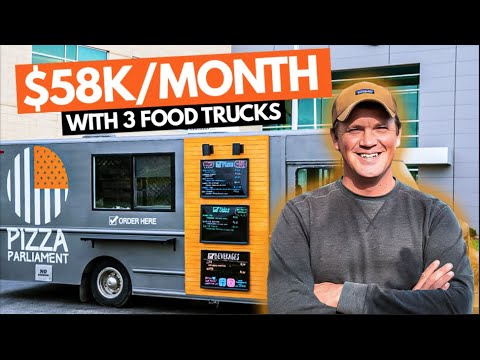
- ~$700k Sales this year
- ~50,000 Pizzas this year
- 22–24% Food cost
- Not given Profit or payroll
The claim
That a pizza food-truck business started six years earlier has grown to three units and will do about $700,000 in sales this year.
- Sales this year — "About 700,000"
- Channel's on-screen graphic, 16:46 — $700,000, labelled "2022 Sales"
- Pizzas this year — "Approximately 50,000"
- Average sale per pizza — ~$14
- Sales target next year — "Hoping to break a million"
- Units — Two trucks and one trailer
- Events per week — ~15 on average; 20–25 in peak weeks
- Food cost — 22–24% of sales, target under 28%
- Festival fee at one event — 35% of sales; a ~$10,000 cheque
- Catering versus vending — Roughly 60/40
- Payroll, repairs, fuel, profit — Never stated
What is this income idea?
A mobile pizza operation that earns most of its money from pre-booked catering, with festivals, breweries and neighbourhood nights filling the rest of the calendar.
- The owner says the business started six years before recording and has grown to three units: the original 2002 truck, a newer truck, and a trailer built that spring. The opening line sets the headline: "this year we'll probably do about 700,000 in sales approximately 50,000 pizzas."
- Operations run from a pole barn rather than a commissary, because the units are self-sufficient. Dough is made to the business's own recipe by an outside bakery, picked up 1,600 at a time once or twice a week, then cold-risen for two to five days in a row of small chest freezers the owner says cost about $189 each.
- Catering is described as "where all the money's at": weddings and company events pay a deposit in advance and happen rain or shine. The schedule is said to be roughly 60/40 catering to vending, with vending events — festivals, breweries, distilleries — used for exposure as much as sales.
- The owner's own role is "sales and marketing and bookings". An operations manager runs pickups and supplies, another staff member stocks and cleans the trucks, and a manager interviewed later says they handle ordering, scheduling, maintenance and payroll on many 60-hour weeks.
- The strongest quarter, by the owner's account, was March to May 2020, when festivals were cancelled and the truck instead parked on residential streets for pre-ordered "neighbourhood nights" — selling about 300 pizzas a night while most other trucks had closed.
- Costs are discussed more openly than usual: a 22–24% food cost, festivals that take a percentage of sales (35% at one, a cheque of about $10,000), constant repairs, and an engine on the original truck replaced twice. What is never given is a wage bill, a repair total or a profit figure.
A pizza business with three mobile units that expects about $700,000 in sales this year, mostly from pre-paid catering — with staff, repairs and event fees coming out of that before anyone is paid.
- Book catering first — Deposits, rain or shine
- Fill gaps with vending — Breweries, festivals
- Outsource the dough — 1,600 at a time
- Cold-rise in freezers — 2–5 days
- Conveyor oven on board — ~81 pizzas an hour
- Market on Facebook — Date and location posts
- Pay event fees — Up to 35% of sales
- ~$700k sales forecast — Before every cost
A real operation described in detail — with the headline at the top of the funnel, not the bottom.
The constraint is staff, not customers
The lesson underneath the number
- The most useful thing in this interview is not the headline. It is the owner's explanation of why catering is the core of the business: a wedding or company event is booked in advance, a deposit is paid, the headcount is known, and it happens whatever the weather. Festivals can earn a lot in a short time, but they are "a lot more hit or miss", they take a percentage of sales, and they require days of set-up. A business that sells mainly to pre-paid bookings can forecast its year in a way a truck that relies on passing trade cannot.
- The second lesson is what limits growth. The owner says they would book all three units every day of the week if they had the staff, and that the hardest role to fill is a driver who can handle a large vehicle, troubleshoot a generator, deal with the public and hold a food-safety certificate. Demand, by this account, is not the problem. The labour to meet it is. That is also why the payroll figure matters, and why its absence leaves the biggest question open.
- The interview is specific about what goes wrong. The first truck turned out to be "a lemon"; the generator, oven and water heater all failed within months; the engine has been replaced twice; a tow truck was hired to move a broken unit between weddings. Food cost is given as a ratio, festival fees are named, and the owner closes by telling viewers to "focus on the numbers" because "there are so many food truck owners that are almost offended by profitability."
- Which is the gap. The video gives the inputs to a profit calculation — sales, pizzas, food cost, fee percentages — and stops before the result. Nothing in it says what the owner takes home from roughly $700,000 in sales, or whether a single unit would make money on its own. The owner's own estimate that the average food truck in West Michigan lasts about two years is the context any viewer should keep beside the headline.
I know you love food but you have to focus on the numbers… you're going to go out of business if you don't focus on the profits.
The owner's third piece of advice — and the number the video does not give
How the business runs, as the owner describes it
More operational detail than most food-truck interviews, and most of it checkable against itself.
Figures are as stated by the owner and staff in the video, published 5 November 2022. The channel's on-screen sales graphic at 16:46 is quoted as it appears.
- Lead with catering — "Catering is really where all the money's at… they're paying ahead of time typically they're paying a deposit." A gratuity is built into each quote for staff. The schedule is described as roughly 60/40 catering to vending.
- Outsource the dough, control the rise — The recipe is theirs; a large bakery makes it, 1,600 dough balls per pickup, one or two pickups a week. A row of small freezers, about $189 each, holds dough at the right stage instead of a walk-in cooler.
- Buy ingredients opportunistically — Meat moved partly from a mainstream distributor to a discount buyer of off-brand or short-dated stock — "a pallet worth of stuff at like 80% discount" — which the freezers make possible.
- Run a conveyor oven — Four minutes per pizza and "about 81 pizzas coming through per hour". The best single day is put at about 700 pizzas, and the best festival at about 3,000 pizzas across four days.
- Choose events by foot traffic — "Understanding that walk flow is like the most important thing." A truck parked across a field from the main path loses the sale to whatever is closer.
- Plan redundancy for catered events — Backup equipment, a whole backup oven, and — when an engine failed — a hired tow truck to move the unit between weddings. Only one or two events were cancelled this year for equipment failure, by the owner's count.
- Market each stop locally — Early growth was word of mouth; since 2020, Facebook posts naming the date, place and an online pre-order link. Pre-orders are queued to fire to the truck's screen about 20 minutes before pickup.
The business model
Pizza sales at catered events (weddings, company events), festivals, breweries and distilleries, and pre-ordered neighbourhood nights.
Couples and companies booking catering in advance, plus walk-up customers at events.
A house-recipe crust and sauce, a fast conveyor oven, and a reputation for not cancelling on a booked event.
Word of mouth, business cards at vending events, and Facebook posts announcing dates, places and online pre-ordering.
- Payroll — Implied as the largest expense. Never priced
- Food — 22–24% of sales, as stated
- Repairs and maintenance — Called the biggest expense after staff. Never totalled
- Event fees — 35% of sales at one festival; ~$4,000–$5,000 at another
- Vehicles and equipment — Three units, a diesel generator, ovens. Never priced
- Fuel, propane, storage barn, card processing — Implied by the operation. Never mentioned as costs
Food cost and event fees are stated, which is more than most interviews give. The two largest cost lines by the owner's own ranking — staff and repairs — are left without a number.
What you would actually need
Money
No start-up figure is given. The owner volunteers food cost, event commissions, a freezer price and the advice that it "takes a lot of time and a lot of money to grow a following".
The vehicle and equipment history shows where the money goes: the first truck was bought used with 250,000 miles, most of its equipment failed within months and was replaced with new, and its engine has since been replaced twice. None of those sums is stated, and neither is the price of the second truck or the trailer.
Named but never priced
- Three vehicles: a used 2002 truck, a newer truck, a trailer
- All-new kitchen equipment after the first truck "broke"
- A diesel generator and two engine replacements
- Conveyor ovens, plus a backup oven
- A pole barn for storage, freezers at ~$189 each
- Payroll for drivers, an operations manager and support staff
- Event fees: ~$4,000–$5,000 at one festival, 35% at another
Time
Six years from start to three units. The owner's role is now "sales and marketing and bookings", with staff handling operations.
The owner's hours are never stated, but a manager describes 24/7 availability and "quite a few 60-hour weeks", and festivals require arriving days early. The stated constraint on growth is not demand but staff: "I would be booking all three trucks every single day of the week if I had enough staff."
Where the time goes
- Six years to reach three units
- ~15 events a week on average, up to 25 at peak
- Festival set-up "a couple days early"
- Staff on site an hour before every event
- A manager on frequent 60-hour weeks
- Constant repairs and maintenance
The part you must pay attention to
The $700,000 is forecast gross sales, not income.
The figure appears twice, both times in the future tense: "this year we'll probably do about 700,000 in sales" and "I think we'll probably hit about 700 this year." The channel's on-screen lower-third at 16:46 shows "$700,000" with the label "2022 Sales"; the owner's words at that moment describe a forecast for the year, so we treat the figure as projected.
- Forecast sales, three units — ~$700,000
- Food cost, as stated — −22% to −24%
- Never priced — − payroll, repairs, event fees, fuel
Profit: never stated
Food alone leaves ~$532,000–$546,000 before labour
The headline rests on the assumption that a forecast of gross sales describes what the business earns. It does not. The owner names payroll as the largest expense ("what's your biggest expense outside of employees"), then repairs, then event fees, and none of those is put in numbers. Some fees are large: one festival took 35% of sales and another cost about $4,000–$5,000 for a weekend. The business also runs three vehicles, a generator, propane and a storage barn, pays a gratuity line to staff on catering quotes, and takes about half its payments by card. With food at 22–24% of sales, our arithmetic leaves roughly $532,000–$546,000 before any of those costs, and the video gives no way to estimate what remains after them.
The forecast itself is credible on the owner's own numbers. $700,000 over 50,000 pizzas is about $14 a pizza, which fits event pricing, and three units averaging about 15 events a week across a season could plausibly reach it. But it is a three-unit figure for a year that was still running — the third unit only started in May and one truck was off the road for weeks with engine trouble — and the next year's "hoping to break a million" is explicitly a hope. Read the title as "a three-unit operation expecting about $700,000 in sales", not as a single food truck producing $700,000 a year in income.
- WHAT THE $700K IS
- Stated "probably" ~$700,000
- Tense future
- Measure sales
- Units 3
- -> forecast, gross, three units
- PER PIZZA (our arithmetic)
- $700,000 / 50,000 pizzas = ~$14
- AFTER FOOD COST ONLY
- $700,000 x 22% = $154,000
- $700,000 x 24% = $168,000
- Left before everything $532k-$546k
- Payroll -???
- Repairs, engines -???
- Event fees (up to 35%) -???
- Fuel, propane, card fees -???
- --------------------------------------
- Profit NEVER GIVEN
- PER UNIT (our arithmetic)
- $700,000 / 3 units = ~$233,000
- (third unit only since May)
The economics
Sales, volumes and some cost ratios — no wage bill and no profit.
- Sales this year — ~$700,000
- Pizzas this year — ~50,000
- Average sale per pizza — ~$14
- Food cost — 22–24% of sales
- Sales left after food — ~$532,000–$546,000
- Oven capacity — ~81 pizzas an hour
- Festival commission (one event) — 35%; ~$10,000 cheque
- Implied sales that weekend — ~$28,600
- Payroll, repairs, fuel, profit — Never stated
Checking the headline against its own volumes
$700,000 ÷ 50,000 pizzas = ~$14 per pizza; $700,000 × (1 − 0.22 to 0.24) = ~$532,000–$546,000 after food
The sales forecast is internally consistent; what it leaves after labour, repairs and fees is unknown
IncomeIdeaLab calculation from figures the owner states
Both the sales and pizza figures are forecasts for a year still in progress, so the per-pizza average is only as good as those estimates. Some events take a percentage of sales off the top, so effective revenue per pizza at those events is lower.
- Payroll — the expense the owner implies is largest
- Total repair and maintenance spend, including two engine replacements
- The cost of the trucks, the trailer, the generator and the ovens
- Fuel, propane, insurance, permits and card-processing fees
- Total event fees across the year
- The owner's own pay, and whether the business is profitable
- One festival "used to charge 35%" and the owner would "hand them a 10 grand" cheque. Our arithmetic: $10,000 ÷ 0.35 implies about $28,600 in sales that weekend. The owner separately recalls about 3,000 pizzas in one four-day weekend there, which at ~$14 would be nearer $42,000; the two recollections may come from different years and are not reconciled in the video.
- The generator is said to be "good for 40,000 hours" and "we go through about 2,000 hours a week". A week has 168 hours, so the second figure does not fit as spoken; it may have been meant per year, which would fit the owner's claim that it will outlast three trucks. We have not used it.
- Dough pickups of 1,600 balls once or twice a week give a capacity of 1,600–3,200 a week. Our arithmetic: 50,000 pizzas a year averages about 960 a week, so the stated supply is consistent with a seasonal business that peaks well above its average.
- The channel's on-screen lower-third at 16:46 reads "$700,000" over the label "2022 Sales". The owner, speaking at the same point, says "this year we'll probably do about 700,000 in sales with the three trucks". The graphic is the channel's, not a sales record, and it does not change the figure's status: a stated estimate for a year still running.
- Cash and card are put at "probably 50/50". On roughly half of sales the business pays card-processing fees, which the video does not mention.
Evidence status
Every substantive claim in the video.
- ~$700,000 in sales this year — Owner — Stated twice as a forecast. Sales, not profit, across three units.
- On-screen graphic: "$700,000 / 2022 Sales" (16:46) — Channel's on-screen graphic — Shown in the channel's on-screen graphic. Labels the figure as 2022 sales; the owner's words are a forecast.
- ~50,000 pizzas this year — Owner — "On pace to make." Consistent with ~$14 a pizza.
- "Hoping to break a million" next year — Owner — Explicitly a hope that depends on staffing.
- Food cost 22–24%, target under 28% — Owner — A useful, specific ratio; higher in 2021 when ingredient prices spiked.
- One festival charged 35% of sales — Owner — Past tense — "used to charge". Implies ~$28,600 in sales that weekend.
- ~81 pizzas an hour from a conveyor oven — Owner — Plausible for a four-minute bake.
- Best day ~700 pizzas; best festival ~3,000 in four days — Owner — Recollections, consistent with the oven rate over long shifts.
- Generator runs "2,000 hours a week" — Owner — Does not fit as stated; a week has 168 hours.
- March–May 2020 was the best quarter ever — Owner — No figure given; ~300 pizzas a night on neighbourhood nights.
- Average food-truck lifespan in West Michigan ~2 years — Owner — An impression, not a sourced statistic — but a useful warning.
- Payroll, repairs, profit — Nobody — The largest costs by the owner's own ranking, never priced.
What is actually proven?
The operation is real and described in detail. The income is not addressed.
- The pole barn, the trucks, the trailer and the freezer set-up are shown on camera.
- Food cost, event commissions and volumes are given as specific figures.
- $700,000 across 50,000 pizzas is about $14 a pizza — internally consistent.
- Food cost alone leaves about $532,000–$546,000 before labour and other costs.
- The $700,000 and the 50,000 pizzas are forecasts for the current year.
- Payroll, repair spend, vehicle costs and the owner's pay.
- Whether the business is profitable, and by how much.
What the headline doesn’t tell you
The title reads like annual income. The owner describes a forecast of sales.
- It is a forecast. — "We'll probably do about 700,000."
- It is sales. — Not profit, not owner pay. The on-screen graphic also says sales.
- It is three units. — Two trucks and a trailer.
- One unit started in May. — And another was off the road for weeks.
- Staff is the biggest cost. — Never put in numbers.
- Repairs come next. — Two engines on one truck.
- Festivals take a share. — Up to 35% of sales.
- Average lifespan ~2 years. — The owner's own estimate locally.
Should you try it?
A realistic picture of the work, without the bottom line
Use the catering-first model and the food-cost ratio. Do not treat $700,000 as what one truck earns.
- Operational detail — 8 — Dough logistics, oven rate, event mix, redundancy — all specific.
- Honesty about problems — 8 — A lemon truck, two engines, a tow truck between weddings, staffing limits.
- Cost disclosure — 5 — Food cost and event fees given; payroll and repairs never priced.
- Headline accuracy — 4 — The owner says forecast sales across three units; the title reads like a year of income.
- Internal consistency — 7 — Sales, pizzas and dough supply reconcile; the generator figure does not.
- Profit disclosure — 0 — No profit, margin or owner-pay figure appears.
- Beginner accessibility — 4 — Requires vehicles, a generator, ovens, storage and trained drivers.
- The model in this video is worth understanding even if you never run a pizza truck. Catering is booked in advance, deposits are paid, headcounts are known and the event happens whatever the weather. Vending at breweries and festivals is used for exposure and fills gaps, but it is "hit or miss" and some festivals take a large share of sales. If you are considering a food truck, build your calendar around bookings you can forecast, not around passing trade.
- Take the food-cost figure seriously: the owner aims to keep ingredients under 28% of sales and says they normally run at 22–24%. That ratio, and the warning that ingredient prices doubled or tripled in 2021, are among the most useful numbers in the interview. A beginner should price their menu from that ratio upward.
- Then read the headline correctly. The $700,000 is a forecast of sales for a year still in progress, across two trucks and a trailer, one of which only started in May. It is before payroll, which the owner implies is the largest cost, before repairs, which they call never-ending, and before event fees that reached 35% of sales at one festival. Our arithmetic gives about $233,000 of forecast sales per unit, still before all of those costs.
- Finally, weigh the barriers. The first truck was bought used with 250,000 miles and most of its equipment failed within months. The owner says the hardest hire is a driver who can tow a 28-foot trailer, troubleshoot a generator and serve the public, and that a lack of such staff is what stops the business booking every day. And the owner's own estimate is that the average food truck locally lasts about two years.
Passive or automated?
Automation
Online pre-orders queue themselves; cooking, driving and set-up do not.
Passive potential
The owner has stepped back to sales and bookings, but every event needs a crew.
The owner has moved out of daily operations into "sales and marketing and bookings", which is as close to passive as this model gets — and it was achieved by hiring an operations manager, a support person who stocks and cleans the trucks, and drivers who can run a kitchen on wheels. Every event still needs a crew on site an hour early, a vehicle that starts, an oven that works and someone who can fix a generator. The manager interviewed describes 24/7 availability and many 60-hour weeks. Online pre-ordering automates the queue, not the work.
- Driving, towing and setting up at every event
- Cooking at up to ~81 pizzas an hour
- Dough pickups and timing the cold rise
- Repairs to engines, generators and appliances
- Booking and quoting catering events
Recommended beginner experiment
Prove one unit's economics before buying a second.
- Price the menu from food cost up. — Under 28% of sales; the owner runs 22–24%.
- Book catering before vending. — Deposits and known headcounts.
- Ask every festival for its fee. — One took 35% of sales.
- Budget for repairs from day one. — The owner's second-biggest cost.
- Buy redundancy for booked events. — A backup oven, a plan for a breakdown.
- Track your own profit per event. — The figure this video never gives.
- Hire and train drivers before expanding. — Staff, not demand, is the stated limit.
- Expect it to take years. — Six years to three units here.
Our verdict: 6/10
A candid tour of a real operation, with the headline left as a forecast of sales and no figure for what is left after staff, repairs and event fees
Credited for an unusually detailed operational account — outsourced dough, freezer-based cold rise, a conveyor oven at about 81 pizzas an hour, a catering-first calendar — and for volunteering a 22–24% food cost, a 35% festival commission and a frank history of breakdowns. Marked down because the $700,000 is a forecast of gross sales across three units for a year still in progress, while the title reads like a year of income; because payroll and repairs, which the owner ranks as the largest costs, are never put in numbers; because no profit or owner-pay figure appears; and because one stated figure, a generator running 2,000 hours a week, does not fit a 168-hour week. The channel's on-screen graphic at 16:46 labels the $700,000 as 2022 sales; it does not add evidence beyond the owner's forecast.
This is one of the more useful food-truck interviews we have reviewed, because the owner describes how the business actually works rather than how much it makes. Catering is the core: bookings are paid in advance, headcounts are known and the event happens whatever the weather. Festivals and breweries fill the calendar and build the name, but they are hit or miss and some take a large cut — 35% of sales at one. Dough is made to the house recipe by an outside bakery, risen in a row of cheap freezers, and baked in a conveyor oven at about 81 pizzas an hour. The owner is frank about what goes wrong: a used truck that turned out to be a lemon, two engine replacements, a tow truck hired to move a broken unit between weddings, and a staff shortage that stops them booking every day. The food-cost ratio of 22–24% is a figure any beginner can use. What the video does not give is the bottom line. The $700,000 is a forecast of sales for a year still running, across two trucks and a trailer, one of which only started in May. Our arithmetic shows the forecast is consistent with 50,000 pizzas at about $14 each, and that food cost leaves roughly $532,000–$546,000 — before payroll, which the owner implies is the largest expense, before repairs, which come second, and before event fees, fuel, propane and card processing. None of those is put in numbers, and neither is the owner's pay. The owner's closing advice is to focus on the numbers because the average local food truck lasts about two years. That is the right advice, and the number it points to is the one this video leaves out.
- Sales this year — ~$700,000 (forecast)
- Pizzas this year — ~50,000
- Per pizza — ~$14
- Food cost — 22–24%
- After food only — ~$532,000–$546,000
- Units — 3 (one since May)
- Payroll and repairs — Never stated
- Profit — Never stated
- Beginner suitability — Model yes, headline no
Sources
- How to Start USD 700k/Year Pizza Food Truck Business — 6 Figure Revenue — Source video, 2022-11-05