Local Services / Food Truck · Claim Review
“How to Start $1,800/Day Chicken Food Truck Business”
What we found: The $1,800 Food Truck Day Was the Best One, on a Truck Open Saturdays
A record day with no pitch fee, a business run around a nine-to-five, and not one cost figure to set against the sales.
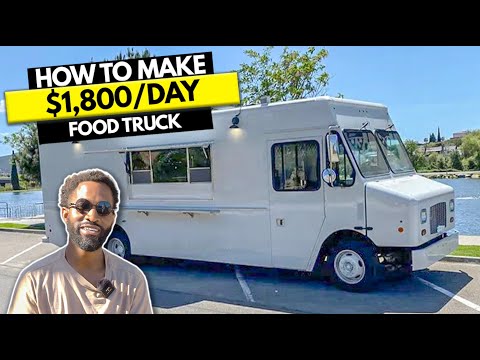
- ~$1,800 Best day in sales
- ~1 a week Trading days
- ~$50,000 Used truck, his estimate
- None given Costs or profit
The claim
That a chicken food truck brings in $1,800 a day.
- Sales on the best day so far — ~$1,800
- Loaded fries sold that day — ~75
- Usual trading days — Weekends, mainly Saturdays
- Owner’s other work — A full-time nonprofit job
- Price of a used truck, as a bare minimum — ~$50,000
- Price paid for this truck — Not disclosed
- Chicken taken to a typical event — One 40 lb case
- Gross if every Saturday matched the best day — ~$93,600 a year
- Food cost, fuel, insurance, licences, profit — Not stated
What is this income idea?
Buy a used, equipped food truck, get it licensed, and sell a short menu at community events and a regular weekend spot.
- The owner went into the venture with family members after about a year and a half working on another local food truck. A relative spotted a truck for sale; it came fully equipped from a previous owner, "everything from most of the equipment to the spoons to the bowls".
- He does not say what it cost — "it was at a specific price" — but estimates that a newcomer should expect to spend "probably a bare minimum if you could find a used one maybe 50,000". The truck is 30 feet long, from the late 1980s, carburetted, and "takes a lot of gas to run".
- Licensing took money and time before any sales: equipment tests, fixes to bring things up to code, and insurance. The first event was the day after the licence arrived.
- The truck trades at weekends only, mostly Saturdays at one regular spot, because he works a nine-to-five in the nonprofit sector. Most bookings come by referral, email and social media. He may add some Fridays.
- The menu is short and built around jerk chicken: a Philly, a chicken sandwich, a quesadilla, loaded jerk fries — the best seller — and his mother’s banana pudding. A typical event takes one 40 lb case of chicken; leftovers are donated to a youth charity where he works.
- The $1,800 comes from his best day: "I think we did around like USD 1,800 sales", at the regular spot beside his uncle’s clothing store, selling about 75 orders of loaded fries and "just about everything".
A real weekend food truck that had one very good $1,800 day; how much it makes in a normal month, and what it keeps, is never said.
- Find a used truck — Price not disclosed
- Licence and test it — Costs before any sales
- Short menu — Jerk chicken, five items
- Community events — Mostly by referral
- Regular Saturday spot — No pitch fee
- Best day: ~$1,800 — Sales, not profit
A credible small business. The title takes its best day and calls it a daily rate.
He tells you to know your numbers, and shares one.
The lesson underneath the number
- The owner is the most measured voice in the video. He kept his full-time job on purpose, so he could learn the business before depending on it. He warns that the work is physically brutal and "definitely not a young person’s thing". He lists his running costs one by one — insurance, weekly ingredients, cleaning supplies, storage bins, a new generator, a fryer — and admits that licensing drained money before the truck earned any.
- His closing advice is the best line in the video: "if the numbers don’t make sense you’re probably wasting a lot of time until your numbers make sense and you can see on paper what you should be making". The only number he shares is the gross takings of his best day.
- That day was also unusually favourable. He traded beside his uncle’s shop, at a spot where he paid nothing to stand and drove almost nowhere, and he says so — "not spending a bunch of money in gas and paying fees to be at a spot" — as part of why it went well. Most event days, by implication, carry costs that one did not.
- The title then takes that single figure and puts "/Day" after it. On a truck that trades about once a week, around a day job, the honest headline is that a careful part-time food truck had a very good Saturday. Whether it makes money over a year is a question the video raises and leaves open.
If the numbers don’t make sense you’re probably wasting a lot of time until your numbers make sense.
The owner’s third tip — the numbers themselves are not shared
How he got it running
A careful, part-time start with family money and borrowed experience.
No cost of any stage is given, including the truck itself.
- Learn on someone else’s truck — He worked about a year and a half on another local food truck first, and credits its owner with teaching him the trade.
- Buy an equipped truck with family — A relative found a fully equipped used truck and they bought it together. The price and ownership split are not given.
- Clear licensing before selling — Equipment tests, repairs to meet code and insurance all came first. "By the time you get done you’d spent all of this money and you hadn’t really brought any in."
- Design the menu around the equipment — The truck came with a flat top and a rice cooker. He added a deep fryer and built the menu to suit, and wants grills later.
- Keep the day job — He deliberately runs the truck at weekends to "learn all the lessons and come up with the systems" before going full time.
- Book events through people you know — Referrals from his community and nonprofit work, plus a car-show organiser who has brought the truck its best event days.
- Hold a regular spot — Most Saturdays at the same location, so customers can find the truck. His best day came there, with no pitch fee and little driving.
The business model
Per-order food sales at community events, car shows and a regular Saturday location.
Event-goers and local regulars in Grand Rapids, reached mainly through referrals and social media.
A short jerk-chicken menu with loaded fries and a family dessert, served fresh at events.
Referrals, inbound requests by email and social media, a recurring car-show organiser, and a fixed weekend spot.
- Truck purchase — Price not disclosed; ~$50,000 his estimate for a used one
- Licensing, tests, repairs — Paid before the first sale. Not priced
- Insurance — Monthly. Not priced
- Ingredients — Weekly; ~40 lb of chicken per event. Not priced
- Fuel — A 30-foot carburetted truck. Not priced
- Equipment — Deep fryer, new generator, bins. Not priced
- Event fees — Avoided on the record day. Not priced
- Help — His mother and friends at larger events
He lists the costs honestly and in detail. He just does not attach a figure to any of them.
What you would actually need
Money
Around $50,000 for a used truck "as a bare minimum", plus licensing, tests, repairs and insurance before the first sale.
That estimate is the only capital figure in the video and it is large next to a $1,800 best day. His own truck’s price is not given, it was bought with family members, and every running cost is described without a number.
Named in the video, never priced
- The truck itself, bought with family
- Licences, equipment tests and code repairs
- Monthly insurance
- Weekly fresh ingredients
- Fuel for a 30-foot, late-1980s truck
- A deep fryer and a larger generator, both added
- A website, just bought, and a planned truck wrap
- Event and location fees where they apply
Time
Weekends, mostly Saturdays, around a full-time job. He describes it as physically punishing.
A trading day is only part of the work: shopping, prep, cleaning, maintenance and repairs fill the week. He is honest that it "will tear your body up".
Where the time goes
- Buying fresh ingredients every week
- Prep and marinating before each event
- Lifting generators and stock
- The service shift itself
- Dishes and deep cleans
- Repairs: "things come unscrewed all the time"
The part you must pay attention to
$1,800 is his best day ever, not his daily takings.
Asked about one of his best days, he describes the day "we did our most amount of money in sales". The title turns that record into a rate.
- Best single day of sales — $1,800
- Saturdays in a year — 52
~$93,600
Gross a year only if every Saturday were the record day
That $93,600 is a ceiling, not an estimate. Ordinary days are not described, and the record day was unusual by his own account: a home spot next to his uncle’s shop, no fee to trade there, little fuel, and a sell-out. Every figure after "sales" is missing — ingredient cost, packaging, fuel, insurance, licences, generator, helpers and any share owed to the family members who co-own the truck.
Set even the ceiling against his own capital estimate and the picture is sober. A used truck at around $50,000 is about 28 record days of gross sales, which at one trading day a week is more than half a year of best days before food or fuel is paid for. He gives the advice himself at the end — "if the numbers don’t make sense you’re probably wasting a lot of time" — and the video gives the viewer none of the numbers needed to check.
- THE TITLE vs THE VIDEO
- Title $1,800 / day
- Video best day so far
- Trading days ~1 a week
- CEILING (our calculation)
- $1,800 x 52 Saturdays
- = $93,600 gross
- Ordinary days not given
- PAYBACK ON A TRUCK
- Used truck ~$50,000
- / $1,800 = ~28 record days
- At 1 day a week = 28+ weeks
- ...before food, fuel, insurance
- COSTS GIVEN none
The economics
One sales figure, one capital estimate, and nothing in between.
- Best day in sales — ~$1,800
- Loaded fries sold that day — ~75
- Trading days — ~1 a week
- Used truck, his estimate — ~$50,000
- Ceiling: every Saturday a record — ~$93,600 a year
- Record days to equal a $50,000 truck — ~28
- Typical day’s sales — Not stated
- Food cost, fuel, insurance, profit — Not stated
How far a record day goes against the truck
$50,000 ÷ $1,800 = ~27.8 record days of gross sales
~28 best-ever Saturdays to match a used truck’s price, before any running cost
IncomeIdeaLab calculation from the two figures given in the video
His own truck’s price is not disclosed and it came fully equipped, so his payback may differ. The $50,000 is his general estimate for a newcomer.
- What a typical trading day takes
- Monthly or annual sales
- Ingredient and packaging cost per order
- Fuel, insurance and licence costs
- What the truck cost and how ownership is shared
- Whether the business makes a profit
- Seventy-five orders of loaded fries is the only volume figure. Their price is not given, so the share of the $1,800 they made up cannot be worked out.
- The opening of the video splices separate remarks together, so "maybe 50,000" and "$1,800 in sales" sound like one statement. In the interview, the first is a truck price and the second is a single day’s sales.
- Nothing is sold in the video: no course, sponsor or affiliate link appears.
Evidence status
Every figure in the video.
- "$1,800/Day" (title) — Channel — The owner describes it as his best day, not a daily rate.
- ~$1,800 in sales on the best day — Owner — Plausible for a sell-out. Sales, not profit.
- ~75 loaded fries sold that day — Owner — Price per order not given.
- Open weekends, mainly Saturdays — Owner — Around a full-time job.
- Used truck ~$50,000 minimum — Owner — A general estimate; his own price is withheld.
- One 40 lb case of chicken per event — Owner — A useful scale marker. Cost not given.
- Employee and full branding by 2025 — Owner — Stated as hopes.
- Costs and profit — Nobody — Listed, never priced.
What is actually proven?
A real truck, a real menu, and one good day in his own words.
- The truck is filmed trading at its regular spot.
- About $1,800 in sales on his best day.
- The truck trades about one day a week.
- Every Saturday at the record would gross about $93,600 a year.
- A $50,000 truck equals about 28 record days of sales.
- Typical daily sales, costs and profit.
What the headline doesn’t tell you
The owner is careful. The title is not.
- $1,800 was the best day. — Not every day.
- Open about once a week. — Mostly Saturdays.
- He has a day job. — Full time, on purpose.
- That day had no pitch fee. — And barely any fuel.
- Truck price withheld. — ~$50,000 is his estimate.
- Co-owned with family. — Split not given.
- No food cost given. — Or fuel, or insurance.
- Hard on the body. — His own warning.
Should you try it?
Only with capital, experience and your own numbers
Copy his caution — work on someone else’s truck first and keep your job — and build the cost model he tells you to build.
- Honesty of the owner — 8 — Candid about costs existing, the physical toll and keeping his job.
- Accuracy of the title — 2 — A best day presented as a daily rate.
- Cost disclosure — 2 — Costs listed in detail, none priced.
- Capital required — 2 — ~$50,000 for a used truck by his estimate.
- Beginner accessibility — 4 — He learned on another truck for 18 months first.
- Evidence of profit — 1 — None given.
- The owner models a sensible way into this business: eighteen months learning on someone else’s truck, a fully equipped used vehicle bought with family, weekend trading while keeping a full-time job, and a short menu designed around the equipment he had. None of that is hype, and he is frank that the work is physically punishing.
- What the video cannot tell you is whether it pays. The only revenue figure is his best day, at a spot that cost nothing to trade from. There is no typical day, no monthly total and no cost figure of any kind. With a used truck estimated at around $50,000, even a run of record Saturdays would take more than half a year to match the vehicle’s price before food and fuel.
- If you are considering it, follow his own last tip literally: work out on paper what a normal day sells, what each order costs to make, and what fuel, insurance, licences and event fees take, before buying a truck. The video gives you the list of costs to price. It does not give you the prices.
Passive or automated?
Automation
Every order is cooked and served by hand.
Passive potential
Sales happen only when the truck is open and staffed.
A food truck is about as hands-on as small business gets, and the owner says so. Shopping, prep, driving, lifting generators, cooking, serving, dishes, cleaning and repairs all fall to him, with his mother and friends helping at busy events. His long-term hope is to build systems good enough that someone else could run it, which would replace his labour with wages rather than remove it.
- Weekly ingredient shopping and prep
- Driving and setting up the truck
- Cooking and serving every order
- Cleaning, dishes and repairs
- Extra hands at large events
Recommended beginner experiment
Prove a normal day before buying a truck.
- Work on an existing truck first. — He spent about 18 months doing it.
- Cost one menu item fully. — Ingredients, packaging, waste.
- Price the licensing route locally. — Tests, repairs and insurance come first.
- Estimate a normal day, not a record. — The video gives only the best.
- Ask what event spots charge. — His record day paid nothing.
- Budget fuel for the vehicle you buy. — His is old and thirsty.
- Keep your job until it adds up. — His own approach.
Our verdict: 5/10
A careful owner and a careless title one record day of sales, presented as a daily rate, with no costs anywhere
Credited for an owner who keeps his job on purpose, warns about the physical toll, lists his running costs and tells viewers to know their numbers; and for no sales pitch of any kind. Marked down because the title’s "$1,800/Day" is his best single day of sales on a truck that trades about once a week, the truck’s price and ownership split are withheld, and no food cost, fuel, insurance or profit figure is given.
The owner in this video is careful, modest and honest about the hard parts. He learned on another truck for a year and a half, bought an equipped used truck with family, trades mostly on Saturdays so he can keep his full-time job, and warns that the work will "tear your body up". He lists his costs — licensing, tests, insurance, weekly ingredients, fuel for an old 30-foot truck, a fryer, a generator — and ends by telling viewers that if the numbers do not make sense, they are wasting their time. The video then shares one number: about $1,800 in sales on his best day, at a regular spot beside his uncle’s shop where he paid no fee and barely drove. The title calls that a daily rate. It is a record, on a truck that is open about one day a week, and it is sales, not profit. Against his own estimate of around $50,000 for a used truck, it would take about 28 record days just to match the vehicle’s price. Take his approach seriously. Do not take the title as an income figure.
- Best day in sales — ~$1,800
- Trading days — ~1 a week
- Used truck estimate — ~$50,000
- Record days to match it — ~28
- Typical day — Not stated
- Profit — Not stated
- Beginner suitability — Low without capital and experience
Sources
- How to Start USD 1,800/Day Chicken Food Truck Business — YouTube video, 2024-07-23