Freelance Services / Paid Ads · Claim Review
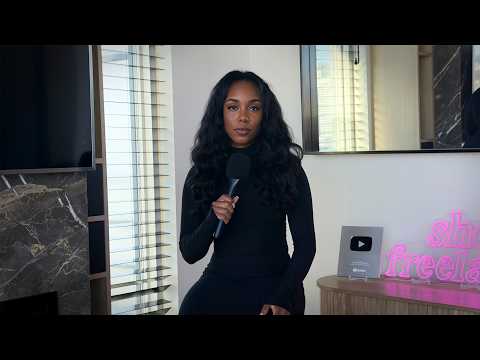
“exposing the highest paying marketing career (you’re in the wrong role)”
What we found: No Pay Figure Is Given for the “Highest Paying” Marketing Role; the $100K Months and $5M Client Results Cannot Be Checked From the Video
A clear argument for moving from organic marketing into paid-ads creative strategy, with the creator’s income stated as revenue, no rates for the role itself, and a free masterclass as the next step.
- Not stated Pay for a creative strategist
- $100K months Creator’s own business
- $5M+ in 4 years Generated for clients
- $100k a year Students’ floor
The claim
That paid-ads creative strategy is the highest-paying direction for a marketer, because a business can see what each ad earns, and that marketers can move into it freelance — as the creator and several of their students did — and earn $100,000 a year or more.
- Revenue generated for clients — Over $5 million in the past four years
- Creator’s own business — “100K months”
- Starting point — $100 copywriting gigs
- Income from the marketing skill set — $10,000 a month
- Students’ earnings — A minimum of $100k a year, self-employed
- Time to first creative-strategy work — Within 90 days (people with no marketing background)
- Open creative-strategy gigs on Upwork — 5,000 at any given moment
- Day rate, project fee or salary for the role — Not stated
- Costs, taxes, profit for any figure — Not stated
What is this income idea?
Reposition existing marketing skills — research, hooks, emails, social content — as paid-ads creative strategy, and sell it freelance to online businesses that spend on ads.
- The creator says they have no marketing degree, taught themselves copywriting, generated over $5 million for clients in the past four years, and used the same skills to scale their own business to “100K months”. They also say they went from $100 copywriting gigs to $10,000 a month with what they call the marketing skill set “closest to the money”, and that several women they helped, from engineering, finance, corporate and non-corporate backgrounds, now earn a minimum of $100k a year working for themselves.
- The argument runs like this. Many small online businesses make most of their money through paid ads on platforms like Meta and TikTok. An organic marketer’s work — social content, emails, blogs, SEO — is hard for a business to tie to revenue, so the business is not inclined to pay more for it. A creative strategist makes ads that the business puts budget behind and can measure, so the value is visible and, in the creator’s words, “the closer you are to the money the more you can make”.
- The practical advice has three parts. Believe that marketing is a skill worth paying for. Build a separate portfolio that leads with quantified results relevant to paid ads, such as follower growth or a long-run email open rate. Then find clients: apply to part-time LinkedIn roles and offer to work on contract, search Upwork for creative strategy (the creator says about 5,000 gigs are open at any moment), and search X for “hiring creative strategist” sorted by latest.
- The video also makes a gender argument — that some companies retitle marketing roles as growth or go-to-market engineer to attract men, and that women are underpaid in the field — based on a video the creator saw three months earlier and a founder’s tweet. A free 90-minute live masterclass is offered twice, with a link in the description.
Make ads instead of organic posts, because a business can see what ads earn and will pay more for them — but the video does not say how much more.
- Existing marketing skills — Hooks, research, emails
- Reframe as creative strategy — Paid-ads focus
- Results-led portfolio — Quantified wins
- Find clients — LinkedIn, Upwork, X
- Make ads clients fund — Revenue is measurable
- Get paid more — Rates not stated
The logic is clear; the last step carries no number.
A good argument about measurability, with the price left blank
The lesson underneath the number
- The core idea in this video is a reasonable one. A business finds it easier to pay well for work it can measure, and an ad that a business funds and tracks produces a revenue figure that a social post or a blog rarely does. A marketer who can point to that figure has a stronger case for a higher fee. The portfolio advice follows from it and is practical: lead with numbers, and build a portfolio for the kind of client you want rather than a general creative showcase.
- What the video does not do is price the role it calls the highest paying. The creator says the numbers on X “will really have you shocked”, but none is read out. There is no day rate, per-ad fee, monthly retainer or salary for a junior, intermediate or expert creative strategist, though the video uses those three levels to describe the 5,000 Upwork gigs. A viewer finishes the video knowing the argument for higher pay, not the level of it.
- The figures that are given belong to the creator. Over $5 million generated for clients in four years is a statement about clients’ revenue, not the creator’s income; by our arithmetic it averages $1.25 million a year across all clients. “100K months” in the creator’s own business and “$10,000 a month” from the marketing skill set are two different figures, and the video does not say which months, whether either is revenue or profit, or what share of the business comes from client work and what share from helping others make the switch.
- The intro says, “in a bit I’ll give you all the tea on exactly what I did to transition from doing $100 copywriting gigs to making $10,000 a month”. The rest of the video gives a three-step repositioning method for viewers, not an account of the creator’s own steps, rates or clients. The more detailed framework is placed in the free 90-minute masterclass, promoted twice with a link in the description. What, if anything, is sold after the masterclass is not stated in the video.
The closer you are to the money the more you can make.
The creator, on why creative strategy pays more
The repositioning method, as the video gives it
A mindset step, a portfolio step and a client-finding step.
No rate, fee or cost is given for any stage.
- Treat marketing as a paid skill — The creator argues that business owners often cannot write a hook that holds attention, and that a marketer who does not believe in the value of the skill will not speak to clients with conviction.
- Transfer organic skills to paid ads — Customer research, speaking in the customer’s language and capturing attention carry over. The new skill to “brush up on” is conversion: getting a viewer to click and buy.
- Build a separate, results-led portfolio — Lead with numbers — the creator’s examples are growing an employer’s Instagram account or holding a 50% email open rate over three years — and show how they transfer to getting people to take action.
- Apply on LinkedIn as a contractor — Search for paid creative strategy roles, including part-time ones, and offer to work on a contract basis.
- Search Upwork and X — The creator says about 5,000 creative-strategy gigs are open on Upwork at any moment, across junior, intermediate and expert levels, and that searching “hiring creative strategist” on X turns up new posts daily.
- Reach out directly — DM, reply in comments, or find an email address and contact the business. Pay levels are described only as numbers that will “have you shocked”.
The business model
Freelance or contract fees from online businesses for making and iterating paid ads.
Small online businesses that sell mainly through paid social ads on platforms such as Meta and TikTok.
Ads built on customer research and strong hooks, whose revenue contribution the client can measure.
Applications to LinkedIn roles, Upwork gigs, X posts and direct outreach by DM or email.
- Platform service fees — Not mentioned
- Taxes and benefits — Not mentioned
- Unbilled pitching time — Not mentioned
- Tools for making ads — Not mentioned
The video gives no cost of any kind, and no fee that a creative strategist charges or is paid.
What you would actually need
Money
No starting cost is mentioned. The creator says experience and a well-known employer on your LinkedIn do not matter; your skill set does.
The direct costs are small, but a freelancer carries costs an employee does not: platform service fees on marketplace work, self-employment tax, health cover, unpaid weeks between clients and the time spent pitching. None is mentioned in the video, and they are why $100k of freelance revenue is not the same as a $100k salary.
Costs not mentioned in the video
- Marketplace service fees on Upwork work
- Income and self-employment tax
- Health insurance and retirement savings
- Unbilled time spent finding and pitching clients
- Ad and design tools
- Gaps between contracts
Time
The creator says people with no marketing background have started working in creative strategy within 90 days with their help.
Starting work in 90 days and earning $100k a year are different milestones, and the video gives no time frame for the second. It also gives none for the creator’s own move from $100 gigs to $10,000 a month.
Where the time goes
- Learning conversion-focused ad writing
- Building a new paid-ads portfolio
- Pitching on LinkedIn, Upwork and X
- Producing and iterating ads for clients
- Managing several clients at once
The part you must pay attention to
The title promises the highest-paying role; the video gives no pay figure for it.
Every money figure in the video describes the creator, their clients or their students. None describes what a creative strategist is paid per ad, per project, per month or per year.
- Creator’s stated income from the skill set — $10,000/mo
- Months, if every month matched — × 12
- Not stated in the video — tax, fees, benefits
$120,000 a year before costs
Our arithmetic; not a figure given in the video
The load-bearing assumption is that being “close to the money” turns into higher pay for the person doing the work. That is plausible — measurable work is easier to price — but the video does not put a number on it. It does not say what Upwork or X clients pay, what a typical retainer is, or how many clients the $10,000 month or the $100k students needed. It also does not say whether the creator’s “100K months” are revenue or profit, which months, or how much of that business is creative work and how much is teaching.
By our arithmetic, $10,000 a month is $120,000 a year if every month matched, and a $100k-a-year floor is about $8,333 a month. Both are gross figures for a self-employed person. And two of the creator’s own figures sit an order of magnitude apart — $10,000 a month from the skill set, $100K months in their own business — without the video saying how one led to the other. The intro promises to explain “exactly what I did” to make that move, and the video goes on to general advice instead.
- THE CREATOR'S FIGURES (our arithmetic)
- $10,000 a month x 12 $120,000/yr
- $100k a year / 12 $8,333/mo
- $100K a month x 12 $1.2 million/yr
- -> if sustained; months not stated
- $5M for clients / 4 yrs $1.25M/yr
- -> client revenue, not creator pay
- PAY FOR THE ROLE IN THE TITLE
- Day rate not stated
- Per-ad or project fee not stated
- Retainer or salary not stated
The economics
Four income figures about the creator and their students, none about the role.
- Generated for clients, past four years — Over $5 million
- Creator’s own business — 100K months
- Income from the skill set — $10,000 a month
- Starting gigs — $100 each
- Students’ minimum — $100k a year
- Creative strategist pay — Not stated
- Costs, taxes, profit — Not stated
Turning the stated figures into comparable units
$10,000 × 12; $100,000 ÷ 12; $5,000,000 ÷ 4
$120,000 a year; $8,333 a month; $1.25 million a year of client revenue
IncomeIdeaLab calculation from the figures stated in the video
These are gross figures. A self-employed person pays income and self-employment tax and covers their own benefits, and marketplace work carries a platform service fee. The $5 million is revenue earned by clients, not money paid to the creator.
- Any day rate, project fee, retainer or salary for creative strategists
- Whether “100K months” is revenue or profit, and how many months
- How much of the creator’s business is client work and how much is teaching
- How long the move from $100 gigs to $10,000 a month took
- How many students reached $100k a year, and over what time
- Platform fees, taxes and benefits
- What is offered after the free masterclass
- Going from $100 gigs to $10,000 a month is the equivalent of 100 such gigs a month by our arithmetic; the video does not say what the creator charged per project when they reached that level.
- $100K in a month is ten times the $10,000-a-month figure given for the marketing skill set. The video does not connect the two.
- The 50% email open rate is given as an example of a portfolio result a viewer might have, not as a result of the creator’s.
- Upwork having about 5,000 creative-strategy gigs open at any moment is the creator’s statement; we could not check it from the video, and it says nothing about what those gigs pay.
Evidence status
Every figure and substantive claim in the video.
- Generated over $5 million for clients in the past four years — Creator — Client revenue, not the creator’s income. No client, campaign or attribution method is given.
- Scaled their own business to $100K months — Creator — Revenue or profit is not said, nor which months or from what activities.
- Went from $100 copywriting gigs to $10,000 a month — Creator — Promised as a detailed account in the intro; the steps and time frame are not given.
- Several women they helped earn a minimum of $100k a year — Creator, about students — No number of students, time frame, or revenue-versus-profit basis is given.
- People with no marketing background started creative-strategy work within 90 days — Creator — Starting work, not reaching a stated income. We could not check this from the video.
- Creative strategy is the highest-paying marketing role — Video title and argument — Argued from measurability; no pay figure for the role or any comparison role is given.
- About 5,000 creative-strategy gigs are open on Upwork at any moment — Creator — A point-in-time count we could not check; pay levels are not given.
- Employers on X pay amounts that will “have you shocked” — Creator — No amount is stated.
- Companies retitle marketing roles as growth or go-to-market engineer to attract men — Creator, citing another video — Second-hand; no company or data is named in the video.
- A founder tweeted that he prefers to hire women creative strategists — Creator, citing a tweet — Second-hand; the founder is not named in what is said.
- The free masterclass runs 90 minutes, live, with Q&A — Creator — Promoted twice; any paid offer after it is not stated in the video.
What is actually proven?
The reasoning is laid out; the money is stated, not demonstrated.
- The video sets out a coherent reason why measurable ad work can command higher fees.
- It gives specific places to look for clients: LinkedIn contract roles, Upwork and X searches.
- The creator’s $5 million for clients, $100K months and $10,000 a month.
- Students earning at least $100k a year.
- What a creative strategist is paid, at any level.
- Costs, taxes or profit behind any figure in the video.
What the headline doesn’t tell you
The direction is argued well; the destination is not priced.
- No rate for the role. — Not per ad, per month or per year.
- $5M is client revenue. — Not the creator’s income.
- $100K months, undefined. — Revenue or profit, and which months, not said.
- Two income figures. — $10,000 and $100K a month, not reconciled.
- The promised story does not follow. — The intro’s “exactly what I did” is not given.
- Freelance is gross. — Tax, fees and benefits come off.
- Student count unknown. — “Several”, with no time frame.
- A masterclass is the next step. — Free, promoted twice.
Should you try it?
A reasonable direction for working marketers; find the rates yourself
If you already write hooks and emails that convert, moving towards paid ads is sensible. Look up real rates on the job boards the video names before deciding it pays more.
- Clarity of the argument — 7 — Measurable work is easier to price; well explained.
- Pay information for the role — 1 — No rate, fee or salary is given.
- Checkability of income figures — 2 — Stated, with no time frame or cost side.
- Practical client-finding advice — 6 — Specific searches on LinkedIn, Upwork and X.
- Delivery on the intro’s promise — 3 — The creator’s own transition is not walked through.
- Cost coverage — 1 — No fees, tax or benefits mentioned.
- Beginner accessibility — 5 — Cheap to start; assumes existing marketing skill.
- The advice suits someone who already works in organic marketing. If you can write a hook, run customer research and get people to click an email, the step into making ads is shorter than starting from nothing, and a portfolio built around numbers is a better pitch than a general showcase. The creator is right that a client can see what an ad earns, and that is a fair basis for asking for more.
- What you cannot take from the video is how much more. It gives no fee for a single ad, a monthly retainer or a full-time creative-strategy salary, at any level. The places it names — Upwork, X and LinkedIn — are exactly where you can find those numbers yourself in an afternoon, and that is the first thing to do before treating “highest paying” as settled.
- Read the income figures as the creator’s statements about their own business and their students. $10,000 a month and $100k a year are gross freelance figures; a self-employed person pays their own tax and benefits, and marketplace work carries a service fee. The $5 million is money clients earned, not money the creator was paid. The video does not say how many students reached $100k, or how long it took.
- For someone with no marketing background, the video says people have started creative-strategy work within 90 days with the creator’s help. Starting work and reaching a stated income are different milestones, and the video gives a time frame only for the first.
Passive or automated?
Automation
Client work: research, writing and iterating ads by hand.
Passive potential
Income stops when the client work stops.
The video presents this as a service, not passive income, and it is one. A creative strategist is paid for producing ads on an ongoing basis — the creator says businesses need ads “consistently” — so income depends on keeping clients and continuing to deliver. The video ties freelance work to autonomy and lifestyle, not to income that runs without the freelancer.
- Customer research for each client
- Writing hooks and ad scripts
- Reviewing performance and iterating
- Finding and pitching new clients
- Managing client relationships
Recommended beginner experiment
Use the video’s client sources to price the role before switching.
- Collect 20 creative-strategy postings. — From Upwork, X and LinkedIn.
- Note the stated rate on each. — Per ad, hourly or monthly.
- Compare with your current pay. — After tax and benefits.
- Build a results-led ad portfolio. — Numbers first, as the video advises.
- Make three spec ads. — For a real small online brand.
- Pitch one contract alongside your job. — Before giving anything up.
- Track hours against fees. — Including unbilled pitching time.
Our verdict: 4/10
A sound argument for paid-ads work, with no price on the role and income figures that cannot be checked from the video
Credited for a clear, reasonable argument that measurable ad work is easier to price, for a results-led portfolio approach, and for naming specific places to find clients. Marked down because no pay figure is given for the role the title calls the highest paying; because the creator’s income figures are stated without time frames, costs or a revenue-versus-profit basis; because the intro promises an account of the creator’s own transition that the video does not give; and because no freelance cost is mentioned.
The video’s argument is worth hearing: a business pays more readily for work it can measure, and an ad it funds and tracks is easier to value than an organic post. The advice that follows — lead with numbers, build a portfolio for paid-ads clients, look for contract work on LinkedIn, Upwork and X — is practical. What the video does not give is the figure its title is about. There is no rate, fee or salary for a creative strategist at any level, and the pay on X is described only as shocking. The money figures belong to the creator and their students: over $5 million generated for clients, which is clients’ revenue rather than the creator’s pay; $100K months in the creator’s business and $10,000 a month from the skill set, two figures the video does not reconcile; and students earning at least $100k a year, with no count or time frame. All are gross and stated without costs. The intro promises the exact steps of the creator’s own move from $100 gigs to $10,000 a month; the video gives a general method instead and points to a free masterclass for more. Price the role yourself before you switch.
- Pay for a creative strategist — Not stated
- Generated for clients — $5M+ over 4 years (client revenue)
- Creator’s own business — $100K months
- Income from the skill set — $10,000 a month
- $10,000 × 12 — $120,000 a year, gross
- Students’ minimum — $100k a year
- Beginner suitability — Best for existing marketers
Sources
- exposing the highest paying marketing career (you’re in the wrong role) — YouTube video, 2026-10-23
- FTC — Guides Concerning the Use of Endorsements and Testimonials — Regulatory guidance on endorsements and earnings claims