Asset Income / Car Wash · Claim Review
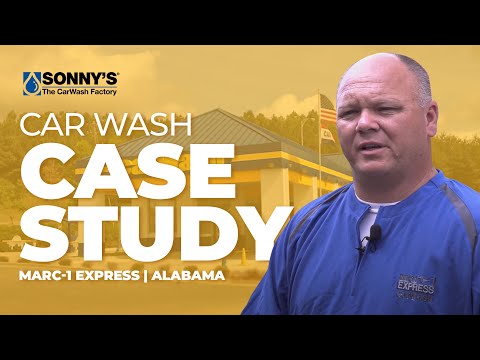
“MARC-1 Express Car Wash Business Case Study Overview”
What we found: A $1.65M Car Wash Conversion Whose $50K a Month Checks Out — and Whose Profit Is Never Mentioned
About 60,000 cars at just over $10 each reconciles with the revenue quoted. Labour, water, debt and every other cost go unstated in a case study made by the equipment supplier.
- >$50k Monthly revenue
- $1.65M Total investment
- 60k+ Cars per year
- None given Operating costs
The claim
That converting a declining self-serve car wash into an express tunnel took revenue from about $140,000 a year to over $50,000 a month.
- Property purchase — $650,000
- Renovations — $600,000
- Equipment — $400,000
- Total of those three — $1,650,000, shown as "TOTAL: USD$ 1.650.000" in the channel’s on-screen graphic at 1:02
- Old self-serve revenue, at its peak — ~$240,000 a year
- Old self-serve revenue, 2013 — ~$140,000 a year
- Revenue after conversion — Over $50,000 a month, in the first year after the 31 December 2013 opening
- Average ticket — Above $10
- First-year volume — "A little over 60,000" cars, against a 50,000 projection
- Construction saving from reusing the building — ~$200,000
- Labour, utilities, chemicals, debt, tax, profit — Never stated
What is this income idea?
Buy a tired self-serve car wash that already has its permits, plumbing and electrics, gut it, and run a conveyor tunnel through the middle of the existing building.
- The site in Birmingham, Alabama was a self-serve wash with three bays plus three in-bay automatics. The presenter says that "back in the heyday it was doing about $240,000 a year in revenue" and that by 2013 it "would have dropped down to 140,000."
- The owner, who the presenter says runs this as their group's fourth tunnel location, had first planned a new wash down the street. The owner of this site approached them mid-construction — "there's no point in both of us competing head-to-head" — and the project moved here. Work started in August 2013 and the wash opened on 31 December 2013.
- The narration prices the project in three parts: $650,000 for the property, $600,000 in renovations and $400,000 in equipment. The channel’s on-screen investment table at 1:02 shows the same three lines — "USD$ 650.000", "USD$ 600.000" and "USD$ 400.000", in European number formatting — and a total of "USD$ 1.650.000", or $1,650,000. The presenter later says the owner has "about a million 6 into it", so the figures agree.
- Rather than fit a short tunnel into one old bay, the walls between the bays came down and a conveyor was laid through the middle of the building. The owner estimates reusing the shell "probably saved about $200,000" in construction cost, plus time working under a roof through a cold winter.
- On results, the presenter says "revenues here are already over $50,000 a month." The owner adds the inputs: an opening price of $6, an average ticket "above $10", and a first year on pace for "a little over 60,000" cars against a pro forma of about 50,000.
- The rest of the video is operational detail: a front-wheel-pull conveyor in a shorter tunnel than usual, a pivoting rinse arch added because local water and sewer are "extremely expensive", a camera arch to document pre-existing damage, 16 free vacuums under a canopy, and free-wash days to build traffic.
Buy an old wash with the permits already in place, convert it to a tunnel, and sell volume at about $10 a car. The revenue adds up, but nobody says what is left after costs.
- Find a failing wash — $140k a year in 2013
- Buy the property — $650,000
- Gut and renovate — $600,000
- Install the tunnel — $400,000 equipment
- Open at $6 entry — 31 Dec 2013
- Sell up the menu — Average ticket $10+
- Drive volume — ~60,000 cars a year
- Revenue — >$50,000 a month
Every step on the way in is priced. Nothing on the way out is.
The revenue is believable. That does not tell you about the profit.
The lesson underneath the number
- Most revenue claims we review cannot be checked against anything else in the video. This one can. The owner says the site is on pace for a little over 60,000 cars in its first year at an average ticket above $10. Multiply those and you get about $600,000 a year, or $50,000 a month, which is what the presenter says the site is doing. The investment figures agree with each other too: $650,000, $600,000 and $400,000 add to $1.65 million, and the presenter separately says the owner has "about a million 6 into it." That is good internal consistency for a three-number claim.
- The idea behind the project is also sound and clearly explained. An old self-serve site already has the hardest things to get for a car wash: zoning, permits, water and sewer connections, power. Reusing the building shell, the owner estimates, saved about $200,000 and let the crew work under a roof through winter. The owner is open about the trade-off as well. At 82 feet, the tunnel is shorter than their usual 90 to 115, so they had to learn chain speeds and add a rinse arch to get the same result.
- What the video leaves out is everything that decides whether $50,000 a month is a good outcome. Labour, water, sewer, chemicals, electricity, card fees, insurance, tax, repairs and debt service are all missing. That matters more here than usual, because the entry price was $1.65 million. Our illustration shows the range: a 20% operating margin would take about 14 years to earn back the investment before any financing cost, and a 40% margin about 7. The video gives no basis for choosing between those.
- Then there is who made it. This is a case study produced by the company that supplied the equipment. The presenter promotes a rinse arch the company built for this site and closes with a link to its own website. That is not hidden, since the channel and the opening line make the source plain, but it explains the shape of the video: it is detailed on equipment and revenue, and says nothing about operating costs, where the supplier has nothing to sell. Treat it as a well-documented revenue example and a conversion idea worth studying, not as evidence that the investment paid off.
Revenues here are already over $50,000 a month, which is a big turnaround and change for this property.
The equipment supplier's presenter, who never mentions a cost
The conversion, as they describe it
A specific, physical playbook. Most of it is about the building and the equipment.
Steps as described in the video, published 17 April 2015 on the Sonny's The Car Wash Factory channel. The investment figures also appear in the channel's on-screen graphic at 1:02.
- Buy the permits, not just the land — The pitch for the site is that it "already had all the permitting plumbing and electrical that he needed." For a car wash, where water, sewer and zoning approvals can hold up a new build, that is a real advantage.
- Run the tunnel through the middle — Instead of fitting a mini tunnel into one bay, the bay walls were taken down and the conveyor laid through the full building. The owner estimates the reused shell saved about $200,000 in construction.
- Work around the short tunnel — "We're 82 ft and so our clones are normally 90 ft to 115 ft." The owner describes learning chain speeds and adding a rinse arch to get a clean car out of the shorter space.
- Price for the average ticket — The menu opened at $6 and has since added a higher tier and a $20 "manager special." They say the average ticket was "above $10" and expect $10.50 to $11 under the new prices.
- Give the wash away to build traffic — "We'd rather try to drive it with free car washes" than discount. Whole days, and sometimes three, of free washes promoted to named nearby cities.
- Control damage claims — A camera arch photographs each car before it enters, so a ding that a dirty car was hiding can be shown to the customer afterwards.
- Free vacuums as part of the offer — Sixteen free vacuum spaces under a canopy, with booms that keep hoses off the ground. A standard express-model feature, presented here as part of looking "professional."
The business model
Express tunnel washes sold on a tiered menu from $6 up to a $20 manager special, with a $10 wheel-focused package among the top sellers.
Local drivers around the Birmingham site, reached partly through free-wash days promoted to named nearby cities.
A fast conveyor wash with free vacuums, at an entry price of $6.
Roadside location, free-wash promotion days, and the operator's existing brand across three other tunnels.
- Capital: property, renovation, equipment — $1.65 million in total. Financing never stated
- Labour — A manager and staff are referred to. Never priced
- Water and sewer — Called "extremely expensive" locally. Never priced
- Chemicals, electricity, card fees — Never mentioned
- Insurance, property tax, maintenance — Never mentioned
- Free washes given away — Promotion days, never sized
- Damage claims — Reduced by a camera arch. Never sized
Every capital cost is given. No operating cost is. For a business with a $1.65 million entry price, the operating margin is what decides whether it pays back.
What you would actually need
Money
About $1.65 million in total: $650,000 for the property, $600,000 of renovation and $400,000 of equipment. How it was financed is never said.
This is a seven-figure property project, not a side business. The figure also leaves out working capital, opening marketing, and the cost of carrying the site while it was closed from August to December 2013. If any of it was borrowed, the repayments are a large monthly cost the video does not mention.
Stated, implied, or missing
- Property: $650,000 (stated)
- Renovation: $600,000 (stated)
- Equipment: $400,000 (stated, from the video’s producer)
- Financing terms and debt service: never stated
- Working capital and opening costs: never stated
- Carrying cost during four months of construction: never stated
- Free-wash promotion days: revenue given away, never sized
Time
About five months from starting work to opening, then a first year running ahead of projection.
Five months is the build. The owner already runs three other tunnels, so the systems, staff and supplier relationships existed before this one opened. A first-time buyer would be learning all of that while carrying a $1.65 million project.
Where the time went
- An abandoned first site down the street, already under construction
- Negotiation to move the project to this property
- August–December 2013: gut, conveyor, canopy, vacuums
- First year: tuning chain speed and rinse on a short tunnel
- Ongoing: promotions, pricing changes, damage disputes
- Three earlier tunnel sites behind all of it
The part you must pay attention to
Over $50,000 a month is revenue. The video never says what it costs to earn it.
The revenue claim holds up when we check it against the owner's own volume and ticket. The problem is everything below it.
- Cars a year, first-year pace — ~60,000
- Average ticket — ~$10
~$600,000 a year
≈ $50,000 a month, the figure quoted
The weak link is that there is nothing after the revenue line. No labour figure, though a tunnel needs attendants and the owner talks about "our manager." No water or sewer figure, though the owner calls both "extremely expensive" in this county and built a special rinse arch to save water. No electricity, chemicals, card-processing fees, insurance, property tax, maintenance or repairs. No debt service on $1.65 million. The free-wash days are a direct cost too: every car washed free still uses water, chemicals and labour. A presenter from the company that sold the $400,000 of equipment calls the result "a big turnaround" and stops there.
Two more points. First, "over $50,000 a month" comes from a first year — 2014, given the 31 December 2013 opening and the April 2015 publication — that the owner describes as ahead of projection, during which they also gave away whole days of free washes, so it may include opening-period volume that does not repeat. They expect 60,000 to 70,000 cars, "maybe even 80," in two or three years, which is projected and not achieved. Second, our own arithmetic shows how much the missing cost line matters. On $600,000 a year of revenue, each ten points of operating margin is $60,000 a year. Even before any debt, a 20% margin would take about 14 years of operating profit to equal the $1.65 million that went in, and a 40% margin about 7. The video gives no margin, so the payback period could be anywhere in that range or outside it.
- DOES THE REVENUE ADD UP?
- Cars a year (pace) ~60,000
- x average ticket ~$10
- = per year ~$600,000
- / 12 ~$50,000
- -> matches "over $50,000 a month"
- THE INVESTMENT
- Property $650,000
- Renovation $600,000
- Equipment $400,000
- Total $1,650,000
- -> matches "about a million 6"
- and the on-screen table
- PAYBACK (OUR ILLUSTRATION)
- Revenue / year $600,000
- at 20% margin $120k -> ~14 years
- at 40% margin $240k -> ~7 years
- Actual margin: never stated
The economics
Capital and revenue are both given and they reconcile. Operating costs are absent.
- Property — $650,000
- Renovation — $600,000
- Equipment — $400,000
- Total investment — $1,650,000 (on-screen table)
- Old self-serve revenue (2013) — ~$140,000 / year
- Revenue now — Over $50,000 / month
- Average ticket — Above $10
- First-year volume — "A little over 60,000" cars
- Volume in two or three years — 60,000–80,000 cars
- Operating costs, debt service, profit — Never stated
Reconciling volume, ticket and revenue
60,000 cars × ~$10 = ~$600,000 a year ÷ 12 = ~$50,000 a month
The quoted revenue matches the owner's own volume and ticket. Revenue alone would take about 2.75 years to equal the $1.65 million invested, before any cost
IncomeIdeaLab calculation from figures stated in the video
The volume is a first-year pace, not a completed year, and the year included free-wash promotion days. Revenue is not profit: the 2.75 years is a lower limit on payback, not an estimate of it.
- Labour, despite a manager and staff being mentioned
- Water and sewer, described as "extremely expensive" locally
- Chemicals, electricity and card-processing fees
- Insurance, property tax, repairs and maintenance
- How the $1.65 million was financed, and the repayments
- The cost of the free-wash promotion days
- Any operating profit or margin figure
- Annualised, $50,000 a month is about $600,000 a year, roughly 4.3 times the $140,000 the old self-serve wash took in 2013. The two are different businesses on the same land, so this shows what the conversion changed, not how the old business grew.
- The narration says a "90 foot tunnel" was installed. The owner says "we're 82 ft." We go with the owner's figure but note that the video contradicts itself.
- The owner says the pro forma projected about 50,000 cars a year. A pace of "a little over 60,000" is about 20% ahead of that. This is their own assessment, part-way through the first year.
- The $200,000 saving from reusing the building is an estimate against a build that did not happen, so it cannot be checked.
Evidence status
Every substantive figure in the video.
- Property bought for $650,000 — Narration — Stated plainly.
- $600,000 renovation and $400,000 equipment — Narration — The equipment came from the company that made the video.
- About $1.65 million in total — Narration; on-screen investment table at 1:02 — Shown in the channel’s on-screen graphic as "TOTAL: USD$ 1.650.000"; the three parts and the later "about a million 6" agree.
- Old site: ~$240,000 a year at its peak, ~$140,000 in 2013 — Presenter — Second-hand figures for the previous owner's business.
- Over $50,000 a month in revenue — Presenter — Matches the owner's volume and ticket. A first-year (2014) figure; which months is not said.
- Average ticket above $10 — Owner — Plausible with a $6 entry price and higher tiers up to $20.
- $10.50–$11 ticket under new pricing — Owner — Stated as an expectation days after the change.
- On pace for a little over 60,000 cars in year one — Owner — A pace, not a completed year.
- 60,000–80,000 cars in two or three years — Owner — A forecast.
- About $200,000 saved by reusing the building — Owner — An estimate against a build that never happened.
- 90-foot tunnel — Narration — The owner says 82 feet.
- Operating costs and profit — Nobody — Absent throughout.
What is actually proven?
The figures agree with each other. Nothing shows the business is profitable.
- About 60,000 cars at about $10 reconciles with over $50,000 a month.
- The three capital figures and their $1,650,000 total appear in the channel’s on-screen investment table at 1:02, matching the presenter's later remark.
- The site is shown on camera as an operating tunnel wash with a canopy and vacuums.
- The old self-serve business was in decline, at about $140,000 a year by 2013.
- Volume of 60,000 to 80,000 cars a year in two or three years.
- Labour, water, sewer, chemicals, power, tax, insurance and debt service.
- Whether the site makes an operating profit, and how much.
What the headline doesn’t tell you
A revenue figure, a capital figure, and nothing in between.
- $50,000 a month is revenue. — No cost is ever given.
- It cost about $1.65 million. — Financing never mentioned.
- The supplier made the video. — $400,000 of its equipment is on site.
- The owner already had three tunnels. — This was not a first attempt.
- Year one included free-wash days. — Their cost is never sized.
- Volume is a pace, not a result. — Part-way through year one.
- Water is "extremely expensive" here. — And never priced.
- The tunnel length disagrees. — 90 feet narrated, 82 said.
Should you try it?
A sound conversion idea for experienced operators with capital
The idea of reusing a permitted site is worth knowing. The economics cannot be judged from this video, and the entry price rules out most beginners.
- Internal consistency of the figures — 8 — Volume × ticket matches revenue; the capital parts match the total.
- Specificity of the conversion method — 7 — Building layout, tunnel length, rinse, vacuums, damage control all described.
- Capital disclosure — 8 — Property, renovation and equipment all priced.
- Operating cost disclosure — 0 — Not one operating cost or profit figure.
- Independence of the source — 2 — Produced by the equipment supplier, which promotes its own products in it.
- Honesty about difficulties — 6 — Short tunnel, chain speed, turning radius and water cost are all raised.
- Beginner accessibility — 1 — $1.65 million and an operator with three other sites.
- Take the core idea seriously, because it is a good one. A self-serve wash that is losing customers still has zoning, permits, water and sewer connections and power in place, and those are often the slowest and most uncertain part of building a car wash. Buying one and converting it can save time and, the owner estimates, about $200,000 of construction. The owner is also specific about the downside: a building designed for bays gives you a shorter tunnel and a tight turning radius, and both had to be worked around.
- Then look at who is behind it. The owner already ran three tunnel washes, so staff, suppliers and a working model existed before this site opened. The project cost about $1.65 million across property, renovation and equipment. Neither of those describes a starting point most viewers have.
- The revenue figure is better supported than most we see, because the owner gives the inputs. About 60,000 cars a year at about $10 each is $600,000 a year, which is the $50,000 a month quoted. But that is a first-year pace and an expectation, not a completed year, and it was achieved partly with free-wash days whose cost is not given.
- The part you cannot get from this video is whether the investment works. There is no figure for labour, water, sewer, chemicals, electricity, card fees, insurance, property tax, repairs or loan repayments. As our illustration shows, the gap between a 20% and a 40% operating margin is the gap between about 14 years and about 7 to earn back the investment, before financing. Anyone considering a conversion like this would need the operating numbers from a source that is not selling the equipment.
Passive or automated?
Automation
The conveyor, pay stations and camera arch automate the wash itself.
Passive potential
A manager, staff, maintenance and promotions are all part of running it.
An express tunnel is one of the more automated forms of car wash, since the conveyor moves the car and pay stations take the money. That does not make it passive. The owner talks about a manager, about tuning chain speeds and rinse settings, about dealing with customers who blame the wash for damage that was already there, and about planning free-wash days to drive traffic. The site sits within a group of four tunnels with its own management. Equipment of this kind also needs regular maintenance, and water and sewer costs need watching in a county where the owner says both are expensive. It is a business with automated equipment, not an automated business.
- A site manager and attendants at the tunnel entrance
- Tuning chain speed and rinse settings for a short tunnel
- Handling damage disputes with camera evidence
- Planning and running free-wash promotion days
- Maintaining a conveyor, brushes and rinse equipment
Recommended beginner experiment
Study the conversion logic, then get the costs from somewhere else.
- Learn what an existing site already has. — Zoning, permits, water, sewer, power.
- Check the building fits a tunnel. — Length and turning radius limited this one.
- Price water and sewer locally first. — The owner calls them "extremely expensive."
- Build a full operating budget. — Labour, chemicals, power, card fees, tax, insurance.
- Add debt service to that budget. — On whatever share of $1.65M you borrow.
- Model volume below the pro forma. — Their year one was a pace, not a result.
- Cost every free-wash promotion. — Each free car still uses water and labour.
- Get numbers from someone not selling equipment. — This case study came from the supplier.
Our verdict: 6/10
Revenue that reconciles, a sound conversion idea, and no costs a supplier-made case study of a $1.65 million project that never mentions profit
Credited because the revenue claim can be checked and holds up: about 60,000 cars a year at an average ticket above $10 gives the $50,000 a month quoted; because the three capital figures add to the "about a million 6" the presenter states separately; because the conversion method is specific, with the building layout, tunnel length, rinse changes, damage control and pricing all described; and because the owner is open about the difficulties of a short tunnel and expensive water. Marked down because not one operating cost appears — labour, water, sewer, chemicals, power, card fees, insurance, tax, repairs or debt service on $1.65 million — so the video cannot show whether the project is profitable; because the volume is a first-year pace that included free-wash days, not a completed year; because the narration and the owner disagree on the tunnel length; and because the video is produced by the equipment supplier, which promotes its own products in it.
This is a better-supported revenue claim than most in this library, because the owner provides the inputs as well as the total. About 60,000 cars a year at an average ticket above $10 is about $600,000 a year, which is the "over $50,000 a month" the presenter quotes. The capital side agrees with itself too: $650,000 for the property, $600,000 of renovation and $400,000 of equipment come to $1.65 million, and the presenter later says the owner has "about a million 6" in the site. The idea behind the project is sound and clearly explained: an old self-serve wash already has the permits, water, sewer and power that make new car washes slow to build, and running a conveyor through the existing shell saved, by the owner's estimate, about $200,000 and a winter of building in the open. The owner is also candid about what the reused building cost them: a tunnel 82 feet long instead of their usual 90 to 115, a tight turning radius, and a learning curve on chain speed and rinsing. What the video does not do is show whether $1.65 million turned into a profitable business. No operating cost is given — no labour, no water or sewer bill despite the owner calling both extremely expensive, no chemicals, power, card fees, insurance, property tax, repairs or loan repayments. Our illustration shows why that matters: on $600,000 of revenue, a 20% operating margin takes about 14 years to earn back the investment and a 40% margin about 7, before any financing cost. The volume behind the revenue is a first-year pace that included free-wash days, not a completed year. And the case study is made by the company that supplied the equipment, which promotes a rinse arch it built for the site and ends with a link to its own website. Read it as a credible revenue example and a useful conversion idea, and look elsewhere for the operating numbers.
- Revenue — Over $50,000 a month
- Volume × ticket check — ~60,000 × ~$10 ≈ $600,000/yr
- Total investment — ~$1.65 million
- Old site revenue (2013) — ~$140,000 a year
- Future volume — 60,000–80,000 cars
- Operating costs — Never stated
- Profit — Never stated
- Source — Equipment supplier case study
- Beginner suitability — Low — seven-figure capital
Sources
- MARC-1 Express Car Wash Business Case Study Overview — YouTube video, 2015-04-17
- FTC — Guides Concerning the Use of Endorsements and Testimonials — Regulatory guidance on material connections in endorsements