Consumer AI Apps · Claim Review
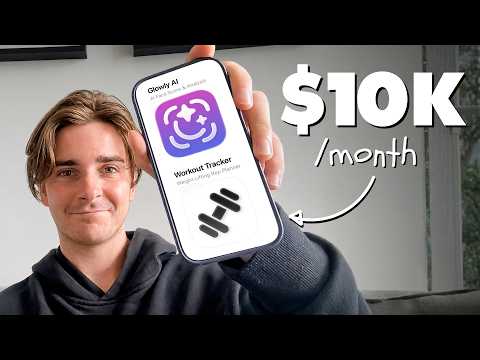
“The Lazy Method: How I Build $10K/Month Apps”
What we found: Sixteen Dollars In, Thirty Out — Before Apple
A face-rating app at $10K a month, with unit economics disclosed and then read differently from our calculation, a sibling app at $800, and no mention of who is being sold appearance advice.
- $12.73–$22.05 Cost per conversion
- $30–35 Lifetime value
- ~2:1 Ratio
- $800/mo Second app
The claim
That they built two iOS apps making over $10,000 a month with minimal effort.
- Title — "$10K/Month Apps"
- The actual split — One app "around 10k"; the other "like $800 a month"
- App one — A fitness app where "you scan your body and you get a result"
- App two — "You scan your face… and you get told how to improve your facial appearance"
- Cost per subscription (spoken) — $16
- Cost per conversion, TikTok Ads Manager at 4:31 (11 Dec 2025 – 27 May 2026) — $16.42 on the ad group under the cursor; $12.73–$22.05 across seven ad groups; $18.67 on the largest (600 conversions)
- Ad spend implied by those seven ad groups — ~$22,400 for ~1,200 conversions, ~$18.67 each
- Subscription dashboard image in a pinned X post (11 April) — MRR $10,573; revenue $10,617 over the last 28 days; 678 active subscriptions
- Lifetime value per paying user — "Around about 30, 35 dollars"
- Their verdict on that — "That's a very good CPA"
- Implied ratio — ~1.9–2.2 to 1, before platform fees
- App store commission — Never mentioned — Apple is not named once
- Ad design — "Keep the app as subtle as possible… sew it in as part of the story"
- Paywall conversion — "The user feels that the app is actually working for them"
- Age, body image, safety — None of these words is said
- Tool stack (on-screen card) — RevenueCat 1% of tracked revenue; Claude $20 a month; AppsFlyer pay-as-you-go
What is this income idea?
Build a simple scanning app, buy users with AI-generated TikTok ads, and scale whatever converts.
- The philosophy is stated plainly and without pretence: "My goal is to maximize the amount of money I can make while minimizing the amount of effort required." They call it lazy maxing, and they are candid that it exists so they can play games, go to the gym and see friends.
- There are two apps. The first is a fitness tracker with a body-scanning feature; the second "is a looks maxing app… You scan your face, get results, and you get told how to improve your facial appearance."
- The revenue split matters. "Glowly's doing around 10k, and then Overlo is doing like $800 a month passive." The title's plural covers one app at ten thousand and one at eight hundred. Later the video shows a pinned post on their X profile, dated 11 April, with a subscription dashboard image reading MRR $10,573 and $10,617 of revenue over the last 28 days, under the heading "iOS Apps: The Lazymaxxers Guide to $10K MRR"; the image does not name the dashboard's platform or say which app it covers. Their X bio also offers paid calls.
- Growth is entirely paid, by preference. They tried creators and influencers and disliked the management overhead: "it involved a lot of getting my hands dirty and managing them, managing payments." Advertising, by contrast, scales without people.
- And then, unusually, they give their numbers. "This is like a subscription campaign so it's costing me like $16 per subscription. My LTV per paying user is around about 30, 35 dollars so that's a very good CPA." The TikTok Ads Manager on screen at 4:31, for an account named Overlo_adv and the period 11 December 2025 to 27 May 2026, shows $16.42 per conversion on the ad group under the cursor; across the seven ad groups visible, cost per conversion runs from $12.73 to $22.05, and the largest, with 600 conversions, is at $18.67.
- The video's tech-stack card lists RevenueCat for subscriptions at 1% of tracked revenue, Claude for AI workflows at $20 a month, and AppsFlyer for measurement on a pay-as-you-go basis.
- Sixteen dollars to acquire, thirty to thirty-five over a customer's whole life — before the app store takes its share, which is not mentioned.
A real paid-acquisition business with disclosed unit economics that are thinner than they say, selling appearance advice to an audience the video never describes.
- Build a scanning app — Body, then face
- Reject creator marketing — Too much managing
- Generate 10–20 ad variants — "Practically free"
- Present them as native content — No app for 3–4 seconds
- Personalise before the paywall — "Feels like it's working"
- Pay $16–19 per subscriber — Against $30–35 LTV
- Scale 20% every 3 days — Until it caps out
- Apple’s cut — Never mentioned
A functioning advertising machine, running on a margin thinner than stated.
They measured the right things; we read them differently.
The lesson underneath the number
- There is genuine operational skill here and it deserves saying first. They chose their marketing channel on the basis of what it costs them in attention rather than money, which is a coherent and honest way to pick when the whole point is minimising effort. They generate ten or twenty creative variants at almost no cost and let the platform find the winner, which is exactly how paid social should be run. They have a disciplined scaling rule — twenty per cent more spend every three days until the campaign stops responding — and they describe the channel accurately as something close to a lottery, where most creative fails and the job is finding the exception.
- They also do something most videos in this format do not: they say their numbers, and show the ad dashboard they come from. Sixteen dollars to acquire a subscription, thirty to thirty-five of lifetime value per paying user. Almost nobody in this format gives both, and without both there is nothing to assess.
- What they conclude from them is where our reading differs. Two to one is not a very good acquisition ratio; the conventional expectation for a subscription business is three, and at two you have already spent half of everything a customer will ever be worth just to find them. Worse, the thirty-five is gross. Subscriptions sold through an app store lose their commission before the developer is paid, which at this scale is fifteen per cent, so the real comparison is sixteen dollars of spend against something nearer twenty-six to thirty of received value — leaving ten to fourteen dollars per customer to cover the inference that powers the scanning, the infrastructure, the refunds and the rest. On the dashboard they show, the average cost per conversion across the seven ad groups is about $18.67 (our arithmetic), which would leave about $7–11. Apple is not mentioned once in a video about two iOS apps.
- And the product itself goes entirely unexamined. One app scans your body; the other scans your face and tells you how to improve your appearance. That is a category with real associations to body image, and the audience for appearance-improvement content is not evenly distributed by age — yet the words young, teen, body image and safe are never said, and the customers are never described at all. The conversion mechanism is a personalised insight timed for the paywall, working "because the user feels that the app is actually working for them," which is a claim about how it lands rather than whether it is right. The ads that deliver those users are deliberately built not to read as ads. All of that is competent marketing. Nobody in the video asks what it adds up to.
It’s costing me like $16 per subscription. My LTV per paying user is around about 30, 35 dollars so that’s a very good CPA.
The founder, on their unit economics
What they actually describe
Real operational craft, and a ratio that does not mean what they say it means.
From the video, published 12 August 2026. A TikTok Ads Manager view, a tech-stack card and a pinned X post with a subscription dashboard image are shown on screen. Apple, age, young, teen, body image, safe, total ad spend and profit are not mentioned.
- State the goal honestly — "Maximize the amount of money I can make while minimizing the amount of effort required." No pretence that this is about craft or mission — and that clarity is the reason the rest of their choices make sense.
- Reject the channel that needs managing — They tried user-generated content and influencers and abandoned both because of the coordination cost. Choosing a channel by its operational overhead rather than its returns is unusual and internally consistent.
- Generate creative in volume — "I can create like 10, 20 different videos" for practically nothing, all variants of one format, and feed them in together. Volume testing is the correct approach to paid social and AI makes it nearly free.
- Make the advertisement not look like one — Their stated method: mimic what people already watch, withhold the app for the first three to four seconds, "keep the app as subtle as possible," and "sew it in as part of the story." Effective, and worth naming for what it is.
- Personalise the moment before payment — "By the time they hit the paywall, I can give them a personalized insight and therefore conversion rates increase massively because the user feels that the app is actually working for them at that point." Note the verb.
- Scale on a fixed schedule — "I just scale the spend by 20% every 3 days until eventually it caps out." A concrete, disciplined rule that prevents both over-committing and under-exploiting a winner.
- Describe paid ads accurately — "It's almost like a lottery." An honest characterisation of a channel where most creative fails and the winners are found rather than designed.
- And misread their own ratio — Sixteen dollars of cost against thirty to thirty-five of lifetime value is a little under two to one, described as "a very good CPA" — and the platform has not taken its share of the thirty-five yet. At the $18.67 average across the ad groups on screen (our arithmetic), it is nearer 1.6 to 1.9.
The business model
Subscriptions on two iOS apps that scan a user’s body or face and return improvement advice. Around $10,000 a month from one, $800 from the other.
People seeking fitness or appearance improvement, acquired through paid TikTok advertising. Demographics never described.
Scan yourself, receive a result, and be told how to improve.
AI-generated TikTok advertising designed to resemble organic content, scaled by 20% every three days.
- Advertising — $16 per subscription stated; $12.73–$22.05 per conversion on the Ads Manager screen. No total budget given
- App store commission — 15% at this revenue level. Never mentioned
- Model inference — Powers the scanning and insights. Never mentioned
- Tool stack — RevenueCat 1% of tracked revenue, Claude $20 a month, AppsFlyer pay-as-you-go, per the on-screen card
- Profit — Never stated
The acquisition cost is disclosed and the platform’s cut is not — which matters because the lifetime value it is measured against is gross.
What you would actually need
Money
Sixteen dollars per subscription acquired, with a deliberately lean tool stack. No total advertising budget and no profit figure are given aloud.
This is a business that buys every customer, so the advertising line is the business rather than an overhead. No total is given, though the seven ad groups on the Ads Manager screen imply about $22,400 of spend for about 1,200 conversions between December 2025 and May 2026 (our arithmetic). More importantly, the lifetime value they measure against is a gross figure. Apple takes its share of those thirty to thirty-five dollars before they receive any of it, and the word never appears.
What comes out of $30–35
- App store commission — 15% at this revenue level. Never mentioned
- $16 of advertising spend per subscriber acquired, as stated; $18.67 on average across the ad groups shown
- Model inference for scanning and generating insights — never mentioned
- RevenueCat at 1% of tracked revenue (~$108 a month on ~$10,800, our arithmetic), Claude at $20 a month, AppsFlyer pay-as-you-go
- Refunds on a paid-acquisition funnel — never mentioned
- Profit — never stated
Time
"A few hours a week," which is the entire premise of the method and appears genuine given the channel they have chosen.
Credible, because advertising really does substitute money for hours in a way creator management does not. What the video does not say is how long the apps took to build, how many failed before these two, or how long the current campaigns have been running.
What is and is not dated
- Weekly time on the apps: "a few hours"
- Creative production: minutes, using AI
- Scaling cadence: +20% every three days
- Time to build either app: never stated
- Number of previous apps that failed: "many other apps", uncounted
- How long the current economics have held: never stated
The part you must pay attention to
Two to one is not a very good CPA, the average on screen is higher than $16, and the platform has not been paid yet.
"It's costing me like $16 per subscription. My LTV per paying user is around about 30, 35 dollars so that's a very good CPA."
- Lifetime value, gross — $30–35
- App store commission, unmentioned — −15%
- Cost to acquire — $16
~$10–14 left per customer
Before inference, infrastructure and refunds
Give them full credit for saying the numbers out loud: a cost per subscription and a lifetime value, stated together, which is something almost nobody in this format offers and which makes the business assessable at all. The problem is what they conclude from them. Sixteen dollars of acquisition cost against thirty to thirty-five of lifetime value is a ratio of about two to one, and the ordinary benchmark for a subscription business is three. At two, half of what a customer is ever worth has already been spent finding them. And that thirty-five is not money they receive — subscriptions sold through an app store lose a commission at the point of sale, which at this revenue level is fifteen per cent, leaving something nearer twenty-six to thirty. Set against sixteen dollars of spend that is closer to one and three-quarters to one, and the ten to fourteen dollars remaining per customer has still to cover the model inference that powers the scanning, the infrastructure, refunds and everything else. The ad dashboard they show also suggests $16 is one of the better ad groups: the seven visible run from $12.73 to $22.05 per conversion, and their weighted average is about $18.67 (our arithmetic), which against $25.50–29.75 of net value leaves roughly $7–11 per customer. Apple is not mentioned once in a video about two iOS apps. None of this means the business loses money. It means "a very good CPA" is doing more work than the arithmetic supports.
The second thing the video never touches is what the product does. One app scans a body and returns a result; the other, in their words, is "a looks maxing app — you scan your face, get results, and you get told how to improve your facial appearance." Appearance-rating applications sit in a category with well-documented associations to body image and self-esteem, and the audience for face-improvement content skews young. Across the whole video the words age, young, teen, body image and safe are not said. Neither does any account of who the customers are. The conversion mechanic is described in a way worth reading twice — a personalised insight delivered just before the paywall, "because the user feels that the app is actually working for them at that point" — which is a sentence about perception rather than accuracy, on a product whose entire output is a judgement about someone's face. And the advertising that brings them in is designed not to look like advertising: mimic native content, withhold the app for three to four seconds, keep it "as subtle as possible," and weave it into a story. All of that is effective. None of it is examined.
- THEIR OWN UNIT ECONOMICS
- Cost per subscription $16
- Lifetime value $30-35
- Their verdict "a very good CPA"
- Ratio ~2:1
- Conventional benchmark 3:1
- WHAT THEY LEAVE OUT
- App store commission @15% -$4.50 to
- -$5.25
- Net LTV ~$25.50-29.75
- less CPA -$16
- = remaining per customer ~$10-14
- ...before inference, infra, refunds
- At the $18.67 average on screen:
- $25.50-29.75 - $18.67 ~$7-11
- "Apple" said: 0 times
- THE TWO APPS
- Glowly (face scanning) ~$10,000
- Overlo (body scanning) $800
- X post dashboard: MRR $10,573
- Title: "$10K/Month Apps"
- THE AD METHOD
- 10-20 AI variants per format
- No app mention for 3-4 seconds
- "keep the app as subtle as possible"
- Scale +20% every 3 days
- NOT SAID IN THE VIDEO
- age / young / teen /
- body image / safe / ad spend / profit
The economics
Both sides of the ratio given, and one deduction missing from it.
- App one revenue — ~$10,000/month
- App two revenue — ~$800/month
- Cost per subscription (spoken) — $16
- Cost per conversion, seven ad groups (TikTok Ads Manager) — $12.73–$22.05; $16.42 on the group highlighted
- Weighted average across those groups — ~$18.67
- Implied ad spend, Dec 2025 – May 2026 — ~$22,400
- MRR in pinned X post image — $10,573
- Lifetime value (gross) — $30–35
- Gross ratio — ~1.9–2.2 to 1 at $16; ~1.6–1.9 at $18.67
- App store commission — 15% at ~$130k annual proceeds
- Net lifetime value — ~$25.50–29.75
- Net ratio — ~1.6–1.9 to 1
- Remaining per customer — ~$10–14 at $16; ~$7–11 at $18.67, before other costs
- RevenueCat fee — 1% of tracked revenue (~$108 a month)
- Claude subscription — $20 a month (tech-stack card)
- Inference, profit — Not stated
Netting the lifetime value down
$30–35 × 0.85 = $25.50–29.75; less $16 acquisition = $9.50–13.75 per customer before all other costs
Roughly ten to fourteen dollars remains per acquired subscriber to cover inference, infrastructure, refunds and profit
IncomeIdeaLab arithmetic from their stated CPA and LTV, with the commission applied at the published small-business rate
The 15% rate applies below $1m in annual proceeds, which their stated revenue is well within. If any revenue is on the standard 30% rate the remaining figure would be materially lower. Using the $18.67 average cost per conversion from the ad groups on screen instead of $16 leaves about $7–11. A conversion on the dashboard may not equal one paying subscriber; the video does not say.
- Total advertising spend across both apps
- The app store’s commission, at any point
- Inference cost for scanning and generating insights
- Profit
- Refund rate on a paid-acquisition funnel
- The demographics of the customers being sold appearance advice
- How many prior apps failed before these two
- Disclosing both CPA and LTV is uncommon and is the main reason this business can be assessed at all.
- The lifetime value is a gross figure; the app store takes its share before the developer is paid, and this is never accounted for.
- The title’s plural covers one app at roughly $10,000 and a second at $800.
- Advertisements are described as deliberately withholding the product for the first three to four seconds and keeping it "as subtle as possible".
- Paywall conversion is attributed to the user feeling the app is working, which is a statement about perception rather than accuracy.
- Their stated background includes "selling likes and followers" before moving to other ventures.
- The Ads Manager account on screen is named Overlo_adv, the name of the app they put at about $800 a month; the video does not say which app each campaign promotes.
- The subscription dashboard image in their pinned X post (MRR $10,573; $10,617 revenue over 28 days; 678 active subscriptions; 25 active trials) is consistent with the "around 10k" stated. The image does not name its platform or app, and the video does not say whether the figures are before the app store's commission.
Evidence status
Every substantive claim in the video.
- "$10K/Month Apps" — Title — One app at ~$10,000 and one at $800.
- $16 cost per subscription — Founder; TikTok Ads Manager at 4:31 — The highlighted ad group shows $16.42 per conversion (11 Dec 2025 – 27 May 2026); the seven groups shown range $12.73–$22.05, ~$18.67 on average (our arithmetic).
- ~$10,000 a month from one app — Founder; dashboard image in pinned X post — Image reads MRR $10,573 and $10,617 over 28 days; platform and app not named.
- LTV of $30–35 per paying user — Founder — Gross. The platform’s share is not deducted.
- "That's a very good CPA" — Founder — About 2:1 gross, ~1.75:1 net at $16; lower at the $18.67 average shown. Below the usual benchmark.
- A few hours a week — Founder — Credible given a purely paid channel.
- Scale spend 20% every 3 days — Founder — A concrete, disciplined rule.
- Ads designed to not look like ads — Founder — Stated method: no app for 3–4 seconds, keep it subtle.
- Personalised insight raises conversion — Founder — "The user feels that the app is actually working for them."
- App store commission — Nobody — Apple is not named once in a video about two iOS apps.
- Audience age, body image, safety — Nobody — None of these words is said.
What is actually proven?
Real numbers, partly shown on screen, read more favourably than our arithmetic.
- One app at roughly $10,000 a month and a second at $800; a dashboard image in their X post reads MRR $10,573.
- TikTok Ads Manager (11 Dec 2025 – 27 May 2026) shows $16.42 per conversion on one ad group and $12.73–$22.05 across seven.
- A stated lifetime value of $30–35.
- A gross ratio near two to one, below the conventional three.
- Roughly $10–14 left per customer after the platform’s share and acquisition.
- A disciplined creative-testing and scaling method.
- That the app store’s commission is not mentioned.
- Total spend, profit, refunds and who the customers are.
What the headline doesn’t tell you
The margin is thinner than the verdict.
- One app makes $800. — Of the "$10K apps".
- $16 in, $30–35 out. — That is ~2:1.
- Apple takes 15% first. — Never mentioned.
- ~$10–14 left per customer. — Before everything else.
- $16 is one ad group. — Seven run $12.73–$22.05; ~$18.67 average.
- No total ad spend stated. — The groups shown imply ~$22,400.
- Ads are built to look organic. — By design.
- It rates people’s faces. — Audience never described.
- No age or safety mention. — Not said once.
Should you try it?
Good craft, thin margin, unexamined product
The testing discipline and the scaling rule are worth copying. Do the ratio properly — including the platform’s cut — and think about what you are selling before you buy users for it.
- Willingness to disclose unit economics — 9 — CPA and LTV, plus the ad dashboard and tool costs on screen.
- Quality of the creative-testing method — 8 — 10–20 variants per format, let the platform choose.
- Quality of the scaling rule — 8 — +20% every three days until it caps.
- Honesty about the channel — 7 — "It's almost like a lottery."
- Interpretation of the ratio — 2 — ~2:1 called "a very good CPA".
- Platform fee disclosure — 0 — Zero mentions across two iOS apps.
- Accuracy of the plural in the title — 3 — One at $10,000, one at $800.
- Consideration of the product’s effect — 0 — Face rating, with no audience or safety discussion.
- The advertising craft is real and transferable. Choosing a channel by how much of your attention it consumes rather than by fashion is a defensible way to decide when your explicit goal is minimum effort. Generating ten or twenty creative variants for almost nothing and letting the platform find the winner is the right way to run paid social. And the scaling rule — twenty per cent more spend every three days until the campaign stops responding — is concrete enough to copy tonight.
- They also do what most videos in this format do not, and state both halves of their unit economics, with the ad dashboard on screen. Sixteen dollars to acquire a subscription, thirty to thirty-five of lifetime value. Without both numbers nothing about a paid-acquisition business can be judged, and they supply them without being pressed.
- Then they read them generously. Two to one is not a very good acquisition ratio — three is the ordinary expectation, and at two you have spent half of a customer's entire worth before earning anything from them. And the thirty-five never reaches them whole: an app store takes its commission at the point of sale, fifteen per cent at their revenue level, which brings the received value to something like twenty-six to thirty. Against sixteen dollars of spend, roughly ten to fourteen dollars survives per customer to pay for the scanning inference, the infrastructure, the refunds and finally the founder; at the $18.67 average across the ad groups they show, about seven to eleven. Apple is never mentioned.
- The last thing to weigh is not financial. One app scans your body; the other scans your face and tells you how to improve how you look. That is a category with genuine links to body image and self-perception, and the video does not say who buys it — the words age, young, teen, body image and safe are not said. Its conversion mechanic is a personalised insight delivered at the paywall, working because the user "feels that the app is actually working for them," and the advertising that brings them in is deliberately shaped not to read as advertising. Each of those is an effective tactic. Taken together they describe a product nobody in the video pauses on.
Passive or automated?
Automation
Advertising platforms do the distribution and AI produces the creative; campaigns still need watching.
Passive potential
Genuinely low-hours by design, and entirely dependent on continuing to buy users.
The "few hours a week" claim is credible, because paid advertising really does substitute money for attention in a way that managing creators does not, and AI removes most of the production work. But the revenue is rented: every subscriber is purchased, spend must be managed as campaigns fatigue, creative must keep being refreshed, and the whole thing rests on an advertising platform and an app store whose rules and costs are outside their control. One of the two apps is described as passive at $800 a month; the other is an active advertising operation.
- Producing and rotating ad creative as campaigns fatigue
- Managing spend and watching the acquisition ratio
- Maintaining two iOS apps through review
- Supporting subscribers on a paid-acquisition funnel
Recommended beginner experiment
Copy the discipline; fix the arithmetic.
- Pick your channel by its overhead. — They rejected creators for the managing.
- Make 10–20 variants of one format. — Let the platform pick the winner.
- Measure CPA and LTV together. — They do. Most do not.
- Subtract the store’s cut from LTV. — 15% below $1m a year.
- Aim for 3:1, not 2:1. — Their is closer to two.
- Scale 20% every three days. — Until the campaign stops responding.
- Expect most creative to fail. — "It's almost like a lottery."
- Ask who you are selling to. — The video never does.
Our verdict: 5/10
Right numbers, a different verdict $16 against $30–35 called "a very good CPA", with $18.67 the average on their own ad dashboard and a platform cut that is not mentioned
Credited for disclosing both halves of their unit economics — a $16 cost per subscription and a $30–35 lifetime value per paying user — which almost nobody in this format does and without which the business could not be assessed at all; for choosing a marketing channel explicitly on how much attention it consumes rather than by fashion, which is coherent given a stated goal of minimum effort; for a volume creative-testing method using ten to twenty AI-generated variants of a single format; for a concrete scaling rule of twenty per cent more spend every three days until a campaign stops responding; for describing paid acquisition honestly as "almost like a lottery"; and for showing their TikTok Ads Manager, a tech-stack card with prices and a subscription dashboard image on screen. Marked down because a ratio of roughly two to one is described as "a very good CPA" when the conventional benchmark for a subscription business is three, and because that lifetime value is gross — an app store takes its commission at the point of sale, fifteen per cent at this revenue level, bringing received value to roughly $26–30 and leaving about $10–14 per customer to cover inference, infrastructure, refunds and profit, or about $7–11 at the $18.67 average across the ad groups on screen, with Apple not mentioned once in a video about two iOS apps; because the title’s plural covers one app at around $10,000 and a second at $800; because no total advertising spend or profit figure is stated in a business whose entire model is buying customers; and because one of the two products scans a user’s face and tells them how to improve their appearance, in a video where the words age, young, teen, body image and safe are not said and the customers are not described.
The marketing craft here is genuine and the honesty about method is refreshing. They picked their channel on the basis of how much of their attention it would eat rather than what was fashionable, which is exactly the right criterion when the entire stated goal is earning as much as possible while doing as little as possible. They produce ten or twenty creative variants at almost no cost and let the platform find the one that works. They scale winners by twenty per cent every three days until they stop responding. And they call the channel what it is — almost a lottery, where most of what you make fails and the job is recognising the exception. Most valuable of all, they state both sides of their unit economics, which most videos in this format do not, and shows the ad dashboard behind them: sixteen dollars to acquire a subscription, thirty to thirty-five of lifetime value per paying user. Without both numbers there is nothing to judge, and they give them unprompted. Where our reading differs is the conclusion. Two to one is not a very good acquisition ratio — three is the usual expectation, and at two you have spent half of everything a customer will ever be worth simply to find them. And the thirty-five is not money they receive. Subscriptions sold through an app store lose their commission before the developer sees anything, which at their revenue level is fifteen per cent, so the honest comparison is sixteen dollars of spend against roughly twenty-six to thirty of value received — leaving something like ten to fourteen dollars per customer to pay for the inference behind the scanning, the infrastructure, the refunds and eventually them. Their own ad dashboard puts the average cost per conversion across seven ad groups nearer $18.67, which would leave about seven to eleven. Apple is not mentioned once. Nor is what the product actually is. One app scans a body; the other scans a face and tells the person how their appearance should change. The words age, young, teen, body image and safe are never said, the customers are not described, the paywall converts because the user "feels that the app is actually working for them", and the advertisements that bring them in are built specifically not to look like advertisements.
- Title — $10k/month apps
- App one — ~$10,000/month
- App two — ~$800/month
- Cost per subscription — $16 said; $12.73–$22.05 on screen
- Lifetime value (gross) — $30–35
- Gross ratio — ~2:1 at $16
- Net of platform fee — ~$10–14 at $16; ~$7–11 at $18.67
- Profit / audience — Not stated
- Beginner suitability — Craft yes, maths no
Sources
- The Lazy Method: How I Build $10K/Month Apps — Starter Story — Source video, 2026-08-12
- Apple — App Store Small Business Program — Published commission terms: 15% under $1m in annual proceeds, 30% above
- Apple — App Store Review Guidelines — Platform rules covering health, physical wellbeing and apps aimed at younger users
- FTC — Disclosures 101 for social media influencers — Guidance on when paid promotional content must be identifiable as advertising