Consumer Fitness Apps · Claim Review
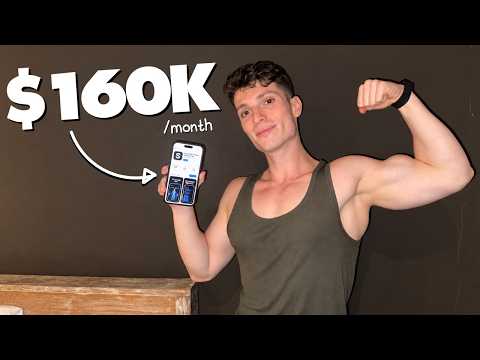
“How I Built This $160K/Month Gym App”
What we found: Half of It Goes to the Creators. The Founder Says So.
A Spanish-market gym app whose RevenueCat dashboard shows $160,324 of revenue in 28 days and $101,757 of MRR, running 500 accounts and 80,000 videos a year — with the creator revenue share disclosed and the platform commission absent.
- $160,324 Gross revenue
- ~Half To creators
- ~80,000 Videos in a year
- Never mentioned App store commission
The claim
That a 22-year-old built a gym app to over $160,000 a month in a single year.
- Revenue, last 28 days, RevenueCat dashboard at 1:59 — $160,324
- MRR on the same dashboard — $101,757
- Active subscriptions / active trials on the same dashboard — 32,531 / 169
- Creator revenue share — "We give nearly half of the revenue to the creators"
- App store commission — Not mentioned; Apple is not named
- Reconstructed retention — Roughly $32,000–$56,000 depending on the order of deductions
- Downloads — ~3 million across iOS and Android (also the channel's on-screen graphic)
- Market — Spanish-speaking — mainly Spain and Mexico
- Videos posted — ~80,000 in the last year
- Accounts operated — More than 500
- Views generated — ~8 billion in a year
- Daily output implied — ~219 videos a day
- Best experiment result — One onboarding screen increased retention 3%
- Team size, costs, profit — Never stated
What is this income idea?
Take a saturated app category, rebuild it for a language the incumbents ignore, and flood short-form video with paid creators.
- The app is a workout tracker — plans, sets, reps, weights, exercise videos — built for the Spanish-speaking market, mainly Spain and Mexico. The founder is 22 and launched it a year before filming.
- They open the dashboard: "This is our RevenueCat dashboard. You can see we're currently at around 160k monthly revenue. And we currently have around 3 million downloads both across iOS and Android." The RevenueCat Overview on screen at 1:59 bears this out and adds more: Revenue $160,324 for the last 28 days, MRR $101,757, 32,531 active subscriptions, 169 active trials, 499,442 new customers and 1,073,268 active customers in the last 28 days. The 3 million downloads appear in the channel's on-screen graphic.
- The growth story is honest about its failures. The existing YouTube audience produced only a small launch spike. Influencer marketing "didn't work." What did work was user-generated content, and the scale of it is the striking part.
- "In the last year, we have posted nearly 80,000 videos. We have more than 500 accounts and we have done nearly 8 billion views in the last year." That is roughly two hundred and twenty videos every day, across five hundred accounts, for twelve months.
- The formats are tracked and segmented. Their example: a simulated iPhone lock screen showing a notification from your girlfriend leaving you, with an app notification underneath telling you to go to the gym. One version of it reached 17 million views.
- And then, unprompted, the number that changes what the title means: "Basically, we give nearly half of the revenue to the creators. So, we pay them a lot. This way they are incentivized to do more content and to stay in symmetry for the long run."
A real $160,000-a-month app where roughly half the money goes to the people making the videos — disclosed honestly — and the app store’s share is never subtracted at all.
- Pick a saturated category — Workout tracking
- Rebuild it in Spanish — Spain and Mexico
- Try the existing audience — Small spike, then nothing
- Try influencers — "It didn’t work"
- Build a creator network — 500+ accounts
- Post ~219 videos a day — 8 billion views
- Pay creators ~half the revenue — Their own disclosure
- $160k gross — Before the store’s cut
An industrial content operation feeding a localized app, with the economics half-disclosed.
They tell you where half of it goes. Nobody mentions the other third.
The lesson underneath the number
- The product method here is the best we have reviewed and it is worth taking whatever you build. Their three phases are a précis of how most software goes wrong: first you build what you want, which they call a terrible idea; then you build what users ask for directly, which they call mediocre; and only then do you start running actual experiments. The reason feedback-led building is mediocre rather than good is that users report preferences, not behaviour — and the fix is to measure behaviour instead.
- What follows from that is a rule about where to spend your testing budget. A light or dark theme changes the experience of perhaps two per cent of daily users; the paywall touches nearly everyone at the moment that decides whether the business exists. So test the paywall, the onboarding, the activation moment — the few surfaces everybody passes through. And they back it with a real result rather than a principle: adding one screen at the end of onboarding where the user commits to working out raised retention by three per cent. One screen, measured, with the number attached.
- Then the thing that reframes the title, offered without being asked: "we give nearly half of the revenue to the creators." That is an unusually honest disclosure and it is the largest cost in the business, deliberately structured so that the people producing eighty thousand videos a year have a reason to keep producing them. Most founders in this format would have let the gross figure stand.
- Which makes the second deduction conspicuous by contrast. Subscriptions sold through app stores are reduced by commission before anyone is paid, and at roughly one point nine million a year this business sits above the threshold for any reduced rate — yet Apple is not mentioned in the video. Run both subtractions and the hundred and sixty thousand becomes something in the region of thirty-two to fifty-six thousand depending on which comes first. And underneath all of it is a distribution operation of five hundred accounts posting two hundred and twenty videos a day, which nobody asks a single question about — not how it is staffed, not what it costs beyond the revenue share, and not what the platforms hosting it think of the arrangement.
Basically, we give nearly half of the revenue to the creators. So, we pay them a lot.
Volunteered without being asked — and it halves the headline
What they actually describe
The best product-experimentation method in this queue, and one very large deduction nobody names.
Taken from what is said and shown on screen in a video published 9 September 2026. The RevenueCat dashboard figures are read from the screen at 1:59; the content figures are as the founder states them. The video's on-screen tech-stack card lists Claude, Wispr Flow, Superwall, PostHog, Notion and Slack. The daily video rate is our arithmetic from the stated annual total.
- Localize a category nobody localizes — Gym apps are among the most crowded categories in the store — in English. Building for Spain and Mexico meant competing in a market the incumbents had not properly served, which is the same wedge we have seen work elsewhere.
- Report the channels that failed — The existing YouTube following gave "a very small spike." Influencer marketing "didn't work." Over a whole summer of user-generated content they "barely were at around 30k downloads." Only in January did it move — "maybe people go to the gym more in January."
- Treat content as a measured production line — 80,000 videos, 500+ accounts, 8 billion views, all segmented into formats and sub-formats and tracked individually. This is not posting; it is manufacturing, with an internal dashboard to match.
- Name the three phases of building wrong — The best framework in the video: "First, we built what we wanted. Terrible idea. Second, we built what users wanted, like directly from feedback. Mediocre. And now we approach a methodical and scientific way of actually building useful things."
- Test where the users are, not where your taste is — "Let's say you build a dark theme or a light theme. This may affect like 2% of your daily active users. Whereas, if you AB test the paywall, it's going to affect a lot of users in a radical way." Obvious once said, and almost universally ignored.
- Show a real experiment result — A single commitment screen at the end of onboarding — "you're like signing, hey, I'm going to work out" — increased retention by 3%. One screen, measured, with the number given.
- Set ambition against product age — "The earlier the product is, the more ambitious your OKRs have to be. It's very easy to increase 10% conversion rate in 90 days if your app was launched last week. Whereas, if you're Netflix, it's not going to be as easy." A genuinely useful calibration.
- And volunteer the split — "We give nearly half of the revenue to the creators." Nobody asked. That single sentence reframes the headline, and they offer it themselves.
The business model
Consumer subscriptions on a Spanish-language workout tracker. $160,324 of gross revenue in the last 28 days and $101,757 of MRR on the RevenueCat dashboard shown, from roughly 3 million downloads and 32,531 active subscriptions.
Gym-goers in Spain and Mexico — a large market the English-language incumbents have not properly served.
A simple, well-tested workout tracker in the user’s own language, with plans, sets, reps and exercise videos.
A creator network of 500+ accounts posting roughly 80,000 short videos a year, paid by revenue share.
- Creator revenue share — "Nearly half" of revenue. Disclosed unprompted
- App store commission — ~30% at this scale. Not mentioned
- Tools — The video's on-screen tech-stack card lists Claude $100, Wispr Flow $15/mo and Notion $20 (about $135 a month, our arithmetic), Superwall at $0.2 per conversion, PostHog usage-based and Slack free
- Team — Required to run 500 accounts. Not sized
- Infrastructure — 3 million downloads. Not priced
- Profit — Not stated
One of the two large deductions is disclosed openly and the other is absent — which together put the retained figure well below the headline.
What you would actually need
Money
Roughly half of revenue paid out to creators — stated plainly as the marketing cost. No other figure is given: no team size, no infrastructure cost, no profit.
The creator disclosure is the important one and they make it. The one not mentioned in the video is the platform’s. At $160,000 a month the business runs near $1.9 million a year, comfortably past the threshold for any reduced commission, so roughly a third leaves before anyone is paid anything.
What comes out of the $160,000
- App store commission — roughly 30% at this scale. Never mentioned
- Creator revenue share — "nearly half". Disclosed
- A team large enough to run 500 accounts. Never sized
- Infrastructure for 3 million downloads. Never priced
- Exercise video production. Never costed
- Profit — never stated
Time
One year from launch to $160,000 a month, with the growth arriving in a specific quarter rather than steadily.
Genuinely fast, and honestly told — they say the summer produced barely 30,000 downloads and the jump came in January, which they half-attribute to gym seasonality. The part with no timeline attached is how a 500-account operation was assembled in twelve months.
The year as described
- Launch — a small spike from an existing YouTube audience
- Influencer marketing attempted; "it didn't work"
- Summer of user-generated content — "barely around 30k downloads"
- Q4 — a slight increase
- January — the spike. "Maybe people go to the gym more in January"
- Since then — "we've stabilized"
- Year one total: ~3m downloads, ~$160k a month
The part you must pay attention to
Half to the creators, a third to the store, and nobody does the subtraction.
"We give nearly half of the revenue to the creators. So, we pay them a lot."
- Gross monthly revenue — $160,000
- Platform commission, unmentioned — ~30%
- To creators, disclosed — ~50%
~$32,000–$56,000
Depending on the order of the two deductions
Credit first, because it is deserved and it is rare: they volunteer the creator revenue share without being asked, state it as roughly half, and explain why — creators paid that way keep producing and stay loyal. That is the single largest cost in the business and most people in this format would never have mentioned it. The deduction they do not mention is the one taken before they see anything. Subscriptions sold through the app stores lose a commission at the point of sale, and at a hundred and sixty thousand a month this business is running at roughly one point nine million a year, which is past the threshold for any reduced small-business rate. Apple is not mentioned anywhere in the video. Put both together and the arithmetic depends on which comes first — if creators take half of gross, the business retains something near thirty-two thousand after the platform takes its third; if they take half of what remains after the platform, it is closer to fifty-six thousand. Either way the figure on the thumbnail is somewhere between three and five times what the company keeps, and only one of the two deductions is ever named. On the MRR the same dashboard shows, $101,757, the two orderings give roughly $20,000 to $36,000 (our arithmetic).
The other thing worth sitting with is the shape of the distribution. Eighty thousand videos in a year across more than five hundred accounts is roughly two hundred and twenty uploads every day, indefinitely, and it produced eight billion views. That is not marketing in the sense most viewers will picture; it is a content factory with an internal dashboard, formats and sub-formats, and hundreds of people on revenue share. It also sits in territory the platforms themselves have opinions about — operating hundreds of coordinated accounts pushing the same product is the kind of arrangement social networks write policies against, and nothing in the video addresses how that is handled or what happens if the accounts are actioned. Account bans are not discussed. Nor does any account of the team required: somebody is recruiting, briefing, tracking and paying several hundred creators, and the video gives no headcount, no salary, and no cost for any of it beyond the revenue share itself.
- THE HEADLINE, DECOMPOSED
- Gross monthly revenue $160,000
- less platform commission
- (~30% above $1m/yr) -$48,000
- -> not mentioned once
- less creator share
- ("nearly half") -$56,000
- -> disclosed, unprompted
- = retained ~$56,000
- If creators take half of GROSS:
- $160,000 - $80,000 - $48,000
- = retained ~$32,000
- Either way: the title is 3-5x
- what the business keeps
- On the MRR shown ($101,757):
- retained ~$20,000-$36,000
- THE DISTRIBUTION MACHINE
- Videos in a year 80,000
- / 365 days = ~219 per day
- Accounts 500+
- Views ~8 billion
- Downloads ~3 million
- NOT STATED
- Apple / Google commission
- Team size, salaries, infrastructure
- Profit
- Platform policy on 500 accounts
The economics
One large cost disclosed, one larger one missing.
- Revenue, last 28 days (RevenueCat, 1:59) — $160,324
- MRR (same dashboard) — $101,757
- Active subscriptions (same dashboard) — 32,531
- MRR per active subscription — ~$3.13 a month
- Annualised — ~$1.9 million on the 28-day revenue; ~$1.2 million on MRR
- Creator revenue share — "Nearly half"
- App store commission — ~30% above $1m in annual proceeds
- Reconstructed retention — ~$32,000–$56,000/month
- Downloads — ~3 million
- Videos posted — ~80,000 in a year
- Accounts — 500+
- Implied daily output — ~219 videos
- Tool costs priced on the tech-stack card — ~$135 a month plus Superwall per conversion
- Team size, infrastructure, profit — Not stated
Netting the headline down
$160,000 − ~30% platform commission − ~50% creator share = roughly $32,000–$56,000 depending on the order of deductions
The business retains somewhere between a fifth and a third of the figure in the title
IncomeIdeaLab arithmetic from the revenue on the dashboard and the stated creator share, with the commission applied at the published standard rate
They say "nearly half of the revenue" without specifying whether that is before or after the platform’s cut, so both orderings are given. The commission rate is our application of published terms, not their figure. On the $101,757 MRR the same screen shows, the range is about $20,000–$36,000. Both RevenueCat figures are gross of store fees.
- The app store commission
- Whether the creator share is calculated before or after that commission
- Team size and payroll for running a 500-account operation
- Infrastructure costs for 3 million downloads
- Profit
- Any platform policy position on operating 500 coordinated accounts
- Churn behind the $160,000, and why the 28-day revenue sits above the MRR shown
- The creator revenue share is volunteered unprompted, which is rare and materially changes what the headline means.
- Roughly 80,000 videos across a year implies about 219 uploads per day, sustained, across more than 500 accounts.
- The best-performing format described is a simulated iPhone lock screen showing a break-up notification beside an app reminder; one version reached 17 million views.
- Growth is honestly reported as failing through two channels before working, with the inflection arriving in January and partly attributed to gym seasonality.
- The dashboard shows 32,531 active subscriptions against $101,757 of MRR, about $3.13 per subscription per month (our arithmetic). Against about 3 million downloads, that is roughly one active subscription per 92 downloads, a low conversion rate typical of consumer fitness apps (our arithmetic).
- The MRR on screen is about 37% below the $160,324 of 28-day revenue on the same screen (our arithmetic). The video does not explain the difference.
- The video's on-screen tech-stack card prices Claude at $100, Wispr Flow at $15/mo and Notion at $20, about $135 a month (our arithmetic), with Superwall at $0.2 per conversion, PostHog usage-based and Slack free. These are list prices on the card; next to the creator share they are small.
Evidence status
Every substantive claim in the video.
- "$160K/Month Gym App" — Title and founder — Gross. Roughly half goes to creators, and the store takes its share first.
- ~$160,000 monthly revenue — Founder; RevenueCat dashboard on screen at 1:59 — The dashboard shows Revenue $160,324 for the last 28 days.
- MRR — RevenueCat dashboard on screen at 1:59 — $101,757, not spoken; about 37% below the 28-day revenue (our arithmetic).
- "Nearly half of the revenue to the creators" — Founder, unprompted — The most important disclosure in the video.
- ~3 million downloads — Founder; the channel's on-screen graphic — Across iOS and Android.
- 80,000 videos, 500+ accounts, 8bn views — Founder, internal dashboard — Implies ~219 uploads a day for a year.
- Influencer marketing failed — Founder — An honest report of a channel that did not work.
- One onboarding screen raised retention 3% — Founder — A specific, measured experiment result.
- Test the paywall, not the theme — Founder — The most transferable advice here.
- App store commission — Nobody — Apple is not mentioned.
- Tool stack and prices — The video's on-screen tech-stack card — About $135 a month of priced tools, plus Superwall per conversion (our arithmetic).
- Team size, costs, profit — Nobody — None stated.
What is actually proven?
A real business, half-netted.
- RevenueCat dashboard at 1:59: Revenue $160,324 for the last 28 days, MRR $101,757, 32,531 active subscriptions.
- That roughly half of it is paid to creators.
- That the platform takes a further ~30% before anyone is paid.
- A retained figure somewhere between a fifth and a third of the headline.
- A content operation of 500+ accounts and ~219 videos a day.
- A product-experimentation method with a measured 3% retention result.
- Team size, infrastructure costs, profit and platform policy exposure.
What the headline doesn’t tell you
They net half of it down themselves. Nobody nets the rest.
- Half goes to creators. — Their own words.
- The store takes ~30% first. — Not mentioned.
- MRR is $101,757. — On the same dashboard.
- Retained is ~$32–56k. — Not $160k.
- 500 accounts. — Nobody asks about that.
- ~219 videos a day. — For a year.
- No team size given. — Someone runs all of it.
- No profit figure. — Or infrastructure cost.
- Two channels failed first. — Honestly reported.
Should you try it?
Excellent method, half-disclosed economics
Take the three-phase building framework and the rule about where to A/B test — both are the best in this queue. Read the revenue as roughly a fifth to a third of the headline.
- Quality of the product method — 10 — Three phases, and testing where the users actually are.
- Disclosure of the creator share — 9 — Volunteered, unprompted, and it reframes the title.
- Honesty about failed channels — 8 — Audience and influencers both reported as not working.
- Willingness to show dashboards — 8 — RevenueCat revenue, MRR and subscriptions shown on screen.
- App store commission disclosure — 0 — Apple is not mentioned.
- Team and cost disclosure — 0 — A 500-account operation with no headcount or cost.
- Treatment of platform policy risk — 0 — 500 coordinated accounts, not discussed.
- Beginner replicability — 3 — The method transfers; the content factory does not.
- The building framework alone justifies the seventeen minutes. Their three phases describe how nearly all software goes wrong: first you build what you personally want, which they call a terrible idea; then you build what users tell you they want, which they call mediocre; and only after that do you start measuring what users actually do. The middle stage is the interesting one, because "listen to your customers" is standard advice and they are saying it produces mediocre products — since people report preferences rather than behaviour.
- The rule that follows is immediately usable. A dark theme changes the experience of maybe two per cent of daily users; the paywall touches everyone at the exact moment that determines whether there is a business. So put your testing effort on the few screens every user passes through, and they prove it with a result rather than a principle — one commitment screen at the end of onboarding, three per cent more retention. They also calibrate ambition sensibly: a week-old app should set far more aggressive targets than a mature one, because the easy gains are still available.
- The economics are half-disclosed, and the half they give is the one rarely stated. Unprompted, they say roughly half of revenue goes to the creators who produce the videos, and explain the reasoning — paying them well keeps them producing and keeps them loyal. That single sentence turns a hundred and sixty thousand into something nearer eighty before anything else is subtracted, and they volunteered it.
- What nobody subtracts is the app store. At roughly one point nine million a year the business is well past the threshold for a reduced commission, so around a third leaves at the point of sale, and Apple is not mentioned anywhere in the video. Depending on whether the creator half is taken before or after that, the company retains somewhere between thirty-two and fifty-six thousand a month — a real business, and between a fifth and a third of what the title says. And nobody asks the other obvious question either: five hundred accounts posting two hundred and twenty videos a day is an operation with staff, costs and a relationship to platform policy, and the video gives none of the three.
Passive or automated?
Automation
Subscriptions renew themselves; the distribution is hundreds of people making videos every day.
Passive potential
Growth depends on 80,000 videos a year and stops when the creators do.
The app itself is a straightforward subscription product that renews without intervention, and the experimentation loop can be run on a quarterly cycle. Nothing about the growth engine is passive. It requires recruiting, briefing, tracking and paying several hundred creators, maintaining more than five hundred accounts, and producing roughly two hundred and twenty videos every day — an operation whose output stops the moment the revenue share stops, and whose account structure depends on the continued tolerance of the platforms hosting it.
- Recruiting and managing 500+ creator accounts
- Producing and segmenting ~219 videos a day
- Tracking format performance and paying revenue shares
- Running quarterly experiment cycles on the product
- Maintaining an app serving 3 million downloads
Recommended beginner experiment
The method is the takeaway; net the revenue yourself.
- Stop building what you want. — Their phase one. "Terrible idea."
- Stop building what users request. — Their phase two. "Mediocre."
- Test the screens everyone sees. — Paywall and onboarding, not themes.
- Set ambition by product age. — New apps should target bigger gains.
- Measure one change at a time. — One screen bought them 3% retention.
- Look for an unserved language. — Saturated in English is not saturated.
- Subtract the store before anything else. — ~30% above $1m a year.
- Then subtract whatever you pay for reach. — Theirs is nearly half.
Our verdict: 6/10
The best method here, on a half-netted number $160,324 of 28-day revenue on screen, roughly half to creators by the founder’s own account, and the store’s share not mentioned
Credited for the strongest product-experimentation framework in this queue — three phases naming why building what you want is terrible and building what users request is merely mediocre, with the correct conclusion that you should measure behaviour rather than collect preferences; for the rule that testing effort belongs on the few surfaces every user crosses, paywall and onboarding rather than themes, backed with a measured result of three per cent additional retention from a single commitment screen; for calibrating target ambition against product age; for reporting honestly that an existing audience produced only a small spike and that influencer marketing failed outright; for showing a RevenueCat dashboard with revenue, MRR and subscription counts, and an internal content dashboard; and above all for volunteering, without being asked, that "we give nearly half of the revenue to the creators" — the single largest cost in the business and the one most people in this format would let pass. Marked down because the other large deduction is absent entirely: at roughly $1.9 million a year the business sits above the threshold for any reduced app store commission, so around a third of every subscription leaves at the point of sale, and Apple is not mentioned in the video — which puts the retained figure somewhere between $32,000 and $56,000 a month depending on whether the creator share is struck before or after, or about $20,000–$36,000 on the $101,757 MRR the same screen shows; because a distribution operation of more than 500 accounts posting roughly 219 videos a day is described without any headcount, salary or infrastructure cost attached; and because nobody raises what the platforms hosting those 500 coordinated accounts might make of the arrangement, a subject the video does not raise.
The product half of this video is the best thing in the queue and it costs nothing to apply. Their three phases are a compressed account of how software usually goes wrong: build what you want and it is a terrible idea, build what users ask for and it is mediocre, and only then start running experiments that measure what people actually do. That middle judgement is the sharp one, because "listen to your customers" is the most repeated advice in this genre and they are saying flatly that it produces average products. The corollary is a rule you can use this afternoon — a dark theme touches two per cent of daily users while the paywall touches everyone at the moment that decides whether a business exists, so test the screens everybody crosses. And they prove it with a number rather than a principle: one commitment screen added to the end of onboarding produced three per cent more retention. The economics are where it gets interesting, because they do the hard half themselves. Unprompted, with nobody pressing them, they say roughly half the revenue goes to the creators making the eighty thousand videos a year, and explain why — pay them properly and they keep producing and stay. That is the largest cost in the business, volunteered, and it immediately turns a hundred and sixty thousand into something near eighty. What is never named is the deduction taken before either of them sees a cent. Subscriptions sold through an app store lose their commission at the point of sale, and at about one point nine million a year this business is past the threshold for any reduced rate — yet Apple is not mentioned once. Depending on which subtraction comes first, the company keeps somewhere between thirty-two and fifty-six thousand a month. Still a genuine business at twenty-two years old, and between a fifth and a third of the figure on the thumbnail. The last unasked question is the machine itself: five hundred accounts, two hundred and twenty uploads a day, eight billion views, and not a word about who staffs it, what it costs beyond the revenue share, or what the platforms carrying it think.
- Revenue, last 28 days — $160,324 (RevenueCat)
- MRR — $101,757 (RevenueCat)
- To creators — ~Half
- App store commission — Not mentioned
- Reconstructed retention — ~$32,000–56,000
- Downloads — ~3 million
- Videos / accounts — ~80,000 / 500+
- Daily output — ~219 videos
- Team / costs / profit — Not stated
- Beginner suitability — Method yes, machine no
Sources
- How I Built This $160K/Month Gym App — Starter Story — Source video, reviewed 16 September 2026, 2026-09-09
- Apple — App Store Small Business Program — Published commission terms: 15% under $1m in annual proceeds, 30% above
- Google Play — Service fees — Published commission terms for subscriptions and in-app purchases
- TikTok — Community Guidelines on spam and deceptive behaviour — Platform rules relevant to operating large numbers of coordinated accounts