AI / Mobile Apps · Claim Review
“How I Built It: $400K/Month Mobile App (Gravl)”
What we found: The Founder Went Back and Recorded the Numbers They Forgot
$440,000 a month, a third of it straight back into ads, and a founder who returned after filming because the financials had been left out.
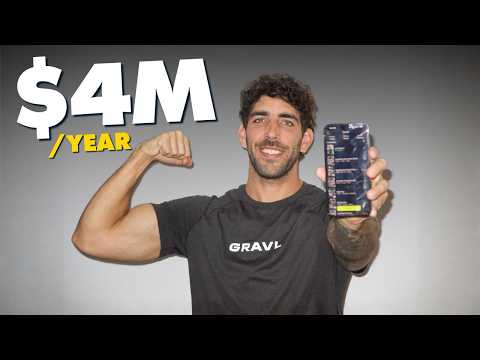
- $440k Monthly revenue
- ~1/3 of revenue Ad spend
- $75k–$171k Estimated net
- ~$6.30/mo Revenue per subscriber
The claim
That an AI fitness app reached over $400,000 a month within roughly two years of launch.
- Last month’s revenue — Over $440,000
- Subscribers — Over 70,000
- Revenue per subscriber — ~$6.30/month
- Ad spend — ~One third of revenue
- Payroll — $50,000–$80,000/month, 13–14 people; "Salaries $50–$80K" on the on-screen expense list at 13:46, period not shown
- Apple commission stated — 15%
- Attribution tools — ~$1,000/month
- Infrastructure and AI — ~$1,000/month
- Estimated net before tax — ~$75,000–$171,000/month
- Churn and pricing — Never mentioned
What is this income idea?
Find an app you like, build a better version of it, get early users from a community you belong to, then buy growth with paid ads.
- Julian is a developer from Argentina who grew up around gyms — their father owned a fitness centre. They were using another fitness app, decided they could build something better, and did.
- The first users came from Reddit, and the detail matters: they did not post a promotion, they posted a technical thread about how they built it. "It got over a couple hundred likes within the first couple hours and over 300,000 impressions," and brought in "our first couple thousand users."
- They are explicit about why that audience worked. They were developers, some of whom go to the gym but find it intimidating — a real overlap between the community they could reach and the problem the app solved.
- Then the growth engine changed entirely. "For us, the bigger distribution was paid ads." Meta and TikTok primarily, with some Google and Apple Search. Two years on there are over 70,000 subscribers and, last month, over $440,000 in revenue.
- The genuinely unusual part comes after the interview ends. They record an additional segment and open it: "We finished recording the video and realized that we didn't really go into numbers and financials of the business. Obviously, very important for you to know and I'm also happy to share some of them."
- They then itemise the cost side — advertising, salaries, Apple's commission, attribution tools, infrastructure. In dozens of these interviews, we have not seen anyone go back and do that voluntarily.
Build a better version of an app you already use, launch it to a community you belong to, then spend a third of your revenue buying the rest of the growth.
- Use a product, see the gaps — A gym-goer and a developer
- Build the better version — React Native, Expo, .NET
- Post the build, not the pitch — 300,000 impressions
- First thousands of users — From one Reddit thread
- Translate to Spanish — Cheaper ad markets
- Start ads at <$50/day — First sale in 10 minutes
- Scale paid acquisition — Now ~1/3 of revenue
- 70,000 subscribers — $440k last month
Organic for validation, paid for scale — and paid never stops.
Paid acquisition is a business model, not a growth tactic.
The lesson underneath the number
- The single most important thing in this video is the sentence about advertising costing a third of revenue. Organic growth, once it works, compounds and costs little to maintain. Paid growth does not: every month begins at zero, and holding the revenue line steady means spending again at the same rate. At $440,000 a month that is roughly $147,000 leaving before anything else is paid, and it will still be roughly a third at a million a month. It is not a phase this business grows out of; it is the shape of the business.
- Notice too how the early distribution worked, because it is more replicable than the ads. They did not promote the app on Reddit — they posted a technical thread about how they built it, to an audience of developers, some of whom go to the gym and find it intimidating. The content matched the community and the community overlapped the customer. Three hundred thousand impressions and a few thousand users came from that, and it cost nothing. The lesson is that the free channel worked because they were genuinely a member of it, which is exactly the part that cannot be copied by someone who is not.
- Their validation tip is sharper than it first sounds, and most people get it wrong in exactly the way they warn about: "it's not just that the product work, but also that people are willing to pay for it." A working product with enthusiastic free users tells you almost nothing before you switch the ads on. Getting a subscription within ten minutes of activating them told them something a thousand downloads would not have.
- And then the thing that sets this interview apart. After filming ended, they realised the financials had been skipped and recorded a separate segment to supply them — ads, payroll, platform commission, attribution, servers. That is the opposite of how this genre normally behaves, where a revenue figure is announced and the cost side is not raised. Two of their numbers still do not reconcile, and the Apple rate they quote belongs to a programme this business has almost certainly outgrown. But the gaps are visible precisely because they gave enough detail for them to be visible, which is a trade worth making every time.
We finished recording the video and realized that we didn’t really go into numbers and financials of the business.
The founder, returning unprompted to fix it
What they actually describe
A clear sequence, with the costs attached.
The steps follow the interview, then the founder's post-interview update, which carries an on-screen pie chart of ad channels (Meta, TikTok, Google, Apple Search, no percentages) and an on-screen expense list.
- Share the build, not the product — Their Reddit post was a technical thread on how they built it, aimed at developers. It drew 300,000 impressions and the first few thousand users. Posting the work rather than the pitch is why it landed in a builder community.
- Validate that people will pay, not just that it works — Their first tip: "validate before spending money on ads. And when I say validate, it's not just that the product work, but also that people are willing to pay for it."
- Choose cheaper ad markets deliberately — They and a co-founder are Spanish speakers, so they translated the app and ran ads across South America where acquisition costs less. They name this as luck as much as strategy.
- Start small and watch for the first signal — "We got a subscription within the first 10 minutes of like activating the ads." Initial spend was under $50 a day.
- Keep a human on support — "We'll have someone reply — an actual person, not an AI. That's something users value a lot." A deliberate cost, and an unusual choice for an AI-branded product.
- Constrain the AI when building — "I use Cursor a lot, but I'm very specific which files to touch and don't let the AI just go rogue." A practical note from someone shipping a production app.
- Know when to quit the thing that is not working — Their closing advice pairs persistence with its opposite: keep going through ads that fail, but also recognise "all right, this product doesn't work."
The business model
Consumer app subscriptions for AI-generated strength training workouts, averaging roughly $6.30 per subscriber per month.
Over 70,000 gym-goers, with significant reach into Spanish-speaking South American markets.
Smart workouts with exercise video, descriptions and a human-staffed support chat.
A technical Reddit thread for the first thousands of users; Meta and TikTok paid ads for everything since.
- Advertising — ~1/3 of revenue, excluding creative production. Expense number one
- Salaries — $50,000–$80,000/month across 13–14 people; "$50–$80K" on the on-screen expense list
- Apple commission — Stated at 15%; the standard rate above $1M annual proceeds is 30%
- "1% clip from revenue" — Labelled "Revenue Cut 1%" on the on-screen expense list; not explained further
- Mobile measurement partners — ~$1,000/month
- Infrastructure and AI — ~$1,000/month — strikingly low for an AI product
- Human support — A deliberate choice, folded into payroll
The most complete cost disclosure in this library, and it arrived because the founder went back and recorded it after the interview had finished.
What you would actually need
Money
Fully itemised in the post-interview addendum, with an on-screen expense list: ads at roughly a third of revenue, salaries of $50,000–$80,000 a month, Apple's commission, about $1,000 for attribution tools and about $1,000 for infrastructure.
This is a paid-acquisition business. The largest single cost is buying customers, it scales with revenue rather than falling away, and it does not stop. That is the defining fact about the model and they state it plainly.
The cost stack, as they give it
- Advertising — Meta, TikTok, some Google and Apple Search: ~1/3 of revenue
- Creative production for those ads — explicitly excluded from that third
- Salaries — 13 to 14 people including part-timers and contractors: $50,000–$80,000/month
- Apple’s commission on every subscription
- A further "1% clip from revenue", labelled "Revenue Cut 1%" on the on-screen list
- Mobile measurement partners: ~$1,000/month
- Servers, AI bills and tools: ~$1,000/month
- Human support staff, by deliberate choice
Time
Launched roughly two years before recording. The first version was built in about two months, alongside winding down a previous venture.
A genuine two-year arc to $440,000 a month with three founders working full time, then a team of fourteen. No part of this is described as passive or part-time.
The sequence
- A previous business that "wasn’t doing great" and drifted into agency work
- Built the first version in about two months
- Reddit launch — first thousands of users
- First year: three people — one building, two on growth and ads
- Team now 13–14, including contractors
- Two years from launch to $440,000 a month
The part you must pay attention to
A third of the revenue never stops going back out.
They name advertising as expense number one and size it directly: "I'd say a third is somehow accurate. A third of our revenue that is. This doesn't include making the ads but just the cost of running them."
- Monthly revenue — $440,000
- Ads (one third) — ~$147,000
- Payroll — $50–80k
~$75,000–$171,000 net
After Apple’s cut, tools and infrastructure, before tax
Two of their own numbers do not sit together. They say "we were spending less than 50 bucks a day on ads. And that's what worked for us from the start up until this day" — but a third of $440,000 is roughly $147,000 a month, or about $4,900 a day. The charitable reading, and probably the right one, is that the strategy persisted rather than the spend level; cheap South American markets, same channels, vastly more volume. As spoken, though, the two figures are a hundredfold apart and nobody reconciles them. The other tension is the platform fee. They state Apple takes 15%, which is the App Store Small Business Program rate — available only to developers with under $1 million in annual proceeds. At $440,000 a month this business is running at roughly $5.3 million a year, where the standard commission is 30%. The difference is about $66,000 a month, and which rate actually applies changes the net materially.
What none of this diminishes is the disclosure itself. They finished the interview, realised the money had not been covered, and recorded a separate segment to fix it — unprompted, and framed as something the audience deserved. The result is that a viewer can do the subtraction and arrive at a real answer: somewhere between about $75,000 and $171,000 a month before tax, shared across three co-founders, depending on payroll and which Apple rate applies. That is a genuinely excellent outcome and roughly a fifth to a third of the number in the title. Both facts are true, and only one of them usually gets said.
- THE SUBTRACTION THEY MAKE POSSIBLE
- Revenue $440,000
- Ads (their "one third") -$146,700
- Salaries (13-14 people) -$50-80,000
- Attribution (MMPs) -$1,000
- Infrastructure + AI -$1,000
- "1% clip from revenue" -$4,400
- IF APPLE TAKES 15%
- Commission -$66,000
- Net ~$141,000-171,000
- Margin 32% - 39%
- IF APPLE TAKES 30%
- Commission -$132,000
- Net ~$75,000-105,000
- Margin 17% - 24%
- APPLE SMALL BUSINESS PROGRAM
- 15% applies under $1M/year proceeds.
- This business: ~$5.3M/year run rate.
- AD SPEND, STATED TWO WAYS
- "less than 50 bucks a day...
- up until this day"
- One third of $440,000 = ~$4,900/day
- UNIT ECONOMICS
- $440,000 / 70,000 = ~$6.30/sub
The economics
Enough disclosure to compute a real answer, and two figures that fight each other.
- Monthly revenue — $440,000
- Subscribers — 70,000+
- Revenue per subscriber — ~$6.30/month
- Advertising — ~$147,000/month
- Salaries — $50,000–$80,000/month
- Apple commission (stated) — 15% — ~$66,000
- Apple commission (standard rate) — 30% — ~$132,000
- Attribution and infrastructure — ~$2,000/month
- Estimated net before tax — ~$75,000–$171,000/month
- Churn and pricing — Never mentioned
Net margin from the founder’s own itemised costs
$440,000 − ads (~$147,000) − payroll ($50,000–$80,000) − Apple (15% or 30%) − ~$5,400 tools and fees
Roughly $141,000–$171,000 monthly at 15% commission, or roughly $75,000–$105,000 at 30%, before tax
IncomeIdeaLab calculation from figures stated by the founder in the post-interview segment
Ad creative production is explicitly excluded from the one-third figure and is not sized anywhere, so the true net sits at or below these ranges. Split across three co-founders and a team, this remains an excellent outcome.
- Churn — never mentioned, on a consumer subscription app
- Pricing and plan mix behind a ~$6.30 average
- The cost of producing ad creative, explicitly carved out
- What the "1% clip from revenue" refers to
- Whether the 15% Apple rate still applies at this revenue
- Tax, and how profit is split between founders
- Around $6.30 per subscriber per month is low for a fitness app, consistent with annual plans amortised monthly and with pricing tuned for South American markets. The business is built on volume rather than price.
- Infrastructure and AI at about $1,000 a month against $440,000 of revenue is remarkably efficient for something marketed as an AI product, and suggests the AI component is light relative to the subscription value.
- Churn is the conspicuous absence. On a consumer fitness subscription — a category with famously seasonal, high attrition — it determines whether a third of revenue spent on ads is buying growth or replacing losses. Nobody raises it.
- The episode carries a disclosed HubSpot for Startups sponsorship and closes with a pitch for the channel’s own paid programme.
Evidence status
Every substantive claim in the video.
- Over $440,000 in the last month — Founder — Consistent with 70,000 subscribers at ~$6.30 each.
- Over 70,000 subscribers — Founder — Reconciles with the revenue figure.
- Ads cost about a third of revenue — Founder — The most important disclosure in the video, volunteered after filming. The on-screen pie chart names the channels without percentages.
- Salaries $50,000–$80,000/month, 13–14 people — Founder — Specific and plausible for the team described. Also shown in the founder's on-screen expense list, which does not show the period.
- Apple takes 15% — Founder — That rate is limited to under $1M in annual proceeds; this business runs at roughly $5.3M.
- "Less than 50 bucks a day on ads… up until this day" — Founder — A third of $440,000 is about $4,900 a day. Likely means the strategy, not the spend.
- Reddit thread: 300,000 impressions, first thousands of users — Founder — Specific and credible for a technical post in a developer community.
- First subscription within 10 minutes of switching ads on — Founder — Offered as the validation signal that justified scaling.
- Infrastructure and AI ~$1,000/month — Founder — Low but plausible; suggests a light AI component.
- Human support rather than AI — Founder — Described as a deliberate, valued cost.
- Churn and pricing — Nobody — Never raised, and decisive for whether ad spend buys growth or replaces losses.
What is actually proven?
More of the cost side than we usually get anywhere.
- The founder returned after filming to supply the financials unprompted.
- Advertising is named as the largest expense and sized as a third of revenue.
- Payroll, headcount, attribution and infrastructure are all given as figures.
- $440,000 in a month from over 70,000 subscribers.
- Net of roughly $75,000–$171,000 a month before tax, across three founders.
- The 15% Apple rate, which applies below a threshold this business exceeds.
- That ad spend is still "less than 50 bucks a day".
- Churn and pricing on a consumer subscription product.
What the headline doesn’t tell you
The disclosure is excellent, which is how you can see the gaps.
- A third of revenue goes to ads. — Every month, permanently.
- Net is well under a quarter of the headline. — Roughly $75k–$171k before tax.
- It is split three ways. — Plus a team of thirteen or fourteen.
- Ad creative cost is carved out. — Explicitly excluded from the third.
- The Apple rate looks outdated. — 15% applies under $1M a year.
- Ad spend is stated two ways. — $50 a day versus ~$4,900 a day.
- Churn is never mentioned. — On a consumer fitness subscription.
- Growth is bought, not compounding. — Stop spending and it stops.
Should you try it?
A real business, honestly accounted for
Among the most transparent interviews we have reviewed. The model itself is capital-hungry and not a beginner path.
- Cost disclosure — 9 — Ads, payroll, platform, attribution and infrastructure — all volunteered after filming.
- Willingness to correct the record — 10 — They re-recorded specifically because the financials had been skipped.
- Specificity of the early playbook — 8 — The Reddit approach and the paid-market choice are both concrete.
- Internal consistency — 5 — Daily ad spend and one-third-of-revenue are a hundredfold apart.
- Platform-fee accuracy — 4 — The stated 15% belongs to a programme this revenue level exceeds.
- Churn transparency — 0 — Never mentioned, on a category known for attrition.
- Realistic timeline — 8 — Two years, three full-time founders, a prior failed venture. All stated.
- Beginner replicability — 3 — Requires ad budget, a growth team and tolerance for permanent spend.
- Judge this one favourably on honesty and cautiously on model. The honesty is exceptional: they finished the interview, noticed the money had been left out, and came back to itemise advertising, salaries, Apple's commission, attribution tools and servers. That makes this one of the few videos in this library where a viewer can perform the subtraction rather than being handed a revenue figure and left to imagine the rest. The answer — somewhere around $75,000 to $171,000 a month before tax, shared between three founders — is a superb outcome, and it is a fraction of the number on the thumbnail.
- Understand what kind of business this is before admiring it. A third of revenue goes to buying customers, permanently, and that fraction does not shrink as you grow. Organic acquisition compounds; paid acquisition resets to zero every month. This is a capital-intensive operation with a growth team, not a small app throwing off money, and the two co-founders who are not Julian work on growth and ads full time. Nothing about it is passive.
- The part worth stealing is the beginning, not the scaling. They posted a technical thread about how they built the app to a developer community they belonged to, and it produced three hundred thousand impressions and the first few thousand users at no cost. That worked because the content suited the audience and the audience contained the customers — a gym-intimidated developer is a real person. Their validation tip is the companion to it: proving people use your product is not proving they will pay, and only the second one justifies switching on ads.
- Two of their numbers need holding loosely. Ads at under fifty dollars a day "up until this day" cannot be squared with ads costing a third of $440,000, which is nearer five thousand a day — they most likely means the strategy rather than the spend. And the fifteen percent they quote for Apple is the Small Business Program rate, which applies below a million dollars in annual proceeds; at roughly five point three million a year the standard thirty percent would apply, a difference of about sixty-six thousand dollars a month. Both are simply unreconciled, and that is a far better failure mode than silence.
Passive or automated?
Automation
Subscriptions bill themselves; acquisition and support do not.
Passive potential
Revenue stops shrinking only while a third of it keeps going back out.
This is one of the least passive businesses in the library, and the founder does nothing to suggest otherwise. Growth is purchased: roughly a third of revenue flows to Meta and TikTok every month, two of the three co-founders work full time on growth and ads, and the moment that spending stops the subscriber pipeline stops with it. On top of that there are thirteen or fourteen people to manage, a deliberate decision to staff support with humans rather than AI, and a product on Apple's platform subject to its commission and its rules. What is automated is billing and delivery; everything that makes a customer appear is a running operation with a payroll attached.
- Running and iterating paid campaigns across Meta, TikTok, Google and Apple Search
- Producing ad creative — a cost explicitly excluded from the one-third figure
- Human support staff answering in-app chat by deliberate choice
- Managing a team of 13–14 including contractors
- Ongoing product development and content for every exercise
Recommended beginner experiment
Copy the first six months, not the next eighteen.
- Pick a product you personally use. — They were a gym-goer building for gym-goers.
- Find the community you already belong to. — Their was developers, not fitness buyers.
- Post how you built it, not why to buy it. — 300,000 impressions, zero spend.
- Prove people pay before you advertise. — Their first and best tip.
- Start ads under $50 a day. — And watch for the first subscription.
- Look for cheaper ad markets you understand. — Language was their unfair advantage.
- Model ads at a third of revenue forever. — That is what this business actually costs.
- Track churn from day one. — The number this video never gives.
Our verdict: 8/10
The most honest accounting we have reviewed of a business that buys a third of its revenue back every month
Credited above all for recording an additional segment after filming had ended, purely because the financials had been missed — then itemising advertising, payroll and headcount, platform commission, attribution tools and infrastructure, which makes the net computable; for a concrete and genuinely replicable early playbook in the technical Reddit thread; for a validation tip that correctly separates usage from willingness to pay; for disclosing a prior business that failed; and for stating a plain two-year timeline with three full-time founders. Marked down because the stated daily ad spend of under $50 cannot be reconciled with advertising costing a third of $440,000; because the 15% Apple commission quoted belongs to a programme limited to under $1 million in annual proceeds while this business runs at roughly $5.3 million, a difference of about $66,000 a month; because the cost of producing ad creative is explicitly carved out of the headline cost figure and never sized; and because churn is never mentioned at all on a consumer fitness subscription, leaving it unknown whether a third of revenue buys growth or merely replaces what leaves.
A founder finished an interview, realised nobody had asked about the money, and recorded a separate segment to supply it. That is the single best thing in this library. What they then give is a real cost stack — advertising at roughly a third of revenue, salaries of fifty to eighty thousand a month across thirteen or fourteen people, Apple's commission, a thousand for attribution, a thousand for servers and AI — and from it a reader can do what these videos almost never permit, which is subtract. The answer lands somewhere between about seventy-five and a hundred and seventy thousand dollars a month before tax, split three ways, which is an outstanding business and roughly a fifth to a third of the figure in the title. Both numbers follow from what they say; only one of them is usually spoken. The shape underneath matters as much as the size. This is bought growth, not compounding growth: a third of the revenue leaves every month to purchase the next month's customers, two of the three founders work on that full time, and the fraction does not fall as the business scales. The free part — a technical Reddit thread posted to developers who also go to the gym, three hundred thousand impressions, the first few thousand users at no cost — is the part a beginner can actually copy, and it worked because they genuinely belonged to that community. Two of their figures need holding loosely. Spending under fifty dollars a day cannot coexist with ads costing a third of four hundred and forty thousand, which is nearer five thousand; they almost certainly means the strategy endured, not the budget. And the fifteen percent they quote for Apple is the reduced rate for developers under a million a year, which at a five point three million run rate this business has left behind — sixty-six thousand dollars a month hangs on which figure is right. The gaps are visible because they gave enough to see them.
- Monthly revenue — $440,000
- Subscribers — 70,000+
- Per subscriber — ~$6.30/month
- Ad spend — ~1/3 of revenue
- Team — 13–14 people
- Estimated net — ~$75k–$171k/month
- Split between — Three co-founders
- Churn — Never mentioned
- Beginner suitability — Early playbook yes, model no
Sources
- How I Built It: $400K/Month Mobile App (Gravl) — Starter Story — YouTube video, 2025-11-13
- Apple — App Store Small Business Program — Platform documentation on the 15% commission rate and its eligibility threshold
- FTC — Guides Concerning the Use of Endorsements and Testimonials — Regulatory guidance on earnings claims