Creator Income / Rental Property · Claim Review
“How Graham Stephan Makes $50,000+ PER MONTH In Passive Income”
What we found: The Guest Says His Biggest Income Is "Not Passive Whatsoever". The Title Includes It in the Total
$4,800 a month of net rent after ten years is the passive part. $35,000–$40,000 a month of YouTube is the part the title needs to reach $50,000.
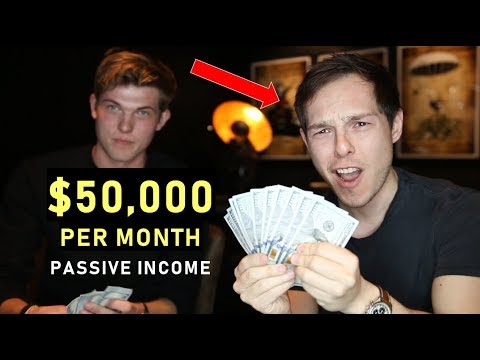
- ~$4,800/mo Net rental income
- $35k–$40k+/mo YouTube
- ~20% Passive share of YouTube
- ~$18k–$29k Passive on his own definition
The claim
That Graham Stephan makes more than $50,000 a month in passive income.
- Net rental cash flow — ~$4,700–$4,800 a month; worst ~$4,200, best ~$6,000
- Time to build it — "About ten years in the making"; four years saving for the first property
- Mortgage principal paid down — ~$2,500–$2,600 a month
- YouTube income — $35,000–$40,000 a month; last four months over $40,000
- Share of YouTube from old videos — "Probably about 20%"
- Course sales — "Almost 30 grand this month"; typically $5,000–$15,000
- Amazon affiliate — $60 a month → $700 a month after switching to a storefront link
- Everything added up — ~$45,000–$60,000 a month
- Passive, on the guest’s own test — ~$18,000–$29,000 a month
- Views at review — 73,784
What is this income idea?
Build rental cash flow slowly, then earn far more by making videos about it — and be honest that the second part is a job.
- The guest opens by rejecting the premise of the genre: "one of the biggest misconceptions with passive income is that you can get something for nothing… you're always going to be trading something for it." His foundation is real estate. Net rental income — "after paying the mortgage the property taxes the repairs the expenses the everything" — is about $4,700 to $4,800 a month, ranging from roughly $4,200 in a bad month to $6,000 in a good one, and he says he keeps his spending inside that number.
- He is specific about what it cost: "about ten years in the making", including four years of saving to buy the first property and four years working as an agent to learn the market. On top of the cash flow he counts about $2,500 to $2,600 a month of mortgage principal paid down, and speculates that once the loans are cleared the cash flow "might increase to you know ten or eleven thousand dollars a month".
- Then the larger number. Making YouTube videos about real estate earns "about thirty-five to even over forty thousand dollars a month… the last four months have all been over forty thousand." He immediately qualifies it: "a lot of that is new videos that I will have to go and film… it's not passive whatsoever." About 20 per cent, he estimates, comes from old uploads — a two-year-old Roth IRA video "still makes me $500 a month".
- Course sales are "almost 30 grand this month" against a typical $5,000 to $15,000, promoted only at the end of relevant videos. Two purchases arrive during the interview and are put on screen — "six hundred dollars in 30 minutes". Amazon affiliate income went from about $60 to about $700 a month when he replaced individual book links with a storefront page carrying his camera and lighting gear.
- He closes with the caveat the title ignores: YouTube "is extremely fickle", the course "will last probably two to six years", and "creating value has a life span to it… unless you buy it" through property or stocks.
A candid breakdown where the guest labels most of his income active and temporary, and the title labels all of it passive.
- Save for four years — First rental property
- Ten years of reinvesting — → ~$4,800/mo net rent
- Make videos about it — $35k–$40k/mo, active
- Old videos keep paying — ~20% of that
- Sell a course — $5k–$15k/mo, spiky
- Affiliate storefront — $700/mo
- Title: "$50,000 passive" — Only by counting the job
The guest draws the line between passive and active himself. The title erases it.
He drew the line. The title moved it.
The lesson underneath the number
- The interesting thing about this interview is that the guest does the work a fact-checker would normally do. He gives his rent net rather than gross and says why. He separates cash flow from principal paydown. He puts a decade on the foundation and four years on the first purchase. He calls his largest income source a job, estimates what fraction of it is genuinely residual, and predicts the whole thing will fade. He describes the course honestly as a product with a shelf life and promotes it lightly. By the standards of the genre in 2019 or now, that is unusual candour.
- It is also why the title is worth an article. "$50,000+ per month in passive income" is only true if you disregard the guest's own labels and add up everything he earns, including the four-fifths of YouTube he films fresh every month, and even then it needs the course's best month rather than a typical one. The number that meets his definition — rent, a fifth of YouTube, a normal course month, the storefront — is roughly $18,000 to $29,000. Still a great deal of money; not the thumbnail.
- The proportions matter more than the total. The one stream he expects to keep for life is the smallest, and it took ten years. The three he expects to lose are the largest, and they exist because the small one gave him something to talk about. He says as much: "I wouldn't have been able to make that money if I didn't have all the experience in real estate to talk about it," and he warns against people who "skip everything" and go straight to the course. That is the actual shape of the business, and it is nearly the opposite of what the title suggests — not a $50,000 passive machine, but a slow asset and a fast, temporary audience built on it.
- Two smaller points. The affiliate tip is the most immediately useful thing in the video: a storefront page of higher-ticket gear multiplied Amazon income more than tenfold compared with book links, and anyone with a channel can copy it in an afternoon. And everything here is from April 2019; the video makes no claim about later years, and neither do we.
A lot of that is new videos that I will have to go and film and take my time and plan them out and it’s not passive whatsoever.
The guest, on the income the title calls passive
The sources, as the guest describes them
Four streams, each with a number, a caveat and a shelf life.
All figures describe April 2019.
- Rental income, stated net — "That is how much that's free after all expenses… on average about forty eight hundred dollars a month." He gives the range and pre-empts the gross-versus-net argument himself.
- Equity paydown counted separately — About $2,600 a month of principal — "every day it's like eighty five bucks less loan" — which is wealth, not cash, and he does not conflate the two.
- YouTube, labelled active — $35,000–$40,000-plus a month, of which "probably about 20%" is from old videos. "It's not passive whatsoever" for the rest. He also says the channel only works because of the real-estate experience behind it.
- The course, promoted lightly — Typically $5,000–$15,000 a month, nearly $30,000 in the month of recording, mentioned only at the end of relevant videos. He claims no negative reviews and a refund for anyone unhappy.
- Amazon storefront over single links — $60 to $700 a month by linking to a page of higher-priced gear rather than $10 books earning "like a $0.50 commission". A concrete, copyable tactic.
- Spend the passive, bank the rest — He pegs his spending to the rental income and treats everything else as "here's my last month… save and invest all of it." The one piece of financial discipline in the video that does not depend on his audience.
The business model
Net rent from multiple properties; YouTube ad revenue; a self-run course; Amazon affiliate commissions from a storefront page.
Tenants, and an audience interested in real estate and personal finance.
A decade of first-hand property experience, explained on camera — he says the channel would not work without it.
YouTube’s algorithm, which he describes as fickle and temporary; the course promoted only at the end of relevant videos.
- Mortgages, taxes, repairs — Netted out of the $4,800; not itemised
- Filming and planning new videos — The work behind $35k–$40k a month; hours not given
- Course refunds and refreshes — Refunds offered; a refresh expected within 2–6 years
- Filming gear — Named only as affiliate products
- Tax, platforms, staff — Not mentioned
Rent is the only stream given net. The other three are given gross, with no cost side at all.
What you would actually need
Money
"Either you're gonna be trading your money to make passive income or you're gonna be trading your effort in your time to set it up." Property purchase prices, down payments and mortgage balances are not given.
The only income he calls durable required four years of saving before the first purchase and a decade of reinvesting; the amounts invested are not stated. The larger streams required an audience, which cost time rather than capital and which he says will not last.
Capital and costs mentioned
- Four years of saving for a first rental property — amount not stated
- Mortgages on multiple properties, with ~$2,600 a month of principal being paid
- Property taxes, repairs and expenses — netted out of the $4,800 but not itemised
- Filming equipment — microphone, lights, posters — mentioned as affiliate items
- Course platform, taxes and any staff — not mentioned
Time
"That's ten years to make forty eight hundred dollars a month." YouTube: "new videos that I will have to go and film and take my time and plan them out."
He is unusually direct that the passive part took a decade and the lucrative part is ongoing work. Hours per week are not given for either.
Timelines stated
- Four years saving, four years as an agent, before the first property
- About ten years to reach ~$4,800 a month net rent
- Two years for an old video to still earn $500 a month
- Course expected to last "two to six years" before needing a refresh
- YouTube income expected to have "an expiration date"
The part you must pay attention to
Reaching "$50,000+ passive" requires counting income the guest calls "not passive whatsoever".
Add every figure in the interview and you get to the title. Add only what the guest himself calls passive and you get about half.
- Net rent — $4,800
- ~20% of YouTube, from old videos — $7,000–$8,000
- Course, typical month — $5,000–$15,000
- Amazon storefront — $700
~$18,000–$29,000
Passive, using the guest’s own labels
The word "passive" in the title. The guest's YouTube income is the largest number in the video, at $35,000 to over $40,000 a month, and he describes it as work: new videos he has to plan and film, an income that is "extremely fickle" and will end when "someone else new… more interesting more charismatic" arrives. He assigns roughly a fifth of it to old uploads that pay without further effort. Counting that fifth, plus rent, plus a typical course month, plus affiliates, gives somewhere between $18,000 and $29,000 a month that meets his own definition. The title's $50,000 is only reachable by adding the other four-fifths of YouTube — the job — and even then a typical course month lands the total around $45,000, so "$50,000+" leans on the near-$30,000 course month he says is not typical. The guest did not write the title, and nothing he says supports it.
The second thing to hold onto is that the durable figure is the small one. He says so directly: real estate "is going to last me my entire life versus some of these other income sources… I believe we'll have an expiration date on them." Ten years of saving, buying and reinvesting produced $4,800 a month, and he expects that to roughly double only when the mortgages are paid off after thirty years. Everything larger — the channel, the course, the storefront — depends on an audience that he expects to move on. A viewer who takes the title literally will conclude that $50,000 a month of hands-off income is available; the guest's own account is that about $5,000 of it is, that it took a decade, and that the rest is a well-paid job with a shelf life. These are April 2019 figures, and the video says nothing about what any of the streams did afterwards.
- EVERYTHING IN THE INTERVIEW
- Net rent ~$4,800
- YouTube $35,000 - $40,000+
- Course (typical) $5,000 - $15,000
- Amazon storefront $700
- ---------------------------------
- Total ~$45,500 - $60,500
- HIS OWN LABELS
- Rent passive, permanent
- YouTube "not passive whatsoever"
- ~20% from old videos
- Course passive-ish, 2-6 yr life
- Amazon tied to views
- PASSIVE BY HIS TEST
- $4,800 + $7-8k + $5-15k + $700
- = ~$18,000 - $29,000
- TITLE "$50,000+"
The economics
Four self-reported streams, one of them net, none of them verified beyond two on-screen sale notifications.
- Net rental income — ~$4,800 a month (range $4,200–$6,000)
- Mortgage principal paid monthly — ~$2,500–$2,600
- Projected cash flow once mortgages are paid — "Ten or eleven thousand"
- YouTube — $35,000–$40,000+ a month
- YouTube from old videos — ~20%, or ~$7,000–$8,000
- Course, typical — $5,000–$15,000 a month
- Course, month of recording — "Almost 30 grand"
- Amazon storefront — ~$700 a month, from ~$60
- Property values, debt, down payments — Never stated
Passive income on the guest’s own definitions
$4,800 rent + ~20% × $35,000–$40,000 YouTube + $5,000–$15,000 course + $700 affiliate
Roughly $18,000–$29,000 a month, against a title of "$50,000+"
IncomeIdeaLab calculation from figures and labels stated by the guest
Whether course income is "passive" is arguable — he calls it "not tied to me working anymore" but expects it to expire. Including or excluding it moves the range; it does not reach $50,000 either way.
- How many properties, what they cost, and how much debt sits behind the $2,600 a month of principal
- Hours spent filming and planning per month
- Course price, student count and refund rate
- Tax on any of it
- What happened to any stream after April 2019
- The rental figure is the best-supported number: net, ranged, dated to a ten-year effort, and consistent with the principal figure ($2,600 a month of paydown implies substantial mortgage balances, which is why the cash flow is modest relative to the asset base).
- The YouTube figure is stated three ways — "thirty-five to even over forty", "over forty thousand" for four months, "35 to 40 thousand" — which is consistent, but nothing is shown from an analytics dashboard in the video.
- Two course sales arriving during the interview are described as put on screen, with a total of about $600 in 30 minutes. That is the only demonstrated income in the video and it is anecdotal by construction.
- The host states on air that the course link is not an affiliate arrangement, and the guest says he has never used affiliates for it. The video does promote the guest's channel and course, openly.
Evidence status
Every substantive claim in the video.
- "$50,000+ per month in passive income" — Video title — Reached only by counting income the guest calls active, plus a peak course month.
- ~$4,800 a month net rental income — Guest — Net, ranged, and dated to ten years of work. The most credible figure.
- ~$2,600 a month of mortgage principal paid — Guest — Wealth accrual, correctly separated from cash flow.
- Cash flow could reach $10,000–$11,000 once mortgages clear — Guest — Thirty years out; offered as speculation.
- $35,000–$40,000+ a month from YouTube — Guest — Stated consistently; described by him as active work.
- ~20% of YouTube income is from old videos — Guest — An estimate ("probably"); one video cited at $500 a month.
- Course: $5,000–$15,000 typical, ~$30,000 this month — Guest — Two sales shown during recording; no monthly figure demonstrated.
- No negative reviews, refunds for the unhappy — Guest — Cannot be checked from the video.
- Amazon income rose from $60 to $700 a month with a storefront — Guest — Plausible mechanism, stated specifically.
- These sources have an expiration date — Guest — Volunteered repeatedly; the honest core of the interview.
- Property count, prices, debt, hours — Nobody — Absent.
What is actually proven?
The guest’s honesty is on the record. His figures are not.
- The guest distinguishes passive from active income and net from gross, unprompted.
- Two course purchases arrived and were shown during the interview.
- ~$4,800 net rent after ten years; $35k–$40k+ from YouTube; $5k–$15k typical course months; $700 affiliate.
- Income meeting the guest’s own passive test is roughly $18,000–$29,000 a month.
- The title total needs the active YouTube income and a peak course month.
- Property costs, debt levels, hours worked, tax, and every stream’s trajectory after April 2019.
What the headline doesn’t tell you
The guest told you most of it. The title left it out.
- YouTube is "not passive whatsoever". — His words, about his biggest number.
- The passive part is ~$4,800. — And it took ten years.
- "$50,000+" needs the peak course month. — Typical months land near $45,000, all-in.
- Three of four streams have an expiry date. — He says so, unprompted.
- Nothing is shown but two sales. — No analytics, no rent roll.
- Property costs are never stated. — Nor debt, nor hours.
- These are April 2019 figures. — The video says nothing about later.
- The channel runs on the real estate. — "I wouldn’t have been able to make that money" without it.
Should you try it?
The guest's labels and the title's total do not match
Listen to the guest’s labels, not the title’s. The replicable parts are the slow one and the affiliate trick.
- Honesty about what is passive — 9 — He labels each stream himself and rejects the "something for nothing" premise.
- Accuracy of the title — 2 — Counts a job as passive and leans on a peak month.
- Evidence for the figures — 3 — Self-reported; two sale notifications shown.
- Cost disclosure — 4 — Rent is net; the rest is gross with no costs.
- Realistic timeline — 9 — Ten years to $4,800 a month, stated plainly.
- Disclosure of interests — 7 — Course and channel promoted openly; no affiliate link, both say.
- Copyable tactics — 6 — The storefront-link change is specific and free.
- Beginner accessibility — 3 — Requires a decade of capital, then an audience.
- Take the guest at his word and this is a useful video. The passive income is the rent — about $4,800 a month net after ten years of saving and reinvesting, with roughly $2,600 a month of principal being paid down on top. That is a real, slow, boring result and he presents it as one. Everything larger is, in his own description, work with a shelf life: a channel that needs new videos every month and will one day stop trending, a course that will need rebuilding in a few years, an affiliate page that pays in proportion to views.
- Do not take the title at its word. Fifty thousand dollars of passive income is not a figure anyone in the video states; it is the host's arithmetic, and it only works by treating the four-fifths of YouTube the guest films fresh as if it were residual, then adding a course month he says is unusually good. On the guest's own labels the passive total is somewhere between $18,000 and $29,000 — a large sum, and a different claim.
- The most replicable idea is the smallest one. Swapping individual Amazon book links for a storefront page of the gear he actually uses moved affiliate income from about $60 to about $700 a month. It costs nothing and takes an afternoon. The least replicable idea is the biggest one, because the channel exists on top of the property experience — he warns explicitly against skipping the experience and going straight to the teaching.
- Finally, date-stamp everything. These are April 2019 numbers describing that month. The video does not say what any of the streams did afterwards, and neither should you assume.
Passive or automated?
Automation
Rent, old videos, the course checkout and the storefront run themselves; new videos do not.
Passive potential
About half the money meets the guest’s own definition; the durable half is a tenth of it.
The guest gives the clearest account of this distinction in the video itself. Rent arrives whether or not he works, though property still needs managing and repairing, and the cash flow is modest until the mortgages clear. A fifth of the YouTube income and most of the course income arrive from work done in the past — genuinely residual, and genuinely expiring. The remaining four-fifths of YouTube, the largest single figure, is monthly production. The honest label for the whole is a mostly active creator business sitting on a small passive base, which is precisely how he describes it.
- Planning and filming new videos every month
- Refreshing the course within "two to six years"
- Managing tenants, repairs and mortgages across several properties
- Handling course refunds and support
- Staying relevant to an algorithm he calls "extremely fickle"
Recommended beginner experiment
Copy the labelling before you copy the income.
- Sort your own income the way he does. — Passive, active, and how long each will last.
- State rent net, never gross. — Mortgage, taxes, repairs, vacancies — then the number.
- Expect a decade for the durable part. — His was four years saving, then six more.
- Build the audience on something you did. — He says the channel only works because of the real estate.
- Try the storefront link today. — $60 to $700 a month, by his account, for an afternoon’s work.
- Treat creator income as temporary. — Spend the passive, bank the rest — his rule.
- Ignore headline totals. — Ask which streams the speaker calls passive, then add only those.
Our verdict: 6/10
The guest is careful with the word "passive". The title is not. $4,800 of rent is the passive part; $50,000 is the job plus a good month
Credited for a guest who gives rental income net with a range and a ten-year timeline; who separates cash flow from principal paydown; who calls his largest income "not passive whatsoever" and estimates the residual share at a fifth; who says his course and channel have expiry dates; who promotes the course lightly and, by both participants' account, without an affiliate arrangement; and who offers one specific, free, copyable tactic in the Amazon storefront switch. Marked down because the title's "$50,000+ per month in passive income" is reachable only by counting the active four-fifths of YouTube and the course's best month, contradicting the guest's own labels; because no figure but two course-sale notifications is shown; because property count, purchase prices, debt, hours and tax are absent; because the non-rent streams are given gross with no cost side; and because every number describes April 2019 and nothing since.
This is a rare interview in which the guest polices the word the title abuses. He begins by rejecting the idea that passive income is something for nothing, gives his rent net rather than gross, puts a decade on it, separates the equity he is building from the cash he can spend, and then — describing the thirty-five to forty thousand dollars a month he earns from YouTube — says plainly that it is not passive at all, that about a fifth of it comes from old videos, and that the whole channel will one day stop trending. He calls the course a product with a two-to-six-year life and promotes it, by his account, only at the end of relevant videos. That candour is the substance of the video and it is worth more than most of the genre. The title does the opposite. "$50,000+ per month in passive income" is not a figure anyone says; it is the sum of everything, active and passive, with the course's best month standing in for a typical one. Using the guest's own labels, the passive total is roughly eighteen to twenty-nine thousand dollars, of which the part he expects to keep for life is the smallest — about forty-eight hundred dollars of rent that took ten years to build. Nothing is verified beyond two course sales that arrived during recording, the property side has no prices or debt attached, and every number is from April 2019. Listen to the guest. Ignore the headline he did not write.
- Net rental income — ~$4,800/mo
- Time to build it — ~10 years
- YouTube — $35k–$40k+/mo, active
- Old-video share — ~20%
- Course — $5k–$15k typical; ~$30k peak
- Passive on his labels — ~$18k–$29k
- Title figure — "$50,000+ passive"
- Shown on screen — Two course sales
- Beginner suitability — Labels yes, total no
Sources
- How Graham Stephan Makes $50,000+ PER MONTH In Passive Income — Nate O’Brien — YouTube video, 2019-04-06
- FTC — Guides Concerning the Use of Endorsements and Testimonials — Regulatory guidance on earnings claims