No-Code Apps / Niche Guide · Multi-Idea Review
“The Only 5 App Niches You Should Start in 2026”
What we found: Five App Niches, One Reused Revenue Range, Zero Named Examples
Health apps and finance apps are both said to "consistently" earn $5,000 to $15,000 a month — the same figure, twice — while three apps get built live on screen and none is shown earning a dollar.
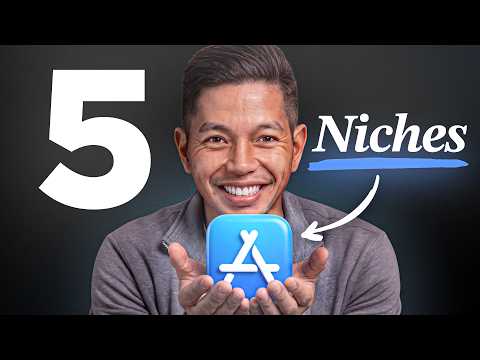
- 5 Niches presented
- 4 of 5 Niches given a $ range
- 0 Named examples behind any range
- 3 built / $0 shown Apps built live, revenue shown
The claim
That niche selection alone is what separates an app earning nothing from one earning $2,000 to $15,000 a month, illustrated with three apps built live inside a no-code platform.
- Health niche revenue range — $5,000–$15,000/month
- Finance niche revenue range — $5,000–$15,000/month
- Habit niche revenue range — $2,000–$8,000/month
- Parenting niche revenue range — $2,000–$5,000/month
- Productivity niche revenue range — None given — only "outperforms"
- Health app industry size — $3.5B in 2025, +20% YoY
- Productivity category size — $14B in 2026
- Finance app category size — $13B in 2026
- Apps built live on screen — 3 — fasting, time-tracking, expense apps
- Revenue shown for any built app — $0 — none has a user
- Master class — $499 normally, "free" for watching — said twice
What is this income idea?
Pick a narrow, already-monetized problem instead of a broad category, then use a no-code AI platform to build and paywall an app around it in a single session.
- The video's thesis is stated early and repeated throughout: "the difference between an app making zero dollars and one pulling in thousands every single month almost never comes down to how well it was built. It comes down to niche selection." Five niches are then walked through in turn — specific-condition health tracking, profession-specific productivity tools, personal finance and expense management, AI-powered habit and routine apps, and parenting and family organization.
- Three of the five are demonstrated live inside Base44, a no-code AI app builder, using the same two-prompt pattern each time: one prompt builds the core app, a second adds a Stripe subscription paywall that locks advanced features behind a paid tier. A fasting tracker is built for the health niche, a freelance time tracker called "Track Flow" for the productivity niche, and a self-employed expense tracker for the finance niche. The other two niches — AI habit apps and parenting apps — are described only; no prompt is shown and no app is built for either.
- Four of the five niches are attached to a specific monthly revenue figure: health and finance apps are each said to "consistently generate between $5,000 and $15,000 per month for indie developers," habit apps "between $2,000 and $8,000 per month," and parenting apps "between $2,000 and $5,000 per month." The productivity niche gets no number at all — only that "revenue per user for profession specific productivity tools consistently outperforms broad productivity apps." Three broader category-size figures are also stated once each: the health app industry at "$3.5 billion dollars with a B in 2025," growing "more than 20% year-over-year"; the productivity category at "$14 billion in 2026"; and the finance app category at "$13 billion in 2026."
- A validation method closes out the niche-by-niche section: read one- and two-star App Store reviews of competing apps, check Reddit and niche forums for the same complaint, then build a landing page with a waitlist form and "send out 50 targeted people to that page." Roughly ten waitlist signups out of fifty visits is offered as "a pretty strong signal that the idea is worth building."
- Threaded through all of this is a course pitch, delivered twice in near-identical language: the presenter's own "master class" on building profitable apps with AI normally costs $499, but is "completely free" for anyone watching this video and clicking the link in the description.
Build small subscription apps in narrow niches with a no-code AI tool, priced against revenue ranges nobody in the video demonstrates, and pointed at a $499 course pitched as a free bonus for watching.
- Pick one narrow problem — Not a broad category
- Mine 1-star App Store reviews — Their favorite research tool
- Check Reddit and forums — Confirm the complaint repeats
- Build the core app in Base44 — One prompt
- Layer a Stripe paywall — Second prompt
- Test with a landing page waitlist — 50 visitors, ~10 signups
- Launch into an unverified range — $2k–$15k claimed, not shown
A real, repeatable build process, laid over four revenue ranges with no example behind any of them.
The build method is real. The revenue numbers are a script, not a study.
The lesson underneath the number
- The niche-selection logic here is genuinely sound, and worth separating from the numbers attached to it. Three tests for a strong niche — people already paying for an imperfect alternative, a specific unmet feature, and enough recurring demand to support a subscription — are a real filter, and the tactic they give for checking them is the best single piece of advice in the video: "App Store reviews are probably the most overlooked research tool available because there are thousands upon thousands of reviews complaining about missing features or poor execution." A one-star review naming a missing feature is a genuine, free, specific signal, and it does not depend on trusting anyone's revenue claim.
- The revenue figures are a different matter. Four of the five niches carry a specific monthly range, delivered in the same confident, "consistently" register each time — and two of those ranges, for niches the video treats as distinct, are identical to the dollar. That repetition is hard to read as anything other than reused copy rather than niche-specific data, and it undercuts the other three figures by association: there is no more reason to trust the habit range or the parenting range than the finance range that turned out to duplicate the health one.
- The build demonstrations are the video's strongest asset and the point where the framing and the evidence diverge, at the same time. Watching three apps get built live, with real, reusable prompts, is genuinely useful — it shows exactly how a Base44-plus-Stripe stack goes from nothing to a working paywalled app in two prompt cycles. But none of the three apps built on screen has a single user, a review, or a dollar of revenue by the end of the video. They demonstrate the build, not the business, and the video moves directly from "here is the app we just built" into the next niche's revenue range without ever closing that gap.
- The course pitch sits underneath all of it. The $499 master class is offered as a free bonus for watching, twice, in near-identical language, each time immediately before or after a niche breakdown built on unsourced numbers. The offer is open to anyone watching and is not presented as scarce, but it does mean the video's call to action is a paid product taught by the same presenter asking the viewer to trust four revenue ranges that the video does not source.
App Store reviews are probably the most overlooked research tool available.
The one piece of advice in this video that does not require trusting an unsourced number
The five niches, as they give them
Three are built live with real prompts. Two are described only, with no app and no build shown.
From the video published 31 August 2026, including the Base44 builder screens shown during the three demo builds. The credit usage page is referenced six times, once after each prompt; the credits shown on screen are never converted to dollars.
- Specific-condition health tracking — Built live: a fasting tracker with a timer, session logging, streak tracking and a progress dashboard, then a Stripe paywall unlocking unlimited logging and trend charts. Revenue is claimed at "$5,000 and $15,000 per month for indie developers," inside a health app industry said to be worth "$3.5 billion dollars with a B in 2025," growing "more than 20% year-over-year." No app, developer or dashboard is named for the $5,000–$15,000 figure.
- Profession-specific productivity tools — Built live: "Track Flow," a freelance time tracker with client management, project-based logging and a weekly dashboard, then a paywall adding monthly reports and CSV exports. This is the one niche with no stated revenue range — only that "revenue per user for profession specific productivity tools consistently outperforms broad productivity apps," a comparison with no number attached to either side. The productivity category itself is put at "$14 billion in 2026."
- Personal finance and expense management — Built live: a self-employed expense tracker logging business versus personal spending, then a paywall locking "advanced insights and analytics." Revenue is claimed at "between $5,000 and $15,000 per month for indie developers" — the identical range given for the health niche, word for word, minutes earlier in the same video. The finance app category is put at "$13 billion in 2026."
- AI-powered habit and routine apps — Not built. Described conceptually only — "if I were building in this niche, I'd focus on a habit tracker that combines AI powered daily coaching, streak tracking, personalized recommendations." Revenue is claimed at "between $2,000 and $8,000 per month," again with no app or developer named.
- Parenting and family organization — Not built. Described conceptually only — "a good starting point in this niche is a family chore and routine tracker" with per-child profiles and a reward system. Revenue is claimed at "between $2,000 and $5,000 per month," the lowest of the four stated ranges, with no app or developer named.
The business model
Stripe subscription paywalls layered onto small niche utility apps built inside a no-code AI platform — plus the video's own $499 course, pitched as a free bonus for watching.
A different buyer for each niche: people managing one specific health condition, freelancers or contractors, self-employed workers doing taxes, habit-trackers, and parents.
Solve one narrow job well with a free tier, then unlock the deeper features behind a paid subscription once the user sees value.
Never addressed for any of the five niches, beyond one generic pre-launch test: a landing page with a waitlist.
- Base44 subscription and credits — Credits per prompt shown on screen (1.2, 0.6); no dollar price given
- Stripe transaction fees — Never mentioned
- Marketing or outreach — Not addressed beyond a 50-visitor landing-page test
- The $499 master class — Free "for watching," no other terms given
- Support and maintenance — Not discussed for any of the five niches
The video points to the credit usage page six separate times, and the builder screen shows credits used per prompt (1.2 for one build, 0.6 for the Stripe step), but no dollar price for a credit or for the Base44 subscription is given. That is the single clearest gap in a video otherwise built around specific, quotable prompts.
What you would actually need
Money
No figure for what building or running any of this costs. The video promises transparency six separate times — "I'll also open the credit usage page here in the settings area so you can see exactly how many credits the build uses" — and the builder’s message menu on screen shows credits used per prompt: 1.2 credits for the expense tracker’s first build and 0.6 for the Stripe step (around 14:58–15:55). No dollar price for a credit is shown or spoken.
This is the largest gap in an otherwise concrete video. Base44 is a paid platform with its own credit pricing, Stripe takes a transaction fee on every subscription payment processed, and the $499 master class — pitched as free twice — carries terms that are never described beyond "watching this video."
Named, not priced in dollars
- Base44 platform subscription and credit costs — credits per prompt shown on screen, no dollar price given
- Stripe transaction fees on every subscription charge
- Advertising or outreach cost to reach even the 50 "targeted people" for a landing-page test
- The $499 master class — free "for watching," terms otherwise undisclosed
- Ongoing support and maintenance for any of the three demoed apps, or the two undemoed ones
Time
Each demoed app is built in two prompt cycles — one for the core app, one for the Stripe paywall — shown taking minutes on screen. No day-count or week-count for reaching any of the stated $2,000–$15,000 monthly figures is ever given.
The video is specific about how fast you can build and silent on how long before anyone pays. Prompt-to-working-app time is demonstrated; prompt-to-first-customer time is never addressed for any of the five niches.
What the timeline actually covers
- Core app build: one prompt, minutes, shown for 3 of 5 niches
- Stripe paywall: one more prompt, shown for the same 3 niches
- Time to first paying customer: never stated, any niche
- Landing-page test duration ("send to 50 people"): no timeframe given
- The other two niches: no build time, because no build is shown
The part you must pay attention to
Two different niches are given the exact same revenue range, and no app is named behind any of the four ranges.
Their stated claim for the health niche: "Niche health apps targeting specific conditions consistently do generate between say $5,000 and $15,000 per month for indie developers." Minutes later, for a structurally different niche: "business finance tools like mileage tracking and expense management just consistently generate between $5,000 and $15,000 per month for indie developers."
- Health niche, as stated — $5,000–$15,000
- Finance niche, as stated — $5,000–$15,000
- Named apps behind either figure — 0
Same range, twice
Two "consistently" claims, one number, no source for either
The word "consistently" implies a pattern the presenter has observed across many apps in each niche. But a genuine niche-specific pattern would be unlikely to produce the identical range — not a similar one, the identical one, to the dollar — for two different categories of app addressing different users with different pricing logic. That repetition is the strongest evidence in the video that these ranges are reused marketing copy rather than distinct research findings, and it is not an isolated case: the habit range ($2,000–$8,000) and the parenting range ($2,000–$5,000) are equally unsourced, and the productivity niche gets no range at all. Across all four figures, no app is named, no developer is quoted, no screenshot of revenue is shown, and no report or analytics firm is cited — a contrast with the three market-size figures ($3.5B, $14B, $13B), which at least sound like they belong to a specific study, yet are also given with no publisher named for any of them.
None of this proves the ranges are false — apps in these categories plausibly do earn in these ballpark figures. What the video does not do is show its own work for any of them. The three apps actually built on screen are fresh code, with no users, no reviews and no revenue of their own; they demonstrate that the apps can be built quickly, not that they, or any other app like them, land anywhere inside the stated ranges.
- THE REUSED RANGE
- Health niche, as stated $5,000-$15,000/mo
- Finance niche, as stated $5,000-$15,000/mo
- Difference $0
- THE OTHER RANGES
- Habit/routine niche $2,000-$8,000/mo
- Parenting niche $2,000-$5,000/mo
- Productivity niche No range given
- NAMED EXAMPLES BEHIND ANY RANGE
- Apps, developers, dashboards 0
- APPS BUILT LIVE ON SCREEN
- Fasting tracker, Track Flow,
- expense tracker 3
- Revenue shown for any of them $0
The economics, niche by niche
Four monthly revenue ranges, no named app behind any of them, and build costs shown only in Base44 credits.
- Health niche revenue — $5,000–$15,000/month
- Finance niche revenue — $5,000–$15,000/month
- Habit niche revenue — $2,000–$8,000/month
- Parenting niche revenue — $2,000–$5,000/month
- Productivity niche revenue — No figure given
- Health app industry size — $3.5B (2025), +20% YoY
- Productivity category size — $14B (2026)
- Finance app category size — $13B (2026)
- Landing-page validation ratio — ~10 of 50 visitors join waitlist
- Master class — $499, free "for watching"
- Base44 credits used, expense tracker first build — 1.2 credits (on screen)
- Base44 credits used, Stripe step — 0.6 credits (on screen)
- Dollar cost of a Base44 credit — Not stated
- Demo fasting app paywall price — $4.99/month (on screen)
Checking the reused revenue range
Health niche: "$5,000 and $15,000 per month" vs. finance niche: "$5,000 and $15,000 per month"
Identical figures for two different niches — a stock range, not one shown to be specific to either
IncomeIdeaLab comparison of the two ranges as stated minutes apart in the same video
A shared range does not settle whether either figure holds — only that neither is demonstrated to be niche-specific, and no example of any app reaching either range is given anywhere in the video.
- The dollar price of Base44 credits and the subscription — credits per prompt are shown on screen, never converted to dollars
- Stripe's transaction fee on any subscription charge
- A single named developer, app or dashboard behind any of the four revenue ranges
- How any of the five niches' apps would actually be marketed to reach paying users, beyond the pre-launch waitlist test
- Whether the presenter has any financial or affiliate relationship with Base44
- The full terms of "free" access to the $499 master class
- The productivity niche is the only one of the five with no revenue range attached at all — just an unquantified comparison ("consistently outperforms broad productivity apps") with no number on either side to check.
- The landing-page heuristic — 50 visitors, roughly 10 waitlist signups counted as "a pretty strong signal" — implies a rough 20% conversion threshold, but no data in the video ties that ratio to any app that went on to actually reach $2,000–$15,000 a month.
- All three market-size figures ($3.5 billion, $14 billion, $13 billion) are stated once each with no report, firm or methodology named in the video.
- The demo apps on screen confirm that none has users or revenue: the fasting tracker at 7:06 shows a paywall card reading “Unlock FastTrack Pro — $4.99/mo” with Streak 0 days and Total Fasts 0, and the expense tracker’s dashboard shows Total expenses $0.00. The $4.99 price is shown on screen but not spoken.
- The $499 master class is offered as free twice in the video, each time framed around "you are watching this video" rather than any stated scarcity — a real, if soft, sales incentive layered under all five niche breakdowns.
Evidence status
Every substantive figure across the five niches.
- 5 app niches presented — Host — Health, profession-specific productivity, personal finance, AI habits, parenting.
- Health apps: $5,000–$15,000/month — Host — No app, developer or dashboard named.
- Finance apps: $5,000–$15,000/month — Host — Identical range to the health niche, stated minutes apart.
- Habit apps: $2,000–$8,000/month — Host — No example given.
- Parenting apps: $2,000–$5,000/month — Host — No example given.
- Productivity apps: revenue "outperforms" broad tools — Host — No number, comparator or example attached to either side.
- Health app industry: $3.5B in 2025, +20% YoY — Host — No report or firm cited.
- Productivity category: $14B in 2026 — Host — No report or firm cited.
- Finance app category: $13B in 2026 — Host — No report or firm cited.
- Three apps built live: fasting tracker, Track Flow, expense tracker — Host, on screen — Genuinely built with the stated prompts inside Base44 and Stripe.
- Revenue shown for any of the three demo apps — Nobody — None — each is a fresh build with no users by the end of the video.
- Master class: $499 normally, free for watching — Host — Repeated twice; no other terms of the offer are given.
- Validation test: 50 visitors, ~10 signups = "strong signal" — Host — A specific, usable heuristic, with no data tying it to actual app revenue outcomes.
What is actually proven?
The build process is real. Every dollar figure attached to it is asserted, not shown.
- Three apps (fasting tracker, Track Flow, expense tracker) are built live inside Base44 with the exact prompts given.
- A Stripe subscription paywall is added to each of the three demoed apps with a second prompt.
- Four of the five niches are given a specific monthly revenue range.
- The health and finance ranges are identical, to the dollar, minutes apart in the same video.
- No app, developer, dashboard or invoice is shown earning any of the four stated ranges.
- Base44 credits used per prompt are shown in the builder on screen: 1.2 credits for the expense tracker’s first build and 0.6 for the Stripe step (around 14:58–15:55).
- The dollar cost of those credits or of the Base44 subscription.
- A publisher or methodology behind any of the three market-size figures.
- The $499 master class is offered free twice, with no other terms stated.
What the headline doesn’t tell you
Three real builds. Four revenue ranges. Zero apps shown earning either.
- The exact same range, twice. — Health and finance niches are both "$5,000 to $15,000 a month," word for word.
- No app is shown hitting any of these numbers. — Not one dashboard, invoice or account appears for any niche.
- Build cost is shown in credits, not dollars. — The builder shows credits used per prompt (1.2, 0.6); no dollar price for a credit is given.
- Productivity has no number at all. — Just "outperforms" — no range, no example.
- The industry-size figures cite no source. — $3.5B, $14B, $13B — each stated once, none attributed.
- Customer acquisition is addressed once, generically. — A landing-page test, not a channel, for any of the five niches.
- "Free" master class is a repeated pitch. — Offered twice, both times framed around watching this video.
- Three demo apps have zero users. — Built during the video, with nobody paying for any of them.
Should you try it?
A real build tutorial wrapped around unsourced revenue claims
Take the niche-selection logic and the App Store review-mining tactic. Verify every dollar figure yourself before treating any of the four ranges as a target.
- Specificity of the niche-selection logic — 8 — Three clear tests for a strong niche, stated plainly.
- Value of the App Store review-mining tactic — 8 — A specific, low-cost, genuinely actionable research method.
- Build-process demonstration — 8 — Three apps genuinely built on screen with reusable prompts.
- Evidence for the four revenue ranges — 1 — No app, developer or dashboard named for any of them.
- Internal consistency of the ranges — 3 — Two different niches share the exact same figure.
- Cost disclosure — 2 — Credits per prompt are shown on screen; no dollar cost is stated.
- Customer-acquisition guidance — 2 — One generic landing-page test, never applied after launch.
- Conflict-of-interest disclosure — 2 — A paid course and a specific paid platform are promoted throughout; no relationship between them is disclosed either way.
- Read this one for the method, not the money. The niche-selection framework and the tactic of mining one- and two-star App Store reviews for unmet demand are genuinely useful and cost nothing to try. So is the two-prompt Base44-plus-Stripe pattern demonstrated three times — core app first, subscription paywall second — which is a real, copyable build technique regardless of which niche you point it at.
- What you cannot take from this video is any of its four monthly revenue figures. Health and finance apps are given the identical "$5,000 to $15,000 per month" range, which is the clearest sign that these numbers are reused framing rather than niche-specific findings, and the other two ranges rest on exactly the same amount of evidence: none. No app is named, no dashboard is shown, and the three apps that are built live on screen end the video with zero users each.
- Notice too what the video shows and what it leaves out on cost: the builder screen shows credits used per prompt (1.2 credits for one build, 0.6 for the Stripe step), but no dollar price for a credit or for the subscription is given. If you try any of these niches yourself, get your own Base44 and Stripe cost figures before you plan around any of the stated revenue ranges.
- Finally, weigh the course pitch. A $499 master class offered free for watching is open to anyone and is not presented as scarce, but it is repeated twice through a video built on four unverified numbers, and it is worth treating with the same scrutiny the video asks you to bring to a one-star App Store review.
Passive or automated?
Automation
Base44 handles the build and Stripe automates billing and paywalls — a genuinely low-touch stack once shipped.
Passive potential
Nothing about finding or keeping a paying customer is automated, and none of it is explained either.
The build-and-bill stack is real automation: a no-code prompt produces a working app, and a second prompt wires Stripe to handle subscriptions without a developer touching payment code. That much of the pitch holds up on screen. What is missing is everything that happens after the app exists. Marketing is addressed once, generically, as a pre-launch landing-page test — never as an ongoing channel for any of the five niches. Support, churn, feature requests and the maintenance of three or five separate niche apps are not discussed at all. And the revenue side of "passive," the part that would justify calling this income rather than a hobby project, has no demonstrated example anywhere in the video.
- Finding and validating the niche yourself — the App Store and Reddit research
- Writing and refining the Base44 prompts for each build
- The actual marketing to reach 50 (or far more) targeted people, not just the waitlist test
- Handling support and churn on any resulting subscription
- Getting a real Base44 and Stripe cost figure, since neither is stated in the video
Recommended beginner experiment
Borrow the validation method. Do not borrow the revenue numbers.
- Pick one condition, not a category. — Their own example: fasting, not "wellness."
- Read 1- and 2-star reviews of existing apps. — Their single best piece of advice.
- Search Reddit and niche forums for the same complaint. — Confirm it is a repeated pain point.
- Build a landing page before any app. — Their stated validation step.
- Send it to 50 real people, not friends. — Their own test size.
- Treat ~10 signups as a signal to build, not a guarantee. — Their threshold, unverified beyond this video.
- Price Base44 and Stripe yourself before you start. — Neither dollar cost is stated in the video.
- Do not use their ranges as a target. — Two different niches share the identical figure.
Our verdict: 3/10
A real build tutorial, wrapped around four unsourced revenue ranges two of which are identical, and none of which names a single app that has earned them
Credited for a genuinely useful niche-selection framework — three concrete tests for whether a niche can support a subscription business — and for the single best tactic in the video, mining one- and two-star App Store reviews for unmet demand; for demonstrating a real, copyable two-prompt Base44-plus-Stripe build pattern across three of the five niches, each with the exact prompt text given; and for a specific, testable landing-page validation heuristic before any code is written. Marked down because four of the five niches are given a specific monthly revenue range with no app, developer or dashboard named behind any of them; because the health and finance ranges are word-for-word identical — "$5,000 and $15,000 per month" — despite being pitched as distinct, niche-specific findings; because build cost is shown only in Base44 credits per prompt and never in dollars; because three multi-billion-dollar market-size figures are given with no report or firm cited for any of them; because customer acquisition, the step that actually turns a built app into the claimed revenue, is addressed once and generically rather than for any of the five niches; and because a $499 course pitched as a free bonus for watching is repeated twice through a video asking the viewer to trust exactly those unverified numbers.
Strip away the dollar figures and this is a competent, specific tutorial: three concrete tests for a good niche, a genuinely smart research tactic in mining App Store complaints, and three apps built live with real, reusable prompts that show exactly how a no-code build-and-paywall stack works end to end. That part of the video earns its length. The problem sits entirely in the numbers laid over that structure. Four of the five niches are handed a precise monthly revenue range — "$5,000 and $15,000," "$2,000 and $8,000," "$2,000 and $5,000" — spoken with the same confident "consistently" language each time, and not one of them is attached to a named app, a developer, a screenshot or a dashboard anywhere in the video. Two of those ranges, offered for what are presented as two distinct niches with different users and different pricing logic, are identical to the dollar: "$5,000 and $15,000 per month" for health apps, and "$5,000 and $15,000 per month" for finance apps, minutes apart. That repetition reads far more like reused marketing copy than independently sourced research, and it drags the credibility of the other two ranges, and the three unattributed multi-billion-dollar market-size figures alongside them, down with it. Build cost is shown only in Base44 credits — 1.2 credits for one build and 0.6 for the Stripe step on the builder screen — and never converted to dollars. Add to that a near-total silence on how any of the five niches' apps would actually acquire paying customers beyond a pre-launch waitlist test, and a $499 course pitched as a free bonus twice through the same video, and the honest read is a well-built how-to-build video standing in for a how-to-earn one. Build the fasting tracker, mine the reviews, run your own landing-page test — but price your own Base44 credits, and treat every one of the four stated ranges as a hypothesis to verify, not a number anyone in this video has shown anyone else reaching.
- Niches presented — 5
- Revenue ranges given — 4 of 5
- Named examples behind any range — 0
- Reused range — $5,000–$15,000 (health & finance)
- Apps built live — 3 — fasting, time-tracking, expense
- Revenue shown for any built app — $0
- Master class — $499, free for watching, pitched twice
- Beginner suitability — Build method yes, revenue claims no
Sources
- The Only 5 App Niches You Should Start in 2026 — Mikey No Code — YouTube video, 2026-08-31
- FTC — Guides Concerning the Use of Endorsements and Testimonials — Regulatory guidance on earnings claims