AI App Builders / No-Code · Cost Review
“How Much It Actually Costs to Build an App with Base44 (Full Breakdown)”
What we found: A Base44 App for 13 Credits and $2.60: The Arithmetic Checks Out, but No Fix or Retry Prompt Is in the Count
Six prompts add up to the stated 13 credits and the dollar conversion is correct; the test records no failed prompt, and the real cash outlay is the $20 plan, not $2.60.
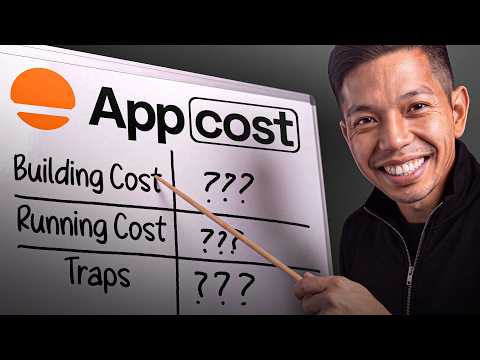
- 13 Credits for the full build
- $2.60 Dollar cost, monthly billing
- $20/mo Starter plan
- None recorded Failed or retried prompts
The claim
That a complete app with authentication, a dashboard, financial reporting, search and filters and a mobile layout can be built on Base44 for 13 credits, which is under $3.
- Prompt 1: core client and invoice system — 1.6 credits
- Prompt 2: one-click status on the dashboard — 1.8 credits
- Prompt 3: six-month reporting chart — 2 credits
- Prompt 4: login and per-user data — 2.1 credits
- Prompt 5: search and combined filters — 2.5 credits
- Prompt 6: empty states, mobile, polish — 3 credits
- Total — 13 credits (our sum agrees)
- Cost per credit, monthly / annual billing — $0.20 / $0.16
- Build cost at monthly / annual rate — $2.60 / $2.08
- Builds per month on Starter / Builder — ~7 / ~19
What is this income idea?
Use an AI app builder that charges in credits to build working software cheaply, for yourself or for clients, and know in advance how far a month of credits goes.
- The video sets out to answer one question: what does a realistic app cost to build on Base44? The test app is a freelance invoice and client tracker. It stores clients, links invoices to them, tracks each invoice as pending, paid or overdue, and shows totals invoiced, paid and outstanding on a dashboard.
- The build is split into six prompts, each adding one layer: the core data model and layout, one-click status changes on the dashboard, a six-month revenue chart, sign-up and login with each user's data kept separate, search with date and client filters that work together, and a final pass for empty screens, a 375-pixel mobile width and consistent styling.
- After each prompt the creator reads out the credits used: 1.6, 1.8, 2, 2.1, 2.5 and 3. The total of 13 credits is then converted to dollars using the Starter plan, stated as $20 a month for 100 message credits, which works out to about 20 cents a credit on monthly billing and 16 cents on annual billing.
- The conclusion given is that the whole app came in under $3, that about seven builds of this size fit inside one month of the Starter plan, and that the Builder plan, stated as including 250 credits, would cover about 19.
- The creator also notes the pattern in the numbers: the first prompt, which created the whole foundation, was the cheapest, and costs rose as later prompts touched more of the app at once, with the app-wide polish pass the most expensive at 3 credits.
- The video opens and is interrupted by a promotion for the creator's own master class, described as normally costing $499 and offered free through a link in the description.
Six prompts built a working invoice app for 13 credits; the sums are right, but every prompt worked first time, which real projects rarely do.
- Core data and layout — 1.6 credits
- Quick status buttons — 1.8 credits
- Six-month chart — 2 credits
- Login and private data — 2.1 credits
- Search and filters — 2.5 credits
- Polish and mobile — 3 credits
- Total — 13 credits
- Convert to dollars — $2.60 monthly rate
A clean, itemised test in which every step succeeded on the first attempt.
A good test of the happy path
The lesson underneath the number
- Most videos about AI app builders say the tools are cheap; this one counts. A credit reading after each of six prompts, a total, a conversion to dollars on two billing options, and a translation into how many similar builds fit in a month: every step is shown as arithmetic, and every step we re-ran gave the same answer. The six readings add to exactly 13. Thirteen credits at 20 cents is $2.60. One hundred credits covers seven builds of that size, and 250 covers nineteen.
- The pattern the creator draws from the figures is also supported by them. The first prompt, which created the entire data model, layout and navigation, was the cheapest at 1.6 credits; the final pass, which added no features but touched every screen, was the most expensive at 3. That is a useful planning rule: cost appears to follow how much of the existing app a request has to change, not how much new functionality it adds.
- The limit is that this is a test in which nothing failed. All six prompts produced the intended feature on the first try, including authentication with per-user data and filters that combine correctly. The introduction mentions "the fixes" as one place costs climb, but no fix was needed, so the video does not measure it. A builder whose prompts sometimes miss will spend more than 13 credits on the same app, and the video gives no basis for estimating how much more.
- The other thing to hold onto is the difference between marginal and actual cost. $2.60 is what this build consumed from a $20 monthly plan. If the remaining 87 credits go on other work, $2.60 is the right number. If this is the only app built that month, it cost $20. The video frames the result as seven builds per month, which is the honest framing for the marginal figure.
Prompt one was actually the cheapest at 1.6 credits even though it did create the entire core system from scratch.
Mikey No Code, on how credit use rose through the build
The build, prompt by prompt
Each prompt adds one feature, and a credit figure is read out after each.
No prompt in the test failed or had to be repeated, so no figure is given for fixes.
- Build the foundation in one pass — Clients with name, email and company; invoices with number, amount, due date and status; add and delete for both; sidebar navigation. Stated cost: 1.6 credits, the cheapest prompt in the build.
- Add one-click status changes — Pending invoices can be marked paid or overdue straight from the dashboard, and the summary cards update immediately. Stated cost: 1.8 credits.
- Add a six-month reporting chart — Total invoiced and total paid for each of the past six months, built from the invoices already in the app. Stated cost: 2 credits. The dollar figures on the chart are the test app's sample data, not business results.
- Add sign-up, login and per-user data — Base44's own authentication, with every client and invoice tied to the account that created it. Stated cost: 2.1 credits. The login flow is tested only at the end, once the app is published.
- Add search and combined filters — A search bar across clients and invoices, plus date-range and client filters that apply together. Stated cost: 2.5 credits.
- Polish every screen — Empty-state messages, a 375-pixel mobile width and consistent spacing, type and colour. No new features. Stated cost: 3 credits, the most expensive prompt.
- Test the whole app end to end — A new account opens empty, the original account keeps its data, and the add-client, add-invoice, mark-paid and reporting flow works together, as described in the video.
The business model
No revenue figure is given. The video measures cost; it suggests the result matters for freelancers doing client work and for anyone testing app ideas.
People building apps for themselves or clients on Base44, and anyone weighing the $20 Starter plan.
A known, small credit cost per feature, so a build can be planned against a monthly allowance.
Not applicable; the test app is not sold or marketed in the video.
- Base44 Starter plan — $20 a month for 100 message credits, as stated
- Credits for this build — 13, worth $2.60 at the monthly rate
- Builder plan — 250 credits; price not stated
- Failed or repeated prompts — None in the test; no figure given
- Builder's time — Not stated
The cost side is the subject of the video and is itemised well. What it leaves out is the cost of things going wrong, which the test did not encounter.
What you would actually need
Money
Under $3 for the whole app: 13 credits at about 20 cents each on the $20-a-month Starter plan.
The $2.60 is the share of a monthly allowance this build used, not what it costs to start. Credits come in a $20 monthly plan, so anyone building one app in a month pays $20 for it unless they use the other 87 credits. The figure also assumes every prompt works first time.
What the $2.60 does not include
- The $20 monthly plan the credits come from
- Prompts that fail, misfire or need rewording
- Bug-fix rounds once real users arrive
- The Builder plan price, which is not stated
- A custom domain or anything outside Base44, not discussed
- Your own time writing and testing prompts
Time
No build time is given. The video covers six prompts and an end-to-end test.
Writing six detailed prompts and testing each result is not long work for someone who already knows what they want built. Knowing that is the skill; the prompts in the video are specific about fields, statuses, filters and screen widths.
Where the time goes
- Specifying the data model before the first prompt
- Writing six feature-level prompts
- Testing each feature as it lands
- Publishing and testing login with two accounts
- Any fixes, which the test did not need
The part you must pay attention to
Thirteen credits measures a build in which nothing went wrong.
The introduction promises to show "where the cost climbs: the foundation, the features, the fixes or the final polish pass". The six prompts cover the foundation, four features and the polish. No fix prompt appears, because every prompt worked first time.
- Credits per prompt, as stated — 1.6 + 1.8 + 2 + 2.1 + 2.5 + 3
- Per credit on monthly billing — $0.20
13 credits = $2.60
Our arithmetic agrees with the video
The load-bearing assumption is that the test is typical. Each prompt in the video produced a working feature on its first attempt, including authentication and combined filters, and the app-wide polish pass also landed cleanly. In ordinary use, prompts are reworded, features come back partly wrong, and fixes are requested; each of those uses credits too. The video gives no figure for a failed or repeated prompt, so the cost of a less smooth build cannot be worked out from it. Thirteen credits is best read as the floor for an app of this size, not the expected figure.
The second point is what the dollar figure means. $2.60 is 13 per cent of a $20 monthly plan. It is the right number if you will use the rest of the month's credits on other builds, and the video says so by framing the result as "about seven apps of this size" per month. For someone building one app, the cash cost is the $20 plan. Both readings are correct; they answer different questions.
- THE CREDIT SUM (OUR CHECK)
- 1.6 + 1.8 + 2.0 = 5.4
- + 2.1 + 2.5 + 3.0 = 7.6
- Total = 13.0 matches
- DOLLARS
- $20 / 100 credits = $0.20
- 13 x $0.20 = $2.60 matches
- 13 x $0.16 (annual) = $2.08
- BUILDS PER MONTH
- 100 / 13 = 7.7 -> 7
- 250 / 13 = 19.2 -> 19
- WHAT IS NOT IN THE 13
- Failed or repeated prompts 0
- Fix rounds 0
- -> treat 13 as a floor
The economics
Every figure is stated, and every sum checks out.
- Credits per prompt — 1.6, 1.8, 2, 2.1, 2.5, 3
- Total credits — 13
- Starter plan — $20/month, 100 credits
- Per-credit cost, monthly billing — ~$0.20
- Per-credit cost, annual billing — ~$0.16
- Build cost at monthly rate — $2.60
- Build cost at annual rate — $2.08
- Builder plan credits — 250
- Builder plan price — Not stated
Re-running the video's sums
1.6 + 1.8 + 2 + 2.1 + 2.5 + 3 = 13 credits; 13 × $0.20 = $2.60; 13 × $0.16 = $2.08; 100 ÷ 13 = 7.7; 250 ÷ 13 = 19.2
13 credits, $2.60 on monthly billing and $2.08 on annual, about seven builds per Starter month and nineteen per Builder month
IncomeIdeaLab calculation from the figures stated in the video
Every prompt in the test succeeded on its first attempt, so the totals describe a build with no failed or repeated prompts. The cash cost to someone building one app in a month is the $20 plan, not $2.60.
- Credits used by a prompt that fails or has to be redone
- The price of the Builder plan
- Whether publishing or hosting the app uses credits or costs extra
- Time spent writing and testing the prompts
- Any revenue from apps built this way
- The annual-billing figure of $2.08 is our calculation from the stated 16 cents per credit.
- The $8,000 invoiced and $3,000 three months earlier mentioned while testing the chart are sample data inside the test app, not income.
- The master class is pitched twice and described as normally costing $499, available free through a link. The video makes no income claim about students beyond saying the templates "have already helped my students launch their own successful AI powered businesses"; no figure is given for that.
- The video does not say whether the Base44 link or the master class earns the creator a commission.
Evidence status
Every substantive claim in the video.
- Six prompts used 1.6, 1.8, 2, 2.1, 2.5 and 3 credits — Creator, read from the credit counter — Stated after each prompt.
- Total of exactly 13 credits — Creator — Our sum of the six readings agrees.
- Starter plan is $20 a month with 100 message credits — Creator — Stated twice; consistent with the per-credit figure.
- About 20 cents per credit on monthly billing, 13 credits = $2.60 — Creator — Checks out: $20 ÷ 100 = $0.20, × 13 = $2.60.
- About 16 cents per credit on annual billing — Creator — At that rate, 13 credits is $2.08 by our calculation.
- About seven apps of this size per Starter month — Creator — 100 ÷ 13 = 7.7, so seven complete builds. Checks out.
- Builder plan has 250 credits, about 19 builds — Creator — 250 ÷ 13 = 19.2. Checks out. Price not stated.
- The first prompt was the cheapest and costs rose with scope — Creator — Supported by the six figures, which rise in order.
- The full app works end to end, including separate user data — Creator — Described in the video's final test.
- Master class normally costs $499 — Creator — Stated in the promotion; offered free via link.
- Cost of fixes — Not measured — Mentioned in the introduction; no fix prompt was needed.
What is actually proven?
The arithmetic is sound. The test conditions were favourable.
- A credit figure is stated after each of six prompts.
- The six figures add to the stated 13 credits.
- The $2.60 conversion and the seven- and nineteen-build counts are correct.
- At the stated annual rate, the build would cost $2.08.
- The cheapest prompt was the foundation; the costliest was the polish pass.
- What a failed or repeated prompt costs.
- The Builder plan price.
What the headline doesn’t tell you
A clean test, read carefully.
- Nothing failed. — All six prompts worked first time.
- Fixes are not counted. — None were needed in the test.
- $2.60 is marginal. — The plan you pay for is $20.
- Polish cost the most. — 3 credits for no new features.
- The chart figures are sample data. — Not income.
- Builder plan price not stated. — Only its 250 credits.
- A course is promoted twice. — Stated at $499, offered free.
Should you try it?
A sound starting estimate, if you budget above it
Use 13 credits as the floor for an app of this size and plan for more once prompts start to miss.
- Accuracy of the arithmetic — 10 — Every sum we re-ran matches.
- Itemisation of cost — 9 — A figure after every prompt, with what each prompt did.
- Realism of the test — 5 — Every prompt worked first time; no fixes measured.
- Clarity on marginal vs cash cost — 7 — Framed as builds per month, which is the right framing.
- Conflict-of-interest clarity — 6 — The course is openly promoted; any affiliate link is not mentioned.
- Beginner accessibility — 8 — No code; the prompts are specific and copyable.
- If you are deciding whether Base44's Starter plan is enough for a project, this is one of the more useful data points available, because it gives a per-feature breakdown rather than a single total. A small app with login, a dashboard, a report and search fitting into 13 credits means a $20 month has room for several similar builds or one much larger one.
- The thing to adjust for is that this build went perfectly. In your own projects some prompts will need rewording and some features will come back wrong, and each attempt draws on the same credits. Doubling the figure for a first project is a reasonable cushion; the video itself gives no figure for this, so treat any cushion as your own estimate.
- Also note what drove cost in the test: requests that touched many screens at once used more credits than the one that built the foundation. Keeping prompts focused on one part of the app is the practical lesson.
- Finally, the video is a cost test, not an income claim. Whether apps built this way earn anything, for you or for clients, is not addressed, and the course promotion in the middle of the video makes no specific figure claim about results.
Passive or automated?
Automation
The AI writes the code; the builder still specifies and tests every feature.
Passive potential
Building an app is active work, and no income from it is discussed.
Base44 automates writing the software, which is the point of the video, but nothing in the process is passive. Each feature has to be specified precisely, tested on arrival and, in ordinary projects, corrected. The video does not discuss selling the app, running it for clients or maintaining it, so any income built on top of this would come with its own work that the video does not cover.
- Deciding what the app needs before prompting
- Writing specific, feature-level prompts
- Testing each feature and the full flow
- Correcting features that come back wrong
- Finding users or clients, not discussed
Recommended beginner experiment
Measure your own credit use the same way.
- Write the data model down first. — Fields, links and statuses, as the video does.
- One feature per prompt. — The test's structure keeps costs readable.
- Record credits after every prompt. — Including the ones that fail.
- Leave app-wide polish until the end. — It was the costliest step.
- Test login with two accounts. — As the video does at the end.
- Compare your total with 13. — The gap is your fix cost.
Our verdict: 7/10
Correct sums from a test that went perfectly a reliable floor for a small app, not an expected figure
Credited for stating a credit figure after every prompt, explaining what each prompt did, converting the total to dollars on both billing options, and translating it into builds per month, with every sum we re-ran matching: 13 credits, $2.60 monthly, about seven builds on Starter and nineteen on Builder. Marked down because every prompt in the test succeeded first time, so the "fixes" the introduction mentions are not measured and 13 credits is a floor rather than a typical figure; because the Builder plan price is not stated; and because the course promoted twice in the video is described without saying whether any link earns the creator a commission.
This is a straightforward and useful cost test. The creator builds a small but real app in six focused prompts, reads out the credits after each, and does the arithmetic in public, and the arithmetic holds: 1.6, 1.8, 2, 2.1, 2.5 and 3 credits make 13; at 20 cents a credit that is $2.60, and at the stated annual rate of 16 cents it would be $2.08 by our calculation; one hundred credits covers seven builds of this size and 250 covers nineteen. The observation that cost tracks how much of the app a prompt touches, rather than how much it adds, is supported by the numbers and is the most practical thing in the video. Two cautions apply. Every prompt worked first time, so the cost of fixes, which the introduction names as one of the places costs climb, is not measured; treat 13 credits as the least an app like this will take. And $2.60 is a share of a $20 monthly plan, which is the right figure only if the rest of the month's credits are used. Read that way, the video answers the question in its title well.
- Credits for the full app — 13
- Cost at monthly billing — $2.60
- Cost at annual billing — $2.08
- Starter plan — $20/month, 100 credits
- Builds per Starter month — ~7
- Failed or repeated prompts — None in the test
- Beginner suitability — Good, with a cushion
Sources
- How Much It Actually Costs to Build an App with Base44 (Full Breakdown) — Mikey No Code — YouTube video, 2026-11-02