Angel Investing / Syndicates · Claim Review
“I'm Worth USD 50M and Spend USD 110K a Month on a Zoo That Makes USD 0”
What we found: A Net Worth "For Sure Over $50 Million" Is Stated Without a Breakdown, and the Ranch Costs $110,000 to $140,000 a Month
The assets the guest puts figures on come to about $17 million by our arithmetic; the rest depends on unvalued private stakes and carry on $56 million of other investors' money.
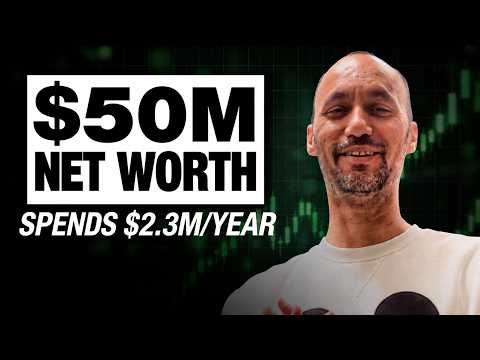
- >$50M Net worth
- ~$17M Valued assets, our sum
- $110k–$140k/mo Ranch overhead
- $56M Syndicate raised
The claim
That the guest is worth "for sure over 50 million", built from an influencer agency, 43 angel investments and 20% carry on $56 million raised for 18 companies, while a ranch with a private zoo costs $110,000 to $140,000 a month to run.
- Net worth — "For sure over 50 million", exact number not known
- Capital raised through the syndicate — $56M across 18 companies, three failed
- Carry on syndicate profits — 20%, no annual management fee
- Personal angel investments — 43, "let's call it a 100k average" = $4.3M
- Ranch purchase and construction — $6.6M plus $5M, $3M of it personal
- Ranch overhead — $110,000–$140,000 a month
- Our annual ranch overhead — $1.32M–$1.68M
- Public stocks — "Couple hundred grand a year" for 14 years
- Ownership of agency and events business — 90%; no valuation given
- Annual travel spend — "Over a million dollars"
- Speaking fee — $25,000; $50,000 for distant events
What is this income idea?
Build one operating business, then use its cash and network to take small stakes in many private companies and raise outside money for them in return for a share of the profit.
- The guest's main business is Elevator Studio, an agency that brands pay to run social media campaigns through what they say is a roster of 3,500 influencers and celebrities. They say they own 90% of it and of the events business that sits alongside it, which runs 42 events a year.
- From that base they invest. Personally, they have made 43 angel investments, usually $50,000 to $100,000 each. Through a syndicate of about 2,200 investors that is free to join, they have raised $56 million for 18 companies, typically $3 million to $6 million per company, and take 20% of investors' profits as carry, with no annual fee.
- They give one worked example: the syndicate put $4 million into a candy company at an $18 million valuation, and its last round was at $135 million. Another early $500,000 cheque went into an acai chain that has grown from 13 to 104 locations.
- The biggest spending item is a ranch bought for $6.6 million, with $5 million of construction, $3 million of it from the guest: a lake, a wedding venue the county would not permit, and a private rescue zoo. They say it costs $110,000 to $140,000 a month with "not really much income on the property", and that it is "phasing out now finally".
- Asked for a net worth, they give a floor: "under oath my net worth is for sure over 50 million." They explain why they cannot be exact: most of it is stock in private companies and carry on investments that have not been sold.
- They are open about losses. An online poker company they say was worth $65 million was shut down in a day in 2011; a chain of trading-card stores saw revenue fall by roughly half after partnership stores closed; and three of the 18 syndicate companies have failed.
One business for income, many small private stakes for wealth, and a net worth that cannot be pinned down until those stakes are sold.
- Run one core business — Influencer agency, events
- Meet founders — 300–400 pitches a year
- Invest personally — $25k–$250k cheques
- Raise a syndicate round — $3M–$6M per company
- Earn 20% carry — Only on investor profit
- Wait for an exit — Paper value until then
Income comes from the agency and speaking; most of the stated wealth is unrealised.
Diversify money, not attention
The lesson underneath the number
- The guest's main rule is the most transferable thing in the episode: put your time into one company and spread your money everywhere else. They learned it, they say, when an online poker business worth $65 million was shut down in a day. They now refuse to back founders who have side projects, while encouraging those same founders to invest their money widely.
- The net worth question shows why that kind of wealth is hard to measure. When most of what you own is minority stakes in private companies and a share of other people's future profit, there is no price until someone buys. The guest says this directly, and the host agrees. What the video does give, the angel stakes, the ranch and the public stock contributions, comes to about $17 million at cost. The gap to $50 million is the unpriced part: the agency, the growth in the stakes, and carry.
- Carry deserves care, because the episode uses large numbers near it. The syndicate has raised $56 million, but that is investors' capital; the guest earns 20% of the profit on it, after the companies are sold. The one example given would produce about $5.2 million of carry on paper. The guest also says they skip the usual 2% annual fee, which the host puts at over $1 million a year (our check: 2% of $56 million is $1.12 million).
- The spending figures are more concrete than the wealth ones. The ranch cost $6.6 million plus $5 million in construction, and runs at $110,000 to $140,000 a month, $1.3 million to $1.7 million a year. The guest is frank that it was a labour of love that did not produce the hoped-for wedding income, and that the overhead is now being reduced. The title uses the low end of the range and describes it in the present tense.
You've got to diversify with investments not with attention.
The guest, on the lesson from losing a company in one day
How the money moves, as the guest describes it
From the operating business to private stakes, then to spending.
No revenue or profit figure is given for the agency, the events business or the syndicate.
- The agency funds everything — Brands pay the agency; the agency pays influencers. The guest calls it "the business that fuels my life for the last 15 years". Its revenue and profit are not stated.
- Services traded for equity — Some clients pay in stock: "instead of me doing 100K in services they might give us 100K in equity". This is how many of the 43 stakes were acquired.
- A filter on founders — 300 to 400 pitches a year, 80 to 120 read, six to ten investments made. The rule: back founders who are all in on one company, and prefer companies already doing $5 million to $20 million in revenue.
- Carry instead of fees — Investors pay 20% of profit only: invest $100,000, get back $300,000, pay 20% of the $200,000 gain. The guest says they skip the usual 2% annual fee and pay the legal and accounting costs themselves.
- Speaking pays for travel — $25,000 per talk, $50,000 for distant events, plus travel buyouts of $3,000 to $5,000 that can exceed the actual fare. Travel overall is over $1 million a year.
- The ranch absorbs cash — $110,000 to $140,000 a month in overhead against little income, after the county refused wedding permits. Described as "a labor of love" and as "phasing out now finally".
The business model
Agency fees from brands, speaking fees, events, interest on small-business loans through a lending partner, and carry on syndicate investments when they exit.
Brands and app companies buying influencer campaigns; event attendees and sponsors; syndicate investors; small businesses borrowing.
Access to a large influencer roster and a founder network, and for investors, deals sourced and supported by an operator.
Live events (42 a year), a weekly mastermind call, speaking engagements and the syndicate's investor list.
- Influencer payouts — The agency's main cost; not quantified
- Event production — Partly covers spending the guest calls business expense
- Syndicate legal and accounting — Paid by the guest instead of a 2% fee
- Travel — Over $1M a year
- Ranch overhead — $110k–$140k a month
- Tax — Not mentioned
The guest gives unusually specific spending figures. What is missing is the income side of the core business: no revenue or profit is given for the agency or events.
What you would actually need
Money
Personal cheques of $25,000 to $250,000, with $50,000 to $100,000 typical. Syndicate rounds use other investors' money.
Forty-three stakes at the guest's own $100,000 average is $4.3 million of capital that cannot be sold until each company exits. The model only works on top of an operating business producing spare cash for years, which the guest had in the agency. The syndicate earns nothing until investors profit, and that may take many years.
Capital and costs stated or implied
- $4.3M across 43 angel stakes, by the guest's average
- Legal and accounting for each syndicate deal, paid by the guest
- About $2M and two years to take a company public, from their 2005 listing
- Travel over $1M a year
- Ranch overhead of $1.3M–$1.7M a year (our arithmetic)
- Income tax on agency income and eventual carry
Time
"For 10 years from 1999 to 2009 I only did one company", then events, then investing after 2011.
This is a 25-year path: a clothing brand at 17, a public energy-drink company at 23, a poker business, then 15 years of the agency. The investing came last, funded by what came before, and the guest travels about 250 days a year to keep the network active.
The timeline the guest gives
- 17: $43,000 saved, spent on a clothing brand
- 23: energy-drink company listed in 2005
- 2011: poker company lost in a day
- 15 years running the agency
- About 250 days a year travelling
- Exits expected in the guest's 50s
The part you must pay attention to
The $56 million is other investors' money; the guest's share is 20% of their profit, once realised.
When pressed for a low end, the guest says "the low end is 56 million is what was deployed into the syndicate". That sum belongs to the syndicate's investors.
- Angel stakes, guest's average — $4.3M
- Ranch, at cost to the guest — $9.6M
- Public stocks contributed — ~$2.8M
~$17M
Assets the guest puts figures on, at cost
The rest of the stated $50 million floor has to come from things given no value in the video: the guest's 90% of the agency and events business, growth in the private stakes, and carry. Carry is 20% of the syndicate's profit, not of its capital, and it is paid only when a company is sold or listed. The candy-company example shows the scale: $4 million in at $18 million, last round at $135 million, is a paper gain of about $26 million, and 20% of that is about $5.2 million (our arithmetic), before any partner split and before any exit.
None of this makes the floor wrong. Private stakes can be worth far more than cost, and the guest names several that have grown. But the video gives no way to get from about $17 million of valued assets to over $50 million, and the guest says so themselves: it "would take me like two days to like write all of it out". The host's own closing line puts it accurately: "your net worth is a guess until somebody exits."
- ASSETS GIVEN A FIGURE (at cost)
- 43 stakes x $100k avg $4.3M
- Ranch $6.6M + $3M $9.6M
- Stocks ~$200k x 14 yrs $2.8M
- ------------------------------
- Subtotal ~$16.7M
- NOT GIVEN A FIGURE
- 90% of agency + events ???
- Growth in private stakes ???
- Carry on $56M raised ???
- ONE CARRY EXAMPLE (paper)
- $4M in at $18M valuation
- Last round at $135M
- $4M x 135/18 = $30M
- Gain = $26M
- 20% carry = $5.2M
- THE RANCH
- $110k-$140k x 12 = $1.32M-$1.68M/yr
The economics
Specific spending, a stated wealth floor, and no figures for the core business.
- Net worth floor — Over $50M
- Angel investments — 43 at ~$100k average
- Syndicate capital raised — $56M, 18 companies
- Carry rate — 20% of investor profit
- Ranch cost to the guest — $6.6M + $3M
- Ranch overhead — $110k–$140k/month
- Agency and events revenue — Not stated
- Travel — Over $1M/year
Adding the assets the guest puts figures on
$4.3M (43 × $100k) + $9.6M (ranch purchase plus personal construction) + ~$2.8M ($200k × 14 years of stock contributions) ≈ $16.7M
About $17 million at cost, against a stated floor of over $50 million
IncomeIdeaLab calculation from figures stated in the video
This is at cost, not market value, and leaves out the agency, investment growth and carry, which the guest says make up the rest. It also takes no account of debt, which is not discussed. The ranch may be worth more or less than it cost.
- Revenue and profit of the agency and events business
- A valuation for the guest's 90% of those businesses
- Current valuations of the 43 angel stakes
- How much carry has been realised to date
- Any debt, including on the ranch
- Tax on agency income and realised gains
- Ranch overhead of $110,000 to $140,000 a month is $1.32 million to $1.68 million a year; the host's "about a million half" is within that range.
- Turning down a $3,000 seat over a $400 one: $3,000 × 200 flights = $600,000, as the guest says.
- Security at the card stores: $30 an hour × 24 hours = $720 a day, × 30 = $21,600 a month, close to the stated $22,000.
- The card-store revenue is given as falling from $12–15 million to $6–7 million a year; the host cites a filing showing 8.8 to 5.7. The two sets of figures do not match, and the video does not reconcile them.
- As a teenager the guest saved $43,000 over three years, about $14,300 a year, consistent with the stated $12,000 to $15,000.
- The episode carries two sponsor reads, for a founders' network and a personal-finance app, introduced by the host. Their claims are the sponsors' and are not part of this review. The guest promotes the free-to-join syndicate, which earns carry from its members; the terms are stated.
Evidence status
Every substantive figure in the video.
- Net worth "for sure over 50 million" — Guest — No breakdown; assets given a figure total about $17M.
- $56M raised for 18 companies, three failed — Guest — Investors' capital; 15 still operating is not 15 exits.
- 20% carry, no 2% fee — Guest — 2% of $56M is $1.12M, matching the host's figure.
- $4M in at $18M; last round at $135M — Guest — About $5.2M carry on paper by our arithmetic.
- 43 angel investments, ~$100k average — Guest — Their own rough average; some were services for equity.
- Acai chain from 13 to 104 locations — Guest — We could not check this from the video.
- Ranch: $6.6M plus $5M construction — Guest — $3M of construction from the guest personally.
- Ranch overhead $110k–$140k a month — Guest — $1.32M–$1.68M a year; said to be phasing out.
- Travel over $1M a year — Guest — Partly offset by speaking travel buyouts.
- Speaking at $25,000, or $50,000 far away — Guest — We could not check this from the video.
- Poker company worth $65M in 2011 — Guest — Volunteered as a loss.
- $28M lent to small businesses — Guest — Through a lending partner; rates not stated.
What is actually proven?
Specific spending and a candid account of losses; the wealth figure is a floor.
- Ranch overhead, seat-cost and security arithmetic all reconcile.
- Assets given a figure add up to about $17 million at cost.
- The one carry example is worth about $5.2 million on paper.
- The guest volunteers three syndicate failures, a lost company and a retail decline.
- Net worth over $50 million, by the guest's statement.
- Revenue, profit or valuation of the agency and events business.
- How much carry has been paid out to date.
What the headline doesn’t tell you
Paper wealth, real spending, and a title that picks the low end.
- $56M is investors' money. — The guest earns 20% of profit.
- Carry is paid on exit. — Until then it is paper.
- Valued assets: ~$16M. — At cost, by our sum.
- The agency is unvalued. — No revenue given.
- $110k is the low end. — Up to $140k a month.
- The ranch is phasing out. — In the guest's words.
- Losses are volunteered. — Poker, stores, three failures.
- A 25-year path. — Investing came last.
Should you try it?
Take the rule, not the model
The diversify-money-not-attention rule applies to anyone. The syndicate model needs a decade of operating success and a network first.
- Specificity of spending figures — 8 — Ranch, travel, seats, security all quantified.
- Internal consistency — 7 — Most stated arithmetic reconciles.
- Honesty about losses — 8 — Volunteers failures and declines.
- Support for the net worth figure — 3 — Valued assets reach about a third of the floor.
- Core business disclosure — 1 — No revenue or profit for the agency.
- Beginner accessibility — 1 — Built on 25 years and an existing business.
- The useful idea here costs nothing: spend your working time on one business, and once it produces spare cash, spread that cash across other assets rather than starting more businesses. The guest says they learned it by losing a company in a day, and they now apply it to every founder they back.
- The investing model itself is not a beginner path. Angel stakes are illiquid for years, many private companies fail or return little, and a syndicate only earns when investors profit. The guest reports an unusually good record, three failures in 18, but 15 companies still operating is not 15 profitable exits. If you invest in private companies, size each cheque as money you can afford to lose and wait for a decade.
- Read wealth claims of this kind for what they are. A net worth made mostly of private stock is an estimate until there is a sale, and the guest is candid about that. When someone cites the capital they raised for others, ask what their share of it is.
- Finally, the ranch is a clear example of a cost that compounds. A one-off purchase became $1.3 million to $1.7 million a year of overhead once permits for the planned income were refused.
Passive or automated?
Automation
Every income stream depends on the guest's presence and network.
Passive potential
Investments are passive once made; finding and supporting them is not.
The investments are the passive part: once a cheque is written, the guest waits for an exit. Everything that produces deal flow is active. They read 80 to 120 pitches a year, host 42 events and a weekly mastermind call, speak for fees, and travel about 250 days a year. They say each company has its own CEO, and that they expect to step back in their 50s once some exits arrive, which is a plan rather than a current state.
- Sourcing and reading pitches
- Running 42 events a year
- Speaking and travelling 250 days a year
- Supporting portfolio founders
- CEOs running each operating company
Recommended beginner experiment
Apply the rule at your own scale.
- Pick one business for your time. — No side projects competing for it.
- Track spare cash each month. — Only that is investable.
- Diversify the cash, not the hours. — Index funds before private stakes.
- Treat private stakes as lockups. — Assume ten years, no sale.
- Value assets at cost until sold. — Paper gains are not income.
- Price recurring costs before buying. — The ranch became $1.3M+ a year.
- Check permits before building for income. — The wedding venue was refused.
Our verdict: 6/10
Candid about losses and spending, unspecific about wealth with a net worth floor that the figures given reach only about a third of
Credited for specific spending figures that reconcile, including the ranch overhead, the travel trade-offs and store security; for stating carry terms plainly, including the absence of a management fee; for volunteering a lost $65 million company, a halved retail business and three failed syndicate investments; for explaining why private wealth cannot be valued precisely; and for a clear, transferable rule about time and money. Marked down because the net worth floor of over $50 million comes without a breakdown, and the assets given figures total about $17 million at cost by our arithmetic; because the $56 million raised is investors' capital, on which the guest's share is carry paid only at exit; because no revenue, profit or valuation is given for the agency and events business that funds everything; and because the title uses the low end of the stated ranch cost in the present tense, while the guest says it is phasing out.
This is a long and open conversation about money, and much of it holds up. The spending figures are concrete and reconcile: the ranch at $110,000 to $140,000 a month is $1.3 million to $1.7 million a year; declining a $3,000 seat over a $400 one across 200 flights saves $600,000; round-the-clock security at $30 an hour is about $22,000 a month. The guest volunteers the losses, from a poker company shut down in a day to card stores that halved revenue and three failed syndicate investments, and states the carry terms plainly. The net worth is where the figures run out. "For sure over 50 million" is a floor, and the assets the guest puts numbers on, 43 angel stakes at their own $100,000 average, the ranch at cost and 14 years of stock contributions, come to about $17 million. The rest rests on the unvalued 90% of the agency and events business, growth in private stakes, and carry. The $56 million cited as a low end is the syndicate investors' money; the guest's share is 20% of its profit, paid when companies exit. The guest says all of this candidly, and the host's summary is the right one: the number is a guess until somebody exits. For a reader, the lasting value is the rule about time and money, not the net worth.
- Net worth — Over $50M, no breakdown
- Assets given a figure, at cost — ~$17M
- Syndicate capital (investors') — $56M
- Carry on one example, on paper — ~$5.2M
- Ranch overhead — $1.32M–$1.68M a year
- Agency revenue and profit — Not stated
- Beginner suitability — Rule yes, model no
Sources
- I'm Worth USD 50M and Spend USD 110K a Month on a Zoo That Makes USD 0 — YouTube video, 2026-10-06
- FTC — Guides Concerning the Use of Endorsements and Testimonials — Regulatory guidance on endorsements and earnings claims