YouTube / Faceless Channels · Claim Review
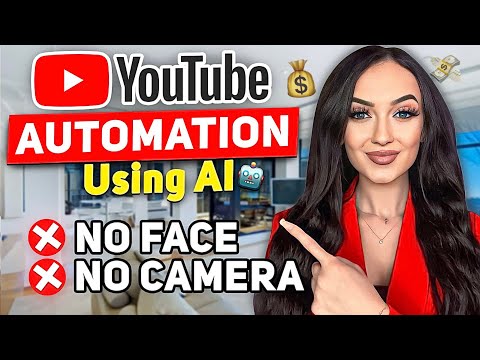
“How to Start YouTube Automation (STEP BY STEP) NO FACE | NO EDITING | FREE COURSE”
What we found: Faceless YouTube Course: The Only Income Figure Is an Estimate for Someone Else's Channel
A $20-a-month tool and a clear walkthrough, but no earnings, views or subscriber figure for the creator's own two channels, and monetization thresholds that match YouTube's lower tier rather than ad revenue.
- $20/month Tool cost
- ~half a million/yr Example channel income
- Not stated Her own earnings
- 3,000 hours Watch-hour target
The claim
That a beginner can start a faceless YouTube channel with an AI video tool, get monetized, and turn it into a "life changing side hustle".
- AI video tool, plus plan — $20 a month; a free plan is also mentioned
- Annual tool cost — $240
- Example faceless channel — "Nearly half a million per year", attributed to Social Blade; currency not stated
- Example channel, per month — ~41,700 a year divided by twelve, if the figure is in dollars
- Her own channels — "Two successful YouTube channels in less than a year"; no subscribers, views or earnings given
- Time to make a video manually — 4 to 5 hours for a beginner, "maybe even more"
- Time to publish in the tutorial — "Less than 20 minutes"
- Monetization thresholds quoted — 500 subscribers, 3 uploads in 90 days, 3,000 watch hours in a year or 3 million Shorts views in 90 days
- Full-length views needed for 3,000 hours at 10 minutes — 18,000
- Ad income, RPM or AdSense earnings — Not stated
What is this income idea?
Pick a niche, type a topic into an AI video tool that assembles stock footage and a voiceover, add a Canva thumbnail and a ChatGPT title, and upload. Then promote it with short clips elsewhere until the channel qualifies for monetization.
- The video presents itself as a free course. Isabella opens by saying people "charge thousands of dollars for courses just like this", and asks only that viewers like and subscribe in return.
- The case for the model rests on one example. A faceless channel called Top Five "according to Social blade is burning in nearly half a million per year". No currency is given, it is a third-party estimate, and it is not her channel.
- The core of the tutorial is an AI video tool. She types "make me a video about traveling in Greece", picks a YouTube explainer workflow, sets a ten-minute length because "over 8 minutes" allows multiple ads, chooses a voice, and generates. She says a sign-up link is in the description, and that the plus plan she uses costs $20 a month.
- Thumbnails are made by hand in the free version of Canva from a free stock photo, because the AI thumbnail tools she tried "were trash". Titles, descriptions and tag ideas come from ChatGPT or from YouTube's own search suggestions.
- Growth is meant to come from outside YouTube. She says her "secret" to growing two channels in under a year was short-form clips on TikTok, Instagram and Pinterest that send viewers back to the long videos.
- She closes with monetization. She warns that YouTube will not monetize repetitious content and tells viewers to add their own intros, edits and personal stories. She lists the thresholds as 500 subscribers, three uploads in 90 days and 3,000 watch hours, and says one viral video could cover the watch hours "pretty much in a day".
Let an AI tool build stock-footage videos, make the thumbnails yourself, promote with short clips, and wait to qualify for monetization. No earnings figure is given for doing it.
- Pick a niche you like — ChatGPT for 100 ideas
- Generate the video — AI tool, $20/month
- Set 10+ minutes — For multiple ads
- Make the thumbnail — Canva, free plan
- Title and description — ChatGPT and search tags
- Upload and publish — "Less than 20 minutes"
- Promote with shorts — TikTok, Instagram, Pinterest
- Reach thresholds — 500 subs, 3,000 hours
A clear production workflow. The video gives no figure for what it has earned anyone, the creator included.
The workflow is real. The income case belongs to someone else.
The lesson underneath the number
- As a production tutorial this is clear and specific. A beginner could follow it on the same day: the tool, the workflow setting, the video length, the voice, the thumbnail technique, the title and description prompts, the upload screens. The one cost is given with the plan name and a free option. Her view that the AI thumbnail tools she tried "were trash", and that hand-made thumbnails matter more than titles, is a useful bit of candour in a video built around an AI tool.
- The income case is thinner. The one figure, "nearly half a million per year", is a third-party estimate for a channel called Top Five. Estimates of that kind are inferred from public view counts rather than reported by the channel, and the video gives no currency or range. It describes what someone else may earn, not what this method has earned anyone.
- Her own results would have been the obvious evidence, and she refers to them twice: "I've grown two successful YouTube channels in less than a year." No subscriber count, view count or revenue figure follows. Viewers are left with a production method and no checkable outcome.
- The most useful thing in the video sits near the end, and it works against the title. She warns that YouTube does not monetize repetitious content and tells viewers to edit the AI output, add intros and logos, and write their own experiences into the script. That is sound advice. It also means "NO EDITING" in the title does not describe the process she recommends, and the 20-minute production time does not include the work that, by her own account, decides whether the channel gets monetized at all.
YouTube did put out a notice that repetitious content will not be monetized. This is something that you have to work around.
The constraint the whole model has to clear
The method, as she gives it
Each step is concrete about the tools. None carries a result.
No views, subscriber counts or earnings are given for any stage.
- Choose a niche you actually like — She advises against topics you know nothing about, even though the AI writes the video, and suggests asking ChatGPT for "100 ideas for faceless YouTube channels".
- Generate the video from a prompt — A one-line topic becomes a narrated stock-footage video "literally within minutes", though she notes one took around ten minutes. The plus plan she uses is $20 a month and a free plan exists.
- Edit the output to make it your own — "Quality of your video matters if you want to stand out and get monetized." She describes changing the intro and call to action with text commands, and calls the AI "a coworker" with you as "the boss".
- Make the thumbnail by hand — Free stock photo, free Canva, bold outlined text sized for phones. She says she has spent hours on a single thumbnail and that the AI thumbnail tools she tried did not meet her standard.
- Write titles and descriptions with ChatGPT — Ask for title ideas, pick one, ask for a keyword-heavy description, and take tags from YouTube's search suggestions.
- Promote off YouTube — Short clips on TikTok, Instagram Reels and Pinterest, linking back to the long videos. She calls this the key to growing her two channels; no figures are given for either.
- Qualify for monetization — She lists 500 subscribers, three public uploads in 90 days and 3,000 watch hours in a year, or 3 million Shorts views in 90 days. Those match YouTube's lower partner tier; ad revenue sharing has higher thresholds.
The business model
YouTube ad revenue once the channel qualifies, plus affiliate marketing and brand sponsorships, all named and none quantified.
Viewers searching for educational or how-to topics in a niche, which she says advertisers pay more to reach than entertainment.
Narrated stock-footage explainer videos produced quickly with AI, with hand-made thumbnails.
YouTube search, helped by keyword-heavy descriptions, and short-form clips on TikTok, Instagram Reels and Pinterest linking back.
- AI video tool — $20 a month on the plus plan; a free plan is mentioned
- Canva, ChatGPT, stock photos — Used on free plans
- Creator time — Editing, thumbnails and promotion; not quantified
- Time before monetization — No ad income until the channel qualifies; not estimated
- Tax — Not mentioned
The cash cost is stated and small. What the video does not give is the other side: any figure for what a channel built this way earns.
What you would actually need
Money
$20 a month for the plus plan of the AI video tool, with a free plan to start. Canva, ChatGPT and the stock photo site are used on free plans.
This is a low and clearly stated cost: $240 a year (our arithmetic). It is credited as such. The larger cost is time and the months before any income, since the channel earns nothing from ads until it qualifies, and no figure is given for what it earns afterwards.
Costs named or implied
- AI video tool, plus plan: $20 a month ($240 a year, our arithmetic)
- Canva: free plan, used "for years"
- ChatGPT: described as free to use
- Stock photos: free
- Promotion on TikTok, Instagram and Pinterest: no cost given
- Months of uploads before any ad income: not quantified
Time
Under 20 minutes to publish the tutorial video, against four to five hours to make one manually as a beginner.
The 20-minute figure covers generating and uploading one video, not the editing she recommends to avoid repetitious-content rejection, the thumbnail work she says can take hours, or the short-form promotion she calls her secret. The time to reach 3,000 watch hours is not estimated.
Where the time goes
- Generating each video: minutes, up to about ten
- Customising it so it is not repetitious: not quantified
- Thumbnails: "hours" at times, by her account
- Titles, descriptions, tags: minutes with ChatGPT
- Short-form clips on three other platforms: not quantified
- Reaching the thresholds: not estimated
The part you must pay attention to
The thresholds quoted unlock YouTube's lower tier, not ad revenue.
The video says 3,000 watch hours "can add up fairly quickly" and that one viral video "can be pretty much done in a day". Here is what 3,000 hours means in views.
- Watch-hour threshold quoted — 3,000 hours
- Minutes per hour — × 60
- Her recommended video length, watched in full — ÷ 10 minutes
18,000 full views
Minimum, and only if every viewer watches to the end
Few viewers watch a video to the end. At an assumed 40% average view duration, four minutes of a ten-minute video, 3,000 hours takes about 45,000 views (our arithmetic). The bigger issue is which tier those numbers unlock. YouTube's partner program help page describes two levels. The one quoted in the video (500 subscribers, three uploads in 90 days, 3,000 watch hours or 3 million Shorts views) opens fan funding features. Ad revenue sharing, the AdSense income the video names first, requires 1,000 subscribers and 4,000 watch hours in a year, or 10 million Shorts views in 90 days. A viewer who reaches the numbers in the video would still be short of ad revenue.
The video promises at the start that "most importantly" it will show how to get monetized and make money. It lists thresholds and names AdSense, affiliate marketing and sponsorships, but gives no income figure for any of them. That includes her own two channels, which she calls successful without a subscriber, view or revenue number. The only money figure is a third-party estimate for another channel. The tool cost, $20 a month, is the one number in the video that belongs to her own operation.
- WATCH HOURS IN VIEWS (OUR MATHS)
- Threshold quoted 3,000 h
- x 60 = 180,000 min
- / 10-min video, full = 18,000 views
- / 4 min watched (40%) = 45,000 views
- TWO YOUTUBE TIERS
- Quoted in video: 500 subs, 3,000 h
- -> fan funding features
- Ad revenue: 1,000 subs, 4,000 h
- -> not mentioned
- THE ONLY INCOME FIGURE
- "Nearly half a million per year"
- Whose: another channel
- Source: a third-party estimate
- Her channels: no figure
- THE ONLY COST
- $20/month x 12 = $240/year
The economics
One cost is stated. No revenue figure is given for the method itself.
- AI video tool, plus plan — $20/month
- Annual tool cost — $240
- Other tools — Free plans
- Example channel, third-party estimate — ~half a million a year, currency not stated
- Her own channels' earnings — Not stated
- Watch-hour threshold quoted — 3,000 hours
- Full views for 3,000 hours at 10 minutes — 18,000
- Views at 40% average view duration — ~45,000
- RPM, CPM or AdSense income — Not stated
What the watch-hour target means in views
3,000 hours × 60 = 180,000 minutes; ÷ 10 minutes = 18,000 full views; ÷ 4 minutes watched = 45,000 views
Between 18,000 and about 45,000 views on ten-minute videos, and that reaches only the lower tier quoted in the video
IncomeIdeaLab calculation from the threshold and video length stated in the video; the 40% view duration is our assumption
YouTube's ad revenue tier needs 4,000 watch hours and 1,000 subscribers, which at the same assumptions is 24,000 to 60,000 views. The video gives no figure for what those views would pay.
- Any earnings figure for her own two channels
- Subscriber or view counts for either channel
- An RPM or per-view rate for the niches she recommends
- How long her channels took to qualify for monetization
- Whether the sign-up link in the description pays her a commission
- Income from the affiliate and sponsorship routes she names
- If the "nearly half a million per year" is in dollars, it works out at about $41,700 a month (our arithmetic). The video gives no currency, no range and no date, and the figure belongs to another channel.
- The claim that YouTube "pays more for educational content" because advertisers value it more is plausible and commonly said, but no figure is given to size the difference.
- "90% of people that are watching YouTube are on their mobile phones" is attributed to a study she remembers. The source is not named.
- The video says the sign-up link for the AI tool is in the description and that viewers should "sign up with that link". It does not say whether the link is an affiliate link. Under the FTC endorsement guides, a material connection to a recommended product is expected to be disclosed clearly; the video does not say either way.
Evidence status
Every substantive claim in the video.
- Top Five makes "nearly half a million per year" — Creator, citing Social Blade — A third-party estimate for another channel. No currency or range given.
- Two successful channels grown in under a year — Creator — No subscriber, view or earnings figure given for either.
- The AI tool's plus plan costs $20 a month — Creator — Stated plainly, with a free plan also mentioned. $240 a year by our arithmetic.
- A video "within minutes" — Creator — She adds that one took about ten minutes. Plausible for generation alone.
- Manual production takes 4 to 5 hours for a beginner — Creator — Her own experience; a reasonable estimate.
- Published "in less than 20 minutes" — Creator — Covers generation and upload, not the editing she recommends.
- Videos over 8 minutes can carry multiple ads — Creator — Consistent with how mid-roll ads work; she notes the rule has changed over time.
- 90% of YouTube viewers are on mobile — Creator, citing a study — Source not named.
- Educational content pays more than entertainment — Creator — Plausible; no figure given.
- Monetization needs 500 subscribers and 3,000 watch hours — Creator — Matches YouTube's lower tier. Ad revenue needs 1,000 subscribers and 4,000 hours.
- One viral video can reach 3,000 hours "pretty much in a day" — Creator — Needs 18,000 full views of a ten-minute video, or about 45,000 at typical retention (our arithmetic).
- "No editing", in the title — Video title — The video recommends editing the AI output to avoid repetitious-content rejection.
What is actually proven?
The workflow is described in full. No result is.
- The tool cost is stated: $20 a month, with a free plan.
- The production steps are concrete enough to follow the same day.
- She warns that repetitious content will not be monetized.
- The only income figure is a third-party estimate for another channel.
- 3,000 watch hours needs at least 18,000 full views of a ten-minute video.
- The thresholds quoted reach YouTube's lower tier, not ad revenue.
- What her own two channels earn, or how many subscribers they have.
- Whether the tool link pays her a commission.
What the headline doesn’t tell you
A free course with a paid tool at its centre and no income figure of its own.
- The income figure is not hers. — A third-party estimate for Top Five.
- Her channels have no numbers. — "Successful", with no figure given.
- "No editing" is in the title. — The video recommends editing.
- The tool costs $20 a month. — Stated plainly, which is to her credit.
- 500 and 3,000 is the lower tier. — Ad revenue needs 1,000 and 4,000.
- One viral video is 18,000+ views. — Watched to the end, at ten minutes.
- Repetitious content is the risk. — She names it herself.
- Link status not stated. — Affiliate or not, the video does not say.
Should you try it?
A usable production tutorial, with no income case of its own
Follow it for the workflow, at a stated $20 a month. Do not take the half-million figure as what this method earns.
- Clarity of the workflow — 8 — Tool, settings, thumbnail, title and upload all walked through.
- Cost disclosure — 7 — $20 a month and the free alternatives, stated plainly.
- Evidence of her own results — 1 — Two channels called successful; no figure for either.
- Relevance of the income example — 2 — A third-party estimate for another channel.
- Accuracy on monetization — 4 — Thresholds match the lower tier, not ad revenue.
- Candour about risks — 6 — Warns on repetitious content and slow early growth.
- Title against content — 3 — "No editing" while recommending editing.
- Beginner accessibility — 7 — Cheap to start and easy to follow.
- If you want to know how to produce a faceless explainer video with AI, this answers it clearly. You see the prompt, the workflow, the length setting, the voice choice, the thumbnail process and the upload screens, and you are told what the tool costs. Her advice to pick a niche you actually like, to aim for educational rather than entertainment topics, and to spend real effort on thumbnails is sensible.
- What the video cannot tell you is whether any of this pays. The half-million figure is a third-party estimate for someone else's channel. Her own two channels are described as successful, and no figure is given for either. Treat the income side as unstated, not demonstrated.
- Take her warning about repetitious content seriously, because it is the real constraint on the model. If many people make similar stock-footage videos from similar prompts, the channels that get monetized will be the ones that add something of their own. That means editing, personal angles and time, which the title's "no editing" and the 20-minute production figure leave out.
- Check the thresholds yourself before planning around them. The numbers quoted, 500 subscribers and 3,000 watch hours, match YouTube's lower tier, which opens fan funding features. Ad revenue sharing needs 1,000 subscribers and 4,000 watch hours. At ten minutes a video, 4,000 hours is 24,000 full views, and far more at normal retention.
Passive or automated?
Automation
The AI drafts the video; editing, thumbnails, titles and promotion are manual.
Passive potential
Old videos can keep earning once monetized; getting there is active work.
She describes videos as "digital assets" that can bring in passive income "as long as these videos are being watched", which is a fair description of a monetized back catalogue. Getting to that point is not passive. Each video needs editing so it is not rejected as repetitious, a hand-made thumbnail, keyword work and promotion on three other platforms. No income figure is given for the catalogue once it exists, so the passive side cannot be sized from the video.
- Editing each AI video so it is not repetitious
- Designing thumbnails, which she says can take hours
- Writing and checking titles, descriptions and tags
- Making and posting short clips on TikTok, Instagram and Pinterest
- Watching YouTube's monetization rules as they change
Recommended beginner experiment
Test the output before you pay for the tool.
- Start on the free plan. — She says one exists; use it first.
- Pick an educational niche you know. — Her own advice.
- Edit every AI video. — Repetitious content is not monetized.
- Make thumbnails by hand. — She rates them above titles.
- Track views and watch time from day one. — The video gives no benchmarks.
- Plan for 4,000 hours, not 3,000. — That is the ad revenue tier.
- Expect 24,000+ full views to get there. — At ten-minute videos.
- Pay $20 a month only once it is working. — $240 a year, stated.
Our verdict: 4/10
A clear AI video workflow with no income figure of its own the only earnings number is a third-party estimate for another channel
Credited for a concrete, step-by-step production walkthrough a beginner can follow; for stating the one cost plainly, $20 a month on the plus plan, and noting a free plan; for saying the AI thumbnail tools she tried did not meet her standard; for warning that repetitious content will not be monetized and telling viewers to add their own edits and experiences; and for cautioning that new channels rarely take off straight away. Marked down because the only income figure is a third-party estimate for another channel, given without currency or range; because no earnings, subscriber or view figure is given for her own two channels, which she calls successful; because the monetization thresholds quoted match YouTube's lower tier rather than ad revenue sharing; because "pretty much done in a day" for 3,000 watch hours needs at least 18,000 full views of a ten-minute video; because "NO EDITING" in the title does not match the editing the video recommends; and because the video does not say whether the tool link pays her a commission.
As a tutorial this does what it says. In one sitting it shows how to turn a one-line prompt into a narrated stock-footage video, size it for multiple ads, make a phone-readable thumbnail in free Canva, write the title and description with ChatGPT, and upload. It gives the one cost clearly: $20 a month for the plan she uses, with a free plan to start. She is also candid in places a tutorial built around an AI tool might not be. The AI thumbnail tools she tried were not good enough, new videos rarely take off on their own, and YouTube will not monetize repetitious content, so viewers should edit the output and add their own experience. The income case is where the video is thin. The only money figure is "nearly half a million per year" for a channel called Top Five, a third-party estimate with no currency or range, for a channel that is not hers. Her own two channels are called successful, and no subscriber, view or earnings figure is given for either. The monetization section lists 500 subscribers and 3,000 watch hours, which match YouTube's lower tier; ad revenue sharing, the AdSense income she names first, needs 1,000 subscribers and 4,000 hours. The suggestion that one viral video could cover the watch hours in a day needs at least 18,000 complete views of a ten-minute video, and about 45,000 at typical retention, by our arithmetic. The title promises no editing, and the video's best advice is to edit. Use it to learn the workflow. Do not use it to estimate what the workflow will earn, because the video gives no figure for that.
- Tool cost — $20/month ($240/year)
- Example channel income — ~half a million/yr, not hers
- Her own earnings — Not stated
- Thresholds quoted — 500 subs, 3,000 hours
- Ad revenue tier — 1,000 subs, 4,000 hours
- Full views for 3,000 hours — 18,000 at 10 minutes
- Affiliate link status — Not stated
- Beginner suitability — Workflow yes, income case no
Sources
- How to Start YouTube Automation (STEP BY STEP) NO FACE | NO EDITING | FREE COURSE — Baddie In Business — YouTube video, 2023-11-16
- YouTube Help — YouTube Partner Program overview and eligibility — Platform documentation on monetization tiers and thresholds
- FTC — Guides Concerning the Use of Endorsements and Testimonials — Regulatory guidance on endorsements and material connections