Ecommerce / Dropshipping · Claim Review
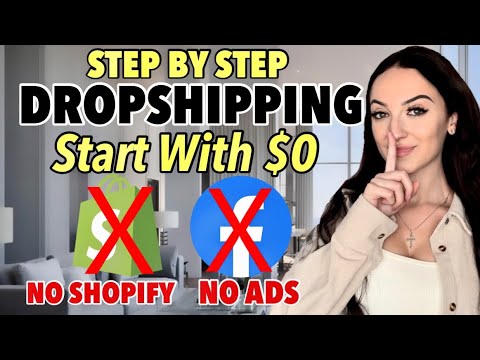
“How To Start Dropshipping With USD 0 | STEP BY STEP | NO SHOPIFY & NO ADS! (FREE COURSE)”
What we found: The $0 Dropshipping Store Is Free to Build; No Dropshipping Sales Are Stated and Running Costs Are Not Counted
A free website plan and organic TikTok really do make setup free. The example hula hoop leaves about $55 gross per order on stated prices, but payment fees, samples and slower shipping are not costed, and the creator says they now ship their own products.
- $0 Setup cost
- ~$55 Example gross per order
- Two "six-figure" Creator's businesses
- Not stated Dropshipping store sales
The claim
That a beginner can start a dropshipping store with $0, without Shopify and without paid ads, by using a free website host and organic TikTok videos.
- Setup cost — $0 on a free website plan with up to five products
- Teaching example — Sell at $200, buy at $150, keep $50
- Example product, competitor price — $64.99
- Example product, supplier prices — $5 to $7 on one site; $13 plus $4 shipping on another
- Creator's own businesses — Two "six-figure earning" online businesses
- Current model — The creator says they now ship their own products
- Sales from a dropshipping store — Not stated
What is this income idea?
Find a trending product on TikTok, list it on a free online store at a markup, buy it from an overseas supplier only after a customer pays, and market it with your own unpaid TikTok videos.
- The creator introduces themselves as the owner of "two six-figure earning online businesses" and says they recommend dropshipping to people starting out who do not want to put money in up front. They advise against Shopify "unless your business is already a six-figure earning business" because of its monthly fees, and against paid ads because they "harm your profit margin".
- The teaching example is simple: a customer pays $200, you buy the item from a supplier for $150, the supplier ships it, and you keep $50. The creator then works through a real product, an adjustable fitness hula hoop seen trending on TikTok, which another store sells for $64.99 and suppliers list for $5 to $7 on one site and $13 plus $4 shipping on another.
- The store is built on a free plan of a website host that allows up to five products, with PayPal and Stripe for payments, a shop email address, a free logo generator and a product photo screenshotted from the supplier's listing. The creator sets a shipping charge of $6.50 to $7 per item, partly because it "is adding to your profit margin".
- When an order arrives, you copy the customer's address into the supplier's checkout, pay with your own credit card for the points, and paste the tracking number back into your store. If shipping is slow, the creator suggests labelling the item as a pre-order with a one-to-three-week delivery note.
- The creator is candid that they do not dropship now: "I used to drop ship when I first got started but we actually ship our own items." The video closes with what the creator personally did on tax, operating as a sole proprietor before forming an LLC, and says repeatedly that this is not legal advice.
A free, step-by-step way to open a small dropshipping store. Setup costs nothing; selling still costs fees, time and some risk.
- Spot a trend on TikTok — Trend tools and search
- Compare supplier prices — $5–$17 vs $64.99
- Free store, five products — No monthly fee
- Post organic videos — No ads
- Customer pays you — Stripe or PayPal
- You order from supplier — Copy the address
- Add tracking — Sales not stated
Every step is free to set up. The flow has no sales figure for a dropshipping store attached.
Free to build, and honest about it, but the sales are the missing step
The lesson underneath the number
- The title's $0 holds for what the video shows: a free store plan, free logo, free email and unpaid TikTok marketing. Because a customer pays before you order from the supplier, the creator is also right that you do not need stock or cash up front. That makes this a lower-risk starting point than tutorials that open with a monthly store subscription and an ad budget.
- The video is candid in ways that matter. The creator says they "used to drop ship when I first got started" and now ship their own items, and the viral example is from that store. They recommend ordering a sample, tell viewers not to copy competitors' descriptions word for word, and repeat several times that the tax section is "not legal advice", only what they personally did.
- What the video does not do is cost a sale or report one. Card and PayPal payments both carry processing fees, refunds can cost more than the shipping charge the creator says they keep, and the cheaper supplier ships more slowly. The plan to call slow-shipping items a "pre-order" with a one-to-three-week note sets expectations honestly, though it is still a longer wait than the competitor offers.
- The two "six-figure" businesses are the creator's own statement, and the video does not say which figure, or whether it is revenue or profit. We make no claim either way. Neither figure is given for a dropshipping store, which is what the video teaches.
I always say it's 25% the product and 75% how you market it.
The creator, on choosing a product
The method, as described
Research, name and logo, free store, listing, fulfilment, organic marketing, tax basics.
No sales, conversion rate or payment-fee figure is given for a dropshipping store.
- Research products where buyers already look — TikTok's trend discovery tool, supplier marketplaces, Amazon and Google. The creator says success is "25% the product and 75% how you market it".
- Check what others charge and what suppliers charge — A competing store sells the hula hoop for $64.99; supplier listings run from $5 to $7, or $13 plus $4 shipping with slower delivery.
- Name, logo and a free store — Check the name is not taken, make a logo with a free generator, and open a free store plan with up to five products and one image per product.
- List the product in your own words — Screenshot the supplier image, write your own title and description, and do not copy competitors "word for word". Add a shipping charge of $6.50 to $7.
- Fulfil each order by hand — Copy the customer's details into the supplier checkout, pay with your own card, and add the supplier's tracking number to the order.
- Market with organic TikTok only — Post videos about the product and link the store in your bio. The creator says their most viral videos do not show their face, though a fitness product would need you on camera.
The business model
The markup between the store price and the supplier price, plus a shipping charge of $6.50 to $7 per item.
TikTok viewers who see a product in a video and buy through the link in the creator's bio, mostly in the United States.
A trending product presented in engaging videos, from a store that looks like its own brand.
Organic TikTok videos only; the creator advises never buying ads.
- Store plan — Free up to five products
- Supplier cost — $5 to $17 per hula hoop on stated listings
- Payment processing — Not stated
- Samples — Recommended; not costed
- Refunds and disputes — Not costed
- Creator's time — Videos and manual fulfilment; not stated
The creator says the store can be run for $0, and the setup can. Variable costs per sale are not put into figures.
What you would actually need
Money
"You can literally do this with USD 0." The store host, logo generator, email and TikTok are all free.
Setup is genuinely free. Running the store is not: each sale carries a payment-processing fee, and the creator recommends ordering a sample, which costs the product price plus shipping. Refunds and disputes also cost money when they happen. None of these is put into figures.
Stated, and not stated
- Store plan: free up to five products (stated)
- Payment processing on each sale: not stated
- Product sample: recommended, cost not stated
- Refunds beyond the shipping charge: not costed
- LLC, when you form one: "not that expensive", no figure
- Phone or camera for videos: assumed already owned
Time
Adding a product took "less than 3 minutes"; fulfilment "only takes a second".
Building the store is quick. The time cost is marketing: the whole plan depends on organic TikTok videos good enough to sell without ads, and no posting rate or time per video is given. Every order is also fulfilled by hand.
Time the video implies
- Researching trends and checking supplier shipping times
- Writing original listings
- Filming and editing regular TikTok videos
- Copying each order into the supplier site
- Answering customers about slow delivery
- Bookkeeping for tax at year end
The part you must pay attention to
The $0 is the cost of setting up. No sales from a dropshipping store are stated, and the creator says they now ship their own products.
The video's figures show that the margin can be wide. They do not show that a store built this way sells. The creator's own example of a viral TikTok, a million views, is for the store where they "ship our own items".
- Planned price, matching a competitor — $65
- Shipping charged to the customer — $7
- Supplier price plus supplier shipping — $17
~$55
Gross per order before payment fees, refunds and samples
The load-bearing assumption is that a beginner's unpaid TikTok videos will bring enough buyers to a store selling a product that, by the creator's own description, many other stores also sell. No conversion rate, order count or revenue is stated for a dropshipping store, and the creator describes their own success as coming from marketing rather than from the product.
On stated prices the hula hoop leaves about $55 per order before fees, which is a healthy gross margin; the slower supplier is the cheaper one, so customers may wait weeks. The teaching example is narrower: $50 kept on a $200 sale is 25% of the price. Both are before payment-processing fees, any refunds and the creator's time. The model can work, but the video shows how to build the store, not how many people buy from one.
- TEACHING EXAMPLE
- Sale price $200
- Supplier cost -$150
- Kept $50
- Share of price 25%
- HULA HOOP (our sums)
- Price $65
- + shipping charged $7
- - supplier $13 + $4 -$17
- Gross ~$55
- - card fees ???
- DROPSHIPPING SALES ???
The economics
Prices from the video, our gross-margin arithmetic, and the costs it leaves out.
- Teaching example: sale price — $200
- Teaching example: supplier cost — $150
- Teaching example: kept — $50 (25% of price)
- Hula hoop: planned price — ~$65
- Hula hoop: shipping charged — $7
- Hula hoop: supplier, slower — $13 + $4 shipping
- Hula hoop: supplier, cheapest listing — $5–$7
- Gross per order, slower supplier — ~$55
- Payment fees, refunds, samples — Not stated
- Dropshipping store sales — Not stated
Gross margin on the example product
($65 price + $7 shipping) − ($13 product + $4 supplier shipping) = $55
About $55 per order before payment fees, refunds and samples
IncomeIdeaLab calculation from figures stated in the video
Uses the slower supplier, whose price the creator reads out in full. The $5 to $7 listings would leave more, but their shipping cost and times are not stated. Card processors such as Stripe and PayPal charge a fee on each payment, which comes out of this figure.
- Any order count or revenue for a dropshipping store
- Payment-processing fees per sale
- Cost of the recommended sample
- Refund and dispute rate
- Time spent making TikTok videos
- Which figure the "six-figure" businesses refers to, and whether revenue or profit
- $50 kept on a $200 sale is 25% of the price, or a 33% markup on cost, by our arithmetic.
- The free store plan allows up to five products and one image per product, as the creator says.
- The shipping charge is set at $6.50 in one part of the video and $7 in another; both are examples.
- The creator says refunds "never really happened" when they dropshipped; no order count is given to set that against.
- Platform fee page: Stripe pricing, cited below for the card fee point.
Evidence status
Every substantive figure in the video.
- You can start with $0 — Creator — True of setup on a free plan; running costs are not counted.
- Owner of two six-figure online businesses — Creator — The creator's statement; revenue or profit not specified.
- Sell at $200, buy at $150, keep $50 — Creator — A teaching example; 25% of price before fees.
- Competitor sells the hula hoop at $64.99 — Creator — We could not check it from the video.
- Supplier listings at $5 to $7, or $13 plus $4 — Creator — Leaves about $55 gross on the slower one.
- Free store plan, up to five products — Creator — As described in the video in 2022.
- A TikTok with 1 million views — Creator — For the store that ships its own items, not a dropshipping store.
- Refunds "never really happened" — Creator — No order count is given.
- Dropshipping store sales or revenue — Nobody — Not stated in the video.
What is actually proven?
A free setup is walked through step by step. No dropshipping sales are stated.
- A store can be set up on a free plan with free tools.
- The example product leaves about $55 gross per order on stated prices.
- The creator says they no longer dropship and now ship their own items.
- The tax section is given as personal experience, not advice.
- Payment fees, refunds and sample costs.
- Orders or revenue from any dropshipping store.
What the headline doesn’t tell you
Free to start is not the same as free to run.
- $0 is setup. — Each sale still has fees.
- No dropship sales stated. — None given.
- Not dropshipping now. — Creator ships own items.
- Viral video, other store. — Own-stock store.
- Cheaper is slower. — One to three weeks.
- Many sellers, same item. — Marketing decides.
- Five-product limit. — On the free plan.
- Video is from 2022. — Plans and fees change.
Should you try it?
A sensible, low-risk way to test dropshipping; budget for fees and your time
Use the free setup to learn. Count payment fees and a sample in your margin, and expect the work to be in making videos, not in building the store.
- Clarity of the setup — 8 — Every step from research to tracking is shown.
- Setup cost accuracy — 8 — Setup really is free on the plan described.
- Running-cost transparency — 3 — Fees, samples and refunds not costed.
- Evidence of dropshipping sales — 1 — None stated; creator no longer dropships.
- Honesty signals — 7 — Says they ship their own items now; repeats not legal advice.
- Beginner accessibility — 7 — No money up front; marketing skill needed.
- This is one of the cheaper ways to find out whether you can sell a product online. Because the customer pays before you order from the supplier, and the store plan is free, you are risking time rather than money. The step-by-step setup is clear enough to follow.
- The money side needs more than the video gives. Every sale carries a payment-processing fee. A sample, which the creator recommends, costs the product and shipping. The cheaper supplier is the slower one, so some customers will wait weeks and some will ask for refunds. Put those into your margin before choosing a price.
- Most of all, the plan rests on your TikTok videos. The creator's own rule is that success is "75% how you market it", and many stores sell the same hula hoop. Expect to spend most of your time filming and posting, and judge the idea by your own orders rather than by the creator's other business.
Passive or automated?
Automation
Every order is copied to the supplier by hand.
Passive potential
Sales depend on a steady stream of new videos.
The creator deliberately avoids the apps that automate order forwarding, so each sale means copying the customer's details into the supplier site and pasting the tracking number back. Marketing is entirely organic TikTok, which means new videos for as long as you want sales. That keeps costs at zero but makes the store an active job.
- Finding and testing products
- Filming and posting videos
- Placing every supplier order
- Handling slow-delivery questions and refunds
- Bookkeeping and tax
Recommended beginner experiment
Use the free setup to test one product cheaply.
- Pick something you use. — As the creator suggests.
- Check supplier shipping times. — Not just price.
- Order one sample. — Check quality first.
- Price after fees. — Card fees and refunds included.
- Write your own listing. — Not a competitor's copy.
- Post videos consistently. — Track views to orders.
- Keep records from day one. — For tax at year end.
Our verdict: 5/10
A genuinely free way to set up a dropshipping store, with no dropshipping sales stated setup costs $0; payment fees, samples and refunds are not counted, and the creator now ships their own products
Credited for a clear, complete setup that really can be done for $0; for being candid that the creator no longer dropships and now ships their own items; for recommending a sample and original listings; for showing a wide gross margin on stated prices; and for repeating that the tax section is personal experience, not advice. Marked down because no orders or revenue are stated for a dropshipping store; because payment fees, samples and refunds are not costed; because the cheaper supplier is slower; and because the "six-figure" businesses are not specified as revenue or profit.
This video does what its title says on the setup side: a free store plan, free tools and unpaid TikTok marketing mean you can open a dropshipping store for nothing, and the order flow means you never pay for stock before a customer pays you. The example product shows how wide the gross margin can be, about $55 per order on the stated prices. What the video does not show is a dropshipping store selling: no orders or revenue are given, and the creator says they now ship their own items. Payment fees, a sample and refunds are left out of the numbers. Use it as a cheap way to learn, count those costs in your price, and judge it by your own orders.
- Setup cost — $0
- Example gross per order — ~$55
- Teaching example margin — 25% of price
- Running costs — Not stated
- Dropshipping sales — Not stated
- Beginner suitability — Good for a low-cost test
Sources
- How To Start Dropshipping With USD 0 | STEP BY STEP | NO SHOPIFY & NO ADS! (FREE COURSE) — YouTube video, 2022-04-15
- Stripe pricing — Platform documentation