Dropshipping / Paid Social · Claim Review
“I Found the Next Winning Dropshipping Niche (Huge Opportunity)”
What we found: A Dropshipping Account With $560,000 in Sales on $197,000 of Ads: That Is Revenue Against Ad Spend, and the Profit, Product Costs and Margins Are Not Stated
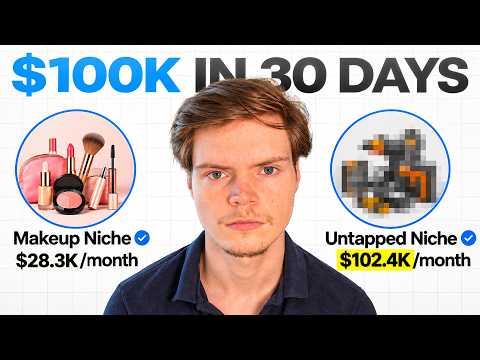
The niche promised in the title is named: tools and gadgets for home handymen. The figures given are sales and ad metrics. The $100,000-in-a-first-month results belong to unnamed students and acquaintances, and a paid programme is promoted at the close.
- $560k Sales on the account
- $197k Ad spend
- ~2.84 Return on ad spend
- Not stated Profit and product costs
The claim
That tools and gadgets for men and home handymen are an untapped dropshipping niche with no competition, where ad traffic is cheap enough that beginners can become profitable easily, with some reaching $100,000 in their first month.
- Ad spend across all campaigns — $197,000
- Sales from that spend — $560,000
- Return on ad spend — ~2.84 ("almost $3 back")
- Average cost per sale — $26
- Average return on the niche store(s) — $4.85 per $1 of ads
- Cost per click, niche vs comparison — $0.33 vs $0.70 average
- New store, first day of testing — $218 from three sales
- People and students reaching $100,000 in a first month — Stated, none named
- Product cost, shipping, fees, refunds, profit — Not stated
What is this income idea?
Dropship products to an audience few other stores target, so that ad clicks are cheaper and campaigns are profitable at lower margins.
- The creator's argument is that most beginners fail not because their product is bad but because they sell in crowded niches such as beauty, skincare, baby products and fitness, where advertising is expensive. Their alternative is to find a small, underserved market: "create your own small market rather than competing for a piece of the cake."
- The niche named is "tools and gadgets for men Okay handyman people who like to fix things at home." Examples include a car inspection tool, a power wheel jack and a tyre cleaner. The creator says they do not have to be strongly problem-solving products, only ones few other stores are selling.
- Product research is done on Instagram Reels: search the hashtag for winning products, like the dropshipping posts that appear, refresh the feed until it fills with similar products, then screenshot one and search for it on AliExpress.
- The figures cited are advertising metrics. One account "spent USD 197,000 on all of our campaigns to make USD 560k", at an average of $26 per sale. A comparison product spent $4,200 to make $8,600 at $43 per purchase. In the handyman niche, the creator cites a cost per click of $0.33 against a $0.70 average, a cost per purchase of $15, and an average return of $4.85 for every dollar spent. A new store's first day of testing brought $218 from three sales.
- The opening claims rest on other people: "I know people who have gone from zero to over USD 100,000 with 50% profit margins within their first month in this niche", and later, "many of them" among the creator's students "have gone from zero to 100K within their first month." The creator also says they "made over eight mill" selling fitness products earlier.
- The video closes with the creator's paid programme, the first link in the description, offering daily chat access, weekly meetings and a full course, described as rated 4.9 stars and with a 24-hour refund policy. One-to-one work is offered by Instagram message.
Sell handyman gadgets where ads are cheaper; the video gives sales and ad costs, but not what the products cost or what is left as profit.
- Avoid crowded niches — Beauty, fitness, baby
- Pick an underserved one — Handyman gadgets
- Train Instagram Reels — Like winning products
- Find the supplier — AliExpress
- Run ads — Cheaper clicks
- Measure ROAS — 2.84 to 4.85 cited
- Profit — Not stated
Every stage up to ad performance has a figure. The stage that matters most, profit, does not.
Cheaper clicks help; they do not tell you the margin
The lesson underneath the number
- The core idea is reasonable. Advertising costs depend partly on how many other advertisers are bidding for the same audience, and a product aimed at a group few stores target can be cheaper to sell to. The creator's comparison, about $0.33 per click and $15 per purchase in the handyman niche against $0.70 and $43 elsewhere, illustrates that, and the advice to look for a smaller market rather than a slice of a crowded one is sound as far as it goes.
- The product research method is also given in enough detail to try: train Instagram Reels on dropshipping posts until the feed shows mostly products, then find the supplier on AliExpress. The niche promised in the title is named and illustrated with examples, so the video delivers what its title says it will.
- What it does not give is the profit. Every figure is about sales and advertising: $560,000 from $197,000 of ads, $26 per sale, a $4.85 average return. In dropshipping, the store also buys each product and pays to ship it, along with platform and payment fees and refunds, and those costs are not stated for any product. With ads alone at about 35% of sales on the headline account, the result could be a healthy profit or a loss depending on margins the video does not give.
- The strongest outcome claims are about other people. The opening says the creator knows people who reached $100,000 with 50% margins in their first month; later, many students are said to have done the same. Neither is named, and the student claims sit in the closing section, which promotes the creator's paid programme. The video also describes the niche as having no competition while publishing it to its audience, which the creator acknowledges: "I should not be posting this video cuz it's just going to lead to competition."
We have spent USD 197,000 on all of our campaigns to make USD 560k.
The video's main figure: sales against ad spend, before every other cost
The method, as the creator gives it
Niche choice and product research, with ad metrics as the proof.
No product, shipping or store cost is given for any product.
- Stay out of crowded categories — Beauty, skincare, baby and fitness products are named as saturated. "It's not possible for a beginner to make his first USD 100,000 chasing makeup trends."
- Choose an underserved audience — Tools and gadgets for home handymen, described as "a very underserved niche". The creator adds that the exact niche matters less than the principle: "identify untapped markets and serve them."
- Use Instagram Reels for research — Search the winning-products hashtag, like the dropshipping posts, then refresh Reels so the feed fills with similar products.
- Find the product on AliExpress — Screenshot the product and search for it by image, or by keyword.
- Compare cost per click and per purchase — The creator's test of a good niche is cheaper traffic: $0.33 per click and $15 per purchase in the handyman niche, against a $0.70 average and $43 per purchase on a comparison product.
- Use cheap clicks to accept lower margins — "When you're only spending 30 cents for a click you can be on lower margin and you can even add upsells." The margins themselves are not given.
The business model
Online store sales of gadgets for home handymen, shipped from suppliers found on AliExpress, with upsells.
Men who fix things at home, described as an audience few stores target.
Useful but non-obvious gadgets that "the average person doesn't know where to find".
Paid social ads, with lower cost per click as the claimed advantage of the niche.
- Ad spend — $197,000 on the cited account, about 35% of sales
- Product cost — Paid to the supplier per order. Not stated
- Shipping — Not stated
- Store platform and apps — Not stated
- Payment processing — Not stated
- Refunds and chargebacks — Not mentioned
Ad spend is the only cost given. For a dropshipping store, product and shipping costs are usually the largest line, so profit cannot be worked out from the video.
What you would actually need
Money
Easy for beginners; "you don't have to be an expert to get into it." No start-up cost is given.
The cited account spent $197,000 on ads, and even the comparison product needed $4,200. A beginner needs an ad budget for testing before any product proves itself, and must pay for products and shipping on each order. None of those amounts is stated for a beginner.
Costs the model depends on
- Ad spend for testing and scaling
- Product cost from the supplier on every order
- Shipping from the supplier
- Store platform subscription and apps
- Payment processing on every sale
- Refunds and chargebacks
- The paid programme promoted in the video, price not stated
Time
Students "have gone from zero to 100K within their first month."
No time figure is given for the creator's own stores, beyond a first day of testing. Research, store building, ad testing and customer service on supplier-shipped orders all take time the video does not estimate.
Where the hours go
- Scrolling Reels and shortlisting products
- Matching products to suppliers
- Building and maintaining the store
- Creating ad content and testing campaigns
- Customer service, delays and returns
The part you must pay attention to
Return on ad spend is not profit.
The headline proof is "We have spent USD 197,000 on all of our campaigns to make USD 560k", which the creator calls "a 3x ROI". It is a return on ad spend: sales divided by advertising cost, with every other cost left out.
- Sales — $560,000
- Ad spend — −$197,000
- Not stated — − products, shipping, fees
$363,000 before product costs
What is left to pay for products, shipping, fees and refunds
Whether any of this is profitable depends on the product margin, which the video does not give for any product. In dropshipping, the store pays the supplier and the shipping on every order, plus payment and platform fees. Ad spend here is about 35% of sales, so if products, shipping and fees take 50% of the sale price, about 15% of sales, roughly $83,000, would remain as profit; at 60% it would be about $27,000; above about 65% the account loses money. These are our illustrations, not the creator's figures. The creator says one product "doesn't have the highest margin", which is the only margin information given.
The video's own numbers also do not match each other in places. "Almost $3 back" is 2.84 on the figures given, and as a return on investment it would be 1.84, since ROI subtracts the spend. The $4.85 average return cited later is much higher than the account-wide 2.84, which suggests it covers only the newer niche store or campaigns; the video does not say which. The claims that people reach $100,000 in their first month, with 50% profit margins, are about unnamed others, and the student results are stated in the section that introduces the paid programme.
- THE HEADLINE ACCOUNT
- Sales $560,000
- Ad spend $197,000
- ROAS 560 / 197 = 2.84
- -> "almost $3 back"
- ROI (560 - 197) / 197 = 1.84
- WHAT PROFIT WOULD LOOK LIKE (OURS)
- Ads as share of sales 35%
- If products+fees = 50%
- profit ~15% = ~$83,000
- If products+fees = 60%
- profit ~5% = ~$27,000
- If products+fees > 65%
- -> a loss
- Actual product costs ???
- COMPARISON PRODUCT
- $8,600 / $4,200 = 2.05
- Cost per purchase $43
The economics
Sales and ad metrics in detail, and nothing below them.
- Ad spend, all campaigns — $197,000
- Sales from that spend — $560,000
- Return on ad spend — 2.84
- Average cost per sale — $26
- Comparison product — $4,200 → $8,600 (2.05)
- Niche cost per click / per purchase — $0.33 / $15
- Average return in the niche — $4.85 per $1
- Ad spend as a share of sales — ~35%
- Product, shipping and fee costs — Not stated
Break-even on the headline account
$197,000 / $560,000 = 35% of sales on ads; break-even if products, shipping and fees take about 65% of sales
The account is profitable only if product, shipping, platform and payment costs together stay below about 65% of the sale price, which the video does not say
IncomeIdeaLab calculation from the figures stated in the video
Refunds and chargebacks would lower the threshold further. The $4.85 average return cited later would leave far more room, but the video does not say which stores, campaigns or dates it covers.
- Product cost per order from the supplier
- Shipping cost and delivery times
- Store platform, app and payment fees
- Refund and chargeback rates
- Profit on any store or product
- Which stores and dates the $560,000 and the $4.85 figures cover
- The price of the paid programme
- "A 3x ROI" describes a ROAS of 2.84. ROI conventionally subtracts the spend, giving 1.84, and still excludes product costs.
- The comparison product ($4,200 to $8,600, $43 per purchase) is described by the creator as "not that profitable", which is consistent with a ROAS of about 2.05.
- The new store's first day ($218 from three sales) and the growth to 15 sales a day are stated without ad spend for those days, so their profitability cannot be checked.
- The "over eight mill" from fitness products is stated once, without a period or a profit figure.
- The paid programme is described as rated 4.9 stars with a 24-hour refund policy; where the rating comes from is not clear in the video, and its price is not stated.
Evidence status
Every substantive claim in the video.
- Tools and gadgets for handymen are underserved — Creator — Named and illustrated with products. Competition is not measured.
- $560,000 in sales from $197,000 of ads — Creator — A ROAS of 2.84. Revenue, not profit.
- "A 3x ROI" — Creator — The figures give a ROAS of 2.84 and an ROI of 1.84 before product costs.
- Average return of $4.85 per $1 in the niche — Creator — Higher than the account-wide figure. Scope not stated.
- $0.33 per click and $15 per purchase in the niche — Creator — Consistent with the cheaper-traffic argument.
- New store: $218 and three sales on day one — Creator — No ad spend given for those days.
- People reached $100,000 with 50% margins in month one — Creator, about others — No one is named. We could not check it from the video.
- Many students reached $100,000 in their first month — Creator, closing section — Stated in the section promoting the paid programme. No one is named.
- Over $8 million from fitness products — Creator — No period, store or profit given.
- Product costs, fees and profit — Nobody — Not stated in the video.
What is actually proven?
The niche is named and the research method is clear. Profit is not addressed.
- The niche in the title is named, with example products.
- The Instagram and AliExpress research steps are described in full.
- Sales and ad-spend figures for one large account and one product.
- The headline account has a ROAS of about 2.84, with ads at 35% of sales.
- Beginners and students reaching $100,000 in their first month.
- Product, shipping and fee costs on any product.
- Whether any of the stores shown makes a profit.
What the headline doesn’t tell you
Sales and ad metrics are the top half of a dropshipping income statement.
- $560k is sales. — Not profit.
- "3x ROI" is a 2.84 ROAS. — Before product costs.
- Ads took 35% of sales. — Products and shipping come next.
- No margin is given. — For any product.
- The $100k months are others'. — None is named.
- $4.85 has no scope. — Which store, which dates.
- The niche is now public. — The creator says so.
- A paid programme closes it. — Price not stated.
Should you try it?
Test the niche idea with a small budget and your own margins
The research method is free to try. Before spending on ads, work out each product's cost, shipping and fees, and the ROAS you need to break even.
- Delivery on the title — 7 — The niche is named and illustrated.
- Specificity of research method — 6 — Instagram and AliExpress steps given.
- Evidence for profitability — 1 — Only sales and ad figures are given.
- Cost disclosure — 1 — Ad spend only.
- Evidence for beginner results — 1 — Unnamed people and students.
- Beginner accessibility — 3 — Needs an ad budget and an understanding of break-even.
- The idea at the centre of the video, that a less contested audience can be cheaper to reach, is worth testing, and the research steps cost nothing to try. Picking a group of buyers few stores are targeting, such as people who fix things at home, and checking whether ad clicks really are cheaper there, is a sensible way to choose a first product.
- What you need before spending anything on ads is your own break-even. For each product, add the supplier price, shipping, payment and platform fees and an allowance for refunds, and compare that with the price you will charge. If those costs take 60% of the price, you need a ROAS of 2.5 just to break even; the headline account in the video ran at about 2.84. The video gives the ad side of this sum and not the product side.
- Treat the outcome claims carefully. Beginners going from zero to $100,000 in their first month is said of unnamed acquaintances and students, and the student claims come in the closing section, which promotes the paid programme. Revenue of $100,000 in a month would also need a large ad budget at the ratios shown in the video.
- Finally, note the creator's own point that publishing a niche brings competition. A niche presented to a large audience as having "no competition" may not stay that way, and the cheaper clicks that make the model work depend on that.
Passive or automated?
Automation
Suppliers ship the orders; research, ads and customer service are manual.
Passive potential
Sales depend on continuous ad spend and testing.
Dropshipping removes the need to hold stock, since the supplier ships each order, but the business is not passive. The model in the video depends on constant product research, testing campaigns, watching cost per click and per purchase, and scaling or stopping products as their numbers change. Customer questions, delivery problems and refunds still come to the store owner. The creator does not describe it as passive; the emphasis is on finding new products before others do.
- Researching and testing new products
- Running and adjusting ad campaigns
- Managing the store and its listings
- Customer service and delivery problems
- Handling refunds and chargebacks
Recommended beginner experiment
Small budget, real margins.
- Shortlist five products in one niche. — Using the Reels method.
- Price each one fully. — Supplier, shipping, fees, refunds.
- Work out your break-even ROAS. — Price divided by margin.
- Set a fixed test budget. — Money you can lose.
- Check cost per click and purchase. — Against the video's figures.
- Stop any product below break-even. — Not below ROAS 1.
- Track refunds and delivery times. — Supplier shipping varies.
- Judge on profit, not sales. — After every cost.
Our verdict: 3/10
The niche is named; the profit is not stated sales and ad metrics stand in for an income figure, and the biggest results are attributed to unnamed others
Credited for naming the niche the title promises and illustrating it with products; for a product research method specific enough to try; for a coherent argument that a less contested audience can mean cheaper ad traffic, with cost-per-click and cost-per-purchase comparisons; and for acknowledging that publishing the niche will bring competition. Marked down because the headline figures are sales and advertising metrics, with no product, shipping, platform, payment or refund cost given for any product, so profit cannot be worked out; because "a 3x ROI" describes a return on ad spend of 2.84; because the $4.85 average return is given without saying which stores or dates it covers; because the $100,000-in-a-first-month results are attributed to unnamed people and students, the latter in the section promoting the paid programme; and because the programme's price is not stated.
This video does what its title says in one respect: it names a niche, tools and gadgets for men who fix things at home, and explains why it might be cheaper to advertise in, with a usable method for finding products on Instagram Reels and AliExpress. The figures offered as proof are a different matter. $560,000 in sales from $197,000 of ads is a return on ad spend of about 2.84, which the video calls a 3x ROI, and it is measured before the cost of the products, shipping, store fees, payment processing and refunds, none of which is stated for any product. With ads at 35% of sales, the account would be profitable if those other costs stay below about 65% of the price, and would lose money above it; the video does not say which. The later $4.85 average return is higher but is not tied to a store or a period. The most striking claims, beginners going from zero to $100,000 in their first month with 50% margins, are made about unnamed people and students, and the closing section promotes the creator's paid programme. A beginner can use the niche idea and the research method, and should work out their own break-even return before spending on ads.
- Sales on the cited account — $560,000
- Ad spend — $197,000
- Return on ad spend — 2.84
- Break-even cost share — ~65% of sales
- Average return in the niche — $4.85 per $1
- Product costs and profit — Not stated
- Beginner results — Unnamed
- Beginner suitability — Only with a costed test budget
Sources
- I Found the Next Winning Dropshipping Niche (Huge Opportunity) — Henrik Wold — YouTube video, 2026-10-27
- FTC — Guides Concerning the Use of Endorsements and Testimonials — Regulatory guidance on earnings claims