SaaS / Platform Add-on · Claim Review
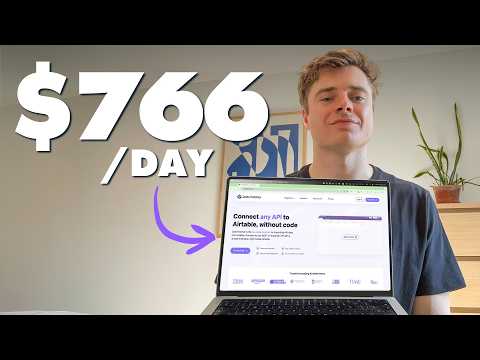
“How I Built It: $23K/month micro-saas”
What we found: The Founder Says 85% Margin. It Checks Out at 84.1%.
Hosting, tooling and a desk, itemised against $23,000 a month — and the platform risk that could end it named as the model’s main weakness, unprompted.
- $23,000 Monthly revenue
- $3,650/mo Disclosed costs
- 84.1% Margin, verified
- +$3,000 Growth since year 3
The claim
That a solo-built Airtable add-on generates $23,000 a month from 600 paying customers at an 85% margin.
- Monthly recurring revenue — $23,000
- Paying customers — 600
- Revenue per customer — ~$38.33/month
- Hosting (said, and in the on-screen graphic at 8:57) — $2,500/month
- SaaS tooling (said, and on screen at 8:57) — ~$1,000/month
- Co-working desk (said, and on screen at 8:57) — $150/month
- Tech-stack card list prices, on screen at 8:27 — $246/month for priced tools (our sum)
- Margin as claimed (also on screen at 8:57) — 85%
- Margin as calculated — 84.1%
What is this income idea?
Find a platform that is growing fast, and build the tool that already sells well on a mature one.
- Andy Cloke runs Data Fetcher alone from London. "It's now at 600 paying customers and it makes $23,000 a month in recurring revenue and I work on it as a solo founder."
- The origin is the most copyable part. Cloke saw API Connector, an add-on for Google Sheets, "doing super well — they had like 100,000 users and seemed to be smashing it. Kind of the perfect lifestyle business." Having hit the same problem on Airtable, they asked whether the proven product could be rebuilt for a platform that was just taking off.
- That timing gave them distribution almost immediately: "I got the first customer after a few days" — the benefit, they say, of being on a platform early.
- Growth came from watching usage. Certain APIs and use cases recurred, so they built no-code integrations for less technical users, "and that drove it through to 10,000 in MRR after the first year." Then "rinse and repeat for a couple years": talk to customers, build what they ask for, write content about it. Twenty thousand after three years.
- They are unusually clear about why the opportunity is the right size: "big enough to kind of change my life financially, but it's not such a big opportunity that there's loads of people raising loads of money to come and build a $100 million business."
- And they name the catch themselves: "the main downside is the platform risk — your tool becoming kind of redundant overnight."
A well-documented one-person business with honest costs, an accurate margin, and a clearly stated single point of failure.
- Find a proven tool — API Connector, 100k users
- Find a rising platform — Airtable, growing fast
- Rebuild it there — Same need, new ecosystem
- Get in early — First customer in days
- Watch repeated use cases — Build no-code versions
- Content and iterate — $10k year 1, $20k year 3
- Carry the platform risk — Named, not solved
A repeatable method with one dependency it cannot remove.
Copy a proven product onto a platform that is still rising.
The lesson underneath the number
- The method here is unusually clean. The founder did not invent a category — they found one already working on Google Sheets, where a comparable tool had roughly 100,000 users, and rebuilt it for Airtable while that ecosystem was still young. Demand was pre-validated; only the platform changed. Arriving early meant a paying customer within days, which is a distribution advantage no amount of marketing buys later.
- Their selection criterion is equally worth stealing, because it inverts the usual instinct. They wanted a market big enough to change their life and small enough that nobody would raise money to compete. Most founders look for large markets and then discover why they were large. Choosing a ceiling on purpose is a defensible strategy for one person.
- The disclosure is what lifts this. Hosting at $2,500, tooling at $1,000, a desk at $150 — and the resulting margin checks out at 84.1% against a claimed 85%. That is rare enough in this library to be worth stating plainly: the arithmetic works.
- Two things temper it. The growth has largely stopped — $10,000 in year one, $20,000 by year three, and roughly $3,000 added since — which is exactly what a deliberately small market does once it fills. And the whole business sits on a platform the founder does not control, a risk they name themselves in the bluntest available terms. What is missing is only their own salary: $19,350 a month is what the company keeps, not what they take home.
The main downside is the platform risk — your tool becoming kind of redundant overnight.
The founder, naming their own single point of failure
What the founder actually discloses
Costs, trajectory and the risk, all given plainly.
Published 13 August 2025. The three cost lines and the 85% margin are also shown in the channel's on-screen graphic at 8:57; the channel's tech-stack card is on screen at 8:27.
- Copy a proven product onto a newer platform — API Connector had demonstrated demand on Google Sheets with roughly 100,000 users. They rebuilt the same category of tool for Airtable while that ecosystem was still growing.
- Arrive before the competition does — First paying customer within days, attributed directly to being early on the platform rather than to marketing.
- Pick a deliberately unattractive market size — Big enough to change their life, too small to attract funded competitors. They state this as a selection criterion, not a consolation.
- Build what usage tells you to build — Watching which APIs and use cases recurred, then packaging them as no-code integrations for less technical users. That change carried them to $10,000 MRR in year one.
- Itemise the costs — Hosting $2,500, SaaS tooling about $1,000, co-working desk $150. "The total margin is 85%, the default state is super lean." The same list is shown in an on-screen graphic at 8:57.
- Name the platform risk — "Your tool becoming kind of redundant overnight." Airtable could build the feature, change the API, or decline — and the whole business sits on that.
The business model
Monthly subscriptions from Airtable users importing external API data into their bases.
600 paying customers — Airtable users needing flexible data import.
A flexible API connector, with no-code integrations for non-technical users.
Platform ecosystem placement plus content marketing.
- Hosting — $2,500/month by the founder's figure — the dominant cost; the card lists Heroku at $25 and Hetzner at $38
- SaaS tooling — ~$1,000/month by the founder's figure; the tech-stack card's list prices for priced tools sum to $246 (our sum)
- Co-working — $150/month
- Founder compensation — Never stated
- Payment processing — Not separately itemised
- Tax — Never mentioned
One of the few disclosures in this library where the stated margin survives arithmetic. The gap is founder pay.
What you would actually need
Money
$3,650 a month in total, itemised: hosting, tooling, desk. Described as "super lean," which it is.
The figure is credible and checks out against the stated margin. Hosting at $2,500 is a real cost of goods for a data-fetching service, and the founder states it plainly. The channel's tech-stack card at 8:27 shows much lower monthly list prices — Heroku $25, Hetzner $38, ChartMogul $99 and $246 for all priced tools (our sum) — but those are list prices, not the founder's bills; we use the founder's figures.
What it costs to run
- Hosting — $2,500/month, the dominant cost
- SaaS tooling — approximately $1,000/month
- Co-working desk — $150/month
- Total — $3,650/month
- Founder salary — never stated
- Tax and payment processing — not separately itemised
Time
First customer in days. $10,000 MRR after year one, $20,000 after three years, $23,000 now.
The early speed came from platform timing, not skill at marketing. The later years show how quickly a niche of this size flattens out.
The trajectory, as given
- Days — first paying customer
- Year 1 — $10,000 MRR
- Year 3 — $20,000 MRR
- Now — $23,000 MRR
- So $10,000 added in years 2–3, and roughly $3,000 since
The part you must pay attention to
The growth has largely stopped, and the numbers show it.
The founder gives three points on the curve, which is enough to see its shape: $10,000 after one year, $20,000 after three, and $23,000 at the time of filming.
- MRR after year one — $10,000
- MRR after year three — $20,000
- MRR now — $23,000
+$3,000 since year three
Against +$10,000 across years two and three
That is the shape of a niche filling up. The first year produced $10,000 a month largely because they were early to a growing platform; the next two added another $10,000; and the period since has added roughly $3,000. None of that is failure — $23,000 a month from one person at an 84% margin is an excellent outcome — but anyone modelling this should expect the curve to flatten rather than compound. They chose a market deliberately too small to attract funded competitors, and a market that small has a ceiling.
The risk they name is the other half of it. Data Fetcher exists because Airtable has an API and an ecosystem; if Airtable ships the same functionality natively, changes its API terms, or simply declines in popularity, the business does not degrade gradually. "Your tool becoming kind of redundant overnight" is their phrase, and it is the accurate one. They offer no mitigation for it and do not claim one.
- THE MARGIN, VERIFIED
- Monthly revenue $23,000
- Hosting -2,500
- SaaS tooling -1,000
- Co-working desk -150
- ------------------------------------------
- Total costs $3,650
- Remaining $19,350
- Margin 84.1%
- Founder states 85%
- -> accurate.
- THE TRAJECTORY
- Days first paying customer
- Year 1 $10,000 MRR
- Year 3 $20,000 MRR (+$10,000)
- Now $23,000 MRR (+$3,000)
- UNIT ECONOMICS
- $23,000 / 600 customers = $38.33/mo
- NOT STATED
- Founder salary, tax, churn,
- payment processing, growth rate.
The economics
Itemised, accurate, and flattening.
- Monthly revenue — $23,000
- Customers — 600
- Revenue per customer — ~$38.33/month
- Hosting (said; on screen at 8:57) — $2,500/month
- Tooling (said; on screen at 8:57) — ~$1,000/month
- Co-working (said; on screen at 8:57) — $150/month
- Monthly prices shown on the video's tech-stack card (8:27) — $246 for priced tools (our sum)
- Margin — 84.1% calculated, 85% claimed
- Founder salary — Never stated
Verifying the stated margin
($23,000 − $2,500 − $1,000 − $150) ÷ $23,000
84.1% — the stated 85% is accurate to within rounding
IncomeIdeaLab calculation from the founder’s own itemised costs
Whether payment processing sits inside the ~$1,000 tooling figure is not specified. If it is separate, the true margin is a few points lower.
- What the founder pays themselves
- Tax
- Churn rate
- Whether payment processing is inside the tooling figure
- Current growth rate
- Customer acquisition cost
- Hosting at $2,500 against $23,000 of revenue — about 11% — is a genuine cost of goods for a service whose function is fetching and moving data. Treating it as a real line rather than a rounding error is part of why the margin claim holds.
- Revenue per customer of roughly $38 a month is coherent for a business-tool add-on and consistent with 600 customers producing $23,000. Nothing in the unit economics requires explaining away.
- The deceleration is the most important thing the numbers reveal and it goes unremarked in the video. Three data points is enough to see that the curve has flattened, and a prospective imitator should expect that shape rather than compounding growth.
- The channel's tech-stack card at 8:27 shows monthly prices of TypeScript, React, PostgreSQL, Node.js, Next.js and shadcn/ui free; Airtable $45; Heroku $25; Hetzner $38; Help Scout $25; Fastmail $5; MailerLite $9; ChartMogul $99; Plausible pay as you go. The priced tools sum to $246 a month (our sum). These are list prices, not the founder's bills: the founder states hosting at $2,500 and tools at about $1,000, and the margin above uses the founder's figures.
- The video closes with a pitch for the channel’s own paid programme. The guest appears to be selling nothing.
Evidence status
Every substantive claim in the video.
- $23,000 MRR from 600 customers — Founder — Implies ~$38.33 per customer per month. Internally coherent.
- Hosting $2,500, tooling ~$1,000, desk $150 — Founder; on-screen graphic at 8:57 — Itemised voluntarily and shown in the channel's on-screen graphic. Enough to compute a real margin.
- Tech stack and monthly prices — Channel's tech-stack card, 8:27 — List prices summing to $246 for priced tools; the founder's own cost figures are far higher.
- 85% margin — Founder; on screen at 8:57 — Checks out at 84.1% from the founder's own figures. Accurate.
- First customer within days — Founder — Attributed to platform timing rather than marketing.
- $10k MRR year 1, $20k year 3, $23k now — Founder — Three points showing clear deceleration. Not remarked on in the video.
- Copied a proven Google Sheets tool onto Airtable — Founder — The core method, and the most transferable idea here.
- Market deliberately too small for funded competitors — Founder — A stated selection criterion rather than a rationalisation.
- Platform risk is the main downside — Founder — Volunteered, accurate, and unmitigated.
- Founder salary, tax, churn — Nobody — The only material gaps.
What is actually proven?
Almost everything except what the founder takes home.
- Costs are itemised across hosting, tooling and workspace, aloud and on screen at 8:57.
- The stated 85% margin verifies at 84.1%.
- $23,000 MRR from 600 paying customers.
- Revenue per customer of roughly $38.33 a month.
- A trajectory of $10k, $20k and $23k at years one, three and now.
- Growth has slowed to roughly $3,000 added since year three.
- Platform dependency is named as the principal risk.
- Founder compensation, tax and churn.
What the headline doesn’t tell you
Honest throughout — the catches are structural, not rhetorical.
- Growth has largely stopped. — +$10,000 across years two and three, +$3,000 since.
- One platform holds the whole business. — The founder says so: redundant overnight is the failure mode.
- Three years to $20,000. — Not a fast result, and not presented as one.
- Hosting is 11% of revenue. — Real cost of goods for a data service.
- The stack card shows list prices. — $246 a month; the founder's own costs are $3,650.
- The market was chosen small. — Deliberately. Small markets have ceilings.
- No founder salary stated. — $19,350 is company profit, not take-home.
- No churn figure. — On a 600-customer subscription base.
- The idea was someone else’s. — Rebuilt from a proven Google Sheets product.
Should you try it?
Honest, verifiable, and structurally capped
One of the few videos where the margin survives checking. Expect the curve to flatten and the platform to hold all the risk.
- Cost disclosure — 9 — Itemised across three lines, voluntarily, and shown on screen.
- Accuracy of the margin claim — 10 — 85% claimed, 84.1% calculated. It holds.
- Risk disclosure — 9 — Platform dependency named as the main downside without prompting.
- Quality of the method — 9 — Copy a proven tool onto a rising platform. Clean and repeatable.
- Trajectory honesty — 8 — Three data points given, though the deceleration is not discussed.
- Completeness — 6 — No salary, tax or churn.
- Growth prospects — 4 — Roughly $3,000 added since year three.
- Beginner accessibility — 6 — Requires engineering, but the idea-finding method is genuinely usable.
- Take the idea-finding method, which is the most transferable thing here. Look for a tool with proven demand on a mature platform, then rebuild it for a platform that is still growing. Demand is already validated; you are only changing the ecosystem. Being early is what produced a paying customer within days, and that advantage cannot be bought once a platform matures.
- Copy the founder's market-sizing instinct too. They deliberately chose something large enough to change their life and small enough that nobody would fund a competitor. That is a coherent strategy for one person, and it is the opposite of the advice usually given.
- Then plan for the ceiling, because the founder's own numbers show it. Ten thousand a month after a year, twenty after three, and roughly three thousand added since. A market chosen for being unattractive to competitors is also a market that fills up. Twenty-three thousand a month at 84% margin from one person is an excellent outcome; treating it as a starting point for compounding growth would be a mistake.
- And price the dependency. The founder names it in the plainest terms — the tool could become redundant overnight if the platform changes course. There is no mitigation offered because there is not really one available. Build here knowing that the single largest risk to the business is a decision made by a company you have no relationship with.
Passive or automated?
Automation
The product serves itself; support and development do not.
Passive potential
Subscriptions recur, but a solo founder is still the whole company.
Data fetching runs unattended and subscriptions bill themselves, so the revenue does not depend on daily effort. But one person maintains the entire product, supports 600 paying customers, writes the content that drives acquisition, and must keep the integration working as the underlying platform changes its API. The flattening growth curve also suggests that holding the line now takes most of the available effort. It is a genuinely good job with excellent margins rather than an income that runs without the founder.
- Maintaining the integration against platform API changes
- Supporting 600 paying customers alone
- Producing content marketing
- Building new integrations as use cases emerge
- Monitoring hosting costs as data volume grows
Recommended beginner experiment
Find the proven tool, then the newer platform.
- Find a tool with proven demand. — The model was a Google Sheets add-on with ~100,000 users.
- Find a platform still growing. — Early entry is the whole distribution advantage.
- Check nobody funded is coming. — Too small for venture money is a feature, not a flaw.
- Ship fast and watch usage. — Recurring use cases told the founder what to build next.
- Package for non-technical users. — No-code integrations reached $10k MRR in year one.
- Itemise your costs monthly. — Hosting, tooling, workspace. The founder's came to $3,650.
- Assume the curve flattens. — This one added $3,000 in the years after reaching $20,000.
- Have a plan for the platform changing. — The founder does not. That is the honest gap.
Our verdict: 8/10
The margin claim survives checking and only $3,000 has been added since
Credited for itemising costs across hosting, tooling and workspace, aloud and in an on-screen graphic; for a stated 85% margin that verifies at 84.1% against those figures; for volunteering platform dependency as the model’s main weakness in unambiguous terms; for a genuinely repeatable idea-finding method — rebuild a proven tool for a newer platform — and for a market-sizing criterion chosen deliberately rather than rationalised afterwards. Marked down because no founder salary or tax appears, so the $19,350 a month is company profit rather than personal income; because churn is never mentioned on a 600-customer subscription base; and because the three revenue data points show growth slowing to roughly $3,000 added since year three without anyone remarking on it.
This is a straightforward, honest case study and it withstands the arithmetic — which in this library is not the default. Hosting at $2,500, tooling at about $1,000, a co-working desk at $150, against $23,000 of monthly revenue from 600 customers: that gives 84.1%, and the founder says 85%, a figure also shown in the on-screen graphic at 8:57. The channel's tech-stack card shows much lower list prices for the tools ($246 a month for the priced ones, our sum); the founder's own figures are the ones that matter for the margin. The method behind it is the most copyable thing in it. The founder did not invent a category; they noticed that an API connector for Google Sheets had roughly 100,000 users, recognised the same need on Airtable, and built it there while the platform was still young enough that being early meant a paying customer within days. They even chose the market size on purpose — large enough to change their life, small enough that nobody would raise money to compete with them. Two things deserve weight. The first they say themselves, in the bluntest possible terms: the main downside is platform risk, and the tool could become redundant overnight. There is no mitigation because there is not one. The second they do not say, though their own numbers show it — ten thousand a month after a year, twenty after three, and roughly three thousand added since. A market deliberately too small to attract competitors is also a market with a ceiling, and they appear to have reached it. That is not a criticism of a one-person business earning $19,350 a month at 84% margin; it is the shape anyone copying this should expect.
- Monthly revenue — $23,000
- Customers — 600
- Total costs — $3,650/month
- Margin — 84.1% verified
- Year 1 → 3 → now — $10k → $20k → $23k
- Platform risk — Named by the founder
- Founder salary — Not stated
- Churn — Not stated
- Beginner suitability — Method genuinely usable
Sources
- How I Built It: $23K/month micro-saas — Starter Story — YouTube video, 2025-08-13
- FTC — Guides Concerning the Use of Endorsements and Testimonials — Regulatory guidance on earnings claims