Sales Skills / Cold Calling · Claim Review
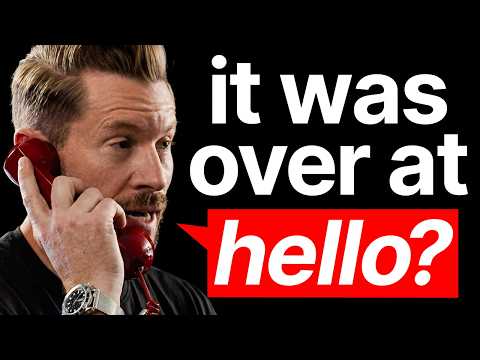
“2026 Cold Calling Techniques (He Trained 1 Million Sales Reps)”
What we found: A Detailed Cold-Call Opener, a 7-in-10 Anecdote, and a "1 Million Reps" the Audio Never Mentions
The word tracks are specific and usable. The only result offered is one sentence about booking rates, and the title’s credential is not spoken anywhere in the video.
- 7 in 10 Booking rate claimed
- ~1 in 50 Other reps
- Not said "1 million reps"
- None given Sales or revenue
The claim
That a specific opener — familiar tone, a "holding a copy of" pattern interrupt, and "selling the exit" — gets prospects to engage where standard openers are rejected.
- Prospects booking the next-step call (his own calls) — 7 out of 10
- Colleagues using standard openers — "maybe one out of like 50"
- Implied ratio between the two — 35×
- Rejection rate of the standard opener — "99% of the time"
- Years studying behavioural science — 25
- Years as a salesperson before the company — 17
- Sales reps trained — Title says 1 million; never stated in the audio
- Closed sales, revenue or commission from the method — Never stated
- Community live sessions — 3 a day, 15 a week
- Community price after the free first month — Never stated
What is this income idea?
Not a business — a sales skill. The video teaches the first twenty seconds of a cold call, on the premise that better openers make a rep’s calls more productive and therefore raise commission income.
- The argument starts from the prospect’s reaction. Within the first few seconds, he says, the brain decides whether the caller is a threat, and standard openers — name, company, "the reason I called" — trigger that defence. He dismisses the "numbers game" approach of dialling more to absorb more rejection.
- His alternative has three moves. First a familiar tone with a deliberate stumble on the name — "it’s it’s Jeremy, Jeremy Miner" — so the prospect assumes they have met. Then a pattern interrupt: "I’m holding a copy of your…" something relevant, with paper audibly crinkled. Then "selling the exit": saying he is not sure the conversation makes sense, or not sure he has the right person.
- The problem statement follows a fill-in template: who would be responsible for "any possible hidden gaps" in some area that "could be causing" a named negative consequence. The close of the opener asks whether the prospect would be "opposed" to a brief conversation rather than "open" to one, because prospects prefer to say no.
- He walks through four examples: AI note-dictation software for hospitals, a real-estate investor calling distressed owners, recruiting software for trucking firms, and a gatekeeper transfer at one of those firms. Each is fully scripted.
- The one performance figure comes as an aside about his time as a rep. Colleagues on monotone openers, he says, wondered why "seven out of ten" of the people he spoke to booked a next-step call when they were getting "maybe one out of like 50".
- The video closes with a call to join his community, which he says has thousands of members, runs live sessions three times a day, and gives the first month free.
Sound like you already know them, mention a document you are holding, say you are unsure it is worth their time, then ask a question they can answer with "no".
- Familiar tone — "It’s it’s Jeremy, Jeremy…"
- Pattern interrupt — "Holding a copy of your…"
- Sell the exit — "Not sure it makes sense"
- Problem statement — "Hidden gaps… causing…"
- Negative question — "Would you be opposed?"
- Next-step call — Claimed 7 in 10
A complete opener — and the result figure stops at a booked call, not a sale.
A good lesson on openers, sold with a credential it never states
The lesson underneath the number
- As instruction, this is better than most of the genre. The steps are named, each is justified, and four full examples show the template adapted to very different buyers — a hospital, a distressed homeowner, a trucking recruiter, a gatekeeper. The gatekeeper move, asking to be put through "to their voicemail" knowing the decision-maker will answer if present, is the kind of specific, testable detail that training videos usually skip.
- Where it is weaker is evidence. The only result is a single sentence: seven of ten prospects he spoke to booked a next step, while colleagues managed about one in fifty. That is a 35-fold gap, offered with no call counts, no period and no definition of who counted as "everybody I talked to". And a booked call is two steps short of income. The video never says what share of those calls closed or what they were worth.
- The title makes a larger claim than the audio. "He Trained 1 Million Sales Reps" is phrased as if someone else is vouching for him, and the figure does not appear anywhere in the video. What he does say about himself — twenty-five years studying behavioural science, seventeen years selling before starting his company — is specific but unverifiable from the video.
- The technique itself deserves a note. The familiar tone works by making the prospect think they have met the caller. The paper-crinkling works by making a document sound present. In the real-estate example he points out that owners "don’t know if you’re the IRS", and the scripted line about representing buyers purchasing "five or six different properties" is accurate only if that is true. Used without care, these moves can leave the prospect with a different impression of who is calling. The video does not raise that risk, and it does not mention calling-compliance rules at all.
They just hear it on a YouTube video like this and they think they’re going to master it.
The presenter, on reps who are not his clients — a frank signal of where the video leads
The opener, step by step, as he teaches it
Every step is scripted in the video. Our notes are on what each step actually relies on.
No call recordings, CRM data or booking logs are shown or described.
- Drop the standard introduction — No "is this John", no company name up front, no "the reason I called". He argues prospects have heard that pattern so often it triggers instant rejection. A reasonable, widely held view; no data is offered for it.
- Use a familiar tone and stumble on your own name — The deliberate repeat — "it’s it’s Jeremy, Jeremy Miner" — is designed so the prospect wonders where they met you. It works by implying a prior relationship that does not exist, which is worth knowing before you adopt it.
- Hold a real document and say so — Property tax records, an Indeed job ad, online reviews, a new regulation. He recommends physically crinkling paper so it "sounds like what you’re saying is real". The document should relate to the problem you solve.
- Sell the exit — "I’m not even sure if it makes sense for us to talk" or "not sure if you’re the right person". Lowering the stakes before asking for time is a well-understood technique and is clearly explained here.
- State a neutral problem and its consequence — "Any possible hidden gaps in your [area] that could be causing [consequence]." He stresses staying neutral rather than assumptive, because the caller has "zero" credibility in the first seconds.
- Ask for a "no" — "Would you be opposed to…" rather than "would you be open to…". The reasoning — prospects prefer to say no — is asserted rather than evidenced, but the phrasing is concrete and easy to test.
- Handle the gatekeeper with a voicemail request — Ask to be transferred "to their voicemail", knowing the decision-maker will pick up if at their desk, then name the gatekeeper when you are put through. A practical detail most training omits.
The business model
For the viewer: commission or salary from selling, improved in theory by more prospects reaching a second call. For the presenter: a paid community and client training, both promoted in the video.
Salespeople in any industry who cold call, from SaaS to real-estate investing.
A repeatable opener that avoids the defensive reaction standard introductions trigger.
A weekly YouTube training video, ending with a free first month in the community.
- Community membership — First month free; ongoing price never stated
- Client training — Referred to repeatedly ("our clients"), never priced
- Lead lists and phone systems — Assumed, never discussed
- Practice and role-play time — He says reps fail without it
For a viewer the scripts are free. The money question sits on the other side: whether a booked call converts to a sale, which the video never addresses.
What you would actually need
Money
Nothing to use the scripts in the video. The community is offered with the first month free; its price afterwards is not given.
The framework itself is free and fully shown, which is to his credit. The upsell is explicit: reps who are "not clients" are said to fail with it because they have not been trained or role-played. Check the community’s ongoing price before joining.
Costs named or implied
- A phone and a lead list — the video assumes both
- Community membership after the free first month, price not stated
- Any paid training for "our clients", never priced
- Calling-compliance obligations where you operate, never mentioned
Time
Twenty-five years studying behavioural science and seventeen years selling before starting his company. The scripts are presented as usable after one viewing.
He contradicts the one-viewing idea himself: reps who "just hear it on a YouTube video" are said to fail without role-play. Expect weeks of practice before the tone sounds natural rather than rehearsed.
Where the time goes
- Writing a "holding a copy of" line for your own industry
- Writing a problem-and-consequence statement your prospects recognise
- Role-playing tone until the stumble sounds natural
- Tracking your own booking rate — the video offers no benchmark method
The part you must pay attention to
The only result in the video is a booked call, measured once, with no numbers behind it.
Seven in ten booking a next-step call against one in fifty is a 35-fold difference. It is offered in a single sentence about his time on a sales floor.
- His prospects booking the next call — 7 / 10
- Colleagues on standard openers — 1 / 50
35× — with unknown sample sizes
Ratio of the two booking rates, our arithmetic
The sentence gives two rates and none of what would make them comparable: how many calls, over what period, from what lead source, in which industry, and whether "everybody I talked to" means every dial or only prospects who stayed on the line past the opener. A booked next-step call is also not a sale — the video never says how many of those booked calls closed, what they were worth, or what the method did to his commission. The title adds a second unsupported figure: "He Trained 1 Million Sales Reps" is written in the third person and never spoken in the video. The only "million" in the audio is the phrase "the million-dollar question".
None of this means the opener does not work; it means the video does not show that it works. It is a well-explained technique supported by the presenter’s authority and one anecdote. Treat 7 in 10 as his recollection, not a benchmark, and measure your own before-and-after rate on the same list.
- THE ONE RESULT, TAKEN APART
- His booking rate 7 / 10 = 70%
- Colleagues 1 / 50 = 2%
- Ratio 70 / 2 = 35x
- Calls behind 70% not given
- Calls behind 2% not given
- Period / industry not given
- Booked calls that closed not given
- THE TITLE
- "Trained 1 Million Sales Reps"
- In the audio no
- Only "million" spoken:
- "the million-dollar question"
- THE COMMUNITY
- Lives: 3 a day, 15 a week
- 15 / 3 = 5 days -> weekdays
- Price after month one not given
The economics
There is no money figure in the video. The arithmetic below is all that the stated rates allow.
- His booking rate — 7 in 10
- Colleague booking rate — ~1 in 50
- Ratio — 35×
- Skilled rep vs volume rep — 10 prospects beats 50
- Standard opener rejection — "99% of the time"
- Doctors’ daily dictation time (client example) — 1.5–2 hours
- Close rate, deal size, commission — Never stated
What 7 in 10 would mean on a day of calls, if it held
20 conversations × 70% = 14 booked calls, against 20 × 2% = 0.4
Fourteen next-step calls a day versus fewer than one — before any close rate, which is never given
IncomeIdeaLab illustration using the two rates stated in the video; the 20-conversation day is our assumption
The 20-conversation day is assumed for illustration only. The video gives no call volume, no period, no lead source and no close rate, so the rates cannot be turned into income. It is also unclear whether "everybody I talked to" counts every dial or only people who stayed on the line.
- How many calls the 7-in-10 and 1-in-50 rates were measured over
- What share of booked calls became sales, and at what value
- The industry, product and lead source behind the anecdote
- Any basis for "trained 1 million sales reps"
- The community’s price after the free first month
- Calling-compliance obligations for the scripts shown
- "Three times a day, 15 times a week" is internally consistent: fifteen sessions at three a day is five days, so the schedule is weekdays.
- The 1.5-to-2-hour daily dictation figure for doctors is stated as the pitch of a client company he trains. It is used as sales copy inside a script, not as a researched figure.
- "Nobody wants to get rejected 99% of the time" and "pretty much over 99% of the time" are rhetorical and are not tied to any data.
- He discloses throughout that he trains clients and runs the community. The pitch is clear, and the scripts are given in full.
Evidence status
Every substantive claim in the video.
- Trained 1 million sales reps — Video title only — Never said in the audio. Not supported anywhere in the video.
- 7 in 10 of his prospects booked a next-step call — Presenter, recalling his time as a rep — One sentence, no call counts or period. Bookings, not sales.
- Colleagues got about 1 in 50 — Presenter — Same sentence. A comparison with no sample sizes.
- Standard openers fail "99% of the time" — Presenter — Rhetorical. No data given.
- A skilled rep on 10 prospects beats an unskilled one on 50 — Presenter — Plausible as a principle; no figures.
- 25 years studying behavioural science; 17 years selling — Presenter — Specific, unverifiable from the video.
- The opener framework and four industry scripts — Presenter, taught in full — Clear, complete and adaptable.
- Doctors spend 1.5–2 hours a day dictating notes — Presenter, citing a client’s pitch — Sales copy for an example product, not a researched statistic.
- Community: thousands of members, 15 live sessions a week, first month free — Presenter — His own product. Ongoing price not given.
What is actually proven?
The technique is shown. Its results are asserted once.
- A complete opener framework with four worked, industry-specific scripts.
- The paid community is pitched openly as his own.
- A 7-in-10 booking rate from his own calls, recalled without numbers.
- The two stated rates differ by a factor of 35.
- Any close rate, deal value, commission or revenue from the method.
- Any basis for the title’s "1 million sales reps".
What the headline doesn’t tell you
An opener gets you a conversation. The video stops there.
- "1 million reps" is not said. — It is only in the title.
- 7 in 10 is one anecdote. — No call counts, no period.
- A booking is not a sale. — Close rates are never given.
- Familiarity is implied. — The prospect has not met you.
- "Not the IRS" is his line. — Confusion is part of the hook.
- Compliance is never raised. — Calling rules vary by place.
- Non-clients are said to fail. — The upsell is built in.
- Community price is missing. — Only month one is free.
Should you try it?
Worth testing on your own calls — with your own numbers
The scripts cost nothing to try. Keep the honest parts, drop anything that implies authority or a relationship you do not have, and measure the result yourself.
- Specificity of the instruction — 8 — Every step scripted, four industries covered, gatekeeper included.
- Evidence the method works — 2 — One undated anecdote with no volumes.
- Link from technique to income — 1 — Stops at a booked call; no close rate or deal value.
- Title accuracy — 1 — The headline credential is not in the audio.
- Disclosure of the pitch — 7 — Community and client training are clearly his.
- Attention to honesty and compliance — 2 — Implied familiarity and document authority are not caveated.
- Beginner accessibility — 7 — Free to try on any call list tomorrow.
- For a working salesperson this is a low-cost experiment. The scripts are complete, the logic of each step is explained, and nothing has to be bought to try them. The most transferable parts are the least theatrical: drop the stock introduction, state a specific problem your prospect already recognises, lower the stakes before asking for time, and handle gatekeepers by asking for voicemail.
- Be careful with the parts that depend on the prospect's impression of who is calling. Stumbling on your name so the prospect thinks you have met, crinkling paper so a document sounds official, and letting a homeowner wonder whether you are the tax authority all rely on the prospect misunderstanding who is calling. Some of that is harmless theatre; some of it, depending on your industry and where you call, could conflict with calling rules where you are. The video does not distinguish the two.
- Then set your own benchmark. The single result — seven in ten against one in fifty — has no sample behind it, and it measures booked calls, not closed deals. Track your current opener for a fortnight on one list, switch to this one on a comparable list, and compare both booking rate and what those bookings became. That tells you more than the video can.
Passive or automated?
Automation
Every step is a live human conversation.
Passive potential
A sales skill pays only while you are on the phone.
This is a skill for people paid to make calls, and nothing about it is passive or automated. The whole method depends on tone, timing and a human reading the prospect’s reaction in real time. It may make each hour on the phone more productive; it does not remove the hour.
- Every call, live
- Writing an industry-specific opener and problem statement
- Role-play practice until the delivery sounds natural
- Handling gatekeepers and transfers
- Measuring your own booking and close rates
Recommended beginner experiment
Test the opener, not the claim.
- Record a baseline first. — Two weeks on your current opener.
- Write your own problem statement. — A gap your buyers already talk about.
- Pick a document that is really relevant. — And really in your hand.
- Drop anything that implies a relationship. — Keep it honest.
- Practise tone until it sounds natural. — He says this is where most fail.
- Run it on a comparable list. — Same source, same volume.
- Track bookings and closes. — The video stops at bookings.
- Check calling rules where you work. — Never mentioned in the video.
Our verdict: 5/10
Useful opener scripts, backed by one sentence of evidence and a headline credential that never appears in the audio
Credited for teaching a complete opener in full, with four worked scripts across very different industries; for practical details such as the voicemail-transfer request for gatekeepers; for explaining the reasoning behind each step; and for presenting the community pitch clearly as his own. Marked down because the title’s "He Trained 1 Million Sales Reps" is never said in the video; because the only performance figure — seven in ten booking a next call against about one in fifty — is a single anecdote with no call counts, period or industry; because the result stops at booked calls and never reaches closes, deal value or income; because the ongoing price of the promoted community is not given; and because the parts of the method that work by implying familiarity or official documents are taught without any caution about how they may be received or about calling rules.
As a lesson in how to open a cold call, this holds up. The presenter gives the whole framework away: sound familiar, reference something concrete, lower the stakes, name a problem and its consequence, and ask a question the prospect can comfortably answer with no. The four worked examples show it bending to very different buyers, and the gatekeeper tactic is a genuinely useful detail. What the video does not do is prove the method. Its only result is a remembered booking rate — seven in ten against one in fifty — with no calls counted, no timeframe and no industry, and it measures booked conversations rather than sales. The title reaches further still: "He Trained 1 Million Sales Reps" appears nowhere in what is said. Several moves also work by leaving the prospect with a particular impression of who is calling or what they are holding, and the video offers no caution on that or on calling rules. Try the honest parts, measure your own rates before and after, and treat the numbers here as a claim rather than a benchmark.
- Booking rate claimed — 7 in 10
- Comparison rate — ~1 in 50
- Implied ratio — 35×
- "1 million reps" — Not in the audio
- Close rate / income — Never stated
- Community price — First month free, then not stated
- Beginner suitability — Try the scripts, measure yourself
Sources
- 2026 Cold Calling Techniques (He Trained 1 Million Sales Reps) — Jeremy Miner — YouTube video, 2026-04-16