Agencies / AI Services · Claim Review
“10 Claude Opus 5.5 Side Hustles That Can Pay A Full-Time Income (Start Today)”
What we found: Ten Claude Side Hustles Ranked: Deal Sizes Come From Mentees, a Prompt-Pack Sum Comes Up $1,900 Short, and One Deal Is Given as $30,000 and $12,000
The ranking test, reaching $8,000 to $10,000 a month without 40 clients, is a useful one. The figures behind it are one-off project fees from the creator's mentorship clients, with no costs and no count of mentees who did not close a deal.
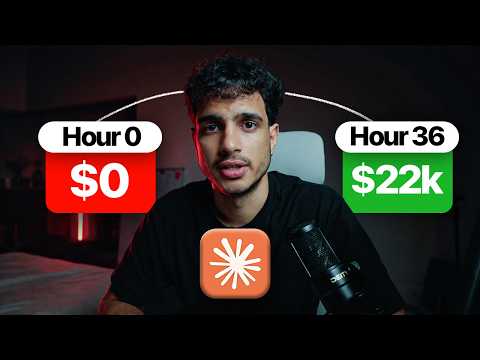
- $1M+ Creator's AI business earnings
- 200+ Founders worked with
- ~$20,000 Average per founder
- Not stated Costs for any idea
The claim
That of ten Claude-based side hustles, the higher-ranked ones can replace a salary at $8,000 to $10,000 a month without needing 40 customers and a staff, as the creator's mentees show.
- Creator's earnings from AI businesses — Over $1 million
- Founders worked with — 200+ in 33 countries, over $4 million in revenue
- Revenue per founder — ~$20,000 over an unstated period
- Yanick's deal — $30,000 at the start; "$12,000" later
- Darien: one voice AI build — $31,000
- Timothy: two email-system deals — 2 × $5,000 = $10,000
- Ramsay: first client — $4,500 upfront plus $1,000 a month
- Hersh: websites — About $30,000 a month
- Prompt packs: 300 sales at $27 — $8,100, not $10,000
- Costs, failure rate, mentorship price — Not stated
What is this income idea?
Sell a familiar service, such as websites, outbound, ghostwriting or app builds, and deliver most of it with Claude, so one person can charge agency prices without an agency's staff.
- The creator says they left a six-figure software engineering job at a big tech company in New York, have made over $1 million through AI businesses, and have worked with 200-plus founders in 33 countries who have done over $4 million in revenue between them.
- The ranking test is stated clearly: not which ideas make money, since "they all make money", but which reach $8,000 to $10,000 a month without 40 customers and a staff. The creator works the low end through: a $27 prompt pack needs about 300 sales a month, and $200-a-month AI retainers need 40 clients.
- From worst to best, the list is: prompt packs and templates; Claude skills sold to businesses; faceless AI content; MVP app builds; websites; connecting Claude to a business's own data with MCP; packaged "AI employee" plugins; running a company's outbound; LinkedIn and email ghostwriting; and, at number one, selling the skill you already have and delivering it with AI.
- Prices are given for most: "a couple hundred" for a Claude skill and not over $1,000; up to $20,000 for an MVP, plus $10,000 for a second platform; $5,000 to $20,000 per website; a $3,000-a-month outbound retainer or 20 to 25% of each deal; $2,000 to $10,000 a month for agency ghostwriting.
- The examples are the creator's mentees: Yanick (a $30,000 deal with an AI energy company), Darien ($31,000 for one voice AI build), Timothy (two $5,000 email-system deals), Ramsay ($4,500 upfront plus $1,000 a month from a first client) and Hersh (about $30,000 a month from websites).
- The creator is frank about limits on several ideas: faceless content can take months and burns "a lot of API credits"; a Claude skill is a one-off sale with no ongoing relationship; a website is usually a one-time build; and the business-data idea has a long sales cycle with security reviews and procurement.
Sell a service you already know, use Claude to do most of the work, and price against a human agency rather than against software.
- Pick a skill you have — Your last job, often
- Check AI can do ~80% — The creator's test
- Find 15 to 20 prospects — Visibly in need
- Send a 30-second voice note — Name one specific issue
- Over-deliver for client one — Make it a case study
- Grow by referral — Founders know founders
A clear service-business recipe; the costs and the hit rate are not given.
A good test for side hustles, applied to examples that do not quite fit it
The lesson underneath the number
- The framing is the strongest thing in this video. Rather than asking whether an idea makes money, the creator asks how many customers it takes to reach a salary, and shows why low-priced products and cheap retainers fail that test: tens of clients, a team, and "you're HR, you're a manager". The number-one idea follows from it: sell a service people already buy from human agencies, price it against those agencies, and keep the difference that speed gives you. That is a coherent argument and a useful filter for anyone choosing between ideas.
- The evidence for it is narrower than the framing. Every income example is a mentee of the creator's programme, and most are single deals: $30,000, $31,000, two of $5,000, $4,500 upfront. Those are project fees, and a project fee is not a monthly income unless another one follows. Only Ramsay's $1,000 retainer and Hersh's $30,000 a month are presented as recurring, and no costs or time frame are given for either. The video does not say how many mentees did not land a deal.
- A few figures do not sit together. Yanick's deal is $30,000 at the start and $12,000 later. Timothy's two $5,000 deals are later described as going "from 0 to USD 10,000 a month in just single month", which is the same $10,000 counted as a month's income. The prompt-pack sum gives $8,100, not $10,000. None of these changes the shape of the argument, but they are the figures a reader would use to judge the ranking.
- The ranking itself is described rather than scored. The intro promises scores on speed to payment, how much of the work AI does, and an "honest ceiling", and says six of the ideas "cap out at USD 2,000 a month". No scores or ceilings are given per idea, and the six are not identified. The reasons the creator gives for each position are often sensible; the numbers promised for them are not in the video.
You're not selling AI. The client isn't buying software… AI is your factory, not your product.
The creator, on the number-one idea
The ten ideas, worst to best, as ranked in the video
No numerical scores are given; the order and the reasons are the creator's.
No costs are given for any idea, and no score is shown for any ranking.
- 10. Prompt packs and templates — A $27 pack of Claude prompts in a Notion doc, sold on Gumroad. The creator's own sum: about 300 sales a month to reach the target. Called "a very easy side hustle to pick up".
- 9. Claude skills for businesses — Write a skill file once and resell it. Ranked low because it is a one-off sale of "a couple hundred", and the creator does not think one can be sold for over $1,000.
- 8. Faceless AI content — Claude for scripts and hooks. The creator says results may take more than three months and the API cost of producing at scale is high; no figure is given for either.
- 7. MVP app builds — Up to $20,000 per build depending on complexity, plus $10,000 for a second platform. The creator says some agencies doing this "make over six figures a month"; none is named.
- 6. Websites — $5,000 to $20,000 per site, aimed at recently funded startups. Hersh, a mentee, is said to make about $30,000 a month. Named the fastest cash on the list, but usually a one-time build.
- 5. Claude connected to a business's data — Hook Claude into a client's CRM, email and calendar with MCP. Ranked fifth because of a long sales cycle; the creator says contracts here are "usually massive" and points to Yanick's deal.
- 4. Packaged "AI employee" plugins — Bundle skills and automations as one installable plugin and price it against a salary of $60,000 to $100,000. The creator says their own plugin replaced a $2,000-a-month director.
- 3. Running a company's outbound — A $3,000-a-month retainer, or 20 to 25% of each deal on a results-only basis. The creator says the business can reach $20,000 to $30,000 a month and that the work is "80% AI 20% you".
- 2. LinkedIn and email ghostwriting — Agencies charge $2,000 to $10,000 a month. With Claude trained on a client's voice, the creator says one person can take 20 clients instead of 10. Recommended for anyone with no skills, audience or technical background.
- 1. The skill you already have, delivered with AI — Sell a normal service and use AI as "your factory not your product". The creator says people running these businesses make $8,000 to $10,000 a month.
The business model
Project fees for builds and websites, monthly retainers for outbound and ghostwriting, results-based commission on outbound deals, and one-off product sales for prompt packs and skills.
Founders and small businesses, with the creator steering towards recently funded startups and B2B firms that "have a lot of money to spend".
An agency-standard service at agency prices, delivered by one person in a fraction of the time because Claude does most of the work.
15 to 20 targeted prospects at a time, each sent a 30-second voice note naming one specific problem, then case studies and referrals.
- Claude subscription and API credits — API spend mentioned for faceless content only. Not priced
- Sales time — Voice notes, calls, scoping. Not quantified
- Results-only outbound risk — "All risk on you". Unpaid until a deal closes
- Security and procurement reviews — Named for the business-data idea. Not quantified
- Platform fees — Gumroad for prompt packs. Not mentioned
- Mentorship — 16 weeks, one-to-one. Price not stated
The creator warns about API credits and long sales cycles, which is more than most lists do. No figure is attached to either, or to any other cost.
What you would actually need
Money
Prompt packs "cost nothing to deliver". Faceless content needs "a lot of API credits". No other cost is given.
The creator's mention of API costs for faceless content is a fair warning, but it is the only one. Every service idea also carries a Claude subscription, outreach time and, for high-ticket builds, unpaid scoping and sales calls. None is priced.
Named or implied, not priced
- Claude subscription or API credits
- Gumroad's fee on each prompt-pack sale
- Hosting and database costs for MVP builds
- Time on 15 to 20 personalised voice notes per batch
- Unpaid work before a results-only outbound deal pays
- The 16-week mentorship, if taken; price not stated
Time
A weekend to build a prompt pack; two weeks for an MVP; 60 days to replace a salary with AI-employee plugins.
These are the creator's estimates for delivery, not for winning the client. The video gives no figure for how long the mentees took to close the deals cited, apart from Timothy's "single month".
Time figures in the video
- A weekend: build a prompt pack
- 2 weeks: a working MVP
- 3+ months: faceless content before results
- 60 days: the creator's salary-replacement target
- 16 weeks: the mentorship programme
- ~10 hours: four ghostwritten posts per client, done by hand
The part you must pay attention to
The income examples are single project fees from mentees, not monthly income from a typical starter.
The video's own test is whether an idea reaches $8,000 to $10,000 a month. Most of the figures offered against it are one-off deals.
- Revenue across the creator's founders — $4,000,000+
- Founders worked with — 200+
~$20,000 each
Over an unstated period; at most, on these figures
The load-bearing assumption is that a newcomer can close project deals of $5,000 to $30,000. The evidence is five named mentees from the creator's own programme, with no count of mentees who did not close a deal. Across all 200-plus founders, the stated totals average about $20,000 each, which is roughly two months at the $10,000 target, over a period the video does not give.
Two figures in the video do not reconcile as stated. Yanick's deal is "a USD 30,000 deal with an AI energy company" in the opening and, later, "an ultimate USD 12,000 deal"; these may be different deals, but the video does not say. And the prompt-pack sum stops short of its own target: 300 sales at $27 is $8,100, while $10,000 takes about 370 sales a month. The point the creator is making, that low-priced products need very high volume, holds either way.
- PROMPT PACKS
- 300 x $27 = $8,100
- $10,000 / $27 = ~370 sales
- RETAINERS
- 40 x $200 = $8,000
- -> checks out
- OUTBOUND, CLIENT'S VIEW
- One $20,000 deal in 2 months
- Fees: 2 x $3,000 = $6,000
- $20,000 - $6,000 = $14,000
- -> the client's revenue,
- before its own costs
- FOUNDERS
- $4M / 200 = ~$20,000 each
The economics
Deal sizes are specific; costs, time frames and success rates are not given.
- Creator's AI business earnings — Over $1 million
- Founders' combined revenue — Over $4 million, 200+ founders
- Yanick — $30,000 deal; later "$12,000"
- Darien — $31,000, one build
- Timothy — Two $5,000 deals
- Ramsay — $4,500 + $1,000/mo
- Hersh — ~$30,000/mo from websites
- Website price — $5,000 to $20,000
- Costs, success rate, mentorship price — Not stated
Websites needed for Hersh's stated month
$30,000 ÷ $20,000 = 1.5; $30,000 ÷ $5,000 = 6
Between two and six websites sold every month, before costs
IncomeIdeaLab calculation from the figures stated in the video
The video does not say how many websites Hersh builds, how long each takes, or whether the $30,000 is a typical or a best month.
- Any cost for any of the ten ideas
- How many mentees did not close a deal
- The period over which the $1 million and $4 million were earned
- Whether Yanick's $30,000 and $12,000 are one deal or two
- The price of the 16-week mentorship
- Per-idea scores and "honest ceilings" promised in the intro
- The $200 × 40 = $8,000 retainer example checks out and supports the creator's case against cheap retainers.
- In the outbound example, the client "paid you 6K but they made 14K". The $14,000 is the client's revenue from the deal minus the fees, not profit; the client's own cost of delivering a $20,000 job is not counted.
- The creator says their AI plugin replaced a director paid $2,000 a month. That is the creator's saving; the build time and running cost of the plugin are not given.
- In the mentorship section the creator also cites a mentee going from $1,000 to $20,000 a month; no time frame or costs are given.
Evidence status
Every substantive figure in the video.
- Over $1 million through AI businesses — Creator — No period or breakdown given.
- 200+ founders, 33 countries, over $4 million — Creator — About $20,000 per founder, our arithmetic.
- Former six-figure big-tech software engineer — Creator — The creator's own account; we make no claim either way.
- Yanick: $30,000 deal — Creator, about a mentee — Later given as $12,000; not reconciled.
- Darien: $31,000 voice AI build — Creator, about a mentee — One project fee.
- Timothy: two $5,000 deals; $10,000 in a month — Creator, about a mentee — The same $10,000, described as a month's income.
- Ramsay: $4,500 plus $1,000 a month — Creator, about a mentee — From a first client.
- Hersh: ~$30,000 a month from websites — Creator, about a mentee — 2 to 6 sites a month at the stated prices.
- $27 prompt pack needs ~300 sales for $10,000 — Creator — 300 × $27 = $8,100; $10,000 needs ~370.
- $200 retainers need 40 clients — Creator — 40 × $200 = $8,000. Checks out.
- Six ideas cap out at $2,000 a month — Creator — The six are not identified.
- Outbound can make $20,000 to $30,000 a month — Creator — No example at that level given.
- Costs, success rate, mentorship price — Nobody — Not stated in the video.
What is actually proven?
The framing is sound; the figures rest on statements about mentees.
- The retainer arithmetic checks out; the prompt-pack arithmetic reaches $8,100, not $10,000.
- Five mentee results are given with specific deal sizes.
- One deal is stated as $30,000 and later as $12,000.
- A 16-week mentorship and a free course are promoted.
- Stated founder revenue averages about $20,000 each.
- Costs, success rates and the time each mentee took.
What the headline doesn’t tell you
A deal is not a monthly income.
- Every example is a mentee. — From a paid programme.
- Most are one-off deals. — Not monthly income.
- $30,000 or $12,000. — Both stated for one mentee.
- 300 × $27 = $8,100. — Not $10,000.
- No scores shown. — Promised in the intro.
- "Six cap out at $2,000." — Which six is not said.
- No costs. — Apart from API credits.
- Mentorship price. — Not stated.
Should you try it?
Use the framing; check the numbers against your own pipeline
The "sell a service you already know" advice is sound. The deal sizes are from mentees and should not be taken as a typical first result.
- Quality of the ranking test — 8 — Clients needed to reach a salary is the right question.
- Candour about limits — 7 — API costs, long sales cycles and one-off sales are all named.
- Evidence for the income figures — 2 — Mentee statements; no breakdown or success rate.
- Internal consistency — 4 — One deal at two sizes; one sum short of its target.
- Cost disclosure — 1 — API credits mentioned, nothing priced.
- Delivery on the intro — 3 — No scores or per-idea ceilings appear.
- Beginner accessibility — 4 — Best ideas need an existing skill or high-ticket sales.
- Start with the creator's test, because it is the most useful thing here. Before choosing any idea, divide your monthly target by the price per client and look at the number. If it is 40 or 370, the idea needs either a team or an audience you do not have. If it is two or three, it needs high-ticket sales skills instead. That one calculation will rule out most of the lists in this genre.
- The number-one idea is also the most practical: sell what you already know how to do, at the price a human provider charges, and use Claude to do it faster. The creator's own check, whether AI can do about 80% of the delivery, is a fair filter. It works best for people who already have a professional skill and someone who has paid them for it.
- Treat the deal sizes with care. Every example is a mentee of a paid programme, most are one-off projects, and no figure is given for how many mentees closed nothing. One deal is given at two different sizes. A $30,000 build is a strong result; it is not the same as $30,000 a month, and the video sometimes moves between the two.
- Finally, cost the idea before you start. The creator says API credits for faceless content add up and that data-integration deals involve security reviews and procurement. Neither is priced. A results-only outbound deal, which the creator recommends for a first client, means working unpaid until the client closes a sale.
Passive or automated?
Automation
The creator puts delivery at about 80% AI for outbound; sales remain manual.
Passive potential
Project fees and retainers both depend on continued work and selling.
The creator does not present these as passive, and the higher-ranked ideas are explicitly services. Claude may write the outreach copy, draft the posts or generate the website, but each deal has to be found, sold and delivered, and project fees stop when the projects do. The two lowest-ranked ideas, prompt packs and Claude skills, are the closest to passive products, and the creator ranks them last precisely because the volume they need is unrealistic for one person.
- Finding and messaging prospects
- Sales calls and scoping for high-ticket builds
- Training Claude on each client's voice or data
- Security and procurement reviews for data work
- Reviewing AI output before it reaches the client
Recommended beginner experiment
Apply the creator's test before choosing.
- Write down a skill someone has paid you for. — The creator's number one.
- Divide your target by the price per client. — The creator's own test.
- Check Claude can do most of the delivery. — Test it on one sample job.
- Message 15 to 20 prospects with one specific issue. — The 30-second voice note method.
- Price against a human provider. — Not against AI tools.
- Record your costs and hours from day one. — The video gives none.
- Count deals, not conversations. — Judge after 60 days.
Our verdict: 5/10
A sound way to rank side hustles, with income examples drawn from one mentorship and two figures that do not reconcile as stated
Credited for a clear ranking test (clients needed to reach a salary), for showing why cheap products and retainers fail it, for a practical number-one idea built on existing skills, and for naming API costs, long sales cycles and one-off sales as limits. Marked down because every income example is a mentee of the creator's programme with no success rate given; because most examples are single project fees rather than monthly income; because one mentee's deal is stated as $30,000 and as $12,000; because 300 sales at $27 gives $8,100, not $10,000; because the scores and per-idea ceilings promised in the intro do not appear; and because no costs are given.
This video asks the right question of side hustles: not whether an idea makes money, but how many customers it takes to replace a salary. The creator shows why a $27 prompt pack and a $200 retainer fail that test, ranks the ten ideas by how few clients each needs, and lands on a sensible number one: sell the professional skill you already have, price it against a human provider, and use Claude to deliver it faster. The creator is also open about limits, from API costs on faceless content to long procurement cycles on data work. The evidence offered is narrower than the argument. Every income example is a mentee of the creator's paid programme, most are single project fees rather than monthly income, and no figure is given for mentees who did not close a deal. Across the 200-plus founders the creator mentions, the stated $4 million averages about $20,000 each over an unstated period. Two figures do not line up as stated: one mentee's deal is $30,000 at the start and $12,000 later, and the prompt-pack sum gives $8,100 against a $10,000 target. The intro also promises scores and "honest ceilings" for each idea that the video does not provide. Take the framing; test the numbers against your own pipeline.
- Creator's AI earnings — $1M+
- Founders and revenue — 200+, $4M+
- Average per founder — ~$20,000
- Largest single deal — $31,000
- Prompt packs at 300 × $27 — $8,100
- Costs for any idea — Not stated
- Mentorship price — Not stated
- Beginner suitability — Best with an existing skill
Sources
- 10 Claude Opus 5.5 Side Hustles That Can Pay A Full-Time Income (Start Today) — YouTube video, 2026-08-14
- FTC — Guides Concerning the Use of Endorsements and Testimonials — Regulatory guidance on endorsements and earnings claims