Asset Income / Self-Serve Car Wash · Claim Review
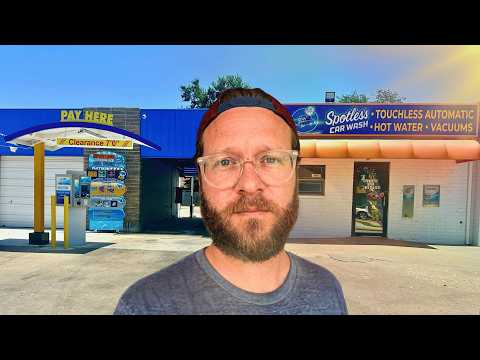
“I Bought and Renovated a Carwash... Is My USD 200K Renovation Finally Paying off?”
What we found: Car Wash Renovation: The $240,000 Value Gain on a $200,000 Spend Applies a 4x Multiple to Revenue, Not Profit
The automatic’s jump from about 6 to 20 cars a day and the 14-day total of $16,232 are specific and reconcile. The payoff case multiplies $60,000 of projected extra revenue by four, before the new automatic’s own running costs, and “all profit from here” sets fixed costs against revenue with variable costs left out.
- ~$200,000 Renovation spend
- 6 → 20 Automatic cars per day
- $16,232 First 14 days of the month
- $240,000 Value gain claimed
The claim
That a $200,000 renovation, mainly a new automatic, is already paying off: the automatic is on track to triple its revenue, and the business is worth $240,000 more than before.
- Renovation spend, first four months of the year — About $200,000
- New automatic — $175,000
- Old automatic, same time last year — 6 cars a day
- New automatic, first half of this month — 20 cars a day
- Old automatic revenue — About $30,000 a year
- New automatic at this pace — $90,000 a year
- Extra revenue a year — $60,000
- Value added at a 4x multiple — $60,000 × 4 = $240,000
- Monthly expenses incl. mortgage — $11,000–$12,000
- First 14 days of this month — $16,232
- Automatic running costs, how the $200,000 was funded — Not stated in the video
What is this income idea?
Buy an existing self-serve car wash and reinvest heavily in it: a new automatic, a canopy, new concrete, a garage door, new bay panelling and signage, and new vacuums.
- The creator says they spent “probably about $200,000” over the first four months of the year, most of it on a $175,000 automatic replacing an older one, plus the building work around it and refreshed self-serve bays.
- The before-and-after on the automatic is specific. The old machine averaged six cars a day at the same time last year; the creator had thought it was doing twelve. The new one is averaging twenty cars a day for the first half of the month, after a slow, rainy first month.
- From that pace the creator projects the automatic at about $90,000 a year against about $30,000 for the old one, so $60,000 more a year. Applying “probably a 4x multiple”, they conclude the business could be worth $240,000 more, against the $200,000 spent, while noting “of course I don’t have that in my pocket.”
- The self-serve side is up too. Last month did $27,000, of which $22,000 was self-serve, which the creator says is $6,000 more than the same month last year. The creator expects over $300,000 gross revenue this year and says the highest month so far was $38,000, in winter.
- The collection itself follows the usual routine: coin from the bays, bills from the changers, quarters from eight vacuums and cash from the automatic. This collection covers seven days and totals $4,257.25, and the month after 14 days stands at $16,232, or $1,159 a day.
- Costs are stated in round numbers: fixed expenses of about $6,750 a month and a mortgage of about $5,000, “about 11 or 12,000 a month average”. Against the 14-day total the creator concludes “I’m already in the black” and that “everything I make from here on out is going to be all profit.” A payroll and scheduling app sponsors the video.
A big reinvestment that has clearly lifted traffic; the claim that it has already paid for itself rests on valuing revenue rather than profit.
- Spend ~$200,000 — $175k automatic
- 6 → 20 cars a day — Half a month
- $30k → $90k a year — Projected
- +$60,000 revenue — Projected
- × 4 multiple — On revenue
- +$240,000 value — Creator’s conclusion
- Costs of the new wash — Not stated
Each step is the creator’s own; the cost of running the extra washes is the step that is missing.
Strong evidence that traffic is up, and a shortcut on what it is worth
The lesson underneath the number
- The operating evidence here is good. The creator gives cars per day before and after, admits the old machine was doing six a day rather than the twelve they had assumed, and says the new one had a slow, rainy first month before reaching twenty. The collection reconciles exactly: 4,147 bay quarters ($1,036.75) and 1,246 vacuum quarters ($311.50) make the roughly $1,300 of coin, and with $2,896 in bills and $13 in rejects the total is the stated $4,257.25.
- The 14-day month total also checks out; the creator’s own on-screen graphics at 26:38 show $9,316.75 and $4,261.25 for the running cash and self-serve card totals. $9,316.75 in cash, $4,261.25 in self-serve card sales and $2,654 from the automatic add to $16,232, and $16,232 over 14 days is $1,159 a day, both as stated. The self-serve side being $6,000 ahead of last year in the previous month is a specific, falsifiable comparison.
- The valuation step is where the reasoning needs care. Multiples are normally applied to what a business earns after its costs, and the creator applies one to extra revenue. The new automatic has its own running costs, every one of which grows with the twenty cars a day, and none is stated. So $240,000 is an upper figure, and on any realistic margin the added value falls below the $200,000 spent, at least on these numbers. The creator does acknowledge that the value is only realised on a sale or refinance.
- The same point applies to “everything I make from here on out is going to be all profit”. The $11,000–$12,000 the creator compares against is fixed expenses plus the mortgage. Soap, water, power and card fees rise with every wash, so revenue above that line is not all profit. The creator also says, fairly, that a normal post-renovation month has not yet been seen. Taken together, the video makes a convincing case that the renovation has lifted traffic and a premature one that it has already paid for itself.
I haven’t seen what a normal month is yet.
The creator, on the post-renovation baseline
How the renovation case is built, as stated
Specific before-and-after figures, then a valuation shortcut.
No figure is given for the new automatic’s chemicals, water, electricity, card fees or maintenance.
- Replace the old automatic — A $175,000 automatic with a new canopy, concrete and garage door, chosen so the wash “doesn’t look janky” to passing traffic. About $200,000 in total.
- Refresh the self-serve bays — New panelling and signage in every bay, and new vacuums to replace units the creator says were constantly failing.
- Measure cars per day — Six a day on the old automatic, which the creator had believed was twelve, against twenty a day on the new one for the first half of this month.
- Project the annual effect — “If I keep that pace up that could be $90,000 a year from one automatic,” against about $30,000 before: $60,000 more a year.
- Value the gain — “Probably a 4x multiple”: $60,000 × 4 = $240,000 of added value, against $200,000 spent, realised only on a sale or refinance.
- Compare the month with costs — $16,232 in 14 days against $11,000–$12,000 of monthly expenses, so the creator says the month is “already in the black”.
The business model
Self-serve bay sessions in coin, tokens and card; automatic washes, mostly by card; and eight vacuums.
Passing drivers; the creator redesigned the site to appeal to “all these cars that are passing by”.
A modern, well-lit automatic and refreshed bays that look like they will actually clean the car.
Road visibility and the look of the site; no paid marketing is mentioned.
- Mortgage — About $5,000 a month, stated
- Fixed expenses — About $6,750 a month, stated
- Renovation — About $200,000; funding not stated
- Automatic running costs — Chemicals, water, power; not stated
- Card-processing fees — Not stated
- Staff payroll — Mentioned in the sponsor read; amount not stated
- Vacuum and equipment repairs — Three vacuums replaced; cost not stated
The creator splits monthly costs into fixed expenses and the mortgage. Costs that rise with each wash are not separated out, which matters most for a renovation whose purpose is to add washes.
What you would actually need
Money
About $200,000 for the renovation, on top of a wash already carrying a mortgage of about $5,000 a month. How the $200,000 was paid for is not stated.
This is a large second investment in an asset already financed. A reader would need to know whether the $200,000 was cash or debt, and if debt, what it adds to the monthly payments, since the stated $11,000–$12,000 of costs may or may not include it.
Named or implied, not priced here
- Purchase of the wash itself, price not given
- Mortgage of about $5,000 a month
- About $200,000 of renovation, funding not stated
- Fixed expenses of about $6,750 a month
- Chemicals, water and power for 20 automatic washes a day
- Card-processing fees on a mostly card-paid automatic
- Three new vacuums and ongoing repairs
- Staff on payroll, through the sponsor’s app
Time
Weekly collections, plus the four months the renovation took and a settling-in period: “I haven’t seen what a normal month is yet.”
The creator is candid that the post-renovation baseline is not yet known. Twenty cars a day is half a month of data in a hot, slow season, which could sit above or below a full year’s average.
Where the owner’s time goes
- Collecting coin, bills and tokens from bays, vacuums and the automatic
- Counting thousands of quarters by hand
- Clearing coin jams and replacing failing vacuums
- Cleaning up after customers
- Managing staff payroll and scheduling
- Overseeing four months of construction
The part you must pay attention to
The $240,000 value gain multiplies extra revenue by four. Businesses are usually valued on profit.
The creator’s argument is direct: “$60,000 times 4 that means this business could be worth potentially $240,000 more,” against $200,000 spent, so “a decent return”. The $60,000 is extra revenue.
- Projected extra revenue a year — $60,000
- Multiple the creator applies — 4
$240,000
Value added, as the creator calculates it
Every extra wash through the automatic uses chemicals, water and electricity, and most automatic customers pay by card, so each also carries a processing fee. None of these is stated for the new machine. A buyer applying a multiple would normally apply it to the extra profit those washes produce, after those costs, not to the extra revenue. The $60,000 itself projects half a month’s pace across a full year.
If the extra washes keep, say, two-thirds of their revenue after their own running costs, the added profit is about $40,000 a year and a 4x multiple gives about $160,000 of added value, less than the $200,000 spent. That margin is our illustration, not a figure from the video; the real one is not stated. On a simple payback basis, $200,000 recovered from $60,000 a year of extra revenue takes about 3.3 years before any running costs, and longer after them. The renovation may well be a good investment; the video’s arithmetic does not yet show that it has paid for itself.
- THE CREATOR'S CASE
- Old automatic ~$30,000/yr
- New, at current pace ~$90,000/yr
- Extra revenue $60,000/yr
- x 4 multiple = $240,000
- Spent $200,000
- ON PROFIT INSTEAD (OUR EXAMPLE)
- Extra revenue $60,000
- If 2/3 kept after
- chemicals, water,
- power, card fees ~$40,000
- x 4 ~$160,000
- SIMPLE PAYBACK
- $200,000 / $60,000 ~3.3 years
- -> before running costs
The economics
Revenue reconciles throughout; the costs of the extra washes are the missing input.
- Renovation spend — ~$200,000
- New automatic — $175,000
- Old automatic revenue — ~$30,000 a year
- New automatic at current pace — ~$90,000 a year
- Last month, total / self-serve — $27,000 / $22,000
- This collection (7 days) — $4,257.25
- 14-day month total — $16,232
- Fixed expenses + mortgage — ~$6,750 + ~$5,000
- Highest month this year — $38,000
- Automatic running costs — Not stated
Checking the 14-day total
$9,316.75 cash + $4,261.25 self-serve card + $2,654 automatic card
$16,232, or $1,159 a day over 14 days, matching the stated figures
IncomeIdeaLab calculation from figures stated in the video
The self-serve card figure is the one consistent with the stated total. A month on this pace would be about $34,800 by our arithmetic, but summer heat, rain and the post-renovation settling-in period all affect it, as the creator says.
- Chemical, water and power costs per automatic wash
- Card-processing fees
- Whether the $200,000 was paid in cash or borrowed, and any added loan payment
- Staff pay
- Purchase price of the wash
- Profit for any full month after the renovation
- Our check of the collection: 4,147 quarters = $1,036.75; 1,246 vacuum quarters = $311.50; $2,896 + $13 rejects = $2,909; total $4,257.25, matching the creator.
- Stated costs: $6,750 fixed + ~$5,000 mortgage = ~$11,750 a month, consistent with the creator’s “11 or 12,000”.
- Twenty cars a day for a year is 7,300 washes; at $90,000 that is about $12.33 a wash by our arithmetic. Six a day at $30,000 is about $13.70 a wash.
- Last month: $27,000 total less $22,000 self-serve leaves about $5,000 from the automatic and vacuums by our arithmetic.
- A payroll and scheduling app sponsors the video, which the creator says during the read.
Evidence status
Every substantive figure in the video.
- About $200,000 spent; automatic $175,000 — Creator — Stated clearly. How it was funded is not stated.
- Old automatic averaged 6 cars a day — Creator — Volunteered with the admission that the creator thought it was 12.
- New automatic averaging 20 cars a day — Creator — First half of one month, after a slow first month.
- $90,000 a year from the automatic — Creator — Half a month’s pace annualised.
- $60,000 more revenue a year — Creator — Revenue, before the automatic’s running costs.
- Business worth $240,000 more at 4x — Creator — Arithmetic is right; the multiple is applied to revenue rather than profit.
- Last month $27,000, $22,000 self-serve, +$6,000 on last year — Creator — Specific and consistent with the month described.
- $4,257.25 this collection — Creator, counted on camera — Reconciles exactly from quarters, bills and rejects.
- $16,232 in 14 days, $1,159 a day — Creator — Reconciles from the stated cash and card parts.
- Expenses about $11,000–$12,000 a month — Creator — Fixed costs plus mortgage; per-wash costs not separated.
- Everything from here is all profit — Creator — Variable costs rise with every wash and are not counted in the stated line.
What is actually proven?
Traffic and revenue are well evidenced. The payoff is not yet.
- The automatic went from about 6 to 20 cars a day, on the creator’s figures.
- The collection and the 14-day total both reconcile from their parts.
- Self-serve revenue was $6,000 ahead of last year last month.
- $90,000 a year from the automatic, from half a month of data.
- The $240,000 value gain applies a 4x multiple to revenue.
- The running costs of the new automatic and how the $200,000 was funded.
What the headline doesn’t tell you
More cars is clear. More profit is assumed.
- 4x revenue, not profit. — Multiples usually apply to earnings.
- Half a month of data. — Annualised to $90,000.
- Per-wash costs not stated. — Soap, water, power, card fees.
- “All profit from here”. — Against fixed costs only.
- Funding not stated. — Cash or a second loan.
- No normal month yet. — The creator says so.
- Value is unrealised. — Only on a sale or refinance.
- Sponsored by a payroll app. — Stated in the read.
Should you try it?
A lesson in reinvestment for existing owners, not a starting point
If you own a tired car wash, the before-and-after is instructive. Judge any upgrade on added profit after per-wash costs, not on added revenue times a multiple.
- Specificity of before-and-after figures — 8 — Cars per day, revenue and comparisons with last year.
- Reconciliation of the counts — 9 — Collection and 14-day total add up exactly.
- Valuation method — 3 — A multiple applied to revenue.
- Cost disclosure — 4 — Fixed costs and mortgage; per-wash costs not stated.
- Candour about uncertainty — 7 — Admits the old count was wrong and no normal month yet.
- Sponsor disclosure — 8 — Stated in the read.
- Beginner accessibility — 1 — A financed wash plus a $200,000 renovation.
- The useful lesson is that the condition of a car wash drives its traffic. On the creator’s figures, an automatic doing six cars a day became one doing twenty after a modern machine, a canopy and a cleaner-looking site, and the refreshed self-serve bays were $6,000 ahead of last year in a month. For an owner weighing an upgrade, that is a concrete before-and-after.
- The valuation needs a second look before you copy it. A 4x multiple on $60,000 of extra revenue gives $240,000, but a buyer would usually value the extra profit, after the soap, water, power and card fees that every additional wash uses. Those costs are not stated, so the video cannot tell you whether the $200,000 has been earned back in value. On simple payback, $60,000 a year of revenue would take about 3.3 years to return $200,000 before those costs.
- Be careful too with the idea that revenue above the monthly cost line is “all profit”. The $11,000–$12,000 the creator cites is fixed costs and the mortgage. Revenue above it still carries per-wash costs, and more of them now that the automatic is busier.
- For a beginner this is not an entry point. It is a large second investment in a financed property, and the creator says the post-renovation normal month has not yet been seen.
Passive or automated?
Automation
The automatic washes cars unattended; collection and counting are manual.
Passive potential
Customers serve themselves, but the owner collects, repairs and manages staff.
The automatic and the self-serve bays run without an attendant, and most automatic customers pay by card. The owner still empties coin from the bays, bill changers, vacuums and the automatic, counts thousands of quarters, clears coin jams, replaces failing equipment, deals with what customers leave behind and runs payroll for staff. The renovation itself took about four months to complete. It is a low-staff business, not a hands-off one.
- Collecting and counting coin and cash
- Clearing jams and replacing equipment
- Cleaning the site
- Managing staff and payroll
- Planning and overseeing upgrades
Recommended beginner experiment
How an owner could test an upgrade on paper first.
- Count real cars per day first. — The creator’s estimate was double the actual.
- Price the per-wash cost. — Chemicals, water, power, card fee.
- Project added profit, not revenue. — Then apply any multiple.
- Decide how you will fund it. — Add any loan payment to costs.
- Use a full season of data. — Not half a month.
- Compute simple payback. — Spend divided by added profit.
- Track the self-serve side separately. — Upgrades can lift both.
Our verdict: 6/10
Traffic clearly up; the payoff is computed on revenue with the new automatic’s running costs and the renovation’s funding not stated
Credited for specific before-and-after figures on the automatic, including the admission that the old machine was doing six cars a day rather than the twelve the creator assumed; for a collection and a 14-day total that both reconcile exactly; for a dated comparison with last year on the self-serve side; for stating fixed costs and the mortgage; for saying a normal post-renovation month has not yet been seen; and for stating the sponsorship. Marked down because the $240,000 value gain applies a 4x multiple to extra revenue rather than extra profit; because the $90,000 projection annualises half a month; because the per-wash costs of the busier automatic are not stated; because “all profit from here” compares revenue with fixed costs only; and because the funding of the $200,000 is not stated.
The video makes a strong case that the renovation has brought customers in. The old automatic was doing about six cars a day, a figure the creator corrects downward from their own assumption, and the new $175,000 machine is doing twenty in the first half of the month. The self-serve bays were $6,000 ahead of last year in the previous month. The counts are careful: the collection reconciles to $4,257.25 and the 14-day month to $16,232. Where the reasoning moves too fast is the payoff. Multiplying $60,000 of projected extra revenue by four gives $240,000, but the multiple would normally apply to profit, after the soap, water, power and card fees that every additional wash uses, and none of those is stated. On any realistic margin the added value falls below the $200,000 spent, at least on these figures, and simple payback on revenue alone is about 3.3 years. The closing line that everything above $11,000–$12,000 is profit has the same gap, because that line is fixed costs and the mortgage. The renovation looks like a sound decision; the video has not yet shown that it has paid for itself, and the creator says the normal month is still to come.
- Renovation spend — ~$200,000
- Automatic cars per day — 6 → 20
- Extra revenue — $60,000 a year
- Value gain at 4x revenue — $240,000
- 14-day total — $16,232
- Simple payback on revenue — ~3.3 years
- Per-wash costs — Not stated
- Beginner suitability — Low
Sources
- I Bought and Renovated a Carwash... Is My USD 200K Renovation Finally Paying off? — StephentheInvestor — YouTube video, 2026-08-19
- FTC — Guides Concerning the Use of Endorsements and Testimonials — Regulatory guidance on endorsements and sponsorship disclosure