Agencies / Business Funding Consulting · Claim Review
“How to Make $10K/Month Helping Businesses Get Funding”
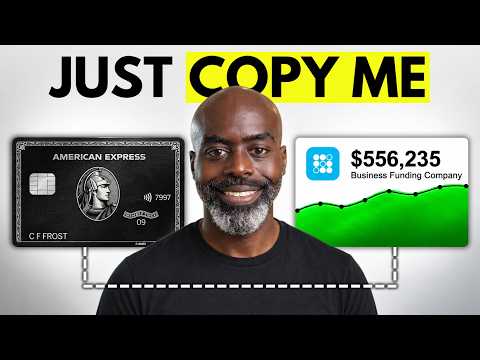
What we found: Business Funding Broker: $10K a Month Title Never Spoken, and the Funding Is Stacked Credit Cards
The model is opening $30,000–$60,000 of business credit cards for a client across three lenders, then taking 2–10% from the borrowed money. No broker income is ever shown.
- Never said "$10K/Month" in the audio
- $30k–$60k Funding per client
- 2–10% Broker fee
- ~2–17 Clients/month for $10k
The claim
That helping businesses obtain funding can be built into "a six-figure funding company in 2026 even if you’re starting from scratch" — $10,000 a month, per the title.
- People helped / funding secured (creator) — Over 600 / over $100 million
- Average per person implied — ~$167,000
- Typical stack per client — $30,000–$60,000
- Success fee — 2%, 3%, 4%, 5% or 10%
- Flat-fee alternative — $1,000
- Referral payout per converted lead — $500
- Mentee results — Two $100,000 fundings with "five figure" fees
- Broker income on any timeline — Never stated
- "$10K/Month" spoken in the video — No
- Price of the creator’s programme — Never stated
What is this income idea?
Act as a middleman who helps small-business owners open business credit lines, and charge them a flat or percentage fee when the credit is approved.
- The creator opens by promising to show "exactly how to start a six-figure funding company in 2026 even if you’re starting from scratch", and says they have "helped over 600 people secure more than a hundred million dollars in business funding". A call with the creator’s team is offered in the first minute.
- The seven steps begin with setting up a credible-looking business — a name that avoids "financial" or "funding", a virtual address, a website ("like a $100" on Fiverr) and a business email. Target clients with a 680 credit score or better across all three bureaus and at least two personal cards around two years old with $3,000–$5,000 limits. Tax preparers are suggested as a lead source because they "have documents of clients that are making six figures".
- The core of the model is step five, "credit card stacking or funding stacking". Because different lenders pull different credit bureaus, the broker takes the client to one lender per bureau in sequence, avoiding piled-up inquiries on any single report. "I go to American Express max them out at 10,000 20,000… then I go to Navy Federal… get another 10 to 20 then I finalize and go to Citizens Bank… so you’re averaging $30 to $60,000 in funding."
- The broker then gets paid. "I have a flat fee of $1,000", or a success fee: "I charge two three four five 10% of whatever you get so once you get funding you use that capital to pay me." A CRM is recommended to remind clients when a 0 per cent introductory rate is about to expire so they can be moved onto new cards.
- Two mentees are cited: one who "funded his third client ever $100,000 in funding and his commission was five figures", and another who obtained "$100,000 from SoFi" for a client with "an amazing five figure success fee". A $500 referral fee is offered for any lead that converts.
Help business owners open $30,000–$60,000 of credit cards across three lenders, then take a cut of the credit as your fee.
- Look like a real company — Name, address, site
- Target 680+ credit — Two aged cards
- Befriend bank reps — National, regional, local
- Pre-qualify leads — Intake, credit report
- Stack by bureau — Three issuers
- Charge a fee — 2–10% or $1,000
- Re-stack at 0% expiry — CRM reminder
A sales and credit-application process. The debt is the client’s; the fee comes out of it.
The skill is real; the income claim and the client risk are missing.
The lesson underneath the number
- The piece of knowledge the video offers is specific. Different card issuers pull different credit bureaus, and applying to one per bureau in sequence limits how many inquiries appear on any single report. Combined with a clear qualification filter — a 680 score across all three bureaus, two aged personal cards with decent limits — that is a coherent description of how people who already have good credit can open more of it in one go.
- The creator also does some things right. Qualifying leads before a call saves everyone time. Building relationships with bank representatives is a real advantage in any lending-adjacent business. Recommending that new brokers avoid words like "funding" in their company name, because it can mark their own business as high-risk to lenders, is a genuinely non-obvious tip.
- But the language matters. "Funding" in this video means business credit cards. The client — who needs good personal credit to qualify — takes on $30,000 to $60,000 of revolving debt, pays the broker from it, and is advised to roll onto new 0 per cent cards when the promotional period ends. None of the downside — interest when the promotion lapses, new accounts on the client’s credit, what happens if the business struggles — is mentioned in fourteen minutes.
- And the title is not supported. "$10K/Month" is never said. The intro promises a six-figure company, and the creator describes running "a seven figure funding business" and says "systems made me a million dollars", without a single revenue figure, client count or fee total for the creator’s own business. The only examples are two mentees’ "five figure" fees. Meanwhile the video pitches a call with the creator’s team twice, links a CRM affiliate, and describes earning referral fees from credit-repair companies for clients who do not qualify.
Once you get funding you use that capital to pay me.
The creator, on the success fee — the client’s borrowed money pays the broker
The seven steps, as given
Clear on process, silent on the broker’s results.
From what is said and shown in the video. We use the channel name for the creator. An editor graphic at 9:40 illustrates the stacking step, with Citizens Bank beside Equifax and the label "Another $10,000".
- Set up a credible business — Avoid "financial" or "funding" in the name because it is "a high-risk industry"; get a virtual address, a website for "like a $100" on Fiverr, and a business email.
- Only take fundable clients — A 680 score across all three bureaus, at least two personal cards about two years old with $3,000–$5,000 limits. Advertise for people needing "between 10 and $100,000".
- Build relationships with bank reps — Take a national, a regional and a local lender’s representative to lunch and ask what profile they want. "Imagine if you just have three lending institutions and each of them give $25,000."
- Pre-qualify with an intake form — Screen by credit profile before booking a call; refer declined leads to "another credit repair partner that pays you an affiliate".
- Stack across bureaus — One issuer per credit bureau, in sequence, to limit inquiries on any single report: $10,000–$20,000 each, "averaging $30 to $60,000".
- Use a CRM to re-engage — Tag clients so that eleven months after a 0 per cent card opens they are offered "other 12 15 even 18 [month] 0% interest credit cards".
- Charge a flat or success fee — $1,000 upfront, or "two three four five 10% of whatever you get" paid from the new credit. The creator prefers back-end fees to build trust.
The business model
A $1,000 flat fee, or a 2–10% success fee on credit obtained, plus affiliate payments from credit-repair partners for declined leads.
Owners of LLCs with 680+ credit scores and aged personal credit cards, seeking roughly $10,000–$100,000.
Knowing which lenders pull which bureau, and sequencing applications to maximise approved credit.
Social media and ads targeting "serious entrepreneurs", tax-preparer referrals, and $500 bounties for converted leads.
- Website and address — ~$100 site; virtual address unpriced
- CRM — Affiliate link in the video; price not given
- Referral payouts — $500 per converted lead
- Lead generation — Ads or content; the creator says they rarely run ads
- Compliance — Never mentioned
The broker’s costs are low; the video’s gap is on the other side — the cost to the client of $30,000–$60,000 in new revolving credit, including the broker’s fee, is never discussed.
What you would actually need
Money
A website for about $100, a registered agent or virtual address, a CRM (affiliate link given), credit monitoring for clients, and $500 per converted referral. The creator says they "rarely run ads".
Start-up costs are low. The real requirement is a pipeline of business owners with strong credit, and the time to build relationships with bank representatives. Legal and compliance advice for acting as a credit intermediary is not mentioned.
Named or implied
- Website (~$100 on Fiverr)
- Registered agent or virtual address
- CRM subscription (affiliate link in video)
- Credit-monitoring service for applicants
- $500 per converted referral
- Lunches with bank representatives
- Legal advice on brokering credit — never mentioned
Time
No timeline is given, beyond one mentee funding "his third client ever" in 2025.
Most of the time goes on finding qualified clients, since the creator is clear that "everybody is not fundable". Relationship-building with lenders and handling applications for each client follow.
Where the hours go
- Marketing for qualified business owners
- Reviewing credit reports
- Relationship-building with three lenders
- Guiding each application in sequence
- Following up at 0% expiry
- Handling declined leads and referrals
The part you must pay attention to
The "funding" is credit card debt, and the fee is paid out of it.
The creator describes the method plainly: "credit card stacking or funding stacking", taking a client to three card issuers in turn, and then: "once you get funding you use that capital to pay me."
- Credit opened for the client — $30,000–$60,000
- Broker success fee — 2%–10%
$600–$6,000 per client
Broker fee range, paid from the client’s new credit
What the video calls "funding" is revolving credit on business credit cards, which the client — typically with a personal credit history underpinning the application — has to repay. The introductory 0 per cent rate is temporary, which is why the creator recommends a CRM reminder at eleven months to move the client onto new cards. The broker’s fee is drawn from the same borrowed money. None of the risks to the client — interest after the promotional period, the effect of multiple new accounts on their credit, or what happens if the business cannot repay — are discussed.
On the broker’s side, the title figure is never supported. "$10K/Month" is not said in the audio; the intro says "six-figure". On the fees described, $10,000 a month would need roughly two clients a month at the top of the range ($6,000 each) or seventeen at the bottom ($600 each), by our arithmetic, before the $500 referral payouts. The mentee examples — "five figure" fees on $100,000 of funding — imply a fee of at least 10 per cent, the top of the creator’s own range. And the creator’s headline record of over $100 million for over 600 people averages about $167,000 each, well above the $30,000–$60,000 stack the video teaches, so the two cannot describe the same service.
- THE STACK (as described)
- Amex (Experian) $10k-$20k
- Navy Fed (TransUnion) $10k-$20k
- Citizens (Equifax) $10k-$20k
- Total $30k-$60k
- -> credit the client repays
- THE BROKER FEE (ours)
- 2% of $30,000 = $600
- 10% of $60,000 = $6,000
- $10k/month needs ~2 to ~17
- clients/month
- Minus $500 per referral
- "FIVE FIGURE" ON $100,000
- $10,000 / $100,000 = 10%+
- -> top of the stated range
- HEADLINE RECORD (ours)
- $100M / 600 people ~ $167k each
- -> not the $30k-$60k taught
The economics
Fee ranges given, broker income never shown.
- Credit obtained per client — $30,000–$60,000
- Success fee — 2%–10%
- Flat fee — $1,000
- Broker fee per client — $600–$6,000
- Clients a month for $10,000 — ~2–17
- Referral payout — $500 per converted lead
- Average per person in the headline record — ~$167,000
- Implied fee on "five figures" from $100,000 — 10% or more
- Creator’s own revenue or client count — Never stated
What $10,000 a month requires on the stated fees
$10,000 ÷ $6,000 ≈ 1.7 clients; $10,000 ÷ $600 ≈ 16.7 clients
About 2 to 17 funded clients a month, before $500 referral payouts
IncomeIdeaLab calculation from the fee and funding ranges stated in the video
The $1,000 flat fee would require ten clients a month. Larger fundings like the $100,000 mentee examples would reduce the count; declines, referral payouts and clients who do not qualify would increase it. The title figure itself is never stated in the audio.
- The creator’s own revenue, client count or fee totals
- How often applicants qualify at the 680 threshold
- Approval rates across the three-issuer stack
- The price of the programme sold via "book a call"
- Any cost or risk to the client of the new credit
- Licensing or compliance requirements for brokering credit
- Over $100 million for over 600 people averages about $167,000 each by our arithmetic — roughly three to five times the $30,000–$60,000 stack the video teaches.
- A "five figure" fee on $100,000 of funding means at least $10,000, or 10 per cent — the top of the stated range, not a typical outcome.
- "Starting a funding company that can make you 20 30 50 or $100,000 in 2026 alone" is a projection in a sales segment, not a result.
- The $500 referral bounty on a client paying a 2 per cent fee on $30,000 would consume most of the $600 fee.
- The on-screen graphic at 9:40 pairs Citizens Bank with Equifax under the label "Another $10,000", the low end of the spoken "another 10 to 20" thousand. It illustrates the stacking sequence; it carries no broker income figure.
Evidence status
Every substantive figure in the video.
- "$10K/Month" (title) — Title only — Never said in the audio.
- Helped 600+ people secure $100M+ — Creator — ~$167k average; inconsistent with the $30k–$60k method taught.
- Runs "a seven figure funding business" — Creator — No revenue, client or fee figure given.
- "Systems made me a million dollars" — Creator — Unsupported.
- Stack averages $30,000–$60,000 — Creator — $10k–$20k at each of three issuers.
- Fees of 2–10% or $1,000 flat — Creator — $600–$6,000 per client by our arithmetic.
- Mentee: $100,000 for third client, five-figure commission — Creator — Implies 10%+ fee.
- Mentee: $100,000 from one lender, five-figure fee — Creator — Same implication.
- $500 per converted referral — Creator — A real cost against small fees.
- Programme price — Nobody — Offered twice; never priced.
What is actually proven?
The method is described. The income is not.
- The bureau-by-bureau stacking sequence is explained clearly.
- Qualification criteria for clients are specific.
- The fee is paid out of the client’s new credit, by the creator’s own description.
- Broker fees of $600–$6,000 per client on the stated ranges.
- The headline record averages ~$167,000 a person, not $30k–$60k.
- The title’s $10,000 a month — never stated or shown.
- The creator’s own revenue or client numbers.
- Any risk or cost to the client of the new debt.
What the headline doesn’t tell you
A credit-card stacking service sold as funding.
- $10K/month is never said. — It is only in the title.
- "Funding" means credit cards. — Revolving debt.
- The fee comes from the debt. — "Use that capital to pay me."
- 0% is temporary. — Hence the 11-month reminder.
- Five figures means 10%+. — The top of the range.
- No income figure. — For the creator or the model.
- Three pitches. — Coaching call, CRM, credit repair.
- Client risk unmentioned. — In the whole video.
Should you try it?
Low start-up cost, high responsibility, income unproven
Understand that you would be steering clients into debt and taking a fee from it. Get compliance advice before charging anyone.
- Clarity of the stacking method — 7 — Bureau sequencing explained with named issuers.
- Client qualification guidance — 7 — Specific score and card-age thresholds.
- Evidence for the title figure — 0 — Never stated or shown.
- Honesty about what "funding" means — 3 — Described accurately, but framed as capital.
- Client-risk disclosure — 0 — No mention of interest, repayment or credit impact.
- Conflict disclosure — 3 — Pitches visible; programme price withheld.
- Beginner accessibility — 4 — Cheap to start; hard to find qualified clients.
- Be clear about what you would be selling. The service in this video is helping business owners open $30,000 to $60,000 of new credit card limits across three issuers, sequenced so that no single credit bureau takes all the inquiries. The client repays that credit, and your fee — $1,000 flat or 2 to 10 per cent — comes out of it. When the introductory rate ends, the video recommends moving the client onto more cards.
- The income is unproven. The title’s $10,000 a month is never said. The creator claims a seven-figure business and over $100 million secured, but gives no revenue, client count or fee total, and the headline average of about $167,000 per person does not match the $30,000–$60,000 method taught. On the stated fees, $10,000 a month means two to seventeen funded clients every month, and the video is clear that most people who approach you will not qualify.
- Consider the responsibility. A broker who earns only when credit is approved, paid from that credit, has an incentive to maximise how much a client borrows. The video never mentions what happens to a client whose business cannot repay once the 0 per cent period ends. If you pursue this, find out what your jurisdiction requires of people who arrange credit for a fee, and make sure every client understands what they are signing.
- The video is also a funnel. A call with the creator’s team is offered twice, a CRM is linked with a stated relationship, and declined leads are to be sent to credit-repair partners that pay you. None of the programme’s pricing is given.
Passive or automated?
Automation
Intake forms and CRM reminders automate; qualification and applications do not.
Passive potential
Each fee requires finding and funding a new qualified client.
The creator describes the CRM as running "on autopilot", and parts of the funnel do: intake forms screen leads, credit-monitoring reports arrive by email, and tagged clients get a reminder before their 0 per cent period ends. Everything that produces a fee is still manual. Someone has to market to find business owners with 680-plus scores, review credit reports, maintain relationships with three lenders, guide each application in the right order, and handle the clients who do not qualify. Because each client is funded once — with a possible repeat when the promotion expires — income depends on a continuous stream of new qualified leads.
- Marketing for qualified business owners
- Reviewing each credit profile
- Maintaining lender relationships
- Guiding applications across three issuers
- Explaining terms and risks to each client
Recommended beginner experiment
Learn the rules before you charge a fee.
- Check your local rules on credit brokering. — The video never mentions compliance.
- Learn how issuers pull bureaus. — The one technical insight offered.
- Write a plain-language risk sheet. — Interest, repayment, credit impact.
- Help one business for free. — Learn approval rates firsthand.
- Track qualification rates. — How many leads meet 680+.
- Prefer a flat fee over a percentage. — Reduces the incentive to over-borrow.
- Price referrals below your fee. — $500 exceeds a 2% fee on $25k.
- Measure income monthly, not per deal. — The title figure is never shown.
Our verdict: 3/10
A credit-card stacking service sold as "funding", with the title’s income never shown the client takes on the debt and pays the broker out of it
Credited for a clear explanation of sequencing card applications across issuers that pull different credit bureaus; for specific client-qualification thresholds; for the practical advice to pre-screen leads before calls and to avoid "funding" in a broker’s own business name; and for describing the fee structure openly, including that it is paid from the client’s new credit. Marked down because "$10K/Month" is never said in the audio and no income figure for the model or the creator’s own business is given; because the headline record of over $100 million for over 600 people averages about $167,000 each and does not match the $30,000–$60,000 method taught; because the mentee "five figure" fees imply a 10 per cent-plus rate at the top of the stated range; because "funding" is revolving credit-card debt and no risk to the client is mentioned; and because the video pitches an unpriced programme twice alongside a CRM affiliate link and credit-repair referral fees.
The technical content of this video is narrow but real: card issuers pull different credit bureaus, so applying to one per bureau in sequence limits the inquiries on any single report, and someone with a 680-plus score and aged personal cards can open $30,000 to $60,000 of business credit this way. The creator explains that clearly and gives sensible advice on qualifying leads. The rest does not hold up. "$10K/Month" is never said. The creator claims a seven-figure business and $100 million secured for 600 people, but no revenue, client count or fee total appears, and $100 million across 600 people averages far more than the method taught produces. On the stated fees, $10,000 a month means two to seventeen funded clients every month. Most importantly, the "funding" is credit-card debt the client must repay, the broker’s fee is taken from it — "use that capital to pay me" — and the video’s answer to an expiring 0 per cent rate is more cards. Not one sentence addresses what that means for the client. Three separate pitches sit alongside. Anyone considering this should start with the rules on arranging credit for a fee, not with the fee.
- Title figure in audio — Never said
- Credit per client — $30k–$60k
- Broker fee — 2–10% or $1,000
- Fee per client — $600–$6,000
- Clients/month for $10k — ~2–17
- Headline record average — ~$167k per person
- Client risk discussed — No
- Beginner suitability — Only with compliance advice
Sources
- How to Make $10K/Month Helping Businesses Get Funding — Bella Sloan Enterprises — YouTube video, 2026-09-22
- FTC — Guides Concerning the Use of Endorsements and Testimonials — Regulatory guidance on earnings claims and testimonials