Asset Income / ATM Placement · Claim Review
“How to Start an ATM Business | How Much Can You MAKE?”
What we found: The $20,000-a-Month ATM Plan Is a Ten-Machine Hypothetical That Drops the Fee Quoted on Camera
Nobody in the video reports owning an ATM. The worked example uses the top of its own usage range and leaves out the 25-cent processing charge the supplier quoted minutes earlier.
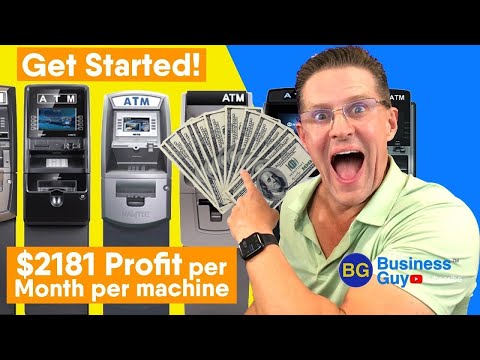
- $21,810 Claimed monthly
- $2,182/mo Per machine
- $2,450 Machine price quoted
- None stated ATMs the presenter owns
The claim
That an ATM business can be started for $4,700 to $5,000 and that ten machines earn about $21,810 a month — "an excess of twenty thousand dollars a month."
- Machine price, supplier call — $2,450 new
- Professional installation — $350
- Processing network fee, supplier call — $39 flat or $0.25 per transaction
- Stated startup cost — $4,700–$5,000
- Startup cost using quoted prices — ~$5,300
- Assumed users per machine per day — 24
- Assumed surcharge — $4 per withdrawal
- Profit per machine after 25% host share (on the presenter's slide) — $2,182 a month
- After the quoted 25-cent processing fee — ~$2,000 a month
- ATMs the presenter owns or has run — Never stated
What is this income idea?
Buy a new ATM, place it in a busy cash-heavy business under a month-to-month agreement, keep it loaded with your own cash, and earn a surcharge on every withdrawal.
- The presenter introduces themselves as working in company formation since 1991 at a firm with attorneys on staff. They frame the video as the opposite of YouTube hype: "I'm actually going to give you the contacts the suppliers how much it costs." They never say they own or have operated an ATM; the idea came from walking past one at a mall.
- The strongest part of the video is a real call to a supplier. The representative quotes a new machine at $2,450, installation at $350, drop-shipping in about two weeks, bolting to the floor for security, next-day ACH settlement of the withdrawal plus surcharge, text alerts when cash runs low — and a processing network charge of "39 flat fee for 25 cents a transaction."
- The placement method is sensible: find the location first, carry a contract in your car, keep it month-to-month so the host feels comfortable, and only order the machine once someone has signed. That keeps the capital at risk low.
- The economics are presented as a worked example on the presenter's own "PROFIT" slides, with the arithmetic repeated in on-screen text: 24 users a day, a $4 surcharge, 25% shared with the host, giving "$504 your profit / week", "$2182 profit per month" and "$26,184 profit / year" per machine. A full-screen card then reads "YOU HAD 10 MACHINES THAT IS $21,810 A MONTH" and $261,720 a year — which the video closes on as "how you make an excess of twenty thousand dollars a month."
- They also cover cash logistics honestly enough to undercut their own "you don't even have to show up" line: at a $60 average withdrawal, 24 users take $1,440 a day, "so with those numbers you'll go in almost every day."
Rent floor space in a busy shop, stock a machine with your own cash, and keep a few dollars per withdrawal — the $20,000 a month is a what-if for ten machines, not anyone's result.
- Find a cash-heavy site — Bars, barbers, gas stations
- Sign month-to-month — Before buying
- Order a new ATM — $2,450 quoted
- Install and bolt down — $350 quoted
- Load your own cash — $1,000–$2,000 suggested
- Earn the surcharge — $3–$8 each
- Share with the host — 25%, up to 50%
- Refill on alert — Nearly daily at their numbers
A clear, low-capital model — with an income projection that no one in the video has actually achieved on record.
Good supplier homework, then a projection presented as a result
The lesson underneath the number
- This video does something most in its genre do not: it picks up the phone. The supplier call on camera gives a real machine price, a real installation price, a delivery time, a settlement mechanism and a processing fee. A beginner can use those numbers directly, and the advice to secure a signed location before ordering a machine is genuinely good risk management.
- The problem is the step from there to "how you make an excess of twenty thousand dollars a month." The $21,810 is a multiplication, not an outcome. Nobody in the video says they own ten ATMs, or one; the presenter's stated background is company formation. The inputs — 24 users a day, a $4 surcharge, a 25% host share — are all chosen for the example, and the usage figure sits at the top of their own range for a busy big-city business.
- Worse, the example leaves out a cost they had just been quoted. The supplier said the network charges "39 flat fee for 25 cents a transaction." At the volume in their example, 25 cents a transaction is about $180 a month per machine. It is not a large number, but it is the one fee in the video with a real source, and it is the one missing from the profit line.
- The video also tells two stories about time. One is the sales line — "you don't even have to show up until you get an alert." The other is their own arithmetic: at $60 a withdrawal, 24 users empty $1,440 a day, so "you'll go in almost every day." Ten machines at those numbers means nearly ten cash runs a day and far more than $2,000 of float per machine. The honest version is in the video; it just isn't the version in the conclusion.
So with those numbers you’ll go in almost every day.
The presenter, on refilling a machine at their own example figures
The method, as they give it
Practical setup detail, anchored by a real supplier quote.
Taken from what is said and shown in the video (published 4 October 2022). The worked income example appears on the presenter's own slides at about 14:17 and on a full-screen text card at about 14:55; both are the presenter's hypothetical, not a record of any machine.
- Secure the location before buying — "You don't actually need to buy the ATM until you get a customer a place to put it." Keep a contract in the car and sign on the spot.
- Buy new, not second-hand — They warn that used machines sold online can carry skimming software. The warning is plausible but no case or source is given.
- Get a real price — The supplier call quotes $2,450 for a new machine, $350 for installation and about two weeks to delivery. This is the most concrete evidence in the video.
- Understand settlement — Withdrawals plus the surcharge are sent back to your bank by ACH "the following day." Your cash is out of your hands for at least a day each cycle.
- Offer the host a share only if needed — Start at 25% of surcharge income, go to 35% if needed, and as high as 50/50 in a busy bar while raising the surcharge to compensate.
- Keep connectivity cheap — Use the host's internet, a vendor connection at about 20 cents a transaction, or a mobile modem at roughly $20 a month.
- Form an LLC — Around $500 depending on state — followed by a phone number for the presenter's own formation company. A disclosed but direct sales pitch.
The business model
A surcharge of roughly $3 to $8 on each cash withdrawal, returned with the withdrawn cash by next-day ACH.
Cardholders at cash-heavy venues — bars, clubs, barbers, restaurants, gas stations, convenience stores, casinos.
Convenient cash on site, which the presenter argues helps the host sell more and can earn the host a share.
In-person pitching to local businesses, with a month-to-month contract signed on the spot.
- Machine and installation — $2,450 and $350 quoted on the call
- Host commission — 25% suggested, up to 50% in busy bars
- Processing network — $0.25 per transaction or $39 flat — omitted from the profit example
- Connectivity — Free, ~20¢ a transaction, or ~$20 a month
- Cash float — Tied up capital; understated at their usage figures
- LLC formation — ~$500; the presenter sells this service
- Insurance, repairs, theft, travel — Never mentioned
They say expenses are "around forty to fifty dollars per machine", which fits internet plus a flat fee but not the 25-cent-per-transaction option at the volume they assume.
What you would actually need
Money
"Forty seven hundred to five thousand" to start: a $2,200–$2,500 machine, about $2,000 in cash to load, and a ~$500 LLC.
Their own total omits the $350 installation fee they were quoted and told beginners to pay. Using the quoted prices, one machine comes to about $5,300. At their usage assumption the float is too small: a machine emptied of $1,440 a day, with settlement arriving the next day, needs roughly two days of withdrawals on hand to avoid running dry.
What one machine really needs
- Machine: $2,450 quoted
- Installation: $350 quoted
- Cash float: $2,000 suggested, ~$2,900 on our arithmetic
- LLC: ~$500, from the presenter’s own firm if you call
- Processing: $0.25 per transaction or $39 flat
- Internet: free, 20¢ per transaction, or ~$20/month
- Insurance, repairs, theft — never mentioned
Time
"You don't even have to show up until you get an alert on your cell phone" — then, at their own numbers, "you'll go in almost every day."
The two statements conflict. At 24 users and a $60 average withdrawal, a $2,000 load lasts little more than a day. Ten machines at those numbers would mean close to ten cash runs a day, plus bank visits to withdraw the cash.
Where the hours go
- Prospecting and pitching businesses in person
- Near-daily refills per machine at their usage figures
- Bank trips to draw cash for loading
- Monitoring alerts and settlement
- Relocating machines that underperform
- Negotiating host commission
The part you must pay attention to
The $21,810 a month is a projection for ten machines, built on a best-case usage rate and missing a quoted cost.
The video's arithmetic, as stated: 24 users × $4 = $96 a day; × 7 = $672 a week; minus 25% for the host = $504; × 4.33 weeks = $2,182 a month; × 10 machines = $21,810.
- Users a day (assumed) — 24
- Surcharge (assumed) — $4
- Kept after host share — 75%
- 7 × 4.33 — 30.3 days
$2,182 per machine a month
Before processing fees, insurance, repairs or travel
The 24-users-a-day figure is the load-bearing assumption, and it comes from the top of their own range applied to a busy big-city store: 300 visitors × 8%. Earlier in the same video they say a typical business with 150 visitors a day gives "six to twelve people." At 12 users, every figure halves. They also say "let's be conservative and call it 40 people a day" and then never use 40 — the example runs on 24.
The supplier they called quoted a processing charge of 25 cents a transaction. At 24 users a day that is about $180 a month per machine, and it does not appear in the profit example. Subtracting it, plus the $20 a month they suggest for internet, leaves about $1,980 per machine — roughly $19,800 for ten, still before insurance, repairs, travel and the cost of the cash tied up in ten machines. The arithmetic they show on their slides is careful by the standards of the genre and checks out to within a few dollars; the slides label the result "profit", but the problem is what it assumes and what it leaves out. None of it describes a business anyone in the video has run.
- THEIR EXAMPLE, RECHECKED
- 24 users x $4 = $96/day
- x 7 = $672/week
- x 0.75 (host 25%) = $504/week
- x 4.33 = $2,182/mo
- x 12 = $26,184/yr
- (matches the slide)
- THE FEE THE SUPPLIER QUOTED
- 24 x 30 days x $0.25 = -$180/mo
- Mobile internet = -$20/mo
- Per machine ~ $1,982/mo
- x 10 machines ~ $19,800/mo
- AT THEIR OWN LOWER USAGE
- 12 users/day ~ $1,091/mo
- before any fees
- CASH NEEDED AT 24 x $60
- $1,440/day out, paid back next day
- ~2 days on hand ~ $2,900/machine
- x 10 ~ $29,000 float
The economics
Real supplier prices, then an income model built entirely on assumptions.
- Machine price — $2,450
- Installation — $350
- Processing fee — $0.25 per transaction or $39 flat
- Users per day — 24 (their range for a 150-visitor store: 6–12)
- Surcharge — $4
- Host share — 25%
- Profit per machine per month — $2,182
- After quoted processing fee and internet — ~$1,980
- Ten-machine monthly figure — $21,810 stated; ~$19,800 after fees
Per-machine profit with the quoted processing fee included
($96 × 7 × 0.75 × 4.33) − (24 × 30 × $0.25) − $20 = $2,182 − $180 − $20
About $1,980 a month per machine at their assumptions — or about $1,091 before fees at 12 users a day
IncomeIdeaLab calculation from the video’s own inputs and the fee quoted on its supplier call
The supplier offered a $39 flat fee as an alternative; at high volume a flat fee would be cheaper, but the video does not say what the flat fee covers or how often it is charged. Insurance, repairs, theft and travel are not included because the video gives no figures for them.
- Any ATM the presenter owns or has operated
- Real transaction counts from any machine
- Insurance and liability cost
- Repair costs beyond the vendor warranty
- Travel time and cost for near-daily refills
- The cost of cash tied up across multiple machines
- Any commission or affiliate arrangement with the suppliers named
- The arithmetic on the presenter's slides is internally consistent: 24 × $4 = $96, × 7 = $672, × 0.75 = $504, × 4.33 = $2,182, × 12 = $26,184, each step shown in on-screen text. The one slip is on the full-screen card at about 14:55: ten machines at $2,182 is $21,820 on our arithmetic, not the $21,810 the card shows; the card's $21,810 × 12 = $261,720 is consistent with itself.
- The slides label each result "profit", but no processing fee, internet, insurance or travel cost is deducted on them.
- Stated startup of "$4,700 to $5,000" is the machine plus $2,000 cash plus a $500 LLC. It excludes the $350 installation the supplier quoted and they recommended beginners pay.
- They say clubs and bars will pay "seven or eight dollars" a withdrawal and that a higher surcharge can offset a 50/50 host split. That may be true locally, but no transaction data is offered.
- The video is produced by a company-formation business and pitches its own LLC service with a phone number mid-video and again at the close. That is disclosed by context, since they introduce the firm, but it is the only product actually sold in the video.
Evidence status
Every substantive claim in the video.
- New ATM costs $2,450, install $350 — Supplier, on camera — Played in the video. Useful and specific.
- Processing: $39 flat or 25¢ a transaction — Supplier, on camera — Quoted, then left out of the profit example.
- Startup cost $4,700–$5,000 — Presenter — Omits the quoted $350 install. ~$5,300 on our arithmetic.
- 4–8% of foot traffic uses an ATM — Presenter — No source given.
- 24 users a day — Presenter — Top of their range, big-city store. Typical-store range they give is 6–12.
- $2,182 a month per machine — Presenter; own slide at 14:17 — Shown in the presenter's own slide as "$2182 profit per month". Arithmetic checks out; inputs are assumed and a quoted fee is missing.
- $21,810 a month from 10 machines — Presenter; on-screen card at 14:55 — Shown on a full-screen text card. A multiplication ($21,820 on our arithmetic). No one in the video reports it.
- Expenses ~$40–$50 per machine — Presenter — Below the ~$200 implied by their own volume and the quoted per-transaction fee.
- You only show up when alerted — Presenter — Contradicted by their own "almost every day" refill arithmetic.
- Used ATMs may carry skimming software — Presenter — Plausible warning, no case given.
- Presenter owns or runs ATMs — Nobody — Never stated.
What is actually proven?
The price of getting started is evidenced. The income is not.
- A supplier quoted machine, installation and processing prices on camera.
- The locate-first, buy-second sequence is clearly explained.
- The worked example on the presenter's slides is arithmetically sound; the ten-machine card is $10 short of its own per-machine figure.
- Including the quoted 25-cent fee cuts per-machine profit to ~$1,980.
- At the lower usage they give for a typical store, income roughly halves.
- The $21,810 a month is a ten-machine what-if.
- Whether the presenter owns or has operated any ATM.
- Insurance, repairs, theft and travel costs.
What the headline doesn’t tell you
A calculator, not a case study.
- $20,000 is ten machines. — All hypothetical.
- No one reports owning one. — Not the presenter, not a guest.
- 24 users is best case. — Their typical-store range is 6–12.
- The 25¢ fee vanished. — Quoted, then dropped.
- Install is left out. — $350 not in their startup total.
- $2,000 float runs out fast. — In about a day at their numbers.
- "Almost every day." — Their words, on refills.
- The product sold is an LLC. — From the presenter’s own firm.
Should you try it?
A low-cost test is reasonable; the income projection is not a plan
Use the supplier prices and the locate-first method. Replace every assumed input with a real count from a real location before buying a second machine.
- Specificity of startup costs — 8 — Machine, install and processing quoted by a supplier on camera.
- Practical placement advice — 7 — Sign first, buy second, month-to-month terms.
- Evidence for the income — 1 — A worked example only. No real machine data.
- Accuracy of the arithmetic shown — 8 — Correct to within a few dollars.
- Completeness of costs — 3 — Quoted per-transaction fee, install, insurance and travel all missing from profit.
- Beginner accessibility — 6 — About $5,300 to test one machine.
- The entry cost here is genuinely low for a business that involves real equipment, and the video gives you the numbers to check it: about $2,450 for a machine, $350 to install it, a processing fee per transaction, and next-day settlement. Signing the location before ordering the machine is the right sequence and limits how much you can lose.
- Treat the income section as a calculator you should fill in yourself. Its inputs — 24 users a day, a $4 surcharge, a 25% host share — are illustrations. The presenter's own typical-store example gives 6 to 12 users a day, and at 12 the monthly figure halves before any fee. The quoted processing fee of 25 cents a transaction should come off the top, as should insurance and your own travel.
- Plan your cash properly. The video suggests loading $1,000 to $2,000, but at its own example of 24 users taking $60 each, a machine empties $1,440 a day and your money comes back the next day. That means either a larger float or daily trips — and the presenter concedes "you'll go in almost every day."
- Finally, notice what is being sold. The only product pitched in the video is LLC formation from the presenter's own firm, with a phone number read out mid-video. An LLC may be sensible, but you do not need to form one before you know whether a single machine in a single location actually gets used.
Passive or automated?
Automation
Settlement and low-cash alerts are automatic; loading cash is not.
Passive potential
At their own usage figures, refills are near-daily per machine.
The video sells this as a business where "you don't even have to show up until you get an alert", and the settlement side is genuinely automated: withdrawals and surcharges return to your bank the next day, and the machine texts you when cash is low. But cash has to be physically withdrawn from a bank and loaded into each machine, and at the example's own numbers that happens almost every day. Scaling to ten machines scales the cash runs, the float and the security exposure with it. Prospecting for locations and negotiating host shares are ongoing sales work.
- Withdrawing cash from the bank to load machines
- Near-daily refills per machine at the example volumes
- Pitching businesses and signing contracts in person
- Moving machines from locations that underperform
- Watching personal safety when loading cash
Recommended beginner experiment
One machine, real numbers, then decide.
- Get your own supplier quote. — Machine, install, processing fee.
- Count foot traffic first. — At the actual site, over several days.
- Model at 4% usage, not 8%. — The low end of their range.
- Include the per-transaction fee. — They quoted it; they didn’t use it.
- Size the float to two days. — Settlement lands the next day.
- Sign month-to-month. — So a weak site can be moved.
- Run one machine for three months. — Before buying a second.
Our verdict: 4/10
Real startup prices, hypothetical income the $20,000 a month is ten imaginary machines at best-case usage, minus a fee quoted on camera
Credited for calling a supplier on camera and publishing real prices for a machine, installation and processing; for the sensible advice to secure a location under a month-to-month contract before buying; for showing its arithmetic step by step, which checks out to within a few dollars; and for admitting that at its own numbers you would refill "almost every day". Marked down because the headline income is a projection for ten machines that nobody in the video reports owning; because the 24-users-a-day input sits at the top of the presenter's own range while their typical-store example gives 6 to 12; because the 25-cent processing fee quoted on the call is omitted from the profit example; because the stated startup cost leaves out the quoted $350 installation; because the suggested $2,000 float lasts little more than a day at the example usage; and because the only product sold is the presenter's own LLC formation service.
This is better than most "how much can you make" videos in one important way: it calls a supplier and lets you hear the prices. A new machine at $2,450, installation at $350, next-day settlement, low-cash alerts and a processing charge of 25 cents a transaction are all on the record, and the advice to sign a location on a month-to-month contract before ordering anything is sound. The arithmetic in the worked example is shown step by step and is correct to within a few dollars. What the video does not have is a result. Its "$20,000 a month" is ten hypothetical machines, each assumed to serve 24 users a day at a $4 surcharge — usage at the top of the presenter's own 4-to-8-per-cent range for a busy big-city store, when their typical-store example gives six to twelve. The example leaves out the 25-cent transaction fee quoted minutes earlier, about $180 a month per machine at that volume, and the startup total leaves out the $350 installation they advised beginners to pay. Their own cash-flow maths shows a $2,000 float lasting about a day, which is why they concede you would "go in almost every day" — the opposite of the passive framing. Nobody in the video says they own an ATM; the business behind the channel sells LLC formation and pitches it twice. Use the supplier prices. Fill in the income calculator with your own counts.
- Machine + install — $2,450 + $350
- Stated startup — $4,700–$5,000
- Startup at quoted prices — ~$5,300
- Per machine, as stated — $2,182/mo
- Per machine, with quoted fee — ~$1,980/mo
- Ten machines, as stated — $21,810/mo
- ATMs owned by presenter — Never stated
- Beginner suitability — One-machine test, yes
Sources
- How to Start an ATM Business | How Much Can You MAKE? — The Business Guy | Asset Protection Planners — YouTube video, 2022-10-04
- FTC — Guides Concerning the Use of Endorsements and Testimonials — Regulatory guidance on earnings claims