Freelance Web Design / No-Code · Claim Review
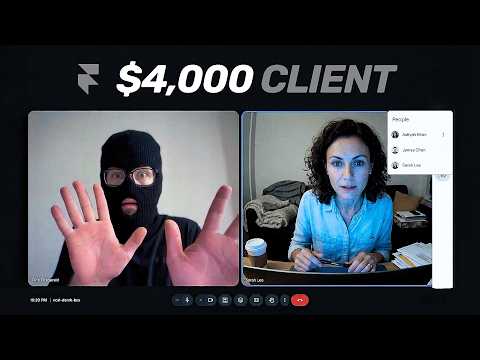
“How to close USD 4K Framer projects without showing your face…”
What we found: Three Anonymous Framer Clients Paid $8,250, and the $4K Project Paid Half
The client figures reconcile: $10,250 agreed, $8,250 collected. The "over $10,000" in the opening is not explained, no hours or costs are given, and the challenge is sold as a paid course.
- $8,250 Client revenue
- $10,250 Agreed fees
- $2,000 The $4K project
- None Hours and costs
The claim
That a brand-new anonymous account, with no camera, no real name and no portfolio history, closed three Framer client projects worth over $8,000 in 60 days.
- Development-only project — $4,000 agreed; 50% paid, so $2,000
- Design and development project — $4,000, raised to $4,250 with a CMS; paid in full
- Landing page project — $2,000, which "would have been a USD 3,500 project normally"
- Total agreed — $10,250
- Total collected — $8,250, matching the stated figure
- Opening statement — "By day 60 I had over USD 10,000 in my pocket"
- Template made during the challenge — "Over USD 20,000", period not stated
- Client turned down — $9,200, not taken
- Hours worked, Framer plan, fees, tax — Not stated in the video
What is this income idea?
Freelance website design and development in Framer, with clients found by posting work on X rather than through ads or cold outreach.
- The creator, who runs the Framer University channel, ran a 60-day challenge under a new name, starting from zero followers, using a voice changer and keeping the camera off on calls. The aim was to show that work and positioning matter more than reputation or a face.
- The method has four parts. Post only work — small portfolio pieces such as a pricing card, a scroll animation or a hero-section redesign. Give the website a way to book a call, which the creator did on day nine after eight days of a bare placeholder. Rely on the funnel of post, profile, portfolio, call. And in the early days, reply to larger accounts' posts to borrow their audience.
- Three projects closed. A development-only site at $4,000 paid half after the client was unhappy with responsive text sizing. A design-and-development site at $4,000 rose to $4,250 with a CMS and was paid in full. And a $2,000 landing page, taken in a hurry after losing the other $2,000, which the creator says would normally be priced at $3,500.
- Total client revenue is given as "USD 8,200 or 8,250". The opening says "over USD 10,000 in my pocket" by day 60. The creator also mentions turning down a $9,200 client for lack of time, and a template built during the challenge that later earned "over USD 20,000".
- The final section promotes the Undercover Library, described as "my first ever paid course", which records every call, DM and portfolio piece from the challenge, and a free live training on making a first $1,000 with Framer.
Post small, impressive examples of your web design work, make it easy to book a call, and sell projects at a few thousand dollars each.
- Build small portfolio pieces — Snippets, not full sites
- Post only work on X — No lifestyle posts
- Reply to big accounts — Early reach
- Book-a-call website — Fixed on day 9
- Discovery call, camera off — Voice changer
- Close the project — $2,000–$4,250
- Deliver in Framer — One paid half
A clear inbound funnel. The project figures add up; the hours behind them are not given.
The half-paid project teaches more than the total.
The lesson underneath the number
- Most income videos show the wins. This one walks through a $4,000 development job that ended with half the fee after the client was unhappy with how text resized across screen widths, put partly down to a limitation in Framer and partly to miscommunication. The creator then took a $2,000 landing page that would normally be priced at $3,500, explicitly out of urgency to recover the shortfall, and describes the vague feedback that followed. That is a realistic picture of freelance client work, and it is to the creator's credit that it is in the video at all.
- It also puts a number on scope risk. Of $10,250 agreed, $8,250 was collected, about 80%. A development-only job built from someone else's design is where the shortfall happened, which matches the creator's own pricing advice: charge less for build-only work, but be aware it is where expectations are hardest to control.
- The inbound funnel is the most transferable part. Post small, striking pieces rather than whole sites, make sure the profile leads somewhere bookable, and use relevant replies to reach people before you have followers. The creator states the reach of individual posts — 16,000 impressions, 10,000 views, 1,000 likes — which is more specific than most.
- What a beginner cannot borrow is the skill. The account was new; the person running it teaches Framer for a living. The pieces that drew clients were advanced, and the video is a test of whether reputation matters, not of whether a newcomer can do the work.
I was too desperate to make up for the USD 2,000 loss to eventually reach a USD 10,000 goal, so I took the client.
The creator, on the $2,000 landing page
The system, as the creator gives it
Specific about posting and calls, open about what went wrong.
No hours, tool costs or fees are given for any project.
- Post only your work — Every post was a portfolio piece. One pricing card post on day nine reached over 400 likes and 16,000 impressions and, the creator says, brought inbound leads that later closed.
- Give visitors a way to book — Eight days with a bare placeholder site, then a page with a call booking link. "You can have the best post in the world but if someone clicks your profile and goes to your website then there's nothing there you just lost a client."
- Reply where the attention is — On day 10, with an account a few days old, a relevant reply under a larger creator's post drew about 100 likes and over 10,000 views and a stream of follows.
- Repackage posts that underperform — A post that drew around 100 likes was reworked and reposted, reaching over 1,000 likes and booking "a bunch of calls". By the end the calendar was closed and replaced with a waitlist.
- Prepare for the discovery call — The first call went badly: a $3,500 quote that did not close. The creator says telling the client the camera was broken was the worst decision of the challenge, and that later, simply asking whether it was fine to keep the camera off worked.
- Price design higher than build — Development from a client's Figma file is priced lower; design plus development is priced higher. The three projects fell between $2,000 and $4,250.
The business model
Fixed-fee website projects in Framer, priced higher when design is included; separately, Framer template sales and a paid course.
Companies and founders who see the work on X and book a discovery call.
Distinctive, animated Framer sites built quickly by a specialist.
Organic posts of portfolio pieces on X, replies under larger accounts, and a portfolio site with a booking link.
- Framer plan — Not mentioned
- Payment processing — Not mentioned
- Tax — Not mentioned
- Unpaid portfolio work — Five pieces planned at the start
- Lost revenue — $2,000 on the half-paid project; $1,500 below normal on the landing page
- Time — Not stated for any project
All figures are fees received. No cost, hourly rate or profit figure is given.
What you would actually need
Money
"No ad spend, no cold outreach." A laptop, Wi-Fi, English and a skill such as Framer "from free tutorials on the internet".
The cash cost is low, which is a real strength. But publishing client sites and a portfolio on Framer generally needs a paid plan, and payment processing and tax come off every invoice. None is mentioned. The bigger requirement is skill, which the creator had in quantity.
Costs implied but not stated
- Framer plan for portfolio and client sites
- Voice changer and call software, if paid
- Payment processing on invoices
- Income tax on freelance earnings
- Time spent on unpaid portfolio pieces
Time
Sixty days from a new account to three closed projects; one $2,000 client closed "in like a few hours".
Hours spent on posting, calls, portfolio pieces and delivery are not given, so there is no hourly rate. The creator also brought years of Framer experience into an account that only looked new.
Timeline in the video
- Days 1–8: placeholder site, no work shown
- Day 6: first posts
- Day 9: booking page live; pricing card post
- Day 10: reply under a larger account
- Day 11: first call, $3,500 quote lost
- Day 16: portfolio launched
- Day 50: repackaged post; calendar fills
- Day 52: $2,000 shortfall; new $2,000 client
The part you must pay attention to
The account was new. The designer behind it was not.
The challenge removes a name, a face and followers. It keeps the skill, taste and client experience of someone who runs a Framer education channel.
- Dev project, 50% of $4,000 — $2,000
- Design + dev with CMS — $4,250
- Landing page — $2,000
$8,250
Collected in 60 days, before costs and tax
The load-bearing assumption is that a viewer can produce portfolio pieces good enough to win $2,000–$4,000 projects from a standing start. The creator says on day 11 there was no portfolio to show yet, and that the strongest pieces — a hero section with 3D rotating books, AI-animated icons, scroll animations — were what caught clients' attention. Those were made by someone who already teaches Framer professionally. The video is clear that the experiment tests reputation and visibility, not skill, and the creator says so: on the first call the questions about past projects could not be answered without revealing who was behind the account.
The arithmetic is otherwise clean. $4,000 + $4,250 + $2,000 is $10,250 agreed, and after the half payment on the first job, $8,250 collected, exactly the figure stated. The one figure that does not fit is the opening line, "by day 60 I had over USD 10,000 in my pocket". Client revenue is $8,250, and the creator later describes $10,000 as the goal being chased. The gap of about $1,750 may be template sales during the challenge, but the video does not say. Over 60 days, $8,250 is about $4,125 a month in revenue (our arithmetic), before the Framer plan, fees, tax and an unstated number of hours.
- THE THREE PROJECTS
- Dev only $4,000
- paid 50% -> $2,000
- Design + dev $4,000
- + CMS -> $4,250
- Landing page $2,000
- "normally" $3,500
- ----------------------------
- Agreed $10,250
- Collected $8,250
- AGAINST THE OPENING
- "Over $10,000 in my pocket"
- Client revenue $8,250
- Gap ~$1,750
- Explained not stated
- PER MONTH
- $8,250 / 2 = ~$4,125
- Hours not stated
The economics
Three fees that add up. Nothing on the cost or time side.
- Dev-only project — $4,000 agreed, $2,000 paid
- Design and development — $4,250
- Landing page — $2,000
- Total collected — $8,250
- Share of agreed fees collected — ~80%
- Average per project collected — $2,750
- Revenue per month over 60 days — ~$4,125
- Hours, costs, profit — Not stated in the video
Checking the stated total
$2,000 (50% of $4,000) + $4,250 + $2,000
$8,250 collected, matching the stated client revenue; $10,250 was agreed
IncomeIdeaLab calculation from the figures stated in the video
The opening figure of "over USD 10,000 in my pocket" is about $1,750 higher than the client total, and the video does not say where the difference came from. All figures are revenue before the Framer plan, payment fees and tax.
- Hours spent on each project and on posting
- What the "over $10,000" in the opening consists of
- Framer plan cost and payment processing fees
- When and over how long the template earned "over $20,000"
- The price of the paid course
- Whether any of the DMs recorded in the course were outreach
- The $9,200 client that was turned down and the $3,500 quote that did not close are not revenue and are not counted in our totals.
- The video says "no cold outreach"; the course description includes "every single DM that I sent". The video does not say what those DMs were.
- The final section promotes the Undercover Library, which the creator calls a first paid course, plus a free live training. The course is described openly as paid; its price is not stated. The FTC's endorsement guides set out expectations for earnings claims used in promotion.
Evidence status
Every substantive claim in the video.
- Three client projects, over $8,000 in payouts — Creator — The three amounts add up to $8,250.
- $4,000 development project, 50% paid — Creator — Disclosed with the reason. Collected $2,000.
- $4,250 design and development project — Creator — Paid in full, by the creator's account.
- $2,000 landing page, normally $3,500 — Creator — Taken below normal price, which the creator states.
- Over $10,000 in pocket by day 60 — Creator, opening — About $1,750 above the client total; difference not explained.
- Pricing card post: 400+ likes, 16,000 impressions — Creator — Specific; could not be checked from the video.
- Reply under a larger account: ~100 likes, 10,000+ views — Creator — Specific; could not be checked from the video.
- Turned down a $9,200 client — Creator — Not revenue.
- Template from the challenge earned over $20,000 — Creator, course pitch — Period not stated; separate from client revenue.
- Hours, costs, profit — Nobody — Not stated in the video.
What is actually proven?
Consistent client figures, and an experienced operator behind them.
- The three project amounts add up to the stated $8,250.
- A lost $3,500 quote and a half-paid $4,000 project are both disclosed.
- The creator states the challenge was run by the person behind Framer University.
- The video promotes a paid course and a free training.
- Post reach figures and a turned-down $9,200 client.
- The opening "over $10,000" is about $1,750 above client revenue.
- Hours, Framer costs, fees, tax and profit.
What the headline doesn’t tell you
The numbers add up; the starting point is not a beginner's.
- The $4K project paid $2K. — Client unhappy with the result.
- $8,250, not $10,000. — From the three clients.
- The account was new. — The skill was years old.
- One job was underpriced. — $2,000 instead of $3,500.
- The first call was lost. — A $3,500 quote.
- No hours are given. — So no hourly rate.
- $20,000 is a template. — Not client work; period not stated.
- The challenge is a course. — Promoted in the closing section.
Should you try it?
A sound client-finding method, if your work is already good enough
Copy the funnel and the honesty about scope. Do not expect these fees until your portfolio pieces can stand next to an experienced designer's.
- Consistency of figures — 8 — Three amounts add up to the stated total.
- Honesty about setbacks — 9 — Half payment, lost quote and underpricing all disclosed.
- Specificity of method — 8 — Posting, replies, booking page and calls all concrete.
- Low cash cost — 8 — No ads; a Framer plan and a laptop.
- Transferability of skill — 3 — An expert ran the account.
- Cost and time disclosure — 1 — No hours, costs or tax.
- The client-finding method is worth copying. Make small, striking pieces that show one skill each, post only those, reply usefully under larger accounts while you have no followers, and make sure your profile leads to a page where someone can book a call. The creator gives reach figures for individual posts, which helps set expectations: some posts travel, most do not, and one good lead can be worth thousands.
- Be realistic about the work itself. The pieces that won clients were advanced animations and redesigns made by someone who teaches Framer. A beginner will need time to reach that standard, and the video does not say how many hours the challenge took.
- Take the scope lesson seriously. The development-only job, built from a client's design, paid half after a disagreement about responsive text. Agree in writing what "done" means, and check that your tool can do what the design requires before quoting.
- Price deliberately. The creator took a job at $2,000 that would normally be $3,500 out of urgency, and describes it as harder work for a less satisfied client. A fee taken under pressure tends to bring that kind of project.
Passive or automated?
Automation
The algorithm distributes posts; everything else is hands-on.
Passive potential
Client projects are paid per job.
The creator describes the posting funnel as letting "the algorithm do the job for me fully automatically", and in the narrow sense of distribution that is fair: there are no ads and no cold messages. Everything else is labour. Each portfolio piece is made by hand, each lead becomes a discovery call, each project is designed or built and revised until the client is satisfied, and in one case still not. By the end the creator had more leads than time and had to close the calendar, which is the limit of any service business. The template mentioned in the course pitch is the more passive income stream, and it is a different business.
- Designing and building portfolio pieces
- Writing replies and posts
- Running discovery calls
- Designing and developing client sites
- Handling revisions and payment disputes
Recommended beginner experiment
Build the pieces first, then the funnel.
- Make five small portfolio pieces. — One skill each, as the creator planned.
- Put up a booking page. — Before you start posting.
- Post only work, daily. — No lifestyle content.
- Reply under larger accounts. — Only where you add something.
- Prepare for the first call. — Past work, process and price.
- Write the scope down. — Especially on build-only jobs.
- Track your hours. — The video gives none.
- Hold your price. — Urgent discounts brought the hardest client.
Our verdict: 6/10
Client figures that add up, from an expert starting anonymously with a half-paid project disclosed and no hours or costs given
Credited for client figures that reconcile exactly to the stated $8,250; for disclosing a lost first sale, a $4,000 project that paid half and a job taken below normal price; for a specific, low-cost inbound method with reach figures for individual posts; and for stating openly that the challenge was run by the person behind an established Framer channel. Marked down because the opening "over $10,000 in my pocket" is about $1,750 above client revenue and not explained; because no hours, Framer costs, fees or tax are given; because the skill behind the work was not new, which limits what a beginner can take from it; and because the challenge is promoted as a paid course whose price is not stated.
This is one of the more careful client-income videos we have reviewed. The three projects are named and priced, and they add up: $10,250 agreed and $8,250 collected after a $4,000 development job paid only half. The creator explains why that happened, describes losing the first sale on a $3,500 quote, and admits to taking a $2,000 job that would normally be $3,500 out of urgency. The inbound method — small portfolio pieces, posts of work only, useful replies under larger accounts, and a bookable website — is specific and costs almost nothing in cash. Two things limit what a viewer can take from it. The account was new, but the person running it teaches Framer professionally, and the pieces that won clients reflect that. And the time side is missing: no hours for posting, calls or delivery are given, so there is no hourly rate, and no Framer plan, payment fees or tax appear. The opening claim of over $10,000 in hand is about $1,750 more than the client total, and the video does not explain the difference. The challenge is sold as the creator's first paid course. As a test of whether a face and a following are necessary, it makes its case. As a guide to what a beginner would earn, it does not.
- Client revenue — $8,250
- Agreed fees — $10,250
- Monthly over 60 days — ~$4,125
- Opening figure — Over $10,000, gap not explained
- Hours and costs — Not stated
- Conflict of interest — Paid course promoted
- Beginner suitability — Method yes, fees later
Sources
- How to close USD 4K Framer projects without showing your face… — Framer University — YouTube video, 2026-03-31
- FTC — Guides Concerning the Use of Endorsements and Testimonials — Regulatory guidance on earnings claims in promotion