Agencies / AI Operations · Claim Review
“The Anatomy Of A Top 1% AI-Native Agency”
What we found: A 64% Agency Margin Is Stated Without Revenue or Costs; the Outreach Figures Are the Checkable Part
A clear framework for building agency systems around AI, with specific outreach results. The margin, headcount and build costs behind the AI operating system are not broken down in the video.
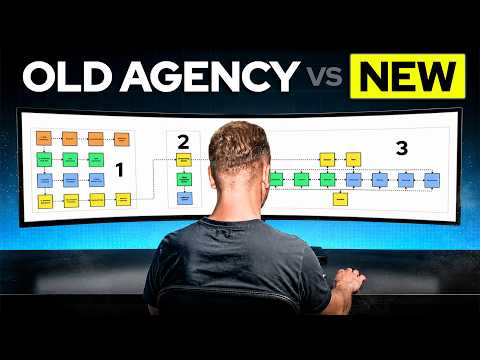
- 64% Net margin
- 98 Active clients
- 10 clients Outreach result
- Not stated Agency revenue
The claim
That an agency rebuilt around an internal AI operating system can run at around 60% net margin with a fraction of the staff of a traditional agency.
- Opening comparison — Two agencies at $100,000 a month: 15 staff at 25% margin vs 5 staff at 60%
- Portfolio agency — 98 active clients, ~5 new a month, 64% net margin, 5-person delivery team
- Portfolio agency revenue and costs — Not stated
- Creator's own agency revenue — "Over USD 10 million"
- Outreach system — 63,000 outreaches, ~4,000 responses, 10 clients, $82,000 new revenue
- Outreach response rate — ~6.3% of outreaches responded (our arithmetic)
- Revenue per client signed — ~$8,200
- Cost to build and run the AI systems — Not stated
What is this income idea?
Running a marketing agency where an internal AI system, fed with the agency's own documents and data, does much of the work a larger team used to do.
- The video opens with two agencies that both make $100,000 a month: one with 15 staff at 25% margin, one with five staff at 60%. The creator says the difference is that the second is "AI native".
- The creator says they have made "over USD 10 million" with their own agency and "a further 100 million for agencies all over the globe", and that one agency in their portfolio has 98 active clients, gains about five a month and runs at 64% net margin with a five-person delivery team.
- The first half is a checklist that comes before any AI: a clear ideal customer, an offer, a distinct brand, one lead channel working well before $100,000 a month, a sales process the founder can step out of, monthly churn below 10%, a narrow service list, documented SOPs, a monthly P&L and KPIs per team member. Automation comes last: "If you automate something shit it's going to just be an automated piece of shit."
- The second half is the AI operating system. Context (services, ideal customer, the founder's goals, SOPs) and data (ads, outreach, recruitment, reporting) feed one system, and tools are built on top: a daily brief for the founder, a paid-ads dashboard, a multi-channel outreach system, AI employees modelled on staff, and an AI screen for recorded job applications.
- One portfolio agency's "command center" is said to hold 32 internal applications, possibly 50 within three months. The creator argues this also raises the sale price: agencies sell at four to six times EBITDA, and a "tech enabled agency" can get closer to 10.
Fix the basics of the agency first, then feed all its documents and numbers into one AI system and build internal tools on top of it.
- Positioning and offer — Say no to 90%
- One lead channel — Until $100k/month
- Churn under 10% — Per month
- SOPs, P&L, KPIs — Before automation
- Context and data — One source
- Internal AI tools — 32 in one agency
- Higher exit multiple — 4–6x, aiming at 10x
The order is the useful idea: AI is added after the basics, not instead of them.
The order matters more than the AI
The lesson underneath the number
- The most useful idea in the video is the sequence. Before any AI tool, the creator lists positioning, a single working lead channel, churn under 10% a month, a narrow set of services, documented processes, a monthly P&L and KPIs for every role. Automation comes last, after a process is good and measured. That is sound advice for any agency and costs nothing to apply.
- The AI operating system is described as the layer that makes those basics cheaper to run: a daily brief built from every call and figure, dashboards that answer questions about ad and outreach data, assistants modelled on staff knowledge, and an applicant screen that ranks recorded interviews. The creator is also clear about the limits: the "true creative spark in innovation" is not something AI does yet, and above $100,000 a month they still have to keep hiring.
- The margin claim is where the figures stop. The 60%-versus-25% comparison in the opening is an illustration, and the real portfolio agency is given as 98 clients, five delivery staff and 64% net margin with no revenue or cost lines. With 98 clients on five delivery staff, that is about 20 clients each (our arithmetic), which says something about how lean delivery is, but not what it costs to run the software that makes it possible.
- The outreach example is the most checkable part: 63,000 outreaches, about 4,000 responses, 10 clients, $82,000 in new revenue. Those are the numbers an agency owner can compare against their own. The video ends with a link to the creator's paid help with this transition; its price is not stated, and the framework itself is given in full without it.
If you automate something shit it's going to just be an automated piece of shit.
The creator, on why automation comes last
The framework, as the video gives it
Core components first, AI operating system second.
No build or running cost is given for any of the systems.
- Get the core components right first — Positioning, predictable deal flow, reliable fulfilment and seamless operations. "AI on an existing shit business just amplifies a shit business."
- Keep one acquisition channel working — Paid ads, outbound, content or referrals. Below $100,000 a month, the creator says to run one channel well; above it, diversify.
- Hold churn below 10% a month — "Don't even think about building systems to save your business if your churn rate is above 10%." Keep the niche and service list narrow so fulfilment is repeatable.
- Document, measure, then automate — SOPs for anything repeatable, a monthly P&L, KPIs for every team member, and automation only once a process is good and tied to the numbers.
- Build context and data into one system — Feed in services, ideal customer, the founder's goals, SOPs, call recordings and every channel's numbers, so internal tools work from the agency's own information rather than a short onboarding form.
- Add back-end functions — For example a daily brief built from calls and figures. The creator says it lets them focus for "four five six hours a day" without checking Slack or WhatsApp or asking an assistant what is happening.
- Add front-end functions last — A paid-ads dashboard, an outreach system sending about 3,000 cold emails a day plus letters, voicemails and WhatsApp, AI employees per role, and an applicant-ranking tool for video interviews.
The business model
Monthly retainers from agency clients; the outreach example names e-commerce brands, one of which receives over 400 ad creatives a month.
Businesses that buy marketing services, chosen against a narrow ideal customer profile.
The same service as a traditional agency, delivered faster and cheaper by a smaller team using internal AI tools.
One main channel to begin with: paid ads, multi-channel outbound, content or referrals.
- Delivery staff — Five at the 64% agency; 30+ at the creator's own agency. No pay given
- AI usage and internal software — 32 applications in one agency. Not priced
- Outreach infrastructure — Email, letters, voicemail, WhatsApp. Not priced
- Ad spend — Paid acquisition is shown as a channel. No budget given
- Finance and recruitment — A fractional finance officer, 181 applicants per role reviewed
Margins are given as percentages only. No revenue or cost line is given for any agency in the video.
What you would actually need
Money
Not quantified. The systems are described as built over "the past couple of months" in an established agency portfolio.
The 32 internal applications, the outreach system and the AI employees were built inside agencies that already had clients, staff and revenue. No figure is given for developer time, AI model usage, sending infrastructure, letters, voicemail drops or the staff who built and maintain the tools, so a reader cannot tell what the AI operating system cost to reach.
Named, not priced
- AI model usage across 32 internal applications
- Infrastructure for ~3,000 cold emails a day
- Handwritten letters and voicemail drops
- Meta and Google ad spend
- Developer or staff time to build each system
- A fractional finance officer or accountant for the P&L
- Salaries for the five delivery staff, and for 30+ staff at the creator's own agency
Time
The systems "happened progressively over time"; following the checklist makes a viewer "a killer in one year two years three years".
The creator says it took them "far longer" than that to work this out and that the channel has run for eight years. The AI layer is presented as the last step, so the time it saves depends on years of basics being in place first.
Where the time goes
- Defining positioning, offer and brand
- Getting one lead channel predictable
- Bringing churn below 10% a month
- Writing SOPs for every repeatable task
- Setting up a monthly P&L and KPIs
- Building and maintaining internal AI tools
- Still hiring: "we have to keep hiring more people" above $100,000 a month
The part you must pay attention to
The 60% margin in the opening is a hypothetical, and the 64% that follows comes with no revenue or costs.
The two agencies at $100,000 a month are described as "two of them" for the viewer to choose between; the video does not say they are real businesses. The real example is a portfolio agency at "64% net margins", with no revenue, payroll or tool cost given.
- Monthly revenue in the example — $100,000
- Margin of the AI-native agency — 60%
- Margin of the traditional agency — 25%
$60,000 vs $25,000
Monthly profit in the illustration
The whole case rests on the margin difference being caused by the AI operating system rather than by the other things the video lists first: tight positioning, a narrow service, low churn and a strong team. The video presents both together and gives no before-and-after figures for any one agency, so the share of the margin that comes from AI cannot be separated out from the video.
The outreach example is different: it gives inputs and outputs. 63,000 outreaches produced about 4,000 responses and 10 signed clients worth $82,000 in new revenue, with $400,000 more "in pipeline value" and "over 500k in lifetime value" expected. The creator calls the reply rate lower than they would expect in other industries. What it does not give is the cost of sending 63,000 messages across email, letters, voicemail and WhatsApp, so cost per client cannot be calculated.
- THE OPENING ILLUSTRATION (ours)
- Agency A $100,000 x 25% = $25,000
- Agency B $100,000 x 60% = $60,000
- Staff: 15 vs 5
- THE OUTREACH SYSTEM
- Outreaches 63,000
- Responses ~4,000
- 4,000 / 63,000 = 6.3%
- Clients signed 10
- 10 / 63,000 = 1 in 6,300
- New revenue $82,000
- Per client = ~$8,200
- Cost of sending not stated
- THE 64% AGENCY
- Clients 98, delivery staff 5
- ~20 clients per delivery person
- Revenue, costs not stated
The economics
Percentages and outreach results are given; revenue and costs are not.
- Portfolio agency net margin — 64%
- Active clients / delivery staff — 98 / 5
- New clients per month — ~5
- Outreaches / responses — 63,000 / ~4,000
- Clients signed / new revenue — 10 / $82,000
- Pipeline / expected lifetime value — $400,000 / over $500,000
- Exit multiple for agencies — 4–6x EBITDA
- Revenue and costs of any agency shown — Not stated
Outreach yield
10 clients ÷ 63,000 outreaches = 1 client per 6,300; $82,000 ÷ 10 = ~$8,200 new revenue per client
About one signed client per 6,300 outreaches, worth roughly $8,200 each in first revenue
IncomeIdeaLab calculation from the outreach figures stated in the video
The video does not say whether $82,000 is monthly retainer value, first payments or contracted value, and gives no sending cost, so cost per client cannot be calculated. The creator also says e-commerce is a harder industry for reply rates than others.
- Revenue of the agency running at 64% net margin
- Payroll, tool and AI usage costs at that agency
- Cost of building the 32 internal applications
- Cost of sending 63,000 outreaches across email, letters, voicemail and WhatsApp
- Monthly churn at the 98-client agency
- Price of the help offered through the description link
- In the opening illustration, the five-person agency makes $60,000 a month profit against $25,000 for the 15-person one (our arithmetic). The video does not say these are real agencies.
- About 4,000 responses from 63,000 outreaches is about 6.3% (our arithmetic). The video then describes "a 5% positive reply rate", which may be a separate measure of positive replies only; the two figures are not reconciled in the video.
- Agencies at four to six times EBITDA: at the illustration's $60,000 a month, $720,000 a year of EBITDA would value the agency at about $2.9 million to $4.3 million (our arithmetic). The creator says a tech-enabled agency can aim closer to 10 times; no sale at that multiple is described.
- The creator also runs an education business, the Affluent Academy, whose daily brief shows a day of "like 10k cash". That figure is for the education business, not an agency.
Evidence status
Every substantive figure in the video.
- Two agencies at $100,000 a month: 15 staff at 25% vs 5 staff at 60% — Creator, opening — Framed as a choice for the viewer. Not described as real businesses.
- "Over USD 10 million" made with the creator's agency — Creator — Stated as the creator's experience. We could not check this from the video.
- "A further 100 million" made for other agencies — Creator — No breakdown given. We could not check this from the video.
- 98 active clients, ~5 new a month, 64% net margin, 5 delivery staff — Creator, portfolio agency — A table in the creator's own Miro board at 1:26 shows EBIT margin 64.1%, 5 net new clients, 7 gross new clients and a delivery headcount of 5. Revenue, costs and churn are not shown, so the margin cannot be checked.
- 63,000 outreaches, ~4,000 responses — Creator, outreach system — About 6.3% responded (our arithmetic). A "5% positive reply rate" is also stated.
- 10 clients signed, $82,000 new revenue — Creator — The creator's own SalesOSX results dashboard at 18:04 shows 57 meetings booked, new revenue $82.8K, lifetime value $388.9K and 188 positive replies. About $8,200 per client (our arithmetic). Sending costs not stated.
- $400,000 in pipeline, over $500,000 lifetime value — Creator — Expected future value, not collected revenue. The dashboard card on screen at 18:04 reads $388.9K lifetime value, while the figure spoken is over 500k.
- ~3,000 cold emails a day — Creator — Plus letters, voicemail and WhatsApp. No cost given.
- Over 400 creatives a month for one client — Creator — Given as an example of AI-assisted delivery.
- 32 internal applications, 50+ within three months — Creator — The 50 is a forecast. Build cost not stated.
- Agencies sell at 4–6x EBITDA, tech-enabled closer to 10x — Creator — Stated as market experience. No sale at 10x is described.
What is actually proven?
A clear framework with one set of outcome figures and no cost lines.
- A full checklist of agency basics to fix before adding AI.
- Outreach results: 63,000 sends, 10 clients, $82,000 in new revenue.
- About one signed client per 6,300 outreaches.
- A 64% net margin at one portfolio agency, as a percentage only.
- The 60%-versus-25% comparison in the opening is illustrative.
- The creator says AI does not yet replace creative work and that hiring continues above $100,000 a month.
- Revenue, payroll and AI costs behind any margin given.
- What the AI operating system cost to build.
What the headline doesn’t tell you
A margin is only as checkable as the revenue and costs behind it.
- The opening agencies are a hypothetical. — Two examples to choose between.
- 64% comes without revenue. — Or any cost line.
- The basics come first. — In the creator's own order.
- Built in established agencies. — With 30+ staff at one.
- One client per 6,300 sends. — Our arithmetic, sending cost unknown.
- Pipeline is not revenue. — $400,000 is expected, not collected.
- Paid help is linked. — Its price is not stated.
Should you try it?
Useful for established agencies; a beginner should start with the checklist
Apply the core-components list now. Treat the AI operating system as a later step, and measure its cost against the time it saves.
- Clarity of the framework — 8 — Basics, then context and data, then tools.
- Specificity of outreach figures — 7 — Volume, responses, clients and revenue all given.
- Evidence for the margin claim — 3 — A percentage with no revenue or costs.
- Cost disclosure — 1 — No build, sending or payroll cost given.
- Candour about limits — 7 — AI is said not to replace creative work, and hiring continues.
- Disclosure of paid offers — 6 — The help link is named; its price is not.
- Beginner accessibility — 3 — Built inside agencies already well past $100,000 a month.
- If you are starting an agency, the first half of the video is the part to use. Pick a narrow customer, one service set and one lead channel, keep churn under 10% a month, write down every repeatable task and track a monthly P&L. The creator is clear that AI added to a weak agency only makes the weakness faster.
- The AI operating system is described from inside agencies that already have dozens of staff, many clients and years of documents and data. That context is what makes the internal tools useful, and a new agency will not have it yet. Start with one tool that saves you measurable time, such as a call summary or a lead dashboard, rather than a command centre.
- Be careful with the margin figures. The 60% in the opening is an illustration, and the 64% is given without the revenue or costs that would let you compare your own agency to it. The outreach numbers are more useful: about one client per 6,300 outreaches in e-commerce, which tells you how much volume a channel like that needs before it produces a client.
- Count the cost of the systems before building them. AI usage, sending infrastructure, letters and voicemail drops, and the time to build and maintain each tool are not priced in the video. A tool is worth building when it saves more than it costs, and the video gives you no figures to judge that yet.
Passive or automated?
Automation
Briefs, dashboards, outreach and screening are automated; delivery and sales still need people.
Passive potential
A service business with staff, clients and ongoing hiring.
The video is about doing more with fewer people, not about removing people. The 64% agency still has a five-person delivery team, the creator's own agency has over 30 staff, and the creator says hiring continues above $100,000 a month. The AI systems summarise, rank, report and send outreach, but clients are still sold to, onboarded, served and retained by staff, and the systems themselves are built and maintained by the business. The founder's gain described is focus, four to six hours a day without interruptions, rather than time away from the business.
- Sales calls and closing clients
- Delivering and reviewing client work
- Creative ideas the creator says AI does not yet provide
- Interviewing the top-ranked applicants
- Building and maintaining the internal tools
Recommended beginner experiment
Do the basics, then automate one measured process.
- Write your ideal customer in one line. — Then say no to the rest.
- Pick one lead channel. — Run only that until it is predictable.
- Measure monthly churn. — Under 10% before any systems.
- Write SOPs for five repeat tasks. — So someone else could do them.
- Start a monthly P&L. — Revenue, costs, net profit.
- Automate one measured task. — Track hours saved and tool cost.
- Log outreach cost per client. — The figure the video leaves out.
- Add context before more tools. — Documents and data first.
Our verdict: 6/10
A sound agency framework with a margin claim that is given as a percentage only useful order of work and specific outreach results, but no revenue, payroll or build costs
Credited for putting agency basics before automation and listing them precisely, including churn below 10% a month and one channel until $100,000 a month; for specific outreach figures with volume, responses, clients and revenue; for describing concrete internal tools rather than general claims about AI; and for stating that AI does not yet replace creative work and that hiring continues at scale. Marked down because the 60%-versus-25% comparison in the opening is an illustration; because the 64% net margin is given without revenue or cost lines; because no cost is given for building the AI systems or sending 63,000 outreaches; because the 6.3% response figure and the 5% positive reply rate are not reconciled; and because the price of the paid help linked at the end is not stated.
This is a well-ordered framework for running an agency around AI, and its most valuable point is the order: fix positioning, one lead channel, churn, a narrow service, SOPs, a P&L and KPIs before automating anything. The internal tools described, a daily brief, ads and outreach dashboards, staff-modelled assistants and an applicant screen, are specific and plausible uses of AI inside an established agency. The outreach example gives real inputs and outputs, one client per roughly 6,300 outreaches and about $8,200 of new revenue each. The margin case is thinner. The 60% agency in the opening is an illustration, and the 64% portfolio agency is given without revenue, payroll or the cost of the software behind it, so a reader cannot tell how much of the margin comes from AI and how much from the basics the video lists first. Use the checklist, build one measured tool at a time, and keep a record of what each system costs against what it saves.
- Opening comparison — 60% vs 25% margin
- Portfolio agency margin — 64%
- Clients / delivery staff — 98 / 5
- Outreach to clients — 63,000 to 10
- New revenue from outreach — $82,000
- Revenue and costs behind 64% — Not stated
- Beginner suitability — Checklist yes, full system later
Sources
- The Anatomy Of A Top 1% AI-Native Agency — Jordan Platten — YouTube video, 2026-07-02