Agencies / AI Automation · Claim Review
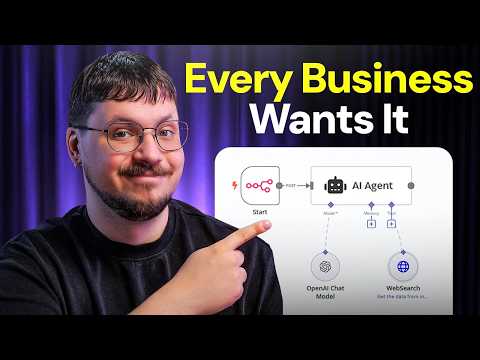
“How to Sell AI Automation Services in 2026 (Step by Step Guide)”
What we found: A Price List With No Earnings Behind It, From a Server Hosting Company
The setup fees are suggestions, the client revenue is a hypothetical and the statistics are unsourced. The worked example adds up on screen, and the VPS the channel recommends is priced on screen at $8.99 a month for two years.
- $1,500–$5,000 Suggested setup fee
- None Earnings reported
- $208,000 Example lost revenue
- Own VPS Tool recommended
The claim
That you can build simple AI automations for local businesses and sell them for $1,500 to $5,000 each, plus optional retainers.
- One-time setup fee — “Usually ranges around $1,500 to $5,000”
- Lead-handling setup — “Over $1,000”
- Example setup fee in the pitch — $2,000
- Monthly retainer amount — Never given
- Performance fee per booked call — Never given
- Example agent: leads and conversions — 30 a month, 4 converted
- Example value per deal — $8,000
- 26 lost leads × $8,000 — $208,000, as shown on the presenter’s board at 7:10
- 2–3 extra deals a month — $16,000–$24,000 for the client
- “78% of customers buy from the first business that responds” — No source given
- “80% of sales require five or more follow-ups” — No source given
- Clients served, revenue earned by the presenter — Never stated
- Recommended VPS (Hostinger KVM 2, checkout on screen at 1:12) — $8.99/mo for 24 months, $239.49 up front incl. tax; renews at $14.99/mo
What is this income idea?
Build small AI-driven workflows for local service businesses — fast lead replies, reactivating old leads, drafting content, chasing invoices — and charge a setup fee.
- The stack is three parts: an automation platform (Make or n8n, with n8n recommended because it can be self-hosted), somewhere to hold data (a CRM such as HubSpot or GoHighLevel, a CMS, or a spreadsheet), and an AI model such as Claude to write messages. The presenter adds a sensible rule: the client should own their own accounts.
- Four use cases are described. Lead handling replies to a form within moments, asks one or two qualifying questions and sends a booking link. Reactivation messages old leads with follow-ups at three and seven days. Content generation turns a short brief into posts, emails or ad copy. Payment collection sends reminders before and after an invoice is due.
- Selling targets local service businesses with “a budget and pain points” — real estate agents, dentists, gyms, law firms, med spas and home services — through a discovery call that puts a dollar value on missed leads.
- Three pricing models are offered: a one-time setup fee of “around $1,500 to $5,000”, a setup fee plus a monthly retainer, or a base fee plus a payment per booked call. No retainer or per-call amount is given.
- The video is published by a hosting company and recommends running n8n on that company’s VPS, with a link and coupon code. Its checkout page, on screen at 1:12, shows the KVM 2 plan at $8.99 a month for 24 months (shown as down from $24.99), $215.76 for the period plus $23.73 tax, $239.49 in total, renewing at $14.99 a month, with an optional $5.99 AI add-on. No one in the video says they have sold an automation, how many clients they have, or what they earned.
A reasonable outline of what to build and how to price it, with no evidence that anyone has earned these fees, from a company that sells the hosting it recommends.
- Pick a local business — Budget and pain points
- Discovery call — Value the missed leads
- Build the workflow — n8n or Make + AI
- Test with fake data — End to end
- Hand over and document — Client owns accounts
- Charge setup or retainer — $1,500–$5,000 suggested
The workflow logic is sound. The step the video skips is finding a client who will pay.
Useful as a menu, unsupported as an income claim
The lesson underneath the number
- As a description of what to build, this is reasonable. The four automations are real problems for small businesses, the advice that clients should own their own accounts is good practice, and the warning not to promise that every lost lead will convert is more restraint than this genre usually shows.
- As evidence that you can earn $1,500 to $5,000 per client, there is nothing. The prices are the presenter’s suggestions. There is no client, no case study, no revenue and no account of anyone closing a sale. The only worked example is a hypothetical agent with hypothetical numbers, correctly multiplied.
- The source also matters. The video comes from a hosting company’s channel, recommends self-hosting n8n because it is cheaper at scale, and then directs viewers to that company’s VPS with a coupon code. That is visible from the channel name and the on-screen offer, and self-hosting n8n is a legitimate choice. But the recommendation and the seller are the same party, and the video does not compare it with alternatives.
- The two statistics deserve the same caution. “78% of customers buy from the first business that responds” and “80% of sales require five or more follow-ups” are widely repeated figures, but the video gives no study, date or source for either, so neither can be checked from what is said.
You shouldn’t guarantee that AI automation will convert all 26. That would be overselling.
The presenter, on pitching the missed-lead arithmetic
The process, as presented
Each step is a recommendation; none is shown being done for a paying client.
Taken from what is said and shown in the video.
- Self-host the automation platform — n8n is recommended because self-hosting “can become much cheaper than paying for multiple automation subscriptions”. The presenter then points to Hostinger’s own VPS with a link and coupon code; the checkout on screen prices the KVM 2 plan at $8.99 a month for 24 months, renewing at $14.99.
- Leave the client in control of their accounts — “You’re selling the AI automation system not individual accounts.” A good rule that avoids the agency holding a client’s CRM or payment accounts hostage.
- Start with fast lead replies — Instant email or SMS response, one or two qualifying questions, then a booking link. Priced at “over $1,000 for a one-time setup”.
- Put a dollar value on missed leads — An agent with 30 leads and 4 conversions has 26 lost leads; at $8,000 a deal, two or three more conversions is $16,000–$24,000 a month for the client. The presenter explicitly says not to promise all 26.
- Choose a pricing model — Setup fee ($1,500–$5,000), setup plus retainer, or base plus per-booked-call. “If the automation directly makes the business money price it based on the value it generates.”
- Reuse a template for delivery — Delivery “in just a few days once you know what you’re doing” because you adapt an existing template rather than starting over.
The business model
A one-time setup fee ($1,500–$5,000 suggested), optionally a monthly retainer or a per-booked-call fee, amounts unspecified.
Local service businesses where a missed lead has a clear dollar value: real estate agents, dentists, gyms, law firms, med spas, home services.
Faster lead response, automatic follow-up, content drafts and invoice reminders without hiring staff.
“Reach out to them and book a quick call.” How to find and reach prospects is not covered.
- Server for self-hosted n8n — The channel owner’s KVM 2 plan: $8.99/mo for 24 months on the checkout on screen ($215.76 + $23.73 tax = $239.49), renewing at $14.99/mo; optional $5.99 AI add-on
- AI API usage — OpenAI or Anthropic keys. Not costed
- Client acquisition — Outreach and discovery calls. Not costed or timed
- Maintenance — Workflows break when connected tools change. Mentioned only as a retainer upsell
“You just build it once and it runs forever” sits awkwardly with the retainer model offered a few minutes later, which charges for “monitoring updates and optimizing the workflows over time”.
What you would actually need
Money
Self-hosting is described as cheaper than several subscriptions; the VPS is offered with a discount code, and its checkout page on screen shows $8.99 a month for 24 months ($239.49 up front including tax), renewing at $14.99 a month.
The running costs are small but real, and some are yours rather than the client’s: the server, AI API usage during building and testing, and any tools you use to find clients. The bigger cost is unpaid time spent on outreach and discovery calls before the first sale.
Named or implied, mostly unpriced
- A VPS to self-host n8n — sold by the channel’s owner; $239.49 for 24 months on screen, then $14.99 a month
- OpenAI or Anthropic API usage
- CRM, SMS and email tools (client-owned, per the video)
- Outreach to local businesses — not covered at all
- Monitoring and fixing workflows after handover
Time
“A standard AI automation system can usually be delivered in just a few days once you know what you’re doing.”
“Once you know what you’re doing” carries the weight. Learning n8n, building reliable templates and getting through a first sale come first, and none of that time is estimated.
Where the time goes
- Learning the automation platform
- Building and testing your first templates
- Finding and calling prospects
- A few days of delivery per client, once practised
- Ongoing maintenance if you sell a retainer
The part you must pay attention to
The worked example adds up, but every input in it is hypothetical, and nobody in the video reports earning a fee.
The pitch arithmetic, on the presenter’s board at 7:10: 30 leads a month, 4 converted for $32,000, and 26 that “go nowhere” — 26 × $8,000 = $208,000 in potential lost revenue. A second board warns against overselling and gives a “realistic impact” of +$16,000 to +$24,000.
- Unconverted leads a month — 26
- Assumed value per deal — $8,000
$208,000
Potential lost revenue, as the board shows
The arithmetic is right: 26 × $8,000 is $208,000, and two or three extra deals at $8,000 is $16,000 to $24,000, both as shown on the boards. The presenter is right to warn against promising all 26, and the board itself labels that “Overselling”. But every input is hypothetical: the 30 leads, the four conversions, the $8,000 per deal and the two or three extra deals. It shows how to frame a pitch, not what any agent actually gains.
The larger gap is that the video reports no earnings at all. “You could be charging over $1,000”, “usually ranges around $1,500 to $5,000” and “let’s say $2,000” are suggestions. The presenter does not say they have sold an automation, and no client, revenue or close rate appears. Two statistics carry the case for the service — “78% of customers buy from the first business that responds” and “80% of sales actually require five or more follow-ups” — and neither is given a source.
- THE EXAMPLE, ON THE BOARD (7:10)
- Leads a month 30
- Converted 4
- 4 x $8,000 = $32,000
- Lost 26
- 26 x $8,000 = $208,000
- REALISTIC IMPACT (board)
- 2 x $8,000 = $16,000
- 3 x $8,000 = $24,000
- -> both check out (our arithmetic);
- every input is hypothetical
- WHAT THE VIDEO REPORTS EARNING
- Clients none named
- Revenue none given
- Setup fees suggested
- Retainer amount not given
The economics
Prices without sales, and a client example without a client.
- Suggested setup fee — $1,500–$5,000
- Lead-handling setup — “Over $1,000”
- Monthly retainer — Not given
- Example agent: lost leads a month — 26
- Example value per deal — $8,000
- Lost revenue, as on the board — $208,000 a month
- Uplift from 2–3 more deals — $16,000–$24,000 a month
- Delivery time once practised — “A few days”
- Clients, revenue, close rate — Never stated
- Recommended VPS, 24 months (checkout on screen) — $239.49 incl. $23.73 tax; $8.99/mo, renews $14.99/mo
What a beginner would need to sell (our illustration)
$3,000 a month ÷ $1,500 setup fee = 2 clients a month; at $5,000 = 0.6 clients a month
Two new low-end clients every month, indefinitely, to earn $3,000 a month from setup fees alone, before any costs
IncomeIdeaLab illustration using the video’s suggested fee range; the $3,000 target is ours
Setup fees are one-off, so the client count has to be refilled every month unless retainers are sold, and the video gives no retainer amount. No close rate is given, so the number of discovery calls needed per client is unknown.
- Whether the presenter has sold any of these automations
- Monthly retainer and per-call fee amounts
- API running costs, and the server cost after the 24-month promotional term beyond the $14.99 renewal shown
- How to find prospects, and how many calls it takes to close one
- Sources for the 78% and 80% statistics
- The $16,000–$24,000 uplift is revenue for the client, not for the person selling the automation. The seller’s income in this example is the $2,000 setup fee.
- Telling a client that two or three extra deals is likely still rests on an assumption about how many cold leads can be revived; the video gives no conversion rate for its own reactivation workflow.
- “Build it once and it runs forever” and a retainer “for monitoring updates and optimizing” cannot both be the whole story. Connected tools change, and someone has to notice when a workflow stops.
- The presenter recommends n8n on the channel owner’s VPS with a coupon code. The checkout on screen at 1:12 prices the KVM 2 plan at $8.99 a month for 24 months — $239.49 up front including tax — renewing at $14.99 a month, about $360 for the following two years (our arithmetic). The video does not compare it with other hosting or with n8n’s own cloud plan.
Evidence status
Every figure in the video.
- Setup fees of $1,500–$5,000 — Presenter — A suggestion. No sale is reported.
- “Over $1,000” for lead handling — Presenter — A suggestion.
- 26 leads × $8,000 = $208,000 — Presenter’s board on screen at 7:10 — Correct. Every input is hypothetical.
- 2–3 extra deals = $16,000–$24,000 — Presenter — Arithmetic correct; inputs hypothetical.
- 78% buy from the first responder — Presenter — “Research shows” — no source named.
- 80% of sales need 5+ follow-ups — Presenter — Called a “fun fact”. No source named.
- Content: 3–4 hours a week down to 20 minutes — Presenter — Illustrative. Not measured for any client.
- Delivery in “a few days” — Presenter — Qualified by “once you know what you’re doing”.
- Self-hosting is cheaper at scale — Presenter — Plausible, and recommended alongside the channel owner’s VPS.
- Presenter’s own clients or earnings — Nobody — Never mentioned.
- KVM 2 VPS at $8.99/mo for 24 months, $239.49 up front — Hostinger checkout on screen at 1:12 — Promotional price; renews at $14.99/mo. Sold by the channel’s owner.
What is actually proven?
The workflows are described. The income is not shown.
- Four common automations and how each would be wired together.
- Three pricing models, with a suggested setup range of $1,500–$5,000.
- The example’s 26 × $8,000 = $208,000 on the presenter’s board is correct, as is the $16,000–$24,000 uplift.
- The channel recommends its owner’s VPS with a coupon code; the checkout on screen shows $8.99 a month for 24 months, renewing at $14.99.
- The 78% and 80% statistics, which carry no source.
- Whether anyone has been paid these fees.
What the headline doesn’t tell you
A pricing menu is not a track record.
- No earnings are reported. — Only suggested prices.
- The example sums are right. — $208,000 on the board; inputs hypothetical.
- The client is hypothetical. — Every input is hypothetical.
- The stats have no source. — 78% and 80%, uncited.
- The channel sells the server. — $8.99/mo promo, renews at $14.99.
- Retainer amounts are missing. — The recurring part is unpriced.
- Finding clients is skipped. — “Book a quick call.”
- “Runs forever” is optimistic. — Then a maintenance retainer is pitched.
Should you try it?
A fair menu of what to build, not evidence of what you will earn
Use the four workflows as a starting list. Price from your own costs and close rate, which the video does not give you.
- Clarity of the workflows — 7 — Four concrete automations, each explained step by step.
- Evidence of earnings — 0 — No client, sale or revenue is mentioned.
- Accuracy of the worked example — 8 — The board shows 26 × $8,000 = $208,000 and a realistic $16,000–$24,000 uplift; inputs hypothetical.
- Sourcing of statistics — 1 — Two key figures with no source.
- Restraint in the pitch — 7 — Warns against promising every lead will convert.
- Independence of tool advice — 3 — Recommends the channel owner’s VPS with a coupon.
- Coverage of client acquisition — 2 — Reduced to “book a quick call”.
- Beginner accessibility — 5 — Low cost to start; the hard part is selling.
- The workflows are a reasonable place to start. Instant replies to web forms, follow-ups to old leads, content from a short brief and invoice reminders are all problems small businesses have, and all can be built with n8n or Make and an AI model. The rule that the client owns their own accounts is worth keeping.
- The prices are a different matter. $1,500 to $5,000 is what the presenter suggests you charge, not what anyone in the video was paid. There is no case study, no client and no figure for how many prospects you would have to contact to close one. Two new clients a month at $1,500 would give $3,000 a month before costs, and that client count resets every month unless you also sell retainers — for which no amount is given.
- If you use the missed-lead pitch, redo the arithmetic with the business’s own numbers. The video’s board does it correctly — 26 lost leads at $8,000 each is $208,000, and two or three recovered deals is $16,000 to $24,000 — and labels promising all 26 as overselling. Your prospect’s lead count and deal value will be different.
- Finally, weigh the source. Self-hosting n8n is a legitimate choice, but this advice comes from a company that sells the server, offered with a coupon code. Its checkout on screen shows $8.99 a month for 24 months, renewing at $14.99. Compare costs yourself before you commit.
Passive or automated?
Automation
You sell automation, but finding clients, building and maintaining workflows is manual work.
Passive potential
One-off setup fees must be resold every month; retainers require ongoing monitoring.
The workflows run on their own once built, which is the product. The business of selling them does not. Each client needs a discovery call, a build adapted from a template, end-to-end testing, documentation and a handover. Income from setup fees stops unless new clients keep arriving, and the recurring option — a retainer — is explicitly for “monitoring updates and optimizing the workflows over time”. The video’s line that you “build it once and it runs forever” describes a single workflow on a good day, not the business.
- Finding and calling local businesses
- Adapting templates to each client’s tools
- Testing workflows end to end
- Writing handover documentation
- Fixing workflows when connected tools change
Recommended beginner experiment
Prove one workflow on one real business before pricing anything.
- Build one workflow for yourself first. — Lead reply is the simplest of the four.
- Price your own running costs. — Server and API, per client.
- Offer one business a pilot. — Measure response time before and after.
- Use their numbers, not the video’s. — And check the multiplication.
- Track your close rate. — Calls made per client won.
- Price the retainer explicitly. — The video leaves it blank.
- Compare hosting options. — Not only the one with a coupon.
Our verdict: 6/10
A sensible build list with no evidence behind the prices and a worked example that adds up but rests on hypothetical inputs
Credited for four concrete, practical automations explained step by step; for advising that clients own their own accounts; for three clearly described pricing models; for warning explicitly against promising that every lost lead will convert; for a worked example whose board on screen multiplies correctly (26 × $8,000 = $208,000); and for showing the recommended VPS’s checkout price on screen, including its renewal rate. Marked down because every price is a suggestion and no earnings, clients or sales are reported by anyone; because the worked example’s inputs are all hypothetical; because the 78% and 80% statistics are given without a source; because no retainer or per-call amount is stated for the recurring models; because client acquisition is reduced to “book a quick call”; and because the channel recommends self-hosting on its owner’s VPS with a coupon code without comparing alternatives.
This is a clear walkthrough of four automations a small business might pay for — fast replies to web enquiries, follow-ups to old leads, content drafted from a short brief, and invoice reminders — with sensible advice on letting clients keep their own accounts and on not overpromising results. As a guide to what to build, it is fine. As support for the income it implies, it has nothing. The $1,500 to $5,000 setup fees are the presenter’s suggestions; nobody in the video says they have charged them, and no client, revenue figure or close rate appears. The only worked example uses a hypothetical real estate agent; its board on screen multiplies correctly — 26 lost leads at $8,000 each is $208,000, and two or three extra deals is $16,000 to $24,000 — but every input is assumed. The two statistics used to make the case — that 78% of customers buy from the first business to respond, and that 80% of sales need five or more follow-ups — come with no source. The recurring pricing options have no amounts attached, and the step that decides whether this works at all, finding businesses willing to pay, is reduced to booking a call. The video comes from a hosting company’s channel and recommends running n8n on that company’s VPS with a coupon code, at $8.99 a month for 24 months on the checkout shown, renewing at $14.99; self-hosting is a reasonable option, but compare it yourself. Use the workflows as a starting list and set your prices from your own costs and results.
- Setup fee — $1,500–$5,000 suggested
- Retainer — Not given
- Earnings reported — None
- Example lost revenue — $208,000 (board on screen)
- Key statistics — Unsourced
- Tool advice — Channel owner’s VPS
- Beginner suitability — Low cost to start; selling is the hard part
Sources
- How to Sell AI Automation Services in 2026 (Step by Step Guide) — Hostinger Academy — YouTube video, 2026-07-01
- FTC — Guides Concerning the Use of Endorsements and Testimonials — Regulatory guidance on endorsements and material connections