Agencies / Productised Service · Claim Review
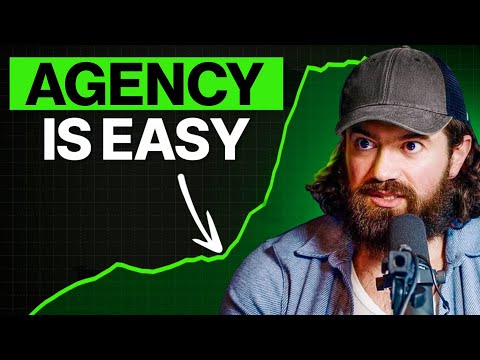
“Alex Hormozi SECRETS for Scaling an Agency to $100k/mo”
What we found: An Agency at $200,000 a Month, and the One Offer Behind It Is Never Named
The lesson is "pick one productised offer". The host credits that choice with six figures a month in ten months — without saying what the offer was, what it cost to run, or what was kept.
- $200k+/mo Stated peak
- 6 figures/mo After focusing
- $2.4M+ Annual run rate
- Never named The offer
The claim
That narrowing an agency to one productised offer, and saying no to everything else, took it to six figures a month within ten months and later past $200,000 a month.
- Agency monthly figure, current or peak — Over $200,000
- Monthly figure ten months after productising — "Six figures per month"
- Title threshold — $100k a month
- Annualised at $200,000 a month — $2.4 million
- Revenue, gross profit or take-home — Never specified
- Starting point before the ten months — Never stated
- The productised offer itself — Never named
- Team size, payroll, clients, margin — Never stated
- Side ventures (software company, course) — "Didn't do well"
What is this income idea?
Run an agency that sells one productised service instead of many custom ones, and turn down everything that distracts from it.
- This is a reaction video. The host plays clips of a well-known business commentator, named in the video's title, talking about focus and saying no, then applies each point to running an agency. We refer to that speaker as the commentator.
- The host's own claim comes in the first ten seconds: "we were able to scale our agency to over $200,000 per month and I attribute it to not the things that I did but the things that I didn't do." No agency name, service, client count or time frame is attached. On screen at that point (0:11), animated text repeats the words ("WE WERE ABLE TO SCALE", "I ATTRIBUTE IT TO", "WITH THAT ONE THING"); no revenue figure, dashboard or offer name is shown with it.
- The turning point is described once. The host was hired for many skills, "spread completely thin burning out", and then chose to "focus on one thing" with "an offer that's productized that I can scale". The result: "10 months later we scaled to six figures per month with that one thing."
- The host is candid about what did not work: "why don't I start a software company why don't I start this course" — and "that thing didn't do well that thing didn't do well", while "the agency started to plateau".
- The clips supply the framing: the commentator running four businesses at once within twelve months, cutting partnerships to focus on one, and later saying every business "can become a billion dollar business", illustrated with salons at "2,000 locations" over "25 years".
- The practical advice is consistent: pick one offer, stop adding services because a client asks, time-block calls, and list the "need to believe" assumptions a plan depends on. What is never given is the offer itself, or any number beyond the two monthly totals.
Sell one thing and say no to the rest — offered by a host who says it took their agency past $200,000 a month, without saying what that one thing was.
- Say yes to everything — Burned out
- Side ventures — Software, a course
- Agency plateaus — Host's account
- Pick one offer — Never named
- Productise it — "That I can scale"
- 10 months later — "Six figures per month"
- Later — "Over $200,000 per month"
A clear story arc with the one concrete input — what was actually sold — missing.
Good advice about focus, and an example that leaves out its own subject
The lesson underneath the number
- The core advice in this video is sound and widely held. Agencies that sell a defined, repeatable service can standardise delivery, hire for one skill, price more confidently and explain themselves in a sentence; agencies that say yes to every request end up with a service menu that is hard to run and hard to sell. The host's line that "you cannot scale an agency doing 20 different things" is a reasonable summary of that.
- The host's own story supports it in one honest way. They describe being "spread completely thin burning out", starting a software company and a course that both failed, and watching the agency plateau while their attention was elsewhere. That is a real admission, and more useful to a viewer than the revenue figure, because it describes what the distraction cost.
- The trouble is that the example stops exactly where it would become useful. "Pick the offer that you're going to scale" is the instruction, and the offer that took this agency to six figures a month is never named — not the service, not the price, not the client type. Without it, a viewer cannot judge whether the success came from focus in general or from choosing one particular, perhaps unusually profitable, thing to focus on. Nor can they check the causal claim: the growth is attributed entirely to what the host stopped doing, with no mention of anything else that changed.
- The numbers inherit the same vagueness. "Over $200,000 per month" and "six figures per month" are consistent with each other and with the title, but neither is described as revenue or profit, neither has a starting point, and neither comes with a team size or a single cost. An agency at $2.4 million a year in revenue may be a very good business or a thin-margin one carrying a large payroll. The video gives no way to tell, and the reaction format, borrowing authority from the commentator being clipped, makes the figures feel better supported than they are.
That thing didn't do well that thing didn't do well the main thing which is the agency started to plateau.
The host, on the side ventures — the most concrete account of cause and effect in the video
The method, as the host gives it
Mostly the commentator's ideas, applied to agencies by the host.
Written from what is said and shown on screen in the video (11:18, published 16 August 2024). Roughly half of the video is clips of another speaker; we attribute those passages to "the commentator" and make no claim about that person beyond what the clips say. The host's own revenue figures are spoken, and no revenue screen accompanies the opening claim.
- Pick one offer and productise it — The host's central instruction: "pick the offer that you're going to scale and focus on just that one thing." Which offer the host picked is never said.
- Stop adding services on request — "You cannot scale an agency doing 20 different things for the clients." A full-service shop doing SEO, email, PPC and social is described as operationally messy and confusing to buyers.
- Cut the side ventures — The host started a software company and a course while running the agency; both "didn't do well" and the agency plateaued. The remedy was to "burn some of these Bridges".
- Guard your calendar — The 11:30 a.m. Wednesday coffee is the host's example of a yes that cost a morning of deep work. The suggestion is to time-block calls and on-the-business work.
- List your "need to believe" assumptions — From the clips: write down what must be true for a plan to work — for example, that content for business owners creates demand for deals — then test each one. The host turns this into a weekly planning filter.
- Stay with the business you already paid to learn — The commentator's point that switching throws away the "ignorance tax" already paid. The host applies it to agencies tempted to add the next service.
The business model
Client fees for a single productised agency service. The service, price and billing model are never described.
Agency clients. The niche, number and size are never stated.
Doing one thing extremely well rather than many things adequately, per the host's framing.
Not discussed. The clips mention content for business owners creating demand for the commentator's own business.
- Delivery staff or contractors — "Our agency" and "we" throughout. Team size never given
- Sales and acquisition — Never discussed
- Tools and software — Never discussed
- Client ad spend — Relevant if the offer involves ads. Unknown
- Failed side ventures — A software company and a course. Cost never given
No cost of any kind is mentioned in the video. For a service business, headcount is usually the largest line and it is never mentioned.
What you would actually need
Money
Never discussed. No cost, margin, payroll or client-acquisition figure is mentioned in the video.
An agency at $200,000 a month almost certainly carries staff or contractors and a sales process, and possibly ad spend handled for clients. None of it is mentioned, so the figure cannot be read as income.
Implied by the model, never priced
- Staff or contractors to deliver the service
- Sales and client acquisition
- Tools and software for delivery
- Any client ad spend that passes through the agency
- The failed software company and course
- Tax on agency profit
Time
Ten months from choosing one productised offer to six figures a month. No date is given for reaching $200,000.
Ten months is measured from an unstated starting point. The agency already existed and was plateauing, so the host began with clients, skills and a reputation — none quantified.
Where the time actually went
- An existing agency before the ten months began
- A burnout period of saying yes to everything
- A software company and a course, both abandoned
- Ten months to "six figures per month"
- An unstated period from there to over $200,000
The part you must pay attention to
The advice is "pick one offer". The host never says which one worked.
The video's whole case rests on a single decision, and the one detail a viewer would need to judge or copy it is left out.
- Stated monthly figure — $200,000+
- Months in a year — 12
$2.4M+ a year
Run rate if the figure is monthly revenue — margin unknown
The load-bearing assumption is causal: that focusing on one productised offer is what produced the growth. The host asserts it — "I attribute it to not the things that I did but the things that I didn't do" — and nothing else is considered: not the market, pricing, a key client, a sales hire, or the reputation the agency had already built. Because the offer is never named, a viewer cannot tell whether it was a commodity service anyone could productise or something the host was unusually positioned to sell. And because "$200,000 per month" is never described as revenue, gross profit or take-home, it cannot be compared with anything.
The two figures are at least consistent with each other: "six figures per month" covers anything from $100,000 to $999,999, so reaching six figures in ten months and later passing $200,000 fits one story, and the title's $100k threshold sits at the bottom of that range. What is missing is everything that would make either number mean something. There is no starting figure, so the ten-month growth cannot be measured. There is no cost, team or margin, so there is no way to know what an agency at this size keeps. And the reaction format lends the host's claim the authority of the commentator being clipped, whose own story in the clips — four businesses at once, cut back to one, then "we made a whole bunch of money" — contains no figure either.
- THE HOST'S FIGURES
- Opening claim >$200,000/mo
- After 10 months "six figures"/mo
- = $100,000 to $999,999
- Title threshold $100,000/mo
- -> consistent with each other
- OUR ARITHMETIC
- $200,000 x 12 = $2.4M/yr run rate
- $100,000 x 12 = $1.2M/yr at the floor
- WHAT WOULD TURN THIS INTO INCOME
- Revenue or profit? unknown
- Team / contractors -???
- Sales & acquisition -???
- Tools -???
- Starting point ???
- The offer never named
The economics
Two monthly totals, no costs, and no description of what was sold.
- Stated monthly figure — Over $200,000
- Monthly figure after 10 months of focus — "Six figures"
- Implied range of "six figures" — $100,000–$999,999
- Annualised at $200,000 — $2.4 million
- Annualised at the $100,000 floor — $1.2 million
- Revenue or profit — Never specified
- Starting monthly figure — Never stated
- Team, clients, margin — Never stated
Annual run rate implied by the opening claim
$200,000 × 12 = $2,400,000
At least $2.4 million a year if the figure is sustained monthly revenue — with no way to derive profit
IncomeIdeaLab calculation from the host's spoken figure
The host does not say whether $200,000 was a single month, a sustained level or a current figure, nor whether it is revenue or profit. A run rate built on a peak month gives a higher annual figure than a full year of lower months would.
- What the productised offer was, and what it cost clients
- Whether the monthly figures are revenue, gross profit or take-home
- The agency's monthly figure before the ten-month period began
- Team size and payroll
- Number of clients, retention and acquisition cost
- What the failed software company and course cost
- The two host figures and the title threshold are mutually consistent: six figures a month covers $100,000 and up, and over $200,000 sits inside that range.
- In the clips, the commentator's salon example — "2,000 locations" over "25 years" to reach a billion-dollar business — implies opening about 80 locations a year, or roughly one and a half a week, for a quarter of a century (our arithmetic). It is offered as a hypothetical, not a result.
- The commentator's own turnaround business is said to have "exploded" and "made a whole bunch of money". No figure is given in the clips.
- No course, coaching offer, sponsor or affiliate link is pitched in this video; it closes with a request to like and subscribe.
Evidence status
Every substantive claim in the video.
- Agency scaled to over $200,000 per month — Host — Spoken; the on-screen text at 0:11 repeats the words and no revenue figure is shown at that point. Revenue or profit, peak or sustained, never said.
- Six figures per month ten months after productising — Host — Consistent with the $200,000 claim. No starting point given.
- The growth came from focus and saying no — Host — Asserted as the cause. No other factor considered.
- A software company and a course "didn't do well" — Host — An honest admission of failed side ventures.
- You cannot scale an agency doing 20 things — Host — A reasonable operating principle; offered as opinion.
- The commentator ran four businesses within 12 months, then cut to one — Clip — Told as a story. No figures.
- The turnaround business "exploded" — Clip — No figure given.
- Every business can become a billion-dollar business — Clip — A belief, stated as such by the speaker.
- Salons: 2,000 locations in 25 years — Clip — Hypothetical. About 80 openings a year, our arithmetic.
- The productised offer, team, costs and margin — Nobody — Absent throughout.
What is actually proven?
The advice is coherent. The results are only spoken.
- The host says the agency reached over $200,000 a month.
- The host says it reached six figures a month ten months after productising.
- The host admits a software company and a course failed while the agency plateaued.
- The two figures and the title threshold are consistent with each other.
- $200,000 a month is a $2.4 million annual run rate, if it is sustained revenue.
- That focus, rather than anything else, caused the growth.
- What the offer was, and what the agency keeps.
What the headline doesn’t tell you
A reaction video with a revenue claim in the first ten seconds.
- The offer is never named. — The whole lesson depends on it.
- Revenue or profit? — Never said.
- No starting point. — Ten months from what?
- No team size. — An agency has payroll.
- No costs at all. — Not one figure.
- Two ventures failed. — The host says so.
- Half the video is clips. — Of someone else.
- Cause is asserted. — Focus alone gets the credit.
Should you try it?
Sound principle, unusable example
Productising one agency service is a sensible move. Nothing in this video tells you which service, at what price, or what it takes to deliver.
- Soundness of the core advice — 7 — Focus and productisation are well-established agency principles.
- Evidence for the revenue — 2 — Spoken, with no revenue screen at the claim; no client count or time frame.
- Clarity on what the figures measure — 1 — Revenue, profit, peak or sustained — never said.
- Specificity of the offer — 0 — The one offer credited with the growth is never named.
- Honesty about failure — 7 — Admits a failed software company, a failed course and a plateau.
- Cost disclosure — 0 — No cost, payroll or margin anywhere.
- Conflict-of-interest risk — 8 — Nothing is sold in the video.
- Beginner accessibility — 4 — Assumes an agency and clients already exist.
- This video is aimed at people who already run an agency, and for them the advice is reasonable. If you are taking any work a client offers and adding services because someone asked, your delivery will be harder to run and your pitch harder to understand. Choosing one service, defining it tightly and selling it repeatedly is a well-trodden way to make an agency easier to grow. The calendar and "need to believe" exercises are practical and cost nothing to try.
- Do not treat the figures as a benchmark. "Over $200,000 per month" is never described as revenue or profit, never dated and never tied to a team or a client count. An agency at that revenue could be very profitable or barely profitable, depending entirely on headcount and delivery costs the video does not mention. And the ten months to six figures started from an agency that already existed, at a level the host never gives.
- Most importantly, notice what the lesson leaves out. The instruction is to pick one offer; the host does not say which offer they picked. Focus is necessary for this to work, but the choice of what to focus on — a service clients will pay well for, that you can deliver repeatably at a margin — is the decision that matters, and the video gives no help with it.
- Credit the admission of failure. The host describes burning out, starting a software company and a course that both failed, and watching the agency stall. That is the most transferable evidence in the video: distraction has a cost, and the host paid it.
Passive or automated?
Automation
Productising standardises delivery; it does not remove the people doing it.
Passive potential
Client service work, sold and delivered continuously.
Nothing in this model is passive, and the video does not suggest otherwise. An agency sells labour: someone has to win clients, deliver the work, manage accounts and keep the offer good enough that clients stay. Productising makes that labour more repeatable — a defined scope, a standard process, one skill to hire for — which is what allows it to scale, but scale here means more people doing more of the same work. The host's own time advice, about protecting mornings from coffee meetings and time-blocking calls, is a reminder that the business still runs on the owner's attention.
- Selling the productised offer to new clients
- Delivering the service, at whatever headcount $200,000 a month requires
- Account management and retention
- Hiring and managing a team
- Deciding what to say no to, repeatedly
Recommended beginner experiment
Productise one service, then measure what it actually earns.
- List every service you currently sell. — With revenue and hours for each.
- Pick the one with the best margin. — Not the most revenue.
- Define it as a fixed package. — Scope, price, turnaround.
- Stop quoting everything else. — Refer it out instead.
- Track revenue and profit separately. — The video never does.
- Write down your "need to believe" list. — Then test each item.
- Time-block client calls. — Protect delivery time.
- Review after ten months. — Against a stated starting point.
Our verdict: 3/10
Reasonable advice on focus, with the proof left unspecified two revenue figures, no costs, and no word on the offer that produced them
Credited for advice on productising and saying no that is coherent and widely applicable; for practical exercises on time-blocking and listing "need to believe" assumptions; for admitting candidly that a software company and a course both failed and that the agency plateaued while the host was distracted; for figures that are at least consistent with each other and with the title; and for selling nothing in the video. Marked down because the only money claims — over $200,000 a month and six figures a month after ten months — are spoken without evidence, a date, a starting point or any indication of whether they are revenue or profit; because the one productised offer credited with the growth is never named; because no cost, payroll, client count or margin appears anywhere; and because the growth is attributed entirely to focus without considering any other cause.
The idea at the centre of this video — that an agency grows faster by selling one well-defined service than by accepting every request — is sensible, and the host makes it clearly, with help from clips of a well-known commentator whose own story of running four businesses at once and cutting back to one carries the same message. The host's personal evidence is partly strong and partly absent. The strong part is the admission: burning out, starting a software company and a course that both failed, and watching the agency plateau while attention was elsewhere. The absent part is everything about the success. The agency is said to have reached "six figures per month" ten months after productising, and "over $200,000 per month" at some point; the figures agree with each other and with the title, and at $200,000 a month they imply a run rate of at least $2.4 million a year. But neither is described as revenue or profit, neither has a starting point or a date, and no team, client, cost or margin figure appears anywhere. Most tellingly, the offer that the whole lesson depends on — the one thing the host chose to focus on — is never named. A viewer is told to pick one offer without being told which one worked, what it cost to deliver, or what the agency kept. Take the principle; there is nothing here to benchmark against.
- Stated monthly figure — Over $200,000
- After 10 months of focus — Six figures a month
- Annual run rate — $2.4M+ if revenue
- Revenue or profit — Never said
- The productised offer — Never named
- Costs and team — Never stated
- Failed side ventures — Software company, course
- Beginner suitability — Principle yes, example no
Sources
- Alex Hormozi SECRETS for Scaling an Agency to $100k/mo — Austin Schneider — Source video, 2024-08-16
- FTC — Guides Concerning the Use of Endorsements and Testimonials — Regulatory guidance on earnings claims