Lead Generation / Cold Email · Claim Review
“I tried sending 50,000 cold emails in a week. This is what happened”
What we found: 96,000 Cold Emails in a Week: The Dashboard Shows 79,587 People Contacted and 1,095 Replies, While the Verified List Stated Is About 12,000
A detailed build of a high-volume cold email campaign. The sending-tool dashboard on screen shows 96,408 emails sent, 79,587 people contacted and 1,095 replies; no deal or revenue is given from the calls, and most of the tool and staff costs are not priced.
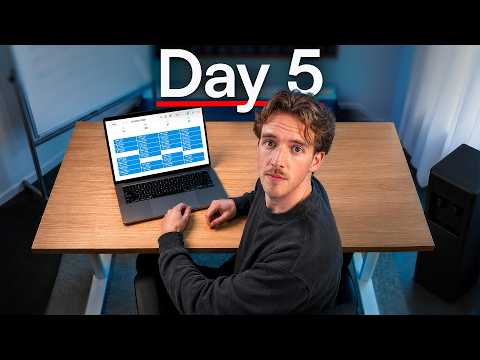
- 96,408 Emails sent in the week
- ~25 Discovery calls booked
- ~3,860 Sends per call
- Not stated Deals or revenue
The claim
That cold email still works in 2026: a campaign built from nothing in a week can send 50,000 emails and book calls.
- Infrastructure — 20 domains, 100 inboxes each, ~2,000 inboxes
- Inbox provider price — ~$30 per tenant per month, plus ~$10 per domain
- Lead list — 19,600 leads at 12,392 companies; just under 12,000 verified emails
- Emails sent — 96,408 in the week; 79,587 people contacted (sending-tool dashboard on screen at about 26:12, 7 to 11 Sep 2026)
- Reply rate and replies — 1.38%; about 1,100 replies stated; the dashboard shows Replies 1,095 (1.38%), Bounced 356 (0.45%)
- Reply rate base (our arithmetic) — 1,095 / 79,587 people contacted = 1.38%; 1,095 / 96,408 sends = 1.14%
- Interested responses — 115 (10.5%), shown on the dashboard
- Discovery calls booked — ~25 stated (about 20%); Calendly Analytics on screen (8 to 10 Sep) shows Created events 22, Completed 6, Rescheduled 3, Canceled 7
- Deals, revenue, total cost — Not stated
What is this income idea?
Book sales calls for a B2B service by sending tens of thousands of short cold emails a week from hundreds of warmed-up inboxes, with a free test offer as the hook.
- The creator runs a cold email agency and sets out to show whether cold email is "dead or is it the cheapest way to generate leads in 2026". The target is 50,000 emails in one week, from setup to booked calls.
- The infrastructure is sized by arithmetic stated in the video: about 10,000 sends a day, 500 sends per domain a day, so 20 domains, each with 100 sending accounts, for roughly 2,000 inboxes. The inbox provider is "roughly $30 per tenant per month", with .com domains at "roughly $10" each. The inboxes are warmed up before sending.
- Leads are US SaaS companies in marketing and sales tech, with over $1 million in revenue and 20 or more staff, targeting founders and growth decision makers. An AI-run enrichment process pulls from the creator's own database and several data providers. The stated result is "19,600 verified ready leads across 12,392 companies", then, after email verification, "just under 12,000 verified emails".
- The offer is a free 14-day test: the agency drives the prospect's ideal customers to their free trial, and the prospect pays "only … per unique trial signup". The creator says this is not the agency's main service, which is "a typical retainer or performance model", and that only the best-fit respondents are offered the test.
- The emails are two steps with three variants of the first, written to look casual and personal. Interested replies trigger an alert, are enriched for a mobile number and called by an appointment setter within five minutes, then sent through a qualification form and a pre-call email sequence.
- At week end the creator reports "around 96,000 emails", a "1.38% reply rate", "1100 replies", "115 interested responses" and "about 25 discovery calls booked". The sending-tool dashboard on screen shows Emails sent 96,408, Total people contacted 79,587, Replies 1,095 (1.38%), Bounced 356 and Interested 115 (10.5%) for 7 to 11 September 2026. The video also promotes the agency, which the creator says has "generated over 45 million in pipeline and booked more than 3,000 calls for our clients in the past year".
Thousands of inboxes send short emails offering a free test, and fast follow-up turns about one reply in ten into interest and one interested reply in five into a call.
- 20 domains, 2,000 inboxes — ~$30 per tenant
- Build the lead list — ~12,000 verified
- Free pay-per-signup test — The hook
- Two-step sequence — ~96,000 sends
- Replies — ~1,100 stated
- Interested — 115
- Calls booked — ~25
- Deals — Not stated
Every stage to booked calls has a figure; the stage that pays does not.
A well-documented machine for booking calls, measured up to the calls
The lesson underneath the number
- The build is specific and teaches a lot. The infrastructure is sized from first principles, 500 sends per domain per day and 100 inboxes per domain, and priced at the inbox level. The list is defined by firmographics, verified, and cleaned with a quality gate that removed records with broken name fields. The creator's point that the offer, not the copy, does the work is sound, and the free pay-per-signup test is a clear example of lowering a prospect's risk.
- The funnel rates hang together. About one reply in ten is interested and about one interested reply in five books a call, both at mid-week and at week end. The creator is candid that the sends ran well over plan because "the team kind of gave me a little bit of a nudge", and that this is "one week one offer one vertical".
- The dashboard resolves the reply count: 1,095 replies is 1.38% of the 79,587 people contacted, which matches the stated rate, and is 1.14% of 96,408 sends. One gap remains. The list-build segment states just under 12,000 verified emails, while the dashboard shows 79,587 people contacted. The video may have drawn on contacts it did not describe in that segment, and a reader trying to reproduce the result needs to know the list size behind it.
- The result itself is calls, not clients. About 25 discovery calls from 96,408 emails is about 3,860 sends per call, and the offer on those calls is a free test. The Calendly page on screen shows 22 events created, 6 completed and 7 canceled over 8 to 10 September. Whether any became paying retainers, and at what price, is not stated. The agency's headline figures, "45 million in pipeline" and 3,000 calls for clients in a year, measure pipeline and meetings, which are not revenue.
This again was just one week one offer one vertical.
The creator, in the week-end recap
How the campaign is built, as described
Five steps from bare domains to a staffed reply desk.
Inbox and domain prices are given; data tools, the reply desk and staff time are not priced, and no deal is stated from the calls.
- Size and buy the sending infrastructure — 10,000 sends a day at 500 per domain gives 20 domains with 100 inboxes each. Lookalike .com domains at about $10, inboxes at about $30 per tenant per month, then warm-up at five emails a day per inbox.
- Build and clean the list — An AI-run waterfall across the creator's own database and several data providers, an eight-point quality check, then email verification: 19,600 leads became just under 12,000 verified emails.
- Lead with a low-risk offer — A free 14-day test where the prospect pays only per unique trial signup, tracked by link. The creator is clear it is a front-end offer used to start a relationship, not the main service.
- Keep the copy short and casual — "The thing that pulls the most weight in a cold email is always going to be the offer not the copy." Plain text, no open tracking, a subject line of two words, and A/B variants.
- Answer interested replies within five minutes — An alert for each interested reply, automatic phone number lookup, a call from the appointment setter, a qualification form, and a pre-call nurture sequence.
- Read the funnel — Mid-week: about 50,000 sends in two days, 1.23% replies, 83 interested, 22 meetings. Week end: about 96,000 sends, 1.38% replies, 115 interested, about 25 calls.
The business model
For the agency: a retainer or performance fee after a free front-end test. For a viewer: booked calls for their own B2B service.
In this campaign, US marketing-tech and sales-tech SaaS companies with a free trial, $1M+ revenue and 20+ staff.
Trial signups from the prospect's ideal customers, paid for only per unique signup during a 14-day test.
High-volume plain-text cold email from about 2,000 inboxes on 20 lookalike domains, with phone and LinkedIn follow-up.
- Inboxes and domains — ~$30 per tenant a month; ~$10 a domain. Tenant count not stated
- Sending tool — Not priced
- Data, enrichment, verification — One provider described as a flat fee. Not priced
- Reply desk — Appointment setter, enrichment, dialler, LinkedIn tool. Not priced
- Free tests — Delivered at the agency's cost to accepted prospects. Not priced
The infrastructure is the cheap part and the only part priced. The people answering replies within five minutes, and the free work given to win clients, are the larger costs and are not put into numbers.
What you would actually need
Money
"Email infrastructure has gotten way cheaper." Inboxes at about $30 per tenant per month and domains at about $10.
The number of tenants is not stated. If each of the 20 domains is one tenant, inboxes are about $600 a month plus about $200 for domains, by our arithmetic. The sending tool, data providers, verification, enrichment, LinkedIn tool, dialler and the appointment setter's pay are not priced, and together they are likely to cost more than the inboxes.
Not priced in the video
- Email sending and warm-up tool
- Lead data and enrichment providers
- Email verification of ~19,600 leads
- Phone lookup, CRM and dialler
- An appointment setter on five-minute call-backs
- Delivering free tests to qualified prospects
Time
One week. "The only reason why I'm able to do it as quickly as I am is because I obviously have been doing it for years."
The week relies on an existing lead database, an AI enrichment process already built, a reply desk and a team that "gave me a little bit of a nudge" to send more. A beginner would spend much longer on the setup, and the inboxes need warming before any of it.
Where the time goes
- Buying domains and warming 2,000 inboxes
- Defining the target list and enriching it
- Writing and testing copy variants
- Answering interested replies within minutes
- Running discovery calls
- Delivering the free test to those accepted
The part you must pay attention to
The dashboard shows the reply rate is taken on people contacted, the contact count is well above the verified list stated, and the funnel stops at booked calls.
The week-end figures are stated as "around 96,000 emails", a "1.38% reply rate", "1100 replies", 115 interested and "about 25 discovery calls". The dashboard on screen reads 96,408 sent, 79,587 people contacted, 1,095 replies and 115 interested.
- Replies (dashboard) — 1,095
- People contacted (dashboard) — 79,587
1.38%
Matches the stated rate on people contacted; 1.14% of 96,408 sends
The remaining gap is the list. Just under 12,000 verified emails are stated in the list-build segment, and the dashboard shows 79,587 people contacted, about 6.6 times that (our arithmetic). The dashboard sends divided by people contacted is about 1.21 emails each (96,408 / 79,587), so most contacts had received one email by then. The creator also mentions adding a separate list of about 4,000 contacts; the video as sampled does not show how the 79,587 relates to the lists described.
The reply, interest and call rates are internally consistent with each other: 115 of 1,095 replies is 10.5%, and 25 of 115 is about 22%. The Calendly page on screen shows 22 events created, 6 completed, 3 rescheduled and 7 canceled for 8 to 10 September, against about 25 calls stated. No deal, close rate or revenue is given, so the result shown is calls booked, not income.
- STATED, WEEK END
- Sends ~96,000
- Reply rate 1.38%
- Replies ~1,100 (dashboard 1,095)
- Interested 115
- Calls booked ~25
- OUR CHECKS
- 1,095 / 79,587 = 1.38% (people contacted)
- 1,095 / 96,408 = 1.14% (sends)
- 115 / 1,095 = 10.5% (matches)
- 25 / 115 = ~22% (matches)
- THE LIST
- Verified emails <12,000
- Steps in sequence 2
- Max sends, one pass <24,000
- Dashboard contacts 79,587
- Sends / contacts = ~1.21
- SENDS PER CALL 96,408 / 25 = ~3,860
The economics
A full funnel to booked calls, a partial cost base, and no revenue.
- Domains / inboxes — 20 / ~2,000
- Inbox price — ~$30 per tenant per month
- Domain price — ~$10 each
- Infrastructure, if one tenant per domain — ~$600/mo + ~$200
- Verified emails stated / people contacted on dashboard — Just under 12,000 / 79,587
- Sends / replies / interested / calls — 96,408 / 1,095 / 115 (dashboard) / ~25 stated
- Reply rate on people contacted — 1,095 / 79,587 = 1.38%
- Sends per booked call — ~3,860
- Deals, revenue, other costs — Not stated
How do the dashboard contacts compare with the verified list stated?
79,587 people contacted ÷ just under 12,000 verified emails = about 6.6; 96,408 sends ÷ 79,587 contacts = about 1.21 emails each
The dashboard contact count is about 6.6 times the verified list stated; the video as sampled does not show how the two relate
IncomeIdeaLab calculation from the list size stated and the dashboard figures shown in the video
The creator mentions a separate list of about 4,000 contacts and that new leads were prioritised; other contacts may have been added that the video does not describe. Our figure shows the gap between what is stated, not what was sent to whom.
- Where the sends beyond the verified list went
- Number of inbox tenants and the monthly total
- Sending, data, enrichment and dialler costs
- Appointment setter pay
- Deals closed from the 25 calls, and their value
- Bounce and spam complaint rates
- At the stated infrastructure, 20 domains at 500 a day is 10,000 sends a day. Sending about 20,000 a day means about 1,000 per domain, or more domains than stated; the video does not say which.
- Mid-week figures are internally consistent: 83 interested and 22 meetings is 26.5%, given as "about 25%".
- The agency's "45 million in pipeline" and "more than 3,000 calls" for clients in a year are the creator's statements; we could not check them from the video, and pipeline is not revenue.
- The video links to the creator's agency and to free offer frameworks.
Evidence status
Every substantive claim in the video.
- About 96,000 emails sent in the week — Creator; sending-tool dashboard on screen — Dashboard shows Emails sent 96,408 and Total people contacted 79,587 for 7 to 11 September 2026. The contacts are well above the verified list stated.
- 1.38% reply rate, about 1,100 replies — Creator; sending-tool dashboard on screen — Dashboard shows Replies 1,095 at 1.38%; that is 1.38% of the 79,587 people contacted and 1.14% of 96,408 sends.
- 115 interested (10.5%) — Creator; sending-tool dashboard on screen — Dashboard shows Interested 115 at 10.5%; matches 115 of 1,095 replies.
- About 25 discovery calls (about 20%) — Creator; Calendly analytics on screen — Calendly Analytics on screen shows Created events 22, Completed 6, Rescheduled 3, Canceled 7 for 8 to 10 Sep. About 22% by our arithmetic. No deals stated.
- Just under 12,000 verified emails — Creator — From 19,600 leads at 12,392 companies.
- Inboxes ~$30 per tenant, domains ~$10 — Creator, provider pricing — Tenant count not stated.
- Cold email is still very much alive — Creator — Calls booked are stated; revenue is not.
- 45 million in pipeline, 3,000+ calls for clients — Creator — Pipeline and meetings, not revenue.
What is actually proven?
The build is detailed and the funnel rates agree with each other. The money is not covered.
- Funnel figures are stated mid-week and at week end.
- The infrastructure, list building, offer and reply handling are described step by step.
- The interested and booking rates are consistent with the stated counts.
- The dashboard shows 1,095 replies, 1.38% of the 79,587 people contacted.
- The 79,587 people contacted on the dashboard are about 6.6 times the verified list stated.
- Deals, revenue and most costs.
What the headline doesn’t tell you
The test ends at booked calls.
- 96,000 sent, not 50,000. — Over plan, by the creator's account.
- ~3,860 sends per call. — Our arithmetic.
- 1.38% is of people contacted. — 1,095 of 79,587 on the dashboard.
- 12,000 verified emails stated. — Dashboard shows 79,587 contacted.
- The offer is a free test. — Paid only per signup.
- No deals stated. — From any of the 25 calls.
- Staff on the reply desk. — Five-minute call-backs.
- Agency CTA. — Stated in the video.
Should you try it?
A sound playbook at a smaller scale
The offer-first approach and fast reply handling transfer to any B2B service. The volume, tooling and reply desk in the video do not suit a first campaign.
- Specificity of the build — 9 — Domains, inboxes, list rules, copy and reply flow.
- Funnel transparency — 7 — Every stage to calls has a figure.
- Internal consistency — 6 — Reply count matches the dashboard rate; list size and contacts do not match.
- Evidence of income — 1 — No deal or revenue stated.
- Cost disclosure — 3 — Inboxes and domains only.
- Beginner accessibility — 3 — Existing data, tools and staff assumed.
- Take the principles. The creator's strongest advice is that the offer decides the result, that the offer should carry little risk for the prospect, and that interested replies should be answered within minutes. Those apply whether you send 200 emails a week or 20,000.
- Do not copy the scale. About 2,000 inboxes on 20 lookalike domains, an AI enrichment process, a lead database and an appointment setter are the tools of an established agency. Sending at this volume also carries deliverability risk, and email providers' terms on bulk sending apply to every inbox.
- Plan the economics past the call. The video stops at 25 booked calls, and the offer on those calls is a free test. Before copying the funnel, estimate your own close rate, what the free work costs you, and what a client is worth, then check whether about 3,840 sends per call pays for itself.
- Check the rules for commercial email where you and your recipients are. The FTC's CAN-SPAM guide for the US covers identification, a physical address and an opt-out in every commercial email.
Passive or automated?
Automation
Sending, enrichment, alerts and drafts are automated; replies and calls are human.
Passive potential
Every result passes through a person on the phone.
Much of the campaign runs by itself once built: inboxes warm and send on schedule, an AI process builds and verifies the list, and each interested reply triggers enrichment, an alert and a drafted response. The part that produces calls is staffed. An appointment setter answers interested replies within five minutes, calls prospects, qualifies them and books meetings, and the creator or a sales rep runs the calls. Delivering the free test to accepted prospects is more work again. Lists also run out, so new contacts have to be sourced continually.
- Answering interested replies within minutes
- Phoning and qualifying prospects
- Running discovery calls
- Delivering the free test
- Refreshing lists and copy as results fade
Recommended beginner experiment
Small list, strong offer, fast replies, full costs.
- Write one low-risk offer. — The creator's first priority.
- Build a list of 500 verified contacts. — One niche, one role.
- Send from a few warmed inboxes. — Not thousands.
- Two short emails, plain text. — As in the video.
- Answer interest within minutes. — The step that books calls.
- Track sends, replies, calls, deals. — Through to revenue.
- Price every tool and hour. — Cost per call and per client.
- Follow commercial email rules. — Opt-out and address included.
Our verdict: 7/10
A detailed cold email build; the week ends at about 25 calls, with a dashboard that confirms the funnel but not the list size clear funnel rates, a send total larger than the stated list supports, and no deal or revenue
Credited for sizing and pricing the sending infrastructure from first principles, a clearly defined and verified list, a low-risk offer the creator explains plainly as a front-end, a fast reply-handling process, funnel figures given mid-week and at week end and shown on the sending-tool dashboard, and the caveat that this was one week, one offer and one vertical. Marked down because the dashboard shows 79,587 people contacted against just under 12,000 verified emails stated; because no deal, close rate or revenue is given from the calls; and because only inboxes and domains are priced among the tools and staff the campaign uses.
As a walkthrough, the video is among the more specific cold email builds we have reviewed. It sizes the infrastructure from stated limits, prices the inboxes and domains, defines and verifies the list, explains why a free pay-per-signup test lowers a prospect's risk, and shows a reply desk built for five-minute follow-up. The funnel rates are stated, agree with each other and match the sending-tool dashboard shown on screen: 96,408 emails sent to 79,587 people, 1,095 replies (1.38% of people contacted) and 115 interested (10.5%). One figure does not reconcile: the list-build segment states just under 12,000 verified emails, against 79,587 people contacted on the dashboard, and the video as sampled does not say where the rest came from. The result is also measured only to the call: about 25 discovery calls stated, with a Calendly page showing 22 events created and 6 completed over 8 to 10 September, offering a free test, with no deal or revenue stated. The creator says plainly that it was one week, one offer and one vertical. A reader can take the offer-first approach and the reply handling, and should measure their own campaign through to signed clients and full costs before deciding whether it pays.
- Emails sent — ~96,000
- Replies stated / dashboard — ~1,100 / 1,095
- Interested — 115
- Calls booked — ~25
- Sends per call — ~3,860
- Verified emails stated — <12,000
- Deals or revenue — Not stated
- Beginner suitability — Principles yes, scale no
Sources
- I tried sending 50,000 cold emails in a week. This is what happened — YouTube video, 2026-09-21
- FTC — CAN-SPAM Act: A Compliance Guide for Business — Regulatory guidance on commercial email