E-commerce / DTC Brand · Founder Story Review
“How I Went from $500 to Half a Billion in 5 Years”
What we found: What the $500 Million Measures Is Not Stated, and the $500 Start Came After Years of Six-Figure Instagram Income and Ad Experience
The setbacks are told candidly; the first-year figures jump from $10,000 in month two to $1.5 million profit, and ad spend and costs are not given.
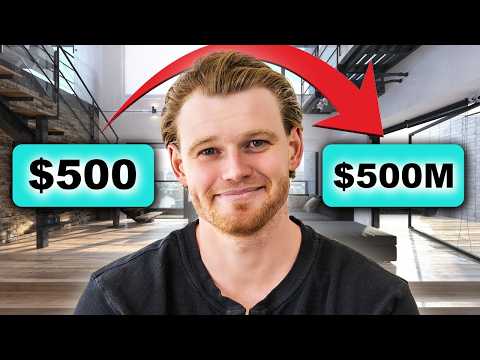
- $500 million Headline figure
- ~$500 Cash at launch
- $1.5 million First-year profit
- Not stated Ad spend and costs
The claim
That the creator went from $500 to $500 million in five years by launching an e-commerce brand, reaching $1.5 million profit in its first year and then building a second, larger brand.
- Headline — "From 500 to 500 million in just five years"
- What the $500 million measures — Revenue, profit, valuation or net worth — not stated
- Cash at launch — About $500, saved from wedding and videography shoots
- Earlier income — "The six figures" from Instagram pages; about $100,000 in the bank at one point
- Losses before the launch — $40,000 on one Instagram account; a food shop losing money; savings back to $0
- Pre-sale customers — About 400, waiting five weeks for stock
- Early sales — $200 first day, $1,000 first week, $10,000 second month
- First-year profit — $1.5 million
- Second brand — From "earning millions to tens of millions"; 60 staff
- Ad spend, stock cost, staff cost — Not stated
What is this income idea?
Find a product with demand and few local sellers, take pre-orders with your own ads and photography, use the customers' payments to buy the stock, then scale the brand.
- The video is a personal story rather than a tutorial. The creator describes struggling at school, turning it around, failing a mining engineering degree, and spending university years "constantly launching new things".
- The first business that worked was a set of Instagram pages reviewing supplements and selling shout-outs to fitness brands. It grew from "five dollars here ten dollars here" to, by the creator's account, the six figures a mining engineering job would have paid, alongside personal training. At one point there was about $100,000 in the bank.
- Then came a run of setbacks, told candidly. A food shop "was losing money". A $40,000 Instagram account bought to resell turned out to have been hacked and was returned to its original owner, taking "almost all of my money at the time". A seasoning business did not work. After a period working in e-commerce marketing in Melbourne — Instagram, influencers, photography, video, Facebook ads and Google ads — the creator was "back at zero dollars", living with their parents.
- The product that worked was weighted blankets, found through a Facebook article and online reviews, with few sellers in Australia. With about $500 saved from wedding and videography shoots, the creator ordered a sample, did the photo shoot themselves, built the store and ads, and sold on pre-sale: taking orders before the stock arrived and using that money to buy it.
- The first shipment was held at customs for about five weeks with roughly 400 customers waiting. Once it cleared, sales were "about 200 in the first day a thousand dollars in the first week ten thousand dollars in the second month", and the business "ended up scaling to doing 1.5 million dollars profit in its first year".
- A second brand "took me from earning millions to tens of millions", with 60 staff. The video ends with the purchases — a Range Rover, a car for the creator's partner, a house — and advice to "never give up".
Years of side businesses and marketing work, several losses, then one product sold on pre-order that took off.
- Instagram pages — Six figures by their account
- Losses — Food shop, $40,000 account
- Marketing job — Ads, content, influencers
- Back to $0 — Living with parents
- Weighted blankets — Few local sellers
- Pre-sale on ~$500 — ~400 customers
- $1.5M profit, year one — No figures in between
- Second brand — 60 staff
The $500 is the cash at the last step before the launch; the skills and audience came from the steps before it.
The $500 is real. It is not where the story starts.
The lesson underneath the number
- The candour in this video is about the failures, and it is considerable. The creator describes failing a degree, a food shop that lost money, a $40,000 loss on an Instagram account that turned out to have been hacked, a seasoning business that went nowhere, spending their savings down to zero and moving back in with their parents. Few founder stories include that much of what went wrong, and it is the most useful part for a viewer.
- It also changes how to read "$500". By the time of the launch, the creator had run Instagram pages to six-figure income, worked in an e-commerce company on Instagram, influencers, photography, video and Facebook and Google ads, and launched several products. The $500 was the cash. The skills to build a store, shoot the product and run the ads without paying anyone were years in the making, and the creator says so: "I had so many skills from all of those past failures."
- The pre-sale model is the part a reader can use directly. Selling stock before it arrives means customers fund the inventory, which is how a launch on $500 is possible at all. It carries risk the video shows plainly: a first import held for five weeks, with 400 customers waiting. What it does not show is the cost of the ads that found those 400 customers, which had to be paid before any stock was.
- The end of the story has less detail than the start. Sales of $10,000 in month two become $1.5 million of profit for the year, a second brand takes the creator "from earning millions to tens of millions", and the title figure of $500 million is not defined. A reader can learn how the first 400 orders were won. How the business grew from there, and what the $500 million is, the video does not say.
I had so many skills from all of those past failures that I could launch the store from scratch.
The creator, on why $500 was enough
The launch, as the video describes it
The useful part is a short, specific account of launching on pre-sales.
No figure is given for ad spend, stock cost or margin at any stage.
- Look for demand with few local sellers — An article on weighted blankets for sensory disorders and insomnia, glowing reviews on forums, and "there wasn't that many products out there especially in Australia".
- Order one sample and shoot it yourself — One sample from China, photographed at home. The creator says the skills from earlier failures meant they "could do everything from scratch".
- Build the store and ads yourself — "I could launch the Facebook ads launch the Google ads", so "I really didn't need any money to get it started" beyond about $500.
- Sell on pre-sale — Take orders for stock not yet in the country, promise a ship date, then buy the stock with the customers' money.
- Expect import delays on a first shipment — The first shipment was held at the border for about five weeks with about 400 customers waiting.
- Scale — $200 the first day, $1,000 the first week, $10,000 the second month, $1.5 million profit for the first year. How the business grew between those points is not described.
The business model
Direct-to-consumer sales of weighted blankets through the creator's own online store, later a second home-goods brand.
Australian shoppers looking for help with sleep and sensory issues; "millions of happy customers" across the brands.
A product with demand and few local sellers, marketed with the creator's own photography and ads.
Facebook ads and Google ads run by the creator, with pre-orders taken before stock arrived.
- Ad spend — Facebook and Google; not stated
- Stock from China — Funded by pre-sales; cost not stated
- Import and customs — A five-week hold described; cost not stated
- Staff — 60 at the second brand; cost not stated
- The creator's own time — Store, ads and photography done personally
The video gives one profit figure, $1.5 million for the first year, and no cost of any kind. Early sales are given as sales; the year is given as profit.
What you would actually need
Money
About $500, with "I really didn't need any money to get it started" because the creator could do the store, ads and photography themselves.
Pre-sales can fund stock, but the ads that bring in pre-orders are paid before the stock is, and their cost is not stated. The creator's $500 also sat on top of skills built over years of paid work in exactly those areas. A reader without them would be paying someone, or paying in time to learn.
Costs the video does not give
- Facebook and Google ad spend to win pre-orders
- Stock from China and the sample
- Shipping, customs and import duties
- Refunds or chargebacks if a delay runs long
- Store platform and payment fees
- Staff, later 60 at the second brand
Time
"From 500 to 500 million in just five years."
The five years count from the launch. Before it came school, a failed degree, Instagram pages, personal training, a food shop, a marketing job and a seasoning business, with 16-hour days at one stage. The launch skills came from that period.
What came before the five years
- Instagram pages selling shout-outs, grown to six figures
- Personal training alongside, 16-hour days
- A food shop that lost money
- Flipping Instagram accounts, ending in a $40,000 loss
- Instagram, influencer, photo, video and ads work in Melbourne
- A seasoning business that did not work
The part you must pay attention to
The $500 million is not defined, and the first year jumps from $10,000 in month two to $1.5 million profit with nothing in between.
The title says "half a billion" and the video says "500 million" twice, without saying whether it is sales, profit, the value of the businesses or the creator's wealth.
- Stated first-year profit — $1.5M
- Months — 12
~$125,000
Average monthly profit, against $10,000 of month-two sales
The load-bearing figure is one the video does not define. "$500 million" could be lifetime sales across both brands, annual revenue, a valuation or a personal net worth, and each would mean something different for a reader asking what this path produces. The creator mentions being on a national rich list, which points toward wealth or business value, but that is not stated as the measure. Within the first brand, the stated figures go from $10,000 in the second month to $1.5 million of profit for the year. Averaging $125,000 of profit a month, after starting at $10,000 of sales in month two, implies very steep growth; the video gives no monthly figures, margins or ad spend to show how.
None of this means the figures are wrong; the video is a story, not an account of the numbers. But the two numbers in the title are not the same kind of thing. The $500 is a cash balance at launch, after years of earlier income and losses; the $500 million is undefined. A reader can take the launch method from this video. They cannot take a growth rate or a return from it.
- THE TITLE
- Start $500
- End $500,000,000
- Ratio 1,000,000x
- End figure measures not stated
- FIRST BRAND, FIRST YEAR (stated)
- Day 1 $200
- Week 1 $1,000
- Month 2 $10,000
- Year 1 PROFIT $1,500,000
- $1.5M / 12 = ~$125,000/mo
- -> sales and profit mixed;
- no figures for months 3-12
- BEFORE THE $500 (stated)
- Instagram income "six figures"
- Bank balance at peak ~$100,000
- Instagram account lost $40,000
- Balance before launch $0
The economics
A handful of figures, mostly from before the launch.
- Minimum wage, first job — ~$16 an hour
- Instagram income at peak — "Six figures"
- Bank balance at one point — ~$100,000
- Instagram account lost — $40,000
- Cash at launch — ~$500
- Pre-sale customers — ~400
- Month-two sales — $10,000
- First-year profit — $1.5 million
- Average monthly profit, year one — ~$125,000
- Headline — $500 million, measure not stated
Placing the first-year figures side by side
$1,500,000 ÷ 12 = $125,000 average monthly profit; month-two sales were $10,000
Average monthly profit for the year is 12.5 times month-two sales, implying steep growth from month three onward
IncomeIdeaLab calculation from the figures stated in the video
Early figures are sales and the annual figure is profit, so they are not directly comparable; the gap in revenue terms would be larger still. Whether "first year" means the first twelve months or a financial year is not stated.
- What the $500 million measures
- Ad spend on Facebook and Google
- Stock, shipping and customs costs
- Sales and margin for the first year
- Monthly figures after month two
- Revenue or profit of the second brand
- $500 to $500 million is a factor of one million. Because the end figure is not defined, the ratio does not describe a return on the $500.
- About 400 pre-sale customers waiting five weeks is stated without an order value. At the stated $10,000 of month-two sales, the average order value cannot be worked out from the video.
- Buying and reselling Instagram accounts, as the creator describes doing, is commonly restricted by platform terms, and the buyer carries the risk of losing the account — which is what happened here with the $40,000 purchase.
- There is no course, coaching or affiliate offer in the video; it closes with a request to like and subscribe.
Evidence status
Every substantive figure in the video.
- "From 500 to 500 million in just five years" — Creator — The $500 million is not defined as revenue, profit, value or wealth.
- About $500 at launch — Creator — Cash only; stock funded by pre-sales, after years of relevant work.
- Six figures from Instagram pages — Creator — Period not stated; we could not check this from the video.
- About $100,000 in the bank — Creator — Before the food shop and the $40,000 loss.
- $40,000 lost on a hacked Instagram account — Creator — A disclosed loss.
- ~400 pre-sale customers, five-week customs hold — Creator — A specific, candid detail.
- $200 day one, $1,000 week one, $10,000 month two — Creator — Sales figures.
- $1.5 million profit in the first year — Creator — ~$125,000 a month on average; no figures for months three to twelve.
- Second brand: "millions to tens of millions", 60 staff — Creator — Whether these are revenue or earnings is not stated.
- Store admin screens shown on camera — Creator — Photographed screens at about 11:40 show total sales of A$562,611.85 from 2,960 orders for 1 Jan–31 (Australian dollars, sales rather than profit, shown on screen but only partly readable), with on-screen text reading "$750k in summer..." and "1 million in 1 month!".
- Ad spend, stock and staff costs — Nobody — No figure given.
What is actually proven?
A detailed story, a short launch method, and very few defined figures.
- The creator launched with about $500 of cash and funded stock through pre-sales.
- Years of Instagram income and e-commerce marketing work came before the launch.
- Losses and failures before the launch are described in detail.
- First-year profit averages about $125,000 a month against $10,000 of month-two sales.
- Photographed store-admin screens at about 11:40 show A$562,611.85 of total sales from 2,960 orders for 1 Jan–31, in Australian dollars, with sales-only figures and no costs.
- What the $500 million measures.
- Ad spend, margins and costs at any stage.
What the headline doesn’t tell you
Two numbers in the title that measure different things.
- $500 million is undefined. — Sales, profit, value or wealth is not stated.
- $500 is launch cash. — Not total capital or experience.
- Six-figure income came first. — From Instagram pages, by the creator's account.
- Ads skills came from a job. — Facebook and Google ads, in e-commerce.
- Customers funded the stock. — Through pre-sales.
- Month 2 to year 1 is a gap. — $10,000 sales to $1.5M profit.
- Ad spend is not stated. — On an ads-led launch.
- The losses are told openly. — Including $40,000 on one account.
Should you try it?
Take the pre-sale method; do not take the headline as a path
A product launch on pre-orders can be done on little cash. Doing it without the ads and content skills the creator had built would cost money or time.
- Candour about failures — 9 — Degree, food shop, $40,000 loss, back to $0.
- Usefulness of the launch method — 6 — Pre-sale funding explained plainly.
- Definition of the headline figure — 1 — $500 million is not defined.
- Detail on growth — 2 — Nothing between month two and year one.
- Cost disclosure — 1 — No cost of any kind is stated.
- Beginner accessibility — 3 — Relies on ads, content and import skills.
- There is a practical idea in the middle of this story. If you can find a product with real demand and few local sellers, and you can produce your own photos and run your own ads, pre-sales let customers pay for the first batch of stock. That is how a launch on $500 of cash becomes possible. It brings its own risk, which the creator shows plainly: a first shipment held at customs for five weeks while 400 customers waited.
- Read the $500 in context. It was the cash at launch, not the starting point of the story. Before it came Instagram pages that, by the creator's account, earned six figures, a job running Instagram, influencers, photography, video and Facebook and Google ads for an e-commerce company, and several attempts at other products. A beginner without those skills would need to pay for them or spend time learning them, and the ad spend to win pre-orders is paid up front either way.
- Do not use the headline to set expectations. The video does not say what $500 million measures, and within the first brand it goes from $10,000 of sales in month two to $1.5 million of profit for the year with no figures in between. Those may well be accurate, but they cannot be turned into a growth rate or a likely return.
- The most transferable lessons are the ones the creator draws themselves: losses happen, a $40,000 account can be taken back, a shop can lose money, savings can run to zero, and skills from failed attempts can still be the basis of the one that works.
Passive or automated?
Automation
The store takes orders; everything around it is managed.
Passive potential
A product brand with ads, imports and later 60 staff.
Nothing in the video is presented as passive. The creator built the store, shot the product, ran the ads and handled the import personally, after years of 16-hour days in earlier businesses. The second brand has 60 staff. A brand selling physical goods through paid ads needs continuous work on stock, suppliers, customs, customer service and advertising, and the video describes all of it as hands-on.
- Finding and testing products
- Photography and ad creative
- Running Facebook and Google ads
- Ordering stock and clearing customs
- Customer service, especially during delays
Recommended beginner experiment
Test demand on pre-orders before buying stock.
- Find a product with few local sellers. — Check reviews and forums for demand.
- Order one sample first. — As the creator did.
- Shoot it and build the page yourself. — Or price what that would cost.
- Set a fixed ad budget for pre-orders. — Track cost per order from day one.
- Give a ship date with margin for delays. — Customs held theirs five weeks.
- Check pre-sale rules for your market. — Delivery dates and refunds.
- Record profit, not just sales. — After ads, stock and shipping.
Our verdict: 5/10
A candid founder story with an undefined headline figure and a $500 launch that followed years of income, losses and directly relevant experience
Credited for describing failures and losses in unusual detail — a failed degree, a food shop losing money, a $40,000 account loss, savings run down to zero; for explaining pre-sale funding plainly, including a five-week customs delay with 400 customers waiting; and for including no course or paid offer. Marked down because the $500 million in the title is not defined as revenue, profit, valuation or wealth; because the $500 start followed six-figure Instagram income and paid work in e-commerce advertising, which the title does not reflect; because the first year moves from $10,000 of sales in month two to $1.5 million of profit with no figures in between; and because no ad spend, stock cost or margin is stated.
This is a story video, and as a story it is more candid than most. The creator describes being told they were stupid at school, failing a degree, a food shop that lost money, a $40,000 Instagram account that turned out to have been hacked, a seasoning business that did not work, and spending their savings down to zero before the product that changed things. The launch itself is described clearly: a product with demand and few Australian sellers, one sample, a home photo shoot, a store and ads built personally, and pre-sales so that customers paid for the stock — with a five-week customs hold and 400 customers waiting as the cost of doing it that way. That is a usable method. The figures around it are thinner. The $500 was the cash at launch, after years of Instagram income the creator puts at six figures and paid work in exactly the skills the launch needed. The $500 million in the title is not defined, so it cannot be read as revenue, profit or a return. And the first brand's growth goes from $10,000 of sales in the second month to $1.5 million of profit for the year, an average of about $125,000 a month on our arithmetic, without a figure in between or a word on ad spend. Take the pre-sale method and the lessons about failure; treat the headline as the creator's summary of where they ended up, not a measure of what $500 can become.
- Headline — $500 million, undefined
- Cash at launch — ~$500
- Month-two sales — $10,000
- First-year profit — $1.5 million
- Average monthly profit, year one — ~$125,000
- Ad spend and costs — Not stated
- Beginner suitability — Method yes, headline no
Sources
- How I Went from USD 500 to Half a Billion in 5 Years — Davie Fogarty — YouTube video, 2023-02-04