YouTube / Blogging / Online Courses · Claim Review
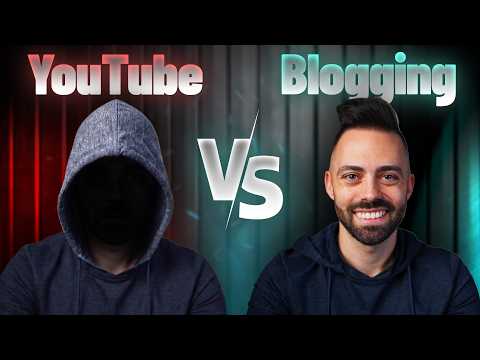
“Faceless YouTube vs. AI Blogging vs Online Courses: Which Makes More Money in 2026?”
What we found: YouTube vs Blogging vs Courses: The "Real Numbers" Are All Hypotheticals
Each scenario’s maths is correct, but none of it is the creator’s own results, and the inputs were chosen to land between $10,000 and $15,000 a month.
- $10k/mo YouTube scenario
- $11k/mo Blog scenario
- $15k/mo Course scenario
- Not given His own results
The claim
That online courses have the highest earning ceiling of the three models, and that YouTube plus affiliate plus a course is the best combination.
- YouTube: 100,000 views at $10 RPM — $1,000 a month in ads
- YouTube: 3 affiliate sales a day at $100 — $9,000 a month
- Blog: 50,000 sessions at $20 RPM — $1,000 a month in ads
- Blog: 20 affiliate sales at $500 — $10,000 a month
- Course: 30 students at $500 — $15,000 a month, "all to you"
- Arithmetic within each scenario — Correct
- Sale value implied by a $500 commission at his 30% software rate — ~$1,667
- His own revenue from any of the three — Not stated
- Course platform recommended — Linked as "my link"
- His own AI masterclass — Promoted at the start and end
What is this income idea?
Build an audience by teaching on YouTube with a real face or voice, earn from ads and affiliate links straight away, and launch your own course after four to six months.
- The creator says he will "break down the real numbers having done all three": faceless YouTube, AI-assisted blogging and online courses. He then compares them with three worked examples.
- YouTube: a channel with 100,000 views a month at a $10 RPM makes $1,000 from ads. Add three affiliate conversions a day at $100 commission, and that is $9,000 more, or $10,000 a month.
- Blogging: 50,000 sessions a month at a $20 RPM makes about $1,000 from display ads. Twenty affiliate sales a month at $500 each adds $10,000, for $11,000.
- Courses: "if you’re selling a $500 course to 30 students that’s $15,000 a month, right, all to you." Courses need an audience to sell to, so he recommends combining all three: teach on YouTube, add affiliate links from day one, and launch a course in months four to six.
- His wider framework has four levels: trust (a real face or voice), solving real problems, a 12-month commitment, and a niche where people spend money (health, wealth, relationships or hobbies). He says faceless AI channels have "the lowest ceiling" because "nobody spends $300 on a text-to-speech voiceover stock footage video."
- He recommends a specific course platform, with a 30-day free trial "through my link below", and promotes his own AI masterclass at the start and end of the video.
Teach on YouTube with your own voice, monetise with affiliate links, then sell a course — supported by example figures, not by his own results.
- Pick a niche that spends — Health, wealth, hobbies
- Teach on YouTube — Face or real voice
- Ads from day one — $10 RPM assumed
- Affiliate links — $100 commission assumed
- Build an email list — Five-email sequence
- Launch a course — Months 4–6
- Sell 30 a month — $500 each assumed
- Commit 12 months — "Not a 60-day one"
A sensible sequence, with every revenue step resting on an assumed input.
Good strategy, borrowed certainty
The lesson underneath the number
- The strongest part of this video is not the comparison; it is the framework. Teach with a real face or at least a real voice, because trust is what turns viewers into buyers. Make content that solves a specific problem, because entertainment has nothing to package into a product. Pick a niche where an audience spends money and where there are many products to recommend. Commit for twelve months, because most people quit in month two or three. That is solid advice and it applies whatever model you choose.
- The comparison is weaker because it is built on numbers he picked. The video promises "the real numbers having done all three", and then every figure is a scenario: "let’s say you have a YouTube channel getting 100,000 views", "if you’re doing 20 affiliate sales a month at $500 each", "if you’re selling a $500 course to 30 students". The sums are right. But the result depends entirely on the inputs, and he gives no figures from his own channels, blogs or courses to show those inputs are realistic.
- One input stands out. A $500 commission per sale is high. By the commission rates he gives a minute later — 2 to 5% for electronics, around 30% recurring for software — it needs a product costing roughly $1,667 at the software rate or $10,000 at the electronics rate. Twenty such sales a month from 50,000 blog sessions is possible in a narrow, high-value niche, but it is not a general benchmark. The YouTube scenario similarly assumes $90 of affiliate income per thousand views, nine times the ad income.
- Finally, the conclusion lines up with what he sells. Courses have "the highest ceiling", the course platform is linked as "my link" twice, and his own AI masterclass is promoted at the start and end. He states all of this. But a viewer should notice that the recommended answer is also the one that earns the creator money, and that "all to you" ignores the platform, processing and marketing costs of selling thirty courses a month.
This is a 12-month commitment, not a 60-day one. The people who make this work put in audience building for months first.
The creator, on the part most viewers skip
His four levels, and the playbook
The framework is stronger than the figures.
- Trust first — People buy from someone they recognise. He argues faceless AI content can get views but has "a structural ceiling on how much people will spend", and that a screen recording with your real voice is enough to clear the bar.
- Solve real problems — "Luxury watch lists" and "best beaches" can get views but "rarely make any money". Content that answers "how to pass the AWS certification exam" leads naturally to a paid product.
- Commit for twelve months — "Most people… quit somewhere around the second or third month." He puts YouTube traction at six months, a new blog at four to six, and a course on top of both. A useful counterweight to faster promises.
- Choose a niche with money in it — Affiliate programmes, an audience that spends, and something teachable. His example of a good niche is backpacking (many products); a bad one is journaling ("just a journal and a pen").
- Add affiliate links immediately — Tools you use in tutorials become recommendations from the first video, before you have a product of your own.
- Build the course at months four to six — Once comments and analytics show what the audience struggles with. He recommends the platform he links, then a five-email sequence from a lead magnet to the paid offer.
The business model
Ad revenue, affiliate commissions, and sales of the creator’s own course, layered on one teaching channel.
Viewers who learn from free tutorials and later buy recommended tools or a complete paid course.
Free teaching that builds trust, followed by a structured paid programme for people who want the full system.
YouTube recommendations and search, an email list built from video descriptions, and a five-email sales sequence.
- Course platform — Free trial, then a subscription. Linked by the creator
- Payment processing — On every course sale. Not mentioned
- Email software — Implied by the sequence. Not priced
- Equipment and AI tools — Not priced
- Refunds and tax — Not mentioned
- Twelve months of unpaid content work — Stated as the commitment
Courses do keep more of each sale than affiliate commissions. "All to you" leaves out platform and processing costs.
What you would actually need
Money
Low. AI handles research and scripts; the course platform has a 30-day free trial, so "the platform costs really nothing much while you build it."
Start-up costs for content are genuinely low. But the course scenario says "all to you", and that is not right: course platforms charge monthly fees after a trial, payments carry processing fees, and selling 30 courses a month usually needs an email list, often paid traffic, and refund handling.
Costs named, implied or missing
- Course platform subscription after the free trial
- Payment processing on each course sale
- Email marketing software for the list and sequence
- Recording equipment, if teaching on camera
- AI tools for research and scripts
- Refunds — not mentioned
- Tax — not mentioned
Time
"This is a 12-month commitment, not a 60-day one." YouTube needs "dozens of videos" and about six months; a blog four to six months; a course comes after.
This is the most honest part of the video. A year of steady teaching content before the course scenario applies is realistic, and he says most people quit in month two or three.
Where the year goes
- Choosing a niche against his three questions
- Dozens of teaching videos over six months
- Joining affiliate programmes and adding links
- Building an email list and a five-email sequence
- Creating the course in months four to six
- Continuing to publish while selling
The part you must pay attention to
"The real numbers having done all three" turn out to be three hypotheticals.
Each example starts with "let’s say" or "if you’re". None is presented as the creator’s own channel, blog or course, and he gives no personal revenue figures.
- Assumed commission per blog sale — $500
- His own figure for software commission — 30%
~$1,667 per sale
Product price needed for each of 20 monthly sales
The load-bearing inputs are the conversion assumptions, and they were chosen, not measured. The YouTube scenario needs 90 affiliate sales a month at $100 commission from 100,000 views. The blog scenario needs 20 sales a month at $500 commission from 50,000 sessions. A $500 commission is possible, but by his own rates — "2 to 5% for electronics, 30% recurring maybe for software" — it needs a product priced around $1,667 at 30%, or $10,000 at 5%. The course scenario needs 30 buyers a month at $500, every month. Change any of these inputs and the ranking between the three models changes with it. He even says "on paper all these models get you similar monthly numbers," which is what you would expect if the inputs were set to land near $10,000 to $15,000.
The arithmetic inside each example is right: 100,000 views at $10 RPM is $1,000; three sales a day at $100 is $9,000 a month; 50,000 sessions at $20 RPM is $1,000; 20 × $500 is $10,000; 30 × $500 is $15,000. What is missing is evidence that any of these inputs are typical. There is also a conflict to weigh. The video concludes that courses have "the highest ceiling", recommends a course platform with "my link" twice, and promotes the creator’s own AI masterclass at both ends. That does not make the advice wrong, but the recommended answer is also what the creator sells.
- THE THREE SCENARIOS (ALL HIS ASSUMPTIONS)
- YouTube 100k x $10 RPM $1,000
- 3/day x $100 x 30 $9,000
- Total $10,000
- Blog 50k x $20 RPM $1,000
- 20 x $500 $10,000
- Total $11,000
- Course 30 x $500 $15,000
- "all to you"
- WHAT THE INPUTS IMPLY
- YouTube affiliate per 1,000 views $90
- Blog affiliate per 1,000 sessions $200
- $500 commission at 30% = $1,667 sale
- $500 commission at 5% = $10,000 sale
- His own revenue, any model: not given
The economics
Correct sums on assumed inputs, and no results of his own.
- YouTube views per month — 100,000
- YouTube RPM — $10
- YouTube affiliate sales — 3 a day at $100
- Blog sessions per month — 50,000
- Blog RPM — $20
- Blog affiliate sales — 20 a month at $500
- Course sales — 30 a month at $500
- YouTube affiliate income per 1,000 views — ~$90
- Blog affiliate income per 1,000 sessions — ~$200
- His own revenue — Not stated
What a $500 commission needs, at his own rates
$500 ÷ 30% (software) and $500 ÷ 5% (electronics)
A product priced around $1,667 at 30%, or $10,000 at 5%, sold 20 times a month from 50,000 sessions
IncomeIdeaLab calculation from the creator’s own figures
Some affiliate programmes pay flat bounties rather than percentages, and some high-ticket software pays more. A $500 commission is achievable in specific niches; the video presents it as a general example.
- His own revenue from YouTube, blogging or courses
- Typical RPMs or conversion rates in any niche
- Course platform fees after the trial
- Payment processing and refund rates on courses
- Whether the course-platform link pays him a commission
- What his AI masterclass costs
- All five sums check: 100,000 ÷ 1,000 × $10 = $1,000; 3 × $100 × 30 = $9,000; 50,000 ÷ 1,000 × $20 = $1,000; 20 × $500 = $10,000; 30 × $500 = $15,000.
- "On paper all these models get you similar monthly numbers" is true of his examples, because the inputs were chosen to land between $10,000 and $15,000. It is not evidence that the models perform similarly.
- Thirty $500 course sales a month is $180,000 a year before costs. He is clear that this needs an audience first and sits on top of a year of content work, which is a fair caveat.
- His point that faceless AI content has a lower spending ceiling — "nobody spends $300 on a text-to-speech voiceover stock footage video" — is an opinion, not a measured figure, but a reasonable one.
Evidence status
Every substantive claim in the video.
- "The real numbers having done all three" — Creator — Every number given is a hypothetical. No personal results.
- YouTube: $10,000 a month from 100,000 views — Creator, scenario — Needs 90 affiliate sales a month at $100.
- Blog: $11,000 a month from 50,000 sessions — Creator, scenario — Needs 20 sales at $500 commission.
- Course: $15,000 a month, "all to you" — Creator, scenario — Ignores platform, processing, refunds and marketing.
- Affiliate rates: 2–5% electronics, ~30% software — Creator — Typical ranges. They make his $500 example a high-ticket case.
- Courses have the highest ceiling — Creator — Reasonable. Also the answer he sells.
- Faceless AI content has the lowest ceiling — Creator — An argued opinion, not a measurement.
- Most creators quit in month two or three — Creator — Unsourced but plausible.
- New blogs take four to six months for traffic — Creator — A common experience, stated as a rule.
- Twelve-month commitment — Creator — Honest and useful.
- Course platform via "my link" — Creator — Recommended twice. Commission terms not stated.
What is actually proven?
The maths is right. The inputs are not evidence.
- Each scenario’s arithmetic is correct.
- Every revenue input — views, RPM, conversions, commissions, course sales.
- A $500 commission needs a ~$1,667 product at his own 30% rate.
- A four-level framework of trust, problem-solving, commitment and niche.
- A twelve-month timeline, with most creators quitting much earlier.
- He promotes a course platform link and his own masterclass.
- His own results from any of the three models.
- The real cost of selling 30 courses a month.
What the headline doesn’t tell you
A good framework around hypothetical numbers.
- The numbers are scenarios. — Not his results.
- $500 commissions are high-ticket. — About $1,667 at 30%.
- "All to you" is not quite true. — Platform and payment fees apply.
- Similar totals by design. — The inputs land near $10–15K.
- Courses need an audience. — He says so: months four to six.
- Twelve months, not sixty days. — His own advice.
- The answer is what he links. — A course platform, "my link".
- He sells a masterclass too. — Promoted at both ends.
Should you try it?
Follow the framework, not the figures
Teach with a real voice, choose a niche that spends, commit for a year. Ignore the monthly totals until you have your own numbers.
- Quality of strategic advice — 8 — Trust, real problems, commitment, niche choice.
- Honesty about timelines — 8 — Twelve months; most quit in month two or three.
- Evidence for the figures — 1 — All hypothetical; no personal results.
- Arithmetic accuracy — 9 — Every sum is correct.
- Realism of the inputs — 4 — A $500 commission is a high-ticket case.
- Cost disclosure — 2 — "All to you" on courses.
- Conflict of interest — 4 — Recommends a linked platform and his own product.
- Beginner accessibility — 7 — Low cost to start; a long runway.
- The advice underneath this video is good. If you want to make money from content, teach something people need help with, show that a real person is behind it (face or voice), and choose a niche where people already spend money on products and learning. Add affiliate links to the tools you actually use from the first video. Build an email list. Make a course only once you know from comments and questions what your audience struggles with. Expect it to take a year.
- Treat the money figures as illustrations, not benchmarks. The $10,000, $11,000 and $15,000 monthly totals come from inputs he chose: 90 affiliate sales a month from 100,000 views, 20 sales at a $500 commission from 50,000 blog visits, 30 course sales a month. None of them is shown to be typical, and he gives no figures from his own work. Your own RPM, conversion rate and commission will decide which model works for you, and you will only know them after months of publishing.
- Look closely at the blog example in particular. A $500 commission per sale means promoting something expensive: around $1,667 at the 30% software rate he quotes, or $10,000 at the electronics rate. That is a specialist niche, not a general case.
- Finally, the course conclusion is also the commercial one. He links a course platform as "my link", twice, and sells his own AI masterclass in the same video. Courses can be the highest-earning option, as he says; just budget for the platform, payment fees, email software and refunds, because the money is not quite "all to you".
Passive or automated?
Automation
AI speeds research and scripts; teaching and publishing remain manual.
Passive potential
Old videos keep earning, but courses need ongoing selling and support.
All three models are sold as passive income, and he partly agrees: ad revenue arrives "because you don’t have to do anything" once content is published, and old videos keep sending traffic. But his own recommended model is not passive. It depends on publishing teaching content consistently for a year, on being a recognisable person whom viewers trust, on maintaining an email sequence, and on selling and supporting a course. Courses also need updating as tools change. AI shortens the research and scripting, as he says, but "it doesn’t change the strategy" — the teaching and the relationship with the audience are the work.
- Recording teaching videos in your own voice
- Choosing and testing affiliate products
- Writing and maintaining the email sequence
- Creating, updating and supporting a course
- Reading comments and analytics to find what to teach next
Recommended beginner experiment
Replace his assumptions with your measurements.
- Pick a niche with many products. — His backpacking vs journaling test.
- Publish teaching videos weekly. — Real voice, real problem.
- Add affiliate links you actually use. — From the first video.
- Measure your own RPM and clicks. — After three months.
- Start an email list early. — Courses sell to lists.
- Price the course stack before building. — Platform, payments, email.
- Pre-sell before recording. — Check that 30 a month is real.
- Give it twelve months. — His own commitment.
Our verdict: 5/10
A sound strategy, compared using numbers nobody earned the sums are right, the inputs are assumptions, and the answer is also what he sells
Credited for a clear framework (trust, problem-solving content, a twelve-month commitment and a niche where people spend money); for an honest timeline that says most creators quit in month two or three; for useful niche tests such as backpacking against journaling; for advising affiliate links from the first video and a course only after months four to six; and for arithmetic that is correct in every scenario. Marked down because the video promises "the real numbers having done all three" and gives only hypotheticals, with no personal results; because the blog scenario’s $500 commission implies a high-priced product at his own stated commission rates; because the course scenario says "all to you" while ignoring platform, processing and marketing costs; and because the conclusion favours courses while he links a course platform as "my link" and sells his own AI masterclass.
The question in the title is a good one, and the framework in the answer is worth keeping. Teach with a real face or voice, because trust is what makes people buy. Solve specific problems, because entertainment has nothing to turn into a product. Pick a niche where an audience already spends, with plenty to recommend. Add affiliate links straight away, build an email list, and make a course once you know what your audience needs. Give it twelve months, because most people stop after two or three. The numbers used to compare the models are a different matter. The video promises "the real numbers having done all three", then offers three hypotheticals: a 100,000-view channel making $10,000, a 50,000-session blog making $11,000, and thirty course sales making $15,000. The sums are all correct. The inputs are not shown to be typical, and the creator gives no figures from his own channels, blogs or courses. The blog example’s $500 commission, at the 30% software rate he quotes, needs a product costing about $1,667. And "all to you" on a course leaves out the platform, payment and marketing costs of selling thirty a month. The conclusion that courses have the highest ceiling may well be right, but it is also the answer that pays him: he links a course platform as "my link" and sells his own masterclass in the same video. Use the framework, and replace every number with your own once you have them.
- YouTube scenario — $10,000/mo
- Blog scenario — $11,000/mo
- Course scenario — $15,000/mo
- Arithmetic — Correct
- $500 commission implies — ~$1,667 sale at 30%
- His own results — Not given
- Course costs — Omitted
- Conflict of interest — Linked platform, own masterclass
- Beginner suitability — Framework yes, figures no
Sources
- Faceless YouTube vs. AI Blogging vs Online Courses: Which Makes More Money in 2026? — Adam Enfroy — YouTube video, 2026-08-10
- FTC — Guides Concerning the Use of Endorsements and Testimonials — Regulatory guidance on earnings claims and affiliate disclosure