YouTube / Shorts · Claim Review
“How to Make Money with YouTube Shorts in 2026 (Full Guide)”
What we found: The $12,000 Shorts Month Is a "Let's Say". At the Monetisation Threshold, the Creator's RPM Pays About $1,000
Correct RPM maths and a responsible warning about AI "inauthentic content" — from a creator who shows two individual Shorts in YouTube Studio, $660.83 and $7.42, but does not state what their channels earn in total.
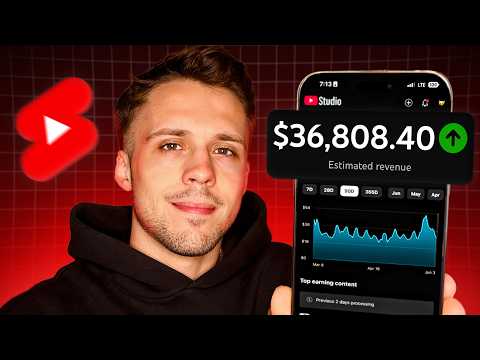
- $12k Example month
- $0.20–$0.40 Tier-one RPM
- ~$1k/mo At the threshold
- Not stated Their total earnings
The claim
That YouTube Shorts aimed at tier-one viewers now earn 20–40 cents per thousand views, enough that a channel with 40 million monthly views could earn $12,000 — from a creator who says they have earned "hundreds or even thousands of dollars on countless individual shorts".
- RPM for tier-one audiences — 20–40 cents per 1,000 views
- Two Shorts in YouTube Studio, 1:26 — $660.83 at 25¢ RPM on 2.6M engaged views; $7.42 at 44¢ RPM on 16.8K
- Views behind the $660 Short — ~2.64 million
- Example month — 40M views × 30¢ RPM = $12,000
- Monetisation threshold — 1,000 subscribers and 10M views in 90 days
- Monthly revenue at the threshold, 30¢ RPM — ~$1,000
- Channels they have taken past 10M views — "Over 10"
- Editor cost — $3–$7 per Short
- Full-time editors listed on OnlineJobs.ph, 12:45 — $4.07–$9.81 an hour; $588–$1,888 a month
- Tool budget — "Under $50 to $100 a month"
- Their total or monthly Shorts income — Not stated
What is this income idea?
Run faceless YouTube Shorts channels in high-RPM niches, produce scripts and voiceovers with AI, outsource editing cheaply, and earn ad revenue once the channel is monetised.
- They open with scale — Shorts draw "over 200 billion views daily" — and argue the pay has improved: "nowadays if you target tier one viewers then you can get 20 to 40cent RPMs". They show one Short at a 44-cent RPM and another at 25 cents "that generated $660", both under fifteen seconds. YouTube Studio on screen at 1:26 shows the 25-cent Short at $660.83 on 2.6 million engaged views, and the 44-cent Short at $7.42 on 16,800 engaged views.
- The money illustration is explicitly hypothetical: "let's say that you get a 30 C RPM for example and you generate 40 million views in a month well then that has the potential to earn you $12,000".
- Niche choice comes first, and they are careful about policy: content that is "inauthentic or reused" — mass-produced AI templates, clips without commentary — "is not allowed to monetize". Good niches show channels pulling tens of millions of views a month and target older American viewers, such as US politics, history or military. One example is another creator's channel, shown in vidIQ with an estimated 1,058,011,458 views gained in about 30 days to 21 June; no revenue is shown for it.
- Production uses an AI research tool (linked below) connected to Claude to analyse a competitor's scripts and generate ideas, built-in voice generation, and CapCut for editing. They name the tools they pay for and warn to be "very very careful which AI tools you decide to pay for".
- Posting advice targets the "zero view jail": use an older Gmail, verify your phone, use YouTube normally for a few days, then post one Short a day from your phone, rising to two or three. Monetisation requires 1,000 subscribers and 10 million views in 90 days, which they say they have reached on "over 10 different channels".
- Scaling means outsourcing editing at "$3 to7 dollars a short", hiring from a site where editors ask "$4 an hour $5 an hour or even $3 an hour". The OnlineJobs.ph listings on screen at 12:45 show full-time editors at $4.07 to $9.81 an hour, or $588 to $1,888 a month. Old channels, they say, still pay monthly, and tools cost "under $50 to $100 a month". The video closes with their new paid community.
Make lots of short, transformative faceless videos for American audiences with AI help, and get paid about 20–40 cents per thousand views once the channel is monetised.
- Pick a high-RPM niche — US politics, history
- Stay transformative — No reused/AI templates
- Research with AI — Tool + Claude
- Script and voice — AI voiceover
- Edit or outsource — $3–$7 a Short
- Post 1–3 a day — From your phone
- Reach 10M views/90 days — Plus 1,000 subs
- Earn 20–40¢ per 1,000 — Tier-one audience
A coherent pipeline. The income at the end depends almost entirely on view volume.
Honest about costs and policy; silent about their own totals
The lesson underneath the number
- This guide gets several things right that the genre often gets wrong. It warns, specifically, that mass-produced AI template content and reused clips without commentary are "not allowed to monetize", which is the single most expensive mistake a beginner in this space can make. It puts prices on the tools and the outsourced editing. And its arithmetic is correct: RPM times views gives revenue, and their $660 Short at a 25-cent RPM corresponds to about 2.6 million views, which matches the 2.6 million engaged views YouTube Studio shows for it on screen.
- The income claim is where it thins out. The headline-sized number in the video — $12,000 in a month — is a hypothetical, introduced with "let's say", that requires 40 million views in a month from one channel. Against that, they say they have taken over ten channels past the monetisation threshold and earned "hundreds or even thousands of dollars on countless individual shorts", but do not state a total, a monthly income, or what a typical one of those channels earns. For a guide whose premise is that Shorts now pay, the creator's own pay is the missing figure.
- Running the threshold through their own RPM gives a better anchor. A channel that just meets 10 million views in 90 days, at 30 cents per thousand, earns about $1,000 a month. Outsourcing 60 Shorts a month at their editor rates costs $180 to $420, and tools another $50 to $100; a full-time editor at the OnlineJobs.ph rates shown on screen would cost $588 to $1,888 a month. That is a viable small business at the threshold and a very good one at several times it — but the gap between $1,000 and $12,000 is entirely views, and the guide offers no evidence of how often new channels reach either.
- The commercial context is the usual one for this genre, and it is disclosed in the video: the AI research tool is linked and praised as one they "literally" cannot work without, and the video ends with their newly launched paid community. A reader should weigh the tool recommendation knowing it is linked, and the community knowing its price is not given.
Be very very careful which AI tools you decide to pay for.
Good advice, in a video that links an AI tool
The process, as they give it
Practical, policy-aware, and dependent on one number: views.
Revenue for two individual Shorts is shown at 1:26 in the YouTube Studio revenue tab: $660.83 on 2.6 million engaged views at a $0.25 RPM, and $7.42 on 16,800 engaged views at a $0.44 RPM. The channel view figures at 1:50 are vidIQ estimates for another creator's channel. Editor rates at 12:45 are OnlineJobs.ph listings. Platform-wide statistics they quote are not sourced in the video and are not relied on here.
- Choose a niche that can be monetised — Avoid "inauthentic or reused content"; add commentary, editing or transformation. This is the most important warning in the video and it is given clearly.
- Aim for high-RPM audiences — English-language content for older American viewers. RPM, they say, ranges 20–40 cents per 1,000 views for tier-one audiences.
- Research with an AI tool — Sort channels by recent views, then have Claude analyse a competitor's script style and propose ideas. The tool is linked below and recommended strongly.
- Warm up the channel — Older Gmail, phone verification, a few days of normal use, then one Short a day from the phone app. Their own observation rather than documented platform rules.
- Hit the threshold — 1,000 subscribers and 10 million views in 90 days. They say they have done it on over ten channels and that appeals have "worked for me literally every single time".
- Outsource and scale — Editors at $3–$7 a Short, from an online jobs site where, they say, rates are $3–$5 an hour and payment can be made off-platform. The OnlineJobs.ph listings on screen show full-time editors at $4.07–$9.81 an hour ($588–$1,888 a month).
The business model
Shorts ad revenue at an RPM they put at 20–40 cents per 1,000 views for tier-one audiences; they note other channels sell products in their bios.
Advertisers paying for Shorts inventory; viewers in high-ad-spend countries.
High-volume, quickly produced, transformative faceless Shorts in niches with proven demand.
The YouTube Shorts feed, gated by an initial "zero view jail" and a 10-million-view monetisation threshold.
- AI tools — Under $50–$100 a month, their figure
- Editing — $3–$7 per Short if outsourced
- Full-time editor — $588–$1,888 a month on the OnlineJobs.ph listings shown at 12:45
- Pre-monetisation period — All costs incurred before any ad revenue
- Policy risk — Reused or inauthentic content cannot be monetised
- Paid community — Promoted. Not priced
Costs are stated more clearly than revenue. The creator gives prices for tools and editors but no total for what their channels earn.
What you would actually need
Money
"You can start for free if you want or ideally you just invest into a couple softwares for under $50 to $100 a month." An editor at $3–$7 a Short is optional.
These costs are stated, which is unusual and welcome. They also add up against Shorts-level revenue: at 60 Shorts a month, outsourced editing alone is $180–$420 (our arithmetic), plus tools, before a channel is monetised. At the threshold of 10 million views in 90 days and a 30-cent RPM, a channel earns about $1,000 a month, so a beginner paying for editing and tools before reaching it is running at a loss for the whole pre-monetisation period. A full-time editor at the OnlineJobs.ph rates shown on screen, $588 to $1,888 a month, would on its own take 59% to 189% of that $1,000 (our arithmetic).
Stated costs
- AI tools: under $50–$100 a month (their figure)
- Editor: $3–$7 per Short (their figure)
- 60 Shorts a month edited: $180–$420 (our arithmetic)
- Full-time editor at the listed rates on screen: $588–$1,888 a month
- Script-writing tool they call "a bit more pricey" — not priced
- Paid community — price not stated
Time
Shorts that "each took me just a few minutes to create"; one to three posts a day; consistency is the main reason people succeed or fail.
"A few minutes" per Short is plausible once a pipeline exists. What the video does not give is time to monetisation: reaching 10 million views in a 90-day window is the gate, and they offer no typical timeline, only that they have done it on over ten channels.
Where the time goes
- Niche research and competitor analysis
- Scripting and voiceover for each Short
- Editing, or hiring and managing editors
- Daily posting from the phone
- Weeks to months before monetisation — not estimated
The part you must pay attention to
The $12,000 month is a "let's say". Their own income is not stated.
"Let's say that you get a 30 C RPM for example and you generate 40 million views in a month well then that has the potential to earn you $12,000."
- Views in 90 days — the monetisation threshold — 10,000,000
- Per 1,000 views — their example RPM — $0.30
~$3,000 per 90 days ≈ $1,000/month
What a channel earns at the threshold itself
The load-bearing assumption is view volume. Every dollar in the model is views multiplied by RPM, and their arithmetic is correct: 40 million views at 30 cents is $12,000; their $660 Short at 25 cents needed about 2.64 million views, and YouTube Studio on screen shows $660.83 on 2.6 million engaged views. But $12,000 a month needs four times the monetisation threshold every single month, from one channel, and they offer it as an illustration rather than a result. The only personal earnings they give are two individual Shorts, shown in YouTube Studio at $660.83 and $7.42 (the higher 44-cent RPM is on the Short that earned $7.42), and a phrase — "hundreds or even thousands of dollars on countless individual shorts" — without a total, a monthly figure, or a per-channel figure across their "over 10" monetised channels.
The threshold calculation is the useful anchor. A channel that just meets YouTube's 10-million-views-in-90-days requirement, at their example RPM, earns about $1,000 a month. That is real money for a portfolio of cheaply produced videos — and it is less than a twelfth of the example month, before tools and editing are paid.
- THEIR $660 SHORT
- $660 / $0.25 per 1,000
- = ~2,640,000 views
- On screen: $660.83, 2.6M views
- THEIR EXAMPLE MONTH ("let's say")
- 40,000,000 x $0.30 / 1,000
- = $12,000
- AT THE MONETISATION THRESHOLD
- 10,000,000 views / 90 days
- x $0.30 / 1,000 = $3,000
- per month ~ $1,000
- COSTS STATED
- Tools $50 - $100 /mo
- 60 Shorts x $3 - $7
- $180 - $420 /mo
- Full-time editor (on screen)
- $588 - $1,888 /mo
- Their own total earnings ???
The economics
Correct per-view maths; no totals.
- Tier-one RPM — $0.20–$0.40
- Example Short revenue — $660.83 at 25¢ (YouTube Studio, 1:26)
- Second Short shown — $7.42 at 44¢ on 16.8K views
- Views behind it — ~2.64M
- Example month — $12,000 (40M views)
- Monthly revenue at threshold — ~$1,000
- Editing, 60 Shorts — $180–$420/month
- Tools — $50–$100/month
- Full-time editor, listings on screen — $588–$1,888/month
- Their total Shorts income — Not stated
What a channel earns at the monetisation threshold
10,000,000 views ÷ 1,000 × $0.30 = $3,000 per 90 days ≈ $1,000 a month
About $1,000 a month at the minimum view level for monetisation, against $230–$520 a month in stated tool and editing costs for 60 Shorts
IncomeIdeaLab calculation from the creator's stated threshold, RPM and costs
RPM varies by niche, audience and season, and views are rarely steady. The threshold is a floor for eligibility, not a forecast. No costs are incurred evenly: tools and editing are paid before monetisation begins.
- Total or monthly Shorts income across their channels
- Typical earnings of a newly monetised channel
- Time from first post to monetisation
- How many channels they started that did not reach the threshold
- Paid community price
- Whether the tool link pays them
- Their $12,000 example is arithmetically correct and explicitly hypothetical.
- Their $660 Short implies about 2.64 million views at the stated 25-cent RPM, matching the 2.6 million engaged views shown in YouTube Studio.
- The higher 44-cent RPM shown is on a Short that earned $7.42 on 16,800 engaged views; the sizeable earner is the 25-cent Short.
- The "over a billion views last month" example is another creator's channel, shown in vidIQ as an estimated 1,058,011,458 views gained in about 30 days to 21 June. It is a third-party estimate and no revenue is shown for it.
- The OnlineJobs.ph listings shown at 12:45 run $4.07–$9.81 an hour for full-time editors, $588–$1,888 a month, above the $3–$5 an hour said aloud. At the threshold's ~$1,000 a month, one such editor would take 59% to 189% of revenue (our arithmetic).
- Platform-wide statistics in the opening are not sourced in the video and do not bear on an individual channel's income.
- Paying editors off-platform, as they describe, removes the marketplace protections that sites like Fiverr and Upwork provide to both sides.
Evidence status
Every substantive money claim in the video.
- Tier-one RPM of 20–40 cents — Creator — Consistent with their two examples.
- A Short at 25¢ RPM generated $660 — YouTube Studio revenue tab, 1:26 — $660.83 on 2.6M engaged views at $0.25 RPM.
- A Short at a 44¢ RPM — YouTube Studio revenue tab, 1:26 — Earned $7.42 on 16.8K engaged views.
- "Over a billion views last month" on an example channel — vidIQ estimate, another creator's channel — 1,058,011,458 views gained in ~30 days to 21 June; no revenue shown.
- $12,000 from 40M views at 30¢ — Creator — Correct arithmetic; explicitly "let's say".
- "Hundreds or even thousands" on many Shorts — Creator — No totals given.
- Threshold reached on over 10 channels — Creator — No earnings for those channels.
- Appeals worked "every single time" — Creator — Their experience; not a guarantee.
- Editors at $3–$7 per Short — Creator — Stated plainly; useful.
- Editors ask "$3, $4, $5 an hour" — Creator; OnlineJobs.ph listings on screen — Listings shown at 12:45 run $4.07–$9.81 an hour full-time ($588–$1,888 a month).
- Tools under $50–$100 a month — Creator — Stated plainly; useful.
- Old channels still pay monthly — Creator — Plausible; amounts not given.
- "99% fail" because they stop posting — Creator — No source.
What is actually proven?
The method and the maths; not the income.
- A clear warning about reused and inauthentic content.
- A full research-to-voiceover workflow shown on screen.
- Two Shorts' revenue in YouTube Studio at 1:26: $660.83 and $7.42.
- RPM arithmetic is correct throughout.
- At the threshold, a channel earns about $1,000 a month.
- The $12,000 month is a hypothetical.
- The creator's total Shorts income.
What the headline doesn’t tell you
Views are the whole business.
- $12k is a "let's say". — Needs 40M views a month.
- ~$1k at the threshold. — Their RPM, our arithmetic.
- No totals. — Two Shorts in Studio: $660.83 and $7.42.
- Costs come first. — Tools and editing before payouts.
- Policy can zero it. — Reused content cannot monetise.
- Editors cost more on screen. — $588–$1,888 a month full-time.
- Tool is linked. — And strongly endorsed.
- Community unpriced. — The closing pitch.
Should you try it?
Viable at small scale, if you budget for the pre-monetisation months
Follow the policy warnings exactly. Plan on the threshold paying about $1,000 a month, not $12,000, and keep costs below that until you know your own views.
- Accuracy of the arithmetic — 9 — Every RPM calculation checks out.
- Policy awareness — 8 — Inauthentic and reused content flagged clearly.
- Cost disclosure — 7 — Tools and editing priced; listed editor rates run higher.
- Evidence for personal income — 3 — Two Shorts in YouTube Studio; no totals.
- Framing of the $12,000 — 5 — Labelled hypothetical, but it is the anchor.
- Commercial restraint — 4 — Linked tool and paid community.
- Beginner accessibility — 6 — Cheap to start; the view threshold is the barrier.
- Shorts can pay, and this guide explains the mechanics accurately. Revenue is views multiplied by RPM, and their own examples are consistent: about 2.6 million views at 25 cents per thousand produced $660.83, as YouTube Studio shows on screen. If you are going to try it, take their policy warning seriously above everything else — content that repackages AI templates or other people's clips without real transformation will not be monetised, however many views it gets.
- Then set expectations with the threshold, not the illustration. Reaching 10 million views in 90 days at a 30-cent RPM earns about a thousand dollars a month. The $12,000 example needs four times that, every month, and the guide offers it as a "let's say" rather than as their result.
- Watch your costs before monetisation. Tools at $50–$100 a month and editing at $3–$7 a Short are cheap individually, but sixty outsourced Shorts a month is $180–$420 before any revenue arrives, a full-time editor at the rates listed on screen is $588–$1,888 a month, and some channels never reach the threshold. Editing your own Shorts until a channel proves itself is the safer route, and paying editors off-platform gives up protections for both of you.
- Finally, notice what is not here. The creator has monetised over ten channels and does not say what they earn. Until you have your own numbers, their RPM and cost figures are more useful than any income figure.
Passive or automated?
Automation
AI scripts, AI voice and outsourced editing remove most manual work.
Passive potential
Old Shorts can keep paying, as they say; growth needs daily posting.
Much of the production can be delegated to AI and to editors, and they say channels they stopped posting on still pay monthly from old Shorts, which is the genuinely passive part. But reaching and keeping the monetisation threshold requires daily posting, Shorts revenue tracks recent views, and every new channel starts from the "zero view jail" they describe. The work shifts from making videos to managing a pipeline — research, scripts, editors and posting — rather than disappearing.
- Choosing and policing a transformative niche
- Approving AI scripts and ideas
- Hiring and managing editors
- Posting daily from the phone app
- Appealing monetisation decisions
Recommended beginner experiment
One channel, your own edits, real numbers.
- Pick one transformative niche. — Check it against the monetisation policy first.
- Edit your own Shorts at first. — Keep pre-revenue costs near zero.
- Post one a day for 90 days. — As they recommend.
- Track views per Short. — Your real rate, not their examples.
- Project to the threshold. — Will you reach 10M in 90 days?
- Estimate revenue at 20–30¢. — Plan on ~$1,000 at the threshold.
- Outsource only after monetisation. — At $3–$7 a Short.
- Buy tools last. — Their own advice: be careful.
Our verdict: 6/10
Sound Shorts maths, with the creator's own totals missing and a $12,000 month that is an illustration, not a result
Credited for correct RPM arithmetic throughout, including a $660.83 Short shown in YouTube Studio and consistent with its stated 25-cent RPM; for a clear and specific warning that inauthentic and reused content cannot be monetised; for stating tool and editing costs plainly; for practical posting advice; and for labelling the $12,000 month as a hypothetical. Marked down because the creator gives no total, monthly or per-channel income despite saying they have monetised over ten channels; because the $12,000 illustration requires four times the monetisation threshold every month while the threshold itself implies about $1,000 a month; because the guide does not address the costs incurred before monetisation or the channels that never reach it; because outsourced editors are paid off-platform, and the full-time editor listings on screen ($4.07–$9.81 an hour) run above the $3–$5 an hour said aloud; and because a linked AI tool and an unpriced paid community are promoted.
As a how-to, this is accurate and responsible. The RPM arithmetic is right at every step, the warning about inauthentic and reused content is the most important thing a beginner could hear about Shorts, and the costs of tools and editors are stated plainly. The money claim needs reframing. The headline-sized figure, $12,000 in a month, is introduced as "let's say" and needs 40 million views from one channel; the creator's own income is described only through two individual Shorts shown in YouTube Studio ($660.83 and $7.42) and the phrase "hundreds or even thousands of dollars on countless individual shorts", with no total, monthly or per-channel figure across the more than ten channels they say they have monetised. Using their own numbers, a channel at the 10-million-views-in-90-days threshold earns about $1,000 a month at a 30-cent RPM, against $230–$520 a month in stated tool and editing costs for sixty Shorts, or $588–$1,888 a month for a full-time editor at the rates listed on screen — a workable small business on the cheaper route, and a long way from the example. Start with one channel, edit it yourself, measure your own views, and treat the linked tool and the paid community as optional until your numbers justify them.
- Example month — $12,000
- Tier-one RPM — $0.20–$0.40
- At the threshold — ~$1,000/month
- $660 Short — $660.83 on 2.6M views (YouTube Studio)
- Stated costs, 60 Shorts — $230–$520/month
- Full-time editor, listings shown — $588–$1,888/month
- Their total income — Not stated
- Beginner suitability — Yes, with own editing first
Sources
- How to Make Money with YouTube Shorts in 2026 (Full Guide) — Source video, 2026-07-08
- FTC — Guides Concerning the Use of Endorsements and Testimonials — Regulatory guidance on endorsements and earnings claims