YouTube / AdSense · Claim Review
“The Ultimate Guide to Earning an Income on YouTube | YouTube Partner Program 2026”
What we found: Multiple Six Figures From YouTube Ads With No Period Given, and a 55/45 Split Stated the Other Way Round
A clear walkthrough of the Partner Program tiers. The creator's own earnings figure has no period or view count, and the stated revenue split does not match YouTube's long-form terms.
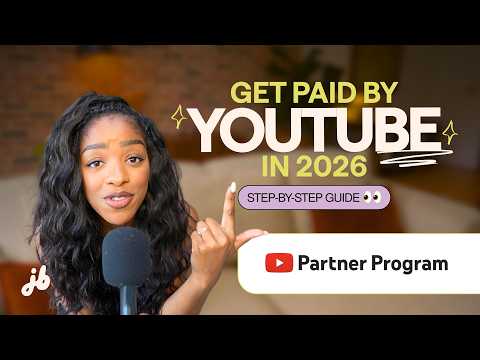
- "Multiple six figures" YouTube earnings
- £8–£20 RPM range
- 10M–25M+ Views implied
- 55/45 Stated split
The claim
That the creator has earned multiple six figures from YouTube ad revenue alone, and that viewers can earn from YouTube too once they understand how the Partner Program works.
- Earnings from YouTube alone — "Multiple six figures", excluding brand deals and products
- Period, currency, views — Not stated
- RPM on the creator's videos — "Sometimes my RPM might be eight pounds, other times it might be 20"
- Views for £200,000 at £8–£20 RPM — 10 million to 25 million
- Stated ad-revenue split — YouTube keeps 55%, creator gets 45%
- Tier 1 entry — 500 subscribers, 3 uploads in 90 days, 3,000 watch hours or 3M Shorts views in 12 months
- Tier 2 entry — 1,000 subscribers and 4,000 watch hours in 12 months, or 10M Shorts views in 90 days
- Membership price — About £2 a month; member count not stated
What is this income idea?
Earning from YouTube itself through the Partner Program: ads on long-form videos and Shorts, plus memberships, Super Chats and YouTube Shopping.
- The video opens with the creator's credential: "I personally have earned multiple six figures just from posting on YouTube alone. We're not talking about brand partnerships. We're not talking about selling products." The creator adds that YouTube once hired them to film a video on this topic.
- It then sets out the two tiers. Tier one, fan funding, needs 500 subscribers, three public uploads in the last 90 days, and 3,000 watch hours or 3 million Shorts views in the last 12 months; it unlocks memberships, Super Chats, Super Thanks and YouTube Shopping. Tier two, full monetisation, needs 1,000 subscribers and either 4,000 watch hours in 12 months or 10 million Shorts views in 90 days.
- It covers the conditions that can block acceptance — public videos only, no AI spam, an eligible country, no active strikes, two-step verification, an AdSense account, advertiser-friendly content — and the application steps, with review taking one to two weeks and the option to reapply after 30 days.
- On ads, the creator explains manual ad slots on videos of eight minutes or more, suggests a slot every three to six minutes at natural breaks, and warns that YouTube now rejects badly placed slots: "my overall ad revenue definitely did dip". RPM varies from about £8 to £20 on the creator's own videos, higher for finance topics than for makeup.
- The last third gives tips for reaching 4,000 watch hours (deep-dive videos of 15 minutes or more, chapters, playlists, live streams) and 1,000 subscribers (a clear reason to subscribe, replying to every comment, doubling down on videos that convert). A sponsor segment for Storyblocks, a stock-media library, runs in the middle and is disclosed at the start.
Reach the Partner Program thresholds, place ads well on long videos, and expect earnings per 1,000 views to vary a lot by topic.
- Tier 1 thresholds — 500 subs, 3,000 hours
- Fan funding — Memberships, Super Chats
- Tier 2 thresholds — 1,000 subs, 4,000 hours
- Link AdSense, apply — 1–2 weeks review
- Place ad slots — Every 3–6 minutes
- Check rejected slots — After each upload
- Earn per 1,000 views — £8–£20 RPM
A clear joining guide. The income figure at the top is not broken down.
The joining guide is solid. The income figure is a credential, not a result.
The lesson underneath the number
- Most of this video is a clear explanation of how the Partner Program now works. The two tiers, the time windows for watch hours and Shorts views, the conditions that block acceptance, and the application steps are laid out in order, with practical advice on where to place ads and what to recheck after each upload.
- The most useful detail is one the creator volunteers against their own interest: when YouTube began rejecting badly placed ad slots, the creator's ad revenue dipped because slots on years of older videos stopped playing. That is a concrete operational risk for anyone with a back catalogue, and the fix — rechecking slots after every upload — is simple.
- The income claim works differently. "Multiple six figures just from posting on YouTube alone" is offered as a reason to trust the guide, not as a result to be examined, and it carries no period, currency or view count. At the creator's own RPM it implies tens of millions of views, which a new channel should not take as a near-term target.
- The revenue split is stated the other way round from YouTube's long-form terms. It does not change the RPM figures, which are already the creator's share, but it would lead a viewer who works from CPM to the wrong estimate.
When they introduced this, my overall ad revenue definitely did dip, because suddenly all of my videos that I've uploaded for the last few years, like, all the ads weren't playing anymore.
The creator, on rejected ad slots
The process, as the creator gives it
Concrete steps for joining and monetising.
No figure is given for what any step adds to earnings.
- Check you meet the thresholds in the window — Watch hours and Shorts views must fall within the stated period. Hours spread across several years "won't actually help you get monetized".
- Clear the blockers — Public videos only, no repetitive AI content, an eligible country, no active strikes, two-step verification, an AdSense account and advertiser-friendly content.
- Place ad slots at natural breaks — On videos of eight minutes or more, add a slot every three to six minutes where there is a natural pause. YouTube will not play slots it judges badly placed.
- Recheck slots after every upload — The creator shows one video where two of four slots were rejected, and says ad revenue fell when the rule began because older videos' slots stopped playing.
- Review blocked ad categories — Some sensitive categories, such as alcohol, may be blocked by default. Unblocking them is optional.
- Build watch time with depth — "You really only need a couple of long form videos that are at least 15 minutes long that are really performing well" to reach 4,000 hours, helped by chapters, playlists and live streams.
The business model
Ad revenue share on long-form videos and Shorts, plus memberships (about £2 a month), Super Chats, Super Thanks and YouTube Shopping commissions.
Advertisers buying placements through YouTube; viewers paying for memberships and tips.
Educational content that holds attention long enough to carry several ads.
YouTube search and recommendations, playlists, and links shared on other platforms.
- YouTube's share — Stated as 55%; 45% on long-form under YouTube's terms
- Production — Equipment, editing and stock media. Not priced
- Tax — Not mentioned
- Lost ad slots — Revenue dipped when slots began to be rejected
Every figure in the video is gross platform revenue or a rate. No cost or profit figure is given.
What you would actually need
Money
No set-up cost is given. The sponsor's stock-media library is recommended, with 15% off annual plans through the creator's link.
Joining the Partner Program is free. Costs come from production: equipment, editing, stock media and, at the creator's scale, a team. None is priced in this video.
Costs implied but not stated
- Camera, microphone and lighting
- Editing software or an editor
- Stock media subscription (the sponsor's, or another)
- Income tax on AdSense earnings
- Time spent re-placing ad slots on older videos
Time
Review takes one to two weeks; rejected channels can reapply after 30 days. No timeline is given for reaching the thresholds.
Reaching 4,000 watch hours is the slow part, and the creator does not say how long it took. Our arithmetic below shows how many views two 15-minute videos would need.
What the thresholds mean in views
- 4,000 hours = 240,000 minutes watched
- At 5 minutes per view: ~48,000 views
- At 7.5 minutes per view: ~32,000 views
- Or 10M Shorts views within 90 days
- Plus 1,000 subscribers
The part you must pay attention to
The stated revenue split is the reverse of YouTube's long-form terms.
The creator says: "YouTube keeps 55% of that money and gives 45% of it to you." YouTube's published terms for long-form watch-page ads give 55% to the creator and keep 45%. A 45% share applies to Shorts revenue.
- Lower bound of "multiple six figures" — £200,000
- The creator's stated RPM per 1,000 views — £8–£20
10M–25M views
Needed at that RPM, over an unstated period
The load-bearing figure is the credential at the top, and it is the least specific number in the video. "Multiple six figures" reads as at least £200,000, but no period, currency or view count is given, so it could describe one year or a decade of uploads. At the creator's own RPM of £8 to £20, £200,000 would take roughly 10 million to 25 million monetised views (our arithmetic). The video does not say how many views the channel has had, how long it has been monetised, or how much of the total came from memberships rather than ads.
The split point matters for anyone using the video to estimate income. RPM is already the creator's share, so the £8–£20 range is not affected. But a viewer who takes the 55/45 description and applies it to a CPM figure would underestimate long-form earnings. RPM is also measured per 1,000 views, including views that show no ad, while CPM is per 1,000 ad impressions, so RPM is not simply 45% or 55% of CPM. The rest of the guide is clear and practical, and the creator discloses that ad revenue dipped when YouTube began rejecting ad slots, which few guides mention.
- THE HEADLINE
- "Multiple six figures"
- Lower bound £200,000
- Period not stated
- Views not stated
- VIEWS IMPLIED
- £200,000 / £20 x 1,000 = 10M
- £200,000 / £8 x 1,000 = 25M
- THE SPLIT
- Stated YouTube 55 / creator 45
- Long-form creator 55 / YouTube 45
- Shorts creator 45
- 4,000 WATCH HOURS
- = 240,000 minutes
- / 5 min per view = 48,000 views
- / 7.5 min = 32,000 views
The economics
Rates and thresholds, and one unquantified total.
- Earnings from YouTube alone — "Multiple six figures"
- RPM range — £8–£20 per 1,000 views
- Views for £200,000 — 10M–25M
- Stated split — YouTube 55% / creator 45%
- Membership — About £2 a month; members not stated
- Views for 4,000 watch hours — ~32,000–48,000 at 5–7.5 min per view
- Period, views, costs, tax — Not stated in the video
What "multiple six figures" implies in views
£200,000 ÷ £20 × 1,000 = 10 million; £200,000 ÷ £8 × 1,000 = 25 million
Roughly 10 million to 25 million monetised views at the creator's stated RPM, over a period that is not given
IncomeIdeaLab calculation from the figures stated in the video
We take £200,000 as the lowest reading of "multiple six figures" and assume the figure is in pounds, as the RPM is. Any membership or Shopping income would reduce the views needed. The watch-hour view counts assume an average of 5 to 7.5 minutes watched per view; the video gives no retention figure.
- The period over which "multiple six figures" was earned
- Whether the figure is in pounds or dollars
- Total channel views and monetised views
- How much came from ads versus memberships and Shopping
- Number of channel members
- How long it took to reach the Partner Program thresholds
- Production costs and tax
- The "YouTube has paid out over $70 billion to creators" line in the opening is a platform-wide figure, not the creator's.
- The eight-minute rule described applies to mid-roll ad slots; the video presents it as applying to all ads on a video.
- The Storyblocks segment is disclosed at the start, and the 15% discount runs through the creator's link. The creator also says YouTube once paid them to make a video on this topic. The FTC's endorsement guides expect sponsorships to be disclosed clearly.
Evidence status
Every substantive claim in the video.
- Multiple six figures earned from YouTube alone — Creator — No period, currency or view count given.
- RPM varies from about £8 to £20 — Creator — Plausible, with finance topics at the higher end.
- YouTube keeps 55%, gives the creator 45% — Creator — The reverse of YouTube's long-form terms; 45% is the Shorts share.
- Tier 1 and Tier 2 entry thresholds — Creator — Set out clearly with their time windows.
- Review takes 1–2 weeks; reapply after 30 days — Creator — Stated as the creator's understanding.
- Ad revenue dipped when slots began to be rejected — Creator — Disclosed with an example of two rejected slots.
- A couple of 15-minute videos can reach 4,000 hours — Creator — Needs roughly 32,000–48,000 views (our arithmetic, assumed retention).
- Membership at about £2 a month — Creator — Member count not stated.
- Over 150,000 creators use the sponsor's library — Sponsor read — The sponsor's figure.
- Period, views, costs, tax — Nobody — Not stated in the video.
What is actually proven?
A clear process; an income figure with nothing around it.
- The creator discloses an ad revenue dip caused by rejected ad slots.
- The sponsorship and a past paid video for YouTube are disclosed.
- Multiple six figures from YouTube alone, and an RPM of £8 to £20.
- £200,000 at that RPM implies 10 million to 25 million views.
- The stated 55/45 split is the reverse of YouTube's long-form share.
- The period, views, costs and tax behind the earnings figure.
What the headline doesn’t tell you
A guide to joining, not a breakdown of earnings.
- No period for six figures. — One year or many.
- No view count. — Our arithmetic: 10M–25M.
- The split is reversed. — Long-form is 55% to the creator.
- RPM varies 2.5 times. — £8 to £20 by topic.
- Ad slots get rejected. — Revenue dipped when it began.
- 4,000 hours is many views. — ~32,000–48,000 on two videos.
- Membership count unknown. — £2 a month each.
- It is sponsored. — By a stock-media library; disclosed.
Should you try it?
A good joining guide; do not set targets from the headline
Use the thresholds and ad-slot advice. Treat "multiple six figures" as a description of a mature channel, and check the revenue split against YouTube's own terms.
- Clarity of the process — 8 — Thresholds, blockers and steps in order.
- Specificity of own earnings — 2 — No period, currency or views.
- Accuracy of the revenue split — 2 — Stated the other way round for long-form.
- Honesty about setbacks — 7 — Revenue dip from rejected slots disclosed.
- Sponsorship disclosure — 9 — Stated at the start.
- Beginner accessibility — 7 — Free to join; the thresholds are the hurdle.
- If you are working towards monetisation, the first half of this video is a useful checklist. Note the time windows in particular: watch hours must come from the last 12 months and Shorts views for tier two from the last 90 days, so old views do not count.
- Put a number on the watch-hour target. Four thousand hours is 240,000 minutes. If viewers watch five minutes of a long video on average, that is about 48,000 views; at seven and a half minutes, about 32,000. The creator's advice to go deep on one topic in videos of 15 minutes or more is aimed at raising the minutes per view.
- When you estimate income, use RPM, which is already your share, and check the split against YouTube's own terms rather than the figure in the video. Expect a wide range: the creator's RPM varies two and a half times between videos.
- Do not anchor on the headline. "Multiple six figures" has no period attached, and at the creator's RPM it implies tens of millions of views. It describes where a successful channel can get to, not what joining the Partner Program pays.
Passive or automated?
Automation
YouTube serves ads and pays out; videos are made by hand.
Passive potential
Older videos keep earning, if their ad slots still play.
Ad revenue on YouTube is one of the more passive creator incomes: once a video is up with working ad slots, it can earn for years without further work. The creator's own experience shows the limit of that. When YouTube changed how it judges ad placement, slots across years of older videos stopped playing and revenue dipped, and the fix meant going back through the catalogue by hand. Reaching the thresholds in the first place is active work — deep-dive videos, replies to every comment, playlists and live streams — and new uploads remain the main driver of subscribers.
- Making long-form videos and Shorts
- Placing and rechecking ad slots
- Replying to comments
- Building playlists and chapters
- Reviewing analytics for what drives subscribers
Recommended beginner experiment
Hit the thresholds, then measure your own RPM.
- Check your 12-month watch hours. — Only the window counts.
- Make two deep 15-minute videos. — On a topic your audience asks about.
- Add chapters and a playlist. — To raise minutes per view.
- Set up AdSense and two-step login. — Before you hit the thresholds.
- Place slots every 3–6 minutes. — At natural breaks.
- Recheck slots after each upload. — Fix any that are rejected.
- Record your RPM per video. — Topic drives the rate.
- Read YouTube's revenue terms. — Do not rely on the video's split.
Our verdict: 5/10
A clear Partner Program guide with an earnings figure that has nothing around it and a revenue split stated the reverse of YouTube's long-form terms
Credited for a clear, ordered explanation of both Partner Program tiers with their time windows, the conditions that block acceptance and the application steps; for practical ad-slot advice; for disclosing that the creator's ad revenue dipped when YouTube began rejecting slots; for giving an RPM range from the creator's own videos; and for disclosing the sponsorship and a past paid video for YouTube. Marked down because the headline "multiple six figures" has no period, currency or view count; because the 55/45 split is stated the other way round from YouTube's long-form terms; because the eight-minute rule is presented as applying to all ads rather than mid-rolls; and because no member count, cost or tax figure is given.
As a guide to joining the YouTube Partner Program, this video is clear and useful. It explains both tiers and their time windows, the conditions that can stop a channel being accepted, how to apply, and how to place ad slots that YouTube will actually play. The creator is candid that their own ad revenue dipped when YouTube began rejecting badly placed slots, and the advice to recheck slots after every upload follows from that. The weaker parts concern money. The opening credential of "multiple six figures" from YouTube alone has no period, currency or view count; at the creator's own RPM of £8 to £20, £200,000 would take roughly 10 million to 25 million monetised views, over a period the video does not give. And the revenue split is stated as 55% to YouTube and 45% to the creator, which is the reverse of YouTube's long-form terms. RPM figures are unaffected because they are already the creator's share, but anyone estimating from CPM would come out low. Use the video as a checklist for getting monetised, measure your own RPM, and check the split against YouTube's own documentation.
- YouTube earnings — "Multiple six figures", no period
- RPM range — £8–£20
- Views implied for £200k — 10M–25M
- Stated split — 55/45 to YouTube
- Costs and tax — Not stated
- Conflict of interest — Sponsored by a stock-media library; disclosed
- Beginner suitability — Good as a joining guide
Sources
- The Ultimate Guide to Earning an Income on YouTube | YouTube Partner Program 2026 — Jade Beason — YouTube video, 2026-06-19
- FTC — Guides Concerning the Use of Endorsements and Testimonials — Regulatory guidance on sponsorship disclosure