Local Services / Window Cleaning · Claim Review
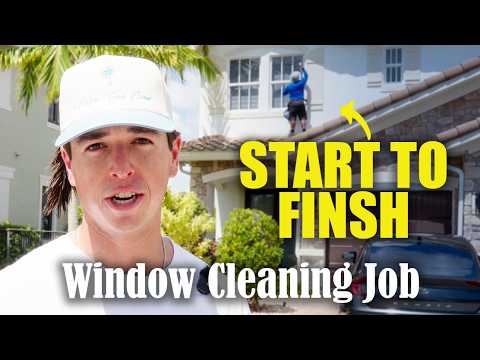
“Window Cleaning Start to Finish — Full Job Walkthrough & What it Pays”
What we found: The Job Maths Checks Out; the $837 Counts Three Visits a Year and No Overhead
A $349 clean that nets $99 after a $150 Facebook lead, then a 13-month plan worth $1,297. The profit figure leaves out the fourth quarterly visit and every cost outside the job.
- $100 First-visit profit
- $1,297 Contract value
- $837 Stated contract profit
- $150 Cost per customer
The claim
That one window-cleaning customer acquired through a Facebook ad yields about $100 on the first job and "$837 total profit on this entire contract" over a 13-month service plan.
- Initial clean price — $349
- Monthly service-plan charge — $79
- Plan as set up in FieldRoutes (9:02, test customer record) — $349.00 initial; 13 months; billed monthly; follow-up every 90 days
- Cost per lead / close rate — ~$15 / about 1 in 10
- Acquisition cost per customer — ~$150
- Cleaner pay, first job — $90 (3 h at $30)
- Profit on first visit — $349 − $250 = $99
- Contract value — $79 × 12 + $349 = $1,297
- Stated contract profit — $837
- Contract profit if a fourth quarterly visit is costed — ~$768
- Company revenue this year — "Over seven figures"
What is this income idea?
A residential window-cleaning company that sells a one-off deep clean and, at the same visit, a monthly service plan that brings the crew back every quarter.
- They introduce themselves as the owner of H2O Bros in South Florida, "on track to do over seven figures this year", and walk through one real job: how it was won, what the homeowner pays, what the cleaner earns and what is left for the business.
- The job came from a Facebook ad. The initial clean is $349, and the customer also signs up to pay $79 a month for a return visit "every 3 months" to clean the windows and reapply a protective coating, with a warranty that lets them call the crew out between visits "at no cost."
- Acquisition is priced openly: "the cost per lead… is about $15", and because "our systems aren't too dialed on converting these people", about one lead in ten becomes a customer, so "this job cost us about $150 to actually get."
- Labour is priced too. The cleaner, Ray, is paid $30 an hour for about three hours ($90), the coating costs about $10, which "leaves us a grand total of $100 in our pockets" on the first visit.
- The service plan is where the profit is meant to be: twelve payments of $79 plus the $349 initial clean gives a contract value of $1,297, and after the cost of the first job, the cleaner's share of the quarterly visits and the coating, they arrive at "$837 total profit on this entire contract."
- The rest of the video is the job itself — cleaning method, applying the coating, a walk-around with the homeowner, asking for a review, and signing the plan in the FieldRoutes CRM with the card stored on file. The FieldRoutes subscription screen at 9:02, on a test customer record, shows a $349.00 initial total, a 13-month custom contract length, monthly billing and a follow-up after 90 days.
Win a customer for about $150, break even on the first clean with $99 to spare, and make the real money from a year of $79 monthly payments.
- Facebook ad — ~$15 per lead
- Close 1 in 10 — ~$150 per customer
- Initial clean — $349, ~3 hours
- Sell the plan — $79 a month, card on file
- Quarterly revisits — ~1.5 hours each
- Contract total — $1,297 over 13 months
The model works on paper because the plan, not the first clean, carries the profit.
Show the lead cost and the close rate, and the rest becomes checkable
The lesson underneath the number
- The most useful thing in this video is that it prices the customer before it prices the windows. A $15 lead and a one-in-ten close rate mean every new customer costs about $150 before anyone picks up a squeegee, and they say so in the first minute. Most home-service videos quote a job price and a labour cost and stop; this one puts acquisition on the same line, which is why the first-visit figure of about $100 can be trusted and reproduced.
- They are also candid where they could have flattered themselves. The conversion rate is low and they say the sales system is not "dialed". The labour rate is specific. The first visit is shown to make a modest profit rather than a large one, and the service plan is presented as the reason the business works — which, on their numbers, it is. A customer who costs $150 to win and pays $1,297 over thirteen months is a sound proposition with plenty of room for error.
- The softness is in the final line. "$837 total profit on this entire contract" is the job arithmetic carried forward for three quarterly visits, though a thirteen-month plan with a visit every three months most naturally contains four. It assumes every customer pays all twelve instalments. And it leaves out the warranty they offer between visits, free to the customer, which is a real cost every time it is used. Above all, it is a figure before any of the things a company pays for regardless of jobs: vehicles, fuel, insurance, the CRM they recommend, the deionised-water rig, payroll taxes and their own time supervising.
- Two other details matter to a viewer. The review flow, as described in the video, routes ratings of three stars and below away from Google — a practice known as review gating that Google's own review policies do not allow. And the video points viewers to a coaching programme, to a contact at FieldRoutes who "may give you a discount", and to the coating "only H2O Bros has", without saying whether any of those pays them. None of that changes the job maths, but a reader should know it before following the setup exactly.
Our systems aren't too dialed on converting these people, so we're only converting about 1 in 10, so this job cost us about $150 to actually get.
The line that makes the rest of the breakdown checkable
How the job is run, as they show it
A start-to-finish walkthrough with the money set out before the work.
Summarised from what is said and shown in the video (published 10 August 2025). The job maths is spoken to camera; the $1,297 and $837 are not shown on screen at that point. The $349 initial price and the 13-month, monthly-billed plan appear on the FieldRoutes subscription screen at 9:02. The close rate is taken as one in ten, the only reading consistent with the other stated numbers.
- Buy the lead — A Facebook ad at about $15 a lead, closing about one in ten. They say plainly that conversion is weak — "our systems aren't too dialed" — rather than presenting an ideal rate.
- Price the first job to cover acquisition — The $349 initial clean pays the $150 lead cost, $90 of labour and ~$10 of coating, leaving about $100. The customer is profitable from the first visit.
- Clean, then coat — Two methods — a deionised-water tank on an extension pole, or soap, scrubber and squeegee — chosen by how dirty the frames and tracks are. Five to seven minutes per window of the size shown, then a "nano coat" buffed in.
- Walk the job twice — Inspect alone first against a checklist, then walk round with the homeowner and use the time to build rapport before asking for a review.
- Route the reviews — FieldRoutes sends a review link automatically; as described in the video, a rating of three stars or below "doesn't submit it to Google."
- Card on file before arrival — The plan is set up as a subscription in FieldRoutes — $349 initial, $79 a month — with the agreement signed and the card stored, so recurring charges need no chasing. The subscription screen at 9:02 shows the $349.00 initial total, a 13-month contract, monthly billing and a 90-day follow-up.
The business model
A $349 initial window clean and coating, followed by a 13-month service plan at $79 a month with quarterly revisits; upsells such as pressure washing and interior cleaning.
Homeowners in South Florida reached through Facebook ads; the example is a 20–30 window house.
Clean windows kept clean, with a protective coating reapplied every quarter and warranty call-outs between visits.
Paid Facebook leads at about $15 each, closing about one in ten, with card details and the agreement taken before the first visit.
- Lead acquisition — ~$150 per customer. Stated
- Cleaner labour — $30 an hour first visit; 25% of quarterly revenue thereafter. Stated
- Protective coating — ~$10 per application. Stated
- Warranty call-outs — Free to the customer. Never priced
- Vehicles, fuel, insurance — Not mentioned
- CRM and card processing — FieldRoutes named and shown, not priced
- Payroll taxes and supervision — Not mentioned
The job-level costs are among the most complete we have seen in this category. The business-level costs are absent, so $837 is a contribution figure, not net profit.
What you would actually need
Money
About $150 of advertising per customer, $90 of labour and ~$10 of coating for the first job. No start-up costs are discussed.
The per-job figures are realistic and unusually complete. Everything a company pays regardless of how many jobs it does is outside the breakdown: vehicles, fuel, insurance, the CRM, equipment, employer taxes and the owner's time.
Costs outside the $837
- Warranty call-outs between visits, offered "at no cost"
- A fourth quarterly visit inside the 13-month plan (our reading)
- FieldRoutes CRM subscription and card-processing fees
- Vehicle, fuel and drive time between jobs
- Liability and workers' insurance, payroll taxes on Ray's wage
- Deionised-water tank, poles and consumables beyond the coating
- Customers who cancel before twelve payments
Time
About three hours for the initial clean of a 20–30 window home, then "hopefully" half that on each quarterly return thanks to the coating.
The cleaning time is specific and plausible. What is not counted is the time to sell: at a one-in-ten close rate, someone is handling ten leads for every customer, and no hours are given for that or for the owner supervising.
Hours the breakdown does not show
- Calling and quoting ten leads to win one customer
- Owner supervision and walk-arounds
- Scheduling quarterly returns and warranty call-outs
- Collecting and reconciling cash or cheque payments
- Hiring and training cleaners to this standard
The part you must pay attention to
Thirteen months of quarterly visits is four return trips. The $837 pays for three.
Their contract arithmetic, reconstructed from the figures they read out, is correct line by line. The question is how many quarterly visits it includes.
- Contract value ($79 × 12 + $349) — $1,297
- Lead, labour and coating on the first job — $250
- Cleaner's 25% of $237, three visits — ~$180
- Coating, three visits — $30
$837
Their figure. With a fourth visit costed: ~$768
The $837 rests on two things the video does not establish. The first is the number of return visits: the plan runs thirteen months with a visit "every 3 months", which on a straightforward calendar is visits at months three, six, nine and twelve — four. Their deductions of about $180 for cleaner pay and $30 for coating fit three. Costing the fourth at the same rate takes about $69 off, leaving roughly $768. The second is that the customer stays for all twelve payments. No cancellation rate is given, and a customer who leaves after six months has paid $823 in total, of which the first job alone consumed $250.
None of this makes the model a bad one — even $768, or a shorter tenure, is a healthy return on a $150 acquisition cost, and the first visit already covers that cost. But "$837 total profit on this entire contract" is a gross profit on direct job costs, for an assumed three visits, from a customer assumed to complete the term. The free warranty call-outs, which they offer between visits, are the one cost inside the contract that has no number at all.
- FIRST VISIT
- Initial clean $349
- Lead cost ($15 x 10) -$150
- Ray, 3 h x $30 -$90
- Coating -$10
- ------------------------------
- Left $99 ("$100")
- CONTRACT (THE OWNER’S STEPS)
- $79 x 12 + $349 $1,297
- First-job costs -$250 = $1,047
- 25% of $237 x 3 -~$180 = $867
- Coating x 3 -$30 = $837
- IF FOUR QUARTERLY VISITS
- One more: $59 + $10 -$69
- Contract profit ~$768
- NOT IN EITHER
- Warranty call-outs free, unpriced
- Van, insurance, CRM, payroll tax
- Cancellations not given
The economics
Per-job figures that reconcile, carried into a contract total that stops at the job.
- Initial clean — $349
- Monthly plan — $79 × 12
- Acquisition cost — ~$150
- First-job labour and coating — $90 + ~$10
- Quarterly visit revenue — $237 ($79 × 3)
- Cleaner share per quarterly visit — 25% ≈ $59
- First-visit margin — ~28% ($99 of $349)
- Contract margin on their figures — ~65% ($837 of $1,297)
- Cancellation rate, overheads — Not given
Re-running the contract with four quarterly visits
$1,297 − $250 − 4 × ($59.25 + $10)
~$770, against their $837 for three visits
IncomeIdeaLab calculation from the prices, labour share and coating cost stated in the video
If the plan is scheduled so only three returns fall within the thirteen months, their $837 stands. Either figure is before warranty call-outs, vehicles, insurance, software, card fees, payroll taxes and any customer cancelling early.
- How many quarterly visits the 13-month plan actually includes
- How often customers use the free warranty call-out
- What share of customers cancel before twelve payments
- Vehicle, insurance, software and equipment costs
- Whether Ray is an employee (with payroll taxes) or a contractor
- Whether they earn from the coaching, FieldRoutes or coating links
- At about $150 per customer against $349 for the first clean, acquisition cost is recovered on day one — the model does not depend on the plan to break even, only to make real money.
- The cleaner's pay on a quarterly visit (about $59 for roughly 1.5 hours, around $40 an hour) is higher per hour than the $30 paid on the initial clean, which is consistent with their point that coated windows are quicker. That time saving is described as what will "hopefully" happen.
- "Over seven figures this year" is a forecast of company revenue, not profit, and is not evidenced in the video. At $1,297 per contract it would correspond to roughly 770 plan customers, though the company also sells other services.
- The close rate is taken as one in ten, the only reading consistent with $15 per lead producing $150 per customer.
- The FieldRoutes screen at 9:02 sets the follow-up at 90 days on a 13-month contract, which supports our reading of four quarterly visits rather than three.
Evidence status
Every figure they give, and how it holds up.
- $15 per lead, about 1 in 10 close — Owner — Specific and modest. Consistent with $150 per customer.
- $150 to acquire the customer — Owner — Follows from the two figures above.
- $90 labour, ~$10 coating, ~$100 left — Owner — Correct: $349 − $250 = $99.
- Contract value $1,297 — Owner — Correct: $79 × 12 + $349.
- "$837 total profit on this entire contract" — Owner — Arithmetic fits three quarterly visits; ~$768 if four. Excludes all overhead.
- Quarterly cleans take about half the time — Owner — Stated as what will "hopefully" happen.
- Free warranty call-outs between visits — Owner — Offered, never costed.
- Five to seven minutes per window — Service manager — Shown on a window of the size filmed.
- "Over seven figures this year" — Owner — A revenue forecast, not evidenced.
- Low ratings not sent to Google — Owner — Review gating, as described in the video.
- Links to coaching, FieldRoutes contact, coating — Owner — Any financial interest not stated.
What is actually proven?
The unit economics are internally consistent. The business-level picture is not shown.
- First visit: $349 − $150 − $90 − $10 = $99, matching their "$100".
- Contract value: $79 × 12 + $349 = $1,297, matching their figure.
- Their $837 matches three quarterly visits at a 25% labour share and $10 coating each.
- The cleaning method, walk-around and plan sign-up are shown step by step.
- Customers complete all twelve monthly payments.
- The cost of free warranty call-outs and of running the company.
- Seven-figure revenue this year.
What the headline doesn’t tell you
Good unit economics, with the overhead and the churn left off the page.
- $837 is job-level profit. — Not company profit.
- Three visits, not four. — In a 13-month plan.
- Warranty call-outs are free. — And never priced.
- Nobody cancels, on paper. — No churn figure given.
- One in ten leads closes. — Ten calls per customer.
- Half-time revisits are hoped for. — Their word: "hopefully".
- Low reviews skip Google. — As described in the video.
- Three links, terms unstated. — Coaching, CRM, coating.
Should you try it?
A sound model with honest job maths — budget for what sits outside it
Copy the habit of pricing the customer before the job. Do not treat $837 as what lands in your account.
- Transparency of job costs — 9 — Lead cost, close rate, labour rate and materials all given.
- Arithmetic accuracy — 8 — Every step checks; the visit count is the one open question.
- Honesty about weak spots — 7 — Admits conversion is not "dialed".
- Overhead disclosure — 2 — No vehicle, insurance, software or tax figure.
- Churn and warranty disclosure — 2 — Neither is quantified.
- Practical method shown — 8 — Cleaning, inspection and sign-up shown in full.
- Disclosure of interests — 4 — Links to coaching, a CRM contact and a coating; terms unstated.
- Beginner accessibility — 5 — Needs ad budget, a cleaner and a CRM, but no large capital.
- Start with the part to copy. Before you decide whether a $349 job is worth doing, work out what the customer cost you. Their numbers — $15 a lead, one in ten closing — put that at $150, and the first clean still leaves about $99 after labour and materials. If your own lead cost or close rate is worse, that first-visit cushion disappears quickly, so measure both from the first week.
- Then build your own version of the contract maths rather than borrowing their total. Count the return visits your plan actually promises over its full length; on a thirteen-month plan with quarterly visits that is likely to be four, not three. Put a number on warranty call-outs, because you are offering them for free. And assume some customers will cancel: someone who leaves after six payments has paid $823, of which $250 went on the first job.
- Then add everything that is not a window. A van and fuel, liability insurance, payroll taxes if your cleaner is an employee, a CRM such as the one they recommend, card-processing fees and the equipment for the pure-water method. None of those appear in the video, and together they decide whether $837 of contribution per customer turns into a living.
- Finally, two cautions. If you set up automated review requests, do not filter low ratings away from Google, as the video describes the system doing; that practice is not permitted by Google's review policies. And when you follow a link to a coach, a software rep or a product, ask whether the person recommending it is paid when you sign up — the video does not say.
Passive or automated?
Automation
Billing and review requests are automated; the cleaning is not.
Passive potential
Recurring revenue, but every payment is matched by a visit.
A service plan makes revenue predictable, not passive. The $79 arrives automatically from a card on file, and FieldRoutes handles agreements and review links, but each quarter of payments is matched by a crew visiting the house, and the warranty means unscheduled visits too. The owner can step back from the cleaning — the example job is done by Ray, the service manager — yet someone still has to run ads, answer and close ten leads per customer, schedule returns, hire and train cleaners to the standard shown, and handle payments that arrive as cash or cheques. It is a well-structured local service business, and it remains a service business.
- Cleaning every window, every quarter
- Answering and closing roughly ten leads per customer
- Warranty call-outs between visits
- Inspection walk-arounds and customer rapport
- Hiring, training and paying cleaners
Recommended beginner experiment
Prove the lead cost and the plan uptake before you hire.
- Run ads with a fixed small budget. — Measure cost per lead.
- Track every lead to close. — Their rate: about 1 in 10.
- Price the first job to cover acquisition. — Theirs leaves ~$99.
- Offer the plan at the first visit. — Record how many say yes.
- Count every promised visit. — Four in 13 months, likely.
- Log warranty call-outs. — Cost each one.
- Add overhead monthly. — Van, insurance, CRM, fees.
- Ask for reviews from everyone. — Not only the happy ones.
Our verdict: 7/10
Honest job maths; the contract figure stops at the job every line reconciles, but $837 counts three visits, no churn and no overhead
Credited for pricing the customer before the job — a $15 lead, about one in ten closing, $150 per customer — and for admitting the conversion process is weak; for a first-visit breakdown ($349 less $150 lead, $90 labour and $10 coating, about $99 left) and a contract value ($79 × 12 + $349 = $1,297) that both check exactly; for naming the cleaner's rate and share; and for showing the full job and plan sign-up on screen. Marked down because the "$837 total profit" fits three quarterly visits inside a 13-month plan that most naturally contains four (about $768 with the fourth costed); because free warranty call-outs, vehicles, insurance, software, card fees and payroll taxes are not costed, so the figure is a contribution rather than profit; because no cancellation rate is given; because the review flow, as described, keeps low ratings away from Google; and because links to coaching, a FieldRoutes contact and the company's coating come without any statement of financial interest.
This is one of the clearer unit-economics breakdowns in the home-services genre. It begins with the cost of winning the customer — $15 a lead, about one in ten closing, $150 each — which most videos leave out entirely, and the owner admits the conversion rate is not where they want it. The first clean at $349 covers that $150 plus $90 of labour and about $10 of coating and still leaves $99, so the customer is profitable from the first visit. The service plan is then priced correctly at $1,297 over thirteen months, and the walkthrough of the cleaning, inspection and sign-up is practical and complete. The headline "$837 total profit on this entire contract" needs reading carefully. It is the job arithmetic carried forward for three quarterly visits, when a thirteen-month plan with visits every three months most naturally includes four; costing the fourth at the same rate gives about $768. It assumes the customer pays all twelve instalments, and no cancellation rate is offered. It excludes the free warranty call-outs promised between visits, and every cost a company bears beyond the job — vehicles, fuel, insurance, the CRM, card fees, payroll taxes and the owner's time. That makes it a contribution figure, and a healthy one, rather than what the business keeps. Two further points are worth knowing: the review system, as described in the video, keeps ratings of three stars and below away from Google, and the video directs viewers to a coaching programme, a FieldRoutes contact and the company's coating without saying whether any of them pays them. The model is sound. Rebuild the totals with your own visit count, cancellations and overhead before relying on the number.
- Acquisition cost — ~$150 per customer
- First-visit profit — $99
- Contract value — $1,297
- Stated contract profit — $837 (three visits)
- With a fourth visit — ~$768
- Overheads — Not stated
- Cancellation rate — Not stated
- Company revenue — "Over seven figures"
- Beginner suitability — Reasonable, with an ad budget
Sources
- Window Cleaning Start to Finish — Full Job Walkthrough & What it Pays — Source video, 2025-08-10
- FTC — Guides Concerning the Use of Endorsements and Testimonials — Regulatory guidance on disclosing material connections