Local Services / Pet Care · Claim Review
“How To Start A Dog Walking Business UK”
What we found: A Real Dog Walking Start-Up With Clear Prices and No Income Figure
He charges £10–£12 an hour to walk and £40 an hour to train, and spent £5,000–£6,000 on a van. "Earning more money than before" is never quantified, and the £250 a day is a forecast.
- £10–£12/hr Walking rate
- £40/hr Training rate
- £5k–£6k Van and fit-out
- Not given Business income
The claim
That a first-time business owner left a 16-year job, started a dog walking business, reached near full capacity within about a year, and now earns more than he did before.
- Local competitors surveyed — 15–20, by phone
- Going local rate — £10 an hour, "pretty much fully booked"
- His walking rate — £10–£12 an hour
- His training rate — £40 an hour
- Training versus walking, per hour — 3.3–4×
- Van with custom dog cages — "Five, six grand"
- Dogs lined up at launch — 9
- Possible training income — "Sort of 250 quid a day"
- Training hours that implies — ~6.25 a day
- Business income, clients, walks per week — Never stated
- Previous salary — Never stated
What is this income idea?
Start a local dog walking business with insurance, a police check, a van and a premium price, then move towards higher-paid dog training.
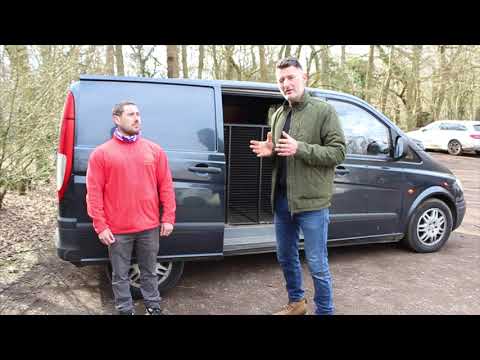
- The video is an interview between a business coach and his client. The client had worked for the NHS for 16 and a half years, had been promoted several times, and describes being "deeply unhappy" in a role that did not accommodate his dyslexia and dyspraxia. The coach, who knew him through his wife, suggested dog walking as a route into the dog training he had wanted to do.
- The groundwork started well before the business. He got his first dog in 2017, took training courses in 2018, and spent weekends shadowing local trainers unpaid while working Monday to Friday. That networking supplied his first clients: "he had nine dogs ready to go" when he launched.
- The preparation is described step by step: a business plan from a free template, phone calls to "about 15 or 20 dog walking businesses" for market research, a dog first aid course, insurance, a police check, a professionally designed logo, a website and a Facebook page, and a van fitted with custom dog cages costing "five, six grand", bought from savings.
- Pricing is the most specific part. The research found "everyone in the area charges 10 pound an hour and they’re pretty much fully booked", so the coach pushed him to charge £12, reasoning that fully booked competitors meant the market would bear more. He now charges "anywhere from 10 to 12 pound an hour … depending on how many dogs they’ve got."
- He launched on 23 March 2020, the day the first UK lockdown was announced. Rather than return to employment he posted puppy and dog training videos on Facebook, which a local community group of about 11,000 members shared, and he picked up clients as restrictions eased. About a year in, he is "almost at full capacity", with Wednesday his quietest day at two walks.
- The plan now is to fill Wednesdays with dog training at £40 an hour, then expand training to two or three days a week, possibly employing his wife to keep the walking going. The coach says they are "at the point where we could be earning you sort of 250 quid a day" from training.
Walk dogs locally for £10–£12 an hour, build a reputation, then shift your time to dog training at £40 an hour.
- Learn and network — Courses, unpaid shadowing
- Call 15–20 rivals — £10/hr, fully booked
- Price above market — £12/hr
- Insure and check — First aid, police check
- Buy a fitted van — £5,000–£6,000
- Launch with 9 dogs — From networking
- Share free videos — Local Facebook group
- Move to training — £40/hr
A sensible, well-ordered start. The money it produces is never stated.
A good start-up story that stops before the money
The lesson underneath the number
- There is a lot to like here. It is a rare small-business video with no hype: a man leaving a long NHS career because it was harming his health, launching on the day the country locked down, and building a local service one client at a time. The practical steps are sound and cheap: ring 15 or 20 competitors to learn the going rate and how busy they are, get insured and police-checked, look professional at every first visit, and give away genuinely useful content locally. The pricing logic in particular is good. If every competitor is fully booked at £10 an hour, the market is telling you it will pay more, and he charged £12.
- It is also honest about the groundwork. He did not start from nothing: he had owned a dog since 2017, trained since 2018, and spent weekends shadowing trainers for free. Those trainers gave him his first nine clients. That is the real reason the business survived its first lockdown, and the video says so plainly rather than crediting the business plan alone.
- What the video does not do is say what the business earns. "Almost at full capacity" is never turned into clients or walks per week, and "earning more money than you were before" has no figure for the business or for the job he left. The most quoted number, £250 a day, is what the coach says training "could be" earning: about six and a quarter hours a day at £40, for a service he is only now adding on Wednesdays. It belongs in the future tense.
- The interviewer’s role matters too. He is the guest’s business coach, has worked with him for a year and a half, and closes by hoping to "bring you even more money" in future. Whether the coaching is paid is not said. The video is, in part, a success story for the coach’s own service. None of that makes the story untrue, and the advice in it is sensible. It does mean the most important figures — income, hours and coaching cost — are not given in the video.
If everyone’s fully booked at 10 pound an hour that must mean it’s pretty good value for the customers.
The coach, on pricing above the local market
How he started, as described
The most practical parts of the interview, in order.
No figure is given for the business’s income, client numbers or weekly hours at any stage.
- Build experience and contacts first — Courses from 2018 and unpaid weekend shadowing of local dog trainers. Those trainers later passed him his first clients, which is why he launched with nine dogs lined up.
- Phone the competition — Calls to 15 or 20 local dog walkers to ask prices and availability. Cheap, quick and the most useful research step in the video.
- Price above a full market — Competitors charged £10 an hour and were "pretty much fully booked", so he charged £12. The logic — full books signal room to raise prices — is sound, and the £2 premium was backed by first aid training, insurance and a police check.
- Look professional at every first visit — The coach’s instruction to treat each new client visit "like a first date" — dressed smartly, polite, prepared. The coach says he has won every client he has visited.
- Give useful content away locally — During lockdown he posted puppy and training videos on Facebook, which a local group of about 11,000 people shared. A no-cost way to become known in a small area.
- Be reliable when things go wrong — A puncture one morning meant borrowing his wife’s car, laying down sheets, and calling every client to explain the delay. Reliability, he says, is why they did not mind.
The business model
Hourly dog walks at £10–£12 depending on the number of dogs, with dog training at £40 an hour being added.
Local dog owners, including owners of rescue dogs and powerful breeds that, he says, other walkers decline.
A reliable, insured, police-checked walker with dog training skills, who walks dogs others will not.
Referrals from dog trainers he shadowed, a Facebook page, training videos shared by a local community group, and word of mouth.
- Van with custom cages — £5,000–£6,000, from savings
- Insurance and police check — Done, never priced
- Training and first aid courses — Done, never priced
- Branding, website, Facebook — A designer was used. Never priced
- Fuel and van running costs — Never mentioned
- Tax and National Insurance — Never mentioned
- Coaching — The interviewer is his coach. Any fee is never stated
The one capital cost is given. Every running cost, and every income figure, is left out.
What you would actually need
Money
A van with custom cages at "five, six grand", from savings. The coach calls it an investment because "this van’s always going to be worth that money."
The van is the one cost given, and it is honest to name it. The claim that it will hold its full value is an assumption: vans lose value with age and mileage. Insurance, the police check, the first aid course, the logo and the website were all done and none was priced.
Costs named but not priced
- Public liability and care insurance
- Police check
- Dog first aid course
- Earlier dog training courses
- A designed logo, website and Facebook page
- Fuel, servicing and van insurance
- Tax and National Insurance on self-employed income
Time
About a year from launch to "almost at full capacity".
The year after launch is only part of it. He had owned a dog since 2017, trained since 2018, and spent weekends shadowing trainers unpaid, which supplied his first nine clients. Weekly walking hours are never given.
Where the time went
- 2017: first dog
- 2018: training courses, then unpaid shadowing
- Business plan and market research with a coach
- 23 March 2020: launch, same day as lockdown
- About a year later: near full capacity
- Next: training days added one at a time
The part you must pay attention to
The video never says how much the business earns.
The coach asks whether he is proud of "earning more money than you were before", and he says yes. Neither figure is given.
- Training rate per hour — £40
- Training hours per day — 6.25 hrs
£250 a day
What training "could be" earning — a forecast
The headline figure is the coach’s "we could be earning you sort of 250 quid a day with your dog training." At £40 an hour that is about six and a quarter billable hours a day, by our arithmetic, for a service he is only starting to book on Wednesdays. It is a target. For the walking business he actually runs, the video gives the price and nothing else: not the number of clients, the walks per week, the dogs per walk, the hours, or the monthly income. Without those, "almost at full capacity" and "earning more money than before" cannot be turned into a figure, and there is no previous NHS salary to compare against either.
One stated comparison also needs care. The coach says a full day of training at £40 an hour versus walking at £10–£12 is "over double the amount he can earn in one day." Per hour, £40 against £10–£12 is 3.3 to 4 times, so "over double" understates it — if the walking rate is per hour of his time. But he says the price varies "depending on how many dogs they’ve got", and he walks several dogs together and owns a van fitted to carry them. If £10–£12 is charged per dog, a group walk of four dogs at £12, an illustration of ours, would take in £48 an hour, more than training. The video never says which, and that one detail decides whether moving into training raises his income at all.
- THE £250 DAY (forecast)
- £250 / £40 an hour = 6.25 hrs
- TRAINING VS WALKING, PER HOUR
- £40 / £12 = 3.3x
- £40 / £10 = 4.0x
- "over double" -> understated
- IF WALKS ARE PRICED PER DOG
- 4 dogs x £12 (assumed) = £48/hr
- -> more than training
- THE VAN
- £5,000-£6,000 / £12
- = 417-500 walk-hours
- before fuel or insurance
The economics
Clear prices, one capital cost, and no income.
- Local going rate — £10 an hour
- His walking rate — £10–£12 an hour
- Premium over market at £12 — 20%
- Training rate — £40 an hour
- Van and fit-out — £5,000–£6,000
- Walk-hours to cover the van at £12 — ~417–500
- Training income target — ~£250 a day
- Billable hours behind £250 — ~6.25
- Income, clients, walks per week — Never stated
What the £250-a-day training target requires
£250 ÷ £40 = 6.25 billable hours a day
About six and a quarter hours of paid training a day, five days a week would be ~£1,250 gross
IncomeIdeaLab calculation from the stated training rate and the coach’s forecast
The weekly figure is ours and assumes five full training days, which is not the plan described: training is to grow from one day to "two days three days a week". Travel between clients, admin and tax are not included.
- Monthly or annual income from walking
- Number of clients and walks per week
- Whether £10–£12 is per dog or per hour of his time
- Running costs for the van, insurance and police check
- His previous NHS salary
- Whether the coaching is paid, and its cost
- At £12 against a £10 market rate he priced 20% above competitors. The reasoning — fully booked rivals mean demand exceeds supply — is sound.
- The van is described as an asset that keeps its value. That is an assumption: vans depreciate with age and mileage, and custom cages may not add resale value.
- He says he walks rescue dogs and powerful breeds that other walkers decline. That is a genuine competitive edge, though it raises insurance and safety demands the video does not discuss.
- The video was published in July 2021 and describes 2020–21 prices.
Evidence status
Every substantive money claim in the video.
- Local walkers charge £10 an hour and are fully booked — His market research, 15–20 calls — Specific and plausible for 2020–21.
- He charges £10–£12 an hour — Coach — Basis (per dog or per hour) not stated.
- Training at £40 an hour — Coach — Clear. Waiting list mentioned.
- Training earns "over double" walking in a day — Coach — Per hour it is 3.3–4×; unless walks are priced per dog.
- Van and cages cost £5,000–£6,000 — Coach — The only cost given.
- The van will always be worth what was paid — Coach — Unsupported; vans depreciate.
- Nine dogs lined up at launch — Coach — From earlier unpaid networking. Credible.
- "Almost at full capacity" — Coach — Never quantified.
- Earning more than before — Guest, agreeing — No figure for either income.
- Could be earning £250 a day training — Coach — A forecast, ~6.25 billable hours a day.
What is actually proven?
The business exists and the steps are clear. The income is not shown.
- Walking and training prices are given.
- The van cost is given.
- He launched with nine dogs from prior networking.
- Training pays 3.3–4 times walking per hour, if walking is priced per hour.
- £250 a day from training is a forecast.
- The van will keep its value.
- What the business earns, and whether it beats his old salary.
- Whether the coaching was paid.
What the headline doesn’t tell you
A good start-up story that leaves out the income.
- No income figure. — Monthly or yearly.
- £250 a day is a forecast. — For training, not walking.
- The interviewer is his coach. — Fee never stated.
- Years of groundwork. — Unpaid shadowing since 2018.
- £5,000–£6,000 on a van. — From savings.
- Per dog or per hour? — Never said.
- "Earning more than before." — Neither figure given.
- 2020–21 prices. — Published July 2021.
Should you try it?
A sensible local business, with your own numbers to do
The start-up steps are sound and cheap. The income you can expect has to come from your own local research, because the video gives none.
- Practicality of the start-up steps — 8 — Research, pricing, insurance and reliability all covered.
- Pricing logic — 8 — Charging above a fully booked market is well reasoned.
- Honesty about the groundwork — 8 — Years of unpaid shadowing acknowledged.
- Income disclosure — 0 — None at all.
- Cost disclosure — 4 — The van is costed; nothing else is.
- Disclosure of coaching relationship — 6 — Stated, but its cost is not.
- Startup cost — 5 — Low without a van; £5,000–£6,000 with one.
- Beginner accessibility — 7 — No special qualification needed to start walking.
- Dog walking is one of the most accessible local businesses there is, and this video’s steps are the right ones. Phone local walkers to find out what they charge and how busy they are. If they are full, price a little above them. Get insurance, a police check and first aid training, and make every first visit count. Post genuinely useful content in local groups. None of it costs much, and all of it is practical.
- Do not take the £250 a day as a dog walking income. It is the coach’s estimate of what dog training could earn, at £40 an hour, for a service only just being added. The video never says what walking earns, how many clients the business has, or how many hours a week it takes.
- Work out your own numbers before spending on a van. At £12 an hour, £5,000–£6,000 takes roughly 417 to 500 walk-hours to recover, before fuel, servicing or insurance, by our arithmetic. Many walkers start on foot or in their own car. Find out whether local walkers charge per dog or per hour, because group walks are where the income per hour comes from, and the video does not say how this business prices them.
- Finally, note the experience behind the launch. He had trained since 2018 and shadowed local trainers unpaid, which is where his first nine clients came from. A newcomer without those contacts should expect a slower start.
Passive or automated?
Automation
Every walk and every training session is done in person.
Passive potential
Income stops when he stops walking, unless he employs someone.
This is a hands-on service business and the video presents it honestly as one. Income comes from hours spent walking or training, a punctured tyre means ringing every client, and dyspraxia means getting up earlier to prepare. The only route to income that does not depend on his own time is the one mentioned near the end: employing someone, possibly his wife, to keep walking while he trains. That turns the business into a small employer, with the wages, insurance and management that brings.
- Every walk and training session
- First visits to win new clients
- Calling clients when plans change
- Van maintenance and driving
- Hiring and managing any future walker
Recommended beginner experiment
Prove local demand before buying a van.
- Call 15–20 local walkers. — Price, basis and availability.
- Get insurance and a police check. — Before the first client.
- Price at or just above the market. — If competitors are full.
- Start on foot or in your own car. — Delay the van.
- Log hours, walks and income weekly. — The figures the video omits.
- Post useful content locally. — Free and effective.
- Add a higher-paid service later. — Training at his £40 an hour.
Our verdict: 5/10
A sound, honest start-up story with no income figure clear prices and a costed van, told by the business owner’s own coach
Credited for specific prices (£10–£12 an hour walking against a £10 local rate, £40 an hour training), well-reasoned pricing above a fully booked market, a costed £5,000–£6,000 van, practical steps from market research by phone to insurance and police checks, and honesty about years of unpaid groundwork and a launch on the first day of lockdown. Marked down because no income, client count or weekly hours are ever given; because "earning more than before" has no figure for either side; because the £250 a day is a forecast for training rather than a result; because it is unclear whether walks are priced per dog, which decides whether training pays more; because the van is assumed to hold its value; and because the interviewer is the owner’s coach and any coaching fee is not stated.
This is one of the more honest small-business videos you will find. A man leaves a 16-year NHS career that was harming his health, launches a dog walking business on the day the UK locks down, and builds it to near capacity in about a year. The steps are practical and cheap: ring 15 or 20 local walkers to learn prices and availability, price above a market that is fully booked, get insured and police-checked, treat every first visit seriously, and share useful content in local groups. The pricing reasoning is good, and the video is candid that his first nine clients came from years of unpaid shadowing rather than from the business plan. The van is costed at £5,000–£6,000. What the video never gives is the income. "Almost at full capacity" is not turned into clients, walks or hours, and "earning more money than you were before" has no figure for the business or for the job he left. The most quotable number, £250 a day, is the coach’s forecast for dog training at £40 an hour — about six and a quarter billable hours a day for a service just being added. Whether training actually pays more than walking depends on whether £10–£12 is charged per dog on group walks, and the video does not say. The interviewer is the owner’s coach, and any coaching fee goes unstated. As a guide to starting, it holds up; as evidence of what the business earns, it offers nothing.
- Walking rate — £10–£12 an hour
- Training rate — £40 an hour
- Van and cages — £5,000–£6,000
- Training target — ~£250 a day
- Hours behind it — ~6.25 a day
- Business income — Never stated
- Previous salary — Never stated
- Interviewer — The owner’s business coach
- Beginner suitability — Good, with your own research
Sources
- How To Start A Dog Walking Business UK — YouTube video, 2021-07-08