Reselling / Thrift Sourcing · Claim Review
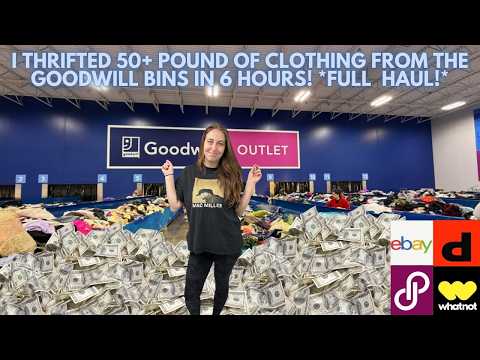
“I Thrifted 50+ Pounds Of Clothes From The Goodwill Bins In One Day! Full Cart Thrift Haul To Resell”
What we found: A Goodwill Outlet Haul Priced Only by Intention: The Stated $1 Million in Sales Is Seven Years of Revenue, and This Haul's Cost and Sold Prices Are Not Given
Five hours at the bins, more than 50 pounds of clothing paid for by the pound, and a detailed sorting method across five sales channels. The figures given are planned list prices; what the haul cost and what any of it sold for are not stated.
- $1M+ Lifetime sales
- ~$143k Average a year
- 50+ lb Haul weight
- Not stated Haul cost
The claim
That the creator has done over $1 million in sales of pre-owned clothing in seven years of reselling, and that buying by the pound at the Goodwill outlet and selling by style and through several channels is how to make the most money from what can be found.
- Lifetime sales — Over $1 million in seven years
- Average sales a year — About $143,000
- Haul — Over 50 pounds, five hours at the outlet
- Price paid per pound / total — Not stated
- Example item cost — About 40 to 50 cents for a light basic
- Planned list prices — Mostly $20 to $60; one item above $100; vintage jeans $75 to $100
- Channels — eBay, Poshmark, Depop, Whatnot, consignment and buy-sell-trade stores, ThredUp
- Profit, fees, consignment payouts — Not stated
What is this income idea?
Buy clothing by the pound at a Goodwill outlet, then route each piece to whichever channel will move it: your own listings, live shows, consignment and buy-sell-trade stores, or ThredUp.
- The creator runs the business with their husband, says they started reselling as a side hustle seven years ago, and states they have done "over a million dollars in sales just in pre-owned secondhand clothing".
- The method rests on two ideas. First, source at the Goodwill outlet, where everything is paid for by weight, which the creator calls one of the lowest cost-of-goods sources for clothing. Second, sell by style rather than brand, writing listing titles around trends and aesthetics, so that pieces most resellers would leave behind can still sell.
- Each item in the haul is routed. Kids' clothing in quantity goes to a buy-sell-trade store the creator ships to monthly. High-retail men's shirts that resell slowly are either underpriced to sell quickly or sold to a consignment store. Light luxury basics go into a pile for monthly Whatnot live shows. Formal pieces from high-retail brands are sent to ThredUp as an experiment.
- Planned prices are given for many pieces: about $25 for a sweater, $45 to $50 for a dress out of season, $50 to $60 for a vintage cardigan, at least $100 for a silk piece after checking comps, and $75 to $100 for a pair of vintage jeans.
- The creator also says that if the kids' clothing sent to the store simply covers the cost of the whole haul, everything else is margin, and mentions an Amazon guide to their supplies with affiliate links, disclosing that they earn a small commission.
An experienced reseller's sorting method for cheap, by-the-pound stock, with lifetime sales stated and this haul's economics left open.
- Dig the outlet bins — Five hours
- Pay by the pound — Rate not stated
- Sort by style — Keywords over brand
- List it yourself — $20–$100 planned
- Or sell in bulk — Consignment, buy-sell-trade
- Or go live — Whatnot shows
- Or test ThredUp — Formal pieces
A clear routing system. None of the routes has a payout figure in the video.
The routing is the business
The lesson underneath the number
- The interesting part of this video is not the haul but the decision the creator makes for each piece. A high-retail men's shirt with a poor sell-through rate is not forced into a listing: it is either priced below the market or sold to a store that wants men's clothing. Kids' clothing found in quantity goes in a monthly box to a buy-sell-trade store, with no photographing or listing. Light basics go to a live-show pile. Formal pieces go to a ThredUp test. That is a business designed to get money out of stock that a single-platform seller would leave in the bin.
- The style-over-brand approach is the other transferable idea. Writing listings around the look a buyer is searching for, rather than the label, widens what is worth picking up, and the creator gives dozens of concrete keyword examples.
- The figures, though, are mostly of one kind: what the creator plans to ask. A vintage cardigan at $50 to $60, jeans at $75 to $100, a silk piece "at least above 100" after comps. These are projections. The cost of the haul is not given, nor what any of it sold for, nor what the stores pay for lots. The creator's own framing, that kids' clothing sold to a store might "make back the cost of my entire haul", is a sensible rule of thumb that cannot be checked here because neither side of it has a figure.
- The over-$1-million claim sits in the introduction as context for the channel. It is lifetime revenue across seven years for a two-person business, and it says nothing about margin. It is a credential the creator states; we report it as their statement.
If I can just literally make back the cost of my entire haul with all of the kids clothing that I get and send to a store that I don't have to list... it's a win-win.
The creator, on why they pick up kids' clothing
The method, as the creator gives it
Cheap stock, sold by style, through whichever channel fits each piece.
No price per pound, haul total or sold price is given for this haul.
- Source by weight at the outlet — Everything in the haul was paid for by the pound. The creator says even one outlet day a week, early on, "made a world of a difference" to their cost of goods. A light basic is estimated at 40 to 50 cents.
- Sell the style, not the label — Listing titles are built from trend and aesthetic keywords such as Y2K, cottage core, dark romantic and quiet luxury, so mall-brand pieces can reach buyers searching for a look.
- Handle high-retail, low-resale pieces two ways — Price below the market to sell faster, or sell to a consignment store that wants that category. The creator's examples are men's button-downs from premium brands.
- Wholesale repeatable finds in bulk — Kids' clothing and brands found again and again are sold in lots to buy-sell-trade and consignment stores across the country, which the creator found by cold emailing and messaging shops.
- Set aside pieces for live shows — Luxury basics and graphic tees go to a pile for Whatnot, which the creator plans to run monthly or every two weeks.
- Test new outlets — ThredUp is described as an experiment for formal and high-retail women's pieces in the second half of this year and the first half of 2027.
The business model
Sales of secondhand clothing through own listings on eBay, Poshmark and Depop, Whatnot live shows, bulk sales to consignment and buy-sell-trade stores, and ThredUp; plus affiliate commission on a supplies list.
Individual buyers searching by style, and resale stores buying wholesale lots.
Trend-matched secondhand pieces, and curated bulk lots for stores that want specific brands.
Five sales channels, chosen piece by piece.
- Outlet stock — Paid by the pound; rate not stated
- Platform commission — Not stated
- Shipping, including monthly lots to stores — Not stated
- Cleaning and repair — Spot remover and sweater shaver named
- Two people's time — The creator and their husband run the business
No cost or margin figure is given for the haul or for the business.
What you would actually need
Money
Very little per item. The outlet is described as one of the lowest-cost sources for clothing to resell.
Plausibly true, and the cheapest way to start reselling we have seen described. The missing numbers are the price per pound, what this haul cost, and what consignment and buy-sell-trade stores pay for bulk lots.
Costs named or implied
- Outlet stock by the pound, rate not stated
- Shipping bulk lots to stores each month
- Platform commission on eBay, Poshmark and Depop
- Cleaning and repair supplies
- Storage for stock waiting for its channel
Time
Five hours at the outlet for this haul.
The sourcing is the only stage timed. Every piece then has to be checked, cleaned, researched, priced, listed or lotted, and some need washing or sweater-shaving first.
Where the time goes
- Five hours digging the bins
- Researching brands and comps
- Cleaning and repairing pieces
- Listing with keyword titles
- Packing lots for stores
- Running live shows
The part you must pay attention to
Planned prices are not sales, and lifetime revenue is not profit.
Two kinds of figure appear in the video: a lifetime sales total, and list prices the creator intends to set. Neither tells you what this haul will earn.
- Stated lifetime sales — $1,000,000+
- Stated time reselling — 7 years
~$143,000 a year
Average sales, before any cost
The load-bearing assumption is that buying by the pound makes cost of goods so low that almost any sale is profitable. That is plausible for a 50-cent basic listed at $25. But the video does not give the price per pound, the total paid for this 50-pound haul, the share of pieces that sell through each channel, or what consignment and buy-sell-trade stores pay for bulk lots, which is usually far below a retail listing price.
The $1 million is stated as sales across seven years for a business run by two people, and the business started as a side hustle, so the yearly figure was likely lower at first and higher later. No profit, margin or take-home figure is given at any point. The video is best read as a sourcing and sorting lesson, not as evidence of what a haul like this returns.
- THE LIFETIME FIGURE (OUR WORKING)
- Stated sales $1,000,000+
- Years 7
- Average per year ~$143,000
- Average per month ~$11,900
- -> sales, before stock, fees,
- shipping and two people's time
- THIS HAUL
- Weight 50+ lb
- Price per pound not stated
- Total paid not stated
- Sold prices not stated
- Planned list prices $20 - $100
The economics
A lifetime revenue figure, and planned prices for a haul of unknown cost.
- Lifetime sales — Over $1,000,000
- Years reselling — 7
- Average sales a year — ~$143,000
- Haul weight — 50+ pounds
- Time sourcing — 5 hours
- Cost of a light basic — 40 to 50 cents
- Planned list prices — $20 to $100+
- Haul cost, sold prices, profit — Not stated
Averaging the lifetime figure
$1,000,000 ÷ 7 years
About $143,000 a year, or about $11,900 a month, in sales
IncomeIdeaLab calculation from the figures stated in the video
A straight average. The business began as a side hustle, so early years were probably smaller. The figure is revenue, before stock, fees, shipping and two people's time.
- Price per pound at the outlet and total paid for the haul
- Sold prices for any piece in the haul
- What consignment, buy-sell-trade stores and ThredUp pay out
- Profit or margin for the haul or the business
- Hours spent processing and listing after sourcing
- Annual revenue in recent years
- The creator discloses that links to an Amazon list of supplies earn them "a small cut", and says viewers can just search for the products instead.
- Several pieces are noted as needing work before sale, including washing, spot treatment and sweater-shaving.
- Seasonal pricing is described: linen and resort pieces would list higher in late spring and summer, and some are being held or marketed to winter travellers instead.
Evidence status
Every substantive figure in the video.
- Over $1 million in sales in seven years — Creator, introduction — Cumulative revenue. About $143,000 a year on average. We could not check it from the video.
- Over 50 pounds from five hours at the outlet — Creator — Price per pound and total paid are not stated.
- A light basic cost about 40 to 50 cents — Creator — The only item cost given.
- Planned list prices of $20 to $100+ — Creator — Intentions, not sales.
- Bamboo baby sleeping bags sell for about $25 within a month — Creator — A stated past pattern; we could not check it.
- Some kids' dresses routinely exceed $100 secondhand — Creator — Stated about one brand; no sale shown in figures.
- Kids' clothing to a store can cover the haul's cost — Creator — Neither the haul cost nor the store payout is given.
- Affiliate commission on supplies links — Creator — Disclosed on camera.
What is actually proven?
A method is described in detail. The money is not measured.
- A detailed, piece-by-piece routing method across five channels.
- Lifetime sales of over $1 million across seven years.
- An average of about $143,000 a year in sales.
- Planned list prices for many items in the haul.
- The cost of the haul and the price per pound.
- Any sold price, store payout or profit.
What the headline doesn’t tell you
A 50-pound haul is a starting point. These are the parts that decide what it earns.
- $1 million is sales. — Over seven years.
- Two people run it. — The creator and their husband.
- Prices are planned. — Not sold.
- Per-pound price is not given. — Nor the haul total.
- Store lots pay less. — Payouts not stated.
- Some pieces need work. — Washing, shaving, spot treatment.
- There is an affiliate link. — Disclosed on camera.
Should you try it?
A useful sourcing and sorting lesson, without the numbers to judge it
Copy the routing idea and the keyword approach. Record what each outlet trip costs and what each channel pays you before relying on it.
- Specificity of method — 8 — Channel and keywords given for almost every piece.
- Evidence for income — 2 — A lifetime sales total and planned prices only.
- Cost disclosure — 2 — One item cost; no per-pound price or haul total.
- Disclosure of conflicts — 8 — Affiliate commission stated on camera.
- Startup cost — 9 — By-the-pound stock is cheap.
- Beginner accessibility — 6 — Low cash barrier; style knowledge takes time.
- If you are starting out in reselling, the most valuable thing here is the idea that each item should go to the channel that suits it, not to a default listing. Pieces that sell slowly on your own store may sell quickly to a consignment shop, kids' clothing can go out in a monthly box with no photos or listings, and some items suit a live show better than a listing. The creator found the stores they sell to by cold emailing and messaging them, which any beginner can do.
- The keyword approach is equally transferable. Describing what a piece looks like and which trend it fits, rather than relying on the label, widens what is worth buying at an outlet where everything costs about the same per pound.
- What you cannot get from this video is a sense of what a haul like this pays. The prices are what the creator plans to ask, the per-pound rate and total cost are not given, and the stores' payouts for bulk lots are not given. A seller with seven years of experience and a network of stores will also do better with the same 50 pounds than a beginner would.
- Start by recording, for your first few outlet trips, exactly what you paid, how long you spent, and what each piece eventually brought in through which channel. That gives you the return per trip that this video does not.
Passive or automated?
Automation
Every piece is sourced, judged and routed by hand.
Passive potential
Bulk lots to stores save listing time but not sourcing time.
This is hands-on work from the first minute. Five hours digging bins, then a piece-by-piece judgement about brand, style, season, condition and channel, then cleaning, listing, lotting, shipping and live shows. Selling in bulk to stores removes photographing and listing for those pieces, which the creator values for exactly that reason, but someone still has to find, sort and pack them.
- Digging outlet bins for hours
- Judging style, condition and channel for every piece
- Cleaning and repairing items
- Listing and running live shows
- Maintaining relationships with buying stores
Recommended beginner experiment
Measure three outlet trips end to end.
- Record the weight and price paid. — Every trip.
- Tag each piece with its channel. — Listing, store or live.
- Contact two local resale stores. — Ask which brands they buy.
- Write keyword titles. — Style first, brand second.
- Record each sale net of fees. — And each store payout.
- Count processing hours. — Not just the sourcing.
- Compare return per trip. — Before increasing volume.
Our verdict: 5/10
A detailed sorting method, with the haul's economics left open and a lifetime sales figure that is revenue across seven years
Credited for a specific, transferable method of routing each piece to the channel that suits it; for concrete keyword and pricing reasoning on dozens of items; for explaining how the creator built relationships with buying stores; and for disclosing affiliate commission on camera. Marked down because the over-$1-million figure is cumulative revenue with no profit or margin attached, because the prices given for the haul are planned list prices rather than sales, and because the price per pound, the total cost of the haul and the stores' payouts are not stated.
This video is a long, knowledgeable walk through 50-plus pounds of Goodwill outlet clothing, and its value is in the decisions: which pieces to list under trend keywords, which to sell in bulk to a kids' buy-sell-trade store, which to price low, which to hold for a live show and which to test on ThredUp. A beginner can copy that routing and the habit of cold-contacting stores. The figures do not support conclusions about earnings. The over-$1-million claim is stated as seven years of sales for a two-person business, about $143,000 a year on average before any cost, with no profit figure. For the haul itself, the per-pound price, the total paid and every sold price are not given; the prices are what the creator plans to ask. The affiliate link for supplies is disclosed. Treat it as a sourcing lesson and measure your own trips.
- Lifetime sales — $1M+ over 7 years
- Average sales a year — ~$143,000
- Haul — 50+ lb in 5 hours
- Haul cost — Not stated
- Planned list prices — $20–$100+
- Profit — Not stated
- Beginner suitability — Method yes; measure your own returns
Sources
- I Thrifted 50+ Pounds Of Clothes From The Goodwill Bins In One Day! Full Cart Thrift Haul To Resell — Trash Pandas Thrift — YouTube video, 2026-11-11
- FTC — Guides Concerning the Use of Endorsements and Testimonials — Regulatory guidance on endorsements and affiliate disclosure