E-commerce / TikTok Shop · Claim Review
“Forget TikTok Shop Affiliate. THIS Makes Me USD 201,509/mo With No Face.”
What we found: A $273,000 TikTok Shop Month Is Stated as Sales With No Profit Figure, and the Title's $201,509 Is Not Said in the Video
A faceless print-on-demand seller playbook with a candid beginner timeline. Affiliate commissions, platform fees, product costs and ad spend are named or implied and never totalled.
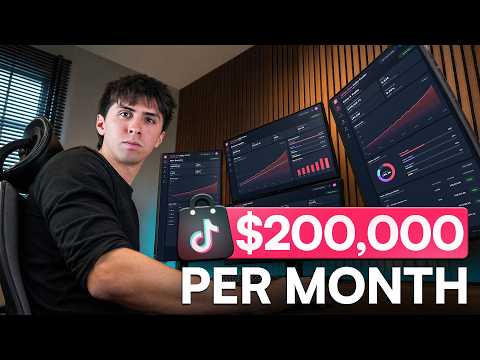
- $273,000 Sales on one shop, past month
- $201,509/mo Title figure
- ~$5,000 Beginner first 30 days
- $30/mo Costs disclosed
The claim
That becoming a TikTok Shop seller, rather than an affiliate, produced $273,000 in one month on one shop, with none of the sales coming from the creator appearing on camera.
- Sales on one TikTok Shop in the past month — $273,000
- On-screen dashboard crop at 0:01 — Last 28 days: GMV $273,146.83, Orders 14,538
- Monthly figure in the title — $201,509, not stated in the video
- Affiliate income when starting out — $2,000 in the first month, then zero the next
- Typical affiliate commission on TikTok Shop — 10% to 25%, "maybe 30%"
- What a seller keeps — "50 to 70% of the profit"; the base it applies to is not defined
- Only upfront cost named — Printify Premium at $30 a month
- Brands built with affiliate recruitment — Up to $2 million a year, over the past two years
- Beginner first 30 days — ~$5,000 in sales
- Beginner at 90 to 110 days — $15,000 to $20,000 a month, "if you are consistent"
- Affiliate commissions, bonuses, ad spend, product and platform costs — Not stated in the video
- Profit on the $273,000 month — Not stated in the video
What is this income idea?
Sell your own print-on-demand products on TikTok Shop and recruit TikTok Shop affiliates to make the videos, so the store grows without you on camera.
- The creator opens with "$273,000 I made on one TikTok shop just in the past month", adding that none of those sales came from them being on camera. They began on the affiliate side, made $2,000 in the first month and nothing the next, and switched to selling.
- The case for selling rests on two points: margin and ownership. Affiliates earn "anywhere between 10 and 25, maybe 30%" of the sales they drive, while "as a seller you keep 50 to 70% of the profit", and a seller owns a store that could later be sold.
- Products come from print on demand. A TikTok Shop is connected to Printify, products are designed and published there, and Printify fulfils each order. The only upfront cost named is Printify Premium at $30 a month. Apparel and mugs are recommended for beginners.
- Products are screened against three tests: an immediate wow factor that stops the scroll, a specific urgent problem solved, and ease of filming. Christmas decorations in Q4 are given as an example of the third.
- Selling without a face runs on two layers. The first is the seller's own faceless videos, or AI-generated videos made from a phone photo; the creator says faceless filming is how they grew their brand to their first million dollars. The second, called "the biggest lever", is recruiting affiliates found through Kalodata by offering a higher commission than they already earn ("affiliate sniping"), keeping them active with bonuses and competitions, and adding TikTok's GMV Max ads to scale the best videos.
- The closing section sets expectations: a first month will not be $273,000; "a realistic first 30 days looks more like $5,000 in sales", rising to $15,000 to $20,000 a month by day 90 to 110 for someone consistent. A coaching application, with a call from the creator's team, is promoted twice.
Own the product, pay other people a commission to promote it, and keep the margin, which the video never calculates after costs.
- Connect TikTok Shop — To Printify
- Design and publish — Apparel, mugs
- Screen the product — Three pillars
- Faceless or AI videos — Layer one
- Find affiliates — Kalodata
- Outbid their commission — "Affiliate sniping"
- Bonuses and competitions — Keep them posting
- Scale with GMV Max — Ad spend not stated
Every step after product design has a cost attached, and none is priced except the $30 Printify plan.
Moving from affiliate to seller moves the commission onto your cost line
The lesson underneath the number
- The creator's argument against affiliate work is fair and specific. An affiliate's income depends on videos going viral every month, there is little to outsource, and nothing is owned. Their own start, $2,000 one month and nothing the next, illustrates it, and the point that a store can be sold while an affiliate audience cannot is a real one.
- The seller model they describe, though, is built on the same affiliates. Sales come from creators who are paid 10% to 30% of every order, offered more than competitors pay, and kept active with bonuses, with GMV Max ads on top. That is a sound way to grow a TikTok Shop, and it means the margin an affiliate gives up is not all kept by the seller: a large part of it is paid straight back out to recruit and keep the affiliate army.
- That is why the headline figure needs a cost line beside it. $273,000 in sales might be a very profitable month or a modest one, depending on what the affiliate cut, product cost, platform fees, bonuses and ads came to. The video gives none of those numbers, and describes what a seller keeps as "50 to 70% of the profit" without saying what that percentage is measured against.
- The most useful thing in the video comes near the end. The creator states that a first month will not look like theirs and offers a far smaller figure, about $5,000 in sales, with $15,000 to $20,000 a month after three to four months for someone consistent. Those are still sales, not take-home pay, but they are the numbers a beginner should plan around.
I'm not going to sit here and tell you that you're going to make $273,000 in your very first month because you won't.
The creator, setting expectations in the closing section
The setup, as the creator gives it
A print-on-demand store promoted by recruited affiliates.
No cost is given for any stage except the $30-a-month Printify Premium plan.
- Connect TikTok Shop to Printify — Design a product, publish it on Printify, and let Printify receive each TikTok Shop order and ship it to the customer, so no inventory is bought in advance. The per-item production and shipping cost is not stated.
- Start with apparel and mugs — Recommended for beginners as "super cheap to make and ship and simple to design around". No unit cost or sale price is given.
- Run every product through three pillars — An immediate wow factor, a specific urgent problem solved, and ease of filming. A clear and usable screening test, though a print-on-demand mug or shirt rarely meets the second pillar, and the urgent-problem example given (a neuropathy device) is not a print-on-demand product.
- Make faceless or AI videos — Film the product without showing your face, or turn a phone photo into an AI video. The creator says faceless filming took their own brand to its first million dollars.
- Recruit affiliates with a higher commission — Find creators already selling trending products in your niche on Kalodata and offer a bigger commission rate than they currently receive. The creator says they have used this for two years to build brands to $2 million a year.
- Keep affiliates motivated — Run bonuses and competitions across the affiliate community. No budget or amount is given.
- Add GMV Max ads — Let TikTok's GMV Max identify the best-performing videos and scale them. No ad spend figure is given.
The business model
Retail sales of print-on-demand products on TikTok Shop, mostly driven by third-party affiliates paid on commission.
TikTok Shop buyers reached through affiliate videos, the seller's own faceless videos and GMV Max ads.
Products screened for scroll-stopping appeal, a clear problem solved and ease of demonstrating on video.
Affiliates recruited from competitors with higher commissions, kept active with bonuses, plus GMV Max ads.
- Affiliate commission — 10% to 30% of sales by the creator's own range; total not stated
- Printify Premium — $30 a month, stated
- Production and shipping per order — Not stated
- TikTok Shop fees — Not mentioned
- Bonuses and competitions — Not priced
- GMV Max ads — Not priced
- Refunds, returns and tax — Not mentioned
The one stated cost is the cheapest in the model. The largest, affiliate commission, is described as a percentage and never applied to the headline figure.
What you would actually need
Money
No money down for inventory; "the only real upfront cost" is Printify Premium at $30 a month.
The $30 is a fair description of the cost of opening the store. It is not the cost of running it. The video's own model pays affiliates 10% to 30% of sales, adds bonuses and competitions, and buys GMV Max ads, on top of each print-on-demand item's production and shipping cost and TikTok Shop's own fees. None of these is priced.
Named or implied in the video, not priced
- Affiliate commission, which the creator puts at 10% to 30% of sales
- A higher-than-market commission to win affiliates from other sellers
- Bonuses and competitions for the affiliate community
- GMV Max ad spend
- Printify production and shipping cost on every order
- TikTok Shop fees on each sale, not mentioned
- An AI video tool subscription
- Refunds and returns, not mentioned
Time
About $5,000 in sales in the first 30 days and $15,000 to $20,000 a month by day 90 to 110, "if you are consistent".
A rare and useful expectation-setter, and stated in sales rather than profit. The creator's own path was longer: an affiliate stint, a brand grown to its first million on faceless videos, and two years of affiliate recruitment.
What the timeline includes
- An affiliate start: $2,000, then a zero month
- A brand grown to its first million dollars on faceless videos
- Two years of affiliate recruitment
- Ongoing affiliate outreach, bonuses and ad management
- Hours per week: not stated
The part you must pay attention to
$273,000 is sales. The video names the costs that come out of it and totals none of them.
The headline is "$273,000 I made on one TikTok shop just in the past month". The model described pays affiliates a share of every sale.
- Sales on one shop, past month — $273,000
- Affiliate commission, the creator's range — 10% to 30%
$27,300 to $81,900
Commission alone, if the affiliate range applied to all sales
The whole claim rests on the idea that a seller keeps the margin an affiliate gives up. That holds only if what is left after the affiliate's cut, the product and shipping cost, TikTok Shop's fees, bonuses and ad spend is still a healthy share of sales. The creator says a seller keeps "50 to 70% of the profit", without saying what that profit is measured from, and no figure is given for any of those costs on the $273,000 month. The faceless claim also depends on affiliates, who are themselves on camera, making the content; the store is faceless for the seller, not for the people who sell it.
Two further notes. The title says $201,509 a month; that figure is not said anywhere in the video, and the spoken figure is $273,000 for one month on one shop, so the two cannot both describe the same month. And credit where due: the creator states plainly that a beginner will not make $273,000 in a first month and gives a much lower first-month figure of about $5,000 in sales. That is more useful to a viewer than the headline.
- THE HEADLINE MONTH (OUR ARITHMETIC)
- Sales, one shop $273,000
- Affiliate cut 10% -$27,300
- Affiliate cut 30% -$81,900
- Product + shipping -???
- TikTok Shop fees -???
- Bonuses, GMV Max ads -???
- ---------------------------------
- Profit not stated
- TWO HEADLINE FIGURES
- Said in the video $273,000/mo
- In the title $201,509/mo
- Difference $71,491
- THE BEGINNER FIGURES (SALES)
- First 30 days ~$5,000
- Day 90-110 $15,000-$20,000/mo
The economics
A sales figure, a commission range and one $30 subscription.
- Sales on one shop, past month — $273,000
- Title figure — $201,509 a month
- Affiliate commission range — 10% to 30%
- Commission on $273,000 at that range — $27,300 to $81,900
- Printify Premium — $30 a month
- Seller's share — "50 to 70% of the profit", base not defined
- Beginner first 30 days — ~$5,000 in sales
- Beginner by day 90 to 110 — $15,000 to $20,000 a month in sales
- Product, platform, bonus and ad costs — Not stated
Applying the creator's commission range to the headline month
$273,000 × 10% = $27,300; $273,000 × 30% = $81,900
Between $27,300 and $81,900 paid to affiliates, if the creator's range applied to every sale, before any other cost
IncomeIdeaLab calculation from the sales figure and commission range stated in the video
The video does not say what share of the $273,000 came through affiliates rather than the creator's own faceless videos or ads, or what commission was actually paid, and the creator says recruits are offered more than the going rate. This is an illustration of scale, not a figure for this shop.
- Profit on the $273,000 month
- Total affiliate commission paid
- Bonus and competition budgets
- GMV Max ad spend
- Printify production and shipping cost per item
- TikTok Shop fees, refunds and returns
- Which month, if any, the title's $201,509 refers to
- The title figure of $201,509 a month and the spoken $273,000 for the past month differ by $71,491 (our arithmetic). The video does not mention the title figure.
- The dashboard crop on screen at the opening shows “Last 28 days”, GMV $273,146.83 and Orders 14,538. The page is cropped and carries no shop or platform name, so it is shown on screen but not fully identifiable; the period shown is 28 days, where the spoken figure is “the past month”. Divided by the orders, GMV is about $18.79 an order (our arithmetic). GMV is gross sales, not profit.
- Three students are cited with results of $45,000 a month, $17,000 a month and $60,000 a week. No costs or time frames are given for any of them, and they are introduced immediately before the coaching application.
- The creator states that TikTok Shop has 10 affiliates for every seller and over $40 million flowing through it every day, and compares it to Amazon in 2016. We could not check these figures from the video.
- The coaching offer is identified as the creator's own: an application in the first description link, followed by a call with someone from their team. No price is stated.
Evidence status
Every substantive claim in the video.
- $273,000 on one TikTok Shop in the past month — Creator, opening — A sales figure. No profit or cost is given for it.
- $201,509 a month — Video title — Not said in the video and does not match the spoken figure.
- None of the sales came from the creator on camera — Creator — Consistent with the model described; the split between affiliates, own videos and ads is not stated.
- $2,000 first affiliate month, then zero — Creator — A candid account of the affiliate start.
- Affiliates earn 10% to 25%, maybe 30% — Creator — Stated as a typical range. It is also the seller's main cost, never totalled.
- Sellers keep 50% to 70% of the profit — Creator — The base the percentage applies to is not defined.
- Printify Premium at $30 a month is the only real upfront cost — Creator — True of opening the store as described; running costs are separate and not stated.
- Brand grown to first $1 million on faceless videos — Creator — Stated without a time frame or costs. We could not check this from the video.
- Affiliate sniping built brands to $2 million a year — Creator — Stated without costs. We could not check this from the video.
- Students at $45,000 a month, $17,000 a month and $60,000 a week — Creator — No costs, time frames or proof given; introduced before the coaching link.
- Beginner first 30 days about $5,000 in sales — Creator — A useful, modest benchmark, in sales rather than profit.
- $15,000 to $20,000 a month by day 90 to 110 — Creator — Conditional on consistency; stated in sales.
- Over $40 million a day through TikTok Shop; 10 affiliates per seller — Creator — No source given. We could not check this from the video.
What is actually proven?
The method is described. The income after costs is not addressed.
- One shop did $273,000 in sales in the past month, by the creator's account; a cropped dashboard on screen at the opening shows GMV $273,146.83 for the last 28 days.
- The print-on-demand setup, product screen and affiliate recruitment method are described step by step.
- A modest beginner timeline is given and the headline month is ruled out for beginners.
- At the creator's own commission range, affiliates would take $27,300 to $81,900 of a $273,000 month.
- The title's $201,509 a month is not stated in the video.
- Profit, total commissions, ad spend, product costs and platform fees.
What the headline doesn’t tell you
The seller keeps the margin only after paying everyone who sells for them.
- $273,000 is sales. — No profit figure is given.
- The title says $201,509. — That figure is not in the video.
- Affiliates take 10% to 30%. — The creator's own range.
- Recruits are offered more. — Than competitors already pay.
- Bonuses and ads are unpriced. — Both are part of the model.
- TikTok Shop fees are not mentioned. — On every order.
- Faceless for the seller only. — Affiliates are on camera.
- A coaching offer closes the video. — Identified as the creator's.
Should you try it?
A workable store model, with the profit side left open
Plan around the creator's beginner figures, not the headline, and price every cost before raising affiliate commissions.
- Specificity of the method — 7 — Print on demand, a product screen and a named affiliate-recruitment approach.
- Expectation-setting for beginners — 8 — Rules out the headline month and gives a $5,000 first-month figure.
- Support for the headline figure — 3 — Stated once, as sales, with no breakdown.
- Title accuracy — 2 — The title figure is not said in the video.
- Cost disclosure — 2 — Only the $30 Printify plan is priced.
- Clarity on margin — 2 — "50 to 70% of the profit" has no defined base.
- Disclosure of own offer — 7 — The coaching application is clearly the creator's.
- Beginner accessibility — 5 — Cheap to open; growth depends on paying affiliates and ads.
- The starting cost really is low. Connecting a TikTok Shop to a print-on-demand supplier means no stock to buy, and a $30-a-month plan is the only upfront cost the creator names. That makes this one of the cheaper e-commerce experiments to try.
- The product screen is worth using: does it stop the scroll, does it solve a specific problem, and is it easy to show on video? Be aware that a printed shirt or mug rarely solves an urgent problem, so a beginner following the recommended apparel-and-mugs start will usually be relying on the first and third pillars.
- Before copying the affiliate strategy, work out your margin per order. Take the retail price, subtract the Printify cost and shipping, TikTok Shop's fees and the affiliate commission you plan to offer, and see what is left for bonuses, ads and you. Outbidding other sellers' commissions only works if that number stays positive.
- Use the creator's beginner figures as your yardstick: about $5,000 in sales in the first month, and $15,000 to $20,000 a month after three to four months for someone consistent. Remember that those are sales; your income is what remains after every cost above.
Passive or automated?
Automation
Fulfilment is automated through Printify; selling depends on affiliates and ads.
Passive potential
Affiliates must be found, outbid for and kept motivated continuously.
Printify handles production and shipping, which removes the most physical part of e-commerce. The selling does not run itself. The creator describes constantly recruiting affiliates from competing sellers, running bonuses and competitions to keep them posting, and managing GMV Max ads. The store can run without the seller's face, but not without the seller's time or budget.
- Designing and screening products
- Researching and contacting affiliates
- Running bonuses and competitions
- Managing GMV Max ad spend
- Customer service, refunds and returns
Recommended beginner experiment
Open cheaply, price every order, then recruit.
- Connect TikTok Shop to Printify. — The $30 plan the creator names.
- Pick one product that passes all three pillars. — Wow, problem, easy to film.
- Write down your margin per order. — Price minus product, shipping and fees.
- Set an affiliate commission you can afford. — After that margin, not before.
- Post your own faceless videos first. — Learn what sells before paying others.
- Recruit a few affiliates. — Track sales per affiliate.
- Cap bonus and ad budgets. — The video gives no figures.
- Judge month one against $5,000 in sales. — The creator's own benchmark.
Our verdict: 4/10
A credible store model, with no cost or profit figure for the headline month and a title figure that is not said in the video
Credited for a specific, low-cost setup through print on demand; a clear three-part product screen; a named affiliate-recruitment method; a candid account of the creator's own affiliate start; and, above all, for telling beginners plainly that their first month will not resemble the headline and giving a much lower figure in sales. Marked down because the $273,000 month is a sales figure with no cost or profit given, although the model pays affiliates the 10% to 30% the creator describes plus bonuses and ads; because the seller's share is given as "50 to 70% of the profit" with no defined base; because the title's $201,509 a month is not stated in the video; and because student results are cited without costs or time frames just before the coaching application.
The video makes a fair case against relying on TikTok Shop affiliate income and lays out a practical alternative: connect a shop to a print-on-demand supplier for $30 a month, screen products for scroll-stopping appeal, a real problem and ease of filming, and recruit affiliates by offering more than competing sellers pay. The creator is also more direct than most about beginner expectations, ruling out a $273,000 first month and pointing to about $5,000 in sales instead. The headline figure itself is sales, and the video does not say what was left of it. By the creator's own commission range, affiliates alone would take $27,300 to $81,900 of a $273,000 month, before product costs, TikTok Shop fees, bonuses and GMV Max ads, none of which is priced. The title's $201,509 a month is not said in the video. Use the setup and the beginner benchmark, and work out your margin per order before you start outbidding anyone for affiliates.
- Sales, past month, one shop — $273,000
- Title figure — $201,509 a month
- Affiliate commission at the stated range — $27,300 to $81,900
- Profit — Not stated
- Stated upfront cost — $30 a month
- Beginner first month — ~$5,000 in sales
- Beginner suitability — Cheap to start, costly to scale
Sources
- Forget TikTok Shop Affiliate. THIS Makes Me USD 201,509/mo With No Face. (Jon Reiter) — YouTube video, 2026-08-13
- FTC — Guides Concerning the Use of Endorsements and Testimonials — Regulatory guidance on earnings claims